Necrophilia is not one of my failings, but I do like graveyards and memorial stones and such...
Following the publication In My Mind's Eye, her acclaimed first volume of diaries, a Radio 4 Book of the Week in 2018, Jan Morris continued to write her daily musings. From her home in the North West of Wales, the author of classics such as Venice and Trieste cast her eye over modern life in all its stupidity and glory.
From her daily thousand paces to the ongoing troubles of Brexit, from her enduring love for America to the wonders of the natural world, and from the vagaries and ailments of old age to the beauty of youth, she once again displays her determined belief in embracing life and creativity - all kindness and marmalade.
Jan Morris was a British historian, author and travel writer. Morris was educated at Lancing College, West Sussex, and Christ Church, Oxford, but is Welsh by heritage and adoption. Before 1970 Morris published under her assigned birth name, "James ", and is known particularly for the Pax Britannica trilogy, a history of the British Empire, and for portraits of cities, notably Oxford, Venice, Trieste, Hong Kong, and New York City, and also wrote about Wales, Spanish history, and culture.
In 1949 Jan Morris married Elizabeth Tuckniss, the daughter of a tea planter. Morris and Tuckniss had five children together, including the poet and musician Twm Morys. One of their children died in infancy. As Morris documented in her memoir Conundrum, she began taking oestrogens to feminise her body in 1964. In 1972, she had sex reassignment surgery in Morocco. Sex reassignment surgeon Georges Burou did the surgery, since doctors in Britain refused to allow the procedure unless Morris and Tuckniss divorced, something Morris was not prepared to do at the time. They divorced later, but remained together and later got a civil union. On May, 14th, 2008, Morris and Tuckniss remarried each other. Morris lived mostly in Wales, where her parents were from.
Turns out that a global pandemic interferes with my reading in that I have been struggling to read for any length of time. We got the newspapers two weeks ago and I saw that Jan Morris had a new book. An instant yearning flooded my entire being as I loved her previous diary. With closed bookshops, it was the postman who delivered me this two days ago. Yesterday's long awaited sunshine sent me out into our small, grubby garden where I opened this book and read for hours and hours - for the first time in weeks. I have the sunburn to prove it!
Nothing much happens - it is merely a diary of thoughts that occurs to the 92/93 year old writer but there is something about the sheer ordinariness of her day that warms my soul. I envy anyone who knows her and gets to sit in the same room as her. This is gentle reading at its best - intelligent and sensitive with wry humour. I know I will reread this for years to come. I am now greedy for a third volume! Oh, and photographs of her workroom/book collection/kitchen too!
She always smiled at people to see if they would smile back, and she often asked them questions. Most people responded, especially on a sunny day by the sea: “The thing is that nearly all of us, old and young…only want to be at one with the world, and welcome even the tiresome conversational devices of elderly literati.” She had a strong belief in the kindness of strangers, and if she was stuck outdoors, looking for a house number, or in a car that wouldn’t start, or lifting heavy firewood, she usually found that people would help: “In every row of houses, almost anywhere, in any country, decent people are living, only waiting to laugh, cry and be kind.” At least, she hoped so.
[Morris accompanied the first successful climb of Mt. Everest in 1953] Morris describes the walk—or climb, or scramble, or slither—up and down between the camps with a kind of proud astonishment. Morris knows it’s worth “swanking” about (“I don’t like to swank, but I often do,” she would still be saying at ninety-two), but also gives a vivid and comical picture of being a hopelessly incompetent climber next to the professionals, as when getting back down to Base Camp at night in order to radio the great news, “in a condition of impending disintegration…my footsteps growing slower and wearier and more fumbling”:
The laces of my boots trailed. The fastening of one of my crampons had broken, so that the thing was half on, half off my foot, and kept tripping me up. I had torn my windproof jacket on an ice-spur, and a big flap of its red material kept blowing about me in the wind. My rucksack, heavy with kit, had slipped on its harness, so that it now bumped uncomfortably about in the small of my back. ....
Here she is at her best, first (in 1965) on the unwelcoming air of Oxford colleges:
They are strange structures indeed, expressing a mixture of militance and domestic satisfaction. They began as little fortresses in a generally hostile city, self-sufficient for minor sieges, with their own treasure-houses, vegetable gardens, water supplies and sewage systems—the cess-pit at New College was so large that during the first 300 years of the college’s history it never had to be emptied.[!!] Even now the colleges do not encourage strangers…. Their buildings are open to the public only with reluctance, and it is odd how often college porters forget to turn the little notices outside their lodges from Closed to Open.
They often look redoubtable still. Their outer walls are high and frowning, sometimes castellated, sometimes viciously studded with spikes or broken glass to prevent undergraduates climbing in after hours…. At night heavy wooden gates are closed upon the street, barred with iron, locked with elaborate padlocks, pierced only by a small postern and powerfully suggesting chain-mail and boiling oil. ....
Not entirely sure I'd read the whole thing, but I'll sign up for the library copy and at least try it. This NYRB review-essay would also be a fine guide to catching up on Morris's backlist, and this would be a good time to do it, when physical travel beyond day trips is difficult or impossible. And a reminder to keep my trial subscription going! I don't care for their histrionic politics, but the actual reviews & non-political stuff can be very good indeed.
A slight volume, essentially a diary, by the esteemed Welsh travel writer Jan Morris. Well, her traveling, in her 92nd year, is limited to her daily walks and the occasional car trip into a nearby town in Wales. But good writers write good stuff, and I enjoyed her daily and modest ruminations. Some themes crop up repeatedly: the beauty of nature, her fierce love of Wales, her befuddlement about the state of the world, and the sadness of seeing her long-term partner descend into dementia.
And of course there are fragments of memories, of an adventurous life as a war correspondent and travel writer. A certain nostalgia for the British Empire and a stubborn belief that most people are basically trying to be kind and decent... these sentiments are out of fashion, but the author is unapologetic about her positions.
This is not heavy literature! Somehow, I found the book unexpectedly uplifting. Perhaps because it's inspiring to read how enjoyment of books, friends and food, as well as one's curiosity about the world (even if that world seems to be in a state of chaos) can endure into the very last stages of life.
How fortunate we are to have a follow up book of thoughts from Jan Morris. 'Thinking again' has the same mix of nostalgic reflection interspersed with domestic details of her daily routines in her beloved house with her beloved partner in Wales. She grapples each day with the vagaries of old age but remains her indomitable cheerful self. She is all too aware that her life has reached its final stage and remains agnostic about her after life prospects but paints a cheerful picture of her own particular hopes for heaven. Most of us would be happy to grant her the optimistic scenario. She has certainly earned it with her prodigious literary output having given so much pleasure to so many for,so long. It has been a life well spent and hedged about throughout with her favourite virtues of decency and kindness
I realise I have, as a friend put it, "gay tinted glasses" and unconsciously believe the best of anyone who sits outside heteronomativity. So when reading Morris I am occasionally blind-sided by her conservative views and old fashioned values, but on the whole, her writing is so thoughtful, her way of seeing and expressing the world so familiar that I can chose to let the nonsense go. I will be reading her first book of diaries, and I've also added a lot of her recommendations to my wish list, I feel her judgement, at least about other writers can be trusted.
Reflections at the age of 92. With a fantastic lucidity, she goes through Brexit, dementia and the simplicity of everyday life. Surprisingly positive for someone on the final stretch of a life long lived, only confused by the speed of today's cyberworld.
More Decency and Kindness. Continuing on from In my Mind’s Eye, more musings of the nonagenarian writer and traveller, even if her journeys are now walks down the lane or along Criccieth promenade, with visits to cafes and tea shops. I, as Jan Morris puts it, “welcome even the tiresome conversational devices of elderly literati”. Frequent references to global matters such as the decline of the British Empire (whilst acknowledging its faults), Anglo-American relations and Brexit alternate with musings about aging, her partner’s dementia, the joys of nature including goats and the literary life. Overall a joyful read for those familiar with Morris’s work and exuding the kindness that she promotes.
5 Star Review: ✨⭐️💫🌟💖💖💖💖 I found this book in the most unexpected way - in a little thrift shop tucked away in a narrow alley in Wales. It was just sitting there for two pounds, and I honestly had no idea what kind of treasure I was holding in my hands. It usually costs 16 to 20 pounds, but the real value of this book goes far beyond price. This isn't something I'd normally read. It doesn't fit into my usual reading habits or genres. And maybe that's exactly why it touched me so deeply. There was something so honest, so human in the way the story was told - as if the author wasn't just sharing a fictional tale, but rather handing me a piece of her soul. What stood out immediately was the structure: no typical "Chapter 1, Chapter 2..." - instead, it was laid out in days: Day 1, Day 2, Day 3... That small shift changed the entire rhythm of the book. It felt more intimate, more like I was living through the moments rather than just reading them. It invited me to slow down and be present with the characters. And the characters - oh, how beautifully they were written. Not polished or perfect, but layered, raw, vulnerable. I loved how the relationships evolved slowly, naturally, with all their fragility and quiet strength. These people felt real, like they could've been neighbors, friends, versions of ourselves in another life. But what touched me the most was the author's perspective. When someone writes from the standpoint of having lived for over 90 years, it changes everything. I can feel it in every sentence - a different way of looking at the world, shaped by time, history, joy, pain, and an understanding that only comes with age . At 92 or 93, you don't just tell stories to entertain - you tell them because you've seen the world rise and fall and change and survive. You've lost people, you've loved deeply, you've watched generations grow up. That wisdom can't be faked. It lingers between the lines, quietly guiding the reader toward something more honest, more grounded, more true. I could've read this book in one or two hours - that's how smooth and compelling the writing was - but I didn't want to rush. I took four or five hours, on purpose, letting it unfold slowly like a conversation with someone you don't want to stop listening to. This book made me reflect. It made me feel. It softened something in me. And I truly believe it's one of those rare stories that finds you at the right time, in the right way. Everyone should read it - not just because it's well written, but because it matters.
5Sterne Deutsch:⭐️✨ Ich habe dieses Buch ganz zufällig entdeckt - in einem kleinen Secondhand-Laden in einer schmalen Gasse in Wales. Es lag einfach da, für zwei Pfund. Ich hatte | J = Ahnung, welch kostbaren Schatz ich da in der Hand hielt. Normalerweise kostet es zwischen 16 und 20 Pfund, aber sein Wert lässt sich nicht in Zahlen wiessen Es war kein Buch, das ich mir normalerweise ausgesucht hätte. Es passt nicht in mein übliches Beuteschema. Und genau das hat es wohl so besonders gemacht. Die Geschichte war ehrlich, tief und zutiefst menschlich - als würde die Autorin mir nicht nur eine Geschichte erzählen, sondern mir ein Stück ihrer Seele anvertrauen. Schon der Aufbau hat mich überrascht: keine typischen _Kapitel 1, Kapitel 2..*, sondern Tag 1, Tag 2, Tag 3... Diese kleine Veränderung hat den gesamten Erzählrhythmus beeinflusst. Es wirkte persönlicher, intimer - als würde ich die Tage wirklich miterleben, nicht nur nachlesen. Ich fühlte mich eingeladen, langsamer zu werden, tiefer einzutauchen, ganz bei den Figuren zu sein. Und diese Figuren... sie waren so wunderbar gezeichnet. Nicht übertrieben oder idealisiert, sondern vielschichtig, ehrlich, verletzlich. Ihre Beziehungen entwickelten sich langsam, organisch, mit einer Mischung aus Zerbrechlichkeit und leiser Stärke. Sie fühlten sich real an - wie Menschen, die man kennen könnte, oder wie Versionen von uns selbst. Was mich aber am meisten berührt hat, war der Blickwinkel der Autorin. Wenn jemand mit über 90 Jahren schreibt, dann verändert das alles. Man spürt es in jedem Satz - diese andere Art, die Welt zu sehen. Geprägt von Zeit, Geschichte, Verlust, Liebe und einer Weishe, * le man nur durchs Leben selbst erlangt. Mit 92 oder 93 erzählt man keine Geschichten, um zu unterhalten - man erzählt sie, weil man gesehen hat, wie die Welt sich wandelt, aufbaut, bricht, wieder heilt. Weil man Menschen verloren hat und andere geliebt hat. Weil man Generationen heranwachsen sah. Diese Lebenserfahrung ist in jeder Zeile spürbar - sie schwingt zwischen den Worten und verleiht der Geschichte Tiefe, Wahrheit, Bedeutung. Ich hätte das Buch in ein bis zwei Stunden durchlesen können - so flüssig war der Schreibstil -, aber ich wollte mir Zeit lassen. Ich habe mir bewusst vier bis fünf Stunden genommen, weil ich das Gefühl hatte, mit jemandem zu sprechen, dem man stundenlang zuhören möchte. Dieses Buch hat etwas in mir bewegt. Es hat mich nachdenklich gemacht, mich gefühlt, mich weich werden lassen. Ich glaube, es ist eines dieser seltenen Bücher, das einen genau zur richtigen Zeit findet. Und genau deshalb sollte es jeder lesen - nicht nur, weil es gut geschrieben ist, sondern weil es wichtig ist.
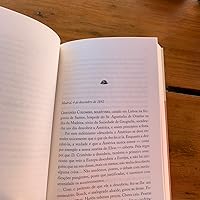
“In My Mind’s Eye - A Thought Diary” de Jan Morris, Faber & Faber, London, 2018 (li de 30/01/2021 a 11/03/2021) “Thinking Again” de Jan Morris, Faber & Faber, London, 2020 (li de 11/03/2021 a 19/03/2021) Depois de ter lido recentemente o ``Conundrum - História da minha mudança de sexo'', li os dois volumes do diário que a autora publicou nos seus últimos anos de vida. Foi, mais uma vez, um interessante percurso pela escrita diarística de alguém que consegue nos prender nos detalhes mais simples do seu quotidiano no País de Gales. “Day 1 I have never before in my life kept a diary of my thoughts and here, at the start of my 10th decade, having for the moment nothing much else to write, I am having a go at it. Good luck to me. The first thought that struck me as being worth memorialising entered my mind today as I drove my dear old Honda Civic Type R (a friend for nine years now) into Porthmadog, and on the radio somebody was playing a piano concerto. I sort of knew the tune, but only just, and perhaps what I was remembering came from some other composition altogether? Then it occurred me to think how amazing it is that there are still enough unused groupings of musical notes for people to write yet more piano concertos! Won’t they ever run out? And isn’t it amazing that there are still all too familiar combinations of notes or harmonies, ones I know all too well, that can still bring the tears to my eyes, especially when I am alone driving my car? Nobody to break the spell, I suppose, and perhaps, since my first concentration is upon the driving, the music slides in unaware, like another old friend reminding me of half-forgotten emotions.” “In My Mind's Eye: A Thought Diary” (2018) e “Thinking Again” (2020) são os dois volumes de que partindo de uma escrita e narrativa subtil prendem os leitores nas suas reflexões. O primeiro volume corresponde a 130 entradas diarísticas iniciadas na primavera de 2018 com intensas referẽncias ao território onde a autora vivia. Tal como refere o The Guardian: “Kind” emerges as a key term for Morris, the capstone of everything she holds most dear. At times she wonders out loud whether it might not be possible to form a religion around the concept, before remembering that we have several already. So instead she takes great pleasure in recording those many occasions on which complete strangers have gone out of their way to help her when she has been in need – with her car, her shopping, or even her own failing body as she sets out every morning to complete her daily 1,000 paces with her trusty walking stick, come rain, shine or treacherous ice. No segundo volume a autora reforça esta simplicidade do seu quotidiano aos 93 anos de idade, e as dificuldades que o tempo e as sua passagem nos provocam. São intensos os textos em que Jan fala da demência da companheira de décadas Elizabeth e que nos obrigam, como leitores, a perspectivar os nossos tempos e o modo como os usamos. Igualmente intensos são as entradas centradas na sua própria velhice e nos quotidianos que foi construindo. São dois volumes que nos obrigam a ler de um outro modo as coisas simples da vida. Leiam.
Back when Jan Morris was James Morris, I read every he had published up until that point, even purchasing the Pax Britannia trilogy. I was also fascinated with the travel books on Venice, Oxford and Trieste. At the time of the release of Conundrum, I had little interest in the transforming of he to she. An off version of being female with too much so-called girlish giddy behavior and and always the bead necklaces and button earrings. Somehow the transition has lost a certain muscular sense of reporting, instead now offering senior flirtation moments on the bus with giggles.
In the past two years, I started going back and re-reading (I have Oxford in my current stack and I gained much more in the second or third reading of Trieste. This slender tiny volume is nothing more than diary pages that includes the discipline of a 1,000 steps walk daily, despite the weather. Under the steps in their house is the mark, already prepared with the epitaph, "Here are two friends - Jan and Elizabeth Morris - at the end of one life.’” I've liked this so much over time, that I've written it down to potential use for Michael and myself since it seems fitting. Sadly, in these later years, Morris' wife, who stuck by him, then her, during the transition, has dementia.
This would never have been published if the author weren't well-known. It's day to day drivel on the level of what was consumed for breakfast or the neighbor's dog, with tiny flashes of insight in aging and the end of the trail.
A benign book, this is a series of diary entries from Jan Morris in her 90s. The entries are brief and undated, only numbered. They are generally good-humored ruminations on life, memories, writing, and relationships, as well as some opinions on politics and history that are formed by her life experiences. The author espouses kindness as a way of life, which is maybe a bit simplistic, but pleasant to consider. As a reader, you suspect the cheer is a bit forced, and the author admits as much in the occasional darker entry. There are larger concerns here, about the end of nations, perhaps civilization itself, and the dementia of her partner Elizabeth. Still, it is not often you get to read about the thoughts and concerns of someone at this point in their life, and to make it so such an age with curiosity and humor intact seem worthy goals.
I picked this up because I want to engage with more work written by or about old people, especially women. I was hoping this would reveal some inner depths of the silent generation (whose cultural works are some of the greatest!) and emit revelations on the aging experience, but it felt like having an ordinary conversation with my grandma. An example: her insisting on checking her bank statement via the telephone and then complaining about how hard it is. I am sympathetic, technology shouldn't be forced on people and the old mode of doing things ought to remain accessible, but this kind of thing makes for rather frustrating reading. She does say she wants younger people reading her works whether they like them or not, so I'm happy I could contribute to her wish.
I am apparently in the minority on this book, as I just don’t think that I actually get it. There are rambling nuggets of wisdom, mixed in with bits of humor, which are thrown together with highly opinionated, often scattered and in-cohesive, thoughts in what is referred to as a diary. I have not read anything else by Jan Morris, nor have I heard of her before, but I will not be reading anything by her in the future based on this one outing with her book. Thank you NetGalley for the advance read copy.
So many perfect reviews -- keep reading below. I loved these daily (not every day) observances & the mixed bag that has been Jan's amazing life. She's still a good writer. In 10 years I shall be her age and don't have many insights to guide me. My Dad left Canada almost the day he retired & headed for Wales (Colwyn Bay). I loved the place dearly and most of my heart is still there. This book brings me a little closer
The author tends to enjoy oscillating between generalizing garishly and then freely admitting to their own bewilderment and lack of understanding about much to do with the modern world. While this is perhaps reflective of the human condition, I had hoped for better from such a prolific writer: perhaps they have run out of material.
I like that it’s written like a diary. I’d not heard of Jan morris before. Maybe because I’m a Canadian. What a smart lady at age 92 to be so in touch with politics and changes in society as her body ages. She repeats a few things but that’s typical for someone that age. Her writing is incredible so I feel I must read more of her books.
A very strange read. I assumed that Jan as a male at the start because of the way the book was written, even though the author was said to be by a women. However, on later research I found out that Jan was a man who had a sex change in the 60s. It was interesting reading Jan's views on life and relationships. However, it needed an opening mind to try and interpret the perspective.
The final book by travel writer Jan Morris, written in her 90s. Still can’t get over how good a writer she is. She wrote every day a diary entry, and this is exactly how it is published. Lots of musings on what it’s like to be old and I love it
A self reflective collection of daily musings and short essays written from her home in North Wales during her nineties. By the author. Had funny parts but she said she respects TRUMPs politics and she is agnostic. So a clear NO THANK YOU for me
There's a point near the end of this book where Morris makes a comment along the lines of "perhaps I'll regret this book" and yes, I think she will. Or maybe not: who knows? The book is a compilation of diary entries and, poorly edited, reads like someone found scraps of said entries blowing in the wind and tried to fix them all together. Morris's trademark raconteur personal is on display, but often ill-advisiedly, and her tone, once a quasi-acceptable one (albeit given to imperialist apologizing), now feels ignorantly out of touch and lacking in compassion. But did Morris ever exhibit compassion before? I re-read some of her work after reading this, and realized that no, she's always been brutal and has always written from her position of great privilege and dismissing those she's deemed beneath her. So perhaps it isn't so much that Morris will regret this book, but that I regret having read it.
I am apparently in the minority on this book, as I just don’t think that I actually get it. There are rambling nuggets of wisdom, mixed in with bits of humor, which are thrown together with highly opinionated, often scattered and in-cohesive, thoughts in what is referred to as a diary. I have not read anything else by Jan Morris, nor have I heard of her before, but I will not be reading anything by her in the future based on this one outing with her book. Thank you NetGalley for the advance read copy.