What do you think?
Rate this book

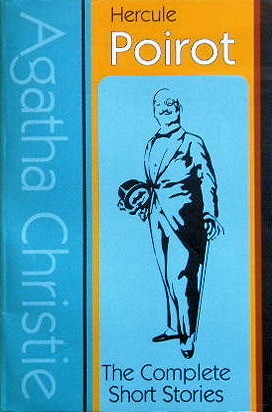
864 pages, Paperback
First published January 1, 1999


I remember enjoying the story collections as as a young reader. Christie's ingenuity is unmatched, not only in devising original twists but also in developing variations on a theme as she did in her collection The Labours of Hercules, all of which are reprinted here. Coming back to them again after the BBC versions, though, I find myself enjoying them much less. It is not that I recall the solutions; none of the stories have stuck in the memory like the best of the novels. It is more a matter of pacing. As compared to weekly television episodes of sufficient length to fill out the social milieu of each mystery, the mostly terse stories, read even two of three at a time, seem more like a diet of canapés that make you long to sit down for a leisurely meal. They contain enough to intrigue, albeit briefly, but not enough to satisfy.
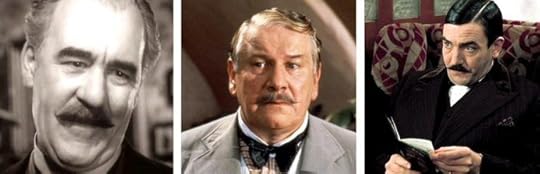
David Suchet, the Poirot of the short stories on BBC
"Fact!" said General Forbes. "Heard it from old Bassington-ffrench. And he got it from old Badger Cotterill who's got it from Snooks Parker."This tiny scrap of dialogue, from "Problem at Sea," says a lot about Christie's world, and also her understated sense of humor. For Hercule Poirot is a society detective, and almost all his cases involve members of the upper crust, bound by wealth and birth, schools, regiments, or clubs, attending the same house parties and social events, and with a fair sprinkling of vapid young things with nothing to do except play tennis and flirt. Even when Poirot's clients come from outside this circle, they are always at the top of their game: a middle-European prince, the ballet dancer who has taken London by storm, an American billionaire, a star of the silver screen. The brilliance of the BBC producers was to realize what scope this gives for production design, shot after shot of Art Deco style and interwar luxury, filled out with those British character actors who can make so much of tiny roles. But on the page, the supporting roles remain tiny, and the color and luxury is left to the imagination. This is not the case with a full-length novel, where even a minor character can be given depth, and we can immerse ourselves in an environment rather than dipping into it and moving on.
Miss Henderson nodded brightly. "That does seem to settle it!" she said.
"There is nothing so intangible, so difficult to pin down, as the source of a rumour."
"Doubtless le bon Dieu knows what he does. But it is odd that he should have permitted himself to fashion certain human beings."