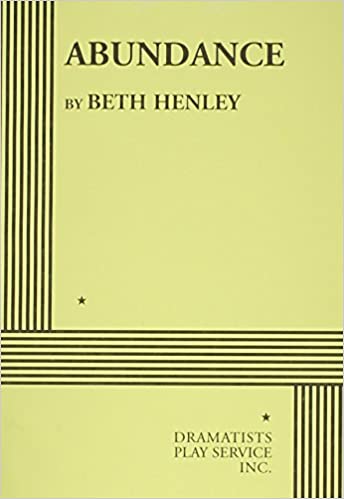
Bess Johnson and Macon Hill are mail-order brides who meet while waiting for their husbands to pick them up to start life in a small town in the Wyoming Territory in the 1860s. Bess is a romantic while Macon Hill is exuberant and determined about getting on with a life in the West, one that promises to be full of possibility. The husbands arrive. Bess, expecting Mike Flynn, gets his brother, Jack. Macon's husband is William Curtis, a widower with one eye and a scarred face. Life becomes very difficult for Bess and Jack, and Bess is constantly abused and totally unappreciated. They struggle and fail to make ends meet. On the other hand, Macon is hardly tolerant of William, although the couple is affluent. One Christmas Eve, in a rage, Jack burns down the cabin. Macon and William take the couple in and start living together for a longer time than expected. Bess and Macon, having forged a strong bond, decide that some day they will strike out on their own, though Macon is reluctant to actually do so. Some time later, while celebrating their mutual wedding anniversaries, Jack and Macon become lovers at the same time Bess is abducted by Indians! Macon, Jack and Will continue to live together over the years, believing that Bess has been killed. However, Bess returns, having escaped death by becoming assimilated into Indian life, and now seems incapable of resuming a normal life. During her absence, the fortunes of Macon and Will have greatly diminished. Bess agrees to tell the story of her abduction and escape for publication and the lecture circuit. With the help of a professor, she becomes the country's hottest sensation with this dramatic and embellished tale. Jack develops a new love forher, while Macon and Will separate and fail miserably at their new business pursuits. Many years later as Bess is getting ready to retire and Macon is ready to die, the women reconcile as they muse over how they have and have not "savored the boundlessness of it all."
Elizabeth Becker "Beth" Henley is an American playwright, screenwriter, and actress. Her play Crimes of the Heart won the 1981 Pulitzer Prize for Drama, the 1981 New York Drama Critics' Circle Award for Best American Play, and a nomination for a Tony Award.
Those who know Beth Henley from her play (and the subsequent movie) Crimes of the Heart will get something darker with her play Abundance, set in the Old West. I listened to the dramatized version by LA Theatre Works, starring JoBeth William as Macon Hill Curtis and Amy Madigan as Bess Johnson Flann.
Two mail-order brides head to Wyoming in the 1860s, and both discover that their new lives aren’t what they expected. You won’t get any of romanticization as in Sarah, Plain and Tall, but you’ll enjoy a tale — marked with equal parts humor, pathos, and grit — of two women trying to make the best of their situations and their relationship over the ensuing 25 years.
Not for the faint of heart! Two women are mail order brides & their lives are hard ones shown in brief situations months & years apart. Each scene is wrenching, tearing at another heart string with a clarity that is incredible for the brevity of the piece. I could really see the area they lived in, feel their struggles, & was horrified by their actions at times. Wow. If it wasn't so damn depressing, I'd give it 5 stars, but she didn't throw us a single bone of hope.
● What I've always loved about Radio Drama, especially Radio Drama from the '30s to the '70s, was the way amazing screen and stage actors could belie their onscreen and onstage personae to become characters our eyes would never let them be. We've been missing that over the last forty years. So what a joy it is to hear Steven Weber (the handsome Brian Hackett from the old sit-com Wings) playing Will, the one-eyed, phlegmy, unattractive but kindly husband of Jo-Beth Williams' Macon. In an impressively strong cast, Weber is the standout, and that's really saying something considering the understated part he's been handed.
● Playwright Beth Henley is no narrator (see "The Bad" below), but she writes excellent dialogue, particularly the dialogue of the mail order brides, Macon and Bess. Even when what's happening is ugly and dark, the dialogue, delivered by seasoned pros, is a joy to listen to. It makes me want to read more of her work, or better yet perform it.
The Bad --
● I'm not a stickler for Aristotelian dramatic structure, but Beth Henley's total disregard for conventions of time is disruptive to the audience's experience. To make matters worse, in this audiobook version, she herself interjects the amount of time we are about to skip with her breathy, whiny, off-putting narration. What that means, for instance, is that we may have an extremely uncomfortable scene between Bess and Jack, full of pathos and menace, then a second later we're given a wheezing Henley transition: "Five years later ... Jack sits on the step eating cake" -- which kills the mood that the actors have so wonderfully created only a moment before. I imagine the transitions of Abundance would work much better onstage, where lights and music and effects could convey the passage of time. Letting Henley just say what the transition is doesn't work at all.
The Ugly --
● I don't even know that a different kind of Western can be written (and I'm guessing it can't be by white folks), but I find it increasingly difficult to plough through the Westerns I've been trying to enjoy of late because of the inaccurate and racist portrayals of Indigenous peoples. I've discovered a new layer to this problem, though, and it is a particular issue in Western texts by and/or about women, like Abundance and Bad Axe. This added layer sees female protagonists use their racism and lies about Indigenous people to free themselves from the White Patriarchy that oppresses them, so they achieve a personal emancipation, a gender victory, but they achieve it at the expense of others. Is this just the reality? Is this what bisectionality must help us address? Perhaps. In these Westerns, however, it is difficult to tell whether this is an attempt at historical accuracy or an authorial blindness to the hidden meaning of the protogonists' actions, but it occurs much more often than I am comfortable with. And it is all over Abundance with few (and those few are questionable) mitigations.
This script is dated and likely would not be well received today, but the relationship between the two women at the play’s heart is still cutting and tragic.
A deliberately sweeping timeframe examines the effect of time on all lives as much as focusses on the specific hardships and hopes of the two main characters. Poignant at times, schematic at others, the play succeeds in giving a sense of how tough and perilous life on the frontier could be and how crushing life anywhere, viewed over long enough, can be.
A lot to unpick in this. Strong, strong recurring themes; eyes - not quite sure what that represents, The American dream and oddly enough Sapphire? I liked the exploration of this female friendship and the conclusion was very satisfying; the whistle an act of resilience against patriarchal limits. Bess was easily the best character but I can’t help feeling sorry for Meghan too; she loved Bess like a sister and her decisions, for me, exemplifies the flaws in humanity. Wow I sound annoying but yolo. I just don’t think she is inherently bad, she made a life changing mistake and paid for it. Both dreamt of a better life but survival of the fittest really exposes character traits. Jack in the other hand, was horrible; he forced women into sex and never gave Bess a chance. I do think this was deliberate but I’m not sure why? I felt sorry for Will but Jack just never had any likable characteristics. Abundance is a powerful exploration of the American dream through two strong females and I like how their bond eventually overcomes all. Commentary on working class and what we do to preserve the life we have whilst dreaming of another. Do we get what we deserve or is life a matter of luck?
The female actors LA Theatreworks got for this were better than their script. It was interesting to have a Western setting from a female standpoint, but there were a lot of stereotypes and unexplored opportunities, especially the kidnapping subplot and the children who were left behind there.
It is powerful defeat to feel suffocated beneath the endless sky of the open west, to be betrayed when each person is a rare outpost of warmth and connection, to seek out meager hope in the sprawl of promise and find life more barren than you knew the earth could be.
LATW version. Strong performance of a bleak play. Two mail order women show up on the frontier to become wives to two very different men, scraping together a meagre existence and dreaming of better days. The relationships and triangle drama feel fairly predictable until the midway turn when the naively optimistic of the two women goes missing. What follows lacks the action of True Grit but feels similar to its ending, as fate takes the characters down new, unexpected roads, but ends ambiguously with a melancholic note of nobody ever really being in control over the twists of a life that runs by all too fast.
On the face of it a western about mail order/ frontier brides is not my normal fare which is what drew me to it. it feels accurate and there are some great moments but the constant time jumps and actively disliking all of the characters got in the way of my enjoyment. I did like the irony of the two couples actually would have worked better the other way round but struggled to listen to the end. still as always with LA theatre works the cast, direction etc, is all excellent