

What do you think?

Analogia: The Emergence of Technology Beyond Programmable Control
A technology historian presents a startling look back at the analog age and life before the digital revolution—and an unsettling vision of what comes next.
Named one of WIRED's "The Best Pop Culture That Got Us Through 2020"
"A pleasingly eccentric, impossibly wide-ranging tech treatise/memoir. . . . A thoughtful—and most thought-provoking—exploration of where our inventions have taken and will take us." —Kirkus Reviews (starred review)
In 1716, the philosopher and mathematician Gottfried Wilhelm Leibniz spent eight days taking the cure with Peter the Great at Bad Pyrmont in Saxony, trying to persuade the tsar to launch a voyage of discovery from Russia to America and to adopt digital computing as the foundation for a remaking of life on earth. In two classic books, Darwin Among the Machines and Turing's Cathedral, George Dyson chronicled the realization of the second of Leibniz's visions. In Analogia, his pathbreaking new book, he brings the story full circle, starting with the Russian American expedition of 1741 and ending with the beyond-digital revolution that will complete the transformation of the world.
Dyson enlists a startling cast of characters, from the time of Catherine the Great to the age of machine intelligence, and draws heavily on his own experiences at the Institute for Advanced Study in Princeton, New Jersey, and onward to the rain forest of the Northwest Coast. We are, Dyson reveals, entering a new epoch in human history, one driven by a generation of machines whose powers are no longer under programmable control.
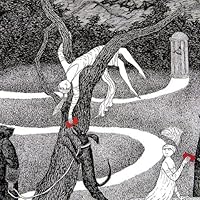
Includes black-and-white illustrations
"An Odyssey of discovery . . . part autobiography, part science manual, part history book." —Izabella Kaminska, The Financial Times
"A work of originality and ambition unlike any you've encountered. George Dyson transmutes memoir, history, and forecast into a page-turning tale in which Geronimo, J. Robert Oppenheimer, Catherine the Great, Kurt Gödel, and Steller's sea cow play roles. . . . Analogia offers more serious fun than a dozen of the usual bestsellers."―William Poundstone, author of The Doomsday Calculation
Named one of WIRED's "The Best Pop Culture That Got Us Through 2020"
"A pleasingly eccentric, impossibly wide-ranging tech treatise/memoir. . . . A thoughtful—and most thought-provoking—exploration of where our inventions have taken and will take us." —Kirkus Reviews (starred review)
In 1716, the philosopher and mathematician Gottfried Wilhelm Leibniz spent eight days taking the cure with Peter the Great at Bad Pyrmont in Saxony, trying to persuade the tsar to launch a voyage of discovery from Russia to America and to adopt digital computing as the foundation for a remaking of life on earth. In two classic books, Darwin Among the Machines and Turing's Cathedral, George Dyson chronicled the realization of the second of Leibniz's visions. In Analogia, his pathbreaking new book, he brings the story full circle, starting with the Russian American expedition of 1741 and ending with the beyond-digital revolution that will complete the transformation of the world.
Dyson enlists a startling cast of characters, from the time of Catherine the Great to the age of machine intelligence, and draws heavily on his own experiences at the Institute for Advanced Study in Princeton, New Jersey, and onward to the rain forest of the Northwest Coast. We are, Dyson reveals, entering a new epoch in human history, one driven by a generation of machines whose powers are no longer under programmable control.
Includes black-and-white illustrations
"An Odyssey of discovery . . . part autobiography, part science manual, part history book." —Izabella Kaminska, The Financial Times
"A work of originality and ambition unlike any you've encountered. George Dyson transmutes memoir, history, and forecast into a page-turning tale in which Geronimo, J. Robert Oppenheimer, Catherine the Great, Kurt Gödel, and Steller's sea cow play roles. . . . Analogia offers more serious fun than a dozen of the usual bestsellers."―William Poundstone, author of The Doomsday Calculation
304 pages, Kindle Edition
Published August 18, 2020
About the author
George Dyson
102 books137 followersGeorge Dyson is a scientific historian, the son of Freeman Dyson, brother of Esther Dyson, and the grandson of Sir George Dyson. When he was sixteen he went to live in British Columbia in Canada to pursue his interest in kayaking and escape his father's shadow. While there he lived in a treehouse at a height of 30 metres. He is the author of Project Orion: The Atomic Spaceship 1957-1965 and Darwin Among the Machines: The Evolution of Global Intelligence, in which he expanded upon the premise of Samuel Butler's 1863 article of the same name and suggested coherently that the internet is a living, sentient being. He is the subject of Kenneth Brower's book The Starship and the Canoe. Dyson was the founder of Dyson, Baidarka & Company, a designer of Aleut-style skin kayaks, and he is credited with the revival of the baidarka style of kayak. (from Wikipedia)
Ratings & Reviews
Friends & Following
Create a free account to discover what your friends think of this book!
Community Reviews
Displaying 1 - 30 of 50 reviews

March 21, 2021
From the title, you could be forgiven for thinking this book is about science. To some degree all technology is science. There was science before electricity but this is about other kinds of technology and maybe about how some technologies get overlooked.
The book spends a lot of time telling the story of a Russian voyage of exploration to Alaska with loads of details on who went, what they took with them (including hauling a ship over land), and the problems they encountered. Some of those problems killed people and few returned home.
There are also many pages spent talking about the last of the Apache's being hunted down and sent to reservations. The Apache's superior skills in the American wilderness might have kept them free forever except the European's kept coming and they used Machiavelli's trick of making promises to the Apaches that were broken as soon as they surrendered.
There was also a chapter on the Orion space program. It was a huge rocket ship propelled by nuclear bombs. The project was canceled when an international treaty was signed against detonating nuclear weapons in space.
There's a full chapter on how the author built a tree-house north of Vancouver as a way to save on rent. It goes into details of how he built it and what life was like there. This is also where he talks about building a kind of Alaskan native kayak with a double bow, one pointing up and one below. The original kayak-like vessels were mostly destroyed when the natives were subjugated. Today, most ships of any great size have that double-bow design. Thus, we see how an old technology might be resurrected as a new technology.
At last, after hundreds of pages, there seems to be a point to all of this. If you don't mind reading all of the above stories to get to his point, you can read the whole book. If you would rather just read his thesis, I think the final chapter might be all you need.
I found this book a bit slow, possibly because there were several subjects I wouldn't choose to read in a full book. I still plan to give his book Turing's Cathedral a read.
The book spends a lot of time telling the story of a Russian voyage of exploration to Alaska with loads of details on who went, what they took with them (including hauling a ship over land), and the problems they encountered. Some of those problems killed people and few returned home.
There are also many pages spent talking about the last of the Apache's being hunted down and sent to reservations. The Apache's superior skills in the American wilderness might have kept them free forever except the European's kept coming and they used Machiavelli's trick of making promises to the Apaches that were broken as soon as they surrendered.
There was also a chapter on the Orion space program. It was a huge rocket ship propelled by nuclear bombs. The project was canceled when an international treaty was signed against detonating nuclear weapons in space.
There's a full chapter on how the author built a tree-house north of Vancouver as a way to save on rent. It goes into details of how he built it and what life was like there. This is also where he talks about building a kind of Alaskan native kayak with a double bow, one pointing up and one below. The original kayak-like vessels were mostly destroyed when the natives were subjugated. Today, most ships of any great size have that double-bow design. Thus, we see how an old technology might be resurrected as a new technology.
At last, after hundreds of pages, there seems to be a point to all of this. If you don't mind reading all of the above stories to get to his point, you can read the whole book. If you would rather just read his thesis, I think the final chapter might be all you need.
I found this book a bit slow, possibly because there were several subjects I wouldn't choose to read in a full book. I still plan to give his book Turing's Cathedral a read.
December 25, 2020
The much-ballyhooed genius tech history writer Dyson trashes the first principle of effective writing which every good journalist knows: To communicate effectively, you have to write prose that succeeds in capturing and holding the reader's attention while taking her by the hand and guiding her with signposts to comprehension. Dyson does none of this. Instead, he shows off his knowledge mixing quasi-academic tours of subject matter (lots of long direct quotes from original sources) with grand pronouncements of largely incomprehensible insights. He needs an editor, but from the looks of it no editor was brave enough to approach his eminence and tell him to write in a way that at least hints that he wants to make his points comprehensible to someone he thinks is at least half as smart as he thinks he is. The result is self-indulgent bullshit packaged as penetrating high-level analysis. His diversions are often excursions into wildernesses without signposts--doubling and tripling back and forth in time and topic. I've never read a book where the author so obviously believes he is way smarter than you ab can't be bothered with the rudiments of elementary communication. All that grunt work is for peons much less genius than he thinks he is. When halfway through this swamp of pretention I read brief descriptions of his other books, I realized this is just his other books stitched together without even a hint of an effort to make them cohere. Avoid this book at all costs and don't be fooled by reviewers afraid to say they don't understand it because they're afraid they'd reveal themselves to be ignorant—or living in the same parched desert as the general reader. To be useful at all, books should at least make a stab at being of interest or comprehensible to a general reader. But what do I know? I'm only a journalist trying to make things clear to people. Dyson can't be bothered with the likes of me.

May 11, 2021
An 18th Century Russian expedition to the North Pacific; the genocide committed against Native Americans, the story of the atomic bomb, the history of computing from 1716 to the present day and George Dyson's own life story of living in the wild and on the sea along the Pacific coastline.
An absorbing and fascinating combination of threads that weave into a cohesive essay and speculate on the 4th age - when machine intelligence has evolved to its full potential.
An absorbing and fascinating combination of threads that weave into a cohesive essay and speculate on the 4th age - when machine intelligence has evolved to its full potential.

Want to Read
August 4, 20208/4/20 found it through James Courier's blog post on his VC firms website where he interviews the author: https://www.nfx.com/post/why-your-wor...
March 10, 2021
George Dyson is certainly a man for detail. Being hugely knowledgeable, as he is, no observation can be made without a plethora of details. Am reminded of the old characterisation of Baroque as "an abundance of noisy detail". Not that the effect is necessarily bad at all, but it can be wearing.
Another reviewer says "... it largely goes off on tangents that add nothing to what I believed to be the central topic". Again, this is not necessarily a bad thing, as a lot of exceedingly interesting side matters are brought into discussion, but this does lead to a text that is rather like a lengthy and sometimes self-indulgent blog.
George's main theme, the dichotomy between digital and analogue (with due reference to Cantor and the hierarchy of infinities, countable or otherwise, DNA ...), the relevance of this to our human situation, and discussion of the significance to the difference, is a continuing discussion.
Be that as it may, George gives a marvellous account of a number of exceedingly interesting topics - that Edison knew that the electrons boiling off the filament in his light bulbs could be attracted to another electrode, and de Forest created the triode valve from this - that Peter the Great met Gottfried Leibniz at Bad Pyrmont in 1716, and Leibniz suggested three grand projects to the tzar - the overland expedition across Siberia to Kamchatka peninsula where oceangoing vessels would be launched to discover whether Asia and America were separated, was one of these which Peter did do. (Looking up Wiki on Kamchatka you see that it is a popular tourism spot nowdays) - George's description of the 1741 expedition is very interesting.
On to the the mid 1800s ruthless elimination of the Apaches, Geronimo etc. - the use of light reflections between distant stations for messaging by the US Army (1886). Disabused me of any idea that the bloody brutality, bad faith and guile portrayed in Cormac McCarthy's "Blood Meridian" was fiction.
What a centre of electronics and intellectual activity Princeton, New Jersey was - from Edison nearby, Bell Telephone Labs nearby, RCA's Princeton labs, RCA's vast Camden works (2.5 million sq ft with its own railway and barge terminals to supply coal and lumber for radio cabinets and the populous low income Camden neighborhood supplying workers) AND the Institute for Advanced Study - (famously home to Albert Einstein and Kurt Godel et al). The IAS was founded in 1930, funded by the merchant Louis Bamberger, and established by education reformer Abraham Flexner who spoke of "The Usefulness of Useless Knowledge". Flexner was so right with this attitude that we now seem to have abandoned (not abandoned at the IAS, though, hopefully).
Szilard and thermodynamics - Maxwell's demon - Nyquist, von Neumann, Claude Shannon, Rutherford poo poo'ing the idea of "sources of power from atomic transmutations", Los Alamos etc.
British Columbia, the coast of BC (the 600 miles between the Strait of Juan de Fuca to Dixon Entrance embraces 16,000 miles of shoreline) baidarka (frameworked kayaks), kwakiutl (dugout canoes) the perils of the waters of the "Inside Passage", the author living in a 80 ft high tree house.
New Zealander Paul Spong on Hanson Island recording killer whale (dolphin) communications - stream of researchers visiting thinking that if enough whale conversations recorded it would be possible to decipher the language - doesn't seem likely - human comms optimised for transmission over a low bandwidth, noisy channel, not like whales - possibility that conversation in an immediate channel (eg sound in water) would not have syntax as we know it.
Samuel Butler in New Zealand - his ideas regarding Darwin's "Origin of Species" and the possibilities of machines (prescience re AI, George introduces this with Leibniz).
Five stage thyratron shift registers were used in the Colossus code-breaking computer built under Thomas Flowers in England during WW2 - much better shift registers using 6J6 (double triode) valves in Ralph Slutz's (1947-ish) SEAC computer.....
Another reviewer says "... it largely goes off on tangents that add nothing to what I believed to be the central topic". Again, this is not necessarily a bad thing, as a lot of exceedingly interesting side matters are brought into discussion, but this does lead to a text that is rather like a lengthy and sometimes self-indulgent blog.
George's main theme, the dichotomy between digital and analogue (with due reference to Cantor and the hierarchy of infinities, countable or otherwise, DNA ...), the relevance of this to our human situation, and discussion of the significance to the difference, is a continuing discussion.
Be that as it may, George gives a marvellous account of a number of exceedingly interesting topics - that Edison knew that the electrons boiling off the filament in his light bulbs could be attracted to another electrode, and de Forest created the triode valve from this - that Peter the Great met Gottfried Leibniz at Bad Pyrmont in 1716, and Leibniz suggested three grand projects to the tzar - the overland expedition across Siberia to Kamchatka peninsula where oceangoing vessels would be launched to discover whether Asia and America were separated, was one of these which Peter did do. (Looking up Wiki on Kamchatka you see that it is a popular tourism spot nowdays) - George's description of the 1741 expedition is very interesting.
On to the the mid 1800s ruthless elimination of the Apaches, Geronimo etc. - the use of light reflections between distant stations for messaging by the US Army (1886). Disabused me of any idea that the bloody brutality, bad faith and guile portrayed in Cormac McCarthy's "Blood Meridian" was fiction.
What a centre of electronics and intellectual activity Princeton, New Jersey was - from Edison nearby, Bell Telephone Labs nearby, RCA's Princeton labs, RCA's vast Camden works (2.5 million sq ft with its own railway and barge terminals to supply coal and lumber for radio cabinets and the populous low income Camden neighborhood supplying workers) AND the Institute for Advanced Study - (famously home to Albert Einstein and Kurt Godel et al). The IAS was founded in 1930, funded by the merchant Louis Bamberger, and established by education reformer Abraham Flexner who spoke of "The Usefulness of Useless Knowledge". Flexner was so right with this attitude that we now seem to have abandoned (not abandoned at the IAS, though, hopefully).
Szilard and thermodynamics - Maxwell's demon - Nyquist, von Neumann, Claude Shannon, Rutherford poo poo'ing the idea of "sources of power from atomic transmutations", Los Alamos etc.
British Columbia, the coast of BC (the 600 miles between the Strait of Juan de Fuca to Dixon Entrance embraces 16,000 miles of shoreline) baidarka (frameworked kayaks), kwakiutl (dugout canoes) the perils of the waters of the "Inside Passage", the author living in a 80 ft high tree house.
New Zealander Paul Spong on Hanson Island recording killer whale (dolphin) communications - stream of researchers visiting thinking that if enough whale conversations recorded it would be possible to decipher the language - doesn't seem likely - human comms optimised for transmission over a low bandwidth, noisy channel, not like whales - possibility that conversation in an immediate channel (eg sound in water) would not have syntax as we know it.
Samuel Butler in New Zealand - his ideas regarding Darwin's "Origin of Species" and the possibilities of machines (prescience re AI, George introduces this with Leibniz).
Five stage thyratron shift registers were used in the Colossus code-breaking computer built under Thomas Flowers in England during WW2 - much better shift registers using 6J6 (double triode) valves in Ralph Slutz's (1947-ish) SEAC computer.....

January 2, 2021
4,5 ster, net geen vijf, eigenlijk vooral doordat stukken in dit boek ook al in andere vorm terugkomen in ander werk
Allereerst: ik hou van mensen als George Dyson die op een haast ongrijpbare manier verbanden kunnen leggen en die ook nog eens zoveel onvergelijkbare kennisgebieden bestrijken en die met elkaar in verband kunnen brengen. En dat op een haast brutale manier doen, soms meanderend, of zo de diepte ingaan op onderdelen dat je ook kan denken - dat had wel wat korter gekund, met namen, anecdotes of historische verbanden. Maar toch: het komt telkens knap bij elkaar en het levert spannende inzichten op waarin de intellectuele omgeving waarin hij opgroeide de creatieve humuslaag is waarop hij gedijd.
Hij is een bijzonder historicus, die oog heeft voor de lange lijnen van inzichten en kennisverwerving, of dat nu Leibniz is die Peter de Grote adviseert om de grens tussen Rusland en Amerika te verkennen (naast de steun die hij zocht om een digitale computer te kunnen realiseren), hoe zeevolken gespecialiseerde zeewaardige kayaks wisten te ontwikkelen (met regenpakken van walvisdarm) of hoe het Amerikaanse leger met een spiegelnetwerk in de 19e eeuw het laatste verzet van de inheemse volkeren wist te breken.
Waar ik maar over na bleef denken was hoe hij zichzelf geschoold heeft, afkomstig uit een bijzondere omgeving (Princeton), waarin hij tussen hyper intelligente ouders kind aan huis was bij de grootheden uit de wis- en natuurkunde. En op zijn 19e, na het bouwen van authentieke zee kayaks een boomhut maakt uit een boomstam die hij zelf tot planken splijt en daar een boomhut op 30 meter hoogte mee bouwt. En daar 3 jaar in woont. Behalve in de zomer, dan verkent hij de noordwest kust van Canada met kayak. In de winter zit hij op 30 meter hoogte, met een houtkachel oude historische boeken en wetenschappelijke lezen. Dan is ie net 20! Dat zijn de momenten dat je echt het idee hebt dat je je tijd van leven aan vergooien bent ;-)
Kevin Kelly vat dit boek mooi samen op de kaft: “This is the most delighfull peculiar book I’ve ever read. It’s grand and intimate, personal and cosmic, and about digital computing and archaic hunter-gatherers. Every paragraph is a surprise”. Mooier kan ik het niet verwoorden.
Allereerst: ik hou van mensen als George Dyson die op een haast ongrijpbare manier verbanden kunnen leggen en die ook nog eens zoveel onvergelijkbare kennisgebieden bestrijken en die met elkaar in verband kunnen brengen. En dat op een haast brutale manier doen, soms meanderend, of zo de diepte ingaan op onderdelen dat je ook kan denken - dat had wel wat korter gekund, met namen, anecdotes of historische verbanden. Maar toch: het komt telkens knap bij elkaar en het levert spannende inzichten op waarin de intellectuele omgeving waarin hij opgroeide de creatieve humuslaag is waarop hij gedijd.
Hij is een bijzonder historicus, die oog heeft voor de lange lijnen van inzichten en kennisverwerving, of dat nu Leibniz is die Peter de Grote adviseert om de grens tussen Rusland en Amerika te verkennen (naast de steun die hij zocht om een digitale computer te kunnen realiseren), hoe zeevolken gespecialiseerde zeewaardige kayaks wisten te ontwikkelen (met regenpakken van walvisdarm) of hoe het Amerikaanse leger met een spiegelnetwerk in de 19e eeuw het laatste verzet van de inheemse volkeren wist te breken.
Waar ik maar over na bleef denken was hoe hij zichzelf geschoold heeft, afkomstig uit een bijzondere omgeving (Princeton), waarin hij tussen hyper intelligente ouders kind aan huis was bij de grootheden uit de wis- en natuurkunde. En op zijn 19e, na het bouwen van authentieke zee kayaks een boomhut maakt uit een boomstam die hij zelf tot planken splijt en daar een boomhut op 30 meter hoogte mee bouwt. En daar 3 jaar in woont. Behalve in de zomer, dan verkent hij de noordwest kust van Canada met kayak. In de winter zit hij op 30 meter hoogte, met een houtkachel oude historische boeken en wetenschappelijke lezen. Dan is ie net 20! Dat zijn de momenten dat je echt het idee hebt dat je je tijd van leven aan vergooien bent ;-)
Kevin Kelly vat dit boek mooi samen op de kaft: “This is the most delighfull peculiar book I’ve ever read. It’s grand and intimate, personal and cosmic, and about digital computing and archaic hunter-gatherers. Every paragraph is a surprise”. Mooier kan ik het niet verwoorden.

April 26, 2023
While there are patches of literary brilliance in the book, unfortunately I have to agree with most of the reviewers that it is a terribly disjointed kludge of a book that jumps from subject to subject. The author clearly believes there is some connection between Russian explorers of the north, his seafaring experiences, the plight of Native Americans and analog computing, I miserably failed in seeing what that connection was. Do not read this book if you are hoping to learn anything, anything at all about analog computing or information processing; because the author clearly does not seem to have much to say about the subject.
October 4, 2020
This book could have and should have been fascinating, but I could tell right away that the author’s varied and eclectic interests would be constantly diverting the book into any number of tangents, interesting by themselves, but ultimately frustrating in a book that is supposed to be about artificial intelligence, not about Pacific Northwest Indian boats or Peter the Great.

October 27, 2025
sorry my attention span says no

June 20, 2023
3.5 | feels like i should've taken a physics course before i started this. really a case where i had to try and stay concentrated on every single sentence (hard) or try to dodge and weave myself through technical explanations to see if i could understand without understanding (also hard).
with my dad sitting next to me to explain in terms that even zilvers can understand it becomes a lot easier. feels like actually a great book club book, if your book club enjoys hard-hitting historical books about the technical revolution. there's a lot here and dyson is very good at finding clever metaphors that help the reader grasp the enormity, almost other worldliness of some of the concepts and ideas he's getting across here. but without some pretty solid prior knowledge it's still a tough nut to crack. personally i would've liked a bit more hand holding throughout.
the parts i could get through on vibes alone were my favourite, specifically the middle section which ties in dyson's own parents, his own growing up at princeton (!!), and the years that followed where he lived in a TREEHOUSE (what kind of boyish dream) and built kayaks. these chapters feel really grounded in their more personal nature, and because dyson's own history is so closely tied to the subject he's writing about throughout this book, it doesn't feel disconnected but more like a nice reprieve.
i also love a book with pictures, especially if those pictures include both interior and exterior shots of tree houses.
with my dad sitting next to me to explain in terms that even zilvers can understand it becomes a lot easier. feels like actually a great book club book, if your book club enjoys hard-hitting historical books about the technical revolution. there's a lot here and dyson is very good at finding clever metaphors that help the reader grasp the enormity, almost other worldliness of some of the concepts and ideas he's getting across here. but without some pretty solid prior knowledge it's still a tough nut to crack. personally i would've liked a bit more hand holding throughout.
the parts i could get through on vibes alone were my favourite, specifically the middle section which ties in dyson's own parents, his own growing up at princeton (!!), and the years that followed where he lived in a TREEHOUSE (what kind of boyish dream) and built kayaks. these chapters feel really grounded in their more personal nature, and because dyson's own history is so closely tied to the subject he's writing about throughout this book, it doesn't feel disconnected but more like a nice reprieve.
i also love a book with pictures, especially if those pictures include both interior and exterior shots of tree houses.
February 24, 2022
I expected a very different book, and thought at first I might not finish ...and then I was hooked! The differences between analogue and digital -- a continuum or black-and-white, one and zero -- is indeed fascinating, and could easily support a book, but this one digresses far into the woods and waters of western British Colombia and the life of the child of two famous eggheads. The book took me awhile, first, to warm to its unexpectedness, but then I came to accept and enjoy the woods-hero, tree-house dwelling, barge-tugging contrast with the Princeton upbringing. I still need to know more about how analogia is going to affect computing and leave human control, but I don't think George (or anyone) completely understand this evolution, even as we see it happening.

September 4, 2020
Andei a ruminar nas ideias deste livro após ter terminado a leitura, e confesso que não percebi onde é que o autor quer chegar. Não me entendam mal, a temática e as histórias, especialmente as da história, que Dyson entretece ao longo das páginas são fascinantes, mas falta a pedra-chave, que fecha o arco e torna o livro conclusivo. Talvez Dyson esteja a lançar um desafio ao leitor, para refletir sobre as analogias da interseção entre tecnologia e história, e tirar as suas conclusões. Ou então é mesmo uma colagem de elementos históricos díspares ao qual falta o fio condutor.
Os livros de Dyson costumam ter o problema de serem demasiado biográficos no que toca à sua família, e este não só não é exceção, como é exemplo perfeito disso. Sim, é verdade, Freeman Dyson foi um nome importante da ciência do século XX, é giro saber que George brincava ao pé do escritório de Einstein, era levado para almoçar pela companheira de Leo Szilard, ou que a sua mãe era uma pioneira na matemática. Também é giro descobrir que este rapaz nascido em berço de ouro académico largou a universidade para viver uma vida de aventura no norte gelado da América, entre as águas turbulentas do Alasca e Colúmbia Britânica, com um lado hoje dito de maker, construtor de canoas e casas nas árvores. Não precisávamos era de tantos detalhes sobre isso, especialmente quando estamos a tentar perceber onde quer chegar com o livro.
O livro começa de forma improvável, com Leibniz e Pedro o Grande a partilhar líquidos numa estância termal, onde o czar é desafio pelo matemático com três grandes ideias: fundar uma academia científica, explorar os novos mundos que estavam para lá da Sibéria, e investir na construção de uma máquina lógica, com berlindes a circular por entre caminhos para obter respostas a questões colocadas de cálculo. Duas em três não é um mau recorde. Uma academia russa foi fundada, e foram lançadas expedições para lá da Sibéria que colocaram os russos no Alasca. No entanto, foi o sonho não realizado de Leibniz que viria a determinar a nossa sociedade contemporânea.
Daí, o livro segue por uma viagem história e etnográfica da América do Norte, com alguns choques tecnológicos. Dyson olha para a exploração Russa do norte, assente na exploração do comércio de peles e na gestão das tribos autóctones; leva-nos mais a sul, ao extermínio dos Índios pela política armada do governo americano. No primeiro caso há confluências tecnológicas interessantes - a capacidade russa de pegar nos kayaks e recriá-los numa nova embarcação leve e eficiente. No outro, o oposto, um confronto entre duas sociedades, com os vencedores a usar a sua tecnologia, da arma repetitiva ao heliógrafo e telégrafo, para o extermínio dos vencidos.
Pelo caminho, temos reflexões sobre a relação elementar entre computação e física atómica. Dyson não cessa de nos recordar a importância dos estudos sobre bombas atómicas para avançar o poder computacional disponível. E é aqui que o livro falha, Dyson entretém-se tanto a falar do pai que deixa de parte a análise profunda da evolução da computação.
Aflora ideias interessantes. A comparação com o nosso mundo analógico mas computacional, com o mundo computacional lógico que construímos tem por detrás a ideia que a computação profunda é analógica e não digital. Que a infinita variação do analógico é mais rica e inteligência que os estados binários sim/não da nossa corrente tecnologia digital. É aqui que Dyson mostra a sua ideia basilar. Ferramenta imperfeita que é (e qualquer observador das tecnologias digitais, estabelecidas e emergentes, sabe que para além do hype são ferramentas muito embotadas), a tecnologia digital está a levar ao surgimento de comportamentos emergentes, que transformam as sociedades e as pessoas. Não mergulha a fundo nisso, mas percebe-se onde quer chegar, é um pouco aquela ideia mcluhaniana de "modelamos as nossas ferramentas e depois elas modelam-nos a nós" à escala global. As ferramentas digitais que Dyson considera elementares pela forma como reduzem a complexidade ao binário, ao serem usadas, geram um acumular de comportamentos complexos capazes de transformar as nossas sociedades. Para Dyson, os nossos computadores não são inteligentes (apesar do marketing que para aí vai), mas os comportamentos padronizados que potenciam poderão ser uma nova forma de inteligência. Veja-se o nosso corrente deslumbre com a Inteligência Artificial, uma tecnologia que não é realmente inteligente (é poder computacional aplicado à estatística no seu lado mais elementar) mas gera ferramentas que de facto alteram a nossa perceção da realidade.
Agora, e cruzar isto com as tropelias russas no Alasca, ou as balas da US Cavalry a exterminar Apaches que se rendiam? Talvez Dyson nos queira dizer que apesar na nossa crença inabalável numa certa ideia de superioridade civilizacional, com a nossa tecnologia, valores democráticos e humanistas a formar uma espécie de pináculo da humanidade que esperemo que continue em frente, estamos na verdade tão vulneráveis quando os Aleutas ou os Apaches. Com a diferença que as forças que nos poderão destruir não são externas, são criadas por nós, uma consequência emergente da intensificação de tecnologias simples que geram comportamentos complexos.
Será isto? Bem, diga-se que há coisas piores do que terminar uma leitura com sentimento de incompreensão. Não na vertente não percebi nada disto. Na bem mais enriquecedora vertente de ficar com ideias na mente, que levam a vários caminhos reflexivos.
Os livros de Dyson costumam ter o problema de serem demasiado biográficos no que toca à sua família, e este não só não é exceção, como é exemplo perfeito disso. Sim, é verdade, Freeman Dyson foi um nome importante da ciência do século XX, é giro saber que George brincava ao pé do escritório de Einstein, era levado para almoçar pela companheira de Leo Szilard, ou que a sua mãe era uma pioneira na matemática. Também é giro descobrir que este rapaz nascido em berço de ouro académico largou a universidade para viver uma vida de aventura no norte gelado da América, entre as águas turbulentas do Alasca e Colúmbia Britânica, com um lado hoje dito de maker, construtor de canoas e casas nas árvores. Não precisávamos era de tantos detalhes sobre isso, especialmente quando estamos a tentar perceber onde quer chegar com o livro.
O livro começa de forma improvável, com Leibniz e Pedro o Grande a partilhar líquidos numa estância termal, onde o czar é desafio pelo matemático com três grandes ideias: fundar uma academia científica, explorar os novos mundos que estavam para lá da Sibéria, e investir na construção de uma máquina lógica, com berlindes a circular por entre caminhos para obter respostas a questões colocadas de cálculo. Duas em três não é um mau recorde. Uma academia russa foi fundada, e foram lançadas expedições para lá da Sibéria que colocaram os russos no Alasca. No entanto, foi o sonho não realizado de Leibniz que viria a determinar a nossa sociedade contemporânea.
Daí, o livro segue por uma viagem história e etnográfica da América do Norte, com alguns choques tecnológicos. Dyson olha para a exploração Russa do norte, assente na exploração do comércio de peles e na gestão das tribos autóctones; leva-nos mais a sul, ao extermínio dos Índios pela política armada do governo americano. No primeiro caso há confluências tecnológicas interessantes - a capacidade russa de pegar nos kayaks e recriá-los numa nova embarcação leve e eficiente. No outro, o oposto, um confronto entre duas sociedades, com os vencedores a usar a sua tecnologia, da arma repetitiva ao heliógrafo e telégrafo, para o extermínio dos vencidos.
Pelo caminho, temos reflexões sobre a relação elementar entre computação e física atómica. Dyson não cessa de nos recordar a importância dos estudos sobre bombas atómicas para avançar o poder computacional disponível. E é aqui que o livro falha, Dyson entretém-se tanto a falar do pai que deixa de parte a análise profunda da evolução da computação.
Aflora ideias interessantes. A comparação com o nosso mundo analógico mas computacional, com o mundo computacional lógico que construímos tem por detrás a ideia que a computação profunda é analógica e não digital. Que a infinita variação do analógico é mais rica e inteligência que os estados binários sim/não da nossa corrente tecnologia digital. É aqui que Dyson mostra a sua ideia basilar. Ferramenta imperfeita que é (e qualquer observador das tecnologias digitais, estabelecidas e emergentes, sabe que para além do hype são ferramentas muito embotadas), a tecnologia digital está a levar ao surgimento de comportamentos emergentes, que transformam as sociedades e as pessoas. Não mergulha a fundo nisso, mas percebe-se onde quer chegar, é um pouco aquela ideia mcluhaniana de "modelamos as nossas ferramentas e depois elas modelam-nos a nós" à escala global. As ferramentas digitais que Dyson considera elementares pela forma como reduzem a complexidade ao binário, ao serem usadas, geram um acumular de comportamentos complexos capazes de transformar as nossas sociedades. Para Dyson, os nossos computadores não são inteligentes (apesar do marketing que para aí vai), mas os comportamentos padronizados que potenciam poderão ser uma nova forma de inteligência. Veja-se o nosso corrente deslumbre com a Inteligência Artificial, uma tecnologia que não é realmente inteligente (é poder computacional aplicado à estatística no seu lado mais elementar) mas gera ferramentas que de facto alteram a nossa perceção da realidade.
Agora, e cruzar isto com as tropelias russas no Alasca, ou as balas da US Cavalry a exterminar Apaches que se rendiam? Talvez Dyson nos queira dizer que apesar na nossa crença inabalável numa certa ideia de superioridade civilizacional, com a nossa tecnologia, valores democráticos e humanistas a formar uma espécie de pináculo da humanidade que esperemo que continue em frente, estamos na verdade tão vulneráveis quando os Aleutas ou os Apaches. Com a diferença que as forças que nos poderão destruir não são externas, são criadas por nós, uma consequência emergente da intensificação de tecnologias simples que geram comportamentos complexos.
Será isto? Bem, diga-se que há coisas piores do que terminar uma leitura com sentimento de incompreensão. Não na vertente não percebi nada disto. Na bem mais enriquecedora vertente de ficar com ideias na mente, que levam a vários caminhos reflexivos.

May 21, 2021
Who in the world gave this book less than 3 stars. What is wrong with you?! Are you not curious? Do you not look at the world around you and marvel? Go back to scrolling tik tok until you have an opinion worth expressing. Sheesh.
This book is into the wild meets the idea factory. I did love Turing’s Cathedral but Mr Dyson organizes his ideas wonderfully and is incredibly articulate in his descriptions and depictions of the charmed existence he was astutely capable or recognizing in the present.
This book is into the wild meets the idea factory. I did love Turing’s Cathedral but Mr Dyson organizes his ideas wonderfully and is incredibly articulate in his descriptions and depictions of the charmed existence he was astutely capable or recognizing in the present.
March 18, 2023
I really wanted to like this book, but it was like reading someone's diary or their inner monologue. We didn't even get a coherent explanation of the difference between digital and analogue or even what "analogia" means. The author is very smart and experienced many things. He wishes to tell us about all of those things. He cannot separate important information from random facts. Hence, he feels the reader needs to know the exact dimensions of his kayak, and the oscillations of his treehouse. We get it, Mr. Dyson. You're very smart and you know the exact dimensions of every piece of wood or twine you ever touched. That's great, except for the fact that these irrelevant details don't add up to anything. I've read other narratives where authors have vague ties to famous people and historic events and name drop and milk those ties to increase their own status and sense of importance. Analogia wasn't as bad as the worst of them. Dyson seems genuinely in awe of the subjects he discusses, and I appreciate his his enthusiasm but so much of his writing pivots toward self-congratulation. He has done and seen amazing things and he is rightfully proud of his intellectual and technical prowess, but he spends so much time basking in the afterglow of his own memories that he forgets he is not talking to himself or his grand kids, but to a reader who wants to learn something that transcends HIM. I was expecting an epic narrative that tied Native America and kayaks to artificial intelligence. Instead what I got was a collage of loosely connected anecdotes that go nowhere. He also has the annoying professorial habit of introducing a complex technical concept and then not explaining it any further in laymen's terms. Thus, when he's not airily reminiscing to himself, he's talking over the readers' heads. The numerous plaudits and praise surrounding this book are further proof that mainstream critics either do not know or care what good writing looks like anymore. Like so many other mediocre books on weighty subjects, it is vastly overhyped. I think that sort of mountain of praise helps with marketing, but it is ultimately bad for both authors and readers, as it paints a very misleading picture of the overall quality of the work and an inflated sense of what the author can or cannot deliver. This book taught me a lesson I already knew: you can be brilliant, you can have great experiences and stories, but if you don't think about your audience neither one of those things matter because your writing will be flaccid.
October 25, 2025
Not at all what I expected, but if my memory had been working slightly better, I could have adjusted my expectations appropriately. The author, George Dyson, is the son of the late Freeman Dyson, famous physicist. Back in the 1970s, Kenneth Brower wrote a sorta-famous book about them, The Starship and the Canoe, which I read about, but didn't read, back then.
Freeman was one of the prime movers behind "Project Orion", a scheme to propel spaceships with—I am not making this up—exploding atomic bombs. George, for his part, designed, built, and lived in a treehouse in British Columbia, while also—not making this up either—engineering innovative designs and construction for giant ocean-going kayaks.
So this book is sort of a hodgepodge of topics, a combination of memoir and historical research. Both interesting and impressive. It begins with Gottfried Wilhelm Leibniz inspiring Peter the Great to finance Bering's audacious "Northern Expeditions", exploring the Northern Pacific between Kamchatka and Alaska. (Audacious, but also disastrous to many of the participants.) Such were the first steps that eventually resulted in the Russkies owning Alaska, only to sell it to us in 1867. So if you were wondering about how Leibniz is connected to Sarah Palin, there you go.
Continuing the hodgepodge, Dyson outlines the development of the first "light speed" communications network, a couple dozen heliographs set up by the US Army in the late 1800s in Arizona/New Mexico territories. Unfortunately used as part of the effort to wage war against the Apaches. He discusses how unexpected behavior of the electrons used in Edison's early lightbulbs gave rise to the vacuum tube and (eventually) early computing devices. And (most fascinating to me) a brief history of Project Orion, which could have been the technology used for manned exploration of the solar system, but (alas) 'twas not to be; done in by political machinations.
And there's much more.
I kept waiting for the computer/AI stuff semi-promised in the book's subtitle. It eventually shows up, but mostly in the last few pages. (Spoiler, I think: analog computation will outthink digital methods, sooner or later. The result will be true intelligence, and it will be beyond humanity's ability to understand or—gulp!—control. See the subtitle.)
The trip to get to that apocalyptic conclusion is pretty interesting though.
November 14, 2024
“Why should I write to the newspapers instead of to the machines themselves, why not summon a monster meeting of machines, place the steam engine in the chair, and hold a council of war?” asked the anonymous “mad correspondent.” “I answer, the time is not yet ripe for this. . . . Our plan is to turn man’s besotted enthusiasm to our own advantage, to make him develop us to the utmost, and find himself enslaved unawares. “My object is to do my humble share towards pointing out what is the ultimatum, the ne plus ultra of perfection in mechanized development,” the writer continued, “even though that end be so far off that only a Darwinian posterity can arrive at it. I therefore venture to suggest that we declare machinery and the general development of the human race to be well and effectually completed when—when—when—Like the woman in white, I had almost committed myself of my secret. Nay, this is telling too much. I must content myself with disclosing something less than the whole. I will give a great step, but not the last. We will say then that a considerable advance has been made in mechanical development, when all men, in all places, without any loss of time, are cognizant through their senses, of all that they desire to be cognizant of in all other places, at a low rate of charge, so that the back country squatter may hear his wool sold in London and deal with the buyer himself—may sit in his own chair in a back country hut and hear the performance of Israel in Ægypt at Exeter Hall—may taste an ice on the Rakaia, which he is paying for and receiving in the Italian opera house Covent garden. Multiply instance ad libitum—this is the grand annihilation of time and place which we are all striving for, and which in one small part we have been permitted to see actually realised.”67 This letter, bearing the stamp of Samuel Butler in style if not in name, was signed “Lunaticus.” One hundred years after Erasmus Darwin gathered his circle of Lunaticks in the English Midlands, a strand of telegraph wire was uncoiled at the antipodes of the earth. Sparked by the transit of a few pulses of electromagnetic code over this embryonic fragment of a net, Samuel Butler foresaw the evolution, perhaps not so far off as he imagined, of that phenomenon, somewhere between mechanism and organism, now manifested as the World Wide Web.”
September 26, 2020
Review of *Analogia: The Emergence of Technology Beyond Programmable Control*, by George Dyson
This is a review of a book supplied by [Netgalley](https://www.netgalley.com/).
George Dyson has led a fascinating life: he is the son of a field theorist and a group theorist, the brother of a tech pioneer. He has built kayaks, lived in a treehouse, and has written histories of computation and atomic-powered space exploration. *Analogia* plots a peculiar course through all of these worlds, a tour of the analog world before the emergence of our current digital world. It ranges from the Bering-Chirikov Russian exploration of North America, to the design of kayaks, to the common ancestry of atomic weapons and numerical computers. Gottfried Leibniz, best known as the co-inventor of calculus, makes frequent appearances as a proposer of both early computing devices and exploration of the region now known as the Bering Straight. Native Americans make appearances in both the Western Plains and the Pacific Northwest. The book concludes with the Ghost Dance, the Native American rite for a new utopia free of the people and technologies that conquered them. The ending, like the whole book, is beautiful and elegiac.
Dyson was born and bred by the people who built the modern world, yet left for kayaks and treehouses in the Pacific Northwest. His writing has covered the achievements of modernity as well as the sophistication of the world that preceded and was replaced by modernity. *Analogia* is something of a synthesis of the two, peculiar and personal and beautiful. It is not a completely successful synthesis for the reader. Dyson's leaps from baidarka kayaks to Project Orion spacecraft can be hard to follow for anyone who hasn't thought as long or as deeply on the two worlds as Dyson has, and sometimes the mashup feels contrived. But the book is interesting and well-written enough to keep one reading.
This is a review of a book supplied by [Netgalley](https://www.netgalley.com/).
George Dyson has led a fascinating life: he is the son of a field theorist and a group theorist, the brother of a tech pioneer. He has built kayaks, lived in a treehouse, and has written histories of computation and atomic-powered space exploration. *Analogia* plots a peculiar course through all of these worlds, a tour of the analog world before the emergence of our current digital world. It ranges from the Bering-Chirikov Russian exploration of North America, to the design of kayaks, to the common ancestry of atomic weapons and numerical computers. Gottfried Leibniz, best known as the co-inventor of calculus, makes frequent appearances as a proposer of both early computing devices and exploration of the region now known as the Bering Straight. Native Americans make appearances in both the Western Plains and the Pacific Northwest. The book concludes with the Ghost Dance, the Native American rite for a new utopia free of the people and technologies that conquered them. The ending, like the whole book, is beautiful and elegiac.
Dyson was born and bred by the people who built the modern world, yet left for kayaks and treehouses in the Pacific Northwest. His writing has covered the achievements of modernity as well as the sophistication of the world that preceded and was replaced by modernity. *Analogia* is something of a synthesis of the two, peculiar and personal and beautiful. It is not a completely successful synthesis for the reader. Dyson's leaps from baidarka kayaks to Project Orion spacecraft can be hard to follow for anyone who hasn't thought as long or as deeply on the two worlds as Dyson has, and sometimes the mashup feels contrived. But the book is interesting and well-written enough to keep one reading.

May 14, 2023
Quite an eclectic book by an even more so, eclectic writer. Our journey, in Analogia, starts with Leibniz 's calculus but moves ever quickly to his dreams of computers driven by binary arithmetic. It would take over 200 years before these dreams became commonplace products. In the mean time there was a lot of ground to cover. The U.S. Calvary, communicating with light waves and signal mirrors, would do its best to exterminate the indigenous populations, even before vacuum tubes would be born. Vacuum tubes, acting like semiconductors, would be the fruitful ground from which transistors sprouted. These steps take time but later semiconductors cast from pure silicon ingots would soon come to be. And digital technology would rule.
In the meantime, we had Sputnik (1957) and atomic bombs over Hiroshima. It was always a balance of what was good for mankind and what terrors we can make of it. I saw George Dyson speak one at a kayak symposium in Port Angeles where he discussed his love of hand made baidarkas. It was through, "The Starship and the Canoe" by Kennith Brower that I was first introduced to his father, Freeman Dyson. Freeman's circle of friends included top scientists such as Leo Szilard, Stan Ulman, von Neumann, and other Oppenheimer pals. Freeman would dream of spaceships powered by atomic blasts, while George cuddled away in his treehouse would dream about "what a tree might think" and when analog systems might again roam the earth.
In the meantime, we had Sputnik (1957) and atomic bombs over Hiroshima. It was always a balance of what was good for mankind and what terrors we can make of it. I saw George Dyson speak one at a kayak symposium in Port Angeles where he discussed his love of hand made baidarkas. It was through, "The Starship and the Canoe" by Kennith Brower that I was first introduced to his father, Freeman Dyson. Freeman's circle of friends included top scientists such as Leo Szilard, Stan Ulman, von Neumann, and other Oppenheimer pals. Freeman would dream of spaceships powered by atomic blasts, while George cuddled away in his treehouse would dream about "what a tree might think" and when analog systems might again roam the earth.

December 22, 2022
What an odd little book. It starts off with Liebnitz and Peter The Great, whose interaction I know a bit about from reading Neal Stephenson's amazing Baroque Cycle. Which leads into a tale of the 18th century Russian expeditions to Alaska by Bering and Stellar et al. And then to the Apaches and Geronimo. And then back to the Pacific Northwest and the founding of Vancouver. In between there are stories about the author's childhood and various adventures making boats and living in a treehouse, as well as his father Freeman Dyson working on Project Orion (nuclear bomb powered spaceships) etc. While interesting, the stories are laden with arbitrary facts, like a data dump of research notes.
Only in the last chapter does the stated topic of the book even come up, and it seems like a tacked on essay that has nothing at all to do with the rest of the book. If there is a connection there, I totally missed it.
Only in the last chapter does the stated topic of the book even come up, and it seems like a tacked on essay that has nothing at all to do with the rest of the book. If there is a connection there, I totally missed it.

September 27, 2020
'To observers in our universe, the digital universe, regulated by ever-faster 'clock cycles,' appears to be speeding up, doing more and more in a given interval of conscious time. To observers in the digital universe, our universe, doing less and less over a given number of increments, appears to be slowing down.
The wise men tell us that the world is growing happier - that we live longer than did our fathers, have more of comfort and less of toil, fewer wars and discords, and higher hopes and aspiration. So say the wise men; but deep in our own hearts we know they are wrong.
The world of the future will be an ever more demanding struggle against the limitations of our intelligence, not a comfortable hammock in which we can lie down to be waited upon by our robot slaves.
Nature's answer to those who seek to control nature through programmable machines is to allow us to build systems whose nature is beyond programmable control.'
The wise men tell us that the world is growing happier - that we live longer than did our fathers, have more of comfort and less of toil, fewer wars and discords, and higher hopes and aspiration. So say the wise men; but deep in our own hearts we know they are wrong.
The world of the future will be an ever more demanding struggle against the limitations of our intelligence, not a comfortable hammock in which we can lie down to be waited upon by our robot slaves.
Nature's answer to those who seek to control nature through programmable machines is to allow us to build systems whose nature is beyond programmable control.'
October 7, 2026
If you're into stuff like this, you can read the full review.
Technology Evangelism: "Analogia - The Emergence of Technology Beyond Programmable Control" by George Dyson
We have been dealing with unintended consequences of technology for hundreds of years! Yes neural networks rely on internal models we cannot immediately fathom (although actually these days there is a lot of research into probing them to visualise features they are using in their 'deliberations'- deepdream and even pixma are examples of this), this is not that far removed from dealing with the many other complex algorithms and deterministic paths in all complex software, for which there is a large and still evolving canon of methods.
Technology Evangelism: "Analogia - The Emergence of Technology Beyond Programmable Control" by George Dyson
We have been dealing with unintended consequences of technology for hundreds of years! Yes neural networks rely on internal models we cannot immediately fathom (although actually these days there is a lot of research into probing them to visualise features they are using in their 'deliberations'- deepdream and even pixma are examples of this), this is not that far removed from dealing with the many other complex algorithms and deterministic paths in all complex software, for which there is a large and still evolving canon of methods.
October 27, 2020
This is a sort of executive summary of George Dyson's other writings with a heavy amount of autobiographical material peppered in. I think that I read it looking for more overt descriptions of analog computing and our recircling to this paradigm, and in doing so missed some of his more subtle points supporting this thesis. The conclusion calls into service countable and uncountable infinities which I found pleasing but this seemed disconnected from the remainder of the narrative. All of Dyson's work is worth reading and I rate this one high in general, but I recommend starting with Darwin Among the Machines or Turing's Cathedral as more compelling introductions to his philosophy.

January 17, 2021
This was well-written, well-sourced, and not at all as advertised. It largely goes off on tangents that add nothing to what I believed to be the central topic. Only the introduction and the last couple chapters pertain to "the emergence of technology beyond programmable control". The rest — the Russian expedition to North America, the Indian Wars in the Old West, the life and career of the author's parents and then of the author himself — was interesting, but not what I wanted when I picked up this book.

March 16, 2023
This was a very long book (it took nearly two years on and off to finish reading!). There are lot of absolutely fascinating stories in here, but it sort of just feels like it could have been 4 or 5 shorter, more focussed books?
I would l recommend reading The Dream Machine first for a “history of computing” book, and then come back to this for a “here’s a bunch of interesting and semi-related things to do with computing”.
I would l recommend reading The Dream Machine first for a “history of computing” book, and then come back to this for a “here’s a bunch of interesting and semi-related things to do with computing”.
June 30, 2020
Note: I received an ARC from NetGalley.
I enjoyed this book. Dyson writes well, and he has an interesting life path that made me want to learn more. He weaves history with current events in a seamless way. I did sometimes wonder why in the world he was talking about far-off pieces of history when the book is about machines, but he is always able to connect the dots. It was a fun read for me.
I enjoyed this book. Dyson writes well, and he has an interesting life path that made me want to learn more. He weaves history with current events in a seamless way. I did sometimes wonder why in the world he was talking about far-off pieces of history when the book is about machines, but he is always able to connect the dots. It was a fun read for me.
May 18, 2022
Feels unfocused. I was frequently wondering what the connection was between what is currently being discussed and the overall thesis. Like a third of the book is about Geronimo and has basically no connection to the thesis. Also GD repeats himself with a chapter on the institute for advanced studies, which he covers in great detail in "Turing's cathedral".

July 31, 2020
An excellent book that mixes history with personal stories. I learned a lot and it made me reflect.
I liked the style of writing and the storytelling.
Recommended.
Many thanks to the publisher and Netgalley for this ARC, all opinions are mine.
I liked the style of writing and the storytelling.
Recommended.
Many thanks to the publisher and Netgalley for this ARC, all opinions are mine.
November 28, 2020
You can learn a few interesting anecdotes about history and the author's unique life. However, there is little to take away and truly understand. The central discussion is loosely, arguably poorly pulled together.

October 15, 2021
This could have been a blog post rather than a somewhat rambling book about the interesting life the author has read. Most of the topic hinted at in the title is contained in the last paragraphs of each chapter. Even as a blog post it’s not that big of an idea.

November 7, 2021
I enjoyed the histories, but couldn't follow or even find the thread. Although the book contains some valuable insights, Dyson's one-liner conclusions often seem to come from nowhere with little precursory or related narrative. I had high hopes for this one that it didn't quite meet.
Displaying 1 - 30 of 50 reviews