

What do you think?
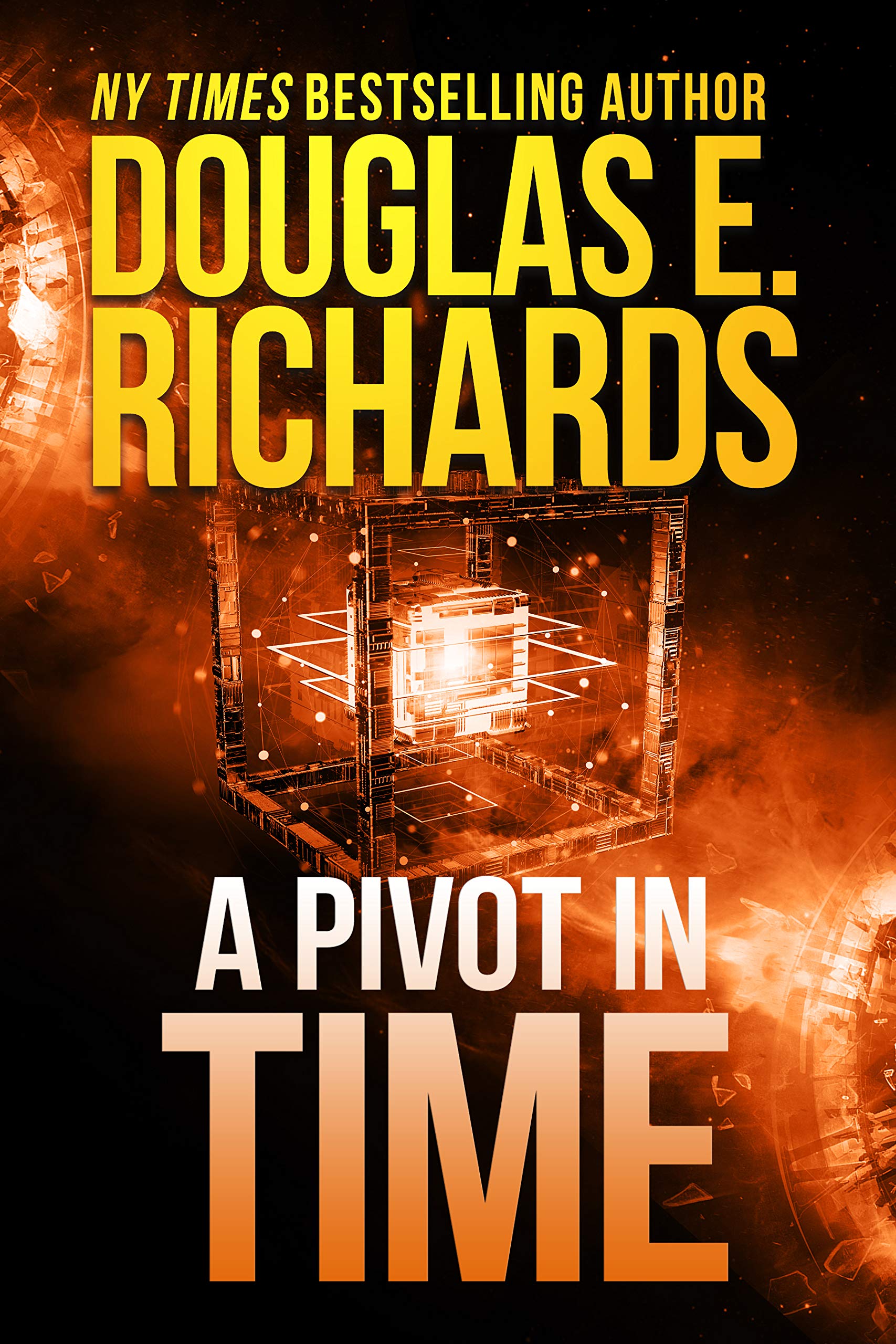
Alien Artifact #2
A Pivot In Time
Kelly, Justin, and Otto return in a riveting near-future thriller. From the million-copy NY Times bestselling author.
"Richards is an extraordinary writer," (Dean Koontz) who can "keep you turning the pages all night long." (Douglas Preston)
The Enigma Cube is an alien object of unlimited power, with technology that can catapult civilization to dizzying heights--or destroy it entirely. Kelly Connolly and Justin Boyd are determined to wield its power for good. But China has a cube of its own, and its motivations are much less benign . . .
Otto Richter is an unparalleled genius. To save his own life and reunite with Kelly and Justin in 2027, he's forced to travel back to Ancient Rome. But when he arrives things go horribly wrong. Now their reunion can only take place in the past. Worse, he learns that the alien cube plans to meddle with the timeline. To intervene at a point so pivotal, one wrong move by the time travelers could completely obliterate all of modern history.
"Richards is a worthy successor to Michael Crichton." (SF Book dot com)
NEAR-FUTURE SCIENCE FICTION THRILLERS BY DOUGLAS E. RICHARDS
STANDALONES
QUANTUM LENS
GAME CHANGER
INFINITY BORN
SEEKER
VERACITY
ORACLE
SERIES
WIRED (Wired 1)
AMPED (Wired 2)
MIND'S EYE (Nick Hall 1)
BRAINWEB (Nick Hall 2)
MIND WAR (Nick Hall 3)
SPLIT SECOND(Split Second 1)
TIME FRAME (Split Second 2)
THE ENIGMA CUBE (Alien Artifact 1)
A PIVOT IN TIME (Alien Artifact 2)
Kids Science Fiction Thrillers (9 and up, enjoyed by kids and adults alike)
TRAPPED (Prometheus Project 1)
CAPTURED (Prometheus Project 2)
STRANDED (Prometheus Project 3)
OUT OF THIS WORLD
DEVIL'S SWORD
"Richards is an extraordinary writer," (Dean Koontz) who can "keep you turning the pages all night long." (Douglas Preston)
The Enigma Cube is an alien object of unlimited power, with technology that can catapult civilization to dizzying heights--or destroy it entirely. Kelly Connolly and Justin Boyd are determined to wield its power for good. But China has a cube of its own, and its motivations are much less benign . . .
Otto Richter is an unparalleled genius. To save his own life and reunite with Kelly and Justin in 2027, he's forced to travel back to Ancient Rome. But when he arrives things go horribly wrong. Now their reunion can only take place in the past. Worse, he learns that the alien cube plans to meddle with the timeline. To intervene at a point so pivotal, one wrong move by the time travelers could completely obliterate all of modern history.
"Richards is a worthy successor to Michael Crichton." (SF Book dot com)
NEAR-FUTURE SCIENCE FICTION THRILLERS BY DOUGLAS E. RICHARDS
STANDALONES
QUANTUM LENS
GAME CHANGER
INFINITY BORN
SEEKER
VERACITY
ORACLE
SERIES
WIRED (Wired 1)
AMPED (Wired 2)
MIND'S EYE (Nick Hall 1)
BRAINWEB (Nick Hall 2)
MIND WAR (Nick Hall 3)
SPLIT SECOND(Split Second 1)
TIME FRAME (Split Second 2)
THE ENIGMA CUBE (Alien Artifact 1)
A PIVOT IN TIME (Alien Artifact 2)
Kids Science Fiction Thrillers (9 and up, enjoyed by kids and adults alike)
TRAPPED (Prometheus Project 1)
CAPTURED (Prometheus Project 2)
STRANDED (Prometheus Project 3)
OUT OF THIS WORLD
DEVIL'S SWORD
424 pages, Kindle Edition
First published August 15, 2020
About the author
Douglas E. Richards
56 books1,771 followersWrite to Doug at douglaserichards1 at gmail dot com, and visit the author's website to be notified of new releases.
Douglas E. Richards is the New York Times and USA Today bestselling author of science-fiction thrillers that have sold more than three million copies (see list below). Richards has been celebrated for his gripping, thought-provoking works that blend cutting-edge scientific concepts with heart-pounding narratives.
Richards burst onto the literary scene with his debut novel, WIRED, published in 2010. The novel garnered widespread acclaim for its ingenious combination of scientific speculation and thrilling storytelling. This success set the stage for a series of bestselling novels, each marked by meticulous research, riveting plots, and characters that resonate with readers.
Known for his ability to translate complex scientific concepts into accessible and engaging narratives, Richards has become a go-to author for readers seeking an intellectually stimulating and adrenaline-fueled reading experience. His works delve deeply into the ethical dilemmas posed by scientific breakthroughs and the potential impact of technology on society.
A former Director of Biotechnology Licensing at Bristol Myers Squibb and a former biotechnology executive, Richards earned a BS in microbiology from the Ohio State University, a master's degree in genetic engineering from the University of Wisconsin--where he engineered mutant viruses now named after him--and an MBA from the University of Chicago.
The author has two grown children and lives in San Diego, California, with his wife and dog.
Richards loves hearing from readers, and always replies, so feel free to write to him at douglaserichards1 at gmail dot com, and address him as "Doug". You can also Friend Richards on Facebook at Douglas E. Richards Author, or visit his website, where you can sign up to be notified of new releases.
SCIENCE FICTION THRILLERS BY DOUGLAS E. RICHARDS
SERIES
WIRED (Wired 1)
AMPED (Wired 2)
MIND'S EYE (Nick Hall 1)
BRAINWEB (Nick Hall 2)
MIND WAR (Nick Hall 3)
UNLEASHED (Nick Hall 4)
SPLIT SECOND(Split Second 1)
TIME FRAME (Split Second 2)
THE ENIGMA CUBE (Alien Artifact 1)
A PIVOT IN TIME (Alien Artifact 2)
STANDALONE NOVELS
QUANTUM LENS
GAME CHANGER
INFINITY BORN
SEEKER
VERACITY
ORACLE
THE IMMORTALITY CODE
UNIDENTIFIED
PORTALS
THE CURE (To become KU eligible for the first time in 2023)
THE BREAKTHROUGH EFFECT
Kids Science Fiction Thrillers (9 and up, enjoyed by kids and adults alike)
TRAPPED (Prometheus Project 1)
CAPTURED (Prometheus Project 2)
STRANDED (Prometheus Project 3)
OUT OF THIS WORLD
DEVIL'S SWORD
Douglas E. Richards is the New York Times and USA Today bestselling author of science-fiction thrillers that have sold more than three million copies (see list below). Richards has been celebrated for his gripping, thought-provoking works that blend cutting-edge scientific concepts with heart-pounding narratives.
Richards burst onto the literary scene with his debut novel, WIRED, published in 2010. The novel garnered widespread acclaim for its ingenious combination of scientific speculation and thrilling storytelling. This success set the stage for a series of bestselling novels, each marked by meticulous research, riveting plots, and characters that resonate with readers.
Known for his ability to translate complex scientific concepts into accessible and engaging narratives, Richards has become a go-to author for readers seeking an intellectually stimulating and adrenaline-fueled reading experience. His works delve deeply into the ethical dilemmas posed by scientific breakthroughs and the potential impact of technology on society.
A former Director of Biotechnology Licensing at Bristol Myers Squibb and a former biotechnology executive, Richards earned a BS in microbiology from the Ohio State University, a master's degree in genetic engineering from the University of Wisconsin--where he engineered mutant viruses now named after him--and an MBA from the University of Chicago.
The author has two grown children and lives in San Diego, California, with his wife and dog.
Richards loves hearing from readers, and always replies, so feel free to write to him at douglaserichards1 at gmail dot com, and address him as "Doug". You can also Friend Richards on Facebook at Douglas E. Richards Author, or visit his website, where you can sign up to be notified of new releases.
SCIENCE FICTION THRILLERS BY DOUGLAS E. RICHARDS
SERIES
WIRED (Wired 1)
AMPED (Wired 2)
MIND'S EYE (Nick Hall 1)
BRAINWEB (Nick Hall 2)
MIND WAR (Nick Hall 3)
UNLEASHED (Nick Hall 4)
SPLIT SECOND(Split Second 1)
TIME FRAME (Split Second 2)
THE ENIGMA CUBE (Alien Artifact 1)
A PIVOT IN TIME (Alien Artifact 2)
STANDALONE NOVELS
QUANTUM LENS
GAME CHANGER
INFINITY BORN
SEEKER
VERACITY
ORACLE
THE IMMORTALITY CODE
UNIDENTIFIED
PORTALS
THE CURE (To become KU eligible for the first time in 2023)
THE BREAKTHROUGH EFFECT
Kids Science Fiction Thrillers (9 and up, enjoyed by kids and adults alike)
TRAPPED (Prometheus Project 1)
CAPTURED (Prometheus Project 2)
STRANDED (Prometheus Project 3)
OUT OF THIS WORLD
DEVIL'S SWORD
Ratings & Reviews
Friends & Following
Create a free account to discover what your friends think of this book!
Community Reviews
Displaying 1 - 30 of 212 reviews

September 26, 2020
I liked the first book of Alien Artifact. This grew tiresome. Like the first book, this is a multi-story lined book. The first is dealing with the Chinese. I thought this was well done, and kept my attention. Then the second part was the time travel, a very convoluted way to get there and back again. Then the character that they meet, becomes a very "Dan Brownish" of skewing the story of history. The main character has to tell the next 2000 years to a "Roman Senator" to prove the skewed story. This is where it seemed to me a bit preachy, a stretching of the "suspended belief" that much science fiction requires of the reader, and not very logical that the historical figure would accept what he was saying.
I am a student of the New Testament, and know that some serious thinkers have postulated the what could've happened that Dan Brown and now Douglas Richards push to an illogical application. Other authors have developed the same kind of stories, like Ben Hur and The Robe, but don't bog down the reader with tedious arguments.
In this book, the characters have become one dimensional, and almost self-righteous in their connection to the Cube and the messianic quest they are chosen by the Cube to fulfill.
I stopped reading the book and removed it from my Kindle about 80% thru.
I am a student of the New Testament, and know that some serious thinkers have postulated the what could've happened that Dan Brown and now Douglas Richards push to an illogical application. Other authors have developed the same kind of stories, like Ben Hur and The Robe, but don't bog down the reader with tedious arguments.
In this book, the characters have become one dimensional, and almost self-righteous in their connection to the Cube and the messianic quest they are chosen by the Cube to fulfill.
I stopped reading the book and removed it from my Kindle about 80% thru.
September 21, 2020
First of all, I enjoyed Richards' first book in this series so much that I looked forward to this book. Unfortunately, I got completely blindsided when he threw in Jesus as a character. He insulted my beliefs and my faith. Christ's purpose of dying on the Cross for our sins was completely ignored as to his purpose. Jesus knew his divinity and his purpose. In the book, the author denies his divinity. It was historically described by eyewitnesses (such as his disciple, Matthew, tax collector who knew how to keep records accurately) and Luke, a physician who scribed from eyewitnesses from interviews over years. This is just a few examples documented by historians. If the author can believe what historians write about the Roman armies and the culture, he can surely believe what the apostles wrote about Jesus.
Richards described him in very lovely, human terms like he was just one of the many Roman gods of the time, even using the derogatory god (not God). I felt a slap at my deeply held beliefs when reading this book especially when the character disavowed his knowledge that he knew he was the Son of God. Since this book is a work of fiction, I guess the author can do this. It is not very nice to the Christian reader though. Clearly, the Bible shows Jesus was quite aware, at the age of twelve, of his divinity and purpose by staying at the Temple, teaching the High Priests, expressing he was doing his Father's work instead of traveling back home with Mary and Joseph. (sorry about the run-on) It is very disappointing in the lack of understanding by the author of the historical facts of Jesus' life and divinity. I read the entire book with afterword explanations and believe the sources he used were limited due to the author's Catholic view of Christianity and the other sources he used. I question those sources and agendas.
I found the discussions of the characters' views' egotistical and arrogant. I appreciated the idea of there having to be a creator to create the physics, mathematical theories, and the unknown dark energy that the human mind has discovered thus far. Since the story was a continuation of the first Alien Book I characters, the characters are very compelling. It gets a little confusing just whose coming and going into the past, the future, and who has to die in order to live again. Lots of rules from the cube that can be changed on a whim. The cube is not divine, only God and Jesus. This book could be considered sacrilegious to some degree. It also could be an honest try to bring an intriguing deity as a character. I just felt Richards demeaned my religious beliefs. He knew this before writing it. Just my opinion, Be forewarned!
Richards described him in very lovely, human terms like he was just one of the many Roman gods of the time, even using the derogatory god (not God). I felt a slap at my deeply held beliefs when reading this book especially when the character disavowed his knowledge that he knew he was the Son of God. Since this book is a work of fiction, I guess the author can do this. It is not very nice to the Christian reader though. Clearly, the Bible shows Jesus was quite aware, at the age of twelve, of his divinity and purpose by staying at the Temple, teaching the High Priests, expressing he was doing his Father's work instead of traveling back home with Mary and Joseph. (sorry about the run-on) It is very disappointing in the lack of understanding by the author of the historical facts of Jesus' life and divinity. I read the entire book with afterword explanations and believe the sources he used were limited due to the author's Catholic view of Christianity and the other sources he used. I question those sources and agendas.
I found the discussions of the characters' views' egotistical and arrogant. I appreciated the idea of there having to be a creator to create the physics, mathematical theories, and the unknown dark energy that the human mind has discovered thus far. Since the story was a continuation of the first Alien Book I characters, the characters are very compelling. It gets a little confusing just whose coming and going into the past, the future, and who has to die in order to live again. Lots of rules from the cube that can be changed on a whim. The cube is not divine, only God and Jesus. This book could be considered sacrilegious to some degree. It also could be an honest try to bring an intriguing deity as a character. I just felt Richards demeaned my religious beliefs. He knew this before writing it. Just my opinion, Be forewarned!

October 25, 2020
A very poor attempt at combining science and faith
I am an enormous fan of this author's work in general, but this particular book was seriously disappointing to me. Not only was this book a detour from his usual clever, entertaining, thought-provoking style of writing, but his treatment of Jesus Christ was borderline offensive to me as a Christian.
Richards himself said that when he started this book he knew nothing about ancient Rome and "less than zero" about Christ, and it shows. He also freely admits that he expected controversy and negative responses from offended Christians. Honestly, if I had known this before I started the book, I would likely have chosen to forego this particular read. Science and faith are not necessarily mutually exclusive, but combining the two requires a more advanced understanding of both than this author has. In my opinion, Richards needs to limit his creative efforts to science-related speculation, which he is very good at, and leave faith-based topics to those who are sincerely interested in religious study.
I am an enormous fan of this author's work in general, but this particular book was seriously disappointing to me. Not only was this book a detour from his usual clever, entertaining, thought-provoking style of writing, but his treatment of Jesus Christ was borderline offensive to me as a Christian.
Richards himself said that when he started this book he knew nothing about ancient Rome and "less than zero" about Christ, and it shows. He also freely admits that he expected controversy and negative responses from offended Christians. Honestly, if I had known this before I started the book, I would likely have chosen to forego this particular read. Science and faith are not necessarily mutually exclusive, but combining the two requires a more advanced understanding of both than this author has. In my opinion, Richards needs to limit his creative efforts to science-related speculation, which he is very good at, and leave faith-based topics to those who are sincerely interested in religious study.

August 15, 2020
I’ve been waiting for this book for over 2 months now, having pre-ordered it on Amazon back in June. I won’t spoil the historical significance – suffice it to say that even knowing the time period from the book’s synopsis didn’t make me go “aha!” – but it was a deft and bold move, one which Richards has, utterly unsurprisingly, pulled off in his usual and spectacular fashion.
I loved the déjà vu of our heroes being seemingly entrapped by the Chinese, which we also saw in the first book. I found the Star trek thing hilarious, and I even learned a gaggle of things about ancient Rome into the bargain, all whilst enjoying another utterly captivating yarn from the master.
I can only imagine how knotty his thinking had to become to find a way of reuniting Otto with Kelly whilst obeying the precepts put down in book one, and to do all that whilst tying this story up with such an overwhelming sense of satisfaction is an incredible feat. Oh and I learned a new word – the last new word I learned from a novel was crepitate a few years back, and I learned Fiat today. How brilliant!
Finally, the use of the word pivot is interesting to me. As loyal readers of my reviews will know I enjoy author’s who have distinct tropes, and it seems to me that pivoting is one of Doug’s specialties. Characters regularly seem to be something but are something else, are presumed to be in one situation but are actually in another, or indeed seem to be completely boxed in without hope … and yet … So I think to finally come out there and acknowledge the import of the pivot to his plotting in a book title is a clever nod to the ambulatory mind that produces such explosively enjoyable stories, time after time after time.
My daughter is currently “going through” Harry Potter for the first time. I am envious of that, of having that innocence, the newness, that one-time gift of being able to enter a new world for the very first time. For anyone looking for some exciting, pulse-pounding thrillers with clever time travel, you’ve now got almost 900 pages to get through. Not to mention the other 19 or 20 books of his to chew on. Did I mention I was envious?
I loved the déjà vu of our heroes being seemingly entrapped by the Chinese, which we also saw in the first book. I found the Star trek thing hilarious, and I even learned a gaggle of things about ancient Rome into the bargain, all whilst enjoying another utterly captivating yarn from the master.
I can only imagine how knotty his thinking had to become to find a way of reuniting Otto with Kelly whilst obeying the precepts put down in book one, and to do all that whilst tying this story up with such an overwhelming sense of satisfaction is an incredible feat. Oh and I learned a new word – the last new word I learned from a novel was crepitate a few years back, and I learned Fiat today. How brilliant!
Finally, the use of the word pivot is interesting to me. As loyal readers of my reviews will know I enjoy author’s who have distinct tropes, and it seems to me that pivoting is one of Doug’s specialties. Characters regularly seem to be something but are something else, are presumed to be in one situation but are actually in another, or indeed seem to be completely boxed in without hope … and yet … So I think to finally come out there and acknowledge the import of the pivot to his plotting in a book title is a clever nod to the ambulatory mind that produces such explosively enjoyable stories, time after time after time.
My daughter is currently “going through” Harry Potter for the first time. I am envious of that, of having that innocence, the newness, that one-time gift of being able to enter a new world for the very first time. For anyone looking for some exciting, pulse-pounding thrillers with clever time travel, you’ve now got almost 900 pages to get through. Not to mention the other 19 or 20 books of his to chew on. Did I mention I was envious?

September 27, 2021
AI Meets The Philosophers Stone
I wouldn't have thought it possible that Douglas E. Richards could write a book more outrageously complicated, technologically advanced and philosophical to boot, but he did.
A Pivot in Time covers all of my favorite genres. Starting with advanced AI and Quantum Physics, to Cyber Warfare and the Art of War, then on to Historical Fiction and Time Travel and winding up with a healthy dose of Philosophy and Humanities.
Welcome back to Justin Boyd and Kelly Connolly, now Boyd and her grandfather, Otto Richter, now known as Jim Connelly and a whole cast of characters who will keep your blood pressure at maximum.
Zipping through the events, turning pages so fast my finger hurts, I'd have to say that A Pivot in Time is one of my favorite Richards' books. Well worth the time spent reading!
I wouldn't have thought it possible that Douglas E. Richards could write a book more outrageously complicated, technologically advanced and philosophical to boot, but he did.
A Pivot in Time covers all of my favorite genres. Starting with advanced AI and Quantum Physics, to Cyber Warfare and the Art of War, then on to Historical Fiction and Time Travel and winding up with a healthy dose of Philosophy and Humanities.
Welcome back to Justin Boyd and Kelly Connolly, now Boyd and her grandfather, Otto Richter, now known as Jim Connelly and a whole cast of characters who will keep your blood pressure at maximum.
Zipping through the events, turning pages so fast my finger hurts, I'd have to say that A Pivot in Time is one of my favorite Richards' books. Well worth the time spent reading!

August 28, 2020
The Sequel That Should Never Have Been Written (YMMV) (Potential spoilers that I tried hard to not make spoilers.)
I like, no I love Douglas E. Richards. He's great writer. He interacts with his readers and fans. His first books, "Wired" and "Amped" were absolutely stellar, the Nick Hall trilogy made for truly riveting reading (flaws and all) and he's continued to write fascinating books, some but not all of them as equally well-written, but all with truly interesting premises, and careful attention to the details, and, generally attention-holding. So it is with regret that I have to say that, for the first time, Douglas E. Richards lost me halfway through a book. Not for lack of effort, nor lack of painstaking research, lack of moral and ethical dilemmas , lack of technological speculation based on actual avenues of scientific exploration., etc. In the first book in the series, there is time travel that takes us back to Nazi Germany. Not an unvisited premise in speculative fiction, but one generally well-handled by the author in "The Enigma Cube." It was an okay if not original choice for the moral and ethical quandaries being explored.
Doug generally provides long afterwards laying out the science and explaining other choices he has made in writing his books, and this book is no exception. Doug surprised even himself with his choice to take the path he took in this book, he states he expected to take some flak for it, and thinks he still might be mad for having made this choice. Well yes, Doug, you're right, but it's not that it was a mad choice–it was the wrong choice. It was the wrong choice because the choice itself became a distraction and drew attention from the writing and the story. From the point that the setting and premise was revealed, it is impossible to truly pay attention to the story without that choice looming over it (a story which is, I will admit, well-crafted, with Doug's usual attention to detail. The historical setting and characters involved simply overwhelm the story, and are always hanging around in the back of the mind as you read. This was my experience, and your mileage may vary, as they say. This isn't a bad book, and many may find it a perfectly acceptable read .
WARNING: IF YOU READ FURTHER YOU WILL ENCOUNTER POTENTIAL SPOILERS, AND THOUGH I HAVE TRIED HARD TO NOT FULL REVEAL THINGS, YOU MIGHT FIGURE THINGS OUT.
Doug, with all of history to play with, why choose this little piece of history that isn't really about history? Would you have chosen Moses and the burning bush, or the revelation at Sinai? Unlikely. There's no actual history there to reference. The Bible is not a book of history, it is a story of the encounter between humans and a deity. I say this as a believing person of faith with a theology degree. Why not Egypt in the 18th dynasty, say during the time of Amenhotep IV/Ahknaten and Nefertiti? That might have been a better setting here if you wanted to touch on matters of religion and faith (would there even be Jewish monotheism without it's development in Egypt for a brief period? Or why not just some aspect of Greek or Roman history? Instead, you chose a nexus of time that is a mish mash of history and faith, little of it actually contemporaneous, rather than keeping them distinct. Therein lies the distraction and the major flaw in the book. A book of speculative fiction, dealing with the possible consequences of modern and near-future technologies, and of time travel, is not the place to be discussing the human or divine status of a central religious figure. Oh, you did your research Doug. Not nearly as deep as possible, but enough for your purposes, as long as you insisted in pursuing this reckless choice. A lot of the resources you mention in your afterwards are really not intended as "scientific" or "historical" explorations, but as means of supporting or challenging religious narratives and interpretations. Things that may appear to lack bias in the eyes of the layman are not as innocent in the eyes of true biblical scholars, biblical archaeologists, and historians.
So now I must reveal a fact about myself. I may be a biblical scholar and theologian with a masters degree from a nominally Christian and well-respected divinity school, and I known New Testament and Christian religious history, but I am also a practicing Jew and Jewish educator. (No, to be absolutely clear, I am not Messianic, which is just another form of Christianity.) Numerous rabbis, Jewish scholars and others have chosen to study at Divinity Schools in order to learn about other religions and to engage in theological discussions and debates, and more importantly, to foster serious interreligious dialogue that openly acknowledges the differences rather than painting them over in well-meaning but not particularly effective "kumbaya". moments.) While it might be easy to assume that my discomfort with your choices in this book are based on my religious faith and outlook, the fact that I chose to become equally knowledgeable in Christianity (and other religions as well) speaks, I hope, to the fact that this is not the source of my discomfort. It's as a reader of science and speculative fiction that I argue you made a poor choice. The choice distracts from the science and the morality because it is shrouded in religious mystery. Science fiction is replete with religious engagement. Explore the intersection of science fiction and religion if you will, but look at the hundreds of examples available to you already in this genre. From masters who were agnostic, even atheists, to believers of all stripes. From Walter Miller's "A Canticle for Leibowitz," or Clarke's "The Nine Billion Names of G"d," Herbert's "Dune" series, Zelazny's "Lord of Light," Dick's "Valis," or the more obvious works like those of C.S. Lewis, Madeleine L'engle. Read pretty much anything by Terry Pratchett. Read through Admiral Heinlein's entire output for the hundreds of religious bon mots (both positive and negative.) Your choice to explore this particular intersection of science fiction and faith was not an optimal one. There are so many others that could have worked and have been far less distracting. Also, to nitpick, I might have opted for a non-western religious figure to avoid having a reading audience that might feel itself threatened by your attempted unbiased representation of this central religious figure. I say attempted unbiased because, ultimately, and as you reveal in the afterwards, you are not entirely unbiased in this regard, or are at least rethinking your views on the matter.
I love your work Doug, and i will keep reading it, recommending it, reviewing it, and calling you to task for the weaknesses I perceive. (You're getting better at the info-dumps, but there's still too much of it for my taste. The afterwards help, but they're still sometimes used as an ancillary info dump.) However, this is a sequel too far, and I honestly believe would have been better left unwritten in its present form.
I like, no I love Douglas E. Richards. He's great writer. He interacts with his readers and fans. His first books, "Wired" and "Amped" were absolutely stellar, the Nick Hall trilogy made for truly riveting reading (flaws and all) and he's continued to write fascinating books, some but not all of them as equally well-written, but all with truly interesting premises, and careful attention to the details, and, generally attention-holding. So it is with regret that I have to say that, for the first time, Douglas E. Richards lost me halfway through a book. Not for lack of effort, nor lack of painstaking research, lack of moral and ethical dilemmas , lack of technological speculation based on actual avenues of scientific exploration., etc. In the first book in the series, there is time travel that takes us back to Nazi Germany. Not an unvisited premise in speculative fiction, but one generally well-handled by the author in "The Enigma Cube." It was an okay if not original choice for the moral and ethical quandaries being explored.
Doug generally provides long afterwards laying out the science and explaining other choices he has made in writing his books, and this book is no exception. Doug surprised even himself with his choice to take the path he took in this book, he states he expected to take some flak for it, and thinks he still might be mad for having made this choice. Well yes, Doug, you're right, but it's not that it was a mad choice–it was the wrong choice. It was the wrong choice because the choice itself became a distraction and drew attention from the writing and the story. From the point that the setting and premise was revealed, it is impossible to truly pay attention to the story without that choice looming over it (a story which is, I will admit, well-crafted, with Doug's usual attention to detail. The historical setting and characters involved simply overwhelm the story, and are always hanging around in the back of the mind as you read. This was my experience, and your mileage may vary, as they say. This isn't a bad book, and many may find it a perfectly acceptable read .
WARNING: IF YOU READ FURTHER YOU WILL ENCOUNTER POTENTIAL SPOILERS, AND THOUGH I HAVE TRIED HARD TO NOT FULL REVEAL THINGS, YOU MIGHT FIGURE THINGS OUT.
Doug, with all of history to play with, why choose this little piece of history that isn't really about history? Would you have chosen Moses and the burning bush, or the revelation at Sinai? Unlikely. There's no actual history there to reference. The Bible is not a book of history, it is a story of the encounter between humans and a deity. I say this as a believing person of faith with a theology degree. Why not Egypt in the 18th dynasty, say during the time of Amenhotep IV/Ahknaten and Nefertiti? That might have been a better setting here if you wanted to touch on matters of religion and faith (would there even be Jewish monotheism without it's development in Egypt for a brief period? Or why not just some aspect of Greek or Roman history? Instead, you chose a nexus of time that is a mish mash of history and faith, little of it actually contemporaneous, rather than keeping them distinct. Therein lies the distraction and the major flaw in the book. A book of speculative fiction, dealing with the possible consequences of modern and near-future technologies, and of time travel, is not the place to be discussing the human or divine status of a central religious figure. Oh, you did your research Doug. Not nearly as deep as possible, but enough for your purposes, as long as you insisted in pursuing this reckless choice. A lot of the resources you mention in your afterwards are really not intended as "scientific" or "historical" explorations, but as means of supporting or challenging religious narratives and interpretations. Things that may appear to lack bias in the eyes of the layman are not as innocent in the eyes of true biblical scholars, biblical archaeologists, and historians.
So now I must reveal a fact about myself. I may be a biblical scholar and theologian with a masters degree from a nominally Christian and well-respected divinity school, and I known New Testament and Christian religious history, but I am also a practicing Jew and Jewish educator. (No, to be absolutely clear, I am not Messianic, which is just another form of Christianity.) Numerous rabbis, Jewish scholars and others have chosen to study at Divinity Schools in order to learn about other religions and to engage in theological discussions and debates, and more importantly, to foster serious interreligious dialogue that openly acknowledges the differences rather than painting them over in well-meaning but not particularly effective "kumbaya". moments.) While it might be easy to assume that my discomfort with your choices in this book are based on my religious faith and outlook, the fact that I chose to become equally knowledgeable in Christianity (and other religions as well) speaks, I hope, to the fact that this is not the source of my discomfort. It's as a reader of science and speculative fiction that I argue you made a poor choice. The choice distracts from the science and the morality because it is shrouded in religious mystery. Science fiction is replete with religious engagement. Explore the intersection of science fiction and religion if you will, but look at the hundreds of examples available to you already in this genre. From masters who were agnostic, even atheists, to believers of all stripes. From Walter Miller's "A Canticle for Leibowitz," or Clarke's "The Nine Billion Names of G"d," Herbert's "Dune" series, Zelazny's "Lord of Light," Dick's "Valis," or the more obvious works like those of C.S. Lewis, Madeleine L'engle. Read pretty much anything by Terry Pratchett. Read through Admiral Heinlein's entire output for the hundreds of religious bon mots (both positive and negative.) Your choice to explore this particular intersection of science fiction and faith was not an optimal one. There are so many others that could have worked and have been far less distracting. Also, to nitpick, I might have opted for a non-western religious figure to avoid having a reading audience that might feel itself threatened by your attempted unbiased representation of this central religious figure. I say attempted unbiased because, ultimately, and as you reveal in the afterwards, you are not entirely unbiased in this regard, or are at least rethinking your views on the matter.
I love your work Doug, and i will keep reading it, recommending it, reviewing it, and calling you to task for the weaknesses I perceive. (You're getting better at the info-dumps, but there's still too much of it for my taste. The afterwards help, but they're still sometimes used as an ancillary info dump.) However, this is a sequel too far, and I honestly believe would have been better left unwritten in its present form.

November 3, 2022
First thing to say is that I enjoyed reading this book. I didn’t enjoy it as much as the first book. The start of the book is exciting with the need to get hold of a second cube currently held by the Chinese and the cunning way in which this is done. In tandem with the capture of the second cube we are introduced to a very long convoluted passage through time where our two main characters end up in Ancient Rome where they have come to rescue Kelly’s Grandfather. Kelly’s Grandfather has gone to Ancient Rome in an attempt to travel forward in time to meet up with her but he must go here first to achieve his goal. Whilst in Rome Jim, Kelly’s Grandfather, gets involved in the timeline of a man who is destined for great things and will be “ pivotal” in the timeline for the whole world as we know it. The story of the interactions of Kelly, Boyd and Jim with the man and his story and future are the theme of the book..Suffice to say it is complex . There is a lot of explanation along the way provided by the helpful AI ( the cube ). Overall a 4.5 star book… not five star as a bit too complex for me .

August 19, 2020
Amazing storyline!
As usual, I was hooked early! Then I thought, "Oh no! What had he done!!" However, I was very impressed how he worked a VERY controversial subject into the fabric of the novel and made it work. Douglas E Richards, you took a big risk with this one, but I think you pulled it off nicely!! I highly recommend, not only this novel but all of Mr. Richards' work.
As usual, I was hooked early! Then I thought, "Oh no! What had he done!!" However, I was very impressed how he worked a VERY controversial subject into the fabric of the novel and made it work. Douglas E Richards, you took a big risk with this one, but I think you pulled it off nicely!! I highly recommend, not only this novel but all of Mr. Richards' work.
January 13, 2021
This guy is my current go-to for near-future, earth-based sci-fi / tech thrillers! Loved the historical element in this two-part series!
October 4, 2021
Revelation
Traveling through this book, one is inclined to dismiss it. “Contrived,” perhaps. “Preposterous,” or even “Absurd!” Yet at Mr. Richards’ tipping point, the threads all come together, light emerges from the darkness, and you realize, “Yes, that perfectly captures the way I look at life, death, immortality, God, Creation and Purpose.” God has a sense of humor, and a deep yearning for intrigue, drama, uncertainty and the need for reward to be earned. There is a God, Herr Nietzsche, and He is VERY much alive. But there is no beginning and no ending ... just an infinite wealth of rich diversity and mystery.
Good books make ya think. And this is a good’n.
Traveling through this book, one is inclined to dismiss it. “Contrived,” perhaps. “Preposterous,” or even “Absurd!” Yet at Mr. Richards’ tipping point, the threads all come together, light emerges from the darkness, and you realize, “Yes, that perfectly captures the way I look at life, death, immortality, God, Creation and Purpose.” God has a sense of humor, and a deep yearning for intrigue, drama, uncertainty and the need for reward to be earned. There is a God, Herr Nietzsche, and He is VERY much alive. But there is no beginning and no ending ... just an infinite wealth of rich diversity and mystery.
Good books make ya think. And this is a good’n.

January 21, 2024
OK, I said I wasn't going to give any more 5 stars, but this book deserved it!
A sequel to The Cube, (and The Cube was outstanding), this takes it to an entire new level.
Twists and turns you don't see coming, a great sci-fi/history thriller that you can't put down.
Very highly recommended!
A sequel to The Cube, (and The Cube was outstanding), this takes it to an entire new level.
Twists and turns you don't see coming, a great sci-fi/history thriller that you can't put down.
Very highly recommended!
June 27, 2021
One word: Brilliant!

August 1, 2022
Not sure whether to give this a 2 or 3, but went to the high side for some of the fun facts and ideas. Like the last novel I found the chit chat annoyingly banal and forced like a day time soap or corny B movie from the 80’s. I just went with it like watching the latest Top Gun movie. However a really good sci-fi writer could definitely continue this plot in some interesting directions.

January 3, 2021
Pivot in time: 9 Parts, 62 chapters 417 pages 13:59:19 total audiobook time.
Audiobook Narrator: Dan Bittner
For spoiler sales blurbs, which I attempt to avoid, or to pick up your copy to enjoy check out Goodreads, Bookbub, or Amazon Ebook, Amazon Whispersync or your favorite book source.


(Alien Artifact 2) A Pivot in Time by Douglas E. Richards
My Rating:
Highly recommended 4.5 star science fiction/thriller/suspense novel. The story of an "alien artifact" discovered in the earlier novel (Alien Artifact 1) The Enigma Cube and the continuing adventures of the people involved in learning to understand this artifact that continue in this book.
Generally:
We start in media res (in the middle of a scene) with Otto Richter, also known as Jim Connolly, waking up, in chains, a prisoner. Fortunately for "Jim" he's fluent in several languages, so when Senator Marcus Dorso starts asking him questions in Latin, he isn't entirely baffled.
No mistake, Jim is baffled and confused. Who wouldn't be after traveling 2000± years into the past from 1971, causing him to black out and luckily not die with his heart disease. An experiment only the great Otto Richter would dare with his near super intellect in his rather imaginative effort to reunite with his granddaughter, Kelly Connolly, who we also know from The Enigma Cube .
Meanwhile, back in 2027, The Chinese and their super advanced technology, along with their iron will, have not given up on obtaining the US "Enigma Cube". The Chinese have found another duplicate of the alien artifact. They intend on capturing the US copy, Kelly Connelly, and Justine Boyd who both appear to understand how it works, so they will have both known cubes and be the exclusive power in the world to wield such a powerful device.
My Notable Notes: These are just notes to remind me what was going on during any given time reading the novel and are not meant to be all inclusive. I often take no notes.
Ch 1-32 Otto goes back to Roman Times of Jesus in an attempt to reunite with his own family in a convoluted scheme that should land him in 2027 eventually.
Meanwhile, our protagonists Kelly and super soldier Justine Really quite an elaborate scheme and plot twist which Douglas deserves praise for.
Ch 32- Unk, Dozed through much of this part of the audiobook but probably picked up enough that listening to it again while doing chores tomorrow will be boring. Set the audiobook back to chapter 32.
Ch 32 - 62. Continued to the end of Part 5, then thru Part 9. The new team put together to study the artifact by Justine and Kelly, after managing their elaborate scheme in Jordon now turn to rescuing Kelly's grandfather Otto Richter/Jim Connelly.
Here we start another wide arc that embraces ancient Rome, and the Senator Marcus Dorso who has Jim Connelly in chains.
Likes and Dislikes : (Possible spoilers).
Our author, Mr. Richards does something I admire in writers. He's courageous. While having little actually historical knowledge, without having read the encyclopedic volumes of commentaries and studies of everything Christian, he tackles Jesus, of all people.
This wasn't a "like" or "dislike" particularly, I've just spent a great amount of time studying books on those topics that I'm confident Mr. Richards has never even heard of regarding religion, and the Christian religion in particular. So when "he started going there" I was skeptical at best. 1. That he would get any facts right, 2. That he wouldn't play politics one way or another with the topic.
To my delight, while I found this cringe worthy, he did a good job in keeping his science fiction time travel story in the era of Jesus relatively non-political and relatively free of any kind of preaching at all. Your mileage may vary.
It helps that at the end of his novels Mr. Richards spends a good amount of time sharing his writing process, including some of his thinking, and research. I like this about Mr. Richard's novels. More than once he has made his remarks and commentary as pleasant as his entertainment via the story he writes based on the things he discusses after the conclusion of the book.
The Technical:
This is a remnant of my years of doing critiques of the writing, usually of unpublished or indie authors.
I have nothing to say here on Douglas E. Richards. He's become one of my favorite authors. I love knowing I can pick up one of his books and my inner critique monster stays asleep.
For those who write, want to write, or want to get help with writing fantastic fiction, I recommend Critters.org. Decades ago I spent a lot time and energy on Andrew Burt's Critters.org. It was there I learned hands on about the information I consumed from hundreds of Writer's Digest books that I had read about writing.
Conclusion
Our favorite characters from The Enigma Cube return in A Pivot in Time . Including the Chinese antagonists who are no "walk in the park" as foes against our protagonists.
Having a little working knowledge of how advanced China has become in the last decade or two, I think Mr. Richards has a good handle of current affairs and writes a very exciting near future thriller.
He's also courageous in tackling time travel, the Roman Empire, Jesus, and John the Baptist et al. I admit this is the first book I've ever read where both Chinese leadership and ancient Roman leadership are antagonists in the same novel.
Read on: Dec 31, 2020 & Jan 1, 2021
Reviewed 01/03/2021
More about me here.
View all my reviews
Additional Links<
Author: Douglas E. Richards Official WebsiteEmail the author at douglaserichards1@gmail.com
Audiobook Narrator: Dan Bittner at Internet Movie Database
Copyright © 2020 by Douglas E. Richards
Ebook Published by Paragon Press, 2020
Audible edition 196MB 13hr, 59min, 19sec
Copyright © 2020 by Douglas E. Richards
Ebook Published by Paragon Press, 2020
Audible edition 196MB 13hr, 59min, 19sec.
Audible Executive Producers Jeff Golick & Mike Charzuk
Audiobook Narrator: Dan Bittner
For spoiler sales blurbs, which I attempt to avoid, or to pick up your copy to enjoy check out Goodreads, Bookbub, or Amazon Ebook, Amazon Whispersync or your favorite book source.
(Alien Artifact 2) A Pivot in Time by Douglas E. Richards
My Rating:
Highly recommended 4.5 star science fiction/thriller/suspense novel. The story of an "alien artifact" discovered in the earlier novel (Alien Artifact 1) The Enigma Cube and the continuing adventures of the people involved in learning to understand this artifact that continue in this book.
Generally:
We start in media res (in the middle of a scene) with Otto Richter, also known as Jim Connolly, waking up, in chains, a prisoner. Fortunately for "Jim" he's fluent in several languages, so when Senator Marcus Dorso starts asking him questions in Latin, he isn't entirely baffled.
No mistake, Jim is baffled and confused. Who wouldn't be after traveling 2000± years into the past from 1971, causing him to black out and luckily not die with his heart disease. An experiment only the great Otto Richter would dare with his near super intellect in his rather imaginative effort to reunite with his granddaughter, Kelly Connolly, who we also know from The Enigma Cube .
Meanwhile, back in 2027, The Chinese and their super advanced technology, along with their iron will, have not given up on obtaining the US "Enigma Cube". The Chinese have found another duplicate of the alien artifact. They intend on capturing the US copy, Kelly Connelly, and Justine Boyd who both appear to understand how it works, so they will have both known cubes and be the exclusive power in the world to wield such a powerful device.
My Notable Notes: These are just notes to remind me what was going on during any given time reading the novel and are not meant to be all inclusive. I often take no notes.
Ch 1-32 Otto goes back to Roman Times of Jesus in an attempt to reunite with his own family in a convoluted scheme that should land him in 2027 eventually.
Meanwhile, our protagonists Kelly and super soldier Justine Really quite an elaborate scheme and plot twist which Douglas deserves praise for.
Ch 32- Unk, Dozed through much of this part of the audiobook but probably picked up enough that listening to it again while doing chores tomorrow will be boring. Set the audiobook back to chapter 32.
Ch 32 - 62. Continued to the end of Part 5, then thru Part 9. The new team put together to study the artifact by Justine and Kelly, after managing their elaborate scheme in Jordon now turn to rescuing Kelly's grandfather Otto Richter/Jim Connelly.
Here we start another wide arc that embraces ancient Rome, and the Senator Marcus Dorso who has Jim Connelly in chains.
Likes and Dislikes : (Possible spoilers).
Our author, Mr. Richards does something I admire in writers. He's courageous. While having little actually historical knowledge, without having read the encyclopedic volumes of commentaries and studies of everything Christian, he tackles Jesus, of all people.
This wasn't a "like" or "dislike" particularly, I've just spent a great amount of time studying books on those topics that I'm confident Mr. Richards has never even heard of regarding religion, and the Christian religion in particular. So when "he started going there" I was skeptical at best. 1. That he would get any facts right, 2. That he wouldn't play politics one way or another with the topic.
To my delight, while I found this cringe worthy, he did a good job in keeping his science fiction time travel story in the era of Jesus relatively non-political and relatively free of any kind of preaching at all. Your mileage may vary.
It helps that at the end of his novels Mr. Richards spends a good amount of time sharing his writing process, including some of his thinking, and research. I like this about Mr. Richard's novels. More than once he has made his remarks and commentary as pleasant as his entertainment via the story he writes based on the things he discusses after the conclusion of the book.
The Technical:
This is a remnant of my years of doing critiques of the writing, usually of unpublished or indie authors.
I have nothing to say here on Douglas E. Richards. He's become one of my favorite authors. I love knowing I can pick up one of his books and my inner critique monster stays asleep.
For those who write, want to write, or want to get help with writing fantastic fiction, I recommend Critters.org. Decades ago I spent a lot time and energy on Andrew Burt's Critters.org. It was there I learned hands on about the information I consumed from hundreds of Writer's Digest books that I had read about writing.
Conclusion
Our favorite characters from The Enigma Cube return in A Pivot in Time . Including the Chinese antagonists who are no "walk in the park" as foes against our protagonists.
Having a little working knowledge of how advanced China has become in the last decade or two, I think Mr. Richards has a good handle of current affairs and writes a very exciting near future thriller.
He's also courageous in tackling time travel, the Roman Empire, Jesus, and John the Baptist et al. I admit this is the first book I've ever read where both Chinese leadership and ancient Roman leadership are antagonists in the same novel.
Read on: Dec 31, 2020 & Jan 1, 2021
Reviewed 01/03/2021
More about me here.
View all my reviews
Additional Links<
Author: Douglas E. Richards Official WebsiteEmail the author at douglaserichards1@gmail.com
Audiobook Narrator: Dan Bittner at Internet Movie Database
Copyright © 2020 by Douglas E. Richards
Ebook Published by Paragon Press, 2020
Audible edition 196MB 13hr, 59min, 19sec
Copyright © 2020 by Douglas E. Richards
Ebook Published by Paragon Press, 2020
Audible edition 196MB 13hr, 59min, 19sec.
Audible Executive Producers Jeff Golick & Mike Charzuk
December 13, 2020
I only have 4 more of your books to read but so far I love everything I've read. They are enlightening and made me think of all the jumps we have made in technology in the last 30 years or so. Also confirmed my suspicion that maybe we are moving more quickly than we should. There are so many ethical questions that need to be studied but also what would happen in the wrong hands. I wish this was required reading for everyone in the world, especially the younger people who run on "how quick
can we get it" mindset. I admire your thoughtfulness in your writing. I'm just an old bag who loves to read and it has been a long time since I have been so engrossed in one author. I hope there is more coming! Thank you.
can we get it" mindset. I admire your thoughtfulness in your writing. I'm just an old bag who loves to read and it has been a long time since I have been so engrossed in one author. I hope there is more coming! Thank you.

December 15, 2020
I really enjoyed this book. The author took on a dangerous and daunting task in dealing with the very nature of Jesus Christ. He maintained a fine balance throughout the whole story. There will be many who take offense at his speculation on Jesus, but as a Christian, I am not threatened nor offended with his fascinating effort. All in all, it's a good story well told. The only issue I would take with it is that there were times the dialogues seemed to go on forever, reminiscent of Ayn Rand.

September 9, 2020
THE ENIGMA CUBE was an excellent sci-fi novel from Douglas E Richards, successful author of about a dozen sci-fi novels. The first part of the novel that takes place in 2027 describes an enigmatic (heh heh) cube in the possession of the US government that is clearly of alien origin and that possesses properties and an AI that seem to defy the laws of physics. After introducing biologically enhanced operative Boyd and the scientist who will become the love of his life, Kelly, time travel is introduced and our protagonists find themselves back in 1942 with the chance to kill Hitler. Should they or shouldn’t they? A well-used, if not timeworn, trope in sci-fi.
In A PIVOT IN TIME, the boy genius, Connolly who we met back in 1942 in the first novel (and who, through the vagaries of time travel turns out to be Kelly's grandfather) finds himself, with cube, back in ancient Rome where he meets an immensely charismatic young Roman senator. One thing leads to another and so as to not give away too much, Kelly and Boyd travel back in time to find him and are also taken by the charm and intelligence of Senator Marcus Dorso. Turns out that all this is taking place during the “lost years” of Jesus and now the question becomes, should they try to intervene and prevent or promote, of interfere in any way with what they know will happen regarding the death of Jesus and the birth of his ministry.
Here the novel will surely lose many readers and gain some unfortunate 1 star reviews. Some because they are devout Christians and cannot abide the (very long) philosophical discussions about the relative good and bad influences that the Christian Church has had on Western Civilization. Others because they are non-believers and find the whole argument rather silly in the first place. Still others because it slows down the action, even though it really is the centerpiece and reason for the novel.
Regardless of one’s beliefs, A PIVOT IN TIME is a natural sequel to the ENIGMA CUBE and we do learn something more about the cube itself and its creators, and lot (at least in my case) about Roman history and customs near the turn of the millennium. The writing is OK, albeit the relationship between Kelly and Boyd is a little sophomoric, and the pacing was good enough to keep me turning pages, even though I had easily figured out the major plot twists within the first quarter of the novel. I’d give it 3.5 stars rounded up to 4 for the historical fiction research and the additional material pertaining the to cube and its creators.
Recommended, warts and all.
JM Tepper
In A PIVOT IN TIME, the boy genius, Connolly who we met back in 1942 in the first novel (and who, through the vagaries of time travel turns out to be Kelly's grandfather) finds himself, with cube, back in ancient Rome where he meets an immensely charismatic young Roman senator. One thing leads to another and so as to not give away too much, Kelly and Boyd travel back in time to find him and are also taken by the charm and intelligence of Senator Marcus Dorso. Turns out that all this is taking place during the “lost years” of Jesus and now the question becomes, should they try to intervene and prevent or promote, of interfere in any way with what they know will happen regarding the death of Jesus and the birth of his ministry.
Here the novel will surely lose many readers and gain some unfortunate 1 star reviews. Some because they are devout Christians and cannot abide the (very long) philosophical discussions about the relative good and bad influences that the Christian Church has had on Western Civilization. Others because they are non-believers and find the whole argument rather silly in the first place. Still others because it slows down the action, even though it really is the centerpiece and reason for the novel.
Regardless of one’s beliefs, A PIVOT IN TIME is a natural sequel to the ENIGMA CUBE and we do learn something more about the cube itself and its creators, and lot (at least in my case) about Roman history and customs near the turn of the millennium. The writing is OK, albeit the relationship between Kelly and Boyd is a little sophomoric, and the pacing was good enough to keep me turning pages, even though I had easily figured out the major plot twists within the first quarter of the novel. I’d give it 3.5 stars rounded up to 4 for the historical fiction research and the additional material pertaining the to cube and its creators.
Recommended, warts and all.
JM Tepper
March 2, 2024
Give us Barabas
As usual, Mr Richards starts off with an intriguing and unusual story. It moves along at an exciting pace until he loses sight of the story, and wants to expound upon what he's learned in his research. Suddenly we start lecturing about Jesus' origin; his future path, and the consequences of taking an alternate path. We are lectured about Jesus' innate goodness and charisma. There are many places I had the feeling that Mr Richards was a little light on facts, and would quickly brush over certain details of Jesus' life. The cube would explain Jesus' walking on water, but what about the bread and the wine? What about Lazarus? If we're going to do something about Jesus, let's get into it. There's plenty of room to delve into Jesus' nature without having to lecture us about it. Anyway, the story is about how our team that has just come back in time from not killing Hitler, and heads out to save Jesus who, it seems, was intending to use his charisma to become emperor of Rome rather than king of the Jews. Seems this is a project initiated by the cubes, and our team falls into it with the need to convince Jesus that he needs to follow the path of what minister rather than that of an emperor. The cubes, of course, want him to follow this path, and will help.
As usual, Mr Richards starts off with an intriguing and unusual story. It moves along at an exciting pace until he loses sight of the story, and wants to expound upon what he's learned in his research. Suddenly we start lecturing about Jesus' origin; his future path, and the consequences of taking an alternate path. We are lectured about Jesus' innate goodness and charisma. There are many places I had the feeling that Mr Richards was a little light on facts, and would quickly brush over certain details of Jesus' life. The cube would explain Jesus' walking on water, but what about the bread and the wine? What about Lazarus? If we're going to do something about Jesus, let's get into it. There's plenty of room to delve into Jesus' nature without having to lecture us about it. Anyway, the story is about how our team that has just come back in time from not killing Hitler, and heads out to save Jesus who, it seems, was intending to use his charisma to become emperor of Rome rather than king of the Jews. Seems this is a project initiated by the cubes, and our team falls into it with the need to convince Jesus that he needs to follow the path of what minister rather than that of an emperor. The cubes, of course, want him to follow this path, and will help.
September 15, 2025
The books written by Douglas E. Richards are always good fiction, but perhaps my favorite part is how he ends each book with details about the real aspects within the story.
Can't say that I was thrilled when the sci-fi book spent so much time discussing religion.
Can't say that I was thrilled when the sci-fi book spent so much time discussing religion.

October 5, 2020
Not so sure about this book. The author's notes helped me move it from 3 stars to 4. Just WAY too much confusion for so very long with regards to the whole time travel dealio, especially when trying to circumvent the Cube's rules about such. I also don't particularly care for a whole diatribe on J.C.. Was there ever such a person? Perhaps. Was he some god or to become "God" and all that jazz. Hell no!! There is no heaven or hell (perhaps write about how Dante created these places (circa 1300 AD I believe); though noting the Greek ""equivalents""). And there is no omnipotent and omniscient being which created the entire universe. I DO SUSPECT that aliens have visited us and were looked upon and revered as gods. And all that carrying over to some messed up belief systems people are brainwashed by their families and others to hold onto... plus Dante's addition to the whole schema. Whatever. Time to figure out what to read next. Not even sure what genre to look towards. I've probably got til at least 10am for reading (though I am easily distracted; and do have some things I should be doing). Hmmmmmmmmmm.......... well, nothing about time travel anyways!! LOL

January 9, 2022
Justin and Kelly use the alien cube to travel back in time to the days of the Roman Empire. Their goal is to rescue Kelly's grandfather, Jim, who became trapped in the past. Jim, a brilliant scientist, was trying to make it to the future in a roundabout way so his weak heart could be repaired and prevent his early death. On their journey to the past, Justin and Kelly meet a Roman senator, Marcus, who seems too good to be true. There is a good reason for this. They learn that Marcus grew up in Judea and is actually Jesus Christ in his "lost" years. It's touch and go as justin and Kelly try to perform the almost impossible juggling act of saving Jim while also keeping Marcus on the right path toward his ultimate destiny. Along the way, Justin, an enhanced super soldier, again showcases his superior fighting skills. The first part of the book has more action and excitement. The later parts bog down with timeline problems and what reads like a theological debate. Can our heroes survive their journey to the past, fix all the problems and make it back to the future? It won't be easy, but you will root for them all the way.
October 17, 2022
I really enjoyed the first book in this series…and the first 2/3 of this one. Unfortunately it descends into a long winded preachy talking heads discussion and speculation on Jesus. Seriously. I skipped through about 40 pages stopping every few to see if the discussion was still on…it was. I could tell the author was all caught up in the speculation, but it got really boring quickly. What started out as a great action thriller full of creative ideas and wild action, turned into a snooze fest. I sincerely hope this episode stays deep in the past and never rises it’s head again. I am going to try the next book in the series because Doug is a good writer and I have enjoyed two of his books. Doug, you almost lost me on this one…
Oh and while I’m at it, as long as I’m crabby, It’s one die — a pair of dice. Also, you use "between" incorrectly several times…if it’s more that two. Use "Among". Your editor should catch these things. They stop the flow of reading. All that said…I know you’re a talented writer.
Oh and while I’m at it, as long as I’m crabby, It’s one die — a pair of dice. Also, you use "between" incorrectly several times…if it’s more that two. Use "Among". Your editor should catch these things. They stop the flow of reading. All that said…I know you’re a talented writer.
This entire review has been hidden because of spoilers.

September 20, 2020
Not many novels can wait until they are 2/3 over before they get to the good part
Or to rephrase, there aren’t many books that you enjoy reading, and then realize 1/3 from the end, the book hadn’t even gotten started. I can’t say much else without giving the plot away, but Christ, what a great book.
I did go back and read the first book in the series before starting this- it definitely helps you get back in the mindset- plus makes it that must more enjoyable of a read.
I love the relationship between Boyd and Kellie-a true love story without the ripped bodices- unless you count Boyd losing his shirt occasionally.
I’ve got to go back and read the end credits now-that is another enjoyable part of Richards’ books: I always like to know what’s real and what’s imagined and don’t have time to read up on all these advancements. I can’t wait to re-read this book in 10 years and see what’s come true.
Or to rephrase, there aren’t many books that you enjoy reading, and then realize 1/3 from the end, the book hadn’t even gotten started. I can’t say much else without giving the plot away, but Christ, what a great book.
I did go back and read the first book in the series before starting this- it definitely helps you get back in the mindset- plus makes it that must more enjoyable of a read.
I love the relationship between Boyd and Kellie-a true love story without the ripped bodices- unless you count Boyd losing his shirt occasionally.
I’ve got to go back and read the end credits now-that is another enjoyable part of Richards’ books: I always like to know what’s real and what’s imagined and don’t have time to read up on all these advancements. I can’t wait to re-read this book in 10 years and see what’s come true.
January 7, 2024
A Pivot got me Spinning
This Pivot was, for me, a book I couldn't put down. Having read Richards' other books with Kelly and Justin, and the Cube, I was delighted to find yet another.
But ... while I consider myself reasonably intelligent, and understand rudimentary physics' concepts, there was a section that really had my head spinning and I thought it was simply too much.
Otherwise, it fit my concept of "Theater of the Mind" and would make an excellent movie, to follow on the other books he's written with the same characters.
The Christ issue ... very strange, and unresolved, after all. Which is as it should be.
It is worth every minute to read this one. Give it a try but read Richards' earlier books on this topic first. A good foundation is necessary to read this follow-on book.
[I apologize for typos...]
This Pivot was, for me, a book I couldn't put down. Having read Richards' other books with Kelly and Justin, and the Cube, I was delighted to find yet another.
But ... while I consider myself reasonably intelligent, and understand rudimentary physics' concepts, there was a section that really had my head spinning and I thought it was simply too much.
Otherwise, it fit my concept of "Theater of the Mind" and would make an excellent movie, to follow on the other books he's written with the same characters.
The Christ issue ... very strange, and unresolved, after all. Which is as it should be.
It is worth every minute to read this one. Give it a try but read Richards' earlier books on this topic first. A good foundation is necessary to read this follow-on book.
[I apologize for typos...]

August 25, 2020
Enigma Cube -book 2
Otto, Kelly and Justin are back at it. Otto finds another cube, near the river Jordan (oh, I wonder how THIS is going to turn out?) and his wife (what a kind woman! I don’t know that we ever learn her name) allows Otto to time travel before his death in the 1940s thinking he’ll bounce there, see what’s what then immediately go to 2037 and be saved. And it’s exactly that easy, the end. Now go take as soothing nap.
OK, not that easy. I think you might guess where it’s all going and I’ll spoil nothing other than to say you’re right. Action in first half, mostly talking in second. Interesting speculative fiction. Quarantine read. Currently available on Kindle Unlimited.
Otto, Kelly and Justin are back at it. Otto finds another cube, near the river Jordan (oh, I wonder how THIS is going to turn out?) and his wife (what a kind woman! I don’t know that we ever learn her name) allows Otto to time travel before his death in the 1940s thinking he’ll bounce there, see what’s what then immediately go to 2037 and be saved. And it’s exactly that easy, the end. Now go take as soothing nap.
OK, not that easy. I think you might guess where it’s all going and I’ll spoil nothing other than to say you’re right. Action in first half, mostly talking in second. Interesting speculative fiction. Quarantine read. Currently available on Kindle Unlimited.
January 27, 2021
Oh, crap. I enjoyed the first book, but this was a major disappointment. Why explain a thing once in a story, when you can pretty much just use the same basic dialogue with or between any of the rest of the characters? Why continue to develop nicely rounded characters when you can just flatten them again in the next book? Oh, wait, is this the character who must make puns or the character that must always tell the c-w-m-l-p how much said character dislikes hearing them? And see how much more of the terrible white space I filled up there with the same words, over and over?
I really hate writing negative reviews. I prefer to write useful and even cheerleading reviews. This time, there was just nothing for me to work with. Reader, I returned the book and got my money back.
I really hate writing negative reviews. I prefer to write useful and even cheerleading reviews. This time, there was just nothing for me to work with. Reader, I returned the book and got my money back.

February 14, 2021
Time Travel, murderous drones, teleportation and just to keep you guessing - Jesus, himself!
This book dovetails right in with the first in the series and never slows down. In many ways it details many of the current world conditions with the dangers of Chinese aggression and disdain for human life and/or rights. While dealing with many questions from a strictly scientific angle, it also delves into the concept of "God " and the concept of free will and how that can backfire or allow huge leaps forward for good or evil. Douglas Richards continues to fascinate and entertainment me with his writings as well as making me question so many things I thought myself certain about. And, what more could be asked of an enjoyable book?
This book dovetails right in with the first in the series and never slows down. In many ways it details many of the current world conditions with the dangers of Chinese aggression and disdain for human life and/or rights. While dealing with many questions from a strictly scientific angle, it also delves into the concept of "God " and the concept of free will and how that can backfire or allow huge leaps forward for good or evil. Douglas Richards continues to fascinate and entertainment me with his writings as well as making me question so many things I thought myself certain about. And, what more could be asked of an enjoyable book?

April 18, 2021
Not as good as Alien Artifact book 1
I love "Hard Sci-fi" genre for the intellectual imagination of where we (homosapien) can evolve to thru science and achieve provided we don't destroy ourselves as a species
I've grown of tired of good Hard Sci-fi trying to reason the existence of GOD. If history tells us anything, it's the more we know about the natural world with scientific method, scientific evidence . . .only deminishes evidence of likelihood of a super intelligent super power entity. So sci-fi arguing in effect we humans are still just to ignorant. If we knew more then we'd known that a super beings or entity must exist.
This is where an otherwise great book lost me.
I love "Hard Sci-fi" genre for the intellectual imagination of where we (homosapien) can evolve to thru science and achieve provided we don't destroy ourselves as a species
I've grown of tired of good Hard Sci-fi trying to reason the existence of GOD. If history tells us anything, it's the more we know about the natural world with scientific method, scientific evidence . . .only deminishes evidence of likelihood of a super intelligent super power entity. So sci-fi arguing in effect we humans are still just to ignorant. If we knew more then we'd known that a super beings or entity must exist.
This is where an otherwise great book lost me.
February 28, 2025
I like it even better than the first book in the series, The Enigma Cube. It builds on everything in that story about the cube, including the reality of dark energy and dark matter, the possibility for teleportation and time travel and a pair of Americans who continue the story of the woman's grandfather. The twist in this one of course is that there are two cubes, and part of the plot is to secure the second cube from the Chinese. But then the entire second half of the book has to do with encountering Jesus during Roman times. The author has done his research well about the unknown years of Jesus life and retains a remarkably well balanced attitude about whether Jesus is in fact divine or not. His research is good so the science and the history ring true.
This entire review has been hidden because of spoilers.
October 19, 2020
I've read most of this author's books and always found them interesting and often engrossing, that is until this one. As a follow-up to the Enigma Cube I was looking forward to another excellent read but sadly soon found myself mired in a bog of complexity. I laboured through the whole thing but was left feeling dissatisfied after I had finished it. The somewhat shmaltzy ending did nothing to improve the overall tone and I got the feeling that the author was looking to wrap the book up as soon as possible after his laborious effort in writing it.
Everyone's allowed at least one dud and I believe that this effort was his.
Everyone's allowed at least one dud and I believe that this effort was his.
Displaying 1 - 30 of 212 reviews