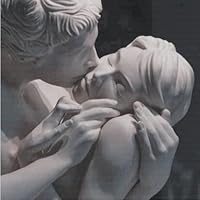
Porphyria's Lover (Complete Edition): A Psychological Poem from one of the most important Victorian poets and playwrights, regarded as a sage and ... The Pied Piper of Hamelin, Paracelsus…
Robert Browning's "Porphyria's Lover (Complete Edition)" delves into the poignant complexities of love, desire, and the dark recesses of the human psyche. Written in Browning's signature dramatic monologue style, this poem captures the unsettling moment when a man reflects on his passionate encounter with Porphyria, ultimately leading to a chilling and irreversible act of devotion. Set against a tempestuous backdrop, the lines oscillate between beauty and horror, illustrating the tension between human emotion and moral boundaries. The poem is an exemplary piece of Victorian literature, exhibiting Browning's innovative approach to narrative and psychological depth, while engaging with themes of power, control, and the duality of love in the context of societal norms of the time. Robert Browning, a prominent figure in the Victorian poetic movement, was deeply influenced by the Romantic tradition as well as the socio-political upheavals of his era. Coming from a background steeped in literature, Browning was known for his exploration of the darker aspects of love and relationships, informed by his own tumultuous experiences and relationships, most notably his marriage to fellow poet Elizabeth Barrett Browning. This personal lens imbues "Porphyria's Lover" with an intense emotional resonance, placing the reader in direct confrontation with the often-uncomfortable intersection of passion and morality. This complete edition of "Porphyria's Lover" is an indispensable read for anyone interested in the exploration of psychological themes in literature. Browning's masterful use of dramatic monologue invites readers to engage deeply with the intricate layers of meaning, making it relevant to contemporary discussions about love, power, and personal agency. The poem's ability to invoke both empathy and discomfort makes it an essential addition to any literary collection.
Robert Browning (1812-1889) was a British poet and playwright whose mastery of dramatic verse, especially dramatic monologues, made him one of the foremost Victorian poets.
Browning began writing poetry at age 13. These poems were eventually collected, but were later destroyed by Browning himself. In 1833, Browning's "Pauline" was published and received a cool reception. Harold Bloom believes that John Stuart Mill's review of the poem pointed Browning in the direction of the dramatic monologue.
In 1845, Browning wrote a letter to the poet Elizabeth Barrett Browning, professing that he loved her poetry and her. In 1846, the couple eloped to Europe, eventually settling in Florence in 1847. They had a son Pen.
Upon Elizabeth Barrett Browning's death in 1861, Browning returned to London with his son. While in London, he published Dramatis Personae (1864) and The Ring and the Book (1869), both of which gained him critical priase and respect. His last book Asolando was published in 1889 when the poet was 77.
In 1889, Browning traveled to Italy to visit friends. He died in Venice on December 12 while visiting his sister.
I have nothing against the poem it’s just not memorable. The concept is captivating and quite interesting but still not enough for me to talk about it in the future or at all.
"Be sure I looked up at her eyes Happy and proud; at last I knew Poryphyria worshipped me; surprise Made my heart swell, and still it grew While I debated what to do."
"Poryphyria's Lover" is genius in how the true drama of the situation unfolds and how the narrator is slowly revealed to be absolutely insane. Beginning with a depiction of dark feelings, Poryphyria's entrance into the scene creates the illusion of warmth and safety, leading to a wonderfully gothic twist and gruesome aftermath. This was a fun one to read in my literature class.
This poem is beautiful in the most sick and twisted way. Love the setting, love the symbolism, love the unexpected ending. As the poem progresses we think that the poet is probably a sick and delirious person by the way he describes his surroundings and porphyria but the last line 'and yet God has not said a word' screams that he was very much in his senses.
This is one of my favorite poems! It's a little creepy, but immensely intriguing.
Dramatic monologues are certainly interesting, especially since they're usually a villain character boasting of his villainly deeds. The speaker in this poem reminds me a little of the narrator in Poe's "A Tell-Tale Heart." He's definitely insane.
Too weak, for all her heart's endeavour, To set its struggling passion free From pride, and vainer ties dissever, And give herself to me for ever. But passion sometimes would prevail, Nor could to-night's gay feast restrain A sudden thought of one so pale For love of her, and all in vain: So, she was come through wind and rain. Be sure I looked up at her eyes Happy and proud; at last I knew Porphyria worshipped me; surprise Made my heart swell, and still it grew While I debated what to do. That moment she was mine, mine, fair, Perfectly pure and good: I found A thing to do, and all her hair In one long yellow string I wound Three times her little throat around, And strangled her.
Honestly… not bad if you like crime and reading disturbing thoughts. - Short poem and it’s entertaining - If you like to analyse, there is a lot to analyse and social commentary to draw on. - Porphyria’s lover is a psycho with a god complex.
*Quotes incoming….* ────୨ৎ──── “That moment she was mine, mine, fair,” “And strangled her. No pain felt she; / I am quite sure she felt no pain.” “Murmuring how she loved me — she”
This poem....mate. I used to hate poetry until I read this. Brownings way of writing is so mesmerising and memorable. And this poem...when you start reading it, you automatically assume its your typical "boy talking about how much he loves a girl but they've had an argument they can't come back from" sort of thing....but honsetly, after the first, let's say, half of it, your jaw will drop, like never before. Its so creepy yet so beautifully written. When I finished reading it, I genuinely thought.."what the fu-" its amazing
After reading Porphyria's Lover a few time and hearing it read helped me understand it a little better. I don't fancy poetry all that much. The way I understood this poem was that they were having a clandestine affair and this might be their last rendezvous. When the lover is strangling her, she is not putting as sort of struggle.
Now this was incredible poetry. I think about this one all the time… Browning stays winning. Edit: why did she make us read this on Valentine’s Day😭 god damn
A dark and unsettling dramatic monologue with Gothic and romantic themes, Porphyria’s Lover leaves the reader with plenty to consider.
Browning establishes the atmosphere immediately, using the stormy setting to create a sense of foreboding. The measured rhyme scheme and variation in indentation gives the poem a distinctive rhythm. This contrasts with the disturbing event. Religious imagery is woven throughout, raising questions about morality, guilt, and divine judgement.
Porphyria’s arrival at the cottage alongside her actions (such as tending the fire and making herself comfortable) suggests familiarity. Yet, I found her somewhat ghostly or perhaps even angelic, almost as though she becomes an idealised figure within the narrator’s account. There is also an impression of apparent independence; she has left a gathering and travelled to see her lover.
The descriptions of Porphyria’s physical appearance are particularly effective. Her hair is especially striking, not only as an image of beauty and intimacy but because it becomes the instrument of her death. This transformation makes an otherwise familiar symbol of affection deeply disturbing.
The narrator’s possessiveness is central to the poem’s horror. He appears to interpret Porphyria’s feelings as something he can claim and preserve, ultimately removing her autonomy in order to maintain the moment as he wants it. His calm, controlled narration makes his actions all the more unsettling, and the shift in tense helps draw the reader into his account of what happens.
The poem also invites a contemporary reading through its portrayal of possessiveness, control and violence within an intimate relationship. I found myself considering how the narrator’s apparent devotion becomes inseparable from his desire for ownership. His certainty about Porphyria’s feelings is disturbing and everything we know about her comes through his perspective
The ending leaves me with complex theological questions. The narrator’s interpretation of God’s silence raises questions about guilt, moral responsibility and the assumptions people make when they want to justify their actions.
This entire review has been hidden because of spoilers.