At a suburban barbecue, a man slaps a child who is not his own.
This event has a shocking ricochet effect on a group of people, mostly friends, who are directly or indirectly influenced by the slap.
In this remarkable novel, Christos Tsiolkas turns his unflinching and all-seeing eye onto that which connects us all: the modern family and domestic life in the twenty-first century. The Slap is told from the points of view of eight people who were present at the barbecue. The slap and its consequences force them all to question their own families and the way they live, their expectations, beliefs and desires.
What unfolds is a powerful, haunting novel about love, sex and marriage, parenting and children, and the fury and intensity - all the passions and conflicting beliefs - that family can arouse. In its clear-eyed and forensic dissection of the ever-growing middle class and its aspirations and fears, The Slap is also a poignant, provocative novel about the nature of commitment and happiness, compromise and truth.
Christos Tsiolkas is the author of nine novels: Loaded, which was made into the feature film Head-On, The Jesus Man and Dead Europe,which won the 2006 Age Fiction Prize and the 2006 Melbourne Best Writing Award. He won Overall Best Book in the Commonwealth Writers' Prize 2009, was shortlisted for the 2009 Miles Franklin Literary Award, long listed for the 2010 Man Booker Prize and won the Australian Literary Society Gold Medal for The Slap, which was also announced as the 2009 Australian Booksellers Association and Australian Book Industry Awards Books of the Year. Barracuda is his fifth novel. Merciless Gods (2014) and Damascus (2019) followed. He is also a playwright, essayist and screen writer. He lives in Melbourne.
Thank you Christos Tsiolkas... you finally made my mind up for me and I have flung your horrid novel away from me in a graceless convulsion which mixed repulsion and depression in equal parts, with a dash of glee.
Because for many pages I was desperately seeking a casus belli. Something I could put my finger on. I was a closet Slap-hater at this point. I couldn't quite admit the horror of this novel to myself. I needed to find something definite, a line in the print where I could say
thus far and no farther
On and on I read. And finally one such moment arrived on page 225.
The scene is the grimy household of Rosie and Gary and their son Hugo who is somewhere between three and four years of age. Hugo is the slapee of the story. Now one of the things about Hugo is that he's still suckling at his mother's breast, which everyone thinks is a bit gross, because he's nearly four, you know, and I was agreeing with this since every single time Hugo hove into view he was like a nipple-seeking missile aiming straight at his mum's brassiere and we would get another description of the act and everyone's reaction to the act.
Every time.
So now here on p225 we have Gary, the sex-starved husband, wrestling with his young son for control of the breasts
She was feeding Hugo on the couch when Gary walked back into the room... He came and stood over them. He watched his son suck contentedly from Rose's tit. 'I want some of that.' Rosie frowned. 'Don't Gaz.' 'I do. i want some of your boobie.' Hugo dropped his nipple and looked mutinously at his father. 'No. It's mine.' 'No. it isn't,' Hugo looked at her for encouragement. 'Whose boobies are they? 'They belong to all of us,' she said, laughing.
Then the atmosphere turns nasty and Gary and the kid begin to squabble viciously about the breasts.
At this point I murmered "Thank you, Christos! At last! I knew you had it in you!" , placed the novel down upon my reading desk and prepared for the traditional flinging at wall ceremony.
*****************
PREVIOUSLY ON "PAUL BRYANT READS 'THE SLAP'"
P 150! - The thing is, I have seven - seven! books I really actually do want to read coming my way very soon. I hear the tramp tramp tramp of the feet of several burly postmen. This book - not so much. But you know the feeling when you walk out of the shop and you get home and you just don't remember stuffing the two packs of sausages, three packs of wafer-thin Wiltshire ham and two small jars of marmite down your kecks? So here I am on p 150. I don't know how I got here or how I'm going to get out of this geyser of Ozzie soapsuds. Can there really be another 330 pages to go?
The Shangri-Las :
PB, is that a bestseller you got there? Uh-huh? Gee, it must be great reading it all day. By the way, where'd you get it?
Pb (dressed in black leather, channelling Mary Weiss) : I met it in the Sainsbury store – 60% off. You get the picture?
Shangs : Yes, we see
Pb : That's when I became… A reader of The Slap.
My friends were always putting it down Shangs : Down, down Only good for the beach they said with a frown Shangs : Frown, frown They told me it was bad And I knew I'd been had I'm sorry I started it – reader of The Slap
The page 100 decision – to continue or to not continue, that is the question.
Well, what about this blurb on the back? This is bugging me -
This event reverberates through the lives of everyone who witnesses it happen.
Is that even grammatical? I would have thought EITHER
This event reverberates through the lives of everyone who sees it happen
OR
This event reverberates through the lives of everyone who witnesses it
No need for the "happen". The "happen" is otiose. So the blurb writer can't write.
But... I dunno. Maybe I'll continue. It's so long. These modern writers, they must get paid by the word. Never mind the quality, feel the width.
***
On Goodreads they all stop and stare They can't hide the sneers but I don't care I think I've become a –
This isn't any old review. My opinion on this book has sparked an idea for a discussion I'd like to have with you about offensive content in novels. I'd like to know how you react to it. But first, let's get to my review of this book.
This book was written by a very highly acclaimed Australian/Greek author. I have to say, that I admire him and his blatant honesty. And this is the first book I've read of his. I find it hilarious how so many people who have read this book have given it bad reviews and low ratings because they believe that the characters were horrible and the language was horrible and 'why would anyone want to write about such uninteresting people?' It really makes me laugh, because clearly, the people who have these opinions have totally missed the point. Opinions like these, are what I like to call, 'surface opinions.' Surface opinions, as the term suggests, do not attempt to dig any deeper than what can be seen (or read, in this case).
The point of this book, in my opinion, is to highlight the pettiness, cruelness, complete self-centeredness of humankind; the attributes we fail to recognize in ourselves, or deny even exist. We are monsters, people. Deep down there is as much bad as there is good in us and this book depicts this realistically. It's void of censorship, void of phoniness, void of pretence. This book is what it is because this is what the world is. Run by a pack of selfish animals. This is who we are, and I think anyone who denies it, is kidding themselves. Even if you do not actually behave appallingly like some of these characters do, take a moment to think: Have you ever smiled at someone, pretended to be polite, and at the same time cursed at their existence? We all have at some time or another. It's human nature. This is what this book represents: human nature. It's honest. It's blunt. It's real.
Great book. I recommend it to those who are not afraid of a bit of honesty. If you don't like reading about the world you live in. Don't read this book. Now to my question:
How do you feel about offensive content in books? If you are disgusted by it, do you ever stop to think, "Gee, there must be a REASON it's like this?" and try to take an objective stance? And another thing, please, please, please, do not assume that the characters in someone's book represent WHO THE AUTHOR IS. This is a big mistake, I believe, that readers make. The author is most likely trying to depict a certain person, or stereotype. Perhaps the author, too, is disgusted by their characters' behaviour, but they wouldn't do their book any justice by censoring these things, would they? Take a moment to think about that too. Look deeper. And don't make assumptions.
La prima serie tratta da questo romanzo è del 2011, tre anni dopo la pubblicazione, ed è made in Australia, proprio dove la storia è ambientata. Tra i registi, Jessica Hobbs, che poi dirigerà due episodi di “Broadchurch”, due di “River”, e l’intera “Apple Tree Yard”.
Christos Tsolkias sventola la sua esca, uno schiaffo, lo schiaffo del titolo, quello di un adulto a un bambino di quattro anni, detonatore di una situazione che man mano si rivela ben diversa dalle premesse.. E noi ventre a terra, a seguire come un branco di segugi questa finta preda, come se fosse il MacGuffin in un film di Hitch.
E c’è anche un’altra esca che ci porta via e distrae dal cuore dell’opera: l’esca della società multicurale, il melting pot.
Un attimo dopo lo schiaffo, la mamma protegge il figlio. Ma è tardi, il guaio è combinato.
E intanto, mentre noi perdiamo tempo dietro a questi due falsi pilastri del romanzo, a esaminarli e rivoltarli e prendere una posizione in merito, Tsiolkias ha un altro progetto, ben più vasto, e costruisce un racconto che parla di altro: parla dell’Australia del terzo millennio, paese che per sua stessa natura è un melting pot, dov’è la novità e la sorpresa? Parla di gente, middle class urbana e suburbana essenzialmente, bambini, adolescenti, adulti e anziani – parla di otto persone, Hector e sua moglie Aisha, il cugino Harry, il padre Manoli, la madre dello schiaffeggiato Rosie, Anouk, Connie e Richie, e attraverso loro, i loro punti di vista e le loro personalità, molte altre persone entrano in gioco. Parla semplicemente della vita, e, naturalmente, della vita.
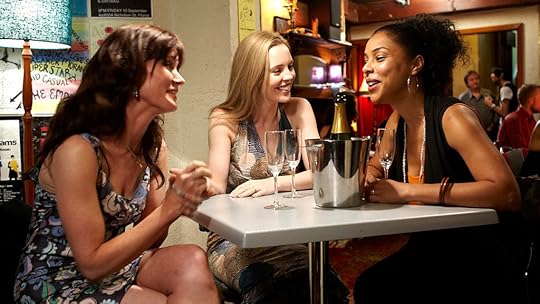
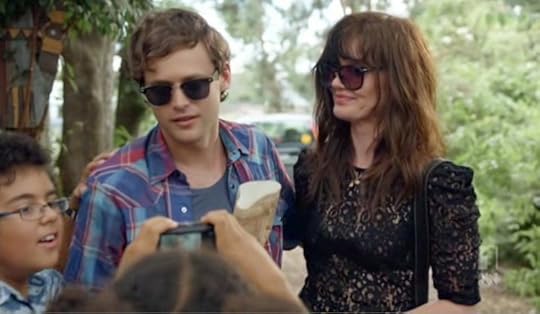
Le tre amiche storiche: al centro Rosie, la mamma della piccola peste che si becca lo schiaffo, interpretata da Melissa George (stesso ruolo anche nel remake US); a destra Aisha/Sophie Okonedo, la padrona della casa dove avviene il fatto; a sinistra Anouk/Essie Davis.
Succede tanto in queste pagine, succede di tutto, cose molto più importanti dello schiaffo. Lo schiaffo serve a sollevare il coperchio, il resto è quello che bolle nella pentola.
Non c’è da stupirsi che nell’Australia del 21° secolo il melting pot sia totale, il multiculturalismo abbia dilagato, e finalmente vinto: gente di tutte le età, di etnia e nazionalità diversa, con convinzioni politiche diverse, questa gente è connessa, intrecciata, sposata una con l’altro, e anche una contro l’altro, e tutto va bene, e tutto, ovviamente, non va affatto bene. Non so se stupirmi che l’Australia sia al momento la nazione con le regole più rigide e strette nei confronti dell’emigrazione, operazione No Way l’hanno chiamata, deportazione in isole e campi di raccolta, roba che mette i brividi. E forse non c’è stupore, ma certo c’è profonda tristezza. Vengono a mente Le die du carnage - Il dio del massacro di Yasmina Reza, la sua bella versione cinematografica firmata da Polanski, e, perché no, La cena di Herman Koch.
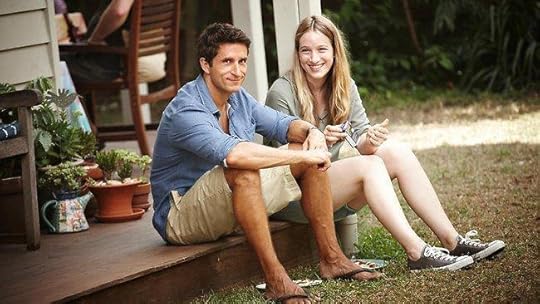
Il padrone di casa, Hector, di origine greca, interpretato da Jonathan Lapaglia, figlio di Anthony (sono molto simili, come si può vedere), e la baby sitter Connie/Sophie Lowe, bella mina vagante.
È un ‘come eravamo’, e anche un ‘come siamo’. Greci, prima di tutto, come l’origine del nome di Tsiolkias lascia intuire. E poi australiani bianchi e australiani neri, inglesi e aborigeni, indiani, italiani... Ci sono momenti di rara intensità, come quello in cui si descrive il guardare indietro nel tempo e si capisce che il tempo si sta prendendo gioco di noi - quello in cui si capisce che la vita è troppo veloce e la cazzo di morte invece troppo lenta, quello in cui è chiaro che dio è uno stronzo, non è onnipotente, non è buono. Bugie, false verità, ipocrisia, tradimento, debolezze, accanto all’amore e all’amicizia e alla sensibilità, come è normale, come è nell’ordine delle cose. I bambini non fanno una gran figura nel romanzo di Tsiolkas, sono lo specchio di adulti mediocri: a uscire fuori meglio di tutti sono gli adolescenti e gli anziani.
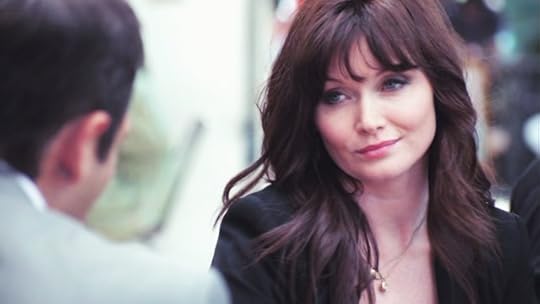
Anouk/Essie Davis merita un primo piano (quintato).
Forse questa gente del nuovissimo continente è difficile da comprendere e sentire vicina per chi proviene dal vecchio continente, dal paese del papa re: il finale con tanto di anfetamina sparata in vena è una celebrazione, la festa di fine e inizio, l’happy ending del racconto, Richie continua a sentire che è il giorno più bello della sua vita, che le cose stanno cambiando in meglio, che la sua omosessualità ha finalmente modo di vivere e manifestarsi, e gli adulti sembrano consenzienti anche allo sballo chimico, la vita è dura, si sa, un aiutino non guasta, più avanti lo si sostituirà con sesso, alcol, carriera. Il r&r funziona sempre.
Purtroppo la capacità di racconto e di prospettiva di Tsiolkas non è sorretta da una scrittura all’altezza: ho trovato diversi momenti di caduta, il tutto peggiorato da una traduzione che non sembra impeccabile.
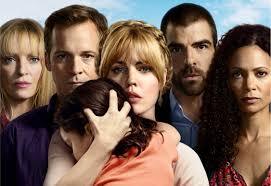
Il remake made in US esce nel 2015. Nell’immagine si vedono: al centro Melissa George/Rosie, mamma dello schiaffeggiato; Thandie Newton/Aisha; Zachary Quinto/Harry, lo schiaffeggiatore; Uma Thurman/Anouk; Peter Sarsgaard/Hector.
PS TV La serie originale (2011) ha il suo fascino e il suo perché: sarà che l’Australia mi è meno nota di NY (dove è ambientato il remake USA), sarà che attori e personaggi sembrano più centrati, per esempio nelle loro origini etniche (i greci), sarà che è più fedele al libro, pur non essendo magistrale, si lascia guardare con piacere. Il remake USA, nonostante il piacere di vedere Uma Thurman, di solito iceberg, che piange ininterrottamente per quasi tutto il suo episodio, e lo fa bene, piange in modo convincente, nonostante visivamente ormai c’è poco da eccepire, il problema è la scrittura che ha ‘americanizzato’ dovunque ha potuto, smussando gli angoli, togliendo le spine, virando verso il politically correct una storia che nasce all’insegna dell’incorrect. E quindi, no, non ce l’ho fatta a guardarla tutta, dopo tre episodi, l’ho abbandonata.
Uma Thurman-Anouk, al centro, tra le sue due amiche del cuore, Thandie Newton/Aisha, e a sinistra, Melissa George/Rosie.
Sull’Australia, su come è nata l’Australia che conosciamo, non smetterò di suggerire un libro magnifico, uno dei miei top 100, La riva fatale di Robert Hughes, che non occorre leggere tutto (830 pagine), basta qualche capitolo, il primo e altri a scelta a seguire.
Di nuovo la versione australiana, di nuovo Essie Davis, che merita un ritorno.
I read constantly. I read for information, for enlightenment, for pleasure. I read anywhere from 2 to 5 books a month, and have for some 45+ years. I was excited when I first saw this title, as I am one who shamelessly admits to ofttimes judging a book by it's cover. I own to liking the look of the book, and the title just jumped out at Me. "The Slap"... Intriguing. The synopsis -- Someone slaps a child who is not their own... Oooh..., you've got Me.
A more apt title would have been "Slaps All Around", which is what I wanted to do to every character -- AND myself -- less than 40 pages in. If this author won an award that wasn't presented by his mother after a panel of close family members voted on a ballot with this single book as the entry, then I am stunned.
How can the entire premise of a book play such a minor role in the ENTIRE BOOK!? How do you manage to write a story with so many characters telling "their story" from multiple vantage points, and yet do so in such a way that the reader cares about NONE of them -- not the children, not the adults, not the seniors, not the dead, not the dying... No One. I, literally, got up from reading this book, logged onto my computer, and sought out reviews because I wanted to make sure I wasn't somehow missing something. I needed reassurance that my reading tastes had not all of a sudden left Me, and I couldn't recognize a good story, or good writing when I read it! And, by the way, for those who felt that this author was a "good writer" -- Really? I finished this only because I hate not finishing a book, and I wanted to validate for myself that what I thought was the case, about 20 pages in, was actually the case -- This is an awful, awful book.
Many reviewers voiced displeasure with some of the crudeness and explicit scenes in the book. Crude or gratuitous, in the context of a good story, can make perfect sense. Crude and gratuitous because you have nothing else of interest or substance to offer is unforgivable... And from an "award-winning" author, nonetheless.
I cannot offer a strong enough warning to those who might be tempted to read this. Please, do yourself a favor -- don't do it. There are so many great books in New Arrivals, Bargain Bins, on the Classics Table, that you could delve into. Reread something you loved before. Reading this will only make you wish you had.
I feel about this book as I do when a writer/director takes a wonderful movie premise and completely mangles it -- What a waste. A waste of time for the writer. A waste of time for the reader. So, if you even remotely care about making each moment count..., don't waste a minute on this.
One of those books that when first dropped, it felt like everyone was talking about it. One day at a suburban barbeque a man slaps someone else's child, this is the story of what happened next to a number of attendees. Longlisted for the Man Booker prize, this is a masterpiece on human relationships across generations in the 21st century. 9 out of 12, fiery Four Star read. 2010 read
I do not consider The Slap to be a great piece of writing - I feel it was created to provide mass appeal. I found the quality of writing a little patchy, and in places offensive.
The basic premise is an interesting one - the "incident" at the party and how it affects the lives of the people involved, which in turn leads to a description, history and character study of a group of loosely interrelated people. The big moral question of whether the actions and reactions following the "Slap" were necessary and appropriate, is an interesting one, but one that I have no trouble answering: No. As a parent I have no hestitation in saying that if I was in a similar positon and somebody slapped my son for appalling behaviour I would have no problem whatsoever (and my wife agrees). Whilst I am against corporal punishment, an occasional, un-premeditated impulsive "slap", whilst undesirable is relatively harmless. What is interesting is that whilst we were initially led to sympathise with Harry, when we reached his chapter we realised what an unpleasant character he is - and later on we learn of even worse behaviour in his past (not that that affects the basic moral question).
Back to the writing and language used (surely the most important factor in a book). Probably what I objected to most was the slipshod way in which this is written. Some examples:
Top of page 104, Harry's lawyer suddenly knows all about it. I checked this several times .. was there a chunk missing?
p96. "Warwick Kelly".. was Kelly the mother or the girlfriend ... ? Very confusing.
p313. Athena leaves the room only to "gasp out loud" a page later
p293 Manolis becomes Monolis a couple of times
There are many many more examples... these are very distracting and make this book a contrast to the polished accurate writing of say Ian McEwan or J M Coetzee.
I found most of the scenes and dialogue clumsy and unconvincing. For example, when Anouk verbally abuses Rosie in the pub on p.77, then a few minutes later they are all lovey girly chums again. Excuse me but women scorned DO NOT BEHAVE LIKE THIS (in my experience)! When spoken to like this most women I have ever met would storm off and not speak to the person who insulted them for weeks.
Most of the characters were unpleasant with the exception of Aisha. Hers was the only chapter I really enjoyed, she was the only character I found convincing, likeable and possible to empathise with. I was quite intrigued with her dilemma. I found most of the other chapters pretty boring.
I found the first chapter hard work, so many random characters were introduced and we had no idea which ones were important. I found the constant use of "fuck" and "fucking" (as an adjective) unnecessary and irritating - especially when used in narrative (as opposed to dialogue). Most people I know do not use this word so liberally, particularly with strangers. For example, when the elderly respectable Italian woman brought her dog into the vet and said "I don't know what the fuck is wrong with him". Who really talks like this ? I did not like the frequent use of the word "wog" - isn't this an unacceptable racist term like nigger? I found the teenage sex and drug scene quite revolting and I don't not believe this is normal (you parents of teenagers, care to comment???). OK, so I was shocked - was this the desired effect?!
To the book's credit, I did finish it. I am surprised this book has become such a well-reviewed bestseller.
En la línea provocativa de Herman Koch, lo supera ampliamente.
Nos enamoramos de algunos libros sin saber muy bien por qué, igual que nos ocurre con las personas (los desenamoramientos son más fáciles de explicar), libros que nos tocan, que nos llegan, que nos dicen mucho más de lo que literalmente leemos. Pues bien, este libro no es de esos, pero es una muy buena novela. Dice lo que dice, no hay más, pero dice mucho.
La bofetada que da título a la novela, propinada a un niño por un adulto que no es su padre, no es más que la excusa para hablar de muchas otras cosas, de un estado del mundo, del nuestro, el actual, el de los llamados países desarrollados, el de la inseguridad, el de la falta de valores claros, o la confusión de valores, el de la decadencia. Un mundo que puede estar en una de esas épocas de cambio importante que no sabemos dónde nos llevará y temiendo a donde nos puede llevar. Y no es un libro de tesis; se limita a plantear los problemas, no hay soluciones, no hay una toma de partido, no hay acusaciones, incluso es indulgente con nuestras debilidades, que no solo son fruto de este mundo nuestro de hoy sino que nos son consustanciales.
Hay libros que nos cautivan pero que no recomendaríamos a todo el mundo por entender que la satisfacción que nos ha proporcionado puede ser muy personal. Este no es de esos libros: mi recomendación es general y sin reservas.
I read this book a few years ago and thought I would write a review as I recently watched the US TV mini series based on the book. I also watched the series a couple of years ago that was filmed in Australia. I love the fact that Melissa George was cast as Rosie in both versions.
First off, I hate this cover. The one I have is a bit different. I just don't like seeing a child on the ground obviously upset and crying.
When I picked it up in the bookstore and read the back I thought the premise was fantastic and original. A man slaps a child (Hugo) at a friends and family barbecue. Hugo is not his child, and the book explores how this event affects everyone that was in attendance at the barbecue.
I was very intrigued!!
The book was compelling to say the least. While there is a varied cast of characters in the book, it is written from the viewpoints of eight characters. All of these characters were present at the barbecue where the slap took place.
We have:
Hector- married to Aisha Anouk-family friend Harry-Hector's cousin Connie-works with Aisha and often babysits Hugo Rosie-Hugo's mother Manolis-Hector's father Aisha - Hector's wife Richie-Connie's best friend
To this day I'm not entirely sure how I feel about this book. From the varied ratings it seems that people either loved it or hated it. I waver between 3 and 4 stars as it held my interest but I found much of it rather disturbing. Although, if I rated everything on how disturbed I felt then my ratings would probably all be low.
Many of the men come off as extremely narcissistic and misogynistic. I realize that people like this do exist in real life but there just didn't seem to be any redeeming qualities about many of the characters depicted. At times it was very offensive and vulgar with what I thought was quite a bit of gratuitous sex.
Having said all of that I still found the book well written with a diverse cast of characters. And while it was disturbing I was still engrossed in the story and the lives of all of the characters. Their individual stories were very involved and interesting.
Controversial at times it examines the differences in regards to discipline and child-rearing, and also shows how people can greatly differ in their personal relationships with both friends and family.
This novel truly shows how one instant can change so many lives.
Having seen this spoken of so highly and having read the initial idea of how one instant can change so many lives i thought i'd give it a try. i was disappointed. Tsiolkas has an appalling view of humankind.
The way people think of each other and treat each other and stick with each other for the most ludicrous of reasons in his universe is depressing in the extreme. The characters are all either racist, sexist, drunken or sluts or indeed, in a few cases, all of the above.
The idea of tracing the lives of witnesses to the slap in question would have been interesting if a) they had been believable and not monstrous caricatures b)You felt any fellow feeling for them at all c) the slap had had an effect on their lives, which reading the novel it didn't. Tsolkias attempts to use it as the hook on which to place the unravelling or quaking of various relationships and there is a certain cleverness to the way the stories interreact and relate but the slap is of no real significance except for the totally unbelievable reaction of arrests and court cases.
The language is laughably foul. I don't know many elderly greek men admittedly but is it likely they would greet another old friend at the funeral of another with ' How are you you old cocksucker? '. The f and c words litter the dialogue and their internal thinking. Almost every page has one. The racism and brutality of relationship is horrible. I have no problem with earthy language and vicious dialogue if it is necessary for character or even atmosphere but i am very dubious here.
I don't think there is a single person who I would be interested in getting to know. Tsolkias does give you a certain insight into the child's mother's upbringing. Her parenting skills are ridiculous and unrealistic but its her neediness and abuse which gives at least a glimmer of ' ah, I can see why' and partially redeems the storyline.
Actually maybe he should write the sequel. Has Hugo, the brat, risen above his dreadful start? Has he managed to break from the circle of madness. So I correct myself; I would not like to meet any of these self-obsessed, self-centred adult idiots at any time in my life but perhaps Hugo could redeem them all by actually turning out well. maybe one slap might change the world or at least this putrid corner of depression
At a suburban barbeque, one slap will change the lives of these people. Christos Tsiolkas unflinchingly looks at domestic life in the Australian suburbs in the twenty first century. The slap and its consequences cause everyone to question their own families and the way they live, their expectations, beliefs and desires. A gripping novel of loyalty and happiness, compromise and truth from the very start to the end.
You’ll either love it or hate it; Christos Tsiolkas’ controversial novel The Slap is heavy reading and very confronting and it all starts with a Slap. The Slap starts at a barbeque for group of family and friends, when one adult slaps an unrelated child the universal tension begins. The book changes perspectives of the different characters at the Barbeque to show different emotions and feelings about the events.
The Slap goes through topics like Discipline, Child Raising, Family Life, Adultery, Friends verse Family, Gossip and Multiculturalism. While the characters are extremely flawed and sometimes you want to slap them, don’t let that put you off. If you are not a fan of course language, be warned it does feature very heavily in this book. Apart from that the writing, the characters and plot are well crafted, I have noticed women seem to hate this book more than men, it could be because of the subject matter. But it doesn’t matter whether you think the child deserved to be slapped (He did), or if the adult should have known better (he should have) this book is going to challenge you in one way or another.
The Slap will play with your emotions all the way through this book and you will rage at the characters and want to slap them senseless. But the turmoil and the internal monologue of all the characters was done really well and makes for an excellent read. It’s like you have an intimate look into the head of all the characters involved in this one incident at a barbeque. It’s a compelling read all the way to the end.
I positively HATED that book. I only finished it, because when I start a book, well I just finish it. First of all... Language. There is at least one occurrence of the word “fuck” “fucking” or even “cunt”... I am no prude, but in this case, it was way too often, and totally unnecessary. That was one of the first thing that ruined this book for me. Especially when you have the 70 something greek granddad, talking to his long lost friends and saying” hello you cocksucker”... totally unrealistic and again why? Or when Aisha, who is perceived by all the other characters as the most elegant, refined women they know, is having a torrid affair and thinks in the crudest language possible... again the scene was ruined and the character as well.
I do concede that Christos Tsiolkas manages very well to immerse you the life of each of his 8 characters, and give them a voice. However, I really found most of them very annoying, and that his vision of humanity was grim and sad. There is no love between these people, no hope. You have the first couple Aisha and her husband. They appear as the perfect couple but each has an affair, the men with a 16 years old no less, referring to her as a young and fresh cunt (charming), and in the end it appears that what make them stick with one another is how good they look together. That is just great, fantastic. But, that is not all. The second couple, Rosie and Gary, just hate each other and are probably the most sordid of the lot. Their parenting style is also just infuriating, and you do want to slap that them both page after page,.. again, I did not find them realistic but very caricatural: bad parents, white trash, puting their friends to court. Then the trophy wife beater...
Finally the slap, that is supposed to reverberate into each of the characters life, has just a very limited impact, apart from Rosie and her husband, and in my opinion was just an excuse. I honestly don’t think that people would let that event impact so much on their life.
I don’t understand how that book had such raving reviews in the press, as I think it should at least open more controversy than it did.
This was one of the best books I've read in a long time. Filled with despicable but ultimately somehow sympathetic characters, a microcosm of friends and family becomes a commentary on the social make-up of the city of Melbourne, the country of Australia, and perhaps the world. That the story is told from multiple perspectives but still chronologically (ie. the episode around which the plot is centred isn't retold again and again) is genius and the complex, nuanced emotions of, reactions to and repercussions of a single event are ably described and brought to life by Tsiolkas. An uncomfortable but highly recommended read.
So I've heard a lot this morning from various MEDIA OUTLETS about this 'Merkin show based on an Australasian show based on this novel based on the movie Precious based on the novel Push by Sapphire.
All the descriptions say it's about a rugged individualist, a "self-made man" who slaps some dumb grimy hippies's's kid after that kid is swingin' a bat around recklessly at a birthday party/neighborhood cookout/commie picnic/wobbly parade combined with a rodeo and a Young Republican circle jerk.
I saw a commercial for it on the media outlet's webinar and the slap was filmed like the opening scene of Saving Private Ryan. It was intense.
Now I don't have kids or nothing but if my kid was swinging a bat around at some dumb commie hippies I'd give him an extra Mountain Dew before bed.
Because look, these kids are either gonna get smacked with a bat or a shiny billy club NOW or it's gonna happen when they fail out of art school and don't make it on Wall St.
So all I've gotta say is that cowboys get slapped all the time, and it only makes them better at rootin' and tootin' at the saloon, and that there are also cowboys in Australasia, and they did their fair share of genocidin' too, so what does that tell you?
I seriously need to stop impulse buying. I also need to start ignoring three for two offers. In addition I need to read the first couple of pages before buying instead of just relying on the book cover. My brother can get away with that kind of behaviour, I can’t. I just end up with tat, as this purchase once again showed. However, my best defence against buying this sort of tat is to stop wandering into Waterstones to ‘have a look around’. That is the most lethal mistake I can ever make. I can’t even blame this one on holiday reading, it truly caught my interest and I am ashamed to admit it.
===Plot=== To begin with I’m going to quote directly from the back cover of the book as this will give you an idea of why this book really caught my attention even if it didn’t hold it. The premise of the book is brilliant, it is just the fact that it doesn’t live up to it which is disappointing. “At a suburban barbecue one afternoon. A man slaps an unruly boy. It’s a single act of violence. But this even reverberates through the lives of everyone who witnesses it happen. Whose side are you on?”
But in reality this only gives the first ‘dramatic’ part of the plot, and the ridiculous thing is that the book actually gets marginally better once the advertised ‘plot has finished and it starts moving forwards. The first section of the book revolves around this slap and the direct consequences of the mans actions including the court case that follows. The supposed focus is on how this splits a group of friends down the middle as each take sides, and what had been a fairly close group of friends becomes split and relationships become strained. The female friends get more bitchy and the male group gets more aggressive. But when the book moves on it moves into the lives of not only the main group of friends which the first section of the book is based around, but also into the lives of the lesser characters. This means that it splits into many smaller, individual plots and it becomes a much better read, but it’s tricky to give too much away about this without ruining the overall plot in case you ever actually want to read this. Personally I’d take my warning and stay well away.
===Characters=== Here is the double whammy of the book. I can cope with an poorly managed plot if the characters make up for it, but no, the characters are awful The author relies far too much on cursing and sex to actually build his characters effectively, and the creations that he has built are almost to a man unlikeable and irritating. I would have thought that the main purpose of a book like this would be to make the reader think, to engage them and as the cover actually asks, to make you pick a side. Instead you just think that they’re all cretins.
The automatic thinking of many, including myself, would be to side with the child – a four year old boy named Hugo. I mean a four year old is fairly defenceless and should be fairly likable, right? Or at least cute? Wrong. Unfortunately this is impossible because he is a spoilt brat who completely and utterly deserved everything he got. If I’d have been there I’d probably have hit him long before the bloke in the story did, and I’d have probably tried to ensure that I had something heavy in my hand at the time. So then you come to the man who slapped him, and who did, in a way, have a reason considering the boy was not only an irritating cretin but was also about to hit his own child with a baseball bat. But you can’t side with him either because he is a genuinely bullish, aggressive and unlikable character. He just isn’t a character you can empathise with, although he does make a very good point when he says; “Your child deserved it. But I don’t blame him, I blame his bogan parents”.
You see the characters get no better in the slightest when you move across to Hugo’s parents; in fact it might even get worse. Rose is over protective, caters to Hugo’s every whim and is still breast feeding him even though he’s four years old. She’s completely weak willed and spineless in some ways which only makes you detest her more, but at the same time she is a manipulative, vindictive bitch who is not above using anything to get her own ends. Needless to say, you don’t like her. Her husband Harry is a weak minded, aggressive alcoholic and the general impression you get is that the entire family could seriously do with a good slapping, not just the child. The friendship group around them is no better than this, particularly as it relies on stereotypical clichés and fails to add anything new; Aisha and Anouk are both two dimensional as manipulative females who act in a remarkably loose manner for absolutely no reason. And Hector, Aisha’s husband, is an aggressive slob who sleeps around. Christos Tsiolkas is working on age old and largely out of date gender stereotypes, and he isn’t even doing it well which is completely inexcusable.
As the book progresses Christos Tsiolkas does make an attempt to improve on this lamentably poor situation. But unfortunately it is too little, too late. It’s all too sudden and completely without tact. You can’t make an asshole a saint overnight particularly when you give no reason for it, and trying to just makes the writer look like an eejit. It seems unconvincing and somewhat ridiculous. The only really good characters are those who were side-characters for most of the way through the novel and didn’t have a part to play when it really mattered. Hector’s parents are very good examples of this; Manolis and Koula barely appear as ‘real’ characters until near the end of the book, but once they do Christos Tsiolkas excels with them. They end up being well-rounded characters who you can empathise with and understand. Their struggle to find old friends and to come to terms with the losses of old age is particularly striking and emotive. What Christos fails to grasp in the earlier section he gets here; with Manoli in particular he grips the reader and forces them to wwatch the pain and helplessness that Manoli finds in finding old friends both alive and dead.
===Language/Content=== To put it very plainly, you’ll be hard pressed to find a page that does not contain at least one obscenity. The *F* word and the *C* word seem to be two of his favourites in particular. Now, I’m not a prude and I’m not too old fashioned. I have no objection to occasional swearing or when it is used in appropriate contexts such as a prison setting or as in my previous review; Animal’s People where it is effective. But when it is littered throughout with no apparent reason or purpose other than swearing for the sake of swearing I get irritated. It is crude, it is pointless and I have to admit that I find the *C* word very offensive. But when you consider that this is set in a middle class, fairly affluent society then it just seems that Christos Tsiolkas either has no grasp of decent English or is being deliberately obtuse.
In a similar vein, his use of sex is frequent, blunt and crude. It’s kind of like being hit repeatedly over the head by a crow bar. The women often behave as little more than whores and the men are no better. Again, if sex serves a function in a novel or if it is sensitively or decently done then I have no problem, but when it’s sex for the sake of sex I start to wonder whether I bought a novel or porn. Then I realise that nobody in their right mind would buy such long winded porn. In fact nobody in their right mind would write such long winded porn. I know that sex sells, but surely any vaguely self respecting author shouldn’t feel like they need to sell out THAT badly!?
Sex sells. So do drugs. And here we have the whole cycle of sex, drugs and rock n roll. But nobody in the novel ever suffers a low from speed or ecstasy, nobody ever has a bad trip on LSD. It’s all wonderful and there are no side effects. Even the parents seem to have no issue with their teenagers taking drugs as is shown by one parent asking her son whether they’ll be drugs at a party. He responds that they’ll be weed, speed and probably an E, but her reaction is outstanding: ‘Oh baby, I guess you’re all grown up.’ Realistic? Not on my life. For a start, what teenager would tell their mother what drugs they are planning on taking? Secondly, would your parents react like that? I know that neither of my sets would. And probably most importantly, is this the message we want to be sending out about drugs? Because we all know that their are side effects, there are lows and there is a reason why they are illegal; but this isn’t portrayed in the book.
===My opinion=== Well, to be fair you’ve probably already had a full earful of my opinion. But what I don’t understand is why this book has such fantastic critical acclaim. It’s the winner of the Commonwealth writers prize and was long listed for the Man Bookers Prize. Everybody was raving about it:
“A tremendously vital book in every sense. Completed at a gallop, it fairly crackles alone, juiced up with novelistic license and peeled-eyeball candour, the characters driven by their appetites into a thrilling, vital approximation of what it is to be alive.” Sunday Times
And this kind of praise isn’t rare, so clearly a lot of people disagree with my opinion. But neither I nor a lady at my local pub who was reading it at the same time get it. To me this was crude, unrealistic and appalling in terms of plot and character development for the first three quarters of the novel. It’s content, language, style, plot and characters seemed completely lacking. In the later sections of the book I actually found myself enjoying it, but for most of it I was forcing my way through it for the sole purpose of writing this review. Very much an, ‘I read this so you don’t have to’ kind of moment! I just don’t understand how it this is a phenomenal international bestseller. There aren’t even any translation issues which can be blamed. It is a fantastic idea, but it is very, very badly implemented.
===Conclusion=== Surely you’ve heard enough of me by now? If I'm honest I wouldn't have given this one star if Ciao allowed me to do that, unfortunately Ciao doesn't give me that option. Christos Tsiolkas did try to redeem himself with the later part of the book, but it truly was too little, too late. But my overall view is that it really pays to read the first couple of pages, or at least sentences, of a book before buying it:
“His eyes still shut, a dream dissolving and already impossible to recall, Hector’s hand sluggishly reached across the bed. Good, Aish was up. He let out a victorious fart, burying his face deep into the pillow to escape the clammy methane stink.”
Trust me, it gets no better. In fact, it gets far, far worse. From now on I will make a concerted effort not to impulse buy books... Don’t waste your money. It's not worth it.
I've never been to Australia. My knowledge of Australia is based entirely on several books both historical and fictional, a conversation with an Australian work colleague who informed me that "No, she could not bring me back a bush-baby" (apparently they're native to continental Africa, not Australia - who knew?) and many many episodes of Neighbours and Home and Away. If this book was my only source of information regarding the denizens of Australia I'd definitely be striking it from the holiday destinations list. Oprah went to Australia a few years and hosted her Op-stravaganza there in order to raise the profile of the country as a tourist destination in the USA. If you handed out free copies of this book to every American citizen you could pretty quickly undo all of Oprah's lovely PR work.
In traditionally stereotypical Australian style, a diverse cross section of friends, neighbours, work colleagues, relatives and their children are gathered together to throw some snags on the "barby". One of them gets a little over excited and slaps a child. Not his own child. Ructions ensue as the group hotly debates what is morally right - to slap or not to slap? That is the question. Strange that it is the slap that causes such a fuss when none of these people seem to think twice about their rampant affairs, alcoholism, wife-beating, fraud and appalling levels of racism.
Each chapter gives you an insight into the lives, racist attitudes, sexual mores and the stance on the slap of each person who was there to witness it. As you progress you're left wondering why you should trust or believe this reprehensible selection of idiots and their opinions on child rearing.
Let me put it this way- if the characters in "The Slap" were real and I was armed with some kind of nuclear device, I wouldn't think twice before blowing up their corner of tedious suburbia. I'd save Richie and Hugo though. Why? Well Richie seemed to be a pretty decent kid, the best of what can roundly be described as a bad bunch. I'd save Hugo because in the post-apocalyptic world it is probably best that everyone has someone to channel their hate and rage towards and let's face it people, young Hugo has the makings of an A-Class shit bag when he grows up.
When it comes down to it, the most pressing question is why are more of the people in this book not getting a damned good thumping?
This book was longlisted for the Man Booker (Man Booker I judge you) and has also been hailed as "the great Australian novel" and a state of nation address. If this makes it onto the revised 1001 books list then I'm bailing.
The word c**t and completely emotionless/hate-filled sex plus casual drug use does not make a story either good, controversial or interesting. There feels like there is only one character in this book, but it assumes different ancestry and genders. Just one hate-filled, drug and alcohol-fuelled zombie, playing all the parts. I hate this book, hate it, hate it, hate it, if I could unwrite it, I would. Books don't have to be angel sparkles, ginger beer and licky happy dogs, I don't mind anger/hate/ennui in books, in fact, I don't even need to like the characters but this book has no redeeming features; the writing is uninventive, the characters one-dimensional and that dimension is hateful, the dialogue forced, the characters without direction, the story rambly etc etc.
Despite all of this, I'd still not rate it so badly if I felt there was a point, even if that point was just to reflect a section of society, but NO ONE thinks like this. Or at least, no large group of people are such an accumulated pack of wankers, I refuse to believe it.
It's not so bad it's good, it's just really really really bad. Please don't read it.
Hated this book. Really hated ALL the characters in this book. I'm probably being a little too harsh to give this one star since I somehow managed to finish the book. The subject was interesting, but I just didn't like it.
The author seemed like he wanted to push every button he could and go extreme with it. The book touches on racism to the point where it's cringe worthy, using every kind of racist comment or stereotype it can. It's very misogynistic, making every man in the story come off as some kind of a-hole. I would hate to run into any of the men in this story.
The story begins at a barbecue where a group of friends and family are gathered. We are introduced to Hugo, the worst bratty little three year old kid you could ever meet. After several little antics Hugo has at the party, one father finally has had enough and impulsively slaps Hugo in the face. This sets off what happens next in the book, which is not always about the slap. We get too much background on these people as each tells his version and story in relation to the other characters. Just when you think you're finally coming across a character that might just be ok, they do or say something despicable. Every single character was the type of person you would not want to be friends with. And every chapter has to bring some kind of icky sex scene to the table. In Rosie's (Hugo's mom, an extremely, I mean extremely, dislikable woman) chapter there's a scene where Hugo and dad compete for her breast. Yes, this is a three year old who gets breastfed at the drop of a hat, anywhere and in front of anyone. This makes every one in the story uncomfortable and no doubtedly plays into their dislike for Hugo. Both dad and Hugo play tug-o-war with Rosie's breast, each claiming, 'No mine.' 'No, mine", back and forth.
There's a scene where one of the teenage boys is going to go to a party. His mom asks him if he's going to take any drugs at the party. The boy (Richie) tells her it is more than likely he will. She replies, "Oh baby. I guess you're all grown up." What!?
I just couldn't get with any of these characters or the way the slap was handled by all the characters as each is forced to take sides. A very uncomfortable read, for sure.
This book has occasioned a lot of controversy with many people thinking that it is misogynistic. It's overly simplistic to see this story as full of misogyny, but even if the charge held, novelists are under no obligation to be politically correct.
This is in many ways an old fashioned novel. It has a beginning, middle and an end. Christos Tsiolkas is giving us his version of social reality and satirizing the concerns of the middle class of the 21st century. Maybe there's more cursing and sex than readers of literary novels like, but it's not gratuitous cursing and sex. It does contribute to the picture he paints of his characters. The men and women are ambivalent about one another. The characters are not always easy to like, but Mr. Tsoilkas helps us understand them.
I found Rosie, the indulgent mother of the 4 year child that is slapped, only too believable. Her child menaces an older child with a baseball bat and later in the novel spits on an elderly man out of pure malice and--that most insidious of 21st century diseases--entitlement Yet Rosie oblivious to her son's faults, is walking around with dirty hair explaining to a friend that she and her husband are trying to teach him about water conservation. But I felt sorry for her as well. She is isolated from her narcissistic mother and overly protective of her difficult husband and her young son, but enraged when her friends seem to favor family loyalties over loyalty to her.
One of the more sympathetic characters in the book is Manoli the elderly uncle of he man who delivers the slap. Manoli struggles to understand why his daughter-in-law would side with Rosie, rather than with her family. Manoli has seen great upheaval and spends one afternoon burying an old friend The scene at the house follow the funeral was one of my favorites It was filled with such warmth and regret. While talking to the widow, he hears that other friends have been largely reclusive since their son was shot and killed by drug dealers After he visits this family and sees an elderly friend wasting away from lung cancer he is saddened that his own children's lives seem to be focused on petty concerns and that they have no conception of what is important in life.
Mr. Tsiolkas also deals with issues of multiculturalism, class, how people make their marriages work and how they raise their children The kids from broken homes--Richie, a young gay man reared only by his mother and Connie, Richie's best friend, who lives with her single aunt are the most appealing of the children.
Henry James urged the novelist to `try to be one of the people on whom nothing is lost.' Mr. Tsiolkas is no Henry James. The Master would never write such graphic sex scenes or use such profanity, but very little seems to be lost on him and the book is dense enough to be worth re-reading.
This novel has aroused some real emotion and anyone whose writing can get people talking--no matter how bitterly--is not to be dismissed.
I’m probably one of the few people in my group of friends that actually finished this book. I don’t think I have ever read a book that has left me with such raw and mixed emotions before. I was totally drained! There were at times when I wanted to fling the book against the wall in utter disgust and there were others where I felt such sympathy for the characters inner turmoil that I wanted to embraces them and tell them it was all okay. This was a very hard book to read. But the thing I really loved about it is how it affected me in this way. Very clever and powerful piece of writing.
Having sat on my to-read shelf for years, I took this on a plane trip recently. I expected to leave it abandoned in my seat pocket for another person. Instead I found it hard to put down.
The premise of the story would never happen in reality – at a party of adult friends and their children, Hugo, a four year old, goes to wack another child with a cricket bat and the father of the target stops this happening by slapping Hugo on the face. The parents of Hugo insist on police involvement and the police take it to court. Because there is so little crime in Australia, that this stands out as a good use of police time and court resources. Not. It just wouldn’t happen.
But let’s pretend it could, because it makes for a great story, as the relations between the various adults are tested by the way in which Hugo’s parents behave and expectations by all concerned. A story gripping enough that not only was an Australian TV series made, but the US made its own – I’m almost curious to see what they did to it. Every main character in the story is ghastly. I’m truly impressed with the author’s ability to make such a readable story out of such shits as they all are. Young and old, they are all materialists whose high points are buying clothes, getting haircuts, drinking and drugging, getting bikini waxes and making entrances. The women are ghastly, the men, the Australians, the Indians, the Greeks, the young, the old. But having said that, the fact is that they are all utterly ordinary. People muddling through life in a self-centered – I, closely followed by my family, are what matters – way.
The Slap is a compelling book, but ultimately just as flawed as its characters. It suffers from the kitchen sink approach, except the sink AND all its piping is thrown in for good measure. In trying to point out the dark side of suburban life, it is beating its own chest and yelling "Look at me! I have so much to say!"
And it DOES have a lot to say about contemporary life in Australia. It's just that it does with no subtlety. The characters are monsters with no shades of grey. Harry, the slapper of the obnoxious kid at the barbecue, is later revealed to not merely be a man pushed to the limit in a bad moment - but also an extremely violent wife beater. Hector, the weak-willed bystander, cheats on his wife with a seventeen year old girl. Every man is seething with violence and misogyny and racism. There is not one redeeming quality in any of them - the book would have been more affecting if the characters were more human rather than every single one of them being reprehensible.
In the end, The Slap reminds me of the smugness of the film 'Crash', which deals with similar themes. It is trying so hard to point out the flaws in our extremely flawed society, but it does so in broad strokes which end up detracting from the truth it is depicting.
This entire review has been hidden because of spoilers.
A group of people are gathered at a suburban Barbecue. During the afternoon an incident between one of the guests and a four year old result in consequences that directly, or indirectly, affect all who are present.
Told as a collection of short stories through the perspective of eight characters, all with different background, age, ethnicity and value systems, The Slap is a provocative, unflinching novel that explores our inner most beliefs and the conflicting issues we face. I enjoyed having a different portal in which the same situation has been explored. Hearing the different points of view shows there is no black or white situation - that our beliefs are a sum of all our life's experiences.
The Slap is hands down my clear favourite amongst this year's Australian fiction and if there is any justice in the world, the judges of The Booker & The Miles Franklin Award will agree.
The cover asks ‘whose side are you on’ and having finished it I found that no one involved in this plot is either fully justified or blameless.
The split narratives offered such a variety of perspectives and points of empathy that I found it a pretty thought provoking text in terms of my own initial judgements. That said, I do wish there had been a bit more of a ‘comeuppance’ for some of the characters (although I’ll admit this could have resulted in an ultra-cheesy, justice-laden ending). Manolis’s section, that dealt beautifully with themes of loss and societal change, was the one I enjoyed reading the most, but I loved the feeling of shifting to a new character perspective throughout. This was recommended to me by a fellow goodreader (having never read Tsiolkas before) and I’m now keen to read more.
There was only one small negative worth mention; I found myself mildly aggravated by the all the sex. I’m no prude and I know Freud might disagree but I found it problematic that at times each characters’ key motivations, regrets and anxieties seemed sex-based. I’m not denying that humans are horny creatures but I like to cling to the ideal that not all men are ruled by their nobs at all times ... and that the average woman doesn’t have a rip-roaring orgasm at the drop of a hat (although, in fairness, the narrator does throw in a couple of failed female climaxes).
Παίρνουμε ένα μικρό, ασήμαντο περιστατικό αστικής βίας σε ένα μπαρμπεκιου, ένα χαστούκι, αλλά στη θέση του θύματος ένα παιδί, στη θέση του θύτη έναν ενήλικα : όχι κάποιον γονιό του. Το μεγεθύνουμε πασπαλίζοντας με γενναίες δόσεις ελληνικότητας και ομοφυλοφιλίας (ο Τσιόλκας γράφει για τον Τσιόλκα) και καλούμε στο τραπέζι την Οικογένεια : από την ελληνορθόδοξη της ξενιτιάς του Μανώλη και της Κούλας, την βαλτωμένη του Έκτορα και της Αϊσα, την πλούσια σε υλικά αγαθά, αλλά με απιστία και το φάντασμα της ενδοικοεγενειακής βίας να παραμονεύει του Χάρυ και της Σάντυ,τη παιδοκεντρική της Ρόζυ, τη μονογονεϊκή του Ρίτσι, την νέα οικογένεια θείας-ανιψιάς της Κόνι, τη μη-οικογένεια της Ανούκ.. Κατά διαστήματα συγκινητικό, κατά διαστήματα σκληρό, προσπαθεί να πει πολλά πράγματα (από το AIDS μέχρι την τρομοκρατία-αυτό πάλι το τελευταίο, γιατί άραγε), ξεκινάει από ένα "ηθικολογικό" ερώτημα (ενήλικας χαστουκίζει ανήλικο : έχει το δικαίωμα ;) σε αναγκάζει να διαλέξεις στρατόπεδο όσο μαίνεται η μάχη της μεσοαστικής αυστραλέζικης οικογένειας. Ο Τσιόλκας δεν χαρίζεται σε κανένα (αν και μαλακώνει στο Μανώλη, τον γέρο Έλληνα μετανάστη και δείχνει να αγαπάει τον χτυπημένο από AIDS πατέρα της Κόνι,την ίδια και τον φίλο της τον Ρίτσι, ως εκπρόσωπους της νέας γενιάς) απορώ με το πλήθος των "μονάστερων", το γνωστό θέμα εδώ : αντιπαθητικοί χαρακτήρες κάνουν και το βιβλίο, κακό ; Ε, όχι βέβαια.
ΥΓ1 : σχεδόν 700 σελίδες για ένα πλημμέλημα (?) του κώλου. Πάνε και σε δίκη ! Φυσικά και το έγραψε Έλληνας. Εκδικάζεται μέσα σε λίγους μήνες. Φυσικά και εκδικάζεται στην Αυστραλία. ΥΓ2 : το μικρό μαλακισμένο ήθελε τις φάπες του. ΑΘΩΟΣ.
This is a thought-provoking, bold and gripping read. The characters were challenging and multi-faceted because as the story progressed revelations about their past would make them appear in a different light and the motive of their actions would also alter the reader's views about them. The descriptions of graphic sex scenes and an overuse of swear words spoiled it for me at times as I cringed or flinched trying to wade through explicit sections which in my view were not necessary and the crude language overly provocative. The book's main premise though - a BBQ where an adult slaps another person's young son - is a great idea for how an event can ripple through a group of friends and bring out their hidden animosities, their views on education and ultimately what they believe is the basis of moral behaviour. It's a book that made me think and I think would make good bookclub material!
Ο Έκτορας στα 40α του γενέθλια πρέπει να υποστεί το πάρτυ γενεθλίων που του ετοίμασε η γυναίκα του, σχεδιάζοντάς το για μήνες. Ξέρει ότι θα πρέπει να ανεχτεί τη μάνα του, το σόι του, τους αγαπημένους αλλά ενίοτε φοβερά ενοχλητικούς του φίλους. Τα παιδιά τους. Τον ατσούμπαλο γιο του. Δε θέλει, αλλά πρέπει να γίνει καλύτερος. Πρέπει να κόψει με τη γκόμενα, πρέπει να κόψει το τσιγάρο, πρέπει να μην ξεχνά τις πρωινές του ασκήσεις.
Πόσο θα ήθελε να είχε ένα γιο σαν τον Ρόκο, τον ανιψιό του. Όμορφο παιδί, δραστήριο. Αδύνατο. Θα γίνει καλύτερος πατέρας, το υποσχέθηκε.
Η μάζωξη άρχισε αμήχανα, συνεχίστηκε με φωνές και τέλειωσε γρήγορα με κλάματα, βρισιές, απειλές. Ένα χαστούκι από τον λάθος άνθρωπο στο λάθος παιδί.
«Όλοι θέλαμε να χαστουκίσουμε τον Χιούγκο. Δε φταίει εκείνος, αλλά ο μαλάκας πατέρας του κι εσύ. Δεν του βάλατε ποτέ όρια. Τον κακομαθαίνετε. Εσείς τον καταστρέφετε. Και τώρα θέλεις να καταστρέψεις μια ολόκληρη οικογένεια για το κωλόπαιδό σου.»
Οι φίλες.
Το χαστούκι έφτασε στην αστυνομία, έγινε μήνυση, πήγε στα δικαστήρια. Ο Χάρι, ο βασιλιάς του σπιτιού του, ο πατέρας του υπέροχου, φυσιολογικού, Ρόκο, του παιδιού που ο Έκτορας εύχεται να ήταν δικός του γιος, είναι ο κατηγορούμενος.
Δύσκολο να περιγράψεις το Χαστούκι. Δε θα ήθελα να καταλήξω σε ένα μακρυνάρι για να γράψω για όλους τους ήρωες - είναι και αρκετοί. Θα γινόμουν βαρετή κι ό,τι να ‘γραφα θα ήταν πάλι λίγο. Όλα μπαίνουν στο μικροσκόπιο του Τσιόλκα. Ή κάτω από τη λεπίδα του. Η οικογένεια, η μέση ηλικία, ο γάμος, οι σχέσεις. Οι φιλίες, το γκεϊλίκι, οι απιστίες, η δηθενιά. Το πώς ο άνθρωπος καταλήγει να ξεχνά από πού ξεκίνησε, χάρη σε ένα σπίτι στα προάστια κι ένα ακριβό αμάξι. Και το κυριότερο: Πού βρίσκονται τα όρια, ποιος δικαιούται να τα σπάσει και γιατί και πώς και πότε. Ποιος είσαι εσύ, μέσα σε όλα αυτά.
Από τη μια εύχομαι να υπάρξουν κι άλλοι συγγραφείς σαν τον Τσιόλκα. Να μάθουν και κάτι από αυτόν, που μπουχτίσαμε στην κακοποίηση της γλώσσας και τις προχειροφτιαγμένες ιστορίες. Από την άλλη σκέφτομαι πως όχι, αυτό δε θα μπορούσε να συμβεί ποτέ. Αν υπήρχαν κι άλλοι, τότε εκείνος θα έλεγε ψέματα. Οπότε μάλλον χαίρομαι που είναι μοναδικός.
Ο Τσιόλκας δε χαϊδεύει αυτιά. Κανενός. Ούτε του αναγνώστη, ούτε των εκδοτών, ούτε της κοινωνίας. Κάπου μοιάζει μάλιστα να προκαλεί όλο τον κόσμο. Η ειλικρίνειά του είναι αποστομωτική. Η απόστασή του από την ιστορία που αφηγείται δεν γίνεται να μην σε εντυπωσιάσει. Η ωριμότητά του φαίνεται σε ολόκληρο το στήσιμο του βιβλίου. 25 χρόνια άλλωστε λέει κι ο ίδιος πως χρειάστηκαν για αναγνωριστεί - τόσο ώστε να ζει πια από αυτό.
Το γράψιμό του απογυμνώνει λίγο λίγο τον κόσμο και στο τέλος τον βλέπεις όπως πραγματικά είναι, θες δε θες: Σκατένιος, σάπιος, ψεύτικος, μα τόσο αληθινός. Κι εκεί κάπου εσύ, ο απλός αναγνώστης, ψάχνεις να βρεις τη θέση σου. Πού ανήκεις μέσα σ’ αυτό το ψέμα που είναι η αλήθεια. Ποιος είσαι. Ως ένα βαθμό θα νιώσεις ακόμα κι ενοχές. Και στο τέλος θέλεις απλά να φωνάξεις «άντε γαμηθείτε όλοι σας».
The Good - An easy enough read with interesting topics of debate (whether it's appropriate to hit a child, fidelity, drugs), and a modern/diverse cast of characters. I read somewhere that it's like a long episode of neighbours,but souped with with lots of swearing... pretty accurate.
The Bad - The title of the book. The opening chapter - characters are introduced at a very fast pace so you've not a clue who is who. Language used isn't amazing, cliches, lots of pointless swearing (Too much use of the c word is not big or clever, especially on the first page). Despite the main topic of discussion, nothing is really discussed: "You should never hit a child", "But the child deserve it,", "But you should never a hit a child, FACT," , "But he deserved it, he is a brat," etc etc, repeat several times in each chapter.
The Ugly - The "diverse" characters are all bloody horrible people at the extreme of stereotype. There's no subtlety to their feelings, actions, or dialogue, and even the ones I thought might be somewhere near normal turned out to be vapid monsters concerned only about image. It just isn't real life (not in my experience anyway) - it's very difficult to sympathise with any of them. Does everyone in Melbourne do drugs? Do they all hate their spouses?
A lot of people will enjoy reading this (people who enjoy soaps) - and it is OK, but by Booker standards it would only get 1-2 rating. I find it funny that the author has slated the English novel too - this guy needs to a get a grip.
The Slap is about New Australia, an uncomfortable country of people living the direct contradiction between the white western world and an immigrant life; a fractured country where class, religion, and all those other big ideas break friendships and families apart.
But this book is also about the small things, the tiny lines people draw, the boundaries we fret over and keep us safe. Christos Tsiolkas explores the ideas that create generational difference. In a lot of ways, I intimately understand what he's after. Where I draw my strength from, my mother can't fathom. When Aisha refuses to go to her brother-in-law's party, it's a matter of her personal principle. She won't go, she can't go. It would be going against her integrity. But, to her father-in-law, she is clearly just insulting the family. She is part of the family and her principles mean nothing against the monolithic idea of family. I know what that's like. When my cousin's marriage went south and it became clear that his and his parents' sexist swine behaviour led to his wife's suicide, I decided I would never talk to the bastard again. I thought surely he would be excommunicated from the family.
But there he was, at the next wedding. Because he was family. It was a betrayal; not just to his late wife, but to every woman there. So, yeah, I know what Tsiolkas is talking about here.
Another big theme is the idea of raising children in an ever more atomised society. Who is responsible for disciplining children? Their parents. But what happens when their parents don't discipline the children? And when those parents' parents are absent, nonexistent, not available to be proper grandparents? There is no one to tell the children they are wrong, no one to tell the child's parents that they are not doing their job. And who takes the responsibility?
Tsiolkas raises important questions about the role of a community in raising a child...and the difficulty of being a parent without a community you trust.
One of the issues I found most interesting was about the men. The book seems to be saying something about the diminishing role of men in the family. See, the story is told in several chapters, each from a different character's point of view. Aisha's husband Hector and his cousin Harry are two of three heterosexual men the book gets inside. Both Hector and Harry are married to beautiful women whom they love and respect. Both Hector and Harry are also cheating on their wives. Both Hector and Harry are ridiculously preoccupied with their penises; they jerk off several times a day; they jerk off to nineteen-year-old girls. It's a little pathetic. But in a way, it seems like these men feel that all the power they have left is in their virility. Aisha chooses not to go to a family party; it makes Hector look bad, his parents wish he'd married someone else, and he's insulted. And he can't do anything about it. Without the traditional, conservative roles of the family he grew up in, it's like all he has left are these pathetic gestures of faithlessness. And I think this i