Jump to ratings and reviews
Rate this book

The Boy in the Field

Rate this book
The New York Times bestselling author of The Flight of Gemma Hardy delivers another “luminous, unforgettable, and perfectly rendered” (Dennis Lehane) novel—a poignant and probing psychological drama that follows the lives of three siblings in the wake of a violent crime.

One September afternoon in 1999, teenagers Matthew, Zoe, and Duncan Lang are walking home from school when they discover a boy lying in a field, bloody and unconscious. Thanks to their intervention, the boy’s life is saved. In the aftermath, all three siblings are irrevocably changed. Matthew, the oldest, becomes obsessed with tracking down the assailant, secretly searching the local town with the victim’s brother. Zoe wanders the streets of Oxford, looking at men, and one of them, a visiting American graduate student, looks back. Duncan, the youngest, who has seldom thought about being adopted, suddenly decides he wants to find his birth mother. Overshadowing all three is the awareness that something is amiss in their parents’ marriage. Over the course of the autumn, as each of the siblings confronts the complications and contradictions of their approaching adulthood, they find themselves at once drawn together and driven apart.

Written with the deceptive simplicity and power of a fable, The Boy in the Field showcases Margot Livesey’s unmatched ability to “tell her tale masterfully, with intelligence, tenderness, and a shrewd understanding of all our mercurial human impulses” (Lily King, author of Euphoria).


262 pages, Kindle Edition

First published August 11, 2020

1096 people are currently reading
13480 people want to read

About the author

Margot Livesey

35 books529 followers
Margot grew up in a boys' private school in the Scottish Highlands where her father taught, and her mother, Eva, was the school nurse. After taking a B.A. in English and philosophy at the University of York in England she spent most of her twenties working in restaurants and learning to write. Her first book, a collection of stories called Learning By Heart, was published in Canada in 1986. Since then Margot has published nine novels: Homework, Criminals, The Missing World, Eva Moves the Furniture, Banishing Verona, The House on Fortune Street, The Flight of Gemma Hardy, Mercury and The Boy in the Field. She has also published The Hidden Machinery: Essays on Writing. Her tenth novel, The Road from Belhaven, will be published by Knopf in February, 2024.

Margot has taught at Boston University, Bowdoin College, Brandeis University, Carnegie Mellon, Cleveland State, Emerson College, Tufts University, the University of California at Irvine, the Warren Wilson College MFA program for writers, and Williams College. She has been the recipient of fellowships from the Radcliffe Institute, the Guggenheim Foundation, the N.E.A., the Massachusetts Artists' Foundation and the Canada Council for the Arts. Margot currently teaches at the University of Iowa Writers' Workshop.

Ratings & Reviews

What do you think?
Rate this book

Friends & Following

Create a free account to discover what your friends think of this book!

Community Reviews

5 stars
1,752 (19%)
4 stars
3,699 (40%)
3 stars
2,773 (30%)
2 stars
651 (7%)
1 star
153 (1%)
Displaying 1 - 30 of 1,166 reviews
Profile Image for Will Byrnes.
1,372 reviews121k followers
July 24, 2025
The closer they got to him, the slower they walked. None of them spoke. Glinting bluebottles and smaller flies circled the boy. His hair was dark, his skin very pale. He wore a deep blue shirt, a color Duncan would later call cobalt, black shorts, and what appeared to be long red socks. At the local private school, the younger boys wore bright red knee socks, and for the briefest instant, Zoe thought, Oh, he’s in uniform. A few steps closer she grasped the nature of the red.
Outside Oxford, early Autumn, 1999. A time of change. Three siblings are on their way from school, seeing how much distance they can cover before late-arriving dad can pull up beside them for their ride home. Sights on their walk tend to the bucolic, rows of barley, a herd of cows, leaves edged in brown. Theirs is a safe, appealing, predictable world. Zoe spots a flash of red through a hedge. (She had a gift for finding things: birds’ nests, their mother’s calculator, a missing book, a secret.) They investigate. A boy is lying in a field, bleeding, stabbed. They flag down a passing car. Help is summoned.
description
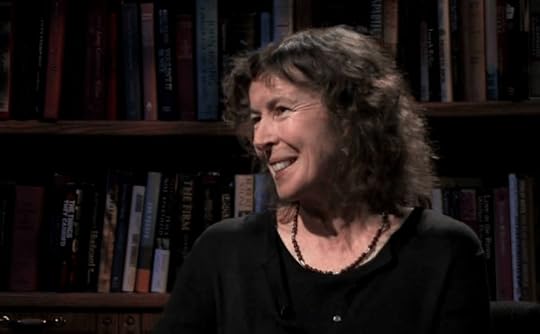
Margot Livesy - image from The History of Literature podcast

And the game is afoot. What had happened to Karel, the teen they had found? And that trail is followed. But the real focus is on how the event impacts the three. Finding the boy is a spark, a shock, a jarring event that pushes each of the three in different directions. Matthew, the oldest, invests in figuring out what had happened, making the event, and maybe the world, understandable, getting chummy with the detective on the case in the process. He even dresses up as Inspector Morse for a local costume event. He finds an ally in a peer to undertake some actual sleuthing. Tears in the boy’s clothing remind Zoe, 15, of a flasher in a graveyard, and a lecture from her mother about being careful in dealings with strangers. Her own awakening sexuality will be kicked up a notch as she tries to track down an attractive Oxford student who has caught her eye. Soon after finding the boy, Duncan, the youngest (If Zoe was the one who found things, their little brother was the one who noticed them), the only adopted sib, who had been reluctant to seek out his birth mother, has a vision of her, and feels compelled to look into finding his biological roots.
An old schoolmate…described how one day he had come home from school on a summer afternoon and at the bottom of the garden in his tiny, tiny village, a place where no one ever locked their doors he found the body of a woman who’d been murdered. Her legs were covered in blood and his first thought was that she was somehow wearing the uniform of the local schoolboys, who wore bright red knee socks. And he was only in her presence for less than ten seconds, before he fled, but those ten seconds changed his life…The story made a profound impression on me, both because of the bucolic setting and the shock of it. And I think of someone’s life jumping the tracks because of something almost random, completely unexpected. - from the Chris Castellani interview
Livesy has some fun with mystery tropes. Her detective, Hugh Price, is a married man, lacking an obvious horrible personal life and substance issues. The victim is not the typical female, but a teenaged boy. He faces some real challenges in his life, but also has a talent that he uses to help many. Looking at what a private citizen could do on his own to investigate a violent crime is certainly not unique. It is the subject of an entire mystery genre, cozies. But neither does Livesy’s approach fit in with the Hardy Boys/Nancy Drew form. The found boy serves mostly as a MacGuffin, a device that triggers other action.
I believe there are essential lies, heroic lies. And I’m very interested in the relationship between secrets and lies. Keeping a secret, however innocent, often seems to require lying. - from the Lithub interview
Lying and secrecy permeate the novel. And they are seriously considered. The three, following a talk about what constitutes a white lie, and the importance of sparing people’s feelings, even make a pact to not lie for a week, which proves particularly difficult to keep. It is one of the things that make us care so much for these kids. While still remaining teens, they have a moral center. They think about the impact of their actions on others. They are not flighty and feckless. And it is not just the teens with secrets to bear. Grownups have some significant no-tells under wraps here as well.

The teens’ missions keep us interested. Matthew’s detective quest is fun to follow. He’s read scads of detective novels, seen vast numbers of mystery shows on the telly. Zoe is determined to be seen for who she is, not just be defined by her relationship to other people. Duncan’s quest is the most moving. Finding his birth mother is both exciting and terrifying for him, but it holds huge implications for the Lang family. What if Duncan’s mother decides she wants him back? What if Duncan decides he wants to leave?

Another wonderful aspect of this novel is that the siblings are all very separate people, with their own interpretation of events, their own insights, perceptions, and ways of going about things. We also see them naturally separating away from each other to set their own courses.

Extra, tasty flavoring is added with a few dashes of magic. Duncan’s vision of his mother, prompted by finding Karel near death, leads him to reverse his prior disinterest in researching his biological family. Zoe has out of body experiences. Duncan’s amazing dog, Lily, has an ability to communicate with people that is far beyond what more usual pooches possess.

The novel uses alternating perspective chapters, with Matthew, Zoe, and Duncan all getting a fair share. We see what, and how they see. For example, The boy gave a small sigh. His lips moved. The sigh became a word. The sibs each hear something different. Zoe goes to the boy and tries to comfort him, stroking his arm. Duncan is busy committing the scene to memory so he could paint it later. (He had seldom had license to examine another person so closely. Years later he would remember him more vividly than men and women he had loved, friends he had adored.) Matthew thinks the boy looks like an illustration in a Victorian novel, but recognizes the seriousness of the boy’s state, takes charge, and tells Duncan to go to the road to get help.

All the characters are wonderful to follow, but my favorite was Duncan, the artist. It is clear what he is and what he will become. He is driven to paint what he sees, what calls to him. He needs more time than other kids at school at tasks, but he is uber bright. He just processes things differently, and needs to work harder at assignments and tests involving words.

I loved the siblings’ interactions, the obvious love they feel for each other, even as each is branching off. How Matthew and Zoe support Duncan in his search is incredibly moving. Matthew’s growing realization that he does not know his sister entirely begs a question. Can anyone really ever know anyone else completely?
Looking at her bright top, her faded jeans, he recalled his father’s admonition (to watch over her). She had changed so much in the last year, and in the few days since they knelt in the field, she had changed again. Perhaps something had traveled from Karel’s arm into her outstretched hand. He knew of several boys at school who liked her. Would they stop liking the new Zoe? Or like her even more? He suspected the latter.
There is so much going on here. Not just the movement of the story, the characters’ stories, but how Livesy attends to family, how people in the same close pod can be so different, can love each other but still grow to become their own separate selves, can see the same things but in entirely different ways. She looks at how secrecy, malign or benign, can result in lies, and shows the pressure that can arrive with them. She looks at how random events can cause lives to veer from a prior path to a new direction. And she manages to do this while giving us wonderfully realized characters we can relate to, in one way or another, characters we can care for. The Boy in the Field is a moving, rewarding, thought-provoking novel. Read it, then pass it along to or buy another copy for your brother and/or sister. You know what they’ll like, right?


Review first posted – October 2, 2020

Publication dates
----------August 11, 2020 - hardcover
----------July 27, 2021 - trade paperback

=============================EXTRA STUFF

Links to the author’s personal, Twitter, GR, and FB pages

The Boy in the Field is Livesy’s ninth novel. She has won multiple awards, and teaches at the University of Iowa’s Writers’ Workshop

Interviews
*-----Connected at the Roots: A Conversation with Margot Livesey by Steven Wingate
-----Guest Host Chris Castellani interviews Margot Livesey about THE BOY IN THE FIELD by Margaret Pinard – video 51:53
-----The Boy in the Field: A Novel by Margot Livesey Interview On The Chris Voss Show - video – 31:38
Profile Image for Nilufer Ozmekik.
3,113 reviews60.5k followers
December 30, 2021
Three siblings: Malcolm, Zoe, Duncan who are young teenagers wait their father to pick them up after school. When their father gets late, they decide to 5 miles long walk to their home because they think they can catch him at the road but they don’t!

Instead of spotting their father’s car, they spot something... no it’s not something... there’s someone on the field... a boy who wears red socks... oh no, they’re not socks, are the boy’s legs covered in blood? Sure, it is ... Zoe touches him to make sure he’s alive and he opens his eyes, saying a word. Three siblings hear different word because seeing a boy who is attacked and left unconscious bring out different emotions, opinions and perspectives.

I have to admit when a story starts like this, you think you’re going to read a mysterious crime investigation or whodunnit page turner. But this is not about the mystery of Karel who might have stabbed by someone and left alone bleed to die. It’s about three siblings whose lives completely change after seeing something earth shatteringly terrifying.

Malcolm is the eldest one, (18)become obsessed to solve Karle’s case before the officers, teaming up with Karle’s brother, digging deep to bring out the truth.

On the other hand, Zoe who is only discovers different things in her life: by entering into a dangerous territory, having an affair with philosophy graduate student. Because after witnessing mortality and realizing time is short at the first hand, she decides to take risks and discover different aspects of the life.

As she discusses complex theories and mind bending ideas with him, she feels like more mature from her own age and she experiences her first real love. But she also explores something very disturbing about their family life via the packet of photos she picked.

And Duncan, perceptive, empathic, observer, artistic, my favorite sibling who is only 13 and adopted one of the family. The very same day they find Karle, he thinks he saw his birth mother outside waiting for him when he looked at the window. Not only his emotional balance but also his art is effected by getting so close to death. Now he starts his discovery to find the identity of her birth mother.

There are books which takes us journey but you never know where the end of the road is. Everything depends on your own vantage point and imagination so you’d better enjoy what you experience throughout your travel.
This book definitely belongs to this category.

I honestly say: I adored those siblings. Especially their devoted relationship, their strong bound, taking care of each other, listening their self discovery and exploration stories from their narrations.

The book’s writing is flawless, pure, unique, genuine and characterization is well crafted, realistic. I normally planned to give four stars but for the love of Duncan, I added half more star and rounding up 4.5 to 5 beautifully written, unputdownable stars!

I’m looking forward to read more works of the author.

blog
instagram
facebook
twitter
Profile Image for Diane S ☔.
4,901 reviews14.6k followers
June 20, 2020
3.5 Love the vibrancy of this verdant green cover. Covers do attract.

Three children are walking home from school when they discover a boy lying in the field. He is very badly injured and there is a great deal of blood. It looked as if he had been stabbed and help is quickly attained.

Although there is the mystery of who was responsible for the boys stabbing, this is not a mystery per se. It is more a study of how those that found the boy changed their lives because of this incident. How just being close to violence altered them in different ways.

Character driven, slowly paced. We get to know these three, two boys, one girl, family members and see into their lives, their thought processes. How they each thought they had heard the boy say one word, but the word was heard differently by each. The way they change will also change their family in response to their actions. There is also a wonderful dog called Lily who is very perceptive.

When I first started reading this I wasn't sure if I would continue. It definitely needs patience in the beginning, but the writing is terrific, and by books end I realized how tightly the author had plotted her story, and what she was trying to achieve. As you can see I ended up liking it quite a bit.

ARC from Edelweiss
Profile Image for Fran .
805 reviews932 followers
August 12, 2020
"The ultimate locked room is another person's brain".

September 1999. The turn of the century was almost upon us. The Lang teenagers, Matthew 18, Zoe 16, and Duncan 13, were about to experience a life changing walk home from school. Their father, Hal, the town blacksmith and owner of the small town forge, failed to pick them up from school as expected. They started a five mile trek home along the fields bordering the road, barley on one side, cows on the other. Zoe spotted something in the field...a motionless boy, chest rising "fractionally", eye lids closed, torn shirt, and bloody legs. The youngest sibling, Duncan, returned to the road to flag down a passing car .....call an ambulance. The injured boy whispered a single word, heard differently by each teen.

Once the police station in Oxford, England was notified, Detective Hugh Price questioned each of the teens separately. The traumatic event set each teen on a journey of self-discovery. Matthew seemed fascinated by the extraordinary crime, one replete with victim and villain. He was a voracious reader of detective novels. Zoe noticed things. "Zoe was searching for something; she didn't seem to know what or whom". "Duncan had an amazing memory once he understood something". He was passionate about painting.

What was known about the victim, Karel Lustig? Karel worked the night shift at Cottage Hospital. After his shift, he planned to meet someone in Oxford but noticed that his bicycle tire was flat. He hitched a ride to town. He was found barely conscious in the field. Matthew wanted the police to work tirelessly to find Karel's attacker. Dissatisfied, he embarked upon his own investigation aided by Tomas, Karel's older brother, a milkman with "a black cloud hover[ing] around him". Zoe perceived strangers lurking everywhere. She took some risks, flying by the seat of her pants. Duncan had dreams of a dark figure beneath "the laburnum trees" summoning him. The dark vision faded. His birth mother...he must find her. Duncan felt more grounded after adopting a puppy named Lily.

Secretly, separately, each one returned to the field to look for clues...a St. Christopher's Medal and an apple peel were found. The ties that bound the Lang family were now fragile, tainted with uncertainty. Betsy Lang, the mother, was a solicitor by day and student of Greek Literature by night. She was always busy. Hal Lang, the father, worked at the forge by day and often drove into Oxford by night...a dalliance. The members of the Lang family had secrets, but they continued to support each other.

Besides the challenges faced with coming-of-age, Matthew, Zoe and Duncan had to deal with the psychological aftermath of finding the boy in the field. Duncan tried to memorize every detail of the boy by examining him closely. "Years later, he will remember him more vividly than men and women he had loved, friends he adored". "The Boy in the Field" by Margot Livesey is unsettling, providing no answers. "I thought if we could find the man, if I knew why he did what he did, things would go back to normal or I'd understand why they changed". Questions remained, many unanswered. A well written psychological, literary novel I highly recommend.

Thank you HarperCollins Publishers, Harper, and Net Galley for the ARC in exchange for an honest review.
Profile Image for Barbara .
1,838 reviews1,513 followers
November 8, 2020
“The Boy In The Field” is a literary mystery that is more a coming of age story. Three siblings, walking home from school because their father didn’t pick them up, come upon a boy who appears to be sleeping, in a field.

The story is told in character chapters of the siblings. Finding this boy, who is hurt, effects them in different ways. This is a “quiet” story, full of observations. The children come from a loving family with supportive parents. There is a family dog, Lily, who seems to possess the uncanny ability to emotionally help the family member in most need.

What each member wrestles with is understanding that the world includes dangerous people, people who are evil. It’s a story of the loss of innocence and how the different children come to terms with their new world.

I enjoyed it, but I don’t think this will be one for everyone. It’s nuanced and observant but not much action.
Profile Image for Michelle.
741 reviews774 followers
August 16, 2020
This is the book you need right now.

I am so glad I didn't pass this one by - what a wonderful story of three siblings whose lives are forever changed after finding a victim of a violent crime in a field on the way home from school. (Nothing graphic is written regarding the crime, so please do not be concerned or fearful that you might not be able to stomach what you read about it.) If you're a fan of William Kent Krueger or Ann Patchett; this is absolutely a must read for you. The writing is so earnest and special without being pretentious. So much is said without all the fluff that some authors feel necessary to put in their books. You know what I mean? I wish I could write this effortlessly! I found myself highlighting like crazy - these kids, (Duncan in particular) just took my breath away with their compassion, emotional intelligence and love for each other and their family.

Nothing I write will do this book justice - so please do yourself a favor and find a way to squeeze this one in. I have no idea why it hasn't received more attention, but it urgently needs it. It is an absolutely wonderful story and one that I will not forget for a very long time. This will absolutely hold a place on my best of 2020 list.

"At last he understood the lesson of the little mermaid. You could want and want and want and still be empty-handed."

Thank you to Harper and Margot Livesey for the early print copy to read and provide an honest review.

Review Date: 08/16/2020
Publication Date: 08/11/2020
Profile Image for Donna.
544 reviews234 followers
August 22, 2020
This was one of those books that was neither here nor there, in terms of its appeal for me. It had some elements I like such as it being a coming of age story for not one, but several young people, three of them siblings. And it had a criminal mystery in it that was unusual and intrigued me. Topping it off, the characters were mainly likable, and I enjoyed how the siblings interacted.

But this is where the positives ended for me. Those same characters felt artificially constructed and too mature for their age, and they intellectualized everything, including their feelings. For the most part, I couldn’t get close to them, though I did feel for some of them, namely the two brothers, Mathew and Duncan, and the injured young man they came across in a field. Their sister, Zoe, wasn’t nearly as appealing to me. She was a strong young woman, but this attribute was wasted on a story element that I really wish writers, especially female writers, would avoid since it reinforces a weak stereotype of young women that does a disservice to them and to readers looking for female characters who are well rounded and can have a life and an identity independent of a male. As for the mystery, it went flat for me, as did the last two sections of the book which left me shaking my head and asking my kindle, standing in for the author, “What! Really?”

So I’ll just say that this book had a certain amount of good writing in it, enough for me to give it three stars. And it had some great character studies, but of characters who never quite felt real to me. And after sticking with this book when I had my doubts about it from the beginning, I was left disappointed by the end. Maybe it was a fitting ending for this melancholy story, which I can admit days after finishing it. But these days, I’m looking for something that will uplift me and I didn’t find it here.
This entire review has been hidden because of spoilers.
Profile Image for Lisa.
622 reviews228 followers
October 10, 2022
Update 10/9/22 - 3. 5 Stars rounded down.
This is the first time I've ever downgraded a book after thought. I loved this story while reading it, and I still love the facets that I've written about in my original review. A month later, there have been a few things niggling in the back of my mind. The trauma to Karl, the eponymous boy in the field, falls flat. I know that it isn't really the focus of the story, yet to have the perpetrator's motivation be so flimsy is still bothering me. The coincidence of the accident of Ant with his scooter which I accepted has now become an annoyance when I think of this novel. And Zoe's reaction to the trauma isn't sitting right with me.

I consider it an impactful novel because I'm still thinking about and weighing it despite having read several books since.

Review 9/5/22
The Boy in the Field opens with three teenage siblings finding another teen injured, lying in a field. This novel is NOT a traditional mystery, rather it's a coming of age story and a family drama. The Lang siblings suffer a loss of innocence, the realization that there is evil in the world and that it can affect them. Matthew, Zoe, and Duncan each react differently to this trauma, and this novel is their story, and the story of their family.

Livesey employs a close third person narration with short chapters, alternating Points Of View of the three Lang teens. This juxtaposition allows her to develop her characters and highlight the differences between the siblings. These short sections also work to create suspense and aid in crafting a tightly plotted short novel in which a good deal happens. Her sparse, evocative prose works to propel the story while conveying everything I need to know about the characters and their environment. This novel touches on similar themes to a lot of books that I love--family, loss, and self discovery.

Some ideas that stood out for me:

"Which was more frightening: the random attacker, or the purposeful? Both, he thought, in different ways."

"She remembered her mother's mysterious suggestion that feelings were optional. Now emotions were leaping up, swirling around, volunteering, vanishing, some dimly recognizable, some barely apprehended. Any number of postures seemed possible; none, so far, insisted. She knew she didn't want to shout. She knew she was already, even as she lay beside him, missing him. Was she jealous? Angry? Sad? Stunned? Bewildered? Outraged? she couldn't tell. she felt reluctant to single out one from among the throng; whichever she chose, perhaps seized almost at random, would begin not just to describe but to dictate her response."

I can remember this maelstrom of emotions as a teen, and again watching our daughters move through this period. Livesey's point, that we can choose, is an important one. The chemical residue of emotion lasts approximately 5 seconds, then I elect how to act. And each action impacts my life going forward. Sixteen is young to be able to understand and consider this idea, yet it fits Zoe and where she is in her life at the moment. I have been practicing this mindfulness for years and am still working on getting it right.

"To be honest . . . I'm not sure I know what forgiveness is. You hold something in your mind without anger. Is that forgiveness?"

UC Berkley's Greater Good Magazine defines forgiveness ". . . as a conscious, deliberate decision to release feelings of resentment or vengeance toward a person or group who has harmed you, regardless of whether they actually deserve your forgiveness."

Without discounting the seriousness of an offense or condoning it, forgiveness can give a person peace of mind and keep one from being defined by damaging anger and/or pain. I work (and it is work) to apply this principle in my own life and coach my patients to do so as well. It takes so much energy to hold onto these grudges and this holding frequently affects the body on a physical level as well as on the mental and emotional levels. Practicing forgiveness helps me let go of burdens and live with more ease and joy in my life.

"Plenty of great painters work in series--the paintings are in conversation with each other and with the viewer."

I love art, and Claude Monet is one of my favorite painters. He has several series of works, and I love to sit with them and observe the progressions. I never thought of them as in conversation with each other, and I love this idea. The next time I look at a series, I will be looking at what they are saying to each other in addition to what they are saying to me. And I have been introduced to a new artist, Giorgio Morandi.

Duncan's fascination with Morandi's series ties into Livesey's theme of life as change, how we accommodate it as an individual and as a family.

Coward, cowrie, cowslip. To understand the significance of these three words and for a lovely read, I recommend spending some time with The Boy in the Field.
Profile Image for Jill.
Author 2 books2,056 followers
July 7, 2020

When people are forced to cope with traumatic situations, they sometimes reassure themselves by believing that everything happens for a reason. But what if life is causal? What if something happens and other “somethings” just organically flow from that event?

Margot Livesey sets up an early situation where three teenage siblings—Matthew, Zoe, and Duncan—spot a boy in a field on their walk back from school wearing long red socks (actually, trails of blood). They quickly act to alert the police and the boy, Karel, survives.

Another writer—a lesser writer—might have used this scenario to either set up a mystery (whodunnit and why) or launch into an exploration of good vs. evil. Margot Livesey has a different goal in mind.

She explores the ramifications of this event from the vantage point of each of the three teens. Matthew, the oldest, bonds with Karel’s estranged brother to find the perpetrator and also with the detective on the case; his focus is on the very nature of evil. Zoe, going on 16, becomes involved with an older philosophy graduate student with whom she discusses “big ideas” and discovers first love. The most interesting character, Duncan, who was adopted very early on and looks different than the others, becomes fascinated with finding his “first mother”. As their individual quests move on, their new dog, Lily, is a wise barometer of the emotional temperature of her new home.

Those who like their stories tied up in a big red bow won’t find that here. There is no real resolution—not the type that readers expect, at any rate—although there is certainly growth. This book is more about a journey, not a destination. Margot Livesey expects her readers to intuit and fill in the blanks of what might be going through her characters’ minds rather than connect the dots and impose her own interpretation.

As a reader, I admit to wanting to know more about the troubled victim and his inner workings, although I accept that often in life, we simply don’t get the answers we seek. I also wondered if the last chapter, which serves as an epilogue, was really necessary. But all in all, The Boy in The Field delivers what I expect from Margot Livesey, whose work I have often loved—a deceptively simple yet profound look at human failings and growth. I owe a big thanks to HarperCollins for allowing me to be an early reader in exchange for an honest review.

Profile Image for Julie.
Author 6 books2,301 followers
January 31, 2021
Elegant, chilling, and full of captivating humanity, The Boy in the Field slivers into the mind like a tiny fragment of glass into the skin: imperceptible until suddenly you can't think about anything else.

Just so we're clear: this isn't a genre mystery. It is possible to have a story with a random act of violence, detective inspectors, and a suspect at large that cannot be pigeonholed into a genre beyond "fiction". I make this point because the book may have been mis-billed as mystery/crime novel and readers who only skim the back cover blurb may feel cheated that The Boy in the Field does not follow conventional crime fiction tropes.

There is a body and there is blood, that of a boy in a meadow outside the storied city of Oxford, discovered by three siblings on their way home from school. He is not dead, this boy whose name is Karel Lustig, although he admits later he wishes he hadn't been found.

This is the story of those three siblings and how the discovery of the boy in the field affects them at their very particular stage of emotional development. Matthew, the oldest, becomes obsessed with finding Karel's attacker and joins Karel's spooked and scary older brother in a bizarre stakeout. Zoe, in full flush of her sexual awakening, discovers that her father is having an affair and responds by pursuing an age-inappropriate relationship with a visiting American graduate student. Most poignant is thirteen-year-old Duncan, adopted at birth from teenager, who is suddenly compelled to find his "first" mother.

Each of these coming-of-age journeys occurs within the shelter of a loving, stable family — Matthew, Zoe, and Duncan are perceptive, kind, wise young people and their parents, flawed and distracted as they are, allow these young people both the room and the safety to grow into their adulthood. The great mystery Livesey explores is that of the human heart and the lengths we travel to make sense of an unknowable world.

It struck me how refreshing it was to read a novel with teens as the main characters set in an era immediately prior to smartphones. Smart technology has gotten in the way of thoughtful discourse and brains developing on their own power.

Written with a light hand in lucid and luminous prose, The Boy in the Field is profound in theme and empathy. The denouement blunts some of the story's power but it also met my need at this point in time for resolution and closure, even if that satisfaction lasts only as long as it takes to read a brilliant book.
Profile Image for chantalsbookstuff.
1,040 reviews1,050 followers
May 1, 2024
{Good}
Exactly as described: siblings trying solving the mystery around finding Karel in the field. Each sibling has their own story. A bit of a dramatic mystery, but I did enjoy it.
Profile Image for Kelly (and the Book Boar).
2,818 reviews9,506 followers
December 30, 2020
Oprah picked it as a best of - need I say more? Okay just kidding (even though she did). This was another selection from the NYT best of 2020 in fiction and once again it was a winner. If you’re looking for a mystery or thriller you might find yourself disappointed as this one focuses on the aftermath of all those involved in the discovery of “the boy in the field.”
Profile Image for The Girl with the Sagittarius Tattoo.
2,929 reviews387 followers
September 25, 2024
This was another attempt to step out of my book comfort zone. Pardon me while I yawn and make myself a double espresso. The Boy in the Field is about what happens to a family whose lives are just barely brushed by incredible violence.

Walking home from school, three teenaged siblings investigate something they see in a field. When it turns out to be a boy their age, stabbed repeatedly and barely clinging to life, the experience impacts them in different ways. The eldest, Matthew, had been preparing to go away to college in the fall, but now he's become obsessed with the crime, working with the victim's older brother to track down clues. Zoe, the middle child, quickly develops a zest for all life has to offer - especially the opposite sex. The youngest, Duncan, is 13. Sensitive and artistic, this adopted child starts dreaming of his "first mother" and insists that his adoptive mother help him find her. As if this wasn't enough for any mum to deal with, the poor woman is forced to face up to her husband's infidelity when the children find out it's been going on for a while.

I know this synopsis makes it sound intriguing, but the author tells it in the slowest, most boring way she possibly could. I wouldn't recommend this book to anybody who isn't trying to fall asleep.
Profile Image for Doug.
2,541 reviews911 followers
December 14, 2020
4.5, rounded up.

I (vaguely) remember reading and enjoying Livesey's early novel Eva Moves the Furniture when it first came out, attracted primarily, IIRC, by the odd title; but have never felt compelled to keep up with her rather prolific output since - until the premise of this, her latest tome, caught my attention. It really isn't at all what I was expecting ... the 'mystery' of the titular character is something of a McGuffin, and not the focus of the book at all - which is more about how that inciting incident affects the three very different siblings in a family irrevocably.

I can't really say just WHY I found the book so compulsively readable, but I devoured it in less than 24 hours, and was greatly impressed by how much Livesey has crammed into 254 pages. Her prose is not fussy or particularly lyrical, but she seems to know the precise turn of phrase that captures a character or concept with precision. In some respects, I suppose you could call her the Scottish Ann Patchett, dissecting the complexity of familial relationships with aplomb. The book takes place in the waning months of 1999, ending (except for a final coda taking place 8 years later) right before the start of the new millennium, so seems quite appropriate to be reading at this time of the year. Highly recommended.
Profile Image for switterbug (Betsey).
935 reviews1,491 followers
July 23, 2020
As the novel opens in Y2K (1999), three teenage siblings—Matthew, Duncan, and Zoe—are walking home from school. On their walk, they notice a young man, Karel (who they don’t know) unconscious, on the ground bleeding. It was obvious he had been severely attacked; finding him in time saves his life. All three hear him utter one word, softly, but each sibling hears it differently. From this act of offstage violence, Livesey, with undemanding delicacy, tells a complex domestic drama. It’s not morose, sensational, or melodramatic; it’s expressed with levity and deceptive simplicity.

The violence to Karel precipitates a rupture in the usual family dynamics. Karel’s suffering affects each of them in searing ways that take the reader on a journey of secrets, resilience, love, betrayal, and identity.

The narrative is pared down to the essentials, each chapter from alternate siblings. Those different words heard by the sibs signal a pivot to the premise, the various effects of trauma on victims and witnesses, more momentous than the cause. The family also faces moral junctures apart from, but changed by this event.

Duncan, the artistic one, is adopted, and grows more curious about his Turkish birth mother. Matthew gets caught up in finding the perp, and Zoe is on a risky adventure of love. Moreover, Zoe unearths a disturbing secret about her parents that alters her sense of security.

Livesey starts with a suspense, a mystery, and morphs it into something more central and universal, but intimate and singular. Do not expect a police procedural as plot. Rather, she keenly probes the siblings’ psyches and their actions. As they transition to adults, the rooted effects of that traumatic day continues to bear upon their choices.

The elegant, spare prose propels the characters, and Livesey tightly controls the narrative with restraint. The punch is between the words, the passages, and the pages, to inspire the readers’ inferences and interpretation. Livesey is my kind of author, a reader’s writer.

Thanks to the ARCs floating around from Harper Collins, I was able to receive a copy from a friend.
Profile Image for Kathy.
3,866 reviews287 followers
August 12, 2020
I believe this is the sixth book I have read written by this author. It is a very different, unique and emotionally fraught landscape one enters in the reading of her books. I do believe I am feeling stumped as to how to describe this one.
We get to know the thinking of a set of siblings as they work toward growing up, and getting into their heads is a unique reading experience.
I did struggle with the time frame as it is set at the dawn of the millenium, but the family life and school experiences of the children seemed more like something from 1950. Otherwise, I was engaged and somewhat on edge anticipating some great crisis that did not occur anymore than the predictions of what would happen when the clocks turned at end of year.

Library Loan
Profile Image for Mary Lins.
1,087 reviews164 followers
July 17, 2020
“The Boy in the Field”, by Margot Livesey, is set in the fall of 1999 in a small village near Oxford, England. One September afternoon, as Matthew, Zoe, and Duncan Lang are walking home from school, a flash of red catches Zoe’s eye across a farm field. She runs through the field, her brothers follow, to find a young man lying bleeding and unconscious on the ground. They find a way to call an ambulance and stay with the young man, Karel Lustig, until he is taken to the hospital.

What follows is how each of the Lang siblings react to the aftermath of this incident. Each is changed, each is eager to follow the details of the hunt for Karel’s assailant and to help the police. And they each have major milestones in their own lives which affects their futures.

How do I describe this lovely and beautifully written novel? I closed it with a lump in my throat and took a moment to hold the book to my chest. My experience with it was luminous! I wasn’t ready to leave the Lang family, and I’ll not soon forget them.

Livesey brings us into the lives of the Lang family in a compelling narrative that perfectly capture family life. Livesey shows us how even people who love each other and live together, can often harbor secrets and lead hidden lives. She also deftly uses the instigating action of finding “the boy in the field” to illustrate a “coming of age” story for each of the siblings. I feel very confident recommending this novel to all who enjoy well-written family stories.
Profile Image for Joseph Nichols.
7 reviews
June 25, 2020
Thank you, Harper Collins, for getting me a copy of The Boy in the Field by Margot Livesey.

First, like many others in the review section here, I must just say that I was instantly drawn to the cover. You did a very nice job!

A quick spoiler-free summary: The Boy in the Field tells the story of three siblings who stumble across a boy who is barely alive while they are walking home. The police are notified, and the novel captivates the reader with the forever changed lives of the three siblings (Matthew, Zoe, and Duncan). Matthew searches for the assailant of the boy that they found; Duncan struggles to find his birth mother; Zoe deals with a breakup and a new relationship. All three of their lives begin to change and secrets unfold after they discover the body on that fateful day in September.

My thoughts: Upon finding out that I won this book I was excited, the cover looked brilliant and I eagerly awaited its delivery. After reading a few reviews of the book, I was expecting a That Was Then This is Now-esque book where the lives of friends are forever changed upon discovering a body. I naturally assumed that the group of friends would either come closer together in a “Fall From Innocence: The Body” style manner, or the friends would grow farther apart in a The Secret History style. In the movie world, I was expecting a Goonies from The Boy in the Field, but I was mistaken. Not every single person is going to like every single novel, I understand that, (and I applaud Margot Livesey for being brave enough to even publish her works) but I have a feeling that I would have liked this novel much better if a few revisions were made( as I will say many times later on, please keep in mind that I think this book was meant for a young audience and not every person will like every novel):

1. The three main characters (Matthew, Zoe, and Duncan) are supposed to be in high-school age 18, 16, and 13 respectively if my memory does not fail me. This is perfectly fine, but some things just didn’t seem right. As a seventeen-year-old myself I can assure you that the dialogue is not entirely accurate. Although not every novel needs to have the colorful vocabulary that is in The Cather in the Rye, I just felt like it would have been more realistic if the kids were younger or if revisions were made. Let me explain. A similar style novel with kids the same age is That Was Then This is Now. Although That Was Then This is Now is based in a different time period, the dialogue and actions of the main characters just seem much more realistic. They don’t hold back with their vocab and they don’t mind getting drunk every few nights. I counted two cuss words in the entre novel and although I’m not someone who wants there to be a cap or threshold on cussing, I just don’t find it super realistic. I feel like Margot Livesey wanted to make a Young Adult/ Coming of Age novel with The Boy in the Field, but if she wants this book to be remembered as one of the best coming of age novels for years to come, I think she has to go back and either edit the dialogue or brings the ages of the main characters down. I believe that this book has a lot of potential and can be a best seller, but if Margot Livesey is aiming towards a younger audience (which I believe her to be) I think some of my revisions and thoughts might help the book.

2. Changing the perspective every chapter was an interesting and unique way to write this novel. The changes came all of a sudden and I’ll admit that my first time reading the book, I didn’t understand the constant perspective changes until around page 20. After finishing the book, I didn’t seem to mind the perspective changes too much at the chapters, but sometimes the perspective would change mid-chapter when a character would enter or leave a room. Changing the perspective would be fine if you kept it labeled at the top of the chapter (which was already done for all the chapters except the first and last two chapters). Personally, I feel like this novel would be much improved if the perspective and narrative of the story was driven by Duncan who seems to have the most character development and is the most interesting character. Most of the characters are decent, but if the novel was changed where Duncan was the sole narrator, I would keep Zoe as a kick-butt older sister, but I’d give him a younger brother and have Matthew’s role either go to Zoe, Duncan, or a friend of the family.

3. Two changed subplots would greatly improve the novel. First, Duncan’s longing to find his mother was a great idea, but it seemed overall a little rushed, and this book would have a much better middle and ending if much more depth was added to Duncan’s search for his birth mother and their relationship. I really liked the idea of him wanting to find where he came from and thinking he didn’t fit in with his current family (a theme that I believe many of readers in the target audience could relate with), but this book would be infinitely better if more depth was added to this storyline. One of the reasons this book was not a five-star book for me was because of Zoe’s main subplot. The main love interest in The Boy in the Field was Zoe and Rufus. This whole subplot seemed wrong and really affected the quality of the book for me. Not only did the relationship just seem creepy and it felt like this college guy was taking advantage of a young high schooler, but not much was gained from this subplot. Sure, this subplot allowed Zoe to grow a little bit and learn what it means to become an adult, but there are much better ways to do this (for example, expanding the whole Karel relationship, but we’ll talk about that later). I don’t want to say this subplot ruined the book for me, it certainly didn’t, but it did greatly affect my rating. As I will touch up on later, most of the romantic relationships in this book seemed rushed, and the Zoe/Rufus relationship is no exception. She thought he might have been the one that hurt Karel, but then she got tea with him like the next day, and then they were sleeping together not long after. The relationship just seemed too rush and gilded, and it doesn’t help the age difference which does make one wonder if he is just taking advantage of her.

4. Like many other things in this novel, the symbolism in The Boy in the Field has lots of potential, but would be much better with just more depth, a little bit can go a long way. Duncan probably had the most symbolism attached to his character which is another reason I think the story should be told solely through his eyes. Even though to my disliking that it was only in the first half of the novel, The Little Mermaid provided Duncan’s character development with substance, and when he began to focus more on Morandi, I thought the transition from one to the other complimented his character quite well. However, if it was focused on more and given more depth, I think it would have had much more significance to the novel, to the level of Holden’s hat in Catcher in the Rye. There was hardly any other symbolism in the novel of any significance, which is another reason why I attribute Duncan as the main character of the novel.

5. Although this isn’t a major change by any means, since the copy I received was an Advanced Reader’s Copy/ Uncorrected Proof, there were some typos I noticed in the novel, but I’m sure those will be fixed.

6. As I touched on earlier, the relationship depth in The Boy in the Field was lacking. Every single relationship in the novel seemed to be rushed. Sure, I didn’t care too much about Zoe breaking up with Ant. Well there it is, I didn’t care. Little depth was added to these relationships and I found myself not giving a whole lot of care about any of the characters’ romantic interests. I already shared my thoughts on the Zoe and Rufus relationship, and I don’t think there’s much reason to bring it up again, so I’ll move on. The Matthew and Rachel breakup could have greatly impacted the story if it was expanded upon more. The growing rift between Matthew and Benjamin would have been a nice thing to see, especially considering the overall development among the characters. Although I wasn’t a fan of the previous relationships unless if much more depth is added, there were two that I very much liked the idea of. I found the father’s affair and child to bring a certain level of uneasiness to this novel. Again, it would have been better with more depth, but I found it to be a nice addition to The Boy in the Field. Although the Tomas/ Karel/ Sylvia relationship seemed a little unrealistic, I actually really liked it. It provided a nice rift in the relationship between Tomas and Karel (seemingly reminiscent of the Matthew and Benjamin debacle). The reader never really knows if the relationship between Tomas, Karel, and Sylvia improved, but I hope it did.

*Spoiler Warning-Skip to section 8 if you haven’t finished the book yet*

7. Another problem I had with the book was the overall ending and the last chapter which I don’t know why it wasn’t called an epilogue. Many of the subplots that felt rushed earlier, now just feel unfinished. Although some loose ends are tied in the last chapter and in the unofficial epilogue, what happens to Esmeray for instance, many plotlines just feel unfinished. “What happens to Tomas?” is just one of many questions I have. I did end up really liking the idea of the epilogue (everyone visiting Duncan at the gallery) but that wasn’t exactly what I wasn’t a fan of. It was what became of the characters that I had a problem with. I wasn’t too big on Zoe going to live in another country with Rufus and no one caring too much about it, and Karel’s suicide didn’t make too much sense. Sure, we could argue about his mental health after nearly dying, but it just seemed like an abrupt way to end his storyline. Again, I absolutely loved the idea of everyone at Mark’s gallery, but some of the loose ends just need a little bit better tying up, I think.

8. If you’re still reading this, we both know I’m beating a dead horse at this point, but I still feel like this book would be infinitely better with deeper subplots and more depth added to character development. As I’ve already said, some of the subplots felt rushed, the relationships felt fake, and the dialogue didn’t feel real. Some of the subplots I thought I imagined until the second or third time I read the book because they were never touched on again (the fencing match between Matthew and Benjamin for instance.) One last minor gripe I had was that I thought the book would deal more heavily with Karel, he is the namesake of the book after all, but it didn’t. Also, I thought there would be some pretty major character developments that happened in the book, but there just weren’t. Although this isn’t anything major, I just didn’t feel like Karel should be the namesake of the book due to how little he is mentioned. I did like the very last sentence though, I found it brought back Karel back quite well.

A few final thoughts: Maybe I just started this book believing it would be the next Outsiders or “Fall From Innocence: The Body” but it was not. I won’t say I hated the book, because I didn’t, and I apologize to Margot Livesey or anyone else that helped with the creation of this book if I sound like I didn’t enjoy it, because I did. I simply just want to give Margot Livesey and Harper Collins my thoughts on the book in an effort to make it better. Even though the perspective changes got a little odd, I very much enjoyed the flow of the book. I will definitely be on the lookout for more of Ms. Livesey’s books in the near future. I also understand that my interests might not be aligned with the target audience of the novel, but it was still a good read. The book is still in development, and even if Harper Collins doesn’t change anything, they’ve still got a pretty decent novel here with a lot of potential. I wish the best of writing to Margot Livesey moving forward, and once again I thank them for sending me a copy of The Boy in the Field.

P.S. This is my first review, I hope it was good.

Profile Image for Meg Lelvis.
Author 8 books70 followers
October 14, 2020
The book started off with interest and promised to be compelling. However, I didn't realize it would be a coming of age story for the three siblings who found the boy. After several attempts to keep reading, hoping to connect with the narrative and at least one character, I gave up. I'm in the minority, but unless you're interested in teenage drama, I don't recommend this book.
Profile Image for Patricia Williams.
736 reviews209 followers
November 11, 2024
Very interesting family story, although giving it 4 stars because it was slow moving. This is a story about a family of four children who found an injured boy in the wooded area around their home when they were walking home from school, and the impact this had on their lives over the years. This was such a shocking thing to happen to a young person and it affected them all differently. I've read this author before and was interested to try this book I had seen recommended, and will definitely read more.
Profile Image for Tori.
63 reviews1 follower
December 15, 2020
Reminiscent of the gold finch, in that this book has nothing to do with its namesake and at the end I’ve found myself questioning why I am perpetually swayed by interesting covers.

Also boring af.
Profile Image for Bonnie Brody.
1,327 reviews224 followers
June 27, 2020
I loved this book. Its narrative, characterizations and structure all appealed to me. I have been a fan of Ms. Livesey's work for some time and this may be her best book yet.

The story starts with three siblings walking home from school and finding an injured young man in a field. He has blood on his legs and appears to be going in and out of consciousness. Before the ambulance arrives he whispers one word and each of the siblings hear it differently. The three interpretations are ''coward', 'cornflower', and 'courage'.

The three siblings are Duncan, 13 years old, Zoe, 16, and Matthew, 18. Duncan is adopted and is very gifted at art. After finding the injured person, he thinks he sees his 'first mother' outside his window that night and becomes fixated on finding her. Betty, his mother, tells Duncan to talk to all the others in the family before they decide whether to start looking for her. Duncan is an empathetic, tender, and loving child, trying to make sense of what they saw in the field and secrets in his family.

Zoe is on the cusp of womanhood, very bright and very interested in finding a soulmate. The recent events in the field have created a sense of mortality for her and she realizes that life is fragile and has no guarantees. She decides to take some risks and go for what her heart seeks. She is also very troubled about her parents. She picked up a packet of photos and one of the photos revealed something quite troubling.

Matthew is going to college next year and is fixated on finding the criminal who hurt the young man. He has an idea of what the car looks like and a vague description of the perpetrator so he decides to go looking for him. He likes to talk to the detective on the case and discuss what is happening with the investigation.

All three siblings love one another in a deep and trusting way, something not seen very much in families. There is no squabbling and fighting among them. Each has been changed by the traumatic event in the field and reacts to it differently. Duncan connects with Karel, the injured young man, and tries to find out what the word he heard meant. His art is deeply affected by the trauma. Matthew meets with Karel's family and talks with them about the case and his efforts at finding the criminal. He is realizing that what he previously thought was so important might be brief and tenuous. He has grown to understand that what matters is depth of connection, family, and trusted friends. Zoe and Duncan work hard to protect their family from potential difficulties and, together, keep a significant secret.

Each chapter is about one of the three siblings and is titled with their name. I liked getting the individual perspectives of each of them and learning about depth and the richness of their lives. This novel is about what is truly important in life and the questions to which we have no answers and never will. Despite living without answers, Ms. Livesey explores ways we carry on and sublimate, taking steps to enrich ourselves and those around us.
Profile Image for La Crosse County Library.
573 reviews202 followers
March 11, 2021
Hmmm....not sure what to say about this book. I gave it 3 stars because I expected a different ending, but after a day of it whirling around in my mind, I think I underrated it. The story of this family, especially Duncan, and all of their individual stories, is very deep and moving and compelling and kept me reading late into the night. It is psychological drama and interesting intellectual facts. It is a thought-provoking novel which I recommend as a “good read”.

Find this book and other titles within our catalog.
152 reviews120 followers
May 18, 2020
Talented author Margot Livesey has written another beautiful coming-of-age family saga (with an art theme) that kept me up all night turning pages! The three siblings in “The Boy in the Field” crawled into my heart .. I laughed & cried with all the characters. Book clubs will find many discussable issues including infidelity, violent crime, death, searching for the birth mother & beyond. Brava!
Profile Image for Kasa Cotugno.
2,754 reviews586 followers
September 16, 2020
Although I've read other books by Margot Livesey, this is the best in terms of plotting, character, and resolution. It shows a maturity lacking in some other of her works, which actually have been labeled as YA. Here we have a coming of age but of three teenaged siblings, the focus equally divided. Matthew, Zoe and Duncan come across a young man who has been savaged (well, he is 18, not so much a boy any more, but The Young Man in the Field is a stupid choice for a title). Beginning with mishearing a whispered comment, these three find themselves dealing with an acceleration in their emotional development, and each has their own journey. There were a few flaws that held back a five star rating, but overall recommended.
Profile Image for Donna.
4,552 reviews166 followers
September 29, 2020
This coming of age story was a solid 3 stars for me. Three siblings discover a wounded boy in a field and ultimately save his life. They all dealt with the violence that the boy must have encountered in their own way as they moved on. There was also the mystery of what happened to him.

I liked the story line and the journey these kids were on, but I just couldn't connect to them. They were too distant for me. Usually young characters bring the mama bear out in me putting me into protective mode, but it wasn't really necessary here. So 3 stars.
Profile Image for Hally.
281 reviews113 followers
January 17, 2021
This book just didn't work for me and the same premise could have been a new favourite in another author's hands.

I know some people were disappointed because they expected it to be more of a crime 'whodunnit?' but I don't fall into that category. Usually I love family and coming-of-age stories like this and there were many elements throughout that reminded me of similar concepts executed in other books that I've enjoyed.

This story begins with three teenage siblings who, when walking home from school one day, come across a 'boy' (not actually a boy really but a young man) lying in a field. He has been stabbed (the blood looks like red socks, a repeated image which I couldn't really get on board with because who bleeds from a stab wound in perfect sock-formation?) The guy survives, and the rest of the book follows the kids' lives from that event onwards (in often barely relevant ways.)

I chose this because I was hoping it would be as good as Idaho by Emily Ruskovich, which is one of my favourite books but has understandably frustrated many readers. Idaho begins with a death/murder (a mother's unplanned killing of her child), but the story is less about the violent tragedy itself and more about its ripple effect across a community. The Boy in the Field follows a somewhat similar idea but it just didn't move or engage me.

Another example of something this book did that I much preferred elsewhere; the 'boy' ends up sort of being a vessel for everyone else's personalities. He barely has a voice of his own and his attacker, plus to a much less sinister extent the three children who save him, brutally use him or displace their own feelings/wants/hopes/fears onto him respectively. This concept is brilliantly executed in The Heart is a Lonely Hunter by Carson Mccullers, which gets me in the gut just thinking about it (phew, I still do have feelings).

The above concept was vague and I only really noticed it in comparison to other books I've read. Other parts of the story, I thought, were needlessly heavy-handed. Also I'm usually the first to defend unlikeable characters but here I felt like I was supposed to be rooting for people that I just wasn't. Then came the unnecessary epilogue and I was done.

BUT there was a dog, she was cute, I do like dogs. And there was a tiny spark that I wanted to fan into a flame where the girl Zoe thinks her relationship is special but realises that everyone feels that way. And at one point the mum and son had wine and cheese which made me fancy wine and cheese...
Profile Image for Susan.
Author 3 books254 followers
September 16, 2020
The Boy In The Field is a real boy, a young man discovered by three teenagers on their way home from school. The boy is gravely injured and identifying the perpetrator becomes central to the lives of the teens. There is mystery here though this is not a police procedural. In Margot Livesey's deft hands and with her keen insights, the reader moves between the experiences of the three teens navigating their own loves and losses in this captivating family drama. What worked for me best was the gentleness, the kindness that Margot Livesey brings to this story. Her writing is sometimes spare but always smooth, butter on warm bread. I welcomed the opportunity to sit and read, to be in this place where trauma was met with such humanity. In a world that seems to give us an endless stream of unlikeable people, you will not find an unlikeable character here and that was such calm to my sometimes sad and overburdened heart.
Profile Image for Madeleine (Top Shelf Text).
292 reviews243 followers
May 10, 2020
Thank you to Harper Books for my free review copy, all opinions are my own.

I was so looking forward to this book, mostly because Margot Livesey wrote The Flight of Gemma Hardy, which I read and ADORED back in college. I’ll say this — I liked this book. It was interesting, but it wasn’t what I was hoping for, mostly because I’m not sure I’m sophisticated enough to really get it. I think this story will play to the literary fiction-loving crowd, but a blurb on the back called it a psychological drama, which didn’t pan out for me. What I liked was the characters: three siblings, all navigating young adulthood and major life events, each uniquely crafted and with nuanced perspectives. This was a quiet book, and quick too, but it just wasn’t in my wheelhouse enough to be a book I loved. If you like books like The Dutch House, you might like this one too.
Displaying 1 - 30 of 1,166 reviews

Join the discussion

Can't find what you're looking for?

Get help and learn more about the design.