

What do you think?

Abra
Abra Phillips has achieved the right and comfortable life – the one that by all accounts, she belongs in – with a successful and kind husband, two beloved children, a home that reflects prosperity and satisfaction. But is it the right life for her? On what looks like a desperate, maybe crazy impulse, she decides that it’s not. Instead she takes off and creates a radically solitary, self-sufficient existence without family, companionship, guilt or regret. For almost a decade she moves to her own rhythms, comfortingly certain that she is where she belongs – until the daughter she left behind, now grown, tracks her down with her own accusations and questions. But what is ‘the right life’, and how obliged is anyone to follow unspoken but powerful rules? Abra is about questions of selfishness, obligations, and the desire and need to learn and pursue a person’s real nature. Globe and "An impressive first novel...a compelling story" Calgary "Abra is the book of the season, a novel to be savoured for its fine writing, its perceptions, its feelings, its moral and emotional dilemmas...a gripping missing persons story" Publishers Abra is "a strangely haunting character" London Free "Joan Barfoot has an enormous story-telling capability, and it's impossible to put this, her first novel, down until the very last page." Hamilton "Abra is an absorbing story of a woman who found undiscovered strengths, a new identity and her very soul, and it will be appealing reading to anyone who has ever dreamed about taking a trip to freedom". Ottawa "appealing in its relevance and timeliness" Books in Canada (Sandra Martin): "Abra is a strange and important book... It is a risky book, exploring new territory, and it works." Toronto "an honestly felt passage through loss and chaos to discovery" Sheila Fischman (Toronto Star): "Abra Phillips is one of the best realized, most appealing (and troubling) women I've met in a novel since Margaret Laurence's Hagar Shipley." U of T "an exceptionally accomplished first skilfully structured, very well-written, intelligent" Times Literary "above all a novel about personal integrity"
240 pages, Kindle Edition
First published January 1, 1978
About the author
Joan Barfoot
17 books57 followersJoan Barfoot is an award-winning novelist whose work has been compared internationally with that of Anne Tyler, Carol Shields, Margaret Drabble and Margaret Atwood. Her novels include Luck in 2005, nominated for the Scotiabank Giller Prize, as well as Abra, which won the Books in Canada first novels award, Dancing in the Dark, which became an award-winning Canadian entry in the Cannes and Toronto Film Festivals, Duet for Three, Family News, Plain Jane, Charlotte and Claudia Keeping in Touch, Some Things About Flying, and Getting Over Edgar. Her 2001 novel, Critical Injuries, was longlisted for the 2002 Man Booker Prize and shortlisted for the 2001 Trillium Book Award. In 1992 she was given the Marian Engel Award. Also a journalist during much of her career, she lives in London, Ontario, Canada.
Ratings & Reviews
Friends & Following
Create a free account to discover what your friends think of this book!
Community Reviews
Displaying 1 - 30 of 178 reviews

July 15, 2026
Could this be the next Stoner, or is that just my wishful thinking? I do believe this is a masterpiece. It should be a modern classic, but somehow got lost, waiting to be rediscovered 48 years after its original publication.
Faber will rerelease it with an afterword from the author, and we can only hope that it will receive at least some of the attention it deserves.
It is easy to say it should have its place on any must-read feminist novels list. This is a story about a woman named Abra, who inexplicably abandoned her family to live a lonely life in a remote area. Her gender does play a big part in the book.
"the image of a crazy bitch-lady living nowhere by herself was not a bad one, if the purpose was to be left alone"
But I do think it has more in common with Walden, Into the Wild, or No Longer Human, because at heart this is a novel about isolation, and how freedom and liberation can sometimes mean the opportunity to choose to be lonely.
"I did not want to affect or change life here; I wanted just to be part of it, have it accept me."
"I became an animal, which is a fine thing."
"I am indeed just like a cabbage, sitting around waiting for the sun to shine or the rain to fall."
Thanks to the publisher for an advance copy of the rerelease.
Faber will rerelease it with an afterword from the author, and we can only hope that it will receive at least some of the attention it deserves.
It is easy to say it should have its place on any must-read feminist novels list. This is a story about a woman named Abra, who inexplicably abandoned her family to live a lonely life in a remote area. Her gender does play a big part in the book.
"the image of a crazy bitch-lady living nowhere by herself was not a bad one, if the purpose was to be left alone"
But I do think it has more in common with Walden, Into the Wild, or No Longer Human, because at heart this is a novel about isolation, and how freedom and liberation can sometimes mean the opportunity to choose to be lonely.
"I did not want to affect or change life here; I wanted just to be part of it, have it accept me."
"I became an animal, which is a fine thing."
"I am indeed just like a cabbage, sitting around waiting for the sun to shine or the rain to fall."
Thanks to the publisher for an advance copy of the rerelease.

April 22, 2026
Aka *Gaining Ground, Canadian author Joan Barfoot’s provocative, exceptionally gripping, debut novel first appeared in 1978 since then it’s become a cult classic. It’s narrated by Abra a woman in her forties, for nine years she’s lived alone in an isolated cabin somewhere northwest of Toronto. An unexpected encounter with estranged daughter Katie leads Abra to reflect on her previous existence, one she considers wholly separate from the person she is now. When Barfoot was writing this, she was based in a communal co-op, increasingly seduced by the idea of solitude, a theme that’s central to her narrative. But its concerns extend far beyond that.
Abra was once the sort of housewife whose lives of quiet desperation featured in Betty Friedan’s infamous The Feminine Mystique – inspiration for Betty in Mad Men. Abra did everything expected of her, unquestioningly following her society’s dominant script for women. At nineteen she married suitably-eligible Stephen, supporting him in menial jobs while he advanced his career. Later she retreated to their home to raise the requisite two children, pausing to host dinner parties for Stephen’s business associates and their wives. Abra ensured she met the required standards for women in their circle: long, lustrous hair and carefully-chosen, feminine outfits for public outings. She constantly refers to Stephen as a ‘good’ husband but he’s clearly what would now be viewed as coercively controlling. Abra leaves work at his bidding, she lives in the houses he chooses, with the décor he considers befitting to his professional status. Her tight bond with her infant son is shattered at Stephen’s insistence - it eats into time he thinks should be devoted to Stephen’s needs.
Abra’s marriage lasts for well over a decade but she’s more and more unsettled, she sleeps too much, smokes too much, finds socialising overwhelming. An old schoolfriend, also a prosperous middle-class mother, who recently died by suicide starts to become a fixation. Abra too decides to die but hers is a symbolic death. One day, using money inherited from her grandmother she simply leaves and never looks back – rather like Laura Brown in The Hours. She buys a remote cabin, a plot of land and reinvents herself. Abandoning the trappings of conventional attractiveness, she crops her hair, and dispenses with mirrors. The lack of mirrors ensures she never sees herself as others see her but never comes into confrontation with herself either. It seems it’s the unexamined life she strives for. Abra, although the name no longer seems to apply, possesses no watches or clocks, instead adjusting to the seasons.
Like a snake shedding its skin, Abra sloughs off her assigned roles as “the lover, the giver, the doer, the mother, the wife.” Her body’s transformed into a muscular force rather than a decorative object. She pours her “passion” into cultivating her garden, growing food, potting preserves, crafting. Hard not to see the influence of the then-thriving Canadian back-to-the-land groups reflected in Barfoot’s portrayal of Abra’s way of life. Like these, the former Abra found contemporary consumerism hollow and pointless, horrified by scenes of violence streamed into her home via television - it’s never stated but likely reporting from the ongoing Vietnam war. Her retreat isn’t simply personal; it’s a wholesale refusal of her society’s conflicts and mainstream values.
Barfoot was writing close to fifty years ago but there’s something very ‘now’ about her story: rampant consumer capitalism; the flood of images of war; pressure to appear as the "perfect" mother complete with picture-perfect house and picture-perfect "looks". Abra’s careful cultivation of land, refusal to domesticate animals, eating only local produce, buying only what’s needed is redolent of resurgent Green lifestyle movements; and of the growing exodus from cities following Covid. But there’s also something individualistic, less realist, more conservative fantasy, about it. Abra’s story raises numerous questions. Is Abra a feminist ascetic, early eco-warrior, or iconoclast? Or is she constructing a habitat akin to Woolf’s room of her own founded on economic privilege? Is hers a radical political act? Or is it entirely selfish? Divorced as it is from any broader political engagement or activism. As the novel unfolds, these kinds of questions accumulate, highlighting broader cultural and philosophical issues.
The arrival of now-adult Katie adds concepts of the maternal to these issues, rooted in cultural expectations and taboos, and in biological essentialism. Then, as now, mothers who left their children were perceived as monstrous, unnatural creatures – at least in western societies, in many other countries it’s common for mothers to leave to find work. Even expressing ambivalence about mothering, as Rachel Cusk discovered, is labelled “deeply suspect.” Suspicions only defused if linked to some form of “madness.” And it’s these kinds of suspicions and oppositions that Katie introduces to the story. As well as reflections on masking and social conformity. Katie’s perspective undermines Abra’s account. Is Abra truly liberated? Someone who’s opted for freedom over duty. Or is her hermit-like seclusion the sign of a “breakdown” requiring medical intervention? Katie, the prospective archaeologist, digs away at Abra, searching for fragments that pieced together will yield answers to these questions.
Katie’s excavations connect to ethical, philosophical debates around solitude versus community engagement dating back to Rousseau versus Hume and beyond. But they also, to me at least, seemed to tap into a Canadian take on Thoreau’s transcendentalism. Abra can be interpreted as a kind of feminist Thoreau - without the mum quietly providing food and doing laundry in the background. All in all, this is an incredibly fertile piece, a fascinating counter to much of the contemporary literature of motherhood - all-too-often founded on the notion of mothering and reproduction as givens. Barfoot’s writing is supremely disciplined, her story’s incredibly thought-provoking, surprisingly relevant. Much of the narrative projects a quiet intensity but there are passages – Abra’s plotting to escape – that read like a thriller. It’s hard to know where to position this for people who haven’t read it, there are echoes of Haushofer’s The Wall, as well as Margaret Atwood’s earlier novels. But, for me, it’s also memorably distinctive.
*Gaining Ground was the UK title, currently out of print but due to be republished by Faber later in 2026
Abra was once the sort of housewife whose lives of quiet desperation featured in Betty Friedan’s infamous The Feminine Mystique – inspiration for Betty in Mad Men. Abra did everything expected of her, unquestioningly following her society’s dominant script for women. At nineteen she married suitably-eligible Stephen, supporting him in menial jobs while he advanced his career. Later she retreated to their home to raise the requisite two children, pausing to host dinner parties for Stephen’s business associates and their wives. Abra ensured she met the required standards for women in their circle: long, lustrous hair and carefully-chosen, feminine outfits for public outings. She constantly refers to Stephen as a ‘good’ husband but he’s clearly what would now be viewed as coercively controlling. Abra leaves work at his bidding, she lives in the houses he chooses, with the décor he considers befitting to his professional status. Her tight bond with her infant son is shattered at Stephen’s insistence - it eats into time he thinks should be devoted to Stephen’s needs.
Abra’s marriage lasts for well over a decade but she’s more and more unsettled, she sleeps too much, smokes too much, finds socialising overwhelming. An old schoolfriend, also a prosperous middle-class mother, who recently died by suicide starts to become a fixation. Abra too decides to die but hers is a symbolic death. One day, using money inherited from her grandmother she simply leaves and never looks back – rather like Laura Brown in The Hours. She buys a remote cabin, a plot of land and reinvents herself. Abandoning the trappings of conventional attractiveness, she crops her hair, and dispenses with mirrors. The lack of mirrors ensures she never sees herself as others see her but never comes into confrontation with herself either. It seems it’s the unexamined life she strives for. Abra, although the name no longer seems to apply, possesses no watches or clocks, instead adjusting to the seasons.
Like a snake shedding its skin, Abra sloughs off her assigned roles as “the lover, the giver, the doer, the mother, the wife.” Her body’s transformed into a muscular force rather than a decorative object. She pours her “passion” into cultivating her garden, growing food, potting preserves, crafting. Hard not to see the influence of the then-thriving Canadian back-to-the-land groups reflected in Barfoot’s portrayal of Abra’s way of life. Like these, the former Abra found contemporary consumerism hollow and pointless, horrified by scenes of violence streamed into her home via television - it’s never stated but likely reporting from the ongoing Vietnam war. Her retreat isn’t simply personal; it’s a wholesale refusal of her society’s conflicts and mainstream values.
Barfoot was writing close to fifty years ago but there’s something very ‘now’ about her story: rampant consumer capitalism; the flood of images of war; pressure to appear as the "perfect" mother complete with picture-perfect house and picture-perfect "looks". Abra’s careful cultivation of land, refusal to domesticate animals, eating only local produce, buying only what’s needed is redolent of resurgent Green lifestyle movements; and of the growing exodus from cities following Covid. But there’s also something individualistic, less realist, more conservative fantasy, about it. Abra’s story raises numerous questions. Is Abra a feminist ascetic, early eco-warrior, or iconoclast? Or is she constructing a habitat akin to Woolf’s room of her own founded on economic privilege? Is hers a radical political act? Or is it entirely selfish? Divorced as it is from any broader political engagement or activism. As the novel unfolds, these kinds of questions accumulate, highlighting broader cultural and philosophical issues.
The arrival of now-adult Katie adds concepts of the maternal to these issues, rooted in cultural expectations and taboos, and in biological essentialism. Then, as now, mothers who left their children were perceived as monstrous, unnatural creatures – at least in western societies, in many other countries it’s common for mothers to leave to find work. Even expressing ambivalence about mothering, as Rachel Cusk discovered, is labelled “deeply suspect.” Suspicions only defused if linked to some form of “madness.” And it’s these kinds of suspicions and oppositions that Katie introduces to the story. As well as reflections on masking and social conformity. Katie’s perspective undermines Abra’s account. Is Abra truly liberated? Someone who’s opted for freedom over duty. Or is her hermit-like seclusion the sign of a “breakdown” requiring medical intervention? Katie, the prospective archaeologist, digs away at Abra, searching for fragments that pieced together will yield answers to these questions.
Katie’s excavations connect to ethical, philosophical debates around solitude versus community engagement dating back to Rousseau versus Hume and beyond. But they also, to me at least, seemed to tap into a Canadian take on Thoreau’s transcendentalism. Abra can be interpreted as a kind of feminist Thoreau - without the mum quietly providing food and doing laundry in the background. All in all, this is an incredibly fertile piece, a fascinating counter to much of the contemporary literature of motherhood - all-too-often founded on the notion of mothering and reproduction as givens. Barfoot’s writing is supremely disciplined, her story’s incredibly thought-provoking, surprisingly relevant. Much of the narrative projects a quiet intensity but there are passages – Abra’s plotting to escape – that read like a thriller. It’s hard to know where to position this for people who haven’t read it, there are echoes of Haushofer’s The Wall, as well as Margaret Atwood’s earlier novels. But, for me, it’s also memorably distinctive.
*Gaining Ground was the UK title, currently out of print but due to be republished by Faber later in 2026

August 7, 2026
3.75- This new release features a new cover 'facelift' for a book originally published in 1978. It is one of those timeless pieces where you’d never guess it wasn't written today. Nothing ages the narrative; every theme explored remains completely relevant, capturing the exact same dilemmas we face now.
At its core, the novel tackles the weight of feeling stuck in a life you more or less didn't ask for—where you feel completely disconnected from your true self and must decide what to do with that realization. Our main character, Abra, reaches that exact breaking point and chooses to go off on her own. Choosing herself, her truest path, and a deep sense of calm over everything else costs her former comforts and connections, offering a totally different way of living. It is a unique, reflective read that really makes you think.
At its core, the novel tackles the weight of feeling stuck in a life you more or less didn't ask for—where you feel completely disconnected from your true self and must decide what to do with that realization. Our main character, Abra, reaches that exact breaking point and chooses to go off on her own. Choosing herself, her truest path, and a deep sense of calm over everything else costs her former comforts and connections, offering a totally different way of living. It is a unique, reflective read that really makes you think.

March 30, 2025
🍁🇨🇦—Though the author is practically a neighbour, this was the first of her books I’d thought to read, and only because it was highly recommended by GR friend, John, as Barfoot's best. I enjoyed it very much, and I'm grateful for the recommendation. Though Abra (aka Gaining Ground in the U.K.) is her first novel, I thought it was very well-written and intelligent. It was published nearly a half-century ago, in 1978, and might have been seen as “risky” for the time as it looks at two issues not commonly explored in any depth back then: mental health and women’s role in marriage and in society. But even now, in 2025, it feels timely and important.
I think the best, most succinct description comes from the author herself: From a comfortable if idle middle-class, urban life, Abra abandons husband and children to live according to her own rhythms and rules. Years later her now-grown daughter finds her, raising questions about duty, love, selfishness, sanity and the nature of motherhood.
After a decade of marriage and children aged 9 and 14, Abra drifts deeply into mental and emotional distress. She becomes distant—detached even—from her children, her husband, and from all facets of domestic life. She’s now viewing her world through a fog.
Only when a run-down, isolated cabin comes into view does she suddenly see things clearly, as though this is meant to be “home”. She returns to her family that night, planning to leave the next day. Her husband can see something’s wrong. He asks what it is and offers to help. He loves her and is willing to do anything, but she doesn’t want to talk about it. She seems to be almost in a trance. She believes there’s no stopping this now; she must get her things in order. She’s got to leave.
And with that, her life as a wife and mother is over. She turns away and never once looks back. As the days, weeks, and months pass, she soon forgets all that was part of “that other life”. Now she lives without clocks or mirrors. She lives as a hermit, grows her own food, chops wood for heat. And, eventually, she forgets her own name, until a stranger appears in her garden one morning and shyly asks, Abra? The young woman looks familiar; Abra struggles to think who she might be. It’s her daughter. She’s finally found her, and she’s looking for answers. But she might not find them.
I found Abra to be an excellent read. It’s a novel that's full of contradictions. I wasn’t terribly satisfied with the ending, but I know many others will be. We all see things differently, and I suppose that’s what makes life interesting.🙂
4 “Be-True-to-Yourself” stars ⭐⭐⭐⭐
I think the best, most succinct description comes from the author herself: From a comfortable if idle middle-class, urban life, Abra abandons husband and children to live according to her own rhythms and rules. Years later her now-grown daughter finds her, raising questions about duty, love, selfishness, sanity and the nature of motherhood.
After a decade of marriage and children aged 9 and 14, Abra drifts deeply into mental and emotional distress. She becomes distant—detached even—from her children, her husband, and from all facets of domestic life. She’s now viewing her world through a fog.
Only when a run-down, isolated cabin comes into view does she suddenly see things clearly, as though this is meant to be “home”. She returns to her family that night, planning to leave the next day. Her husband can see something’s wrong. He asks what it is and offers to help. He loves her and is willing to do anything, but she doesn’t want to talk about it. She seems to be almost in a trance. She believes there’s no stopping this now; she must get her things in order. She’s got to leave.
And with that, her life as a wife and mother is over. She turns away and never once looks back. As the days, weeks, and months pass, she soon forgets all that was part of “that other life”. Now she lives without clocks or mirrors. She lives as a hermit, grows her own food, chops wood for heat. And, eventually, she forgets her own name, until a stranger appears in her garden one morning and shyly asks, Abra? The young woman looks familiar; Abra struggles to think who she might be. It’s her daughter. She’s finally found her, and she’s looking for answers. But she might not find them.
I found Abra to be an excellent read. It’s a novel that's full of contradictions. I wasn’t terribly satisfied with the ending, but I know many others will be. We all see things differently, and I suppose that’s what makes life interesting.🙂
4 “Be-True-to-Yourself” stars ⭐⭐⭐⭐

August 28, 2026
Mild spoilers below
Provocative and confrontational, this rediscovered feminist classic speaks just as much to our present moment as it did on first publication in the 1970s. In lots of ways it enacts the journey of second-wave feminists: uncovering the structures of patriarchy that shape and construct 'woman' in a way detailed by Simone de Beauvoir's The Second Sex; showing us the numbing fate of 'desperate housewives' told they've got it all with a breadwinner husband, a bourgeois household of mod cons and the requisite children. It's also second-wave in the lack of intersectionality: white middle-class characters with a handy $70,000 dollars stashed in the bank to enable escape! But that's fine: the book is shaped by the horizons of the time in which it was written.
What makes this challenging is that Abra makes no concessions to being 'likeable'. When we meet her, she has abandoned children and husband to live an austere life of solitude in a cabin in a Canadian wilderness (though, luckily, close enough to shops for essentials!) She works her yard, grows her own vegetables, relies on no-one, rejects even the responsibility for a half-tamed squirrel, even if she cries as she pushes it away back to its own freedom. And into all this self-sufficiency comes Katie, the daughter Abra abandoned a decade ago, now 18 and wanting to know why.
Barfoot's writing is as pared back as Abra's lifestyle, almost hypnotic at times with its repetition and circularity: an acute evocation of a mind and interiority that isn't self-analysing until prompted by the arrival of Katie. In recounting her previous life, Abra hits what have now become feminist key-notes: the unease before the wedding at age 19 to a man she's been with since 16; the meaningless day job that exhausts and is unsatisfying; the husband's moans about being neglected; the drift into motherhood because there are no other paths; the masquerade and facade that involves fancy dinner parties for the husband's work colleagues who have no interest in Abra; the intensity and pressures of motherhood while the husband criticises... What makes this all feel so gripping is the fact of Abra's confiding, cool voice along with knowing that this whole bourgeois structure will be smashed to pieces, and we're on tenterhooks to understand why and how.
In the end, this is a book which raises issues and questions which are not - cannot be - adequately resolved by the close of the book: is Abra making a radical decision or merely abandoning all responsibility for her children? What would have happened if she hadn't conveniently had that $70,000 nest-egg/inheritance from her grandmother (at least it's money passed from woman to woman - still, quite a privileged amount in the 1970s)? What does she owe to society and community? To the children she birthed? Is abandonment the only route for survival in a world hostile to female non-conformity and independence?
Remarkably, for a book first published 50 years ago, this is full of female rage ('I was his mother, and I was full of rage'), a theme that has become mainstream in literature only within the previous decade or so; similarly with books about maternal ambivalence and the costs of motherhood. Reading a friend's review, reminded me of Laura Brown in Michael Cunningham's The Hours, another female character, from the 1950s, who abandons her son as the only way to preserve her life and sanity.
I was especially interested in Abra's wrenching of the term 'breakdown' away from the implication of pathology when it is used against her by Katie, into something more akin to Audre Lorde's concept that The Master's Tools Will Never Dismantle the Master's House - Abra has to smash through all the constraints of patriarchal scrutiny and shaping, to which Katie still subscribes, in order to achieve an uncomfortable, inadequate freedom where solitude is also loneliness, and where the only way to stifle what she thinks is love for her daughter is to avoid thinking. As was the case with the squirrel, Abra releases herself from maternal obligations and responsibilities: 'I think I may have been crying a little at the time'.
I switched between audiobook (beautifully read - this felt like Abra's voice) and text: the section where Abra first goes to the cabin was unnecessarily slow, for me, and it was easier to speed through it in a book. Otherwise, I found this fascinating, gripping and intelligently formed, raising problematic issues about motherhood, women's roles, freedom and the intersection with societal expectations in a non-dogmatic way. I guess my slight reservations were about the financial get-out-of-jail-free clause that enabled Abra's flight, and the lack of political agency: middle-class Abra is able to escape, but she bears no responsibility for all the fellow desperate women, perhaps in more dire circumstances than herself, still trapped.
But, then, that's part of what makes this book so provocative: selfishness, survival, solidarity (or its lack) are all thrown up in the air and allow the reader to navigate their own route through these abstract ideas in Abra's - and our own? - lives.
What would I do? I did not feel it could be my choice; I did not know how to make a choice. That was how I was lost.
Of myself I remember even less. A void, a blank. An impression of a vacuum moved by outside sources. Characterless, faceless, in any essential respects.
Provocative and confrontational, this rediscovered feminist classic speaks just as much to our present moment as it did on first publication in the 1970s. In lots of ways it enacts the journey of second-wave feminists: uncovering the structures of patriarchy that shape and construct 'woman' in a way detailed by Simone de Beauvoir's The Second Sex; showing us the numbing fate of 'desperate housewives' told they've got it all with a breadwinner husband, a bourgeois household of mod cons and the requisite children. It's also second-wave in the lack of intersectionality: white middle-class characters with a handy $70,000 dollars stashed in the bank to enable escape! But that's fine: the book is shaped by the horizons of the time in which it was written.
What makes this challenging is that Abra makes no concessions to being 'likeable'. When we meet her, she has abandoned children and husband to live an austere life of solitude in a cabin in a Canadian wilderness (though, luckily, close enough to shops for essentials!) She works her yard, grows her own vegetables, relies on no-one, rejects even the responsibility for a half-tamed squirrel, even if she cries as she pushes it away back to its own freedom. And into all this self-sufficiency comes Katie, the daughter Abra abandoned a decade ago, now 18 and wanting to know why.
Barfoot's writing is as pared back as Abra's lifestyle, almost hypnotic at times with its repetition and circularity: an acute evocation of a mind and interiority that isn't self-analysing until prompted by the arrival of Katie. In recounting her previous life, Abra hits what have now become feminist key-notes: the unease before the wedding at age 19 to a man she's been with since 16; the meaningless day job that exhausts and is unsatisfying; the husband's moans about being neglected; the drift into motherhood because there are no other paths; the masquerade and facade that involves fancy dinner parties for the husband's work colleagues who have no interest in Abra; the intensity and pressures of motherhood while the husband criticises... What makes this all feel so gripping is the fact of Abra's confiding, cool voice along with knowing that this whole bourgeois structure will be smashed to pieces, and we're on tenterhooks to understand why and how.
In the end, this is a book which raises issues and questions which are not - cannot be - adequately resolved by the close of the book: is Abra making a radical decision or merely abandoning all responsibility for her children? What would have happened if she hadn't conveniently had that $70,000 nest-egg/inheritance from her grandmother (at least it's money passed from woman to woman - still, quite a privileged amount in the 1970s)? What does she owe to society and community? To the children she birthed? Is abandonment the only route for survival in a world hostile to female non-conformity and independence?
Remarkably, for a book first published 50 years ago, this is full of female rage ('I was his mother, and I was full of rage'), a theme that has become mainstream in literature only within the previous decade or so; similarly with books about maternal ambivalence and the costs of motherhood. Reading a friend's review, reminded me of Laura Brown in Michael Cunningham's The Hours, another female character, from the 1950s, who abandons her son as the only way to preserve her life and sanity.
I was especially interested in Abra's wrenching of the term 'breakdown' away from the implication of pathology when it is used against her by Katie, into something more akin to Audre Lorde's concept that The Master's Tools Will Never Dismantle the Master's House - Abra has to smash through all the constraints of patriarchal scrutiny and shaping, to which Katie still subscribes, in order to achieve an uncomfortable, inadequate freedom where solitude is also loneliness, and where the only way to stifle what she thinks is love for her daughter is to avoid thinking. As was the case with the squirrel, Abra releases herself from maternal obligations and responsibilities: 'I think I may have been crying a little at the time'.
I switched between audiobook (beautifully read - this felt like Abra's voice) and text: the section where Abra first goes to the cabin was unnecessarily slow, for me, and it was easier to speed through it in a book. Otherwise, I found this fascinating, gripping and intelligently formed, raising problematic issues about motherhood, women's roles, freedom and the intersection with societal expectations in a non-dogmatic way. I guess my slight reservations were about the financial get-out-of-jail-free clause that enabled Abra's flight, and the lack of political agency: middle-class Abra is able to escape, but she bears no responsibility for all the fellow desperate women, perhaps in more dire circumstances than herself, still trapped.
But, then, that's part of what makes this book so provocative: selfishness, survival, solidarity (or its lack) are all thrown up in the air and allow the reader to navigate their own route through these abstract ideas in Abra's - and our own? - lives.

May 9, 2016
One of my all time favourites, terrific mother/daughter exploration. She's from my GR friend Jodi's hometown even. Wonderful writer, first read this one over 30 years ago.
ps Jodi, I see it is now called Abra in both Aussie and US kindles for some reason. I only found a few of her books available, but I've put three on my WTR list that are there and I haven't read. I cannot believe she isn't more read as her writing is sublime.
ps Jodi, I see it is now called Abra in both Aussie and US kindles for some reason. I only found a few of her books available, but I've put three on my WTR list that are there and I haven't read. I cannot believe she isn't more read as her writing is sublime.
June 16, 2015
When working at the State Library many years ago I read this book, as I was interested in reading books by the Feminist Press, at the time. Some of their books were of no interest to me, however Gaining Ground resonated with me as at the time I was going through the whole idea of wanting to end my marriage. Which I did, however the book meant more to me at that time, I believe because of my personal circumstances. Over the years I thought of the book many times, and could never find it again, especially once I had left my work at the library. Eventually after not being able to buy it anywhere I search e-bay and was able to find a good second hand copy. Now I have my very own copy and can read it to my hearts content. I have found that even over so many years, the story has not lost its appeal to me. It might not be for everyone, but I love the guts of the woman in this story and how she copes with living in an isolated, cold environment and her eventual decision that she makes. Wonderful story.

June 11, 2017
Wonderful. So much food for thought. I never re-read books, but this is one of the first I'll make an exception for. A book every woman should read.

August 6, 2024
It's not often that one book will completely take over all my reading & force me to give it my full attention until it is completed—but that's exactly what happened here. Flinty & unsparing, refusing easy answers or expected explanations at every turn, this is a novel unapologetically built around an unlikable character which makes it in turn a rather unlovable little book.
Or I imagine that's the case for many, & the main reason why this remains largely unknown outside of a small (but as reviews here demonstrate, extremely devoted) cultish following. But I loved Abra from the jump; or at least deeply respected the way she—& so by extension we—grapple so ruthlessly with the thorny issues of personal autonomy, social/familial responsibility, kinship, the right to self-determination, beautifully delineated through Barfoot's sedulous, coldly elegant prose. An instant all-time favorite.
"And then I left them, left all of it. Nothing in particular, but something began to happen, and it ended in the spring I came here. The ending was clear and distinct and cold and final; I search, but cannot find the beginning. I have snapshots in my mind, but there are no answers; only labels on the back."
Or I imagine that's the case for many, & the main reason why this remains largely unknown outside of a small (but as reviews here demonstrate, extremely devoted) cultish following. But I loved Abra from the jump; or at least deeply respected the way she—& so by extension we—grapple so ruthlessly with the thorny issues of personal autonomy, social/familial responsibility, kinship, the right to self-determination, beautifully delineated through Barfoot's sedulous, coldly elegant prose. An instant all-time favorite.
"And then I left them, left all of it. Nothing in particular, but something began to happen, and it ended in the spring I came here. The ending was clear and distinct and cold and final; I search, but cannot find the beginning. I have snapshots in my mind, but there are no answers; only labels on the back."

June 8, 2011
Looks at a woman who's left her family - successful husband and two children - to live by herself in a cabin on several wooded acres. It is interesting to consider the roles women maintain as mothers and wives in our society and what it means when they leave those roles. Though this book is sometimes sad, but it is always insightful.

Review of advance copy received from NetGalley
A really interesting novel. It opens with Abra at work in her garden, being visited by her daughter. She had abandoned her family a few years back, and her daughter, Katie, is seeking answers. And a is telling her own story, so we go back as she remembers her former life. She married young, has children, and a relatively affluent lifestyle. A nice big house, but it doesn't feel like home. When her son is born, she forms an intense bond with him, but Stephan, her husband, makes her see that it is too much, makes her go out and leave him with a babysitter, after that, the bond snaps, and from them on, she seems to become disconnected from her family. She struggles to find her place. She comes across a cabin with some land, very remote, and eventually, walks out on her family to live there alone.
We are in Abra's head, which can be a bit uncomfortable at times, but she is very honest and acknowledges that what she has done is selfish and will have damaged the family she left behind, but felt she couldn't go on as she was, and that may have just left different scars anyway. She is a fascinating character that I don't think I'll forget in a hurry. She leaves the reader, (this one anyway), with plenty to ponder. I bet it would lead to some lovely book group discussions.
This edition has an afterward by the author where she talks of people's reactions to And a when she goes on a book your to promote the book. Also very interesting.
*Many thanks to Netgally and Faber for a copy in exchange for an honest opinion.*
We are in Abra's head, which can be a bit uncomfortable at times, but she is very honest and acknowledges that what she has done is selfish and will have damaged the family she left behind, but felt she couldn't go on as she was, and that may have just left different scars anyway. She is a fascinating character that I don't think I'll forget in a hurry. She leaves the reader, (this one anyway), with plenty to ponder. I bet it would lead to some lovely book group discussions.
This edition has an afterward by the author where she talks of people's reactions to And a when she goes on a book your to promote the book. Also very interesting.
*Many thanks to Netgally and Faber for a copy in exchange for an honest opinion.*

August 27, 2026
Gaining Ground (1978) by Joan Barfoot is an "eco-feminist" novel from the 1970s just reissued in the UK by Faber and unsurprisingly it's well worth reading and still feels provocative and relevant.
Abra, a middle class woman in her thirties, abruptly abandons her husband, two children, and comfortable suburban life to move to an isolated cabin in the Canadian wilderness, seeking complete solitude and self-reliance. The question posed by the novel is whether prioritising your own wellbeing is more important than your responsibilities to your children?
It all really comes together by the conclusion and leaves the reader with an ambiguous denouement to ponder. Given the many discussion points this would make a great choice for a book group.
4/5
'I've never read a book so authentically frightening . . . Beneath the radical disquiet is a beautiful hymn to the undeniable hearts and minds of women.' Sarah Hall
'I absolutely loved so thought-provoking and complex, but also full of moments of beauty and peace. Abra's dilemma electrified me. An extraordinary novel.' Katherine May
'A joyful and generative novel about running away to make a new home for a new self.' Sarah Moss
I swear I loved them all, and I did the best I could. And then I left them, left all of it.
Abra has a perfect-seeming life as a wife and until one day, she walks away, leaving only a note asking her family not to look for her.
In a woodland cabin, her new life alone begins. There are no mirrors, no clocks, no just the squirrels breathing in the forest, and silence of vegetables growing.
Years later, a young woman arrives, and the past-flashes begin. Daughter? A strange word. Is this her? And what will this mean?
Rediscovered after almost half a century, Joan Barfoot's Gaining Ground (1978) is a both a radical meditation on living on your own terms and an exquisite work of art. It calls to anybody who has ever wanted to escape - who has asked what it costs to be wild, to be sane, to be free.
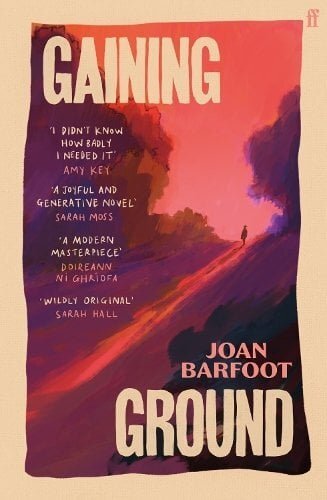
Abra, a middle class woman in her thirties, abruptly abandons her husband, two children, and comfortable suburban life to move to an isolated cabin in the Canadian wilderness, seeking complete solitude and self-reliance. The question posed by the novel is whether prioritising your own wellbeing is more important than your responsibilities to your children?
It all really comes together by the conclusion and leaves the reader with an ambiguous denouement to ponder. Given the many discussion points this would make a great choice for a book group.
4/5
'I've never read a book so authentically frightening . . . Beneath the radical disquiet is a beautiful hymn to the undeniable hearts and minds of women.' Sarah Hall
'I absolutely loved so thought-provoking and complex, but also full of moments of beauty and peace. Abra's dilemma electrified me. An extraordinary novel.' Katherine May
'A joyful and generative novel about running away to make a new home for a new self.' Sarah Moss
I swear I loved them all, and I did the best I could. And then I left them, left all of it.
Abra has a perfect-seeming life as a wife and until one day, she walks away, leaving only a note asking her family not to look for her.
In a woodland cabin, her new life alone begins. There are no mirrors, no clocks, no just the squirrels breathing in the forest, and silence of vegetables growing.
Years later, a young woman arrives, and the past-flashes begin. Daughter? A strange word. Is this her? And what will this mean?
Rediscovered after almost half a century, Joan Barfoot's Gaining Ground (1978) is a both a radical meditation on living on your own terms and an exquisite work of art. It calls to anybody who has ever wanted to escape - who has asked what it costs to be wild, to be sane, to be free.

October 6, 2013
Originally published in 1978, Joan Barfoot’s Gaining Ground feels remarkably radical and pertinent even now. Abra, a wife and mother, abruptly abandons her comfortable suburban life to live alone in a remote woodland cabin, determined to rediscover the self she feels she has lost. Barfoot refuses to make Abra either heroine or villain. Her solitude brings freedom and a profound sense of belonging, but her decision to leave her children is deeply unsettling. When her grown daughter reappears nine years later, the novel confronts the emotional cost of Abra’s escape. Quiet, measured and psychologically challenging, Gaining Ground asks uncomfortable questions about motherhood, duty, identity and the price of personal freedom. It is a fascinating feminist novel precisely because it refuses to provide easy answers.

September 9, 2026
3,6*
Senas, bet nepasenęs feministinis tekstas.
Skaitant šį 1978 m. pirmą kartą išleistą romaną, atmintyje nuolat iškildavo scena iš filmo „Valandos“ (The Hours): Julianne Moore herojė įsėda į taksi, ketindama palikti šeimą, o jos veide atsispindi nebylus kančios šauksmas ir ta nenatūrali, skaudi šypsena, atsisukus į pro langą žiūrintį sūnų.
Knygoje tokios atviros išorinės dramos nėra, tačiau vidinis išgyvenimas panašus. Pagrindinė veikėja Abra turi „tobulą“ gyvenimą: mylintį, dėmesingą, kažkaip nesu tikra ar labai mylimą vyrą, du nuostabius vaikus. Tačiau toje gerovėje ji jaučiasi visiškai praradusi save, ar taip ir nesuspėjusi savęs atrasti. Ji žmona ir motina, bet be savo pačios identiteto.
Todėl vieną dieną ji tiesiog susikrauna daiktus ir išvyksta į atokią Kanados miškų trobelę. Tas pabėgimas į visišką izoliaciją, malkų kapojimas ir kova už išgyvenimą tampa vieninteliu būdu jai susigrąžinti ar bandyti atrasti save.
Daugeliui toks motinos ar žmonos elgesys gali pasirodyti nesuvokiamas, egoistiškas ar net žiaurus. Ir tame yra tiesos. Tačiau man labai patiko, kad šis kūrinys paliečia motinystės, santuokos apskritai temą, kuri iki šiol išlieka visuomenės tabu. Ar net tampa vėl aktuali. Kiek moterų apie tokį atotrūkį bent trumpam yra slapta pasvajojusios...
Beje, žinoma, kad tokios savęs paieškos turi ir savo kainą.
Senas, bet nepasenęs feministinis tekstas.
Skaitant šį 1978 m. pirmą kartą išleistą romaną, atmintyje nuolat iškildavo scena iš filmo „Valandos“ (The Hours): Julianne Moore herojė įsėda į taksi, ketindama palikti šeimą, o jos veide atsispindi nebylus kančios šauksmas ir ta nenatūrali, skaudi šypsena, atsisukus į pro langą žiūrintį sūnų.
Knygoje tokios atviros išorinės dramos nėra, tačiau vidinis išgyvenimas panašus. Pagrindinė veikėja Abra turi „tobulą“ gyvenimą: mylintį, dėmesingą, kažkaip nesu tikra ar labai mylimą vyrą, du nuostabius vaikus. Tačiau toje gerovėje ji jaučiasi visiškai praradusi save, ar taip ir nesuspėjusi savęs atrasti. Ji žmona ir motina, bet be savo pačios identiteto.
Todėl vieną dieną ji tiesiog susikrauna daiktus ir išvyksta į atokią Kanados miškų trobelę. Tas pabėgimas į visišką izoliaciją, malkų kapojimas ir kova už išgyvenimą tampa vieninteliu būdu jai susigrąžinti ar bandyti atrasti save.
Daugeliui toks motinos ar žmonos elgesys gali pasirodyti nesuvokiamas, egoistiškas ar net žiaurus. Ir tame yra tiesos. Tačiau man labai patiko, kad šis kūrinys paliečia motinystės, santuokos apskritai temą, kuri iki šiol išlieka visuomenės tabu. Ar net tampa vėl aktuali. Kiek moterų apie tokį atotrūkį bent trumpam yra slapta pasvajojusios...
Beje, žinoma, kad tokios savęs paieškos turi ir savo kainą.

November 22, 2024
Was für ein Buch – zu Unrecht in Vergessenheit geraten. Meisterhaft. Radikal. Eine feingesponnene Innenschau, ein Frauenporträt, das mit Marlen Haushofers „Die Wand“ ein wunderbares Double Feature abgibt.
(passed down to me by my aunt and mother - which I find most wonderful.)
Siehe auch:
Backlisted. Episode 215.
(passed down to me by my aunt and mother - which I find most wonderful.)
Siehe auch:
Backlisted. Episode 215.

Review of advance copy received from Publisher
This novel is in equal parts beautiful and devastating, and I found myself connecting to it on a very human level.
In Gaining Ground we are guided through the life of a woman called Abra, who 10 years prior had abandoned her family to live a life of solitude in a remote old hunting lodge out in the sticks.
She didn’t give a reason for this at the time, and she has seemingly forgotten a great deal of her previous life in those 10 years spent alone, but the book starts as her daughter, who is now 18 years old, tracks her down and encroaches upon the self-imposed exile that Abra has been living under. Abra’s memories start flooding back and we see her life up unto that point, we see her get a job, we see her meet and marry her husband, we see her have two children, a boy and a girl... and then we see her walk away from it all.
The book dares you to judge it’s protagonist, to look down on someone who has shirked their parental responsibilities and run away from a life that they created, leaving those that loved her and depended on her behind, but there is a profound level of understanding behind the way this book is written, as well as it’s characters actions, and I found myself utterly absorbed.
This is a book about empathy and connection; about responsibilities and what we owe to those around us.
It’s about making mistakes and allowing ourselves to be forgiven.
It’s about memory and alternate ways of living and about assessing what makes us feel whole and connected to the environments in which we chose to live.
I really liked this book.
Thank you to the publisher, Faber & Faber, for the proof copy. Whilst I finished the book prior to (re)release, I didn’t have the chance to write this review or give feedback until now, but I hope the final copy had it’s spelling mistakes corrected because there were many. That being said, it didn’t take away from my experience and I would still highly recommend this book, particularly to 1) those who can relate to (or simply appreciate) a well-written and messy mother-daughter dynamic, but also 2) those who have ever felt they wanted to retreat and hide away from life – let this book be your retreat.
4.5 stars
In Gaining Ground we are guided through the life of a woman called Abra, who 10 years prior had abandoned her family to live a life of solitude in a remote old hunting lodge out in the sticks.
She didn’t give a reason for this at the time, and she has seemingly forgotten a great deal of her previous life in those 10 years spent alone, but the book starts as her daughter, who is now 18 years old, tracks her down and encroaches upon the self-imposed exile that Abra has been living under. Abra’s memories start flooding back and we see her life up unto that point, we see her get a job, we see her meet and marry her husband, we see her have two children, a boy and a girl... and then we see her walk away from it all.
The book dares you to judge it’s protagonist, to look down on someone who has shirked their parental responsibilities and run away from a life that they created, leaving those that loved her and depended on her behind, but there is a profound level of understanding behind the way this book is written, as well as it’s characters actions, and I found myself utterly absorbed.
This is a book about empathy and connection; about responsibilities and what we owe to those around us.
It’s about making mistakes and allowing ourselves to be forgiven.
It’s about memory and alternate ways of living and about assessing what makes us feel whole and connected to the environments in which we chose to live.
I really liked this book.
Thank you to the publisher, Faber & Faber, for the proof copy. Whilst I finished the book prior to (re)release, I didn’t have the chance to write this review or give feedback until now, but I hope the final copy had it’s spelling mistakes corrected because there were many. That being said, it didn’t take away from my experience and I would still highly recommend this book, particularly to 1) those who can relate to (or simply appreciate) a well-written and messy mother-daughter dynamic, but also 2) those who have ever felt they wanted to retreat and hide away from life – let this book be your retreat.
4.5 stars
February 8, 2013
One of my favourites. Good for discussion.
March 8, 2013
My favorite book of all!

May 16, 2017
A remarkable and challenging book. I will have more to say, but want to reread the novel and reconsider my thoughts before putting them down.
August 22, 2026
This is so ‘f them kids and f you too’ meme but feminist 💅
February 10, 2019
I loved reading this book. It allowed me to contact that part of myself that has often wondered could I do it. How close am I to doing it. And what would I reach if I did. Would I gain ground. A story of impossible bravery, survival and reconciliation.

September 16, 2026
İlk baskısı 1978. Şimdi F&F yeniden yayımladı ve epey ilgi görüyor. Romanın kahramanı Alba, orta yaşlarında bir kadın. Düzanlamıyla dağ başında bir evde, tek başına yaşıyor. Bir gün 18 yaşındaki kızının evin kapısını çalması ve ondan –on senelik yokluğunun ardından– anneliğini talep etmesiyle başlıyor roman. Alba’nın kızını özlemle kucakladığı söylenemez. Onun yerine, okurlara o noktaya nasıl geldiğini, kısacası hikayesini anlatıyor.
Alba dönemin tipik bir orta sınıf kadını. Kocası için eğitimini yarıda bırakmış. Onun başarısı için çabalamış. Karşılığını da bir şekilde almış, kocası işinde yükseldikçe ailecek refaha kavuşmuşlar, çiftin iki çocukları olmuş ve rahat bir hayat sürmeye başlamışlar.
Ancak dengeler, ya da Alba’nın dengesi şehir dışında, dağlık bölgede bir müstakil ev ilanı görmesiyle değişiyor. Gizlice evi ziyaret ediyor ve anında satın almaya karar veriyor – böylece belki hayatındaki ilk defa kendi adına karar veriyor... Evi alelacele, büyükannesinden kalan parayla satın alıyor ve hemen sonra, 8 yaşındaki kızını, 10 yaşındaki oğlunu ve eşini terk edip bu eve yerleşiyor. Bundan sonra münzevi bir hayat sürüyor, ta ki kızı on sene sonra onun izini bulup, romanı başlatacak şekilde kapısını çalana kadar. Roman, bu olayla birlikte Alba’nın yaşadığı hesaplaşma ve ikilem üzerine kurulu.
Dönemi için önemli bir roman. Keza o vakte kadar sürüyle orta sınıf aile babası kimliği içinde boğulan, ailesini terk edip –ailesinden, tekdüze işinden kaçıp– serseri hayatı yaşayan münzevi erkek romanları ve bizzat öyle yaşayan erkek yazarlar vardı, başta Kerouac olmak üzere. Bunu bir kadın yapınca, üstelik kutsal anne rolünü de hiçe sayınca işin ne denli çetin bir hal aldığını gösteriyor “Gaining Ground”, bu anlamda put kırıcı romanlardan biri.
Lakin romanın tek meselesi bu değil. Bir yerde kusurlu yaşamlarımıza bir methiye gibi de okunabilir. Hiçbir zaman mükemmel hayatlar yaşamayacağız, çünkü dünya öyle bir yer değil, hele orta sınıf hayatı hiç değil. İnsan da mükemmel bir varlık değil. O halde önemli olan, her şartta karar vermek ve o kararın sorumluluğunu almak, kusurlu yaşamlar belki ancak bu şekilde bir anlam kazanabilir. Ki benim için romanın en etkileyici kısımları, Alba’nın kararında diretmesiyle yaşadığı dönüşüm, bu dönüşümün imgeler, izlenimleri üzerinden anlatımıydı.
Bununla da sınırlı değil. “Gaining Ground”ı aynı zamanda bir doğa anlatısı olarak, romantize edilmemiş, dozunda bir tür feminist Walden olarak okumak da mümkün. Alba’nın yaralı sincapla ilişkisi, resim yapması, rüyalarında kat ettiği kumlu araziler, bahçesiyle ilişkisi, günlük işleri ve genel olarak doğaya yaklaşımı ister istemez Thoreau’yu akla getiriyor.
Marilynne Robinson’ın “Evlerden Uzak” Housekeeping adlı romanı 1980’de yazılmış, özellikle Amerika’nın toplum kurallarına ters düşmüş maceracı erkek romanı geleneğine bambaşka ve feminist bir yorum getirmişti. “Gaining Ground” da o geleneğe eklemlenecek bir roman, benzer bir başkaldırı ve özgürleşme hareketinin ürünü. Ama bana daha çok Marlen Haushoffer’in romanlarını, özellikle de Duvar’ı anımsattı. Cansız, tek düze ve sinsice tahakküm üzerine kurulu orta sınıf yaşantısını terk edip kendini yalıtan, anneliğine de mesafe alan bir kadının doğaya sığınmasını ve dönüşmesini anlatıyor. Kısacası varoluşçu bir yanı da var.
Türkçede önümüzdeki sene yayımlanacak.
Alba dönemin tipik bir orta sınıf kadını. Kocası için eğitimini yarıda bırakmış. Onun başarısı için çabalamış. Karşılığını da bir şekilde almış, kocası işinde yükseldikçe ailecek refaha kavuşmuşlar, çiftin iki çocukları olmuş ve rahat bir hayat sürmeye başlamışlar.
Ancak dengeler, ya da Alba’nın dengesi şehir dışında, dağlık bölgede bir müstakil ev ilanı görmesiyle değişiyor. Gizlice evi ziyaret ediyor ve anında satın almaya karar veriyor – böylece belki hayatındaki ilk defa kendi adına karar veriyor... Evi alelacele, büyükannesinden kalan parayla satın alıyor ve hemen sonra, 8 yaşındaki kızını, 10 yaşındaki oğlunu ve eşini terk edip bu eve yerleşiyor. Bundan sonra münzevi bir hayat sürüyor, ta ki kızı on sene sonra onun izini bulup, romanı başlatacak şekilde kapısını çalana kadar. Roman, bu olayla birlikte Alba’nın yaşadığı hesaplaşma ve ikilem üzerine kurulu.
Dönemi için önemli bir roman. Keza o vakte kadar sürüyle orta sınıf aile babası kimliği içinde boğulan, ailesini terk edip –ailesinden, tekdüze işinden kaçıp– serseri hayatı yaşayan münzevi erkek romanları ve bizzat öyle yaşayan erkek yazarlar vardı, başta Kerouac olmak üzere. Bunu bir kadın yapınca, üstelik kutsal anne rolünü de hiçe sayınca işin ne denli çetin bir hal aldığını gösteriyor “Gaining Ground”, bu anlamda put kırıcı romanlardan biri.
Lakin romanın tek meselesi bu değil. Bir yerde kusurlu yaşamlarımıza bir methiye gibi de okunabilir. Hiçbir zaman mükemmel hayatlar yaşamayacağız, çünkü dünya öyle bir yer değil, hele orta sınıf hayatı hiç değil. İnsan da mükemmel bir varlık değil. O halde önemli olan, her şartta karar vermek ve o kararın sorumluluğunu almak, kusurlu yaşamlar belki ancak bu şekilde bir anlam kazanabilir. Ki benim için romanın en etkileyici kısımları, Alba’nın kararında diretmesiyle yaşadığı dönüşüm, bu dönüşümün imgeler, izlenimleri üzerinden anlatımıydı.
Bununla da sınırlı değil. “Gaining Ground”ı aynı zamanda bir doğa anlatısı olarak, romantize edilmemiş, dozunda bir tür feminist Walden olarak okumak da mümkün. Alba’nın yaralı sincapla ilişkisi, resim yapması, rüyalarında kat ettiği kumlu araziler, bahçesiyle ilişkisi, günlük işleri ve genel olarak doğaya yaklaşımı ister istemez Thoreau’yu akla getiriyor.
Marilynne Robinson’ın “Evlerden Uzak” Housekeeping adlı romanı 1980’de yazılmış, özellikle Amerika’nın toplum kurallarına ters düşmüş maceracı erkek romanı geleneğine bambaşka ve feminist bir yorum getirmişti. “Gaining Ground” da o geleneğe eklemlenecek bir roman, benzer bir başkaldırı ve özgürleşme hareketinin ürünü. Ama bana daha çok Marlen Haushoffer’in romanlarını, özellikle de Duvar’ı anımsattı. Cansız, tek düze ve sinsice tahakküm üzerine kurulu orta sınıf yaşantısını terk edip kendini yalıtan, anneliğine de mesafe alan bir kadının doğaya sığınmasını ve dönüşmesini anlatıyor. Kısacası varoluşçu bir yanı da var.
Türkçede önümüzdeki sene yayımlanacak.

August 24, 2026
Tremendous. If I Who Have Never Known Men and Walden had a baby. I really think this book will be huge
Originally published in in 1978, Gaining Ground opens with a women gardening outside her cabin, confused by the young woman who is suddenly at her door. The young woman is her daughter, who has come after many years to track down the mother who abandoned her family to, as Thoreau would say, live deliberately
Of course its an amazing feminist novel, examining at length the genuinely crippling female experience of waking up one day and realizing no part of your life was freely and fairly chosen-- not the babies, not the husband, not the house, not the work or lack of it. Which mother hasn't occasionally fantasized about just, walking away from it all. This book takes that thought to its edge.
But it's also just an amazing life novel. The novel takes very seriously what it means to opt out of not only being a mom and wife but also a worker in a system. Our main character returns to being an animal in changing seasons, or a plant in a natural cycle. She gives every task the time it needs. She stops looking in mirrors. She becomes intimately familiar with the cycles of movement and stillness, working and resting. She honestly stops having feelings, if only because having a feeling requires observing the self and noticing, and she is entirely within herself. Gaining Ground, to me, seems like a guide to what a truly good life should feel like, if not exactly what it should look like
TL, DR-- this book is about a woman who gives up everything in order to eat when she wants and sleep when she wants, to allow the doing of the thing to be the whole point. What else can anyone ask for, and how many of us are denied such a thing
Originally published in in 1978, Gaining Ground opens with a women gardening outside her cabin, confused by the young woman who is suddenly at her door. The young woman is her daughter, who has come after many years to track down the mother who abandoned her family to, as Thoreau would say, live deliberately
Of course its an amazing feminist novel, examining at length the genuinely crippling female experience of waking up one day and realizing no part of your life was freely and fairly chosen-- not the babies, not the husband, not the house, not the work or lack of it. Which mother hasn't occasionally fantasized about just, walking away from it all. This book takes that thought to its edge.
But it's also just an amazing life novel. The novel takes very seriously what it means to opt out of not only being a mom and wife but also a worker in a system. Our main character returns to being an animal in changing seasons, or a plant in a natural cycle. She gives every task the time it needs. She stops looking in mirrors. She becomes intimately familiar with the cycles of movement and stillness, working and resting. She honestly stops having feelings, if only because having a feeling requires observing the self and noticing, and she is entirely within herself. Gaining Ground, to me, seems like a guide to what a truly good life should feel like, if not exactly what it should look like
TL, DR-- this book is about a woman who gives up everything in order to eat when she wants and sleep when she wants, to allow the doing of the thing to be the whole point. What else can anyone ask for, and how many of us are denied such a thing

August 25, 2026
Made me question everything - where are my desires sourced from and are they really mine?
Some parts of it, you just want to do the same thing as the character.
Towards the later part of the book, there are some crazy revelations that you can either accept or argue against, but it’s super thought provoking nonetheless
Some parts of it, you just want to do the same thing as the character.
Towards the later part of the book, there are some crazy revelations that you can either accept or argue against, but it’s super thought provoking nonetheless

September 7, 2026
It makes sense in the current political climate that this book would come back around. It was written in 1978 (the year I was born) and I imagine it was seen as radical then as it is today as well. Essentially, it is about autonomy, particularly a woman's right to be as she chooses to be.
If you know me well, you know that I have a deep love of time by myself and that without carving out this time eventually I feel completely untethered. Reading this felt like an extreme version of my life if I didn't hold so tightly to my children. I can't imagine choosing to escape to a cabin forever, but for a month every two years YES!
The book itself is very well written. I suppose you could feel that the fmc is cold, but I felt that she was existing on a different plane that was, for her, completely rational.
If you know me well, you know that I have a deep love of time by myself and that without carving out this time eventually I feel completely untethered. Reading this felt like an extreme version of my life if I didn't hold so tightly to my children. I can't imagine choosing to escape to a cabin forever, but for a month every two years YES!
The book itself is very well written. I suppose you could feel that the fmc is cold, but I felt that she was existing on a different plane that was, for her, completely rational.

September 8, 2026
4⭐️ - This book really does have a timeless narrative, you would of never guessed that it was written in the 1970’s. It confronts dilemmas a lot of women may still have in their lives and you really do empathise with the main character as you read her thought processes.

September 8, 2026
3,75 ⭐️
‘How many fears have there been that I’ve learned to make mine?’
Als vrouw je gezin en oude leven achterlaten om alleen in een cabin in the woods te gaan wonen. Dat geeft stof tot nadenken en ruimte om te reflecteren op je eigen leven en rollen. Mede daarom kwam ik niet snel door dit boek heen, maar ik geloof niet dat dat af doet aan het boek zelf. Soms traag en veel interne monoloog, maar dat is dan ook wel weer passend. Even laten bezinken.
‘How many fears have there been that I’ve learned to make mine?’
Als vrouw je gezin en oude leven achterlaten om alleen in een cabin in the woods te gaan wonen. Dat geeft stof tot nadenken en ruimte om te reflecteren op je eigen leven en rollen. Mede daarom kwam ik niet snel door dit boek heen, maar ik geloof niet dat dat af doet aan het boek zelf. Soms traag en veel interne monoloog, maar dat is dan ook wel weer passend. Even laten bezinken.

August 8, 2026
I wish I’d seen what other reviewers saw in this one. Not for me, sadly.
I was genuinely invested in the book’s central idea, but found the pace meandering; too much time spent dwelling in the drudgery of isolation, and not enough pressure on the questions the premise raised. I like a slow book, but this one drifted rather than deepened.
Abra was a hard narrator to spend time with, for a book this short. I could feel her frustrations with society and her marriage, but she came across as too easily led - passive in a way that made her hard to root for. The questions the novel seemed to want me to sit with just didn’t stick.
I was genuinely invested in the book’s central idea, but found the pace meandering; too much time spent dwelling in the drudgery of isolation, and not enough pressure on the questions the premise raised. I like a slow book, but this one drifted rather than deepened.
Abra was a hard narrator to spend time with, for a book this short. I could feel her frustrations with society and her marriage, but she came across as too easily led - passive in a way that made her hard to root for. The questions the novel seemed to want me to sit with just didn’t stick.

August 13, 2026
Phenomenal! This has floored me. To be read again soon. It’s one of those rare books that got under my skin and kept a firm grip from start to finish.
March 24, 2021
I've read this book twice. Once at age around 30, again in my late sixties. I adored it first time around and felt an urgent need to reread it and see if it still held meaning for me. I scoured second hand bookshelves for years and finally snapped up a slightly battered edition in the good old dark green colour of The Women's Press - legend!
And I still loved it. In some of the same ways - adoring how the wilderness that Abra retreated to was a character in its own right and feeling bereft for the land at the thought she might choose to leave. Feeling triumphant that she had bravely walked away from a traditional woman's life to claim her own identity. Her determination and physicality.
Yes this time around I noticed a few things such as a total absence of any mention of sexual feelings or managing menstruation. Also that there are some very dense paragraphs. But that's all absolutely fine. I still love it and consider one of the most influential novels I have ever read.
And I still loved it. In some of the same ways - adoring how the wilderness that Abra retreated to was a character in its own right and feeling bereft for the land at the thought she might choose to leave. Feeling triumphant that she had bravely walked away from a traditional woman's life to claim her own identity. Her determination and physicality.
Yes this time around I noticed a few things such as a total absence of any mention of sexual feelings or managing menstruation. Also that there are some very dense paragraphs. But that's all absolutely fine. I still love it and consider one of the most influential novels I have ever read.
Displaying 1 - 30 of 178 reviews