Monarchs of the Sea: The Extraordinary 500-Million-Year History of Cephalopods [2017/2020] – ★★★★
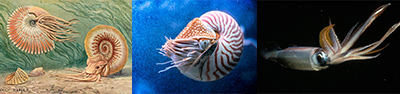
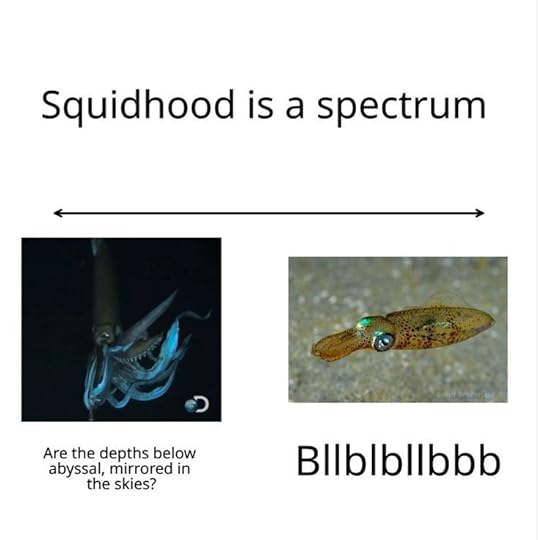
This book is about the magnificent, enigmatic and elusive cephalopods (a class of molluscs to which octopuses and squid belong), their origin and 500-million-year history. Danna Staaf, a marine biologist, traces their evolution from the very origins of life on Earth in the sea, to the demise of some cephalopods in the Cretaceous period and our modern age. From the causes of the “Great Dying” that happened in the Permian period (when up to ninety-six percent of all marine species perished) to our present day threat of global warming and dangers that face nautiluses, Staaf explains clearly the many issues that concern cephalopods, as well as introduces a whole variety of weird and fascinating sea creatures: from the first sponges and worms, to now extinct ammonoids and a variety of curious present-day octopuses and squid (for example, the pygmy squid and the mimic octopus). This well-illustrated book, which is written with surprising humour and succinctness, will completely delight all those who are interested in marine evolution and curious about the history of present-day cephalopods.
Monarchs of the Sea was published as Squid Empire in 2017, and it has now been revised and reissued as Monarchs of the Sea. This relatively short book is a very good one in terms of explaining the evolution of many sea creatures, making the point that it is not such a straightforward concept: “evolution is not a single thread – it’s the interweaving of many, many threads, some cut short, others so quickly changed you can hardly follow them through the cloth” [2020: 47], explains Staaf in her book. Driven by the desire to survive at any costs, many creatures were forced to adapt quickly in the past to either the changing environment or the changing creatures around them (or both). This means that, in time, fish got their teeth and, while some sea animals got their shells, others abandoned them (or substituted them for internal shells). Monarchs of the Sea then explains the quirks of the cephalopod’s jet propulsion, and elaborates on that exciting time when cephalopods were the super-predators of the sea.
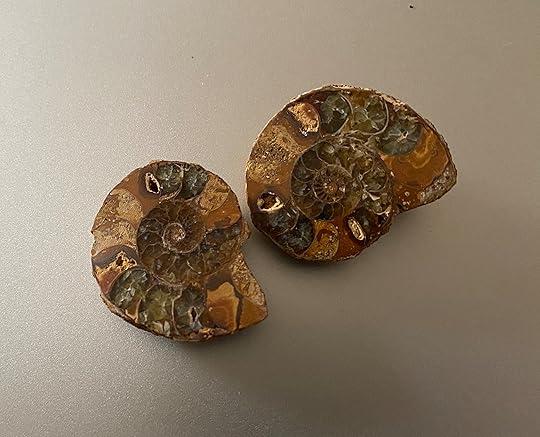
One of the great elements of the book is that the author talks much about the scientific debates and contentious issues that concern cephalopods, presenting both the “crazy” arguments (including their rebuttals) and more or less “sound” arguments. Staaf definitely does not shy away from mysteries, and goes to the very crux of current debates. It was indeed very surprising to find out that there is so much speculation about much information that concerns cephalopods in the current scientific community. While Staaf debates in her book how big the giant squid actually was, the reasons why ammonoids disappeared and why nautiluses have survived for so long and against all odds, we are also introduced to the works of such undoubtedly great marine biologists/palaeontologists as Alexander Arkhipkin, Margaret Yacobucci, Neale Monks and Kenneth De Baets.
Near the end of her book, Staaf talks about our present time and how hard it is to find fossils of cephalopods because many of them were jelly-like and did not leave behind much by way of evidence that can shed light on their composition/structure. She also talks about the human dangers that many marine animals face today. This is largely as a result of the speed in which these changes are introduced and are happening in the marine environment, meaning that many sea animals cannot adapt sufficiently quickly to survive: “changes wrought by humanity are now being felt on every level, from the deepest ocean trench to the most remote mountain glacier” [Staaf, 2020: 164].
The only downside of the book is that its approach may be considered as too “relaxed”. Everyone wants to read a non-fiction book that is entertaining and engaging, but surely we do not want to read too much slang, street talk, informalities, etc. I am also sure that today’s readers are capable of maintaining their attention without the author mentioning such unrelated people as J. K. Rowling and M. C. Escher, and other trivialities. Thus, we find such phrases in Staaf’s book as “rough luck for the squid”, “now that that’s taken care of…”, ”it sounds a bit goofy”, “shell trade is…a real doozy”, etc.
The good thing, though, is that Monarchs of the Sea finishes on a very uplifting, positive note. It is true that we face losing nautiluses and humans continue to endanger the planet’s fragile ecosystem, says Danna Staaf, but the cephalopods’ population is also on the rise, and there are plenty of young people around who are curious and interested in studying, and promoting the interests and history of cephalopods in future.
🦑 Overall, Monarchs of the Sea is a wonderful book that filled the gap that needed to be filled in this genre of popular non-fiction books; the unique creatures that many cephalopods were deserve to be better known since their history goes much further than that of the dinosaurs, and their diversity and resilience to survive still astound many.