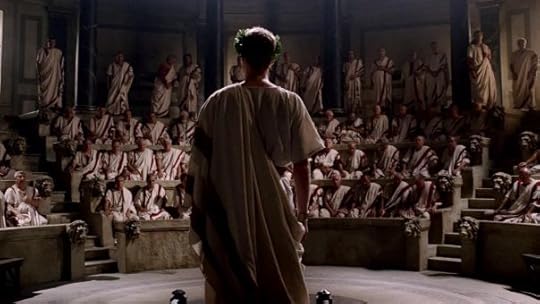
After years of fighting on the battlefield, Sertorius returns to the city and family he fought for, to find them far different than he remembered.
Rome, 100 B.C.
The northern menace has been annihilated. Rome has no more foes to conquer, her borders are secure. But the Republic has never been closer to collapsing.
Sertorius has returned to Rome after more than five years of fighting in the north, and Marius has plans for him. Marius has plans for all of Rome, actually. At the height of his power and with the love of the people, Marius is a few political connections away from ruling the Republic. Will the august body of the Senate be enough to stop him?
Corruption, betrayal, and violence spread throughout Rome like a fire in the Subura as Sertorius does everything in his power to maintain the peace within the Republic and within his home.
Bodies in the Tiber is the third book in the best-selling Sertorius Scrolls historical fiction series. If you like well-researched, historically accurate, page-turning books than you’ll love Vincent B. Davis II’s compelling saga.
Vincent B. Davis II writes historical fiction books to keep the past alive through the power of storytelling. He is also an entrepreneur, speaker, and veteran who is a proud graduate of East Tennessee State University and was honorably discharged from the US Army in 2022. Armed with a pen and an entrepreneurial spirit, Vincent quit his day job and decided it was as good a time as any to follow his dream. He went on to publish six historical fiction novels, four of which have now become Amazon International Best Sellers.
Vincent is also a devoted and depressed Carolina Panthers fan and a proud pet parent to his rescue pups, Buddy and Jenny. Join Vincent in celebrating the past through the pages of his books. His newsletter, The Legion, is more than just another author email list. It’s a community of readers who enjoy free additional content to enhance their reading experience—HD Maps, family trees, Latin glossaries, free eBooks, and more. You can join the community and snag your freebies at https://vincentbdavisii.com/join-the-....
Vincent also loves connecting with his readers through social media. Find him on Facebook or Instagram @vbdavisii, vincentbdavisii.com, or email him at Vincent@thirteenthpress.com.
I received this book's ARC from the author in exchange for my honest review
This enemy is not made up of barbarian hordes, bloodthirsty pirates, or rebellious Macedonians. No, this army is led by the men I once sat beside in the senate-house. The men on the front lines have probably served alongside me in some previous campaign or other. Tomorrow we will be fighting Romans. How has it come to this, you may ask? I ask myself the same question. Romans killing Romans? There was a time when the thought would have been absurd. But for as long as I can remember, it’s all the Republic has known. How has it come to this?
After returning victorious from the Battle of Vercellae, Sertorius is awarded with the title 'Hero of the north' and persuaded by his mentor Gaius Marius to become a senator and support him in the Senate. Initially reluctant, Sertorius agreed on the condition that he will not do anything which his conscience doesn't allow him to do.
With Marius as the consul and his followers Lucius Saturninus as tribune and Gaius Glaucia as praetor, they brought some new legislations for the welfare of plebs and veterans of war. But when Saturnius and Glaucia began to use coercion, threats, and assassination to remain in power and Marius get completely isolated in the senate for initially supporting them, Sertorius finally realized the true meaning of shithole of Romulus, that is the roman politics.
Perhaps, up until then, the Republic could have been saved. Marius could have assuaged his old friends and they could have been brought to reason with a show of goodwill and some compromising. But not after that. The fate of Rome had been sealed with the consul’s stamp.
Review:
🩸The cover is stunningly beautiful and the title is apt to the story. The book also gives a glossary at the end which is helpful to understand the meaning of Latin terms and their historicity.
🩸Davis's writing is smooth and flawless. There was some minor editorial error in the book but that can be easily overlooked and didn't hinder my reading experience.
🩸Davis with his immense knowledge of Rome had beautifully portrayed the life in Rome and working of its Senate. A Senator's life, their thinking, and all the cunning, ploy, and machination they employ to gain votes are relatable with today's politicians.
🩸The book is narrated from the Sertorius's POV. I missed Sulla's POV (although there was one chapter in his POV too). I think Saturninus's POV if added could have brought a different perspective to the story and makes it more interesting to read.
🩸The pacing of the book is plodding, but that can be understandable since the entire story revolves around the Roman Senate and its senators. So if you are expecting to read some grand adventures and epic battles, then you are highly mistaken.
🩸All the characters are well written. Sertorius, getting adjusted in his new life as Senator and his constant self-introspection was pleasing to read. Marius, getting envious and paranoid is perfectly shown. Loved Tribune Saturnius, can't stop myself from empathizing with him.
🩸The ending was sad and quite expected. However, in the epilogue, there are two happy surprises waiting for you; one will be regarding Sertorius's love interest, Arrea and another will open up a new prospect of life for him.
In comparison to the other two books in the series, Bodies in the Tiber was a-ok read for me. Instead of outside battles it mostly deals with mind battles. If you like Roman history then go for this book, but before that don’t forget to read the other two books in the series.
Even though I knew the Republic was corrupt at the end, this book lays it out in all its shocking manifestations. Our protagonist, Quintus Sertorius, has been raised up to Senatorial rank by Marius despite the illegality of his promotion. Already he feels unmistakable twinges of discomfort, but his loyalty to Marius overwhelms his suspicions. Unfortunately, unlawful—or at best, questionable—activities between Marius and his disreputable friends continue to build up until there is no longer any doubt that they are planning a coup. Sertorius is torn by his loyalty which shreds in proportion to Marius’s obvious mental deterioration; Rome’s famous commander is no longer the man he once was. The Populares, as their political party is called—crossed the line when they resorted to violence to remove a man who threatened to derail their proposed legislation:
I reached for my sword, instinctively, which of course wasn’t there.
When I looked up again, a group of hooded men in tight formation was ascending the steps of the Rostra. Lifted swords glimmered in the sunlight. The tribune-elects were jumping over the edge like sailors on a breached ship.
But Nonius was too late. I caught sight of him as he was swallowed up by glistening swords.
Even then, Sertorius tried to rationalize the murder, trying not to blame it on Marius. But his own self-respect demanded that he assert himself, and Sertorius does his best to rein in the worst excesses of the party he is associated with. But things have gone too far. Rome is tearing itself apart and the mob rules. Murder has become the order of the day. Which disreputable leader will save Rome? We’ll have to read book four to find out. Great reading!
It has been almost a year since I read the second book of this Sertorius series, but the character is so memorable it is easy to pick up the action. This episode has him continuing his association with Gaius Marius, his former commander, who leads him to become a senator. There is great unrest and many challenges both personally and in the public arena where his heroics (Marius) are once again called on and depended on.
Well done - again Vince you tease out more of the machinations that were the building blocks of the Rome that would come in less than 40 years. Saturninus , Glaucia and Marius form a triumvirate that once unleashed chills the senate to its core. Our newly minted senator realizes the manipulations being done and as is his way ,takes a stand. Looking forward to the coming times with the Cornelia and the looming civil war. Great yarn ,thanks and keep it going !
Book 3 in a series about a man's rise from north Italy country lad to general in the Legions. This book basically covers the rise of Marius to political dominance and becoming Dictator in Rome. Its mostly political maneuvering and relationship stuff, and is so dire and unhappy a time in Roman history that it was a bit of a slog for me, but others might like that content better.
Overall the series is well written and historically interesting, but overcast with a sad depressing mood that is almost oppressive
In this third book of the "Sertorius Scrolls", Quintus Sertorius has completed his campaign service against the Gallic tribes and returns to Rome, only to be invested into the Roman Senate. During his tenuous initiation into Roman politics, Sertorius is continually let down by the greedy, power-driven colleagues with whom he must work. However, by the ending, he manages to salvage self-respect and maintain his prized Roman honor.
Davis has done a noteworthy job of depicting a young Roman man, begining his passage on the cursus honorum. I did feel the plot pace to slow down quite a bit, but Davis's excellently detailed historical research is impeccable--especially in his depictions of the voting process--and saved the story from becoming too cumbersome. Indeed, this author does his homework and it's been made obvious. As in the first two books, there are some grammatical and spelling errors, however, overall, this is an entertaining romp through the streets of late Republican Rome.
After participating in several battles, Sertorius, now the "Hero of the North", returns to Rome. This novel traces out his entry and political career as senator, as protégé of Marius. Disillusioned with Roman politics following an assassination and machinations concerning bills, especially the one concerning land grants to veterans, he breaks with Marius. He feels this is the beginning of the end of the Republic. He calls for reconciliation among the aggrieved politicians, but is not listened to. The way is opened for further adventures. I wouldn't necessarily call this a "political thriller" but a further chapter in Sertorius' life. I enjoyed the novel and recommend it as a continuation of Sertorius' story and possible influence on him. Unfortunately, there were typos, which I took as the typesetters' fault. Several expressions did confuse me though. I thank the author for sending me a copy.
Using one review for 3 books: All the books in the Sertorius Scrolls (1-3).
Story of a young in the time just before Sulla's takeover of the Republic of Rome. Setorius is a man of honor, from humble conditions. I kept going on in the hope the story would go someplace interesting, but it never did.
A woman that he is love with, that he cannot marry? Check. Comes to the attention of important people by chance, and they quickly promote him? Check. He becomes a hero? Check.
In addition, the author needed a basic copy editor. Things like confusing accept/except, typos, and odd word uses. He keeps referring to a morning levy, where a politician's clients come to visit him. Levy is a tax or mandatory service, or the results of that. (The levy raised was given to the governor.) Perhaps he's thinking of levee, a French term, but that's a formal ceremony in French court, starting in the 1600s.
A decent historical novel based on the real-life Quintus Sertorius, a Roman general and former senator who led a rebellion against the Roman Senate. The political environment of Rome of his era was so much like today. Choice little quotes from the book: “The conversation had never begun as ‘how do we bring more justice to corrupt governors, "’but rather as ‘how do we secure a larger body of voters.’” “’We can silence the man with accusations as well as we can with swords.’” “’There is one member of the senate who refuses to uphold the Roman law. He has proven today that his first and only allegiance is to his political party.’” Sound familiar? The book is copyrighted 2020, so the author is likely drawing the parallels.
One error in the book: Sertorius thinks, “And there was no going back. The Rubicon had been crossed, so to speak.” Except, that phrase alludes to Julius Caesar's crossing of the Rubicon in 42 B.C., and Sertorius died in 72 B.C., so that never would have been part of his thinking.
This is part of a series, but stands fine on its own.
Quintus Sertorius is now a Senator of Rome, and not of his own choosing. He is drawn into political intrigue on all sides and doesn’t know who his friends are. Quintus Sertorius was a real soldier and many of the people around him are real as well. A great book for everyone that likes political mysteries.
Enjoyable, well written and flows well. Its written in the first person which the style I like in a book. Its different from the other books in the series, This being more political, more intrigue and at a different pace. A nice change and not a simlar rehash of earlier story like some authors do.
Filling in the life of one of the characters Ms McCulloch skimmed over as Sertorious presumably was not in the direct story line but Mr Davis amply fills that gap and I for one are waiting impatiently for his subsequent stories of a hero of mine. Anyway thanks for everything written so far, including your freebies on your webpage, esp the maps and glossary which nicely fit in my smartphone
I found this book a little boring. No battle scenes just politics and the rage engulfing the republic at this time in Roman history. Nevertheless, a good telling of what occurred during Marius’s sixth term as Consul.
Having defeated the massive combined Germanic and Gallic army in book 2, Sertorius finally gets to return home to Rome. However, he enters a battlefield unlike one he has seen before - the Senate. His friend Marius, seeing the value in having a war hero on his side, takes Sertorius under his wing, but it seems Marius has other motives. Corruption is rife (I love that phrase) and someone is sowing seeds of rebellion among the masses, leaving no one safe. The political intrigue brings a different aspect to the trilogy but is no less interesting than watching legions go through their paces. This isn't all talk, there's plenty of stabby-stabby for those who enjoy such things, but the conniving politicians bring an interesting challenge for Sertorius that is far different from the brutal honesty of the battlefield. We also get to meet a famous historical figure. The series is narrated by the outstanding Joshua Saxon, who is becoming an auto-listen for me, even if I haven't heard of the author/book. Weird, huh?
A worthy finish (I assume) to the trials of Sertorius.
Davis moves the series from the battlefield to the battle of the senate. Who knew that today’s politics so mimicked Rome’s over two thousand years ago?
Quintus Sertoris has just returned from the northern battle against the Cimbri to secure Rome’s borders. Hailed as Hero of the North, Quintus is uncomfortable with all the public attention. He only wants to find his family and start to rebuild his relationship. He soon learns that his wife has perished by her own hand and is reunited with his servant, his nephew who is also is adopted son, and his true love Arrea. But he has changed and so has everyone else. Quintus soon learns that Marius wants Quintus to become a senator to show support for his consulship and elected party. Quintus left the noble party years ago because of the corruption of politics and has misgivings but finally decides that maybe he can do some good in the world. What he discovers is that while Rome may be secure at her borders, the Republic is on the brink of collapse within!
I’ve enjoyed all the Sertoris Scrolls, but this one was enjoyable as a political thriller. What was interesting was how the political parties spend more time trying to stay in power than they actually do for the good of the Republic. Sound familiar? Like maybe it could be written in today’s world? As always, Davis did a great job on his research for the time period and cast of characters. I’m a huge fan of Ancient Roman history, so I’ve already done a tremendous amount of research on the time period before I read these books and I’m always pleased to see how accurate they are.
Quintus continues to grow as a noble character, even though he had a bit of a stumble throughout this book with his drinking and depression. However, I’m glad to see that he was able to overcome and continue to do what he thinks is right even when wrongs continue to confront him. I’m not going to divulge much, but I’m extremely happy about an event in this book that previously frustrated me in the second. I think those that read through the book will understand once they read it.
There is quite a bit of harsh language and violence throughout the book, so I recommend that only mature audiences select this title. Lovers of the time period will surely enjoy this! I hope to see this series continue!
I received a complimentary copy of this title from the publisher. The views and opinions expressed within are my own.
Bodies in the Tiber is the third book of an ambitious set by Vincent B. Davis, II. Moreover, the three volumes (thus far) of The Sertorius Scrolls are punctuated by two volumes of The Marius Scrolls.
The setting is ancient Rome in the dying days of the Republic, 100 BCE. Gaius Marius has been elected consul for an unprecedented sixth term and asked his protégé, Quintus Sertorius to serve in the Senate. Sertorius, who would later lead a rebellion against Rome (cf., the Sertorian War, 80-72 BCE), is the protagonist and narrator of this volume.
Historical fiction is a remarkable genre, and it gives the author the opportunity to develop literary characters out of figures from “real life.” Davis has obviously done his homework, and his depiction of the rift between Marius and Lucius Appuleius Saturninus offers a marvelous (and scathing) presentation of Roman politics of the time.
The historical liberties are actually “improvements” from the literary perspective. For example, Sertorius is hailed as “the hero of the North” and apparently lost an eye during the military campaigns against the Teutones and Cimbri (which were actually a year apart). Historically, he did suffer such a wound, though not until the Social War (91-88 BCE), yet the chronology by Davis is actually more effective within this fictitious narrative.
The author does a convincing job with the tricky political relationships, notably between Saturninus, Sulla, and Marius (and their factions). He does not fare as well with some of the interpersonal relationships, notably that between Sertorius and his former lover, Arrea. Here, things seem somewhat superficial and might have benefitted from further development.
The action is compelling, and the reader must remember that these were bloody times, as ancient Rome moved inexorably toward civil wars. As the title conveys, bodies would indeed be thrown into the Tiber – or, to translate the idiom, some of the characters would “sleep with the fishes.” The story arc follows the turbulent historical events admirably, and the narrative is well paced.
The text is generally “clean,” although it could have used some editorial services in places. A tale this good should not have typos and other minor errors.
Sertorius is reminiscing about his time in the Roman senate, where he was basically placed by his consul friend Marius despite not having the legal qualifications of age and property-holdings (to say nothing of having held previous office). He and Marius were legionaries together, and Sertorius wants to support his friend.
The author positions this as a political thriller, but I'd say it's more about intrigue than "beating the clock" as people take whatever dangerous actions they're taking. That's okay. The bigger problem for me were the things that jerked me right out of the story.
One of them was putting anachronistic speech in the character's mouths. For example, in the epilogue, Gavius (Sertorius' adopted son) says "Okay." No ancient Roman used that word; it wasn't coined until the early 19th C. in America. "All right," "very well," or similar would have served and not had me scratching my head.
The thing that bothered me the most was that the author didn't seen to understand how the Roman tria nominia works. We learn of the birth of Gaius Julius, who later gives himself the title of Caesar. Gaius would be what we call a first name (the praenomen). Julius is the family name (nomen). The cognomen is something used among intimates or friends, and is akin to a nickname in many ways. The author refers to Gaius' family as "the Gaius Caesar family" more than once, when they are actually the Julian family. While history does record other men named Gaius Julius Caesar, they were not of the "Gaius Caesar family."
And here's why all of this bugs me so much: it's a good story. We get a good look at politics in the Roman Republic, and how bribes and intrigue were employed for both good and bad purposes. It's not as though the author hasn't otherwise done his homework. So, for someone like me, who has studied ancient Rome, these seemingly minor things added up to a major disappointment.
Third in the series following the life and times of Quintus Sertonius, a soldier in the Roman Army who served under Marius. Fighting successfully concluded, Quintus returns to Rome and family, hailed as an hero of Rome. H is persuaded to stand for office as a Senator, despite lacking the necessary qualifications, including age, and discovers that politics can be as deadly as the battlefield.
Told in the first person as if this were a personal memoir, the reader is able to not only be in the midst of the action as it occurs but also enter into the emotions of the man relating, his character, love, hopes, fear and anger clearly revealed. The inner workings of this turbulent time is clearly revealed. Narration by Joshua Saxon further enhances this experience of living with Quintus: his reading is immaculate with perfect pace and good modulation, his R.P.English accented voice fitting perfectly with the character. Only at one point late in the story does his perfect identification with Quintus falter briefly, but this is quickly resolved. Overall, a very fine performance.
The change of outlook from military to political action makes For a slightly slower pace than the earlier books, but no less intense in the happenings. For some reason, however, my audio version of Bodies in the Tiber did not include the very interesting glossary at the end of the ebook, nor the Epilogue, which concludes this part of the Sertorius story. Given a continuation with a fourth book, seems most unfortunate. A very enjoyable book for all with an interest in pre Empire history of Ancient Rome and one which can be read as a stand alone. Highly recommended
I remember drawing Greek and Roman gods in the margins of my texts and avidly reading Norse mythology which probably made me a pretty odd child. So I was happy when this book came my way by chance. It combines my bent towards history with a thriller of sorts - fiction mixed in with the fact. The author, Vincent B. Davis II, is himself a soldier and brings authenticity to his writing about this soldier turned Senator - the PTSD nightmares, the battle injuries, the changes to the inner self and, even, the seeking of solace and forgetfulness in alcohol.
There is all that but there is also the political intrigue and Quintus Sertorius’ quest to save the soul of Rome for future generations. It seems the more things change, the more they stay the same and, throughout history, we seem doomed to make the same mistakes.
This is a good read on different levels. You take away from it what you will.
This book was just an okay read with me. After reading the previous book, which was pretty exciting, this one was less interesting with the emphasis on the politics of the day. Sertorious seemed really awkward and out of place as a senator, which is maybe what the author intended. There were additional typos in the story (as there were in previous book) which do make you stop reading to figure out which word the author really intended to use. And maybe I'm wrong, but it seemed to me that the author used the word "persecute" when he actually meant "prosecute" several times. When a word is misspelled or incorrectly used it does damage to the flow of the story and I find it difficult to ignore if it happens too often. The author did a great deal of research in the writing of this novel. I liked that Latin was used pretty often, because it helps with giving you a feel for being in Rome at that time in history. The author writes well. I wish he would use a better editor.
Another fine piece of writing by Vincent Davis. I had to put it down due to life events, but was able to pick right back up where I left with no problems.
Mr. Davis comes out of his shell more and more with each book he writes, much to the delight of his fanbase (of which I am a proud member of). The story keeps you on the edge of your seat, the plot twists make you smile, laugh, and frown until the end.
The ending of this book is much like his other writings- it leaves you thirsting for more and eagerly awaiting his next installment in this series.
I say this every time I write a review, and it is true every single time- this writer is going places, and is well on his way, and he is taking us, his readers, along for the ride.
Bravo yet again, Mr. Davis, a wonderful story to add to my bookshelf!
Bodies in the Tiber was a big shift from the battlefield to the capitol. But the amount of drama and excitement is still very much present. If not more so, as civilian and innocent (for the most part) blood is shed in service of maintaining political power, not so much different than what we are seeing in the good Ol' USA today. It is quite eerie how similar our story is with the Roman Republic. Vincent does a wonderful job setting the tone, and the stage for what is to come in Quintus' story. Don't let the moderate pace of this 3rd edition fool you, there is plenty blood if that is what you desire.
I have enjoyed all the books in the series rating them with five stars. I am a big fan of fiction about Roman Military. This book was all about the political happenings in the Senate in Rome. It was not as excited a read for me . But, I hav to say at the end I was smiling at the way it need. That is what I would expect an author would like to see at the end of their book A smiling reader who liked the ending. I am looking forward to the next in the series, hopefully it will be Roman Army not So much Roman politics!
This is the third book in the series and I have yet to grow tired or weary of this story. Each book leaves me anxious to delve into the next.
The storytelling is great, and it strings you along perfectly. I love the historical side of all of it. It captures the imagination while also causing thoughts of history and the way it repeats itself in today's world.
Immerse yourself in Roman politics/culture that frighteningly resembles the present day. Voting your conscious was proposed to be the standard of excellence to strive for but the reader will see that each Roman has a different opinion on what their conscience needs at any specific moment. How does a noble Republic crumble? My reader, it crumbled from within.
If you are a serious student of Roman history you will enjoy the storyline. The military aspects seem quite accurate and the descriptions of Rome itself are encouraging me to make another trip. The visual imagery at times is so good it feels as if you are at the Forum.Even if it was a bit slow getting started it was an excellent read
I had a very difficult time putting it down. The story was well thought out and the view point presented of Sertorious' is astoundingly deep. Over the three books to see Sertorious' character evolve is quite satisfying. Literally on the edge of my seat by the end of this book!
I wanted to like this book so bad but it took me days of plenty of naps to get through it. Too many Latin names and terms that I had to look up. When people have three different names and are referred to by 1 I couldn't keep up with who was who. I kept reading cuz I wanted it to be better. Actually wasn't a bad story but I just couldn't deal with all the weird and duplicating names