Jump to ratings and reviews
Rate this book

The Coming of the Fairies

Rate this book
The story of the Cottingley fairy photographs hoax. Includes eleven of the photographs which fooled the establishment, plus the original articles published in The Strand magazine.

111 pages, Hardcover

First published January 1, 1921

36 people are currently reading
924 people want to read

About the author

Arthur Conan Doyle

15.8k books24.3k followers
Sir Arthur Ignatius Conan Doyle was a Scottish writer and physician. He created the character Sherlock Holmes in 1887 for A Study in Scarlet, the first of four novels and fifty-six short stories about Holmes and Dr. Watson. The Sherlock Holmes stories are milestones in the field of crime fiction.

Doyle was a prolific writer. In addition to the Holmes stories, his works include fantasy and science fiction stories about Professor Challenger, and humorous stories about the Napoleonic soldier Brigadier Gerard, as well as plays, romances, poetry, non-fiction, and historical novels. One of Doyle's early short stories, "J. Habakuk Jephson's Statement" (1884), helped to popularise the mystery of the brigantine Mary Celeste, found drifting at sea with no crew member aboard.

Ratings & Reviews

What do you think?
Rate this book

Friends & Following

Create a free account to discover what your friends think of this book!

Community Reviews

5 stars
63 (15%)
4 stars
94 (23%)
3 stars
166 (40%)
2 stars
64 (15%)
1 star
19 (4%)
Displaying 1 - 30 of 79 reviews
Profile Image for Manybooks.
3,815 reviews101 followers
October 14, 2018
When I was in grade five (in 1977), I checked out Sir Arthur Conan Doyle's The Coming of the Fairies from my elementary school library, not because I knew at that time who the author was and that he was indeed famous and known for his Sherlock Holmes mysteries, but simply because I found the cover photo both visually appealing and at the same time somewhat strange, and of course I was therefore also more than a bit curious if The Coming of the Fairies was a collection of folklore tales or perhaps actually a book that strived to prove that fairies in fact did exist (and the latter was indeed the case with The Coming of the Fairies).

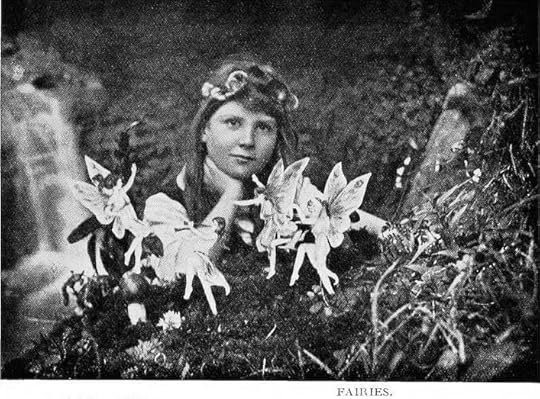
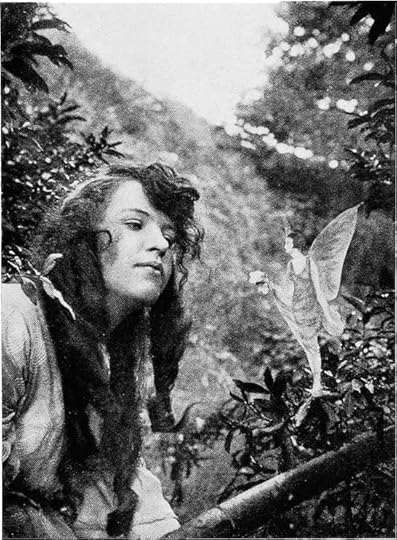
Now while I did not at the age of eleven actually manage to either finish reading or fully and lastingly comprehend all or even half of the textual components of The Coming of the Fairies (as my command of the English language was in 1977 not as yet strong enough for that, seeing that my family had but immigrated to Canada from Germany in 1976 and of course, I was still in the process of learning the ins and outs of English grammar, syntax and word usage) I certainly was even with my at that time still somewhat limited English language skills able to not only figure out pretty rapidly that yes and for certain, Sir Arthur Conan Doyle absolutely and totally not only believed that fairies were real, that according to him, they actually did in fact exist in real life, but also that with regard to the presented and included photographs of the now infamous Cottingley Fairies that I personally could not in any way imagine how the author, how Sir Arthur Conan Doyle could have been so ridiculously gullible and so easily mislead by Elsie Wright and her cousin Frances Griffiths that their supposed photographs were real and natural, as yes, every single one of those so-called (and included as proofs and examples in The Coming of the Fairies) fairy photographs (even if I now do realise that photography was still a bit of an enigma and a "miracle" to many in the early part of the 20th century) absolutely and totally looked even to my eleven year old eyes as utterly managed and faked, often beautiful and enchanting, for sure, but really, anyone with reasonable eyesight should have been able to notice and discern that these were not bona fide fairies being photographed but rather pictures of the two cousins posing with staged paper cut-outs.

While the presented and included "fairy" photographs of The Coming of the Fairies I do consider even now as being visually and aesthetically quite interesting (if not even rather pleasing from an artistic point of departure) the entire premise of The Coming of the Fairies (namely that according to Sir Arthur Conan Doyle, fairies do truly exist) is actually and in my humble opinion mostly rather massively saddening and even pity-producing. Also and furthermore the narratives, the texts included (which obviously are meant to both justify and prove alongside of the shown photographs the bona fide, the supposed reality of the existence of fairies) upon just having now reread The Coming of the Fairies, I have definitely and personally found Sir Arthur Conan Doyle's written, his printed words (as well as his inclusions from other supposed "fairy" experts) neither all that readable nor in any way of much narrational interest (and truth be told, I now also do tend to believe that my textual problems with The Coming of the Fairies in 1977 were indeed NOT ONLY due to my at that time still prevalent English language learning issues but also simply the fact that the presented and featured narrative of The Coming of the Fairies just is not and cannot be described as being all that engaging and interesting in and of itself).
Profile Image for Lucas.
12 reviews17 followers
September 2, 2008
"The series of incidents set forth in this little volume represent either the most elaborate and ingenious hoax ever played upon the public, or else they constitute an event in human history which may in the future appear to have been epoch-making in its character."

If somebody ever asks me what my favorite opening sentence in a book is, I think I will refer them to the above.

When I cracked open this book I expected to have a nice, tongue-in-cheek read of one man's defense of a few fake photographs taken by some little girls. What I got instead was an earnest parade of craziness so large that, if this were fiction, people would say that none of these characters could possibly exist in the real world. The tapestry of delusion that these people weave around themselves in order to believe the photographs are evidence of the existence of fairies grows with every word. Conan Doyle poo-poos the photographic experts (from Kodak, no less) who refuse to declare the photos legitimate, accusing them of falling back on "old discredited anti-spiritualistic" arguments. Another person hypothesizes that fairies don't cast shadows due to their ethereal nature and that is why they look so flat! To top it all off, there is an entire chapter dedicated to the notes of a World War I veteran -- an ex-tank brigade commander and self-described clairvoyant -- who spends several days traipsing about the meadows of Cottingley with the two girls, Elsie and Frances, relating all of the psychic creatures that they see. But the cream of the crop is a medium who, with the help of his spirit guide, describes the circumstances surrounding the taking of the photographs and their development (all in generalities, of course) before ending the session by saying that, should he (the medium) ever be lucky enough to get into Heaven, he would be well-suited to stocking God's arsenal with rifles to fend off any invasions from Hell. Why that is relevant to photographs of fairies, I have no idea.

The entire situation, at times, seems to be even too much for Conan Doyle to process. He occasionally expresses doubt in the validity of the pictures, though never for long, as he just as quickly shakes it off by extolling the good, middle-class background of the girls and the virtue of the other characters in this "story," commonly introducing each person as "having nothing to gain by lying." That is, in fact, part of the problem. It is my belief that many of the people involved don't think they are lying; or they want so badly to validate their beliefs that overlooking an inconvenient fact or two, or "tweaking" the truth just a little bit, isn't much of a bad thing in their minds. For instance, there is a lot of wonder that the photographs show the fairies "moving" (they're in poses that look like they're dancing, or walking, etc.), yet they conveniently ignore the fact that the apertures in cameras at the time stayed open long enough that if an object is moving it will look blurry in the resulting photograph. Yet these "dancing" fairies come out looking crystal clear.

Conan Doyle is himself part of the problem. Being, of course, the author of Sherlock Holmes, I got the feeling that he believed he had a little bit of Holmes inside of him. After all, the man who created the logical genius who could solve any crime, no matter how perplexing, surely must be a very good sleuth himself, right? Wrong. Consistently he states how very logical and careful he is being in his investigations, but should a critic come along to rain on his parade, he spouts off some quip and immediately dismisses them. Or he'll counteract criticism such as "these look like they could have been done in a studio" by showing a picture of the area where the photographs were taken and claim victory simply because, see, the area itself really exists! In the end, Conan Doyle is undone by his prejudices. Not just his deep-seated belief in spiritualism and the validity of these photos, but in his Victorian-era ideas that middle-class children couldn't possibly have the desire to lie, and if they somehow did then they'd be so bad at it that the man who created Sherlock Holmes would surely see through such a ruse.

I couldn't help but find myself feeling a little sad for Conan Doyle. When his son was killed in World War 1 he threw himself into the world of seances and ghostly rappings wholeheartedly in an effort to maintain a connection with his son. It's a lesson to all skeptics out there in just how easily the human mind is able to overcome any obstacle, large or small, that stands in the way of whatever it is that the believer wants to believe, with the truth itself often being the easiest blockade of all to cross. It is also a lesson to the believer that just because you believe strongly that something is so, that doesn't necessarily make it so.

On the whole, this was an enjoyable, well-written, if not well thought out, book that I was very close to giving five stars simply for the first chapter alone, but it does drag a bit in the end when Conan Doyle dedicates an entire chapter to other people's experiences with fairies; as if these stories bring more weight to the case for the photographs. If you eat that type of stuff up with a spoon, however, then go ahead and add an extra star.

Now, if you'll excuse me, I'm going to go set up a webcam in my backyard. If you're interested in hunting for "wee folk" from the safety of your living room, you can do so for the low, low price of five dollars a month!
Profile Image for bookstories_travels🪐.
794 reviews1 follower
August 22, 2024
Conocía desde hacia ya un tiempo el caso de las hadas de Cottingley y la implicación que en el tuvo uno de los escritores más famosos e influyentes de la Inglaterra victoriana, Sir Arthur Conan Doyle. El creador de una figura literaria que se caracterizaba por el frío uso de la lógica y la deducción como fue Sherlock Holmes, el cual protagonizaba una serie de misterios, que eran siempre resueltos usando solo su gran capacidad de deducción por medio de las pistas que tenía su disposición; cuyo interés por los avances científicos y tecnológicos de su época era reconocido y buen representado en muchas de sus obras, también fue un acérrimo defensor del espiritismo y de la creencia de que los vivos podían comunicarse con los muertos, llegando a recorrer el mundo, haciendo conferencias en favor de esta causa. y esto le llevó también a defender la existencia de otros seres, que no eran visibles para la inmensa mayoría de los humanos, debido a que se movían a una frecuencia inteligible para para las personas normales y corrientes.

De esta historia, bebe (que no va de ello) una de las novelas que más ganas tenía de leer, y que más me han endulzado este verano, “El Gran Timo de las Hadas” de Félix J. Palma, donde se menciona el caso de Cottingley y se usa el impacto e interés que generó en la sociedad británica posterior a la Primera guerra mundial para crear una trama en la que timos, gángsters y magia se dan de la mano eficazmente. El autor del libro, Félix J. Palma, menciona en el epílogo un pequeño librito escrito por sir Arthur sobre el tema de las hadas. Cuando finiquite la novela a finales de este mes, me hizo mucha gracia encontrarme con esta referencia. Y es que, tan solo unos días antes de empezar “El Gran Timo de las Hadas” encontré por casualidad ese pequeño volumen en un mercadillo de segunda mano. No sabía ni que existía, pero como obviamente vi la relación entre esta ahora y la que estaba ya deseando leer, me dice con él con el fin de leerlo una vez hubiera terminado la novela de Palma. Se ve que fue cosa del destino. P de las hadas…

Si habéis llegado hasta aquí, supongo que os estaréis preguntando ¿y que narices fue eso de las hadas de Cottingley? Pues bien, me permito sin pudor copiar de mi reseña de “El Gran Timo de las Hadas”un breve resumen de este acontecimiento que al final fue un acontecimiento sino un mero engaño.

En 1920, en las respetables páginas de la revista The Strand apareció un articulo firmado por Sir Arthur llamado “Hadas fotografiadas – un suceso memorable”en la que aparecían dos fotografías que mostraban a dos muchachas posando con lo que parecían ser unas hadas y unos gnomos. Doyle había conocido por medio de una autoridad teosofista la existencia de estas imágenes , tomadas por las adolescentes Elsie Wright y Frances Griffith, unas primas oriundas de la localidad de Cottingley. Las jovenes aseguraban que las instantáneas eran auténticas y que realmente podían ver a las hadas. Rápidamente la historia ganó fama, siendo rápidamente vendido el número de The Strand donde aparecían las fotografías. A estas imágenes le siguieron otras tres tomadas también por las dos primas, momento en el cual Doyle volvió a escribir otro articulo y aseguro que creía fielmente en la autenticidad del relato de las jóvenes. El tema levantó ríos de tinta durante bastante tiempo. Hasta 1981 en concreto. En ese entonces Elsie y Frances, ya ancianas, confesaron que las imágenes habían sido manipuladas y que eran falsas. Las mujeres aseguraron que lo que empezó con una broma inocente acabó convirtiéndose en una bola de nieve, que fue haciéndose más y más grande con la implicación de Doyle, y que no se atrevieron a confesar antes por ello. De hecho, ellas mismas estaban sorprendidas de todo el revuelo que había generado el asunto, ya que aseguraban que en varias de las fotos se podían ver las agujas con las que sujetaban las figuras de papel que habían recreado a partir de un célebre libro infantil de ilustraciones sobre hadas y demás criaturas míticas.

De todas maneras, una de las implicadas, Frances, defendió hasta su muerte que una de las cinco fotografías, conocida habitualmente como “el nido de las hadas”, era auténtica y que sí que había visto a las hadas. Queda a decisión de lector decidir aceptar la verosimilitud de esta afirmación.

“El Misterio de las Hadas” es la obra con la que Conan Doyle trata de demostrar la autenticidad de estas fotos y del testimonio de las niñas, presentando una serie de pruebas y testimonios que él considera irrefutables. Y resulta sorprendente ver cómo Conan Doyle llevó acabo una minuciosa investigación y recogió todo tipo de pruebas al más puro estilo científico para demostrar la existencia de criaturas sobrenaturales. Y es que, tal y como se señala en el estupendo prólogo que acompaña a la edición de la editorial El Barquero, incluso una historia con tintes de cuento como lo era el misterio de las hadas de Cottingley, se empapó del interés de la sociedad victoriana y Eduardiana por la divulgación científica, los avances tecnológicos y el estudio basado en pruebas eficientes en pos del progreso. Incluso para evidenciar la existencia de seres como hadas, gnomos, elfos u ondinas, Doyle buscó todo tipo de pruebas de sesgo científico y no en leyendas y cualquier tipo de testimonio. Y para ello no solo consultó a diversos especialistas en el campo de lo mítico, busco testimonios creíbles de gente que aseguran haber visto a estas criaturas, investigo a los implicados en la cuestión y también consultó a diferentes especialistas para certificar la autenticidad de las fotografías, varios de los cuales aseguraron que eran imposible que fueran un plagio. en definitiva, el autor escocés hizo todo lo que estuvo en su mano para demostrar la autenticidad de sus pruebas junto a Edward Gardener, el líder Teosófico que descubrió las imágenes y que fue quien las hizo publicas durante sus charlas.

La verdad es que, mientras lees el librillo resulta hasta tierno como, desde las líneas del texto, se desborda la completa confianza de Doyle y Gardener en el tema, la seguridad de que tenían de que esta historia era verdad y en ahínco que le pusieron para defenderla y refutarla. Esa emoción y esfuerzo por su trabajo hace que, a ratos, mientras lees tengas ganas de creerte toda esta parafernalia. Aunque solo sea por tener contentos a Doyle y Gardener los cuales son, como también señala el prólogo, una suerte de trasunto de los inolvidables Sherlock Holmes y el doctor Watson en la vida real, que trabajan juntos en un mismo caso y se complementan perfectamente. La verdad es que yo he cerrado el libro, sintiendo una cierta pena tierna por estos dos personajes, porque ha dado la impresión de que realmente creían en la existencia de las hadas y los gnomos. Pero también, aunque suene un poco feo, me han dado cierta pena las dos chicas, Elsie y Frances, que a tierna edad se vieron envueltas en unas circunstancias que ellas mismas habían contribuido a crear y que terminaron por apresarlas buenas parte de su vida. De hecho, si buscáis información de la historia de las fotografías de las hadas, veis que en diferentes entrevistas ambas (ahora ya adultas o ancianas) empezaron a dejar caer que todo era una estafa una vez que Doyle y Gardener ya habían muerto. La impresión que me queda es que Frances siguió manteniendo que una de las fotos era auténtica para que no parecieran unas mentirosas redomadas, pero que ambas se vieron envueltas en una espiral que no pudieron controlar en ningún momento. De todas maneras, otro dato que he encontrado que me ha llamado la atención: hace algunos años un investigador, por lo visto, encontró otras dos fotografías previas a las tres que se publicaron por primera vez en 1920, en las que ya aparecían las chicas con diferentes figuras de papel con forma de hadas, pero que fueron desechadas porque era muy evidente que eran falsas. Esto da a entender que los padres de las muchachas estaban al tanto de toda la historia y que no eran tan crédulos respecto a sus hijas como Doyle los presenta en “El Misterio de las Hadas”. Quizás nunca sepamos si esta familia buscó hacer negocio con el tema feerico, o simplemente querían hacer la gracia de fotografiar a las chicas (que, por lo visto, ya desde pequeñas estaban interesadas en el tema de las criaturas fantásticas. De hecho, la madre de Elsie había hecho sus pinitos en el teosofismo) con hadas para disfrute personal y privado (las tres primeras fotografías que ganaron fama salieron a la luz porque los propios padres padres las compartieron a modo de curiosidad con familiares y amigos) y se les fue todo de las manos. Pero a las dos primas me gusta darles el beneficio de la duda al menos.

Este breve ensayo se compone de una explicación de como se hicieron las instantáneas y como salieron a la luz, los diferentes testimonios que Doyle y Gardener recogieron en favor de su autenticidad (incluso un “supuesto” y reputado médium fue enviado por Doyle y Gardener a pasar una semana con las niñas en Cottingley, el cual aseguro que vio a muchas hadas, gnomos y demás criaturas míticas en su compañía. Spoiler: cuando dijeron la verdad sobre las fotografías, Elsie y Frances confesaron que le siguieron el juego, porque desde el principio les pareció un fraude completo), testimonios de otras personas que aseguraban también haber visto hadas en algún momento de su vida, refutación de los diferentes reportajes que salieron asegurando que la historia era una falacia (en realidad, fueron muchos más de los que aparecen en este libro, la mayor parte de la prensa de la época ridiculizó mucho a Doyle) y lo que, a mi modo de ver, le da mucho color y un toque de encanto, añejo al libro: un resumen de las características de estos seres mágicos (incluyendo datos sobre su función dentro de la naturaleza, su esperanza de vida y su comportamiento) y una tipología de cómo son estas criaturas a lo largo y ancho del mundo (por lo visto, según el lugar de donde eran tenían unos colores diferentes).

Una de las cosas que más he valorado en esta lectura ha sido la estupenda edición en la que venía. El sello editorial El Barquero nos trae un ligero tomo que viene ilustrado por imágenes de las jóvenes Elsie y Frances, retratos de Doyle y Gardener, un plano de Cottingley donde se marcan los lugares donde supuestamente se realizaron las fotografías, e incluso imágenes de otra foto hecha en Canadá, que “supuestamente” también muestra hadas (aunque sí que tengo que decir que yo no he visto nada) y que se menciona en la obra, además de cuadros e imágenes sacadas de diferentes libros de hadas para que tengamos una idea de como son. Y por supuesto, las cinco imágenes de la polémica, las que las dos primas sacaron con las hadas y los gnomos. Lo cual he agradecido mucho, porque a lo largo de todo el libro se hace mención a las cinco fotos en muchas ocasiones, y el que no habían estado me hubiera obligado a buscarlas por Internet para hacerme una idea de que era de lo que se estaba hablando, hablando en ese momento exacto en el libro

Independientemente de que sepas ya como termino el cuento y que escondía realmente, o creas o no es la existencia de las hadas, hay que reconocer que la lectura de “El Misterio de las Hadas” tiene un poso de delicia y encanto que la convierte en algo muy disfrutable. Como siempre, la pluma de Doyle es muy agradable de leer por lo amena, directa y clara, pero sin perder su pulcritud. Entre el tema, la forma en que está escrito y su brevedad, el librito se lee en un suspiro. Tiene el encanto de los mejores cuentos de hadas, esos en los que a uno le gustaría creer con todas sus fuerzas en ciertos momentos de su vida. Y es que para Doyle el tema tenía su importancia, porque si se demostraba que las hadas existían ¿qué impedía que el ser humano pudiera relacionarse con los muertos? Y ese fue el motivo por el que el autor se metió en esta aventura. Y es que, Doyle abrazó con firmeza el espiritismo a raíz de la muerte de su hijo durante la Primera Guerra Mundial, seguida, posteriormente por la de su madre y su hermano. Para mí el interés triste y nostálgico a la vez que ha tenido esta lectura es como todo bebé de las ansias del ser humano de aferrarse a algo en lo que cree en sus momentos más oscuros. Y en como el que muchas personas estuvieran dispuestos a creer a dos niñas de clase obrera que aseguraban que jugaban con las hadas en los campos y bosques de su pueblo natal muestra como la sociedad inglesa de los años 20 se encontraba a medio camino entre los avances científicos y tecnológicos y el apoyo a la fría lógica inherente al progreso humano, pero seguía aún mamando de toda una tradición infantil, donde las hadas eran una parte muy importante de los cuentos e historias que las madres e institutriz leían a sus hijos en libros donde estas bellas criaturas aparecían dibujadas con todo lujo de detalle.

Además, reconozco que haber leído este libro después de “El Gran Timo de las Hadas” ha sido un plus, ya ha sido muy divertido ver hasta qué punto Félix J. Palma ha cogido datos e inspiración de lo que narra Doyle en esta obra y pillar muchas cosas que están presentes en la novela.
Profile Image for Christine.
7,223 reviews569 followers
August 16, 2014
Once upon a time, the man who created the world’s most famous consulting detective had his leg pulled by two young women. In the days before Photoshop, the young ladies took pictures of fairies. They posed with the fairies. They claimed to see the fairies quite often.
Of course, the fairies were pasted pictures. You look at this photographs today, and part of you wonders how people could be so gullible. Yet, we have famous fake pictures today as well. Do you really think the reporter is always in front of the White House?
Doyle’s defense of the photos is a collection of essays, in part by him and in part by others. It can be rather dull reading, but it does include reporters various reactions as well as other accounts from elsewhere. These other accounts show why people were willing to believe, even those who should have known better.
For me, the biggest surprise was the fact that one of the girls was 16, which does present a slightly different take on the story.
Still worth reading for a Doyle fan or fairy tale fan.


Crossposted at Booklikes.
Profile Image for Timothy Ferguson.
Author 54 books13 followers
October 26, 2012
This is, in some ways, a terribly sad book. Conan Doyle turned to spiritualism to help him deal with the vast wave of senseless death which had ravaged his family. His views made him, and I hope not to offend any spiritualists reading, terribly gullible, because the way spiritualists demonstrated the veracity of their claims was so poor. Conan Doyle does not realise how credulous he is.

At one point, toward the end of Chapter One, he explains how the investigation of the Cottingley fairy photographs occured, and says he puts the technique before the public so any error on his part can be indentified. He’s just spent some time describing how a particular person is similar to the revelations given by a spiritualist claiming the aid of a spirit guide. As a detatched observer we can say “Well, you discounted all of the features which did not fit, and your spiritualist has described the person who took the photographs as a professional photographer (who takes photographs?) of the predominant gender in the profession (male), of average height, of average build, with a popular haircut (“hair brushed back” while staring into a camera) and using the average equipment for the time (owns expensive cameras, has many cameras, and some have crankable handles on them). The one distinctive characteristic is “fair hair”, but that’s hardly a postal address.” He then asks how the “best experts” could be fooled by the photographs, but he’s excluded from “best” the experts who have pointed out that the faeries have elaborate Parisian hairstyles.

The sad thing is that Conan Doyle hopes that faeries will crack the wall of scientists around him who say “You cannot prove that you are speaking to the dead. Therefore, you cannot prove that all of your dead realtives are still, in some sense, alive.” If the methods used to prove fairies existed were sound, then the same methods must be sound when used to prove the existence of ghosts. His advocacy for fairies comes from a place of terrible pain, which opens him up to humiliation.

Originally reviewed on book coasters
Profile Image for Bill FromPA.
703 reviews47 followers
October 24, 2014
I read The Coming of the Fairies to try to answer for myself the question of how Sir Arthur Conan Doyle could bring himself to believe in fairies.

Since the book is not well-known I’ll first give a summary of its contents.

This is a relatively short book (196 pages) containing the 5 “fairy photographs” taken in 1917 and 1920 in Cottingley, Yorkshire by Elsie Wright (age 16 in 1917) and Frances Griffiths (age 10 in 1917), as well as additional photographs taken in the same area. Though the book is by Doyle he quotes extensively from the letters and notes of others, so I would say that his actual writing makes up no more than half the text. Here’s a breakdown of the contents:

Chapter 1. A description of the sequence of conversations and correspondence that brought the first 2 photos to Doyle’s attention.

Chapter 2. The original article on the photographs Doyle wrote for The Strand, describing the girls (under pseudonyms) and the circumstances of their taking the photos using Elsie’s father’s camera. Doyle’s role here is that of someone summarizing events, as he had not actually talked to the girls or visited the site. The investigation of the photographs was made by Edward L. Gardner of the London Theosophical Society, letters from whom are extensively quoted and whose portrait serves as the book’s frontispiece.

Chapter 3. The public reaction to Doyle’s article, quoting at length from skeptical reviews, a few of which are quite wrongheaded, but some which are quite perceptive about the telltale indications of the actual circumstances under which the photos were taken.

Chapter 4. A description of the circumstances and images of the last 3 photographs. These were taken in 1920 at the prompting of Gardner who provided the girls with a camera and is, again, the principal on-the-scene investigator of the phenomena.

Chapter 5. “Observations of a Clairvoyant”. These are purportedly notes taken in the field by a man “whom I will call Mr. Sergeant, who held a commission in the Tank Corps in the war, and is an honorable gentleman with neither the will to deceive nor any conceivable object in doing so.” “Sergeant” spent a week in August 1921 with the two girls in Cottingley where he accompanied them into the fields and woods and shared their (unphotographed) encounters with fairies. The events described here are as if seen in a theater – there may be occasional eye contact, but otherwise there is no interaction described between the mortals and fairies, who, in a variety of forms, all tentatively classified, put on spectacular displays of dancing and acrobatics. It seems as if during these outings “Sergeant” and the girls generally saw different events and beings – it is not clear whether all 3 ever witnessed the same things at the same time. I was left with the impression, later confirmed in chapter 6, that the visualization of these events depended upon the “clairvoyance” of the participants and that the inability of a fourth party, were any present, to see the beings being described would not, in Doyle’s eyes, provide any counter-argument to their reality.

Chapter 6. Descriptions of fairy sightings which Doyle had collected and written about before hearing of the Cottingley photographs. Here Doyle documents his previous interest in the subject. The article shows his inclination toward belief in fairies even before being aware of the photographs.

Chapter 7. Descriptions of fairy sightings which came to Doyle’s attention after the publication of the Cottingley photographs. Publication of The Strand article encouraged fairy-seers from around the world to write accounts of their experiences to Doyle. Excluding “one or two … more or less ingenious practical jokes”, he here presents “some which appear to be altogether reliable”.

Chapter 8. The Theosophic View of Fairies. This final chapter is given over almost completely to descriptions of fairies by Theosophists Gardner and Bishop Leadbeater. Gardner attempts to explain the nature of fairies and their vital role in the natural world: “The function of the nature spirit of woodland, meadow and garden, indeed in connection with vegetation generally, is to furnish the vital connecting link between the stimulating energy of the sun and the raw material of the form. That growth of a plant which we regard as the customary and inevitable result of associating the three factors of sun, seed, and soil would never take place if the fairy builders were absent.”
Leadbeater describes “nature spirits” encountered throughout the world, each locality having its unique inhabitants, distinguished, it would seem, primarily by color. Much of this section reads like a very, very bad imitation of Lord Dunsany,
I well remember, when climbing Slieve-na-mon, one of the traditionally sacred hills of Ireland, noticing the very definite lines of demarcation between the different types. The lower slopes, like the surrounding plains, were alive with the intensely active and mischievous little red-and-black race which swarms all over the south and west of Ireland, being especially attracted to the magnetic centres established nearly two thousand years ago by the magic-working priests of the old Milesian race to ensure and perpetuate their domination over the people by keeping them under the influence of the great illusion. After half an hour's climbing, however, not one of these red-and-black gentry was to be seen, but instead the hill-side was populous with the gentler blue-and-brown type which long ago owed special allegiance to the Tuatha-de-Danaan.
To be fair to Doyle, he doesn’t explicitly endorse this nonsense, but he seems incapable of turning a critical eye on the writings of two men who were personal friends and in their own way fellow evangelists of the truth of Spiritualism.

Now to the question that inspired this reading: How could Doyle believe in fairies?

Doyle’s Fairies – The Foundations of Belief
1. Spiritualism and Theosophy. There were religious-philosophical reasons for Doyle having an inclination toward belief in the existence of fairies. He does not consider the fairies to be flesh-and-blood beings like humans and animals, but instead thinks that their physical forms, when visible to humans, are composed of ectoplasm, a non-material substance which requires the presence of both human mediums (in this case the two girls) and spiritual beings to manifest. Having long accepted the reality of mediumistic manifestations and most of the photographs taken of the phenomena, Doyle was quite prepared to accept the ectoplasmic appearance of beings that were not the returned spirits of deceased human beings. The existence of such beings was an established doctrine of Theosophy, a belief that Doyle seems to have respected while not being an avowed follower. The Theosophists consulted by Doyle were able to apply their existing beliefs to explain some of the oddities of the photographs (inconsistency of the shadows on the fairy figures) as well as some of the gaps in the girls’ explanations, such as their inability to describe exactly how the fairies arrived and departed the scenes of the photographs. Thus it seemed that these beings fit into a sort of pre-existing spiritual “phylum” and were, in this way, no more out of the ordinary than a previously undiscovered species of butterfly.
2. Popular Culture. A review of British popular art in the 20 years preceding the photographs, and well into the previous century, shows a number of works depicting fairies, such as, to pick three examples with which I am familiar, Peter Pan, the illustrations of Arthur Rackham, and the play The Starlight Express. These established the appearance and behavior of fairies, much as Theosophy had established their (super)nature, making it impossible not to recognize one when it appeared. I suspect that it may be the case that regularly seeing fictional representations of something makes its acceptance as an actual phenomenon more likely than would occur with something of a more obscure nature, such as Wells’ Martians (who would have their day of belief two decades hence). Of course, Doyle would counter, as he basically does in chapter 6, that I was confusing cause and effect here, and that the popular fictional depictions of fairies were ultimately based on factual reports that had been transmitted as folklore and legend.
3. Modernism. “There's an east wind coming all the same, such a wind as never blew on England yet. It will be cold and bitter, Watson and a good many of us may wither before its blast. But it's God's own wind none the less, and a cleaner, better, stronger land will lie in the sunshine when the storm has cleared.” Doyle, along with many others, may not have thought the winds of change as divine at the end of the war as he did at its beginning. Where the post-war world was busy enthroning materialism as its new ideal, Doyle yearned for a spiritual transformation of Western civilization. He speaks of the events in his book as “epoch-making” and, still hoping for “God’s own wind”, he looks to the irrefutable establishment of fairies’ existence as a large step in achieving the assertion of the spiritual realm over the material.
4. Projection.
Such tricks hath strong imagination,
That if it would but apprehend some joy,
It comprehends some bringer of that joy;

Doyle desires mankind to have an “I / Thou” relationship with the natural world, rather than the “I / It” view promoted by science, and the fairies are an embodiment and personification of nature and its forces. At the end of chapter 2 he writes of the fairies,
The thought of them, even when unseen, will add a charm to every brook and valley and give romantic interest to every country walk. The recognition of their existence will jolt the material twentieth-century mind out of its heavy ruts in the mud, and will make it admit there is a glamour and mystery to life. Having discovered this, the world will not find it so difficult to accept that spiritual message supported by physical facts which has already been so convincingly put before it.

Profile Image for Ashley.
20 reviews15 followers
February 15, 2016
Being a fan of Conan Doyle's fiction and having read previous accounts of the Cottingley fairies within various 'mysteries of the world' type books, I was both eager and wary to read 'The Coming of the Fairies'.

Thankfully, I was spared the second-hand embarrassment I thought I was going to endure. This slim volume is delightful despite the more recent revelations that have proven so many of the theories and ideas contained within inaccurate (the original Cottingley photographs were debunked as fakes quite a while ago). Instead, the book is a fascinating account of what Conan Doyle and so many others wanted the Cottingley photographs to be and why they were so convinced as to the authenticity of the photographs in the first place. Oddly enough, the majority of second-hand embarrassment was to be found in Conan Doyle's bias towards Spiritualism, which is about as subtle as it was in his novel 'The Land of Mist'. In a way, the argument Conan Doyle is making on the existence of fairies suffers more from his Spiritualist beliefs than from actual facts.

All in all, a short and entertaining read. Despite knowing the Cottingley photographs were faked, it is still fun to lose yourself in the argument being made and allow yourself to consider that, perhaps, there truly are fairies out there somewhere.
Profile Image for LJ.
Author 4 books5 followers
April 19, 2019
This book is completely bonkers. Supposedly it is a factual account presenting what may be proof of the existence of fairies. The first half of the book is devoted to the 'famous Cottingley photographs' and the second half to miscellaneous accounts of other fairies. Sadly the picture quality is so poor and the pictures devoid of helpful arrows that I can't even entirely make out what fairies I'm supposed to be looking at in some cases.

The first half of the book is okay. It's perfectly readable. In fact, the first time I read it many years ago when I considered myself a huge Doyle fan simply because I happened to find the Sherlock Holmes short stories amusing, I found that the style was so similar to that of Doyle's science fiction and fantasy short stories that this must also be an extended work of fiction (albeit perpetuating someone else's prank). Reading now, that can't be the case because much of the book is simply quoted text from other people, which would have been traceable when the book was new (nearly 100 years ago), so I guess everyone just wrote in the exact same style back then.

Doyle, mostly through a man called Gardner, presents us with the evidence of the existence of fairies, namely five photographs taken by two young women in Yorkshire. He also presents the criticism of the so-called evidence, so you get both sides of the story, or at least a little bit of it. It's all done through third and fourth parties. It's like looking at evidence down the wrong end of a telescope. Gardner and therefore Doyle fixate on certain details and ignore others. The photographs are proved not to have been faked in a laboratory, but they hardly even consider whether they were therefore faked at the actual taking the photo stage. We are endlessly told that it would simply be impossible, even though the photos are very clearly of DRAWINGS. Gardner, or someone, has a look at the girls' art and says it isn't good enough to convince, and the matter is dropped, ignoring the possibility of either tracing or just general deception. One piece of criticism points out that the fairies are completely static, but because the first expert who examined the photos says that you can see they are moving, that point is never reexamined. Meanwhile, one person even points out that the fairies look flat, and this is used as proof rather than picked up on as criticism. And worried about shadows? No fear, Doyle will tell you about ectoplasm. We are told that we should trust people simply because they are respectable, as if that means something concrete.

Doyle spends nearly all of this time going off on tangents about sceptics to spiritualism, which has absolutely nothing to do with this. The poor man seems to have lived in a similar era to now, where everywhere you step you tread on an internet troll and so he spends most of the book basically saying 'haters gonna hate' and pooh-poohing scepticism because he's sick of people deriding his religion and rolling his eyes at them, despite the fact that life after death and a new species of creature have pretty much nothing in common. Due to this, he also presents spiritualist ideas and statements from psychics as absolute fact. He does admit that other spiritualists are among the sceptics, since they don't need anyone else's BS tainting their already maligned ideals.

But then you get to the second half of the book, where things really start to lose it. In the incredibly dull chapter 'Observations of a clairvoyant in the Cottingley Glen, August 1921' we get the very boring and seemingly endless account from a clairvoyant who visits the two girls who took the fairy photos and apparently sees THOUSANDS of random fantastical creatures all over the place, despite the fact that this doesn't tie in at all with the original photos. We are told that the girls weren't able to take any more photos during this time (hmm, what a shock it was the only time they were accompanied) because of bad weather, which is completely contradicted by this man saying they see the fairies all the time. So why didn't any of you try to photograph them then? It's actually quite disturbing reading his account, because he must have been completely insane, and yet he was allowed to spend all this time alone with these two girls.

The rest of the book contains various random accounts from random people claiming to have seen fairies. For some reason Doyle thinks that anecdotes count as evidence, he also openly and repeatedly talks about psychics and spiritualists in scientific factual terms, as if these ideas can't be argued with and therefore whatever they say is factual evidence rather than some thing a person is just saying and possibly just making up. But no, they are respectable and have no reason to lie so therefore they absolutely must be telling the truth.

The really painful part of all this, is that NONE of the accounts match up. Everyone who claims to have seen fairies, be they children or adults, contemporary or historical, clairvoyant or not, give utterly contradictory and unique accounts. And somehow Doyle, despite even commenting on the differences sometimes even with a hint of scepticism, doesn't seem to understand that since every account fails to corroborate each other, he is actually unravelling his own case. The book ends with more quoted extracts, this time from a theosophist, which according to Doyle is the only religion that believes in fairies. The account that follows is so openly stated as fact, just full on listing all the varieties of fairies and how they live and work, that again, it's kind of scary.

Doyle never really feels like he cares that much about the subject - all his research is second hand. He just seems to be in on it because if one thing that didn't used to have proof can become scientifically accepted, then his own beliefs are in with a chance.

The excitement over the original photos is interesting to read about, although it's so hard to imagine from a modern perspective, where anything can be faked and no one believes anyone, but the rambling accounts of other fairies are varyingly dull or creepy. Maybe I'm just jealous because I've never seen anything magical, but I keep wondering what's wrong with these people, are they lying and therefore mocking Doyle or are they insane and if so, did it go untreated? Either way, it makes me uncomfortable.
Profile Image for C.O. Bonham.
Author 15 books37 followers
August 22, 2012
The reason for looking up and reading this obscure piece of history is because the recent rediscovery of a very cute movie titled: Fairy Tale: a true story. This short book is the nonfiction account of the events dramatized in the aforementioned movie. The events being the infamous Cottingly Fairy photographs.

The actual photos as reprinted by Doyle do appear rather fake to my modern eye. It is also a problem that Doyle's only argument in favor of the photo's depicting real fairies is that the girls who took them were . . . Well girls, and therefore not crafty and mischievous enough to have faked them. Are only are girls clever enough to have faked them they certainly fooled you Mr. Creator of Sherlock Holmes.

The rest of the book is full of Doyle's spiritualist agenda as well as so many Fairy theories that they all contradict each other. If fairies are psychic phenomena then how can they be photographed? If they are scientific products of evolution then why don't more people see them? Apparently bringing God into it means that the fairies are either Demons or delusions.


Anyway this is a short and entertaining piece of history and can be enjoyed as such without becoming completely disgusted by the obvious agenda behind its publication.
Profile Image for Jean-Pierre Vidrine.
636 reviews4 followers
July 26, 2016
It's hard to go into this book without already feeling like you'll be reading rubbish. I am not a cynic, nor am I totally closed to the possibility of such phenomena. But the fact that the young girls later in life admitted to faking the photographs that inspired Doyle to write this is impossible to ignore. Even without this knowledge, the discerning reader can find enough in the text to cause plenty of head shaking and wincing.
Early in the book, Doyle quotes a correspondent who almost stumbles upon the truth when he comments upon the fairies' "somewhat artificial looking flatness" in the pictures. And that's only one time that the author and his fellow believers seemingly refused to see the obvious.
The latter chapters in the book are a chore to get through as self-proclaimed clairvoyants and seers give their own accounts of fairy encounters with attempts to explain things "scientifically."
Doyle's own statement near the end: "I do not myself contend that the proof is as overwhelming . . ." does nothing to redeem the book, as that is exactly what he did all throughout. To publish such a work, blinded by want of belief, is just irresponsible.
Profile Image for Rachael.
Author 3 books17 followers
March 19, 2016
Oh, the poor delusional man. He really believes it.

The writing is rather dry and repetitive. Unfortunately for Doyle, pounding the same point over and over doesn't actually make it true; if it did, fairies would have taken over Yorkshire by now.

I'm not convinced of his investigative abilities, as he relies entirely on the testimony of others. And while I'm willing to believe the expert photographers who asserted that the plates were taken in a single exposure, and therefore are not faked by a trick of photography, I'm not convinced those fairies aren't made of paper.

The book is amusing in a sad, pitiable sort of way, as it is definitely not meant to be humorous. When I finished, I shook my head, joining the rest of the throngs of Holmesians in wondering, "What on earth was Doyle thinking?"
Profile Image for Emily Wrayburn.
Author 5 books43 followers
Read
October 7, 2022
Not rating this because how on earth do you rate this? So much of the analysis boiled down to "lots of people have said they saw fairies, and they couldn't possibly all be wrong!"

It's not even that I don't necessarily believe in them myself. But nothing in this book is the incontrovertible proof that the author and other contributors seem to think it is.
Profile Image for Peter J..
Author 1 book8 followers
November 23, 2023
Not as compelling as most of Doyle’s research works, but certainly worth the read.
Profile Image for Graham.
1,550 reviews61 followers
October 30, 2017
The story of the Cottingley Fairies is one of the biggest hoaxes of the 20th century, alongside the infamous Piltdown Man case. Essentially, a couple of bored teenage girls decided to cut a load of fairy figures out of magazines and photograph them in the woods, pretending they were the real thing. What's astonishing is that many people believed them, none more prominent than the great Sir Arthur Conan Doyle, who wrote this book on the case.

The whole thing seems astonishingly obvious and fake to the modern reader, but if you put yourself into the mindset of the era - a time of war and great death - then the credulity and the willingness to believe in something otherworldly and magical begins to make sense. As for this book, it's as well written and engaging as the rest of the author's canon, and watching him make a case, you're tempted to believe - if the whole thing wasn't so screamingly obvious, except for Doyle and his mates, of course.
This entire review has been hidden because of spoilers.
Profile Image for Owlseyes .
1,805 reviews304 followers
December 11, 2016


Whether you believe in them or not; or, whether you think you don't have the psychic ability to see them...; or, whether you think it's fake,...it just doesn't matter. Doyle's work presents a good discussion of the reactions of the people when the photos showed up. Perhaps, the artistic side of the matter nobody would dare to question.


"September 6, 1920.
MY DEAR DOYLE, Greetings and best wishes
....
I have received from Elsie three more negatives taken a few days back. I need not describe them, for enclosed are the three prints in a separate envelope. The Flying Fairy and the Fairies’ Bower are the most amazing that any modern eye has ever seen surely I received these plates on Friday morning last and have since been thinking furiously."


"MELBOURNE, October 21, 1920.
DEAR GARDNER, My heart was gladdened when out here in far Australia I had your note and the three wonderful prints which are confirmatory of our published results. You and I needed no confirmation, but the whole line of thought will be so novel to the ordinary busy man who has not followed psychic inquiry, that he will need that it be repeated again and yet again before he realizes that this new order of life is really established and has to be taken into serious account, just as the pigmies of Central Africa.
...
It almost seems to me that those wise entities who are conducting this campaign from the other side, and using some of us as humble instruments have recoiled before that sullen stupidity against which Goethe said the Gods themselves fight in vain, and have opened up an entirely new line of advance, which will turn that so -called religious,” and essentially irreligious, position, which has helped to bar our way.
...
Yours sincerely, ARTHUR CONAN DOYLE."


"...a gentleman named Matthews, writing on January 3, 1921, from San Antonio, Texas. He declared that his three daughters, now married women, could all see fairies before the age of puberty, but never after it. The fairies said to them We are not of the human evolution".


Right, many years later both sisters acknowledged it had been a trick, for 4 photographs; but the fifth one was a true one.

Yours to decide.

http://www.nytimes.com/2010/11/07/wor...
Profile Image for Leah.
1,732 reviews290 followers
October 18, 2013
"If you believe in fairies, clap your hands...

In this short book, Conan Doyle tells the story of the famous 'Cottingley Fairies' – 5 photographs taken over a three-year period purporting to show fairies and gnomes sporting in a valley in Yorkshire. The photos were taken by two young girls, but it was only when Conan Doyle got his hands on them that they became a cause célèbre.

By the time the first photos surfaced in 1917, Conan Doyle had already become a firm supporter of spiritualism and, while he makes it clear that he doesn’t consider the existence of fairies to be directly related to people communicating from beyond the grave, he expresses his hope that this 'proof' of one thing thought to be a myth might open people’s minds to considering the truth of the other. In short, he was motivated to accept the photos as genuine and to dismiss any other explanation. And sadly, that’s exactly what he does.

"Once you eliminate the impossible, whatever remains, however improbable, must be the truth."

Unlike the revered Mr Holmes, Conan Doyle decided to believe the improbable by assuming that it was impossible for the girls to fake the photos. Fortunately, by the time the girls admitted that the fairies were copied from a magazine, cut out from cardboard and held in place by hatpins, Conan Doyle had long since died – though of course one of his medium friends may have passed on the shock news.

“We received [psychic] communications from a fairy named Bebel several times, one of them lasting nearly an hour. The communication was as decided and swift as from the most powerful spirit. He told us that he was a Leprechaun (male), but that in a ruined fort near us dwelt the Pixies. Our demesne had been the habitation of Leprechauns always, and they with their Queen Picel, mounted on her gorgeous dragon-fly, found all they required in our grounds.” Extract of a letter from one of Conan Doyle’s 'witnesses'.

The book itself is less interesting than I hoped. Conan Doyle includes his own magazine article and copies of the correspondence between himself and Edward Gardner, the man who carried out the investigation. But he also includes copies of lots of correspondence he received from other people also claiming to have seen fairies and his acceptance of even the tallest of these tales becomes somewhat uncomfortable after a time. There’s also a long chapter in the form of a report from a clairvoyant who sees so many fairies, goblins and gnomes cavorting in the valley that it’s hard to understand how a man of Conan Doyle’s undoubted intelligence couldn’t see it for the sham it so clearly is. Unless of course, you believe in fairies…

www.fictionfanblog.wordpress.com
Profile Image for Michael Burnam-Fink.
1,722 reviews304 followers
August 28, 2015
The sad coda to Arthur Conan Doyle’s great career was his belief in spiritualism. The man responsible for the famous line “When you have eliminated the impossible, whatever remains, however improbable, must be the truth,” spent his final years clinging to every impossibility that he found. This book is his account of Cottingley Fairies incident, including his article in The Strand Magazine, and the work of Doyle and his partner Edward Gardner in investigating the claims.

As a primary source, it’s an interesting look inside the mind of man desperately trying to prove the truth of something ignored by science. It’s rather interesting to see the focus on various forms of darkroom trickery, and not the obvious explanation that the fairies are painted cardstock cleverly posed. There are some interesting glimpses of English theosophy, but mostly the impression that they’re willing to believe in anything other than mundane reality; etheric matter, phasic vibrations, auras, and of course tiny dancing woodland elves in rich taxonomy. The saddest chapter is one where Doyle sends another friend, a “Sergeant Tank” with the gift of clairvoyance to Cottingley, and he reports tons of fairies in great detail without a single photograph.

This is an important book, for say an academic studying cryptozoology, or cultural research on belief in the supernatural, but there’s little pleasure and less information in reading it.
1,165 reviews35 followers
December 27, 2017
If I were reviewing this as a piece of efficient reportage, mingling hard fact, letters, and background to the subject, then, yes, it's well done. But I find it impossible to get away from the underlying 'hard fact' that an elderly, desperately unhappy man so wanted to believe that he allowed himself to be duped. I also take issue with the common misconception that the perpetrators were 2 little girls - the elder was 16, had worked in a photographers, and knew perfectly well what she was doing. Shame on her.
I was fascinated by the chapter on Theosophy and the theory that fairies make plants grow. Wow.
Profile Image for Rex Libris.
1,333 reviews3 followers
December 19, 2018
In the early part of the 20th Century to young ladies from england claimed to have actual photographs of themselves cavorting with fairies and gnomes. Needless to say, this was greeted with much scepticism. Arthur Conan Doyle, creator of Sherlock Holmes, was heavily into "Spiritualism" and wrote a book defending the girls and the existence of supernatural folk.

Pardon the spoiler, but it was discovered after the book was published that the photographs were a hoax. What I find most interesting is the effort and number of people recruited into the scheme to make it happen. A number of people wrote about their psychic experiences in witnessing these fairies in lengthy detail.
Profile Image for Jennifer W.
562 reviews61 followers
July 16, 2011
I find it hard to believe that the same man who created Sherlock Holmes, a character of the utmost ability to deduce conclusions logically could also believe in fairies. My favorite part was where he scoffingly pointed out that there was no such thing as fairy rings, those had to be created by fungus spreading out, but if the fairies happened to use them afterward, well, that was OK. Really? i wonder if I would have liked this better if I hadn't already known that the girls later fessed up to faking the pictures? The later chapters were especially boring.
Profile Image for Pam.
502 reviews1 follower
February 14, 2016
2.5 stars. A little boring and sometimes hard to follow. I paid more and purchased an actual book because I thought the photos would be better than on my kindle. The photos in this book are horrible. Better off getting the cheaper kindle version and then finding the photographs on the web. They are much clearer there.
Profile Image for Derelict Space Sheep.
1,376 reviews18 followers
August 14, 2018
42 WORD REVIEW:

It isn’t Doyle’s beliefs that grate in this tract; it’s his plodding insistence on presenting facts via formal correspondence. Even when addressing himself to the reader, Doyle assays a monotonous inveiglement, showing nothing of the literary warmth so beloved of his fiction.
3 reviews5 followers
September 12, 2019
Shows how really smart people can fool themselves into believing nonsense even when faced with the evidence.
Profile Image for Steve Kimmins.
514 reviews101 followers
Read
July 24, 2024
I had a look at this curious book, where Sir Arthur Conan Doyle presents evidence for Fairies as fact not fiction, which I was reminded of when rereading a Houdini biography where Doyle and Houdini are shown as having had a friendship eventually broken apart by their disagreements on Spiritualism. Doyle was a strong believer; Houdini unmasked Spiritualists who he thought were exploiting grief.

At the end of WW1 photographs of fairies in a rural northern England location, taken by two young female cousins, got some public attention (The Cottingley Fairy case). Doyle sent trusted like minded colleagues (in Theosophy, a vague religious cult with links to spiritualism) to investigate. Their impressions plus copies of the photographs sent to Doyle form the core of this book. Doyle never met the girls himself. They confessed to forgery much later in their lives though one still held out that the final photo of five taken was genuine. The book also includes testimony from other ‘trusted sources’ (including a number of country vicars!) who claim to have seen fairies in their home areas too. Plus theories on fairy lifestyle from Theosophy colleagues, one of whom was an Australian bishop. The quantity of testimonies, and their respectable sources, rather their quality seems to have persuaded Doyle on the genuine existence of Fairies.

I could go on and on about the vagueness of the evidence presented, how easily the contributors and Doyle extrapolate from hearsay to presenting full life cycles of spiritual beings only the ‘sensitive’ can see. But it just shows how, if you really want to believe in something, you’ll find a way to justify it, even in the face of good evidence to the contrary. Not an issue any of us would have much difficulty believing, with maybe a surge in conspiracy theories via the Internet fulfilling that role nowadays.

Nonetheless I found it interesting. It’s a short book and I didn't skim the contents. Some of the old arguments used against those sceptical about supernatural or true magical acts (and Doyle gives their views some airing) are the same as used today by people claiming supernatural powers. Such as: just because magicians can simulate their powers doesn’t mean they don’t exist; the presence of sceptics inhibit the appearance of these magical effects.
A vague ‘science’ is presented based on ‘vibrations’ where Doyle makes an analogy with the different parts of the electromagnetic spectrum, parts being visible to us, much not being directly visible. But these vibrations, visible to the ‘sensitive’, are not explained further, just left as a vague analogy. Children are identified as the most ‘sensitive’ to these vibrations, which are also stronger on warm sunny days (!), with the rather weird extension, frequently expressed, that young girls lose that sensitivity when they ‘become women’ (as with the Cottingley Fairy cousins). This struck me as probably linked to an Edwardian middle aged male view of the mystery of puberty in women! Though the puberty influence on magical receptiveness is also present in more contemporary fantasy - Pullman’s Dark Materials!?

It also made me think about whether I should be so critical of the gullibility shown by Arthur Conan Doyle given that I enjoy reading fantasy fiction, sometimes with fairies as well as elves, dragons and other crazy creations of the mind. Somehow I manage to get magical enjoyment keeping them imprisoned in my mind and not letting them out into the world. I seem to find plenty of intriguing mystery in the world and the universe, of a type that can be examined directly by everyone, even if the explanations are often difficult to formulate - the scientific exploration of the natural world. But plainly, as this book shows, that’s not enough for everyone.

I can’t really rate it. To be blunt, it’s nonsense! But it’s also interesting nonsense. Especially as it involves the author of Mr Deduction himself, Sherlock Holmes.
Profile Image for Victoria Catherine Shaw.
208 reviews7 followers
May 21, 2025
Best known as the author of the Sherlock Holmes series, Sir Arthur Conan Doyle was also a spiritualist and believer in fairies. In 1917, Doyle became aware of two girls, 16 year old Elsie Wright and 9 year old Frances Griffiths, who claimed to have captured real fairies on camera in a series of images that came to be known as the Cottingley photographs. Convinced of the authenticity of the photographs, Doyle set out his evidence in The Coming of the Fairies, a short book making the case for the existence of fairies with reference to the Cottingley photographs. While Wright and Griffiths eventually confessed that the photographs were a hoax, The Coming of the Fairies is a testament to the endurance of the once popular belief in fairies even following the scientific advances made during and following The Enlightenment.

📚

Given the admission that the Cottingley photographs had been forged, no one reading The Coming of the Fairies today would be convinced by its argument that the images constitute definitive proof of fairies living in Britain. I have to say though, that I'd be surprised if it ever really convinced anyone. Doyle's attempt at persuasion is unconvincing and, at times, even laughable. Evidence supporting his position is given undue weight, while evidence rejecting it is frequently brushed away. It's clear almost immediately that, in spite of how it's presented, The Coming of the Fairies is no academic or scientific text.

📚

However, there were several aspects to the book that I found intriguing. Firstly, it's curious how resonant a hoax such as the Cottingley fairiea is to today's world of AI and endless fake news. Like many people today, Doyle was apparently incapable of distinguishing between anecdote and verifiable fact, and his unwavering belief in the falsehoods presented to him feels somewhat cautionary. Secondly, there's something interesting about Doyle's desire to "jolt the material twentieth-century mind out of its heavy ruts in the mud, and...make it admit that there is a glamour and a mystery to life". In framing his quest in such a way, Doyle seems to be expressing dissatisfaction at modern life and a yearning for the days of folklore and widespread fairy belief, something that I suspect a lot of modern readers can relate to. There's a certain magic in things being inexplicable, and our thirst for knowledge arguably comes at the cost of losing that magic. While we might not want to give up our knowledge, nor do we want to stop searching for the magic we lost along the way. In that light, Doyle's search for fairies is somewhat endearing, if also not particularly persuasive.

📚

This probably isn't a book I'd recommend unless you're really interested in fairy belief, but I did find it interesting if not quite in the way the author intended.

📚
Profile Image for Nor'dzin Pamo.
Author 5 books9 followers
June 16, 2020
I think I was given this book as a gift many years ago, and am happy to have read it at last. It is an interesting read, if at times frustrating and perplexing. The early parts of the book are also rather repetitive. It is really more like a long article, or pamphlet, than a book. The discussion of the details in the photographs taken by two girls, Elsie and Frances, was frustrating because the quality of reproduction of the images does not reveal the details discussed. (Having looked up the images on the web, however, these details do not seem any clearer in larger and better renditions.) With a modern eye, it is difficult to understand how the first four photographs could have been thought of as anything other than paper cut outs. The fifth and last Cottingley photograph has a different quality to the others however, and was claimed to be genuine by one of the two girls till the end of her life.
The final section of the book discusses the Theosophical view of fairies, and it is perplexing to read wishful-thinking and conjecture presented as fact. It is extraordinary to think that some of these ‘facts’ could ever have been given credit.
The book leaves me with questions: did the girls actually see fairies, and created the photographs to try and convince their parents about what they were seeing? Is the question of the existence of fairies still a valid area of enquiry today? Could their existence have more to do with science fiction, than fantasy? Theories of parallel universes, and other dimensions beyond the human range of perception, might prompt further examination. The folk lore and anecdotal evidence of encounters with fairies, and other ‘little people’ is certainly extensive, and has featured throughout human history.
I have never seen a fairy, and yet I have quite specific ideas about what they are like in manner and appearance, and have a sense of their existence in certain environments. This is not logical - yet I am clearly not alone in this lack of logic, or the (secret) wish for fairies to really exist.
Profile Image for Amanda.
4 reviews
January 16, 2025
I remain a skeptic but did enjoy the classic Doyle logical/ deductive language used throughout the book. It read just like his Holmes novels but instead of solving a murder or finding missing treasure he works through why he believes fairies are real.

I will say, I felt I was doing one of those ink blot tests for some of the fairy photographs; I would be curious to read some modern analyses of them…were they ever debunked?

And while I’m not sure about his underlying vibration theory, I totally respect the possibility that some people can see fairies while others simply don’t have the ability (“to waive aside the evidence of such people on the ground that it does not correspond with our own experience is an act of mental arrogance which no wise man will commit”— maybe the nonbelievers are just bitter they can’t see fairies). Anyway, during his discussions I kept thinking about mystic visions (Saint Teresa of Avila comes to mind), and I figure if people can see angels, sure, why can’t fairies be out there as well.

I also love this project as being a subversive pushback against rationalism: “victorian science would have left the world hard and clean and bare, like a landscape in the moon; but this science is in truth but little light in the darkness, and outside that limited circle of definite knowledge we see the look and shadow of gigantic and fantastic possibilities around us, throwing themselves continually across our consciousness in such ways that is difficult to ignore them”. He uses rationalism to point out that hey!!! maybe we actually don’t know everything or have all the answers!!! It’s awesome.

This was overall a very enjoyable read regardless of whether or not fairies do exist! Would recommend to the psychic and skeptic alike <3
Displaying 1 - 30 of 79 reviews

Can't find what you're looking for?

Get help and learn more about the design.