

What do you think?

Reflections in Natural History #1
Ever Since Darwin: Reflections in Natural History
More than any other modern scientists, Stephen Jay Gould has opened up to millions the wonders of evolutionary biology. His genius as an essayist lies in his unmatched ability to use his knowledge of the world, including popular culture, to illuminate the realm of science.
Ever Since Darwin, Stephen Jay Gould's first book, has sold more than a quarter of a million copies. Like all succeeding collections by this unique writer, it brings the art of the scientific essay to unparalleled heights.
Ever Since Darwin, Stephen Jay Gould's first book, has sold more than a quarter of a million copies. Like all succeeding collections by this unique writer, it brings the art of the scientific essay to unparalleled heights.
285 pages, Paperback
First published January 1, 1977
About the author
Stephen Jay Gould
168 books1,441 followersStephen Jay Gould was a prominent American paleontologist, evolutionary biologist, and historian of science. He was also one of the most influential and widely read writers of popular science of his generation. Gould spent most of his career teaching at Harvard University and working at the American Museum of Natural History in New York.
Most of Gould's empirical research was on land snails. Gould helped develop the theory of punctuated equilibrium, in which evolutionary stability is marked by instances of rapid change. He contributed to evolutionary developmental biology. In evolutionary theory, he opposed strict selectionism, sociobiology as applied to humans, and evolutionary psychology. He campaigned against creationism and proposed that science and religion should be considered two compatible, complementary fields, or "magisteria," whose authority does not overlap.
Many of Gould's essays were reprinted in collected volumes, such as Ever Since Darwin and The Panda's Thumb, while his popular treatises included books such as The Mismeasure of Man, Wonderful Life and Full House.
-Wikipedia
Most of Gould's empirical research was on land snails. Gould helped develop the theory of punctuated equilibrium, in which evolutionary stability is marked by instances of rapid change. He contributed to evolutionary developmental biology. In evolutionary theory, he opposed strict selectionism, sociobiology as applied to humans, and evolutionary psychology. He campaigned against creationism and proposed that science and religion should be considered two compatible, complementary fields, or "magisteria," whose authority does not overlap.
Many of Gould's essays were reprinted in collected volumes, such as Ever Since Darwin and The Panda's Thumb, while his popular treatises included books such as The Mismeasure of Man, Wonderful Life and Full House.
-Wikipedia
Ratings & Reviews
Friends & Following
Create a free account to discover what your friends think of this book!
Community Reviews
Displaying 1 - 30 of 196 reviews

February 13, 2009
Note: I wrote this review sometime before Gould's death.
How does one write about a book of essays? Ever Since Darwin is a collection of essays drawn from Natural History magazine for which Gould wrote a monthly column entitled "This View of Life." While not especially easy reading, all the essays provide an intellectual delight that make them well worth the effort. A common thread running through all is the wonder and amazement Gould has for the extraordinary variation and adaptability of nature. One can see in these essays the development of ideas more fully defined in Wonderful Life The Burgess Shale and the Nature of History
His examples are most absorbing and occasionally bizarre. He explains how the tiny gall midge reproduces in two ways: either normally from eggs as sexually reproducing flies; or without the aid of a father, i.e., via parthenogenesis, otherwise known as virgin birth. When food is abundant (midges feed primarily on mushrooms) the young grow in the mother's body feeding on her flesh. After she has been consumed they emerge and within two days their own children begin to feed off the parent. This matricide which at first glance might appear somewhat foolish is not just a disgusting freak of nature. As Gould points out, in light of evolutionary theory, the behavior is truly efficient and adaptive. As long as food is plentiful reproduction remains parthenogenetic. As food inevitably becomes scarcer the flies reproduce normally (hate to use the word normal in this context) at which point they can fly and scout out new food sources. "The flightless parthenogenic female stays on the mushroom and feeds. When it exhausts its resources it produces winged descendants to find new mushrooms." This still does not answer the question of why matricide? Gould explains better than I (read the essay entitled "Why should a fly eat its mother?;" but, basically it has to do with adaptability to environments which impose irregular catastrophic mortality (fairly common in nature,) or where food sources are hard to find but abundant when located. The best adaptability is to "reproduce like hell while you have the ephemeral resource, for it will not last long and some of your progeny must survive to find the next one." Whether this lesson should be applied to Man I will not hazard a guess.
Gould recognizes the social and cultural influences of the scientific imagination. Theories, at their best, should free us from our prejudices, at their worst they support the biases of their creators (witness Wolcott and his misinterpretation of the Burgess Shale), illustrated also in the attempts to find parallels between individual development and evolutionary history. (Gould has another book Ontoqeny and Phyloqeny dealing with just this issue which I have not yet read, but will soon?) Gould is very skeptical of biological determinism. (At a recent conference I witnessed E.O. Wilson, author of Sociobiology The New Synthesis, Twenty-fifth Anniversary Edition , a proponent of biological determinism, and Gould argue these points, much to the fascination of the audience.
Gould argues for biological potentiality.) Biological determinism has become popular in Gould's mind because it allows us to escape responsibility, e.g. the homeless are inevitably thus because they inherited the wrong genes; we can fob off responsibility for war to man's inherent aggressiveness rather than to blame the political structures we have created. Several essays deal with just such issues. Obviously I have not come close to doing justice to this richly diverse and fascinating collection of essays. Read the book, I guarantee you will be fascinated.
How does one write about a book of essays? Ever Since Darwin is a collection of essays drawn from Natural History magazine for which Gould wrote a monthly column entitled "This View of Life." While not especially easy reading, all the essays provide an intellectual delight that make them well worth the effort. A common thread running through all is the wonder and amazement Gould has for the extraordinary variation and adaptability of nature. One can see in these essays the development of ideas more fully defined in Wonderful Life The Burgess Shale and the Nature of History
His examples are most absorbing and occasionally bizarre. He explains how the tiny gall midge reproduces in two ways: either normally from eggs as sexually reproducing flies; or without the aid of a father, i.e., via parthenogenesis, otherwise known as virgin birth. When food is abundant (midges feed primarily on mushrooms) the young grow in the mother's body feeding on her flesh. After she has been consumed they emerge and within two days their own children begin to feed off the parent. This matricide which at first glance might appear somewhat foolish is not just a disgusting freak of nature. As Gould points out, in light of evolutionary theory, the behavior is truly efficient and adaptive. As long as food is plentiful reproduction remains parthenogenetic. As food inevitably becomes scarcer the flies reproduce normally (hate to use the word normal in this context) at which point they can fly and scout out new food sources. "The flightless parthenogenic female stays on the mushroom and feeds. When it exhausts its resources it produces winged descendants to find new mushrooms." This still does not answer the question of why matricide? Gould explains better than I (read the essay entitled "Why should a fly eat its mother?;" but, basically it has to do with adaptability to environments which impose irregular catastrophic mortality (fairly common in nature,) or where food sources are hard to find but abundant when located. The best adaptability is to "reproduce like hell while you have the ephemeral resource, for it will not last long and some of your progeny must survive to find the next one." Whether this lesson should be applied to Man I will not hazard a guess.
Gould recognizes the social and cultural influences of the scientific imagination. Theories, at their best, should free us from our prejudices, at their worst they support the biases of their creators (witness Wolcott and his misinterpretation of the Burgess Shale), illustrated also in the attempts to find parallels between individual development and evolutionary history. (Gould has another book Ontoqeny and Phyloqeny dealing with just this issue which I have not yet read, but will soon?) Gould is very skeptical of biological determinism. (At a recent conference I witnessed E.O. Wilson, author of Sociobiology The New Synthesis, Twenty-fifth Anniversary Edition , a proponent of biological determinism, and Gould argue these points, much to the fascination of the audience.
Gould argues for biological potentiality.) Biological determinism has become popular in Gould's mind because it allows us to escape responsibility, e.g. the homeless are inevitably thus because they inherited the wrong genes; we can fob off responsibility for war to man's inherent aggressiveness rather than to blame the political structures we have created. Several essays deal with just such issues. Obviously I have not come close to doing justice to this richly diverse and fascinating collection of essays. Read the book, I guarantee you will be fascinated.

January 22, 2016
الكتاب عبارة عن ثمانية أبواب أو أبحاث، وكل باب يتكون من عدة فصول
تناول الباب الأول داروين نفسه والحيثيات التي أحاطت بحياته وأبحاثه وأدت لظهور نظريته
الباب الثاني تناول تطور الانسان والنظريات والأبحاث المختلفة لهذا الشأن
الباب الثالث تناول أمثلة لنماذج أو مستحاثات شكلت تحديا لنظرية التطور ومحاولة تفسيرها بما يتلاءم مع النظرية، مثل: الأيل الإرلندي
الباب الرابع حوى فصولا مختلفة عن الانفجار الكاميرا وما يسمى بالموت العظيم
الباب الخامس تناول بعض النظريات العلمية الغريبة التي كانت تحاول تفسير الوجود وعمر الأرض ونظريات الخلق، وبعضها بالاعتماد على الكتاب المقدس
الباب السادس تناول مقاربة طريقة لعلاقة الحجم بالشكل، منطلقا من طريقة تصميم الكنائس ليصل إلى دماغ الانسان وغيره من الفقاريات
الباب السابع تناول النظريات العنصرية التي حاولت التلبس بلبوس العلم والارتكاز على نظرية التطور
أما الباب الثامن والأخير فتناول أيضا النظريات العنصرية في تصنيف الأعراق والأجناس بالاضافة لموضوع التوريث
تناول الباب الأول داروين نفسه والحيثيات التي أحاطت بحياته وأبحاثه وأدت لظهور نظريته
الباب الثاني تناول تطور الانسان والنظريات والأبحاث المختلفة لهذا الشأن
الباب الثالث تناول أمثلة لنماذج أو مستحاثات شكلت تحديا لنظرية التطور ومحاولة تفسيرها بما يتلاءم مع النظرية، مثل: الأيل الإرلندي
الباب الرابع حوى فصولا مختلفة عن الانفجار الكاميرا وما يسمى بالموت العظيم
الباب الخامس تناول بعض النظريات العلمية الغريبة التي كانت تحاول تفسير الوجود وعمر الأرض ونظريات الخلق، وبعضها بالاعتماد على الكتاب المقدس
الباب السادس تناول مقاربة طريقة لعلاقة الحجم بالشكل، منطلقا من طريقة تصميم الكنائس ليصل إلى دماغ الانسان وغيره من الفقاريات
الباب السابع تناول النظريات العنصرية التي حاولت التلبس بلبوس العلم والارتكاز على نظرية التطور
أما الباب الثامن والأخير فتناول أيضا النظريات العنصرية في تصنيف الأعراق والأجناس بالاضافة لموضوع التوريث

Did Not Finish
September 5, 2017بدأت قراءة الكتاب في طريق العودة من الكلية زهاء الثلاث سنوات، أنهيت حينها المقدمة وأول فصلين، وقررت أنه كتاب عظيم جدا، به ما به من إمتاع تاريخي وسد لثغرات كثيرة في فصول قصة التطور، ثم لم أفتحه مرة أخرى من حينها

February 8, 2015
If there's an overarching theme in these fascinating essays it's that scientists (and science) are just as vulnerable to political and social bias as everyone else, and we should be skeptical of claims that the scientific "facts" support a given political or social view.
Unfortunately, in my reading, the author seems concerned with this misuse of science only when it's in support of philosophical ideals that he does not share. While he presents his own view as enlightenedly multifarious, it comes across more as an argument for the other extreme, only from a defensive position. Here's an example:
In a book where there is no detail too small to inspire impassioned debate, a notion suddenly becomes "trivial, uninteresting, and unimportant," the moment it doesn't directly bolster the author's egalitarian social views or may come to an uncomfortable conclusion.
He goes on to claim,
Our job? As scientists? As human beings? It's unfortunate that an otherwise astute book that cautions against being too eager to derive philosophical conclusions from mere facts contains a smattering of political statements derived from nothing at all. It's as if the author seeks to bolster his well-meaning social ideals, not by finding support for them, but by arguing the fallibility of science proper.
Unfortunately, in my reading, the author seems concerned with this misuse of science only when it's in support of philosophical ideals that he does not share. While he presents his own view as enlightenedly multifarious, it comes across more as an argument for the other extreme, only from a defensive position. Here's an example:
I do not claim that intelligence, however defined, has no genetic basis—I regard it as trivially true, uninteresting, and unimportant that it does.
In a book where there is no detail too small to inspire impassioned debate, a notion suddenly becomes "trivial, uninteresting, and unimportant," the moment it doesn't directly bolster the author's egalitarian social views or may come to an uncomfortable conclusion.
He goes on to claim,
Our job is simply to provide the best environmental situation for the realization of valued potential in all individuals.
Our job? As scientists? As human beings? It's unfortunate that an otherwise astute book that cautions against being too eager to derive philosophical conclusions from mere facts contains a smattering of political statements derived from nothing at all. It's as if the author seeks to bolster his well-meaning social ideals, not by finding support for them, but by arguing the fallibility of science proper.

March 24, 2023
Came mostly for Gould's arguments against genetic determinism and his article on Engels, but everything here is deeply engrossing. Great literary style as well, I'm definitely going to take some writing ques away from him.
I got super excited about the natural sciences as a kid. I used to tell everyone I was going to grow up to be a zoologist. While I'm not going to take a turn into academia anytime soon, I thank Gould for regniting that spark.
I got super excited about the natural sciences as a kid. I used to tell everyone I was going to grow up to be a zoologist. While I'm not going to take a turn into academia anytime soon, I thank Gould for regniting that spark.

December 22, 2015
In this collection of scientific essays, Stephen Jay Gould promises to shine a light on Darwin’s dangerous and revolutionary idea, whilst informing the reader – in a comprehensive and adequate prose – about the new advancements in the field. The writing is lucid and compelling. The subjects are varied and detailed. And while it presents the reader with data and information about the various ideas floating around in the scientific community, it never asserts anything: the reader has to make their own conclusions. After all, that might be the ultimate purpose of a good essayist.
Many people acknowledge Charles Darwin as the most brilliant scientist of all time. In 1859, he proposed a theory that would soon alter the perception of life on planet Earth. Until the 19th century, nobody had a conclusive scientific answer. For all purposes, all species on Earth had been created at a single moment in time by a divine entity. And although there are some who still hold their faith in that specious premise, today it is no longer a plausible idea. In essence, the evidence for evolution is abundant.
More than a hundred years later, a lot of momentous events occurred: scientist discovered genetics, and fossil evidence was unearthed from the ground. There was a lot that Darwin did not know. That did not stop him from devising the most important theory in all biology.
Many people acknowledge Charles Darwin as the most brilliant scientist of all time. In 1859, he proposed a theory that would soon alter the perception of life on planet Earth. Until the 19th century, nobody had a conclusive scientific answer. For all purposes, all species on Earth had been created at a single moment in time by a divine entity. And although there are some who still hold their faith in that specious premise, today it is no longer a plausible idea. In essence, the evidence for evolution is abundant.
More than a hundred years later, a lot of momentous events occurred: scientist discovered genetics, and fossil evidence was unearthed from the ground. There was a lot that Darwin did not know. That did not stop him from devising the most important theory in all biology.

February 23, 2008
Stephen J. Gould was a treasure of a science writer, who left us far too early, in 2003. Ever since I stumbled across his column in Natural History Magazine, I've been an avid Gould reader. This is his first collection of the Natural History columns, and, although not as brilliant as his later works, contains the promise that emerged in The Panda's Thumb, The Flamingo's Smile, and others. Even so, by itself, it is amazing. Gould's work has definitely shaped my view of evolution and biology. Many times I thought of sending him a copy of my fiction about how a society of sapient large cats might develop, but I waited until too late. He has delighted and enlightened me over the years, and his books have a place of honor on my "keeper" shelf. I re-read them constantly.
July 26, 2025
An ode to my friend Darwin. Evolutionary biology books at stores are usually dedicated towards Darwin, so I was intrigued to find one focusing on the time after him. So so well written, and easy to read. It’s a collection of articles from Gould regarding the trains of thought of evolutionary biology, geology, and paleontology from 1800s to now.

February 23, 2025
Pesadito.
July 15, 2025
Stephen Jay Gould is one of the highest quality popular science writers of the English language. He published many, many collections of essays like Ever Since Darwin. However, I think Ever Since Darwin regularly gets reprinted and shows up in used book stores because it is fairly representative of Gould's interests and what he did best. The book opens with Gould's self-professed hero, Charles Darwin, and gives us some interesting tidbits about him like why he took meals with the Beagle's captain. Next are typically Gould-ian pieces on odd organisms and what evolutionary science has to say about them, as well as the joys of thinking through the puzzles that the geological and fossil record have to offer. Much of the third half of the book is devoted to debunking racist evolutionary thinking and statements about genetic determinism and intelligence testing (the subject of an entire book, The Mismeasure of Man). By the end, I certainly had a handful of interesting facts about evolution and paleontology to rant about, but I was also impressed by his unmatched ability to weave an elegant story about some scientific phenomenon (or conundrum) without making the reader feel dumb or confused (or worse, bored). For academics and popular science writers alike, Gould continues to be a model for well-crafted prose that is both intelligent and lightweight.

February 4, 2015
This was the first collection of Gould's articles from Natural History magazine. All the essays have some connection with the theory of evolution, either historically or as exemplifications. I read the book for the first time when it was relatively recent; today, of course, after thirty-five years, the science is somewhat dated, particularly with regard to human evolution. The essays are still fun to read, though, and many of his points are still quite relevant, especially about the misuse of science for political purposes-- it didn't begin with the Bush administration, the Reagan administration, or even the Third Reich.

November 12, 2021
لم تكن كلمة تطور باعتبارها وصفاً لمفهوم داروين في "النسب مع التعديل" ، بل نقلت بالاحرى من العامية . كانت كلمة"تطور" قد اصبحت في زمن داروين كلمة انجليزية شائعة لها معنى مختلف تماماً عن المعنى المتخصص الدي الذي أراده لها "هالر" . فإن "تطور" بالعامية الانجليزية كانت مرتبطة بقوة بمفهوم التقدم وقد استخدم داروبن بالفعل كلمة " تطور" بهذا المعنى العامي . نبذ داروين التطور باعتباره وصفاً لنظريته في النسب مع التعديل لان معناها المتخصص يتناقض مع معتقده ولانه لم يكن يشعر بالارتياح لفكرة التقدم المتأصلة في المعنى العامي الذي لا مفر منه للكلمة.
ان المسافة الوراثية الصغيرة جداً بين الانسان والشمبانزي في إجراء اكثر التجارب العلمية انصافاً بإثارة الاهتمام ألا وهي تهجين نوعينا وإن على الاقل في جانب منه شمبانزياً ، ربما يكون هذا التكاثر المختلط ممكناً فالمسافات الوراثية التي تفصل بيننا صغيرة جداً . ان النسل الهجين من المؤكد تقريباً ان يكون عقيمًا ، الاختلافات الوراثية بين الانسان والشمبانزي ثانوية ، ولكنها تشمل ما لا يقل عن عشر انعكاسات وانتقال للكروموسومات وسيكون لكل خلية هجينة مجموعة من كروموسومات القردة وعدد مماثل من الكروموسومات البشرية . ان البويضات والخلايا المنوية تنشأ بعملية تسمى الانقسام المنصف ، وفي عملية الانقسام يجب على كل كروموسوم ان يقترن بنظيره ، اي ان كل كروموسوم شمبانزي يجب ان يقترن بنظيره البشري .
لا يمكن إنكار التأخر باعتباره حدثاً أساسيًا في تطور البشر . اولاً الرئيسيات العليا بصفة عامة متأخرة مقارنة بمعظم الثدييات الاخرى فهي تعيش حياة اطول وانضج ببطء ويستمر هذا المنحى في جميع مراحل تطور القرود . القردة العليا عادة اكبر وتنضج ببطء اكثر وتعيش اطول من القردة والبروسيمات ، بالطبع وتيرة حياتنا قد تباطئت على نحو اكثر بكثير وفترة الحمل لدى البشر اطول قليلاً فحسب من القردة العليا ولكن اطفالنا يولدون اثقل وزناً، والنضج يتم في وقت لاحق ونعيش مدة اطول يستمر العديد من أنظمتنا في النمو فترة اطول بعد ما تكون الاجهزة المماثلة لدى الرئيسيات العليا الاخرى قد توقفت .مثلاً يكون حجم الدماغ لدى الشمبانزي عند الولادة 40.5% ، ولكن لدى البشر 23% فقط . يصل الشمبانزي والغوريلا الى 70% من حجم الدماغ النهائي في وقت مبكر من السنة الاولى ، والإنسان لا لا يصل الى هذه المسبة حتى وقت مبكر من السنة الثالثة.
ان خنفساء ميكرومالثوس ، هذه الخنفساء تعيش في الخشب الرطب وتتعذى عليه ، عندما يجف الخشب يتطور لدى الخنفساء شكل جنسي للبحث عن موارد جديدة نشأ عنها مجموعة من التكيفات ، فهي عذرية التكاثر وتتكاثر في مرحلة مبكرة تشريحياً وينشأ الصغار ايضا داخل جسم الام ويلتهمونها في النهاية . وتنتج الامهات ايضاً ثلاث انواع من الصغار الاناث فقط عندما يكون الغذاء وفيراً وذكوراً فقط او ذكوراً وإناثًا عند تضاؤل الموارد .
ان التكاثر الجنسي الذي يتسم بالكفاءة كان يتطلب خلية حقيقية النواة ذلت كروموسومات منفصلة وان الكائنات المعقدة لا يمكن ان تتطور من دون التنوع الوراثي الذي يوفره التكاثر الجنسي . في ان خلية حقيقية النواة نشأت بعد اكثر من ملياري سنة من نشوء أجدادها من الخلايا بدائية النواة . ان الطحالب بدائية النواة من العصر ما قبل الكامبري قد هيمنت على كل المساحة المتوفرة في ما قد يكون بيئتها .لقد ملأت مرحلة التزايد اللوجارتمي للعصر الكامبري محيطات الارض ومنذ ذلك الحين أنتج التطور تنوعاً لا نهاية له وفق مجموعة محدودة من التصاميم الاساسية . كانت الحياة البحرية غزيرة في تنوعها وبارعة في تكيفها ، لم يكن منذ العصر الكامبري سوى إعادة استخدام المنتجات الاساسية لمرحلة الانفجار الخاصة به .
منذ حوالي مئتين وخمسة وعشرين مليون عام نفقت في نهاية العصر البرمي نصف فصائل الكائنات البحرية خلال فترة قصيرة من بضعة ملايين من السنين . وكان ضحايا هذا الانقراض الجماعي جميع ما تبقى في الحياة من الكائنات ثلاثية الفصوص ، وجميع الشعاب المرجانية القديمة وجميع الأمونايت رخويات بحرية فقاريةما عدا سلاسة واحدة ، ومعظم الحيوانات الطحلبية وزنبق البحر . يعتبر هذا الموت العظيم الاكثر تأثيراً بين الانقراضات العديدة واسعة النطاق والتي تخللت تطور الحياة خلال ٦٠٠ مليون السنة الماضية ويأتي بعد الانقراض الذي حدث في أواخر العصر الطباشيري منذ سبعين مليون سنة ، اذ دمر 25% من جميع فصائل الحيوانات وأخلى الارض من الحيوانات البرية المهيمنة فيها وهي الديناصورات وأقاربها وبذلك هيأ لهيمنة الثدييات ونشوء الانسان في نهاية المطاف .
ان مسار تطورنا لا يمكن ان يتبعه الا مخلوق له حجم قريب جداً من حجمنا . ان حجمنا قد حدد أنشطتنا وصاغ شكل تطورنا الى حد كبير . ان دماغ الانسان هو الان حوالي ثلاث مرات اكبر من دماغ الاوسترالوبيثيكوس ، ان الدماغ شهد زيادة حقيقية في الحجم لا علاقة لها بمتطلبات الجسم الاكبر حجماً .
ان للفقاريات ذوات الدم الحار أدمغة اكبر من أقاربها ذوات الدم البارد التي لها حجم الجسم نفسه .
كان لدى كل من الحيوانات آكلة النبات وآكلة اللحوم زيادة مستمرة في حجم الدماغ اثناء تطورها ، ولكن في كل مرحلة كانت الحيوانات آكلة اللحوم متقدمة دائماً .
ان تطورنا المبكر انطوى بالفعل على تغير في وضع القامة أسرع من التغير في حجم الدماغ والتحرر الكانل للأيدي لاستخدام ادوات سبق معظم الزيادة التطورية لحجم الدماغ .
على مدى نصف قرن جمع المؤيدون لنظرية التلخيص أدلة عنصريك كانت جميعها تقول بأن البالغين من الاعراق الادنى كانوا
بمستوى ذكاء الاطفال البيض .
ان المسافة الوراثية الصغيرة جداً بين الانسان والشمبانزي في إجراء اكثر التجارب العلمية انصافاً بإثارة الاهتمام ألا وهي تهجين نوعينا وإن على الاقل في جانب منه شمبانزياً ، ربما يكون هذا التكاثر المختلط ممكناً فالمسافات الوراثية التي تفصل بيننا صغيرة جداً . ان النسل الهجين من المؤكد تقريباً ان يكون عقيمًا ، الاختلافات الوراثية بين الانسان والشمبانزي ثانوية ، ولكنها تشمل ما لا يقل عن عشر انعكاسات وانتقال للكروموسومات وسيكون لكل خلية هجينة مجموعة من كروموسومات القردة وعدد مماثل من الكروموسومات البشرية . ان البويضات والخلايا المنوية تنشأ بعملية تسمى الانقسام المنصف ، وفي عملية الانقسام يجب على كل كروموسوم ان يقترن بنظيره ، اي ان كل كروموسوم شمبانزي يجب ان يقترن بنظيره البشري .
لا يمكن إنكار التأخر باعتباره حدثاً أساسيًا في تطور البشر . اولاً الرئيسيات العليا بصفة عامة متأخرة مقارنة بمعظم الثدييات الاخرى فهي تعيش حياة اطول وانضج ببطء ويستمر هذا المنحى في جميع مراحل تطور القرود . القردة العليا عادة اكبر وتنضج ببطء اكثر وتعيش اطول من القردة والبروسيمات ، بالطبع وتيرة حياتنا قد تباطئت على نحو اكثر بكثير وفترة الحمل لدى البشر اطول قليلاً فحسب من القردة العليا ولكن اطفالنا يولدون اثقل وزناً، والنضج يتم في وقت لاحق ونعيش مدة اطول يستمر العديد من أنظمتنا في النمو فترة اطول بعد ما تكون الاجهزة المماثلة لدى الرئيسيات العليا الاخرى قد توقفت .مثلاً يكون حجم الدماغ لدى الشمبانزي عند الولادة 40.5% ، ولكن لدى البشر 23% فقط . يصل الشمبانزي والغوريلا الى 70% من حجم الدماغ النهائي في وقت مبكر من السنة الاولى ، والإنسان لا لا يصل الى هذه المسبة حتى وقت مبكر من السنة الثالثة.
ان خنفساء ميكرومالثوس ، هذه الخنفساء تعيش في الخشب الرطب وتتعذى عليه ، عندما يجف الخشب يتطور لدى الخنفساء شكل جنسي للبحث عن موارد جديدة نشأ عنها مجموعة من التكيفات ، فهي عذرية التكاثر وتتكاثر في مرحلة مبكرة تشريحياً وينشأ الصغار ايضا داخل جسم الام ويلتهمونها في النهاية . وتنتج الامهات ايضاً ثلاث انواع من الصغار الاناث فقط عندما يكون الغذاء وفيراً وذكوراً فقط او ذكوراً وإناثًا عند تضاؤل الموارد .
ان التكاثر الجنسي الذي يتسم بالكفاءة كان يتطلب خلية حقيقية النواة ذلت كروموسومات منفصلة وان الكائنات المعقدة لا يمكن ان تتطور من دون التنوع الوراثي الذي يوفره التكاثر الجنسي . في ان خلية حقيقية النواة نشأت بعد اكثر من ملياري سنة من نشوء أجدادها من الخلايا بدائية النواة . ان الطحالب بدائية النواة من العصر ما قبل الكامبري قد هيمنت على كل المساحة المتوفرة في ما قد يكون بيئتها .لقد ملأت مرحلة التزايد اللوجارتمي للعصر الكامبري محيطات الارض ومنذ ذلك الحين أنتج التطور تنوعاً لا نهاية له وفق مجموعة محدودة من التصاميم الاساسية . كانت الحياة البحرية غزيرة في تنوعها وبارعة في تكيفها ، لم يكن منذ العصر الكامبري سوى إعادة استخدام المنتجات الاساسية لمرحلة الانفجار الخاصة به .
منذ حوالي مئتين وخمسة وعشرين مليون عام نفقت في نهاية العصر البرمي نصف فصائل الكائنات البحرية خلال فترة قصيرة من بضعة ملايين من السنين . وكان ضحايا هذا الانقراض الجماعي جميع ما تبقى في الحياة من الكائنات ثلاثية الفصوص ، وجميع الشعاب المرجانية القديمة وجميع الأمونايت رخويات بحرية فقاريةما عدا سلاسة واحدة ، ومعظم الحيوانات الطحلبية وزنبق البحر . يعتبر هذا الموت العظيم الاكثر تأثيراً بين الانقراضات العديدة واسعة النطاق والتي تخللت تطور الحياة خلال ٦٠٠ مليون السنة الماضية ويأتي بعد الانقراض الذي حدث في أواخر العصر الطباشيري منذ سبعين مليون سنة ، اذ دمر 25% من جميع فصائل الحيوانات وأخلى الارض من الحيوانات البرية المهيمنة فيها وهي الديناصورات وأقاربها وبذلك هيأ لهيمنة الثدييات ونشوء الانسان في نهاية المطاف .
ان مسار تطورنا لا يمكن ان يتبعه الا مخلوق له حجم قريب جداً من حجمنا . ان حجمنا قد حدد أنشطتنا وصاغ شكل تطورنا الى حد كبير . ان دماغ الانسان هو الان حوالي ثلاث مرات اكبر من دماغ الاوسترالوبيثيكوس ، ان الدماغ شهد زيادة حقيقية في الحجم لا علاقة لها بمتطلبات الجسم الاكبر حجماً .
ان للفقاريات ذوات الدم الحار أدمغة اكبر من أقاربها ذوات الدم البارد التي لها حجم الجسم نفسه .
كان لدى كل من الحيوانات آكلة النبات وآكلة اللحوم زيادة مستمرة في حجم الدماغ اثناء تطورها ، ولكن في كل مرحلة كانت الحيوانات آكلة اللحوم متقدمة دائماً .
ان تطورنا المبكر انطوى بالفعل على تغير في وضع القامة أسرع من التغير في حجم الدماغ والتحرر الكانل للأيدي لاستخدام ادوات سبق معظم الزيادة التطورية لحجم الدماغ .
على مدى نصف قرن جمع المؤيدون لنظرية التلخيص أدلة عنصريك كانت جميعها تقول بأن البالغين من الاعراق الادنى كانوا
بمستوى ذكاء الاطفال البيض .

January 25, 2017
I very much enjoyed reading this collection of unique essays which explores, from a geologists’ point of view, few scientific theories that were popular about 40 years ago. All 33 essays are awesome. Essays number 6 (about 'ladder' vs 'bushes' ) and 9 (about Irish Elk) caught my attention with few things that I've never heard about.
In essay number 6, ‘ Bushes and Ladders in Human Evolution’, Gould rejects the “ladder” representation of the human evolution from 'Australopithecus africanus' to 'Homo sapiens' introducing the “bush metaphor” saying that species did not “morphed” into the next one but rather “overlapped in time”-“In this paradigm, speciation – the formation of new species – occurs by branching off from the ancestral stock, while the ancestors continue on. The details of the process are fuzzy, but proponents argue that it almost always occurs in small, isolated populations … in marginal environments …”
Essay number 9,’ The Misnamed, Mistreated, and Misunderstood Irish Elk’ evolves around the extinct Irish Elk known for its super-sized antlers –about 12 feet across a pair. Some scientists were supporting the idea that the antlers were increasing in size ‘ generation after generation’ and because very big antlers would have impeded eventually the Elk's overall function, the species disappeared. Trying to find out if it there is evidence for the ‘allometric’ correlation, Gould gathered specimens, did the measurements , and discovered that antlers were increasing “about two and a half times faster than the rest of the deer.”
“ In spite of this apparent success, Gould remained dissatisfied. Can we really know that
the giant antlers offer no selective advantage?, he asks rhetorically. Darwin …speculated that larger antlers might serve a role in sexual selection (“selected” as attractive by the female), rather than as better armament against predators or rivals. Another possibility, Gould suggests, is that they were used against rivals in “ritual combat” rather than literal combat; … In either case, we cannot dismiss the possibility that the antlers drove the size of the deer, rather than vice versa”
In essay number 6, ‘ Bushes and Ladders in Human Evolution’, Gould rejects the “ladder” representation of the human evolution from 'Australopithecus africanus' to 'Homo sapiens' introducing the “bush metaphor” saying that species did not “morphed” into the next one but rather “overlapped in time”-“In this paradigm, speciation – the formation of new species – occurs by branching off from the ancestral stock, while the ancestors continue on. The details of the process are fuzzy, but proponents argue that it almost always occurs in small, isolated populations … in marginal environments …”
Essay number 9,’ The Misnamed, Mistreated, and Misunderstood Irish Elk’ evolves around the extinct Irish Elk known for its super-sized antlers –about 12 feet across a pair. Some scientists were supporting the idea that the antlers were increasing in size ‘ generation after generation’ and because very big antlers would have impeded eventually the Elk's overall function, the species disappeared. Trying to find out if it there is evidence for the ‘allometric’ correlation, Gould gathered specimens, did the measurements , and discovered that antlers were increasing “about two and a half times faster than the rest of the deer.”
“ In spite of this apparent success, Gould remained dissatisfied. Can we really know that
the giant antlers offer no selective advantage?, he asks rhetorically. Darwin …speculated that larger antlers might serve a role in sexual selection (“selected” as attractive by the female), rather than as better armament against predators or rivals. Another possibility, Gould suggests, is that they were used against rivals in “ritual combat” rather than literal combat; … In either case, we cannot dismiss the possibility that the antlers drove the size of the deer, rather than vice versa”
September 26, 2015
“Ever Since Darwin” overall is a great read and is a great way to immerse yourself in the world of evolution. In this book, Dr. Stephen Jay Gould tackles various topics that fall within the realm of evolution, the history of evolution as a field of science, and even the biological arguments against racism and human nature.
As stated before, this is a great book for further exposing yourself to the concept of evolution and the information surrounding it. Dr. Gould presents various cases from human evolution to the literal exploration of the evolution of life. In addition to this topic, Dr. Gould touches upon some of the history behind evolution starting with Charles Darwin himself and ending with the way natural selection was used to justify various outrages points of view.
One of the largest issues, in my opinion, that this book makes an effort to fight is racism and it in no sense of the word fails. Dr. Gould uses a variety of information from the field of Biology to prove to the reader that scientifically humans are but one species and cannot be logically separated into different groups.
All the way to the end, Dr. Gould’s “Ever Since Darwin” bombards the reader with information pertaining to evolution and ultimately shows her/him how far it’s come as a field. If there’s one thing I should point out, it’s that this book can prove to be quite hard to read at times with all the scientific jargon that it contains, and so I recommend that any reader should read this book (in order to get the most out of it) in a setting where they aren't pressured to read it by a certain deadline. Take the book in little by little and I’m sure that Dr. Gould’s prose will at least impart something interesting and worthwhile to your internal data bank.
As stated before, this is a great book for further exposing yourself to the concept of evolution and the information surrounding it. Dr. Gould presents various cases from human evolution to the literal exploration of the evolution of life. In addition to this topic, Dr. Gould touches upon some of the history behind evolution starting with Charles Darwin himself and ending with the way natural selection was used to justify various outrages points of view.
One of the largest issues, in my opinion, that this book makes an effort to fight is racism and it in no sense of the word fails. Dr. Gould uses a variety of information from the field of Biology to prove to the reader that scientifically humans are but one species and cannot be logically separated into different groups.
All the way to the end, Dr. Gould’s “Ever Since Darwin” bombards the reader with information pertaining to evolution and ultimately shows her/him how far it’s come as a field. If there’s one thing I should point out, it’s that this book can prove to be quite hard to read at times with all the scientific jargon that it contains, and so I recommend that any reader should read this book (in order to get the most out of it) in a setting where they aren't pressured to read it by a certain deadline. Take the book in little by little and I’m sure that Dr. Gould’s prose will at least impart something interesting and worthwhile to your internal data bank.

March 16, 2013
قرأت الطبعة العربية للكتاب من إصدار مشروع كلمة.
الكتاب يجمع مقالات متفرقة عن التطور.. الجميل فيه أنه يضيف معلومات تضفي تساؤلات جديدة حول آلية التطور.. فهناك مثلا حفريات لأنواع تظهر دون ترتيب تطوري منطقي و ظواهر بيولوجية لا تتبع النسق التطوري يحاول المؤلف تفسيرها.. المشكلة الوحيدة في الكتاب هي أنه كتب في السبعينات, مما يعني ان بعض تساؤلاته ربما أجيب عنها لاحقا في ظل التسارع الرهيب لعجلة البحث العلمي.
لا تقرأ الكتاب باعتباره كتابا عن التطور, بل باعتباره كتابا يقدم لك ثقافة علمية بيولوجية بطريقة شيقة تدعو للتفكير
الكتاب يجمع مقالات متفرقة عن التطور.. الجميل فيه أنه يضيف معلومات تضفي تساؤلات جديدة حول آلية التطور.. فهناك مثلا حفريات لأنواع تظهر دون ترتيب تطوري منطقي و ظواهر بيولوجية لا تتبع النسق التطوري يحاول المؤلف تفسيرها.. المشكلة الوحيدة في الكتاب هي أنه كتب في السبعينات, مما يعني ان بعض تساؤلاته ربما أجيب عنها لاحقا في ظل التسارع الرهيب لعجلة البحث العلمي.
لا تقرأ الكتاب باعتباره كتابا عن التطور, بل باعتباره كتابا يقدم لك ثقافة علمية بيولوجية بطريقة شيقة تدعو للتفكير

October 15, 2015
من جملة ما قرأت عن التطور:أضع هذا الكتاب في أعلى الكومة،أسلوب سلس و سهل،تدعمه موسوعية جولد التي طالت التاريخ و الهندسة و اللاهوت و السينما و الشعر،مع محتوى علمي دسم في قالب مسلي و ممتع،أعتقد أني سأبحث عن كتاب لجولد يشرح فيه مبادئ التطور لأوصي به كل راغب في التعرف على النظرية للمرة الأولى،أسجل أن أعجابي الأشد تركز على الفصول الأخيرة من الكتاب حيث الحديث عن دور الحجم في تطور الأنسان و كذلك قضايا الحتمية الوراثية.
February 6, 2021
Muhteşemdi. Jay Gould'un bilimsel süreçlerin ilerleyişinde şüpheci kalınması gerektiğine dair görüşü çok hoşuma gitti. Bilimin her zaman yeni olguların ortaya çıkışıyla aşamalı olarak ilerlemediğini, bu olguların eskiden bildiğimiz kuramlara uydurulabileceğini, bilimi üreten insanlar olarak hata yapabileceğimizi, önyargılı olabileceğimizi vurgularken aynı zamanda incelikle bunun "tarihin çöplüğüne karışmış" iddiaların yeniden ortaya atılması ile karıştırılmaması gerektiğini vurguluyor. Bunu yaparken sosyal bilimleri yabana atmamasını, aynı zamanda da "doğal" olanın önemli ve sinsi bir politik araç olarak kullanıldığını vurgulaması da ayrıca ufuk açıcıydı. Doğal olanın doğru olan veya amaç güdülen bir şey olmadığını söylemeye çalışmasının da ayrıca Darwin'in daha iyi okunması anlamına geldiğini düşünüyorum, organizmalar bir amaç doğrultusunda ilerlemezler. Geçen yıllarda biri bana "Dawkinsci mi Jay Gouldcu mu" diye sormuştu, o zaman bu konuda pek bir şey bilmiyordum, genin davranışlar üzerindeki "bencil" yönlendirmesinden tamamen farklı bir açıdan yaklaştığı anlaşılıyor, özellikle de kanıtların eksik olduğunu öne sürüyor. Bu tip genellemelerin kaderci olduğunu bile söyleyebiliriz belki de, üstelik engin çeşitlilikle de çelişiyor. Belki de bu iddiaları öğrenegeldiğimiz kültürel kodlarla birleştirerek indirgemeci bir kavrayış geliştiriyoruz. Yine de kültürü evrimsel biyolojiden tamamen bağımsız bir etken olarak değerlendirmek mantıklı mıdır bilemiyorum, öyleyse kültürün nasıl oluştuğu sorusu da ortaya çıkıyor. Yine de hızlı cevaplardan ve ezbere formüllerden kaçınmak gerektiğini düşünüyorum.
Ağırlık bu tartışmada olsa da bir paleontolog olduğu halde Jay Gould çok enteresan ekolojik olayları ele almış, bir kısmını bilmiyordum bile. Gerçekten çok zevkliydi.
Zannediyorum moleküler evrim kuramındansa "sıçramalı" bir evrim düşüncesine daha yakın Jay Gould. Ancak proteinler üzerinde "saat gibi işleyen" bir evrim sürecine dair bulgular olduğuna işaret etmiş. Dawkins'in "Kör Saatçi"de bahsettiği bu moleküler saat mi acaba diye düşünüyorum. Bu konuda pek bilgim olmadığı için yalnızca bende merak uyandırdığını söyleyip burada bırakayım.
Çeviriye gelince, daha iyi olabilirdi. Say yayınevini genellikle beğenirim ama biyoloji yayınlarında (bu kitap özelinde konuşuyorum) Metis'in çevirilerini tercih ederim. Bazı kavramların bu şekilde çevrildiğinden emin değilim. Bunun haricinde "uygarlık" sözcüğünün daha iyi karşıladığını düşündüğüm Almanca "kultur" burada kültür olarak geçiyor mesela. Ya da "bilim adamı" inatla "bilim insanı" yerine kullanılmış. Serinin devamı olan "Pandanın Başparmağı"nı Versus'tan okuyacağım o yüzden çevirmen ya da yayıneviyle ilgili çok kesin bir yargıda bulunmak istemem.
Biyoloji ile "yakından" ilgilenmeyen herkesin de okuması gereken, keyif alacağı, ufuk açıcı bir kitap olduğunu söyleyebilirim. Birkaç yerde bu kitabının nispeten ön bilgi gerektirdiğine dair yorumlar okudum. Ben son dönemlerde bunu pek ayırt edemiyorum ama muhtemelen üniversiteye başlamadan önce okusaydım bahsi geçen bazı biyolojik olguları şimdiki kadar iyi anlamayabilirdim. O yüzden uyarmakta fayda olabilir. Yine de özellikle sosyal bilimciler için çok keyifli bir okuma olur bence.
Ağırlık bu tartışmada olsa da bir paleontolog olduğu halde Jay Gould çok enteresan ekolojik olayları ele almış, bir kısmını bilmiyordum bile. Gerçekten çok zevkliydi.
Zannediyorum moleküler evrim kuramındansa "sıçramalı" bir evrim düşüncesine daha yakın Jay Gould. Ancak proteinler üzerinde "saat gibi işleyen" bir evrim sürecine dair bulgular olduğuna işaret etmiş. Dawkins'in "Kör Saatçi"de bahsettiği bu moleküler saat mi acaba diye düşünüyorum. Bu konuda pek bilgim olmadığı için yalnızca bende merak uyandırdığını söyleyip burada bırakayım.
Çeviriye gelince, daha iyi olabilirdi. Say yayınevini genellikle beğenirim ama biyoloji yayınlarında (bu kitap özelinde konuşuyorum) Metis'in çevirilerini tercih ederim. Bazı kavramların bu şekilde çevrildiğinden emin değilim. Bunun haricinde "uygarlık" sözcüğünün daha iyi karşıladığını düşündüğüm Almanca "kultur" burada kültür olarak geçiyor mesela. Ya da "bilim adamı" inatla "bilim insanı" yerine kullanılmış. Serinin devamı olan "Pandanın Başparmağı"nı Versus'tan okuyacağım o yüzden çevirmen ya da yayıneviyle ilgili çok kesin bir yargıda bulunmak istemem.
Biyoloji ile "yakından" ilgilenmeyen herkesin de okuması gereken, keyif alacağı, ufuk açıcı bir kitap olduğunu söyleyebilirim. Birkaç yerde bu kitabının nispeten ön bilgi gerektirdiğine dair yorumlar okudum. Ben son dönemlerde bunu pek ayırt edemiyorum ama muhtemelen üniversiteye başlamadan önce okusaydım bahsi geçen bazı biyolojik olguları şimdiki kadar iyi anlamayabilirdim. O yüzden uyarmakta fayda olabilir. Yine de özellikle sosyal bilimciler için çok keyifli bir okuma olur bence.

Read
May 24, 2025This is a nice background book reflecting on both the early modern and current issues surrounding human and non-human evolutionary biology. The first half focuses on a lot of the early debates regarding our origins, and goes much deeper and more specific to very niche (as they are now debunked) thinkers. Second half spends more time on the social impacts of weaponizing science towards our worst biases, ie the justification for the existence, and subsequent categorization, of different “races” of humans, for the colonial project.
The language in this book is far more academic than what I normally enjoy listening to o audiobook, but the cadence of the delivery was quite good. Felt like I was transported to the middle of a 1970s classroom on the east coast. Makes sense, since it’s now quite old, and the references it makes to pop culture and news and even now and then, religion, reflect those times. Stephen J. Gould (yes, there are not one, but 2 prominent Stephen J. Gould’s in science because…of course) is a pretty good writer.
Side note: Because of the societal topics it touches on, and the kind of mood-setting writing style, this is kind of excellent side reading for a book that I recently read and thought was also pretty good, which is the fantasy/dark academia novel blood over bright haven by author m.l. Wang…(this is me dropping hints for more people to read that because I desire opinions)
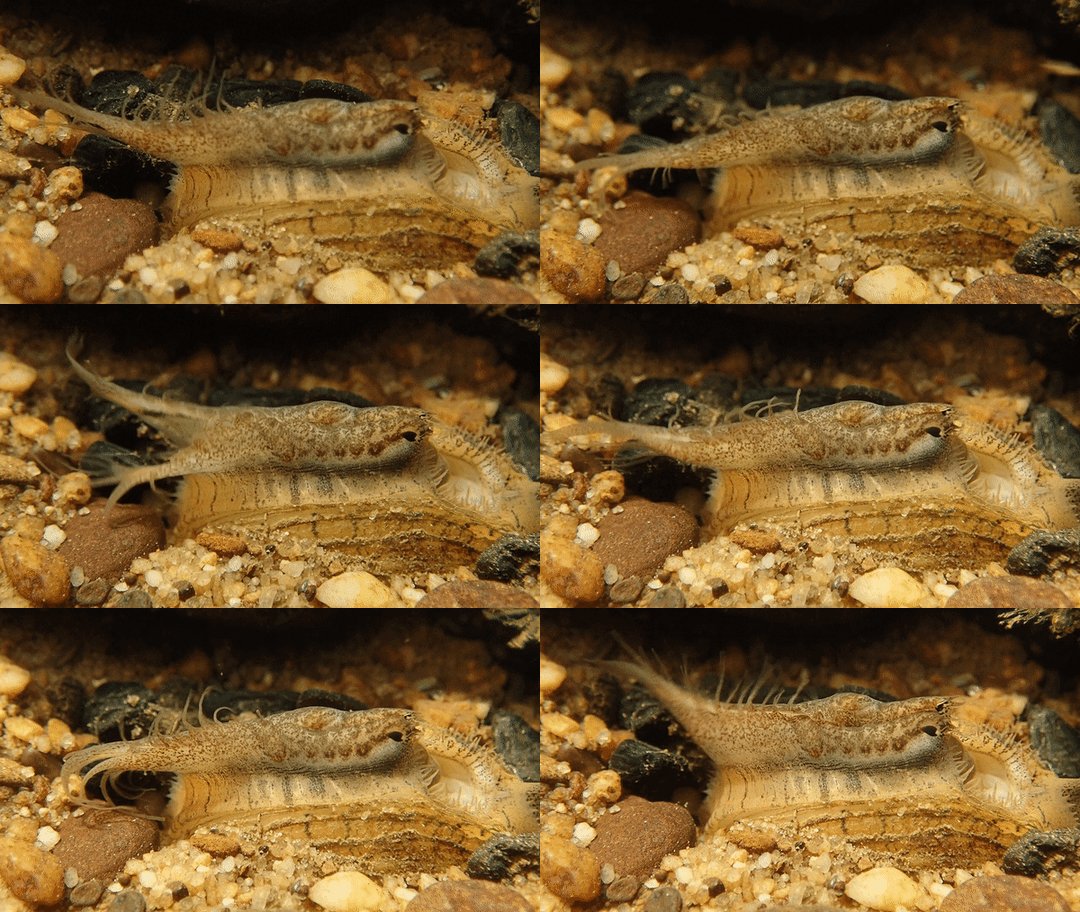
I am also dropping the gif of the lampsilis fasciola mussel, which has an incredible fish mimicry thing going on, which I was delighted to learn about in this book
The language in this book is far more academic than what I normally enjoy listening to o audiobook, but the cadence of the delivery was quite good. Felt like I was transported to the middle of a 1970s classroom on the east coast. Makes sense, since it’s now quite old, and the references it makes to pop culture and news and even now and then, religion, reflect those times. Stephen J. Gould (yes, there are not one, but 2 prominent Stephen J. Gould’s in science because…of course) is a pretty good writer.
Side note: Because of the societal topics it touches on, and the kind of mood-setting writing style, this is kind of excellent side reading for a book that I recently read and thought was also pretty good, which is the fantasy/dark academia novel blood over bright haven by author m.l. Wang…(this is me dropping hints for more people to read that because I desire opinions)
I am also dropping the gif of the lampsilis fasciola mussel, which has an incredible fish mimicry thing going on, which I was delighted to learn about in this book

June 10, 2022
The first collection of Gould's essays, reprinted from a magazine, and dating back to the 1970s. Although they require careful reading, they are not written in a obtuse or highbrow way but for the general reader with some science knowledge. There are interesting and thought provoking articles ranging from subjects such as Darwin's ordeal aboard The Beagle with a captain who detested him, to racism in science, and the general tendency of science to move by jolts as a new theory is accepted (and old evidence is then perceived to support it) rather than the stately progress of accruing facts that gradually bring about acceptance of a theory. The major example given is that of continental drift, which was proposed decades before it was finally accepted - the stumbling block to its acceptance being the lack of a mechanism which would convince most scientists who dismissed fossil evidence that supported it. The discovery of the ocean trenches where material is drawn down into the earth's interior, plus the fault lines where new material is produced from within, finally led to the idea of continental drift becoming an accepted fact.
Some of the essays deal with controversies of the time and 'new' discoveries in the 1960s/early 1970s. As these may have been overtaken by events and the huge expansion of knowledge around DNA, still in its infancy at the time of writing, and I don't know in detail what might be out of date, I have to rate this at 3 stars only, although it was an entertaining read.
Some of the essays deal with controversies of the time and 'new' discoveries in the 1960s/early 1970s. As these may have been overtaken by events and the huge expansion of knowledge around DNA, still in its infancy at the time of writing, and I don't know in detail what might be out of date, I have to rate this at 3 stars only, although it was an entertaining read.

February 18, 2023
يرىالمؤلف أن التطور يحدث على دفعات تفصل بينهم فترات من الركود، وهو بذلك يختلف مع كثير من علماء التطور مثل "ريتشارد داوكينز" الذين رأوا في التطور عملية مستمرة.
يستحق القراءة
يستحق القراءة

June 21, 2009
Solid introduction to Gould's perspective on evolution and other issues in modern science. The essays were written in the late 1970s, but they still feel current-- I especially enjoyed his meditations on the Irish Elk, the role of size in evolutionary development, and the shakeup caused by the discovery of plate tectonics in the late 1960s. Towards the end of the book he gets a little hung up on his politics-- as an enlightened highly liberal humanist, he has little time or sympathy for scientists who distort the facts to match their conservative/racist/classist/sexist ideologies. That whole series of essays is praiseworthy and impossible to disagree with, but in the age of Obama, it feels a little bit dated and strident. And after reading ten essays where Gould assails the impact of conservative politics on science, even the most liberal reader has got to wonder: in what ways did Gould's own liberal bent bias his results?
December 6, 2007
a lot... makes science very enjoyable and readable without dumbing it down one bit, but just by eliminating jargon. puts science in its social context, and ties it in with other fields of life and learning. also compares general phenomenon in evolution as a system to other types of systems.. .. .Must read one of his books!

February 9, 2017
Rare brilliant polymath, Gould is incapable of not entertaining

March 30, 2026
This has to be the most interesting set of essays I have ever read. Stephen Jay Gould was a renowned palaeontologist and evolutionary biologist with an astute insight on evolution. His writing is informative and entertaining. Below I have summarised some of the key points in the first half of the book.
- The term evolution means to ‘unroll’ and it embodied ‘a concept of progressive development’. The erroneous view of equating evolution with progress is a neat misconception. However, ultimately it all boils down to adaptation best suited to the existing environment. The concept of evolution in its truest sense should humble us for we are mere accidental consequences of natural selection.
- ‘Nature provides no independent criterion for fitness; thus, natural selection is tautological.’ Natural selection is not synonymous for selection of variants that have progressive traits. Rather, the traits that allow for a selective advantage over other variants for existence and the ability to propagate to next generations seems to be at the core of natural selection. There is an interesting essay where Gould discusses how political environment influences scientific theory. We can draw several parallels to this socio-political-scientific axis with natural selection as well. Theories best suited to the political ideology of the current government will get precedence over other (and perhaps more accurate) theories.
- The startling similarities at the molecular level between chimpanzees and humans pose a paradox. How can we be so similar yet so different? Gould attempts to answer this through differential gene expression and developmental pathways. It is possible that the distinction between chimps and humans exist in some significant genes and the regulatory mechanisms governing it leading to certain stark differences.
- Human evolution and emergence of fossils at same as well as different times of the past discards the ladder concept of evolution where all descendants have evolved in a ‘single, progressive sequence’ by ‘gradual and continuous transformation’. To counteract this view, Gould mentions mosaic evolution where traits can be worked upon and selected by nature independently at different times and rates. Hence, more than one ancestor might be there for a descendant in a random pattern.
- ‘Homo sapiens is not the foreordained product of a ladder that was reaching toward our exalted estate from the start. We are merely the surviving branch of a once luxuriant bush.’
- One more interesting essay details the significance of delayed development of humans in comparison to groups of animals. A time-consuming development ensures a ‘remarkable capacity for learning by experience’. This might account for our excellent mental faculties (mostly).
- The term evolution means to ‘unroll’ and it embodied ‘a concept of progressive development’. The erroneous view of equating evolution with progress is a neat misconception. However, ultimately it all boils down to adaptation best suited to the existing environment. The concept of evolution in its truest sense should humble us for we are mere accidental consequences of natural selection.
- ‘Nature provides no independent criterion for fitness; thus, natural selection is tautological.’ Natural selection is not synonymous for selection of variants that have progressive traits. Rather, the traits that allow for a selective advantage over other variants for existence and the ability to propagate to next generations seems to be at the core of natural selection. There is an interesting essay where Gould discusses how political environment influences scientific theory. We can draw several parallels to this socio-political-scientific axis with natural selection as well. Theories best suited to the political ideology of the current government will get precedence over other (and perhaps more accurate) theories.
- The startling similarities at the molecular level between chimpanzees and humans pose a paradox. How can we be so similar yet so different? Gould attempts to answer this through differential gene expression and developmental pathways. It is possible that the distinction between chimps and humans exist in some significant genes and the regulatory mechanisms governing it leading to certain stark differences.
- Human evolution and emergence of fossils at same as well as different times of the past discards the ladder concept of evolution where all descendants have evolved in a ‘single, progressive sequence’ by ‘gradual and continuous transformation’. To counteract this view, Gould mentions mosaic evolution where traits can be worked upon and selected by nature independently at different times and rates. Hence, more than one ancestor might be there for a descendant in a random pattern.
- ‘Homo sapiens is not the foreordained product of a ladder that was reaching toward our exalted estate from the start. We are merely the surviving branch of a once luxuriant bush.’
- One more interesting essay details the significance of delayed development of humans in comparison to groups of animals. A time-consuming development ensures a ‘remarkable capacity for learning by experience’. This might account for our excellent mental faculties (mostly).

August 8, 2021
SJG is consistently even smarter, funnier, and more worthy of admiration than I remember. highlights include a brilliant takedown of biological determinism, a case against the necessity of an adaptive/genetic basis for homosexuality in order to support gay rights, and answers to some questions that have really plagued me, such as why do some insect larvae eat their mothers from the inside out? why do cicadas only come out every 17 years? and how does a complex phenotype like mimicry or the vertebrate eye arise if only looking 5% like a poisonous butterfly doesn’t seem adaptive?

January 8, 2022
Gould es una de esas personas que no debería haber muerto nunca. Por desgracia, se fue pronto, pero nos dejó la mejor divulgación posible, escrita con la calidad y la distinción que solo unos pocos pueden alcanzar. Siempre es un placer volver a él.

September 19, 2019
"In the conventional model of scientific "progress," we begin in superstitious ignorance and move toward final truth by the successive accumulation of facts. In this smug perspective, the history of science contains little more than anecdotal interest–for it can only chronical past errors and credit the bricklayer for discerning glimpses of final truth. It is as transparent as an old-fashioned melodrama: truth (as we perceive it today) is the only arbiter and the world of past scientists is divided into good guys who were right and bad guys who were wrong."
May 11, 2021
We've come a long way from being a sea of algae.
April 9, 2026
These essays are hardly “bricks added to the bright temple of knowledge”. They are some of the best writings that show in practice how science is a creative, human activity, written with an inspired defense of materialism and dialectics against idealism and dogmatism (even if not always explicit, this is clearly influenced by Dialectics of Nature and Anti-Dhuring, which he cites, and of which I haven’t read in full yet). Some are decent, most are excellent and moving, fostering curiosity and excitement to understand nature in its fascinating complexity and motion.
March 26, 2019
En rekke essays om biologi og evolusjon. Noen veldig interessante, andre veldig uinteressante. 6/10.
Displaying 1 - 30 of 196 reviews