Jump to ratings and reviews
Rate this book

Night Walks: And Other Essays

Rate this book
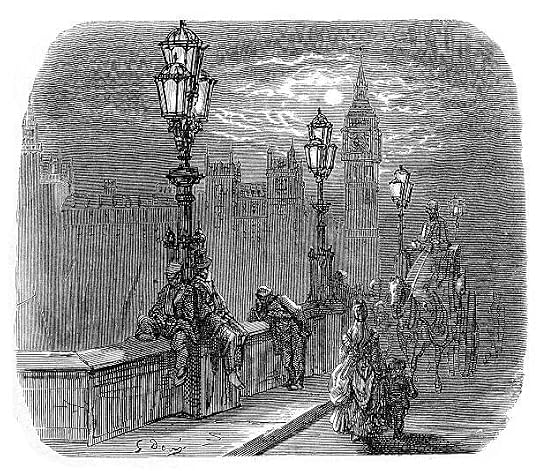
As a remedy to sleeplessness, Charles Dickens used to take to wandering the streets of London at night for long stretches of time. On those walks, he gained a great deal of experience of and sympathy for homeless people and what it was like to share their world, noting down his observations in the series of essays and accounts contained within this volume. The essays “Night walks” (1860), “Gone Astray” (1853), “Chatham Dockyard” (1863), “A Small Star In The East” (1868), “On an Amateur Beat” (1869), “Betting-shops” (1852), and “Trading in Death” (1852). These incredible essays offer a unique glimpse into London's underbelly during the mid-nineteenth century, painting a vivid picture of the lives and travails of London's neglected underclass. Charles John Huffam Dickens (1812–1870) was an English writer and social critic famous for having created some of the world's most well-known fictional characters. His works became unprecedentedly popular during his life, and today he is commonly regarded as the greatest Victorian-era novelist. Although perhaps better known for such works as “Oliver Twist” and “A Christmas Carol”, Dickens first gained success with the 1836 serial publication of “The Pickwick Papers”, which turned him almost overnight into an international literary celebrity thanks to his humour, satire, and astute observations concerning society and character. Read & Co. Books is publishing this fantastic collection of essays complete with a specially-commissioned biography of the author.

124 pages, Paperback

Published May 26, 2020

4 people are currently reading
47 people want to read

About the author

Charles Dickens

12.8k books31.5k followers
Charles John Huffam Dickens (1812-1870) was a writer and social critic who created some of the world's best-known fictional characters and is regarded as the greatest novelist of the Victorian era. His works enjoyed unprecedented popularity during his lifetime, and by the twentieth century critics and scholars had recognised him as a literary genius. His novels and short stories enjoy lasting popularity.

Dickens left school to work in a factory when his father was incarcerated in a debtors' prison. Despite his lack of formal education, he edited a weekly journal for 20 years, wrote 15 novels, five novellas, hundreds of short stories and non-fiction articles, lectured and performed extensively, was an indefatigable letter writer, and campaigned vigorously for children's rights, education, and other social reforms.

Dickens was regarded as the literary colossus of his age. His 1843 novella, A Christmas Carol, remains popular and continues to inspire adaptations in every artistic genre. Oliver Twist and Great Expectations are also frequently adapted, and, like many of his novels, evoke images of early Victorian London. His 1859 novel, A Tale of Two Cities, set in London and Paris, is his best-known work of historical fiction. Dickens's creative genius has been praised by fellow writers—from Leo Tolstoy to George Orwell and G. K. Chesterton—for its realism, comedy, prose style, unique characterisations, and social criticism. On the other hand, Oscar Wilde, Henry James, and Virginia Woolf complained of a lack of psychological depth, loose writing, and a vein of saccharine sentimentalism. The term Dickensian is used to describe something that is reminiscent of Dickens and his writings, such as poor social conditions or comically repulsive characters.

On 8 June 1870, Dickens suffered another stroke at his home after a full day's work on Edwin Drood. He never regained consciousness, and the next day he died at Gad's Hill Place. Contrary to his wish to be buried at Rochester Cathedral "in an inexpensive, unostentatious, and strictly private manner," he was laid to rest in the Poets' Corner of Westminster Abbey. A printed epitaph circulated at the time of the funeral reads: "To the Memory of Charles Dickens (England's most popular author) who died at his residence, Higham, near Rochester, Kent, 9 June 1870, aged 58 years. He was a sympathiser with the poor, the suffering, and the oppressed; and by his death, one of England's greatest writers is lost to the world." His last words were: "On the ground", in response to his sister-in-law Georgina's request that he lie down.

(from Wikipedia)

Ratings & Reviews

What do you think?
Rate this book

Friends & Following

Create a free account to discover what your friends think of this book!

Community Reviews

5 stars
6 (42%)
4 stars
4 (28%)
3 stars
4 (28%)
2 stars
0 (0%)
1 star
0 (0%)
Displaying 1 - 4 of 4 reviews
5 reviews12 followers
August 10, 2025
Favorite read of 2025 thus far!
Fascinating to read a firsthand account of the nitty gritty of quotidian life in the east end (my ends!). So much and so little has changed.
Profile Image for Tiffany.
154 reviews
January 31, 2022
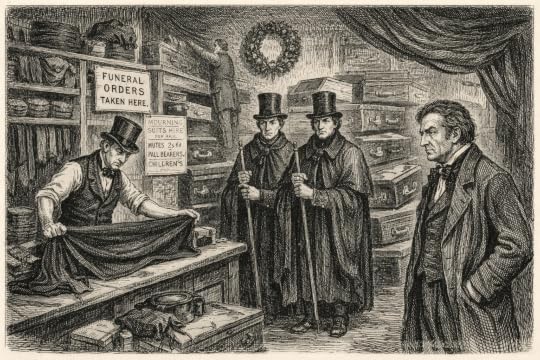
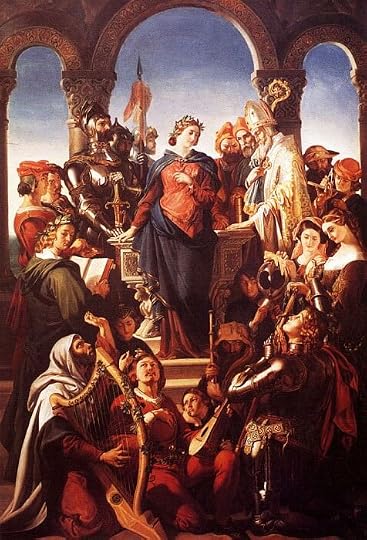
This book is a series of eleven essays/articles published by Charles Dickens in various periodicals between 1844 and 1869. They provide an interesting first-hand account of the conditions in London in the mid-19th century. Most of the essays highlight deplorable social conditions, including extreme poverty, the horrible impact of the lead industry, gambling and betting-shops, and the commercialization of death/funerals. A few of the essays take shots at corruption in the government and are more political. There are some rays of hope and light in several essays, however - the Children's Hospital, the establishment of 'Ragged Schools', and a piece on the painting "The Spirit of Chivalry" by Daniel Maclise. Well worth a read by anyone interested in this time period or any lover of Dickens.
From "Chatham Docks" (1863) - "And however conscious I may be that an individual can do little, I very heartily protest that I mean to do all the little I can, to have England governed by men of merit, and not by fine gentlemen."
(I actually read the paperback version with the same cover as pictured for the Kindle version, and it was a very nice reprint (Read & CO, 2020). The font and formatting were appropriate and easy to read. It would have been lovely to have illustrations, though - I had to research several locations or items with which I was unfamiliar.)
Profile Image for Patience.
267 reviews
January 1, 2024
The first essay is, by far, the best, but they all provide a window into London in Dickens' time. Reading this while sitting in London was one of my favorite moments of the year. It will also remind you that nothing is new. People have been people forever.
Profile Image for Stephanie.
106 reviews11 followers
March 25, 2025
Having known his fiction for years, I was delighted to get to know Dickens himself better. It was wonderful to hear his “voice”— with all his wit, empathy and cutting insights.

A must-read for Dickens fans, those who love London, and Victorian history enthusiasts.
Displaying 1 - 4 of 4 reviews

Can't find what you're looking for?

Get help and learn more about the design.