Boston: 1974. Jamaica Plain is a neighborhood under siege. Someone is systematically torching abandoned buildings and the horribly disfigured body of Sandy Morgan, a dedicated young neighborhood organizer, has been dug from the ashes. Why? Who stands to gain? Sandy’s boss, lead organizer and Vietnam combat veteran, Jedidiah Flynt, has sworn to bring the arsonists responsible to justice and will use whatever means are required.
This Boston neighborhood has become a jungle. The banks have REDLINED Jamaica Plain, crashing the housing market, opening the neighborhood to blockbusters and slumlords. Flynt was hired to halt it. His quest to stop the banks and find justice for Sandy Morgan will lead him through a dangerous labyrinth of corrupt politicians, bent churchmen and a gang of vicious Chinese mafiosi who will stop at nothing to thwart him.
Two interwoven plots work their way through this heart-stopping narrative. One is absolutely true. It tells the story of how a local community, skating along the razor’s edge of decline, organized itself and saved the neighborhood. The other never really happened but, in the corrupt netherworld of Boston politics, very well might have.
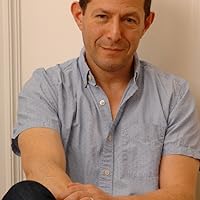
Richard Wise is the author of four books. His latest novel, THE DAWNING; 31,000 BC (2022), is set in the Aurginacian Period in Southern France.
His REDLINED, A NOVEL OF BOSTON (2021), is a mystery thriller set in Boston's Jamaica Plain neighborhood. PublishersWeekly raves: "Fans of suspense fiction with a social conscience will be pleased." Midwest Book Review describes REDLINED as "An original and simply riveting novel." REDLINED was nominated for the National Book Award and the Benjamin Franklin Award in fiction. www.richardwbooks.com
His previous books include Secrets Of The Gem Trade, The Connoisseur's Guide To Precious Gemstones. First published in 2003, the book became a critically acclaimed bestseller. The revised and expanded second edition was published in November 2016. www.secretsofthegemtrade.com
The author's second book and first novel, The French Blue (2010), chronicles the adventures of 17th-century gem dealer and adventurer Jean Baptiste Tavernier and tells the back story of the Hope Diamond. The French Blue was an "Award Winning Finalist" at the 2011 International Book Awards. www.thefrenchblue.com
Author Richard W. Wise scores big with this mystery, suspense thriller, Redlined. Set against the backdrop of Boston's Jamaica Plain in the mid-70s, two interwoven plots are fused together throughout the narrative, ‘one is absolutely true, the other never happened, but very well might have.’ Skillfully constructed, this political thriller will have you turning the pages from beginning to end.
The book description gives a sneak preview: ‘The year is 1974. Boston's Jamaica Plain is a neighborhood under siege, a community skating along the razor's edge of decline. The banks have REDLINED Jamaica Plain, causing the housing market to crash, wiping out local homeowner's lifetime investments and opening the neighborhood to blockbusters and slumlords. Now, someone has begun systematically torching those abandoned buildings and the charred body of Sandy Morgan, a dedicated young neighborhood organizer, has been found among the ashes. Why? Who stands to gain? … Community organizer and Marine combat veteran, Jedidiah Flynt and Alex Jordan, his beautiful Harvard educated researcher together with a group of local property owners are determined to stop the redlining and bring the arsonists responsible for Sandy Morgan's death to justice. Their search will lead them through a labyrinth of corrupt politicians, Asian gangsters and bent churchmen.’
I enjoyed the story, character development, and dialogue. There were plenty of plot twists that I didn’t see coming and that added to the book’s mystique. When I stopped reading to work, I found myself wondering what happened in the book, and replaying parts of the novel in my head to see if I could figure more out. It has been a while since I enjoyed a book this much. It’s a well-written and gripping suspense thriller with perfect pacing. Not much is as it appears here, which is just the way fans of the Mystery, Thriller, and Suspense will want it.
This was a fascinating and captivating read that had me immersed from the beginning. The story flowed from scene to scene with ease, and the author shows exceptional ability when it comes to storytelling. The book may sound like a well-used storyline, but Wise weaves a different kind of tale, rich in details, twists, and heart-thumping scenes. Highly recommended.
I wasn’t sure about this book at first but it ended up being a really nice read. Set in the Jamaica Plain neighborhood of Boston in the early 1970’s era, the banks are redlining the houses causing the market to crash, and many people loosing all they have. Along with many others,, Jedediah and Alex teams together to try and figure out what is going on, but when they found a body in the rumbles of a burned building, they knew someone meant business.
Redline by Richard W. Wise had me biting my nails quite a few times throughout this book. Wise created amazing characters that played there parts well, some better than other of course. It’s had to choose the best ones but I think for me it is Alex and Jedediah, I enjoyed following these two as they tried to find the culprit. There were lots of twists and turns in this story. One I thought I knew whodunit another twist shot up just that threw me back in the game again. It was a fun journey though. I enjoyed it when I finally learned who it was. If you love a good suspense thriller, this is a good book for you to try.
Along with the amazing story, this is my first time listening to a book narrated by Bobby Gaglini. I have to say he did a fantastic job with this story. At first I had to really listen to see if it was him or a lady narrating as well. Gaglini’s voice is pleasant to listen to and his expressions make the story so much more interesting and fun. I look forward to listening to more book where Gaglini is the Narrator. Redlined by Richard W. Wise is Five Stars for me.
A special thanks to the author/publisher for a copy of this book. I am not required to write a positive review, the opinions here are mine alone. I am disclosing this with my review in accordance with the Federal Trade Commission’s 16 CFR, Part 255.
A well-written, conventional thriller whose title hints at the novel’s most interesting twist (to me): the protagonist is a community activist (former Marine, of course) leading a project to end redlining in Boston’s Jamaica Plain neighborhood back in 1974, a time when I was living in the Boston area. Unfortunately, redlining is a bit of a red herring, but the scenes of community meetings, the conversations about tactics, and the attempts to bring different community interests together are something you don’t find much in fiction, not to mention in thrillers.
The information here on Goodreads about this book begins:
The year is 1974. Boston’s Jamaica Plain is a neighborhood under siege. The banks have REDLINED the neighborhood, causing the housing market to crash, wiping out local homeowner’s lifetime investments and opening the neighborhood to blockbusters and slumlords.
That sounds like a reasonable summary of what a reader might expect in a book about redlining. It is not, however, the subject of this book, which is not primarily about the harm done to neighborhoods by pernicious banking practices. This is, rather, a thriller, in which the latter part of the book is filled with lovingly graphic descriptions of violence and torture. One might expect to see redlining as horrible, but I was surprised to find the story turning into a borderline horror novel.
In 1974, there was a large area of Boston called the Southwest Corridor which had been planned to be used for highway expansion. Then plans were changed and that left "a partially demolished six-lane cancer eating out the guts of the neighborhood." Part of the area affected was a section of Boston called Jamaica Plain. In this book, people living in the area or thinking of moving there find that banks will no longer issue loans to purchase or improve area homes. The banks are "redlining." The central character in the book, community organizer Jedediah Flynt, explains, "Basically, redlining happens when the banks or the insurance companies or all of the above get together and draw a big red circle on a map around parts of the city that they consider too risky to do business with." And, Flynt adds, "If mortgage or the insurance money is choked off, the housing market collapses - which sets the stage for slumlords buying cheap for cash, racial steering and housing abandonment."
But in this book, there is no blockbusting, no deliberate attempt to move minority buyers or renters into the neighborhood. There are no indications that the neighborhood is becoming a high-crime area. There is no rush of residents to leave for other pastures, because the ones in Jamaica Plain still seem green to them.
So why are the banks redlining the area? There have been an unusually large amount of fires in buildings in which no one is living. In fact, says Flynt, "Except those properly boarded up, every vacant building within two or three blocks of the corridor has been torched." And, strangely, no one had noticed that until a young woman working with Flynt realized it. It does not appear that anyone consults the police. But if nobody is aware there is a problem, why the redlining? I have no idea. Either I missed it or the book simply doesn't consider that question.
I do know who is burning the buildings, though - a conspiracy made up of business people, Catholic clergy, and Chinese and Chinese-American gangsters, abetted by corrupt politicians, each and every one despicable and dangerous. And those folks make up the formidable opposition to Flynt, his colleagues, and the citizens of Jamaica Plain.
Thrillers thrive on conspiracies, the more evil, the better. The conspirators in this book are very evil indeed. They offer and accept bribes, they molest small children, they assault and torture and kill. Some of them seemed unrealistic to me. Others, scheming businessmen and members of the clergy, seemed more true to life.
Flynt is a former Marine and a master of martial arts, a man who can easily defeat an attacker in single combat. He is dedicated both to his job and his ideals, and fiercely loyal to his associates. He does have significant flaws, though; he trusts people unwisely, and he is an uncaring father, who has left his children and his former wife.
Some of his supporters and colleagues are the most three-dimensional and nicest people in the book. Sheldon Trapp, Willie-Joe Patrizzi, and, especially, Mary Kavanaugh are all stalwart allies. Some of Flynt's other allies, a member of the French Secret Service and a cadre of extraordinary combat veterans, are less believable.
Flynt's slowly developing romance with one of his colleagues was almost inevitable but is nicely portrayed.
The book itself is most believable and most interesting to me when it stays away from violence and deals with activities with the Jamaica Plain community. The material about banking, real estate, and organizing is fascinating. The heavy action sequences are fine for what they are, but people working together peacefully and with shared goals are actually more engaging.
Although I live in Boston and was here during the period in which the book is set, I don't know how much of the background is real. Financial institutions named are real and some of the politicians were as well. I have read that Sheldon Trapp was real also. The book has some careless errors - for example, a major Boston street in the book is actually "Newbury" rather than "Newberry" and the Massachusetts senator named was Ed Brooke, with an "e" at the end. (Brooke was the first African-American in the United States Senate since Reconstruction.)
Another good novel about a related situation is The Block Busters by Lou Cameron. There is also a non-fiction book about redlining in a different part of Boston, The Death of an American Jewish Community: A Tragedy of Good Intentions by Lawrence Harmon and Hillel Levine.
I did enjoy Redlined: A novel of Boston. I would have liked it even more if it had not been written as a thriller, but I suspect that most readers would not agree with me.
Boston in the 70's. I lived there at the time, but had no clue that the nefarious practice of "Redlining" was taking place in certain neighborhoods like Jamaica Plain. Banks were systematically denying mortgages to qualified householders. Richard Wise knows the turf, and he takes us inside the community groups that fought the banks and the forces behind them. His book is a testament to grassroots organizing. "Redlined: A Novel of Boston" could be read as an instruction manual as to how urban neighborhoods can fight corruption. That's the heart of the book and it's a worthy read. The story, "based on true events", follows the efforts of a community organizer to track down those responsible for the death of young woman. She'd been investigating a series of mysterious fires in Jamaica Plain. "Redlined" has all the ingredients of a page-turner, feisty damsels in distress, despicable bad guys, and a formidable good guy, an ex-marine. Billed as a "mystery thriller", there isn't much of a mystery – we learn early on who's responsible for the woman's death – and most of the book deals with the mechanics of organizing, not exactly thrilling stuff. At the end, the pace picks up considerably, and we're treated to an action sequence worthy of a movie. It's a bit predictable, but fun nonetheless. Wise knows how to use detail when it counts. His description of a Song Dynasty teapot was spot on, as was his knowledge of weaponry. When the moment came for the posse to assemble, you knew down to the caliber what kind of heat they were packing. The real heroes of the novel are the organizers and the neighborhood folks who had the guts to band together to stop exploitation and greed. Enjoy the novel and, if you're an action seeker, hang in there for the ending.
This book by Richard W. Wise takes readers to 1974 Boston. You’ll be transported to the city’s Jamaica Plain which is going through a rough time due to banks redlining the area. Because of this, residents are losing investments which is causing chaos in the streets. To make things worse, the body of Sandy Morgan, a neighborhood icon, has been found in a burned building.
To prevent further damage, a group of organizers decide to work together to stop the banks from causing such horrible damage to the area. They’re also determined to get justice for Morgan’s murder.
While things seem simpler said than done, they soon discover that their work isn’t welcomed by some. Will they fight for what is right or fall prey to threats?
If you’re on the search for a well-written thriller, this is one to check out. Not only is it packed with shocking twists, but a variety of characters that add their own touch to this fascinating story.
Redlined by Richard W. Wise was a good read. Suspenseful and a well-plotted mystery made this book very engaging.
This book was inspired by real life events – the reclining of the Jamaica Plain neighborhood in Boston in the 70s. Honestly, I learned quite a bit about this piece of history because I’d never heard of it. The research put into this led to a authentic read.
I think this was a well-crafted mystery/thriller. I.was kept on my toes, and enjoyed learning about an event in history on top of it. Don’t miss this one.
*I received a free copy of this book from R&R Book Tours to review honestly on the blog tour. All opinions are my own and unbiased.*
I really enjoyed this novel. This fast-paced story centers on Boston's crazy real estate market of the '70s, which often pitted residents against developers. This is not a subject that I knew anything about before I read this fascinating novel, and I'm glad to have learned a lot about this really interesting and thought-provoking struggle. I'd highly recommend this novel.
Spoilers: Redlining is when federal, state, or municipal governments selectively raise prices within certain communities. This causes stricter criteria and outright denial of goods and services, primarily in poor minority-led communities escalating disadvantages within the community. It was particularly used in the housing industry by mortgage companies to suppress minority populations from receiving home loans to buy homes in other neighborhoods and deny funding to improve their homes. It is a classist and racist policy which ,despite the Fair Housing Act of 1968's attempts to challenge it, is still very evident in many cities causing segregation in all but name and spacial isolation against minority communities.
Richard W. Wise's novel, Redlined: A Novel of Boston, is a suspenseful and effective mystery thriller. However, what stands out in the book is the theme of community and how members gather together during times of trouble and how they combat redlining.
The novel is set primarily in the Jamaica Plains district of Boston in 1974. Community organizers are investigating a series of suddenly raised housing and property prices and suspiciously started fires in the Jamaica Plains area. Community worker, Sandy Morgan investigates one of the buildings that is about to be torched when she is caught by some unidentified dangerous characters and burned alive inside the building. Her colleague, Jedediah Flynt, hires Harvard grad student,,Alex Jordan, as a researcher, to help him communicate with community members about the redlining situation and to find out what happened to the burnings and who was really responsible for Sandy's death.
Redlining is one half mystery and one half social commentary and New excells at writing both. The mystery is pretty solid as Alex and Jed investigate possible leads to solve the mystery behind Sandy's death. Things get pretty tense when they learn that there is a conspiracy involving certain wealthy Bostonians, political figures, and organized crime members. Like in any true conspiracy novel, there are plenty of moments of slamming doors and abrupt endings of phone conversatios before Jed and Alex learn the truth that these people don't mind sacrificing whole communities and residents for their own gain. There are some exciting moments such as when Jed has a one on one fight with an assassin using his skills as a Vietnam vet to take on a much younger and more fit man. Another exciting moment occurs when Alex is kidnapped by the same people who did away with Sandy.
Since we read the points of view of the protagonists and antagonists, the Reader is ahead of Alex and Jed. This effect allows suspense to build when Jed or Alex confides in characters that are revealed to be involved, such as Monsignor Bendetti, a man of the cloth who is not exactly holy. He acts smooth and caring while in previous chapters, he accepted blood money from corrupt businessmen "for the good of the church," of course. The multi points of view also reveal the hypocrisy of the more antagonistic characters and the exact means that they use to intimate the poorer community members. Sometimes they use violence, but more often their means are much more subtle. For example, Banking Commissioner Louise Winthrop Gray insists that there is no such thing as redlining. From her privileged Boston Brahmin viewpoint, she has never experienced such a thing so to her, it doesn't exist. This elitism is very real, especially to Readers who have experienced such behavior in real life.
What stands out more than the suspense is the importance of community and how the residents of Jamaica Plains work together to combat redlining and the degradation of their neighborhood. Jed is a leader who is able to bring diverse members together and visualize such possibilities. He recognizes each community member's contributions to organize and save the space around them. Alex is an outsider from a wealthier background but is very politically active and inspired to help others. She is new to community organization but is able to prove herself by researching various details and interacting with Jamaica Plains' residents.
They aren't the only ones who help build the Jamaica Plains community. Sheldon Trapp, a Methodist minister from Chicago wants to implement many of the same strategies that he used there for Boston and has experienced first hand the ends results of a redlined community. Willie-Joe Patrizzi, an attorney, is able to use his street smart attitude and legalese as a bridge between the people in Jamaica Plains and the wealthy Bostonians. Mary Kavanaugh, an Irish-American housewife, has plenty of brilliant ideas such as the concept of greenlining, getting neighborhood residents to move their savings accounts to a bank that will specifically lend money for Jamaica Plains. The loyalty that the characters have for Jamaica Plains shows a different side to these so called dangerous neighborhoods. These neighborhoods aren't born that way. They become that way because of systematic racism and classicism leading the citizens to become desensitized. The characters in Redlined, just like real life counterparts, recognize something of value within that community. They feel that loyalty and friendship through adversity and pull together to fight against that adversity.
Redlined is a great novel that explores the themes of community involvement and builds an exciting suspenseful thriller plot around it.
Welcome to the first Mystery Monday of February. I have spent much of this month ill and deep in a cave in an undisclosed location, being taken care of by the last of the Knight’s Templar. We used to be sworn enemies you know, Knights and Dragons, but the world moved on and became a not so nice place for either of us and times being what they were, we decided on a “the enemy of my enemy is my friend” sort of arrangement. At any rate, I am back and though I need more rest and to keep taking that vile tasting draught they sent with me, am for all intents and purposes alive. Our Gem this evening is akin to a burning ember. See it here when I removed it from the box? It even smells like smoke and wet wood a bit. It gets on your claws and leaves soot that doesn’t easily come off. And even as you wash it away, the smell lingers. This is “Redlined: A Novel of Boston” by Gem Maker Richard W. Wise. This is the story of Jedediah Flynt, Viet War Vet, College Grad, Community Organizer and the city of Boston and how it treated it’s citizens up until the 1970’s. Jedediah sends one of this workers out to watch an abandoned house with very strict instructions. She is not to go near the house, she is not to touch anything, if she sees anyone go in or near the house, she is to call the police and then him, her boss. She does none of these..why? Because it’s the ’70s and she’s not going to let herself be seen as some little woman needing a man. Did I mention she’s watching the place at 2 in the morning because they suspect it will be hit by arsonists? But she does exactly what we would expect. She sees four men drive up, drop two off, come back, pick them up and then she goes INSIDE THE HOUSE. And she’s toast. Now Jed will spend the next 200 pages looking for the killer(s). I really nearly put the book down here. It seemed a little too, contrite. But I decided to give it another three chapters. I’m glad I did. I liked this book. I enjoyed reading about the Redlining of neighborhoods (something I learned about in college way back when, but had forgotten), how the neighborhoods fought back. It was a good story. The bad guys were bad guys and the good guys were good. Wise himself was a Community Organizer at one point in his life. I can tell he knows his stuff. No one can described a cold (without introduction) visit to another person’s home unless they’ve done it themselves. I know he has. Here is the one problem I had with the book. The community organizers in this book all use the Alinsky Method, as in Saul Alinsky and if you haven’t heard that name you have had your earbuds in the past 30 years and really need to remove them. He makes Alinsky sound fairly harmless if you aren’t really thinking about what you are reading. But Alinsky isn’t harmless, if you really read and understand his philosophy. He’s no one to look up to, emulate or follow. He’s downright dangerous. But this was the 1970’s and I don’t think any of these young people understood that yet. They were idealistic and wanted to help. Some came home from war and wanted to do some good. Some, like the character Alexis, just want something nice on a resume. You can grab this book for less than $12 in hardback on Amazon right now, I’d suggest doing so! One thing I do know, I do hope Wise writes a sequel, I want to see what happens to Michael at the Vatican. Until tomorrow, I remain, your Humble Book Dragon, Drakon T. Longwitten I received a copy of this book from the author in exchange for an honest review.
Redlined: A Novel of Boston is set in 1974 and focuses on the Jamaica Plain section of town. This area has been redlined by banks, due to the housing market's crash, which sets the stage for racial steering and blockbusting, prompting the transition from a healthy neighborhood to a slum. Abandoned buildings to proliferate as crime rises.
When a building is burned and the body of a community activist is uncovered, fellow community organizer and Marine combat veteran Jedidiah Flynt and assistant Alexis Jordan become determined to stop the destruction of the neighborhood. They assume the role of amateur investigators who probe the arson and death with a focus and determination reflective of their abilities.
All too soon, however, adversity strikes even closer to home. Jedediah and Alexis face their own prejudices, pasts, and the initial discomfort of a forthright, sexual woman confronting a former Marine already uncomfortable with the power women have assumed in society and the workplace. These experiences capture the first phase in the blossoming women's movement that was to change many of these roles.
This interpersonal interplay of emotions sets the stage for a dual confrontation as the unlikely team forays into unfamiliar territory both personally and politically.
At first, Redlined reads with the setup and motivation of a murder mystery. Readers are in for a bigger treat, however, because Richard W. Wise incorporates real, contemporary social issues and tensions into this story, along with a special dynamic between the investigators, which elevates his read beyond a typical whodunit.
From Jedediah's ability to face Alex's charge that he is a "consummate opportunist' whose worldview affects his life choices and taints his perspective to their shared zeal and campaign, the politics which plays dirty tricks behind the scenes in Boston affairs, and gang members (a coalition of actors; real estate agents, developers, crime syndicate, who make money from the destruction of an urban neighborhood) who play a key part in community choices and makeup, Richard W. Wise tailors the kind of story that is steeped as much in Boston's unique cultural and social makeup as it is in community struggles to change it.
While investigative mystery readers will be the likely audience of Redlined, the story will especially appeal to women who like their characters strong and purposeful. Another audience will be readers familiar with Boston's cultural milieu, who will find Redlined an absorbing series of conundrums that lead ever deeper into the heart of a community's manipulations, politics, and social interactions. Highly recommended. --D. Donovan, Sr. Reviewer, Midwest Book Review
A book with two main plots that are interestingly intertwined as such things often are. One the one side, the banks who decide to redline Jamaica Plain and therefore crashing the affordable housing and opportunities for lending in that area. On the other side, a mysterious entity who is using arson to burn down all the buildings that are being abandoned and amidst those ruins the body of a local activist, Sandy Morgan is found. Who killed her, was it a coincidence? Who is setting the fires? Jedediah and Alex are the only two who are currently fighting the redlining, and then they hear about Sandy’s death and begin working on that as well. But are these all two separate occurrences? Or is someone trying to profit off the misery and misfortune of others? A crime, thriller with suspense that is somewhat rooted in historical truth. The main premise of the book is fiction however, so some factual errors from the author, are to be forgiven. Well written and certainly suspenseful, there are plenty of villains to blame, but there is really only one who is ultimately pulling all strings.
Redlined: A Novel of Boston is a mystery thriller by the author Richard W Wise. The story is set in the year 1974 in Jamaica Plain. From this book I got to know about the redlining concept. Redlining happens when bank or insurance companies draw a big circle on the areas that are risky to do business with.
Jamaica Plain of 1974 was redlined by the banks. This resulted in crashing of the housing market. Community organizer and Marine combat veteran, Jedidiah Flynt took the effort to stop redlining along with Sandy Morgan. But things turned bad when Jed lost his researcher Sandy Morgan whose body was found among the ashes.
Will Jed be able to take revenge for Sandy's death? Story is very intriguing. It left me turning pages after pages until I finished. It is based on a different concept and therefore, I found this book worth my time. Language is medium as cover page of the book is very creative. Looking forward to read more books by Richard. Go ahead with this one. It's a promising read. Don't miss at all.
I was worried what this book would be like. It was written… differently. (Not bad. I found the written language and terminology to be different than the norm.” I found it slightly difficult to read because of this and found myself re-reading parts to ensure I understood it, but the storyline itself is what grabbed me from the start and did not let go.
Initially, I really was wondering where this book would lead. I was worried it was going to be political and educational and boring, but then I found myself engrossed in the story, turning pages, trying to read faster (which did not work!) and did not want to put the book down! I had to read more; I had to know who and what!
In addition to the engrossing story; I was educated. I bonus, in my opinion. Who doesn’t like to read a good suspense read while learning something new at the same time!?
Redlined is the first book I have read by Richard Wise, and I hope he writes more suspense and thrill because this was an excellent read. I highly recommend picking up Redlined and giving it a read!
This was more a political procedural than a mystery. It follows an “Organizer” who comes into a community and organizes a group to fight some social injustice. The idea is that the group becomes self sustaining and the organizer can then move on to another location and project. A young woman who works for the protagonist is killed in an arson fire and he vows to find and punish those responsible. Then, almost all of the rest of the book is devoted to the process of setting up the political organization. It’s only in the last couple of chapter that we see any real action as he must rescue another young woman who had been kidnapped by the people responsible for the death of the first woman. Those chapters are written more as a thriller, since we know what is happening and who done it. There is no mystery to solve. While it was a different genre than I expected, the prose was good, the characters engaging, and there was enough conflict to keep me reading.
Dedicated community organizer Jedediah Flynt is the complex character at the center of this suspenseful and socially relevant novel. When one of his co-workers dies in a deliberately set fire, Flynt feels responsible for having assigned her to watch the decrepit building. Flynt organizes the residents of this ‘redlined’ neighborhood work to defend themselves against heartless banking practices, ruthless developers, and crooked politicians, the reader is drawn into their individual stories. Deftly drawn, relatable characters, strong, atmospheric realism and high stakes combine to make this an excellent and worthwhile read.
“Redlined” by author Richard W. Wise is a suspense thriller that, from my point of view, is a perfect mix of a murder mystery and a socio-political conflict narration.
It is set in 1974, in an old Boston neighbourhood, where concatenated facts lead to local people fight for justice, social tensions and neighbours' way to protect their dream. This is truly an inspirational story, but what I liked the most was its prodigious narrative style. The author masterfully weaved financial issues, a murder, the city power fight between different institutions and strong and purposeful characters.
All in all, I enjoyed this book very much and I will definitely recommend reading it.
I have read hundreds of books and it is extremely rare for me to be surprised. I almost always anticipate the plot twists, and I thought I had this one all figured out from the very beginning, but I must say that I could not have been more wrong! “Redlined” is an exhilarating, emotional, fast paced read that I could not put down. This story was utterly unique. I was not ready for a rollercoaster of emotions and I did not see some shocking twists coming. All in all, I would recommend this book because it is an easy and amazing piece of writing which kept me entertained for a lot of time.
Great story! Richard Wise has crafted a satisfying suspense tale based upon a shameful part of our history when neighborhoods could be Redlined by banks and insurers making it near impossible to obtain a mortgage or insurance, driving property values way down. This is a definitely a page turner with great characters and a plot with some surprising twists and turns. Reveals corruption involving the church, but also local politicians and an Asian crime organization. Highly recommend!!
Good to know more about redlining & how it has happened one Boston neighborhood. I always enjoy books which feature New England, even if they are fictional.
An interesting book with a real sense of time and place. I felt the typical action thriller ending actually detracted from what was an effective slow boiler, but overall I enjoyed it.
This thriller is about a Boston neighborhood in 1974 and the corruption running the streets causing murder and mayhem. When Sandy Morgan turns up dead in a burned out abandon home, the community turns to Jedidiah and Alex to find out what is happening and take action to prevent it from continuing. There are corrupt politicians, gangsters, and the church involved in this fast paced thriller that will keep you turning the pages to see what will happen next. I found the characters to be well developed and the story kept my attention and was very entertaining throughout the descriptive account of this adventure. A great read for anyone who loves suspense and thrillers.
Richard W. Wise’s Redlined: A Novel of Boston is a suspenseful, well-structured mystery thriller by a writer well-versed in the genre. I was surprised at how quickly I read it: I just had to keep turning to the next page to find out what happened next!
In the opening scene, a young woman, Sandy Morgan, keeps watch over a building in a declining urban neighborhood that has been experiencing a rash of arson fires. She has been given this seemingly routine assignment by Jedediah Flynt, a local community organizer determined to save the neighborhood for the sake of the people living there. This scene depicting the grunt-work of community organizing then quickly shifts to the risks associated with it.
Sandy’s fate provides the driving force for Jedediah to uncover the source of the arsons and to what end they are being carried out. As the events in the novel unfold, the conspiracy is revealed to be Byzantine and the ends nefarious.
Redlined was inspired by the redlining of the Jamaica Plain neighborhood in Boston in the mid-1970s. Prior to picking up the book, I had never heard of the “redlining” of a declining urban neighborhood by banking institutions. The book incorporates the details of that particular business practice and the devastating effect it had on the lives of ordinary working people. Outside of its role in the plot, I found this historical information interesting in its own right and enjoyed learning about it.
Wise’s experience as a community organizer in Massachusetts and Rhode Island in the 1970s is very much in evidence and lends the novel authenticity. (There’s a great conversation between the Jedediah and the recent Harvard graduate he hired as a researcher about the difference between strategies and tactics to accomplish social change--Byzantine in their own right!)
I also appreciated how well the settings are drawn, both exterior descriptions of Boston streets and buildings, as well as interior descriptions. I know that wainscoting and worn linoleum.
The highlight of Redlined for me was the role that the Roman Catholic Church plays in the novel. It suits the Boston setting, as well as the nature of the conspiracy at the center of the arsons, with echos of scandalous headlines and shades of characters from The Canterbury Tales. Monsignor Benedetti is a prelate who bears watching.
I’d highly recommend Redlined to aficionados of the mystery thriller genre, as well as readers with an interest in the history of Boston. A very entertaining read!
Honestly, I am an avid Richard Wise fan and I adored all his previous novels; this new one is no exception. They are all great suspense fiction thrillers with plenty of twists and switches that made me want to finish them in one sitting. This one in particular is no different from the others I have read, but it has unique features of imagination, with a really good plot and really complete and descriptive characters and scenes.
It is set in the year 1974 in Boston and it tells the story of a person who is torching some abandoned buildings but in one opportunity the corpse of a woman called Sandy Morgan appears. A group of local property owners are ready to find the responsible even if this action put corrupt politicians and gangsters in their path.
I read it over two evenings and didn’t guess the big reveal at the end. I really enjoyed it and I didn’t want it to end!
Redlined: A novel of Boston is a fabulous read. It is, also, my first introduction of reading a book by Richard W. Wise. It definitely will not be the last. This book is one of those thrillers that will keep a reader captivated from start to finish. I enjoyed getting on this roller coaster of twists and turns. The story is full of action, mystery and suspense that kept me on the edge of my seat. I could not put it down until I was reading the very last page hours later.
Redlined: A novel of Boston takes readers back in time to the 1974 Jamaica Plain neighborhood of Boston. Richard W. Wise’s talent really shines through by telling this story. It is quite compelling to read. I enjoyed the main characters, Jedediah and Alex. They are a great team working together trying to solve as what is going on. I was not easily able to predict what would happen next. It is so so good.
I thought Redlined: A novel of Boston was a great read. I am giving it a very well deserved five plus stars. I highly recommend it for readers who enjoy a good suspense filled novel. I would love to read more by Richard W. Wise in the future. I am interested to find out where his imagination will take his readers to.
I received a copy of Redlined: A novel of Boston from the publisher. This review is one hundred percent my own honest opinion.
A compelling, fast-paced mystery set in Boston in the 70s . It’s 1974, and someone is torching the buildings of Jamaica Plain. Wise deftly evokes Boston of the era: the politics; the “turf-based” Catholic parishes; the “partially demolished six lane cancer eating out the guts of the neighborhood” that is the corridor. Jedediah Flynt is a social activist and a flawed hero, an ex-Marine and Vietnam vet who is haunted by the war and by leaving his young son just as his father before had left him. Sandy, a young community organizer who works for Jed, is murdered when a Green Street house is torched. Jed blames himself for sending Sandy to her death and is determined to find out who is responsible. Aided by Alex, a young researcher, they uncover an insidious land acquisition scheme involving unexpected co-conspirators. Wise excels at rendering the Boston of the era, down to the “jaundiced glow of the streetlights” and the “Stygian darkness” of a church. The plot comes alive with crisp dialogue and granular details regarding Boston history and the practice of redlining, with which the author is evidently well-versed. A page-turner!
Redlined is the first book that I have read by Richard. I am into mystery thrillers and that made me to pick this book. This suspenseful novel is based on redlining as suggested by the title of this book. The redlining of Jamaica Plain turned a good neighbourhood into the one like slum. Jed Flynt, a community organizer and Sandy Morgan shared an odd sort of relationship.
While working to protect the neighborhood with Jed, Sandy lost her life in an explosion. Now, Alex Jordan, another character of importance soon will be graduated from Harvard. She was looking for a job and was recommended to Flynt by her professor. Now, as they both work together to end redlining and take avenge for Sandy's death, will they get success in their mission?
The plot twist and turns made the story interesting. It's an unputdownable book. Cover of the book is eye catchy and title is according to the story. Writing style of Richard is impressive.
If you love reading crime thrillers, then this one if for you!! A great read...
I found REDLINED gripping from the first page to the last. The gruesome murder of a young, female community organizer leads the reader into the seamy, sordid world of redlining in Boston’s Jamaica Plains neighborhood. Go along for a wild ride as main character, Jedidiah Flynt, runs up against greedy banks, corrupt politicians, venal clergymen, and even a vicious Hong Kong triad, in his efforts to bring the murderers to justice and thwart their plot to build a casino right in Boston via the titular practice of redlining neighborhoods. Great plot, characters, and dialog. A thoroughly enjoyable book that I highly recommend! (Matt Bloom)
I have a lot of sympathy for what the author was trying to do here. It’s set in my neighborhood, which was fun, and shares certain of my preoccupations. A summary of this novel would sound attractive. But unfortunately the execution fails. It is difficult to read, and does not improve as pages progress.
Richard Wise weaves an intricate and engrossing story replete with fantastic imagery and tactful subplots. It is as if the author lived through this tale personally... It pulled me in and wouldn’t let go—simply brilliant.