Jump to ratings and reviews
Rate this book

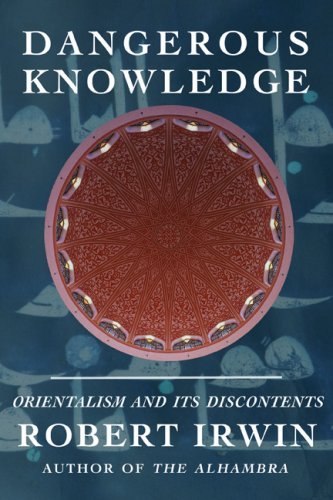
Dangerous Knowledge: Orientalism and Its Discontents

Rate this book
The publication of Edward Said's hugely influential Orientalism in 1981 called into question the entire history of the Western study of Islamic culture, condemning this scholarly tradition as one that presented inaccurate and deliberately demeaning representations of Islamic peoples and institutions—so much so that the words "Oriental" and "Orientalist" have come to take on the most negative connotations.

But what is Orientalism, and who were the Orientalists, and how did Western scholars of Islamic culture come to be vilified as insidious agents of European imperialism? In Robert Irwin's groundbreaking new history, he answers this question with a detailed and colorful story of the motley crew of intellectuals and eccentrics who brought an understanding of the Islamic world to the West. In a narrative that ranges from an analysis of Ancient Greek perceptions of the Persians to a portrait of the first Western European translators of Arabic to the contemporary Muslim world's perceptions of the Western study of Islam, Irwin affirms the value of the Orientalists' legacy: not only for the contemporary scholars who have disowned it, but also for anyone committed to fostering the cross-cultural understanding which could bridge the real or imagined gulf between Islamic and Western civilization. Dangerous Knowledge is a both riveting and entertaining history, a bold argument, and an urgent redress of our conceptions about Western culture's relationship with its nearest neighbor.

376 pages, Hardcover

First published January 1, 2006

16 people are currently reading
661 people want to read

About the author

Robert Irwin

117 books134 followers
Robert Graham Irwin was a British historian, novelist, and writer on Arabic literature.

Ratings & Reviews

What do you think?
Rate this book

Friends & Following

Create a free account to discover what your friends think of this book!

Community Reviews

5 stars
50 (24%)
4 stars
73 (35%)
3 stars
59 (28%)
2 stars
14 (6%)
1 star
10 (4%)
Displaying 1 - 30 of 30 reviews
Profile Image for Alish.
114 reviews63 followers
August 30, 2022
نویسنده در واقع قصد داره نشون بده که دریافت ادوارد سعید از شرق‌شناسی غلط، مغرضانه و بعضاً حتی ابلهانه بوده
اما برای این کار از ابتدای کتاب درباره موضوع صحبت نمیکنه
بلکه رویکرد خودش به مسیری که شرق‌شناسی از ابتدا تا زمان انتشار کتاب شرق‌شناسی سعید طی کرده رو توضیح میده تا بتونه برای خواننده مواد لازم برای نقد اثر سعید رو فراهم کنه و تازه وقتی به فصل 9 میرسه (کتاب کلا 10 فصل داره) به سراغ سعید و تبعات منفی‌ای که آثارش برای دانش شرق‌شناسی داشت میره
روایت نویسنده خوب و جذابه گرچه سکته‌های بیخودی هم داره که ممکنه گاهی آدم احساس میکنه دلش میخواد برای مدتی کتاب رو کنار بگذاره
ولی در مجموع 4/5
Profile Image for Caracalla.
162 reviews15 followers
January 26, 2016
A very unusual book, a history of Orientalism or more precisely Arabic studies in the West, written for the general reader. It aims to offer a different account of this discipline than that found in Said, mostly through meticulously plotting its history, something that Said's Orientalism doesn't do. The introduction rather oddly has Irwin suggesting he wants to set the record straight pace Said and that certain 'enemies' motivate him in this. This put me off the book at first but his account of Orientalism is actually fairly reasonable and moderate in its approach, written in a friendly and easily digestible style. Certain interesting trends recur, like the fact that many Orientalists were Christian nuts and terrible at teaching. A lot of work done by these scholars is very culturally marginal (mostly because Classical Arabic literature has wrongly no profile in the West at all so there aren't many people who are seeking good scholarly editions of classical texts or translations based on such editions) but it's interesting to see that one of the earliest translation of non-scriptural Arabic text into English, was Pococke's Philosophus Autodidactus (a prose account of how a person could come to know God through the exercise of reason alone based on a earlier work by Ibn Sina) and that this work could have been a formative influence on Locke/his empiricism. More could have been made of Persian poetry/its influence on German romanticism but I guess that's quite a complicated topic that needs book-length treatment in itself.

Many of the figures Said criticizes are given a similarly critical treatment here, particularly von Grunebaum whose conviction of the failure of Islamic culture/civilization ruins a lot of his scholarship. He attempts to argue that Gibb was more politically virtuous than Massignon (in terms of complicity with colonialism etc.) pace Said and I suppose he might have a point (although Said is really more critical of Gibb because of his similar fixation on Islam as a failed culture or as a culture that could never have succeeded given its premises). Irwin also asserts a strict divide in Lewis' work between the unreasonably negative portrayals of Arab Islamic culture/society he wrote for Foreign Policy journals (in part to support Israeli policy) and his scholarship, which is also a reasonable distinction (Said mostly focusses on the former in Orientalism, it has to be said).

The book ends with two chapters, criticizing attempts at criticizing Orientalism, one devoted entirely to Said. You realize in these that the personal nature of Irwin's arguments were probably motivated by the heavy weather he faced as an editor of the TLS when it published critical essays against Said. Many of his arguments relate to fairly petulant accusations of some seemingly trivial form of hypocrisy against Said or issues with the facts on offer in Orientalism (these are often enumerated in tedious lists). Crucially, these latter aren't particularly relevant; Orientalism is a work of thoroughly theoretical bent and is not meant to offer a meticulously precise historical account of Orientalism (and indeed, it construes this much more broadly than Irwin to involve all discourse related to the Arab world, not just scholarly work associated with scholarly institutions). Glimpses of fairly promising critical paths are found, notably the idea that Said's use of mutually exclusive accounts of culture, Gramsci's elite hegemony and Foucault's more impersonal discourse, is problematic, and also the idea that political virtue and issues of bad faith cannot affect the objectivity of scholarship (this one isn't argued ever, just asserted based on quotes by academics). The strength of Said's arguments became apparent to me in reading this and also their radical nature. Perhaps they do suggest that objective scholarship in good faith on the Arab Middle East is impossible for Westerners; certainly they do for such scholarship before the publication of the book, based as it is on imagined geographical categories. Said seems to step back from this conclusion in his 2001 foreword to the work, saying that what's needed is a philological approach (i.e. an approach similar to Auerbach and his close interest in detail). Anyway a nice account that falls down with fairly amateurish arguments at the end.
Profile Image for Taha Rabbani.
164 reviews217 followers
August 20, 2021
این کتاب در رد کتاب شرق‌شناسی ادوارد سعید است. نویسنده در فصل اول توضیحاتی درباره‌ی هدفش می‌دهد و بعد چندین فصل را اختصاص می‌دهد به مروری بر اسامی شرق‌شناسان و کارهای آن‌ها. در دو فصل پایانی به هدف خودش برمی‌گردد و انتقاداتش از سعید و دیگر مخالفان شرق‌شناسی را توضیح می‌دهد. این فصل‌های میانی حجم زیادی دارد و مثل رمان‌های روسی، آدم در میان اسامی گم می‌شود. فرقش با رمان‌های روسی هم این است که خط داستانی خاصی ندارد. بااین‌حال، قلم نویسنده و تسلط و سواد مترجم باعث می‌شود لذت روشنفکرانه‌ای از این فصول هم نصیب خواننده بشود.
کتاب ادوارد سعید البته جدلی است. من نگاهی به آن کرده‌ام و به دلم ننشست. نهایت چیزی که توانستم از آن دریافت کنم این بود که شرق‌شناسان مشکل روش‌شناختی داشته‌اند و با افزایش آشنایی با شرق و گسترش دانش و منابع، امکان اصلاح دیدگاه‌های آن‌ها بوده. نویسنده‌ی این کتاب هم به مشکلات زیادی اشاره می‌کند، از جمله اینکه رابطه‌ی بین استعمار و شرق‌شناسی بی‌پایه است. شرق‌شناسی عمدتاً در آلمان بالیده است که هیچ‌وقت استعمارگر بزرگی نبوده. در انگلستان هم که استعمارگر بزرگی بوده، توجه زیادی به شرق‌شناسی و زبان‌های شرقی نمی‌شده است مگر در این اواخر. کارگزاران استعمار تحت تاثیر تربیت کلاسیک بوده‌اند و خود را در جایگاه رومیان می‌دیده‌اند و خبر چندانی از فعالیت‌ها و مطالعات شرق‌شناسان نداشته‌اند که بخواهند تحت‌تأثیرشان قرار بگیرند. اگر قرار بوده در جایی رابطه‌ای بین استعمار و شرق‌شناسان باشد در روسیه بوده که سرزمین‌های مسلمان‌نشین آسیای میانه را فتح می‌کرده‌اند. اما سعید اصلا گویی از شرق‌شناسی روسیه بی‌خبر بوده است.
Profile Image for Masoud Sadr.
22 reviews8 followers
December 1, 2020
دانش خطرناک در هفته های اخیر مورد توجه تاریخ خوان ها و پژوهشگران حوزه مطالعات اسلامی قرار گرفت. از منظری کتابی موفق است و از منظری دیگر کتابی عقیم و حیله گر حتی. کتاب در اصل برای پاسخ دادن به کتاب شرق شناسی ادوارد سعید نوشته شده است و میخواهد یکی از اصلی ترین نظرات او را که حرکت سیستماتیک شرق شناسی است بی بنیان نشان دهد. پس ابتدائا باید در نظر داشت که کتاب جنبه های احتجاجی دارد و برای همین هم البته خصوصا در اواخر آن به سمت سطحی گری و اشکال تراشی و ادبیات طعنه ورزانه حرکت میکند.
کتاب مفیدی است از آن جهت که سیری پانورامایی از جریان شرق شناسی را در تاریخ ارائه میدهد و تلاش میکند بدون آن که خسته کننده باشد بر بخش عمده ای از تاریخ شرق شناسی در جهان نوری بیفکند. که البته در این موضوع موفق است. جز آنجا که به بحث شرقشناسی روسی میپردازد. احتمالا چون نویسنده روسی بلد نیست، پس فی الجمله اشاره ای میکند و میگذرد. در حالی که تحولات عمده ای در این حوزه خصوصا در ساحت اقوام مسلمانی که روسها با آنها سروکار داشتند درگرفت و البته مکتب روسی به نوعی و تا حدودی در سبک خاص خودش بنیانگذار جدی "سلف اوریانتالیسم" در جهان شد. این جنبه مثبت قضیه بود که هر ازگاهی با گزارش هایی جزئی و جذاب از زندگی شرق شناسان رنگ و بوی خوشی هم به خود میگیرد. همچنین نویسنده با هدف اثبات نظریه اصلی اش نشان میدهد که اروپایی ها آنطور هم که ما مسلمانان/شرقی‌ها فکر میکنیم به صرت سیستماتیک حرکت نکرده اند و هرکسی که اتفاقا انسان هایی فارغ از چارچوبهای رسمی بوده اند و ذوقی و فردی و آتش به اختیار حرکت میکردند این سنت را رشد داده اند.
از نظر فهم سیر تحولات، توجه به کم و کاستی های این جریان، توجه به تاثیرات پیرامونی در مطالعات شرق شناسانه و نوع مراودات شخصی در میان بزرگان این جریان کتاب موفق و شایسته مطالعه ای است.
اما ناموفق است چرا که تلاش کرده با زیرکی از دال مرکزی نظریه ادوارد سعید که همان تلاش برای "دیگری" سازی به واسطه جریان شرقشناسی در غرب است خودداری کند. غیرقابل انکار است که همیشه بخش عمده ای از ادبیات شرقشناسانه نظار بر ایجاد یک دیگری و تعری کاریکاتور وار از آن بوده. نویسنده ادبیات بازاری شرقی، نقاشی های شرقی، گزارش های علمی ژورنالیستی را به نظرم دانسته کنار گذاشته و تلاش کرده است از شرق شناسی ارتودوکسی خارج نشود. حال آن که بخش عمده ای از تاثیرات شرقشناسی در غرب ناشی از این حوزه ها بوده است. زمانی میتوان در مورد شرق شناسی به مثابه یک جریان سخن گفت که همه این جوانب را مورد مطالعه قرار داد و نویسنده بی شک عامدانه از این منظر چشم پوشی کرده. چرا که تلاش میکند تا چهره استادش لوییس را تطهیر کند.
از نظرات دیگر سعید مزدوری جریان شرق شناسی است که البته کل تلاش نویسنده در طول کتاب انکار این است. اما واقعا نویسنده از وضعیت فوندهای شرق شناسی امروز غرب خبری ندارد؟ نقش سازمان های اطلاعاتی امنیتی غربی در بورس های تحصیلی این حوزه، نقش فوندهای عربی خلیجی، نقش فشارهای روانی و سیاسی جریان های صهیونیستی، نقش فشارهای لابی ارامنه، نقش جریان های خبری کلان در سمت گیری تحقیقات های این حوزه مگر مسائلی است که بتوان اساسا نادیده گرفت تا برسد به انکار آنها؟
نویسنده تلاش کرده است بر اشتباهات سعید پافشاری کند و البته در ادامه مخالفان جریان شرقشناسی را به استهزا بگیرد. مثلا برای متفکر بزرگی همچون سید حسین نصر معتقد است که او طرفدار تعدد زوجات است و ا را با این عنوان یاد میکند. آیا این حرکتی غیراخلاقی نیست؟ برای کسی که هزاران صفحه مطلب علمی نوشته است استفاده از چنین عنوانی شایسته است؟ همین نوع نگرشها شان دهنده ذات احتجاجی کتاب است که بیشتر سعی در اسکات طرف مقابل خود دارد تا تلاش برای فهم حقایق تاریخی.
او یکی از منتقدی شرق شناسی را به انگ طرفداری از صدام میکوبد، اما واقعا لحظه ای به بهانه هایی که برای حمله به عراق پیش کشیده شد و فجایعی که پس از آن رخ داد اشاره نمیکند. آیا مخالفت با حمله یانکی ها به عراق لزوما طرفداری از صدام است و آیا اساسا پذیرش یک جنبه از وانب یک سیاستمدار به معنای طرفداری از همه جنبه های اوست؟
با نگاه ریزبینانه در کتاب میتوان مثالهای مختلفی از این نوع نگرشها در آن پیدا کرد که همگی ریشه در ماهیت ردیه نگارانه آن دارد.
اما با این همه باز هم کتابی است که ارزش خوانده شدن دارد و البته باید از تلاش مترج�� آن برای ترجمه خوش خوانش تشکر کرد.
Profile Image for Bryn Hammond.
Author 18 books412 followers
Read
September 30, 2016
It’s infrequently I regret I read a book, but I think I do in this case. Because I’ve admired Robert Irwin: I hugely enjoyed his The Penguin Anthology of Classical Arabic Literature, I read one of his novels (an Orientalist fantasy; it was fine) and a Mamluk history; he’s been deeply involved in Dedalus’s decadent collection. I admired his range and I liked his style.

But this one is a tirade. And as another reviewer says, he misses the point. He thinks Said says quite other things than what Said said. If you like scholarship as combat you might enjoy this bout. But he excuses himself that Said got personal first, and at least in Orientalism, Said didn’t. Irwin sees no virtue whatsoever in Said's book, which he regards as a polemic (it isn't. On the other hand...) In brief, defensive.

I can’t star this one, I’m afraid. It wouldn’t be pretty.
7 reviews
February 10, 2021
The first part of the book provides a comprehensive history of Oriental scholarship the West, starting in Ancient Greece. Irwin tells us that, unlike what Said is saying, not all scholarship was done with an imperial political agenda in mind. Irwin rightly claims that Said only discusses French and British Orientalism. In doing so, he forgets to mention Oriental scholarship from the Soviet Union and Russia, Nazi Germany, Germany in general (esp. 19c Oriental philology), medieval Europe etc. This historical overview gives nuance to Said's understanding of Oriental scholarship, namely that all of it is interwoven with an imperial and colonialist political agenda. I agree with Irwin that Said's Orientalism is too often unchallenged in Western universities, so this historical overview is important.

However, Said never wanted to give this type of historical overview. Early in his book he even said that he is aware of other types of Orientalism than the French and British ones, such as Dutch Orientalism, and he invited other scholars to look into it. Rather, Said, drawing from Foucault, wanted to give a genealogy (which is *not* a historical overview) of Orientalism. Through Foucaldian discourse analysis, Said wanted to show that the West has defined itself and functioned in history as colonialist. I'd argue that Said's book is theoretically inconsistent (something he later admitted himself, saying he "designed it that way"). Unfortunately, Irwin only devotes three pages to Said's use of Foucault and Said other main influencer, Gramsci. He makes the interesting point that Gramsci's and Foucault's ideas are incompatible and that Said did not realise this. Nonetheless, his critique falls short and he missed a chance of properly criticising Said's nihilism that is the result of Foucault's understanding of representation (=if all representations are constructs of power, then that means that no representation can accurately describe external reality, because truth itself is a representation). Irwin probably thought that the theoretical underpinnings were secondary to Said, and that therefore he could "destroy" Said's Orientalism with just historical facts, but as I just showed, he is wrong. Even if he did not think this, Irwin's methodology is flawed because he did not consider the question of whether historical (empirical) facts can demolish a (non-empirical) theory. As a student of philosophy myself, I am inclined to say this is not possible or at least, this is a complex problem that Irwin (and historians in general..) should have considered. But then again, Irwin would tell me that I am overstating Said's emphasis on theory, and perhaps he is right.

Lastly, Irwin forgets to mention the fact that in 2001, Said distanced himself from his earlier nihilism by saying that not all Oriental scholarship is bad, as long as one is "methodologically conscious" of what they are doing.

Profile Image for Golriz Nafisi.
91 reviews2 followers
April 30, 2021
Irwin Begins his book by trying to present a history of orientalism from antiquity until the end of the world war II ( or a bit after). he is doing a good job or as he likes to demonstrate later he does it with " Scholarly methods" until the twenty or so pages on Edward Said and some Scarce number of Islamic Scholars that are among the oppositions of orientalism.
the problem is that i don't necessarily find Said's and other opposing theorists notions on Orientalism accurate but I find that unlike Irwin's claim he has written this book with so much Bias on the matter, Using sarcasm does not make it better it just proves the fact that you are writing with prejudice.
there are some parts that bothers me much:
First is that through out the 9th chapter he constantly points that Said creates a fantasy history about orientalism that did not exist but the problem is that everyone, every individual and every social groups make their own historical narrative exactly as Irwin himself does and if you had not experience it does not give you the permission to ignore it (or maybe it does when you are a White English man living in twenty first century Britain and write about "Arab" literature- even i am writing with Bias.).
second was that when writing about opposing Authors on orientalism he describes them as too emotional not so much rational men that can not be considered scholars.
the third one was ignoring Russian orientalists that done some much and never got credited for-at least in Persianate countries :)))

I mean you can write a book and defend very particular people and views and give your side of the narrative but pretending to be a neutral observer makes it hard to read.
Profile Image for Serge.
29 reviews16 followers
June 16, 2007
Absolutely brilliant and hilarious! Mr. Irwin has authored several novels, and, no doubts, his non-fiction writing has only been improved by that.

So far, I found just a couple of rather strange ... aberrations? (I guess it is appropriate to use that word for a book populated by so many eccentrics). Mr. Irwin writes (pp. 19-20), "For reasons that remain mysterious, the new conquerors [i.e., Arabs] were referred to in the earliest Latin sources either as 'Hagarenes' or as 'Saracens'." I've always thought there's nothing mysterious about that: it's an old tradition of calling an ethnos by a name or place known to classical authors, or by a legendary ancestor. Hagar was mother of Ishmael, the ancestor of the Arabs, hence Hagarians. Saraceni were nomads mentioned by the late Greek authors, so here you go ...

Another example (p. 181): "It always rankled with [Edward] Palmer that he did not succeed to [William] Wright's professorship when the latter died." Something isn't right here. Palmer was murdered in 1882, Wright was succeeded by their mutual friend William Robertson Smith after Wright's death in 1889. With all Orientalists' eccentricity, it seems rather unusual for Palmer to be irritated by a fact that his friend and colleague outlived him.

Despite these minor editorial omissions, I wish could give more than five stars to this book.

As for the sad case of Said's "Orientalism," Mr. Irwin yet again "tore that book to pieces," which, naturally, will have no effect on Said's admirers. As any critique never had and never will on supporters of the "Black Athena," or on believers in the less known here in the West so called "New Chronology."
Profile Image for Jim Coughenour.
Author 4 books228 followers
July 31, 2024
May 2017

Originally conceived as an extended rebuttal to Edward Said’s “Orientialism,” this study by the Arabist Robert Irwin is a generous (and occasionally bizarre) history of Western scholars seduced by the cultures of the Middle East — the odyssey of an intellectual obsession. Irwin’s capsule biographies of eccentric Europeans and their “lust for knowing” illuminates a rich tradition more typically caricatured and vilified. It’s hard to exaggerate the pleasures of this book, a kind of outraged memoir but far more, a work of art and scholarship.

July 2024

For any who happen to come upon my short review of Irwin’s wonderful book, I’d like to point to an appreciation of Irwin's work that I just found today. My review here is only an echo of the hundreds of hours I’ve enjoyed reading Irwin and the literature and culture he championed, not least the fabulous Allen Lane/Penguin edition of The Arabian Nights: Tales of 1001 Nights, Volume 1 to which Irwin provides the introduction. (The link is only to the first of 3 volumes.)
Profile Image for Mehmet Koç.
Author 26 books89 followers
November 4, 2018
Irwin’in kitabı, kendi perspektifinden, Batı’daki Oryantalist çalışmaların savunusu ve temelde Said’in ‘Orientalism’ eleştirisinin eleştirisi... Reddiye mahiyetinde olduğu için polemikçi ve bazen yüzeysel, ama okunmayı hakedecek kadar da kaliteli...
Profile Image for Tucker.
Author 28 books225 followers
June 27, 2015
A high-level overview of the philologists and other European scholars who were interested in the East, beginning with Guillaume Postel, "the first true Orientalist," born 1510. Many of these people were purely dictionary-writers or literary commentators and had little or no interest in interacting with actual living people or contemporary culture, which did not necessarily make them racist or various forms of evil, but just obsessively narrow in their academic interests. Irwin says of Said's earlier political critique of Westerners-interested-in-the-East in Orientalism: "the picture that it presents of the world is richly imagined, but essentially fictional."
Profile Image for John.
318 reviews6 followers
March 27, 2011
For my purposes it could have been a nice essay rather than a book. 90% is a dry review of history, followed by 7% adulation of Bernard Lewis and the pillory of Edward Said, then an interesting 3% at the very end summarizing the subjects view of the Orientalist. It also provides an interesting reading list.
Profile Image for Ari.
119 reviews39 followers
Read
June 18, 2023
Read chapter 9, a direct "criticism" of Said's Orientalism, which read more like slander than criticism.
Profile Image for An Angry Book Reader.
11 reviews
March 22, 2021
یک کتاب خشن و خوب. همانطور که هرکتاب دیگری اگر بتواند اینطوری ما شرقی/ خاورمیانه‌ای/ مسلمان‌ها را با توهمات باستانی‌‌مان مواجه کند، خوب خواهد بود. که به قدر کافی در سال‌های اخیر غرب و شرق ما را لوس و ستایش کرده‌اند و ما هم با لذت این تعاریف را بازنشر داده‌ایم و نان غربی زیر بغل شرقی‌ خودمان گذاشته‌ایم. حالا این وسط، کمی به رخ کشیدن اشتباهات و جهالت‌های ما خیلی به جا خواهد بود، به خصوص اگر مثل کار رابرت اروین، دست روی یکی از حساس‌ترین نقاط ناموس ملی ما گذاشته شود: غیرت‌مان نسبت به اینکه دیگران آنطور که باید و شاید ازمان تعریف نکرده باشند.
که باعث میشود مهمترین نقطه ضعف کتاب قابل تحمل باشد، اگروقت اضافی برای خواندنش وجود داشته باشد: اینکه خیلی ربطی به آن چیزی که ادعا کرده ندارد و به جز یک مقدمه و موخره، اصل کتاب صرفا تاریخی پرجزئیات از سیر مطالعات شرق شناسی در غرب است. مفید تقریبا برای هیچ کس.
264 reviews3 followers
July 25, 2012
Can I give this six stars? Irwin demolishes the "truthiness" that undermines this field.
300 reviews2 followers
December 20, 2023
"Said and his allies in cultural studies popularized the idea that it is more important to destroy Orientalism than to represent its history accurately." (p. 328)

Quite a remarkable book and mostly quite a lot of fun to read. There are really two sides of the book that need to be considered. On the one hand, it is a history of Oriental studies and as such, is enlightening and entertaining. On the other hand, it is a direct attack on Said's Orientalism. In this, it is more difficult to gauge.

The quick glance I made at reviews of Dangerous Knowledge suggest that Irwin is unquestionably on point in criticizing Said's historical picture, but reviewers are less sure that he has as thoroughly undercut Said as he thinks. This seems likely to me, but I'm looking forward to reading Said again soon to see what I think.

The criticism of Said that stands out most to me throughout is Irwin's point that Said has not read the sources. This comes up time and time again and is not a small matter. For example, Irwin says: "In other words, a book on Middle Eastern and Islamic studies that gave no account of Goldziher's work in the field would not be worth the paper it was printed on" (p. 196).

At the same time, I suspect that Irwin and Said are working on disjunct planes and that this is why Irwin's critiques are not fully destructive of Said's project. The story Irwin tells seems to be that the Orientalists were an eccentric bunch of variously qualified (almost exclusively) men who set out with real interest at getting it right, rather than as a pernicious bunch who set out to construct European identity on the hollow grave of an ad hominem-ed Arab world. But I think Said's point is built more on a piece of what they actually accomplished, rather than what they set out to do, so there is room for some both-and here.

Irwin's writing is a pleasure to read and the book is worth reading for his history of Oriental studies alone. Still, he also seems to allow himself to indulge in a bit of the sensational side himself. He describes Hurgronje as spending months in Mecca taking notes and photos while "disguised as a Muslim" (p. 200). But a quick look at the Wikipedia entry suggests that Hurgronje had permission from the Ottoman governor and had passed an examination by a delegation of Muslim scholars before proceeding. The fuller picture is less glamorous, but probably more impressive.

Highly recommended for those interested in the history of the field and (I suspect) quite important for those coming to grips with the legacy of Said.
Profile Image for Robert.
113 reviews3 followers
March 12, 2022
For Lust of Knowing is written as a response and corrective to Edward Said's Orientalism, which Irwin views as having greatly distorted the actual history of how the Islamic world has been studied in the West. The lion's share of the book is devoted to Irwin's presentation of a more faithful history of Orientalism, from its medieval and Renaissance roots until what he describes as its "all too brief" heyday in the nineteenth and twentieth centuries. Irwin's narrative is erudite and cohesive but also dry. As he himself admits, for the most part the individuals who populate the story were devoted if unglamorous scholars working in an obscure field. The real fireworks come in the final 50 pages, in which he contextualizes, reviews, and dismantles much of Said's 1977 work. If my personal experience in graduate school 15 years ago is any indicator, Orientalism continues to be a—perhaps the—key text in Middle Eastern studies despite its grave flaws. Can a polemic speak a greater "truth" despite being based on shoddy history and ideological animus? This is the hand-waving defense that some give of Said; Irwin finds it as inadequate as I do.
Profile Image for Carlos.
96 reviews
November 28, 2024
This is a well-crafted but very niche book. The high point comes in chapter 9 (of 10), in which the author shows all the problems with Edward Said's analysis in Orientalism, i.e. the thesis that the intellectual interest of Europeans for the Orient was just one of the arms of the exploitation of the region by the West. Said, it seems, had an "easy way with evidence" (the narrative is more important than the facts). To show that, Irwin dissects all the history and main characters of the study of the Orient by westerns from antiquity to the twentieth century in 8 thorough chapters. For example, he shows that Germany was for a prolonged time the main center for Orientalism in Europe, despite not having direct economic interest in the Middle East or Asia such as mandates or colonies . This seems to be an important counter-example to Said's thesis. In general, a very interesting book, but a little too much of the ivory tower's infighting for my taste.
Profile Image for Edith.
502 reviews26 followers
March 20, 2022
A good survey of the history of orientalist (and the crazy orientalists who defines the field) as well as an effective pushback again Edward Said’s Orientalism. Written in an entertaining and accessible fashion with humorous anecdotes, which is appropriate given its critique of the ambiguous contradictory and jargon-filled approach of postmodern critiques of the field. It is interesting to note the Foucaltian assault on whether objective facts can exist or whether only discourse exists has been drawn into the mainstream, and it is refreshing to see lively scholarly debate around this development.
Profile Image for Jan.
1,251 reviews
April 7, 2025
Exhaustive reading experience. Learned and well documented profiles and biographies of orientalists in their many shapes from the middle ages and forward. Can seem fragmented but maybe that is a key subtile message - Orientalism never was or is a concise area of study, framework of theory or vision for the interpretation and development of the world South-East of Europe.
Profile Image for Cal.
11 reviews1 follower
Read
October 16, 2007

33PP1 on Galen
'It was a systematic way of misunderstanding the world and, in general, a sick person was probably better off going to a wise woman than consulting a learned physician who had immersed himself in Galen.'


39PP2 on Ricoldo da Monte Croce
'Writing of his experience as a missionary, he observed that it was very difficult to convey a correct idea of the Trinity to a Muslim audience and that it was easier to attack Islam than to defend Christianity.'


40PP2 Sea of Vir.
'The anonymous *Sea of Virtues*, written in twelfth-century Syria, mocked the Christians for worshipping someone who was incapable of saving himself from execution.'


41PL
'The Saracens were stock fantasy villians and, as such, the precursors of the Red Indians and the Daleks.'


44P2 - 2nd gen. also - book of the Gentile
'Lull spent nine years studying Arabic and Islam in Majorca. There was some urgency in his studies, for he feared that the Mongols, who at that time had conquered most of Asia, including Iran and Iraq, would convert to Islam unless Christian missionaries reached them first.'


46PP1
'In *The Art of Contemplation* Lull argued, among other things, that going on crusade was a bad idea, for it God had approved of the Crusades they would have been more successful in the past.'


70PP2 on Postel
'"The spiritual sons of Luther are the little bastards of Mahom," as he put it.'


73PP2
'There is a certain triumphalist history of European culture that presents the progress of the arts and sciences in terms of smooth, incremental gains. in this progress every grand intellectual endeavour inevitably brings the results that benefit the world. but such a selective version of intellectual history neglects the past importance of grand projects, supported by the best minds and often by copious funding that still went nowhere. Cultural history is (or at least should be) full of cul-de-sacs, such as the labours of Joseph Justus Scaliger, James Ussher, Count Jean Potocki and others to establish a universal chronology that would confirm the apparent time-frames set out by the Bible, or the attempts to square the circle, by Nicholas of Cusa and others.'


77PP2f philologist and philosopher Julius Caesar Scaliger (1484-1558)
'"Our theological disputes arise from ignorance of grammar.'"


85PP1 historian David C. Douglas
'It is very easy to ridicule the circumstances that attended the private patronage of letters in the early years of the eighteenth century, and the fulsome compliments of contemporary dedications have nourished the self-0satisfaction of an age which prefers the flattery of a large public to the delectation of a patron. But hasty writing designed to extract money as rapidly as possible from the largest number of pockets is not necessarily a better means of producing good books than the effort to please the exigent taste of a cultured and wealthy class.'


124PP2mid 'The establishment...'
'The establishment of an Indo-Aryan family of languages by European philologists is something that has been resented by Edward Said and he appears to doubt the validity of their findings, though he does not explain why.' cites Orientalism p.127


127PP2 Reiske, on his move to Leiden in 1738
'"This served me an ill turn. Dearly, too dearly have I had to pay for my folly! I became a martyr for Arabic literature. Oh if my burning thirst of those days for this literature, which only made me unhappy coming as it did too early, at a time when nobody needed it and still less appreciated it enough to reward or encourage it, oh if it could find its way into a soul which could some day bring life to happier times! If that day ever comes (though there is hardly room for hope) then Arabic literature will be better appreciated and studied with greater application than it is now."'


132PP3 Carsten Niebuhr
Profile Image for Katie.
684 reviews16 followers
September 7, 2025
I picked up this book because I thought it was going to talk about the British desire for knowledge that drove their relentless expansion. But instead it turned out to be an erudite, painfully thorough compilation of the history of European scholarship about the “Orient”. While interesting in parts, it would have been more so if I were more familiar with the field he was summarizing. The author’s main objective in doing this was to refute Edward Said’s Orientalism by showing how ignorant Said actually was about the historiography. Again, this argument would have been more interesting if I were more familiar with the minute details of Said’s book. But alas - I’ve never actually sat down and read the whole thing through.
Profile Image for Lauren Albert.
1,834 reviews188 followers
February 1, 2015
Irwin sees and criticizes the personal flaws, intellectual faults and prejudices of the Orientalists but is able to see their strengths at the same time. At the end of the book, he quotes Ernest Gellner's review of Edward Said, "“Truth is not linked to political virtue (either directly or inversely)…Like the rain, truth falls on both the just and the unjust.” He makes the effort in "Dangerous Knowledge" to see the truth where it falls even if it falls in the camp of the otherwise unjust.

I can understand people's unhappiness with his critique of Said, not for his argument (which sounds reasonable and thought out to me) but for his tone which is unnecessarily sarcastic. When he writes, “One may feel tempted by this sort of argument, though, of course, if Said and his allies do not feel bound to respect facts, there is no reason why their critics should do so either, for if it is permissible to misrepresent Orientalism, Christianity and British imperialism, it would not be so obviously wrong similarly to misrepresent Islam, Arab history or the Palestinian predicament," I want to ask why he needs to say this. It seems childishly petulant. Anger at Said may be behind his argument, may drive it, but it should not enter into his argument. "Obviously," he writes, "I find it impossible to believe that his book was written in good faith." He should know that hobby horses want and will be ridden. What drives a scholar, no less than what drives a politician, or a writer, or any other person, may be as emotional as intellectual. Argue with Said's scholarship but don't impugn his honesty.
10 reviews
December 11, 2009
Seminal study of Middle East - West relations through the perspectives of scholars on both sides, but mainly dealing with those of the "Orientalists"; the book is not a direct attack on Edward Said's legendary diatribe Orientalism but Irwin gives Said's work a good thrashing in passing. Irwin is a well known academic/author in the Uk, less known in the US.
105 reviews22 followers
March 7, 2022
Instantly forgettable. I had forgotten I had read it actually though I vaguely remembered some parts. He just doesn’t get Edward Said’s critique bless his cotton socks. His defence of orientalist studies is only incidentally relevant to Said.

Some nice anecdotes, I seem to remember.
173 reviews7 followers
January 11, 2008
Excellent survey of the history of Orientalism and response Edward Said’s book on Orientalism. Wealth of names & bibliography and evaluation of their work & influence.
3 reviews
Currently reading
March 30, 2008
Strident and cogent critique of Said's Orientalism.
Profile Image for Leo Africanus.
190 reviews31 followers
August 4, 2011
At times entertaining but often opaque. Some hilarious thrashing of Ziauddin Sardar though and the odd interesting counterpoint to Said's Orientalism.
Profile Image for Shana.
37 reviews
June 26, 2015
Was interesting to read about Said's precursors in identifying a strand of Western thought called "orientalism" - basically rebutting Said's implicit claim to first identifying this as a trope.
Displaying 1 - 30 of 30 reviews

Can't find what you're looking for?

Get help and learn more about the design.