Jump to ratings and reviews
Rate this book

The Living Sea of Waking Dreams

Rate this book
In a world of perennial fire and growing extinctions, Anna’s aged mother is dying—if her three children would just allow it. Condemned by their pity to living she increasingly escapes through her hospital window into visions of horror and delight.When Anna’s finger vanishes and a few months later her knee disappears, Anna too feels the pull of the window. She begins to see that all around her others are similarly vanishing, but no one else notices. All Anna can do is keep her mother alive. But the window keeps opening wider, taking Anna and the reader ever deeper into a strangely beautiful story about hope and love and orange-bellied parrots.

240 pages, Kindle Edition

First published September 29, 2020

415 people are currently reading
7973 people want to read

About the author

Richard Flanagan

30 books1,663 followers
Richard Flanagan (born 1961) is an author, historian and film director from Tasmania, Australia. He was president of the Tasmania University Union and a Rhodes Scholar. Each of his novels has attracted major praise. His first, Death of a River Guide (1994), was short-listed for the Miles Franklin Award, as were his next two, The Sound of One Hand Clapping (1997) and Gould's Book of Fish (2001). His earlier, non-fiction titles include books about the Gordon River, student issues, and the story of conman John Friedrich.
Two of his novels are set on the West Coast of Tasmania; where he lived in the township of Rosebery as a child. Death of a River Guide relates to the Franklin River, Gould's Book of Fish to the Macquarie Harbour Penal Station, and The Sound of One Hand Clapping to the Hydro settlements in the Central Highlands of Tasmania.

Ratings & Reviews

What do you think?
Rate this book

Friends & Following

Create a free account to discover what your friends think of this book!

Community Reviews

5 stars
1,142 (24%)
4 stars
1,688 (36%)
3 stars
1,253 (26%)
2 stars
444 (9%)
1 star
146 (3%)
Displaying 1 - 30 of 805 reviews
Profile Image for Vit Babenco.
1,784 reviews5,784 followers
April 13, 2023
Modern life is crap…
And though Anna found Tommy’s spontaneous gesture undignified, even an affront to their mother’s dignity, somehow, with Francie’s wink and Tommy’s embrace it felt that they had been made complicit in their mother’s old age and her body’s collapse, as if the hydrocephalus and the cancer and now the haemorrhage and all her mother’s woes had also become theirs.
Anna felt not pity but revulsion bordering on a strange fear.

Although The Living Sea of Waking Dreams begins like an amateurish horror tale it is an elaborate absurdist comedy about the pathology of contemporary consciousness…
As Anna listened to the doctors talk of various new tests, medicines changing in quantity and type, the alteration of certain nursing regimes, it was as if Francie’s body, now little more than skin clutching the sticks of her bones, was not that of a frail old animal but an intricate twenty-first-century machine that could be kept working with the body’s technicians and engineers ceaselessly oiling, replacing, lubricating and fuelling its various mechanical parts.

We are slowly turning into hostages of the advanced abstruse technologies… We are drowning in the ocean of rubbishy information… Social media sites are nothing but a breeding ground of mass stupidity and conduits of global foolishness…
She scrolled past medieval tableaux of muted humanity on beaches in the ochre wash of an inferno. Caravaggio Brueghel Bosch it seems to have happened a very long time ago it’s happening today is it the terracotta that lights everything now? You ask people when the fire hit, someone says somewhere, but they can’t remember they don’t know what day it is. Days months years blur. Light blurs words slide her phone beeped with a message. Anna couldn’t bear to read it she couldn’t bear to think. Shoes dresses kitchenware.

Stupidity multiplies… The end of the world isn’t what happens to the planet, the end of the world is what happens in our heads.
Profile Image for Paromjit.
3,080 reviews26.3k followers
October 26, 2020
Richard Flanagan's remarkably thoughtful novel is both challenging and illuminating, with its elements of magical realism, dwelling on the destruction, devastation and extinctions of the natural world globally, such as the out of control bush fires burning in Australia, and the parallels to be found on a more personal level in the dysfunctions of a family and a refusal to come to terms with the natural circles of life and death. 87 year old Francie is suffering from a brain bleed in a Hobart hospital, with her children, the kind and compassionate Tommy, the artistic failure who had stayed, the middle aged Anna, the architect and Terzo, the venture capitalist, both of whom had fled Tasmania. There was another son, Ronnie, who committed suicide after being abused in this family of distant relationships, buried feelings and emotions, silences, trauma, and grief.

Tommy wants to let his mother slip away, however, Anna and Terzo are disdainful of Tommy, robust in their determination to keep Francie alive with any medical interventions, irrespective of her wishes, leaving Francie in misery and despair, looking out of the window at the world, the horrors and the dreams. The main focus in the story is on Anna, the invisible older woman with a son, Gus, who has disconnected from her. As Anna sits by the bedside of her mother, her body parts start to slowly disappear, something Anna begins to accommodate and barely notice. A metaphor used by the author to highlight humanity's blindness to what matters on a individual and family level, and on a more wider level in our environment, as people seek distractions with their addictions to social media, TV, other trivia, even pursuing ambitions at the cost of family, families who cannot truly hear or see each other.

Flanagan is a perceptive writer with his timeless themes, expressing grief, rage and sorrow at what has unthinkingly been allowed to happen to our earth, a planet on which we are dependent on for our very existence, and on the pain, fear and fault lines to be found within families, the inability to let go and accept the natural rhythms of life and death, unable to connect with each other and genuinely communicate. Despite the dark, sad and bleak narrative, there is hope to be found in it, if we can only learn to pay attention to the actual things and people that matter, and take care of each other and our beautiful, delicately balanced, world. A profound, moving, pertinent and timely read that I think will appeal to many readers. Many thanks to Random House Vintage for an ARC.
Profile Image for Henk.
1,197 reviews305 followers
December 18, 2021
With a little less than two weeks to go I feel this is my favourite read of 2021!
Gorgeous writing on our times, mortality and the immense effort living can be
They felt their own judgements absolute and the judgements of others idiocy or wickedness deserving the worst punishment. It was as if everyone had to believe their own story - any story, really - because if they stopped believing there would only be reality left to deal with. No one doubted, or was unsure; every individual was infallible because it was their truth, and so there could be no truth and the world was wrong.

The Living Sea of Waking Dreams is not a very thick book but managed to impress me with its amalgamation of themes that speak of our modern days. From climate change, technology prolonging live expectancy, inequality to mass extinctions. Anna is a sister to Tommy and Terzo, a partner in an architecture firm and most of all in the context of this book, a daughter to 87 year old Francie. Her mother is dying of old age and her children desperately try to keep her from leaving this world behind her.
This brings along a lot of mixed emotions: Anna was overwhelmed with the greatest guilt because it did not seem possible to love someone and want them dead at the same time.

The story is very much about money and the inability (but also to a certain extent exactly the ability) to buy of death. Terzo, the venture capitalist brother who seems most successful, is also most adamant in this regard, being accustomed to having his way:
And they were accustomed to acting on the world and not allowing the world to act on them. And yet what was any of it worth if it could not help their mother?
Euthanasia being quite normal in the Netherlands, the whole life support discussion surrounding Frannie feels a bit overblown for me, and it does bring some repetition in the plot with it.

However there is much more to unpick than just children facing the death of their loved ones. One of the things that is interesting is how the dying process of Francie mimics the environmental collapse, wildfires and extinctions happening in the broader world:
Soon there was not one or even many problems but something else, something that wasn’t quite a crisis and wasn’t quite not a crisis, a depressing and gathering mudslide of complications, and complications on complications; side effects, and side effects of side effects, and all seemingly without end.

Overall the story is like a more thought out and impactful version of Weather by Jenny Offill, a chronical of the pre-COVID-19 now.
The level of drama is a tad high, I mean some things in Anna her life must be going oke one imagines and I am happy to be an only child if I reflect on how Anna and her brothers get along. How is she a partner at a professional service firm and so indecisive and just accepting of all external circumstances is also something I thought about while reading the book.

Sexual abuse at the end also comes back, and there is some The Memory Police like disappearance of body parts, Francis Bacon painting like only vaguely humanoid mangled bodies, and even Eternal Sunshine of a Spotless Mind like featureless faces, but all in all the power of Richard Flanagan writing is definitely the reason why I heartily round my rating up to five stars.

Some brilliant examples:
Anna felt she was seeing her mother for the first time, a fierce face with a sharp nose and strong jaw, as if the process of decay was excavating daily a little more of some truth that her daughter had never previously known.

The immense effort living can be.

Maybe some parents are monster. But aren’t they mostly just us? Aren’t we just them?

Perhaps he became many things he was never meant to be, things that he was not. You know, Terzo said, when you think about it you can make yourself anything. But you never really become it. There’s always the same person hiding inside.

How could it be? thought Anna. That was the mystery: they knew and they knew and they did nothing. They could not talk about it and what they talked about was a way of not talking about anything at all with the confidence it actually mattered.

For so long they had been searching, liking, friending and commenting, emojiing and cancelling, unfriending and swiping and scrolling again, thinking they were no more than writing and rewriting their own worlds, while, all the time - sensation by sensation, emotion by emotion, thought by thought, fear on fear, untruth on untruth, feeling by feeling - they were themselves being slowly rewritten into a wholly new kind of human being.

He never said stupid things or things he didn’t believe, while she, to the contrary, said so many stupid things thinking that somehow made them genuine. Now she wondered if it didn’t just make them false. But sometimes Anna wondered if there wasn’t more wisdom in not naming anything you truly feel, so that you might keep feeling it. Every name fixes something to the cross, stops it mid-flight; every name, thought Anna, is a bullet seeking a target to kill.

And when the first famines began, they were elsewhere, and the growing numbers of wars were elsewhere, the atrocities and horrors were elsewhere, and elsewhere is always the fault of others, and others were always less able and more stupid than them, and so they didn’t worry too much about these things either, nor were they overly concerned when refugees fleeing these horrors were turned away from their borders or incarcerated because, with their two eyes and noses, it was clear they weren’t really like them at all, but freaks.

It was as if words were now a wall between people rather than a bridge, and if you could just build the wall high enough no one would see the growing desert of the vanished on the other side.

The lie was that postponing death was life.
Profile Image for Gumble's Yard - Golden Reviewer.
2,189 reviews1,796 followers
May 29, 2024
In a recent (September 28, 2020) Guardian interview around this book (for I assume the Australian part of the website, given its earlier publication there) the author said “successful books are ones that have escaped the author’s intentions and become something else. Novels when they succeed are incoherent and contradictory and mysterious. Nothing is more secondary to a writer’s achievements than their original ambition”

And that I think is particularly appropriate for this book – given I think (and this is not mentioned in the interview) the book was first conceived around 10 years ago as a story of Critchley Parker, the son of a mining magnate who conceived a plan in 1941-2 to build a Jewish homeland in the south-west corner of Tasmania, only to die on a solo survey of the area.

That story is still in this novel – but very much as a 1 page aside related to the decline in the population of the now critically endangered orange-bellied parrot, but still stands as an important part of the book – as a testament (as Flanagan said in a January 2010 ABC interview – at which point he said he has been working for a year on a novel around the story) both to a beautiful but remote landscape and to the “great poetic beauty about [Parker’s] stoic and ultimately doomed quest”, a quest motivated by love (in Parker’s case for a Jewish journalist) and by a determination to dream big in the face of the seemingly implacable onset of evil.

The novel that Flanagan has written is still about this – but it is about so much more.

The ostensible plot of the book is relatively simple if imbued by a heavy dose of magic realism (which also I think owes something to Saramago). As an aside though between Flanagan and Robbie Arnott it feels like a new genre is emerging which owes less to other literature and more to the particular nature of the Tasmania that is home to both of them. A literature I described in my review of Robbie Arnott's Flames as Tasmanian Flora and Fauna, Fantasy and Folklore, Fusion literature.

The ostensible plot is around a 87-year old Tasmanian lady (Francie) dying in hospital. Francie has three surviving children: Anna (the main point of view character of the novel), Tommy and Terzo. Her second child Ronnie committed suicide as a teenager. Anna and Terzo have both made successful careers away from the Island – Anna an architect, Terzo a venture capitalist – while Tommy stayed behind in Tasmania taking on the caring duties for his mother. Anna is divorced and has a reclusive son Gus who she forced into independence as young child while she built her career but who now, as an older teenager, spends most of his time in his room playing online computer games.

As Francie’s condition deteriorates, Tommy’s (and Francie’s) resigned acceptance of the removal of medical intervention, spurs Anna and Terzo into marshalling their influence, contacts and money into trying every possible medical route to prolong her existence, well past the point of any medical or even moral justification.

All of this takes place against 2020 Australia – racked by extremes of heat and terrible bushfires, and the deaths of animals and birds; as well as against a wider background of accelerating natural extinctions, refugee crises and the apparent indifference of government. The smoke from the bushfires directly impacts on Anna (“It was like living with a chronically sick smoker except the smoker was the world and everyone was trapped in its foul and collapsed lungs”), but most of this more plays out on her Instagram and Twitter feeds (which she checks incessantly, partly as a way of avoiding her mother’s situation and the rightness of her own actions around it).

Anna looked at her phone – a waterfall of faces that were not in her life, friends, workmates, celebrities, an ex-boyfriend …. all falling, so many meaningless droplets briefly lit before going dark before returning remarried, single, partnered, ever triumphal, while half of Greenland’s surface ice melted, France had its hottest day on record, a tiny Australian marsupial rat was the first species to e wiped out by climate change and the last Sumatran rhinoceros died


The magic realism element though is that Anna realises (on the opening page of the novel) of vanishings – starting with the inexplicable loss of one of her fingers and then extending to her knee and other body parts – and then over time to the wider population. The missing parts are effectively pixelated like the “all too familiar photoshopped sheen”; but as well as the incongruity of them going missing, what bugs Anna the most is the apparent indifference of those around her to their disappearance; people (including Anna) quickly adapting to their invisibility.

Of course on the most direct level, this is a straight analogy for the apparent indifference of our society to the extinction of birds and animals (“It wasn’t much of a knee. But now it had vanished she realised she missed it. But like the aurochs it was gone. Like the thylacine and the Walkman. Like long sentences. Like smoke-free summers. Gone, never to return”)

But on another level this could also be (and is) about all of: the invisibility of middle-aged females to men; the way in which death has largely disappeared from society to take place in hospitals in the company of strangers – as well as being out off as long as possible, well beyond any measure of the quality of life; the way in which busy parents disappear from their families into their work; and how teenagers in turn disappear from their parents into their bedrooms; how work successes lead to people losing touch with their families and childhood locales ..... – all themes among the many explored in the book (you can also for example add religious/school related sexual abuse and even I think an allusion to cryogenics - a refusal to admit that money cannot solve everything including death).

Perhaps most symbolically of all, I see it as representing the way in which 21st century humans, precisely at the time when they most need to engage with the world and change its trajectory, have largely vanished from it and moved to the online world of clicks and likes.

The more things changed the harder people stared into their screens, living elsewhere, the real worlds now no more than a simulacrum of the screen world, their real lives the shadow of their online lives. The more people vanished the more they asserted themselves online as if in some grotesque equation or transfer.


And this distraction of social media (and of the distractions of the trivia of life) from more pressing long term issues is brilliantly captured in the sporadically broken form of the writing and another disappearance - this time of commas and full stops.

Overall the message of the book is about hopeful engagement in the face of societal turmoil and environmental breakdown. But not social media engagement – instead engagement with the natural world (in all its damaged beauty) and with your immediate family (in all theirs).

She wished to once more observe the world not as people said it was, but as it is. She wanted to be attentive to this is, not panicked by what wasn’t. She needed to precisely know the world as it presented itself to her. And if it revealed a bruised, damaged universe, still perhaps there would be in the very wound some hope.


While on the subject of disappearances, the year’s since Flanagan won the Booker Prize (for, I think, his most conventional novel) have seen an almost complete disappearance (one 2015 longlist sighting) of Antipodean authors (somewhat like the Red Squirrel it would seem following the introduction of less aesthetically pleasing US competition).

I would like to think this “incoherent and contradictory and mysterious” but above all excellent, novel may start the reversal of that trend.

My thanks to Random House, UK Vintage for an ARC via NetGalley.
Profile Image for Bianca.
1,317 reviews1,146 followers
February 25, 2021
I've just finished this and I'm a mess, so I'll just write a few thoughts about my first Richard Flanagan book (feel free to throw eggs at me, I deserve it).

Astonishing, powerful, gut-wrenching, raw, complex and yet very readable, topical without being preachy, very realistic and, at the same time, very imaginative, this is one of the best novels I read this year, a must-read if you appreciate literary fiction.

Dying, grief, trauma, relationships, ageing, including middle-aged women's invisibility cloak, the environment are prominent themes.

Essie Davis' narration was out of this world. At times, I got chills down my spine.

Here's a link for a recent interview: https://www.youtube.com/watch?v=E4kj6...


NB: make sure to leave a Living Will. Tell your loved ones what you think, wish to happen should you become incapacited etc.
Profile Image for BlackOxford.
1,095 reviews70.3k followers
February 18, 2022
Being Kind To Be Cruel

Anna and her brothers, Tommy and Terzo, are keeping their mother alive in a Tasmanian hospital while the world around them burns with apocalyptic wildfires. As she withers, they invest more will, emotion and money to stave off the end. Of course they believe that they do so out of love. But the author (and the reader) know this is a fabrication. These are cruel people.

Yes, it’s true. Human being can rationalise anything, including the torture of loved ones, perhaps especially the torture of loved ones when they cannot resist, namely when they are very young or very old. When young, we teach them to want, desire, believe, and say the right things (and hide other things that you must never ever tell about), through psychological intimidation if not outright physical abuse. When old, we insist they undergo every possible treatment to prolong their life, regardless of the pain, anxiety, and distress it might entail. We do these things in the name of love, of duty, even religious obligation. We are monsters.

“For Terzo it was simple—and she understood now why that was. To every problem of their mother’s weakening flesh was their infinitely stronger cruelty. Once you accepted its necessity, it was unstoppable and impossible to defeat. She felt almost giddy with the sheer power of their cruelty. Buy in the help they needed using Francie’s money—and to what better use could it be put?”


The fact is that we love power, or at least the feeling of power. Power to control events, to shape outcomes, to create the future. There’s a certain buzz one can only get through deciding, acting, and claiming credit for a result. If the result is the extended life of another, the buzz itself justifies the love of power, not only is power necessary but it is also rightfully employed in our hands. Given sufficient power, we may even come to believe that our hands are those of God guiding the world towards its correct fate:

“Anna and Terzo both had what people call comforts: a little money, a little power. By the standards of the real rich, pitiful; by the metrics of the truly powerful, negligible, even laughable. But still: money and power. And they were accustomed to acting on the world and not allowing the world to act on them.”


The rationalisation extends to our possession of power not just its exercise. We don’t have any real power, we say. In fact we are the victims of power. It is others, the rich, the influential, the connected, who have power. We are forced to protect ourselves from these people, as well as from the vagaries of existence itself, that is to say, from God. We are obligated to resist this power, particularly the power of death. Thinking of her mother in light of her brother’s dictates about her treatment, Anna muses “It wasn’t enough that she lived in her sea of waking dreams. In Terzo’s view, she had to live like us, rationally, in a rational universe. And as there was to be no death.” Isn’t life the most important thing?

What we mean is that my life is important. My life should not be interrupted by the loss of your life. My life should not be compromised by the reminder that your death foretells my death. My life is painful enough; your pain relativises mine and at least doesn’t make my pain more intense. My life can be given purpose and meaning by exploiting your life; your life makes my life seem bigger. Your continuing life is a distraction from the vast numbers of other lives - whole ecosystems - that are being extinguished now and prospectively over which I don’t have any control whatsoever. We never make these rationalisations explicit. Instead we call them love, devotion, obligation, even hope. Thus we engage in the ultimate delusion.

What we are deluded about is fear. Not necessarily fear of death, or loneliness, or unwanted memories and regrets. What we fear is nothing, literally nothingness, for which we have no other word. “What is the image of nothing?” Anna asks. Exactly. Nothingness doesn’t exist. We used to think that nothingness was an interstellar emptiness. But we’ve learned that emptiness is filled to overflowing with ‘stuff,’ fields and interactions, and comings and goings of particles. Such space is hardly nothing. Nothingness is inconceivable. Nothingness is what mystics mean by God.

It is the certainty of the inconceivable which, I think, scares the pants off us. So much so that we are willing to inflict unlimited suffering on those who confront us with its paradoxical presence. Our bodies may return to the earth but that ability/organ/conception we call our minds goes no where at all (perhaps it was never real at all). And with it our ability to rationalise comes to a dead halt. Our minds can’t adapt to that; we can’t rationalise it no matter how hard we try.

This is why so-called schizophrenics are such a problem. By her dying mother’s bedside, Anna’s schizophrenic nephew says, “Your mind’s a garden, Auntie... Mine’s fucking Aleppo.” The mind that can’t rationalise is, while not dead, a living symbol of both the fragility of thought and the nothingness for which there are no words. Schizophrenics are beyond reason. Thus the historic treatment of schizophrenics - incarceration, drug-induced idiocy, electro-shock. All in the name of ‘care.’

In Flanagan’s novel, the rationalisation we do around death is a kind of stealing, a stealing from reality. It makes words superior to what is and what happens. It shows up in Anna’s mysterious loss of body parts, in her son’s thefts from around the house, and in her inability to resist her dominant brother’s will, expressed of course in directive, decisive words. Her brother steals her own will, her self, every time he argues, bullies and cajoles. Repressing this makes the siblings merely “amiable strangers.”

The brother, Tommy, father of the schizophrenic, knows what lies buried beneath his brother’s words but he is incapable of overcoming their power:

“Tommy stutters. I mean, is translating experience into words an achievement at all? Or is it just the cause of all our unhappiness? Is it our tragedy and our ongoing conceit? The world gets carried away with words, phrases, and elaborate paragraphs. One word leads to another and soon enough you have affairs, wars, genocide and the Anthropocene. Silence, according to Tommy when in his cups, is the only place where truth can be found.”

Tommy understands that in the matter of death, words have nothing to say. His stutter is an obvious trope about his relationship to language.
Tommy knows that contrary to what the poet says, and despite what our waking dreams within language (not just the internet for heaven’s sake) would like us to believe, death does have dominion.

So Anna finally realises about her mother “They had saved her from death, but only… by infinitely prolonging her dying.” With this Anna also has an epiphany that coincides with Tommy’s insight: “words are walls between ourselves and reality,” especially the reality of other people. Consciousness itself may be the image of the nothingness she senses, a void filled with ultimately meaningless words that are shown to be so at death - the release her mother had longed for, from her words as well as theirs.
Profile Image for Elyse Walters.
4,010 reviews11.9k followers
May 28, 2021
Intense!!!! Fucking INTENSE!!!

“Shouldn’t stories go places where other things don’t exist?”

This is a question — an excerpt - taken directly from this novel….
that I’m sitting with….. contemplating the pros and the cons …..of it, ESPECIALLY related to this story.


The title fits!
The book cover is one of the most gorgeous covers I’ve seen all year —-

Read the blurb - other reviews— I’m not gonna touch this one— anymore that what I’ve written here.

This book has masterful phenomenal qualities….
There’s no denying how brilliant and skillful the author is—-
But the nails-on-a-chalkboard-non-stop GRIEF- UNSETTLING reality - fantasy - and choices is a GRUELING DARK EXPERIENCE!!!
Profile Image for Debbie.
507 reviews3,842 followers
March 6, 2022
All shook up…

Do you want to read a book where every sentence is intense? Then this might be it. Talk about rich—beautiful, lyrical stream-of-consciousness, every sentence counts. This is the epitome of literary fiction, a book you can sink your canines into, bite down hard, while you’re getting transported by the language. The book is poetic and is also full of social commentary that makes you ponder. I read a lot of sentences twice.

This story is set in Australia, where wildfires rage. The smoke is everywhere, animals are dying. It shook me up. There’s this eerie and intense vibe going on in the background. The story is about a woman named Anne, who with her two brothers, is tending to their hospitalized mother, who is losing her abilities. She is way past her expiration date and tells them she is ready to die. But oh no, the kids will have none of it. Well, actually, one of the sons would let her die but he gets outvoted by his sibs. They prolong her life as long as they can, hospital machines and procedures on overtime. Mom is being tortured and is at their mercy. And actually, they have no mercy. I had a really hard time watching the mother suffer so much; her physical decline is described in detail. It’s sickening how much energy the kids put into keeping her alive. It’s not that they are afraid of losing her because they feel all warm and fuzzy toward her; in fact, they’re the opposite—all austere and cold and don’t seem to even like her. It’s more like they don’t want to be in the state of grief that will happen once she’s dead. It’s all very selfish. (As other reviewers have exclaimed, make sure you have an advance directive!)

Meanwhile, parts of Anne are disappearing—first a finger, then a knee. After a while, the people around her lose body parts, too. I thought the disappearing acts would fascinate me, entertain me, but for some reason they didn’t. (Maybe this is because magical realism and I aren’t often buddies.) Yes, I know, it’s supposed to be symbolic of how middle-aged women feel invisible, blah blah blah, but it lacked umph. I do think it had the potential of working, but don’t ask me how.

The plot is not the main thing here, it’s the language and the commentary. If you do think about the plot, it’s damn depressing. A dying mother who is ready to check out but can’t. Kids who are torturers. A sad woman who is slowly disappearing. A wildfire that won’t give up. Horrible events and people everywhere.

Oh, let me add that there is psychological insight out the kazoo; it’s a great character study. I’m a sucker for psychology. I wasn’t a Psych minor for nothing; I ate up all the wisdom about the noggin and the feels. On the other hand, Anne wasn’t likeable, so I didn’t love spending all my time with her.

Okay, here’s the rub: My poor brain got tired toward the end. Often a sentence is one gigantic paragraph, and that made my head hurt. If I tried to hold my breath until I finished reading the sentence, I wouldn’t make it. The story demands a lot of brain power and mine would peter out, especially when long descriptions took over. Sometimes I just wanted to return to the plot. And give me a little more dialogue, will you? The story just got too dense, food for thought every half second. I went from dying to pick the book up to sort of wanting to be done with it. Even though the book was on the short side, I wanted it to be a little shorter. So my rating fell from 8 stars to 4 stars.

It’s an amazing and profound book, though, one I think I’ll remember for a long time. The language carried me away—I mean, even the book title is beautiful. The big question is, did the book shake me up? Absolutely. And when that happens, you know you’ve got a good one.

Thanks to NetGalley and Edelweiss for the advance copies.
Profile Image for PattyMacDotComma.
1,776 reviews1,058 followers
April 23, 2021
5★
“It wasn’t enough for Terzo that their mother had not died. It wasn’t enough that she lived in her sea of waking dreams. In Terzo’s view, she had to live like us, rationally, in a rational universe. And as there was to be no death, nor could there be any other life.”


Their mother is falling apart, the world is falling apart, and Anna is disappearing, piece by piece.

Francie is 86, in hospital with increasing complications from ailments. Tommy is her only child who hasn’t left Tasmania, and he has been trying to keep up with her appointments and the day-to-day demands of her life with when he doesn’t even cope with his own. He stutters, worries, has a schizophrenic son, and thinks he would like to be reborn as a tree.

This family’s trial of conscience plays out against the Australian Black Summer of 2019, when the eastern half of the continent was devastated by bush fires. The air was so polluted with smoke and particles that people who could be safe indoors, stayed indoors. Planes were grounded, highways were closed, and it felt like the end of the world.

We had our bags packed, ready to go, with TV and radios and phones giving constant updates and alerts. All news reports were terrifying.

“The world gets carried away with words, phrases, and elaborate paragraphs. One word leads to another and soon enough you have affairs, wars, genocide and the Anthropocene. Silence, according to Tommy when in his cups, is the only place where truth can be found.

And what do we have instead? Noise—babble everywhere.”


Each time their mother has had a procedure or event of some kind, Tommy has kept his sister and brother up to speed through text messages. Anna and Terzo have busy, successful careers on the mainland, and it’s obvious they resent Tommy’s constant sense of urgency about Francie’s state of health.

Besides, Anna has her own health event to deal with. A vanishing!

“Between her little finger and her middle finger, where her ring finger had once connected to her hand, there was now a diffuse light, a blurring of the knuckle joint, the effect not unlike the photoshopping of problematic faces, hips, thighs, wrinkles and sundry deformities, with some truth or other blurred out of the picture.”

Of course we compare Francie with Mother Earth and the constant assault on her ageing body and mind with the environmental catastrophes. I don’t know that Flanagan intends it as a literal parallel, but watching Terzo ignore medical advice and almost nobody noticing Anna’s missing finger, certainly strikes a chord with those of us watching politicians bow to the pressure of lobbyists regarding mass extinctions due to Climate Change.

Anna does her best to avoid thinking about it, hiding her missing finger from her mother and giving in to Terzo’s bullying of the doctors – finding a specialist elsewhere who will pressure the hospital to use all life-prolonging measures (however uncomfortable and unsuccessful they are bound to be) on her mother. But she doesn’t want to make decisions for her mother. That’s a mother’s job, isn’t it?

“Francie was talking to Anna about the plain of fires beyond the window when Terzo arrived. Almost immediately he was irritated and began arguing with Francie, telling her that her dreams were not to be taken seriously, that they were vile delusions brought on by her meds, and that she should stop talking about them as if they were the truth.”

Whenever the conversation gets too much for Anna, she makes excuses to escape, but escape for her is to the reality of the catastrophic weather events.

“Anna felt for her phone she pretended something urgent had arrived. She said she was sorry she said work she stared solemnly at her screen. There was something perversely comforting in the mounting horror the sixth extinction rising oceans, the Antarctic having just had its hottest day ever while there in the air-conned ward it was cool.”

She would rather keep scrolling on her phone to read about what’s happening outside so she doesn’t have to face either making a decision about or losing her mother.

“She thought of the fire smoke smog that lay over Sydney smearing morning into midday into afternoon with no shadow or sky to tell you otherwise, a confusion of time that was growing within her also. Was it today or yesterday or tomorrow? All these things pressed on her in an immediate way her mother did not, and in a way she did not want her mother to.”

She begins to lose other body parts, as do a few other people. Her knee disappears, but her leg still works – somehow. She loses more fingers, and that does start to impinge on her ability to use her phone – OH NO! That really IS an issue for her. Near the end of the book, the loss of more fingers becomes a much more serious problem, but I’ll leave that for you to discover.

Note to readers. There are no quotation marks and some very long sentences with little or no punctuation. It gives a real sense of urgency to me, the way people think and talk when they are panicky, but I know it's a style that puts some people off.

“When Terzo pressed for the doctor’s name Tommy wasn’t even sure who. They had names and personalities, Tommy said, of course, one was a woman and one was a man, but he had forgotten who was who, really one doctor quickly became the next, or the one before was back, there was no sense of progress or development, because no doctor was ever the last doctor and every doctor was the same doctor and all conversations never really began or ended but simply circled; they would read the notes they would babble they could never really say with conviction that Francie looked better or worse or seemed to be bouncing back or falling away. Instead they talked of vital obs, blood counts, levels, and other measurements. Yes no maybe nothing.”

I really enjoyed this book, although I’m not sure “enjoy” is the right word, since the message is bl**dy terrifying, and this is all before Covid19. As I write this, Australia is beginning to get more criticism from the rest of the world for continuing its commitment to the fossil fuel industry, something the author has been vocal about for years. Don’t get me started.

For readers who aren't fans of the supernatural, the author had this to say in a BBC interview.

“Realism is the least effective way to describe reality.”

Incidentally, I tried the audio of this book, and I like Essie Davis as an actor (Miss Fisher, from the TV murder mystery series), but for some reason the first few pages really turned me off, so I waited for a printed edition from the library. I think I may have to go buy one to keep now.

Profile Image for Janelle.
1,621 reviews344 followers
October 11, 2020
Wow, what a wonderful, powerful, thought provoking book. Richard Flanagan has again written a book that has left me emotional. It’s such a human book, how as humans we can see things, yet not see them. We know something has gone yet we carry on or distract ourselves with trivialities while outside forests are burning, species are going extinct. There’s denial on so many levels.

The novel is about a family, two brothers and a sister brought together at their mothers hospital bed as she nears the end of her life. Two of them prolong her treatment and life, it’s beyond cruel and hard to read. Mostly the book is about the daughter Anna. She has an adult son, who’s she’s also in denial about.

It is, of course beautifully written. Flanagan has again written a book that has got inside me and I will be thinking about for a long time.

The book itself is also beautiful, from the stark black and white dust jacket, to the hardback inside patterned with the gorgeous feathers of the orange-bellied parrot which features later in the story.
Profile Image for Paul Fulcher.
Author 2 books1,955 followers
October 4, 2021
"One of the most spectacularly incoherent novels ever to reach print”

When sci-fi writer Brian Stableford used this phrase to describe Bram Stoker’s Lair of the White Worm, it earned the book, and the phrase, an entry in Wikipedia’s List of Books Considered the Worst Ever Written ( https://en.wikipedia.org/wiki/List_of...).

But Richard Flanagan would regard that label as a mark of success, saying in an interview to mark this book “Novels when they succeed are incoherent and contradictory and mysterious. Nothing is more secondary to a writer’s achievements than their original ambition.”
(https://www.theguardian.com/books/202...)

Although here incoherence appears to be the original and deliberate ambition.

The novel’s title is taken from a poem by John Clare (https://www.poetryfoundation.org/poem...), who was also the part inspiration for Gould’s book of fish (“I am inspired by the unfinished biography of the 19th century peasant poet John Clare”, as per Flanagan’s original proposal for Gould’s Book of Fish to Pan Macmillan).

But the “Waking Dreams” experienced by the dying Francie is a rather minor part of the novel that follows, and one that feels rather bolted on and soon forgotten.

Flanagan’s concerns about climate change and, particularly in an Australian 2019-20 context, bushfires, rather dominate the tone of the novel, which at times can be polemical, although again they are relatively incidental to the plot. See his article in the Guardian (https://www.theguardian.com/environme...)

At times the narrative voice lurches into grumpy old leftie male, railing against, inter alia, airbnb, TED talks and tourists. While the narrative PoV is largely Anna, a successful architect, the voice seems more to channel Tommy, her brother, a commercially unsuccessful artist, and the only one of three siblings still to live in Tasmania.

The most powerful part of the novel, and its ostensible (© Gumble’s Yard) narrative thread, concerns the prolonged death of Anna, Tommy and Terzo’s mother Francie, one prolonged by the medical interventions demanded by the two siblings. Flanagan uses this as an excuse for some upper-middle class bashing, Terzo in particular a caricature of a venture capitalist, explaining in the Guardian interview on the novel:

The catalyst for this book came from one of my daughters and a story she told me from her workplace. She works in a hospital, and there was an old man who had been admitted, who was dying and ready to die. But his family were wealthy and privileged and powerful. And they wouldn’t allow it. And somehow it offended them.


Terzo’s colleague, as successful people in financial services, in the novel’s worldview clearly have no souls:

But soon enough the talk swung from Terzo to the traditional lamentations of venture capitalists. Everyone seemed to relax a little everyone agreed excessive financial regulation red tape green tape red the government must incentivise funding must support value creation must deregulate must regulate R&D tax incentives must fast-track visas for software engineers must get the hell out of business must! must! must! And once warmed up and relaxed they talked fin-tech and ag-tech and ed-tech law-tech reg-tech and tech-tech; A rounds and B rounds and down rounds, LPs and floats and phoenixes until finally returning to green tape red so the song cycle could begin again.

But it occurred to Anna as she leant further in, smiling, sagging on her crutch, that no one dared say they were frightened or, unlike Lisa Shahn, risk describing what they loved, they were unable to say that something struck them as beautiful, far less confess that they no longer knew how to talk with their children or their parents and perhaps never had, that they were lost, or alone.


But Flanagan’s descriptions of visiting a stricken relative in hospital will be pertinent to anyone who has experienced that process:

The Hobart hospital corridors gradually became as familiar to her as the street on which she lived—the neon-lit tunnels along which she made her way through the befuddled odours of disinfectant and death, past cleaning trolleys with their chipped enamelled metal rings dangling bright burnt orange plastic bags, the shark-mouthed sharps boxes, hand-sanitising stations, silent gurneys and gossipy ward stations, amidst a clustering chaos of signs signalling to Anna only her own growing confusion.

And it is pleasing to see later-life care, one of our society’s biggest problems, tackled in a novel – I’m struggling to think of many precedents other than Margaret Drabble’s excellent The Dark Flood Rises, albeit in Flanagan’s novel this theme gets rather lost under his polemical and the myriad of other themes.

Stylistically, the novel seems designed to replicate our attention-deficient social-media age, with some jarringly unpunctuated passages that interrupt the novel’s more natural flow.

She looked at her phone she checked Instagram she read professors of health were calling for cities to be readied for mass evacuation Indigenous people fearing central Australia is becoming too hot for humans towns running out of water Australia ending its hottest year ever while someone was saying that it wasn’t, that official weather records had been forged to make Australia look colder in the past and hotter now. It wasn’t that these things were fragments, thought Anna. The world was fragments. She liked a meme she reposted she followed she no longer knew if the fires were already over even though they hadn’t really yet begun. Things that happened yesterday were things happening today and things that hadn’t happened tomorrow were old news several months ago. Was it only just yesterday was it the future now?

Or half-listening to the doctors (with a nod I assume to Ulysses):

She reposted a video she hadn’t watched on Rem Koolhaas interiors when Terzo said the family felt dialysis was a better option, Anna looked up and nodded, murmuring assent, while the specialists’ language became at once more direct and more opaque they spoke they said damaging dangerous they advised against not hospital policy, yes, Anna said, yes.

Or rather more randomly talking to her son:

It was just a few dollars it was nothing of the sort, Anna said, Gus wouldn't and didn't it was depression the times toxic masculinity the housing market millennial despair screens solar spots and, in her darker moments, her possible failure as a mother.

Oddly Flanagan seems to employ this device randomly, to the extent that I at first wondered if the passages were a I was reading a poorly-formatted ARC rather than deliberate artistic intent.

Part of the novel also appears written in real-time a la Ali Smith’s seasonal quartet, or Olivia Laing’s Crudo:

She would scroll the country would burn she would watch a video shot by firefighters inside a fire truck swallowed by fire try to escape tunnelling through a phone screen of pure flame, flame moving like water giant rolling and breaking waves of fire, firefighters dead, a politician in board shorts holidaying in Hawaii, arms around people drinking tossing a shaka, hanging loose.

A reference to this story from December 2019, while Flanagan would have been writing the novel:
https://thenewdaily.com.au/news/natio...

and this photo:
https://1v1d1e1lmiki1lgcvx32p49h8fe-w...

We learn early on of the death if the fourth of the siblings by suicide as a teenager, and that transpires to be linked to yet another passing theme, the abuse of children in Marist Brothers schools.

And about two thirds of the way, rather randomly by the narrative device of a chance conversation with a neighbour on a plane (shades of Cusk?), he inserts a link to what had been intended 10 years ago to be an entire novel, an ambitious and doomed plan in WW2 to build a Jewish homeland in Tasmania.And one that then segues, but not neatly, into parrot into another ecological theme, the story of the orange-bellied parrot.

Oh and while this is all going on, Flanagan adds a magical realism element whereby body parts and eventually whole people start to disappear, although everyone seems (understandably) too distracted to notice.

A fascinating novel is a so-bad-its-almost-good way, and one that, were Flanagan eligible, would make this a strong Goldsmiths contender.

3.5 stars - rounded down to 3 for the grumpy-leftie aspects of the novel.

Thanks to the publisher via Netgalley for the ARC.
Profile Image for zed .
599 reviews155 followers
December 9, 2022
The planet chokes and burns and there is mass extinction. On the other hand, there is the most (un?)intelligent species trying to stay alive when staying alive should not be an option. But are they staying alive or just heading towards disappearing little by little, body parts and all?

This is my third book by Richard Flanagan. For me the most difficult to read so far but then, strangely, the most thought-provoking. Blending heavy metaphor, magic realism, stream of conscious delivery; add the human elements of love, brutality, indifference and egoism, just to name a few, we are asked, do we think about the future or do we just ignore it for what it might or might not be? Let all just disappear, except that that suit our collective self-importance?

Recommended to those that only wish to look at social media .
Profile Image for Luís.
2,370 reviews1,361 followers
December 8, 2025
This book left a lasting impression on me: an ecological fable, a reflection on end-of-life care, a painful family story. After entering the story without knowing the underlying themes, I was captivated by the author's style. Are we capable of responding to the inevitable? I recommend this book, which, despite everything, remains full of hope.
Profile Image for John Banks.
153 reviews71 followers
November 8, 2020
Flanagan's The Living Sea of Waking Dreams is a profoundly brilliant book that evokes the anxiety and dread of our times. This is the novel that for me best encapsulates what many of us have lived through over the past year or so, including the unfathomable enormity of the bushfires here in Australia earlier this year. The narrative plays out against the background of creeping, insidious ecosystem collapse and climate change.

"You ask people when the fire hit, someone says somewhere, but they can't remember they don't know what day it is. Days months years blur. Light blurs words slide her phone beeped with a message. Anna couldn't bear to read it she couldn't bear to think. Shoes dresses kitchenware. she couldn't stand Instagram she opened Insta. A generator with an electric light illuminating a fire-created darkness at midday when did the world turn black? Hell in a wildfire nothing in the palm of the hand. There was something there was everything. There was nothing."

The central narrative concerns elderly Francie dying in a Tasmanian hospital, and the lives of her three children (Anna, Teerzo and Tommy) as they stuggle to come to terms with their mother's decline. And their refusal to let her go, especially Anna and Terzo, insisting on medical interventions that prolong Francie's dying and suffering. Both Anna and Teerzo departed Tasmania many years earlier for mainland Australia, and both are successful: Anna as an architect and Terzo as an investment banker. Tommie, something of a failed artist, remained behind and has been largely responsible for caring for Francie through her final years. The account of this disintegrating family as they struggle with guilt and various accountabilities for events in their past brilliantly mirrors the creeping sense of wider societal and environmental collapse and disintegration.

Even the prose feels shattered, with passages that fall apart, sentences that seem to lose their way, language and imagery grasping at things that are elusive, meaning disappearing and fading. Yet there’s also gorgeous, luminous moments reminding us of what we have in our experience of the natural world.

Flanagan stunningly renders that sense of breakdown and disintegation as the impacts ripple outwards from the heart of this family. The central character, Anna, painfully refuses to acknowledge what is real and right in front of her as she obfuscates and evades the reality of her dying, suffering mother. And yet life has a way of insisting, here in the form of her mother's suffering body, resisting Anna's attempts to buy her way out of where it's inevitably heading.

The imagery of vanishings through the novel is superb and tellingly pierces our societal and individual reactions to the extinction events unfolding around us. Anna notices she is missing a finger (it just vanishes, is there then is gone). There is no pain in this vanishing, rather just a vague, uncanny sense of discomfort and the need to mostly ignore what's missing. Life must go on. As others around her also start 'vanishing' body parts and indeed entire people (with reports of children vanishing), the imperative is to ignore these inconvenient and disturbing events. And yet there is clearly a subjective, psychological cost in this collective overlooking. This is deeply disturbing and brilliantly evocative of the mundanities of our current lives as we mostly insist on our patterns of economic activity etc., all the while the vanishings and disintegration of our natural world unfold around us.

"She googled vanishings. Nothing. she posted a penguin meme she couldn't hold her thoughts she couldn't read she clicked through smoke sending people crazy it triggers anxiety a professor said it's like a war the enemy is attacking the city we don't know where the enemy is. The planet's life support systems may collapse flat earth believers now number millions new words for a new age, reads a meme. Pyro-cumulonimbus giant fire-generated clouds sixteen kilometres high creating more fire through lightning, ember attacks, wind, fire tornadoes. Omnicide. Solastalgia emotion induced by the loss of everything. What is the image for nothing? Where is a language she thought she didn't she tried Insta again it loaded. So much joy! Instagram, blesses. Novocaine of the soul! Foodholidayssmilinggroupsshopping. She had to get off. she knew it. She had to get off."

"She had learnt that people were remarkably unobservant, thinking they were seeing the same person when that person was vanishing before them. Bit by bit they dissolved and yet no one seemed to notice. The more things changed the harder people stared into their screens, living elsewhere, the real world now no more than the simulacrum of the screen world, their real lives in the shadow of their online lives. The more people vanished the more they asserted themselves online as if in some grotesque equation or transfer. Meme artist, influencer, blogger, online memorist. She wondered if the more they were there the less they were here? Did she know? No, thought Anna, she didn't know; she knew nothing, but it seemed to her at times that not only were people not seeing but perhaps - and it was this that struck her as more frightening than anything - they did not want to see."

The narrative structure conveys an almost lurching and chaotic sadness. The anxiety and dread are carried at the level of narrative structure, prose style and syntax, characterisation, setting. It all coheres in the sense of cleverly and thoughtfully conveying the themes of loss, disappearance, disintegration. And yet there's hope weaved through some beautifully lyrical passages. It's a hope mostly found in the natural world.

"And there in the Melrose hills, halfway between the immensity of Bass strait's ocean twenty miles to the north and the massif of Mount Roland an equivalent distance to the south, that tiny prostrated form let his soul fill with the glittering azure of the sea, the ultramarine of the mountain, and the bands between of ploughed volcanic earth and vibrant forest and crops rippling in the racing cloud shadow. The red! The green! The blue! If he were to make a flag, that would be his tricolour, and he would call it home, family, love. If he were to shout it to the heavens he would cry US! We! Ours! But he knelt."

"The tiny bird, green as hope, newly arrived, two tiny black eyes brilliant as balls of dropped ink, held her head up a little longer until she was sure that the single astonished eye of the young woman staring into the darkness of her nest was gone"

Highlight read of 2020 for me.
Profile Image for Hugh.
1,293 reviews49 followers
July 22, 2021
Another find in the local library, that I had been planning to read in paperback unless it made the Booker longlist.

Flanagan's novels are always interesting, and this one is no exception. This one has two main themes - the destruction and despoliation of the natural world, and the nature of dying and modern medicine.

There is also a surreal / magic realist element which mirrors man's blindness to natural changes - the characters lose body parts, in some cases more extremely than others, but these changes seem to be largely invisible to those around them.

The other key element is quite a moving family story- the main protagonist Anna is one of four children, one of whom committed suicide as a teenager, and they are drawn together but also into conflict caring for a mother who is dying in Flanagan's native Tasmania, but whose death is perpetually postponed by modern medicine. Anna also has a difficult relationship with her son, who lives a reclusive existence in her Sydney house and steals from her.

I was not 100% convinced by the ending, but I can see what Flanagan was trying to do, and on the whole this book is pretty impressive, though given the Booker's recent blindness to Australian and New Zealand writers I would not be at all surprised if this misses out - we will see next week.
Profile Image for Lisa (NY).
2,139 reviews823 followers
July 9, 2021
A novel about an elderly mother dying while wildfires rage is a fitting novel to read in the midst of a pandemic and climate-change induced heatwave. For me, it was sometimes too much. I found it painful to read about the way Anna and her brothers steamroll over their mother's wishes, forcibly prolonging her agony. Perhaps my feelings are intensified because my 91 year old father is currently hospitalized. And Anna's vanishing body parts, the diminishing and subtraction of herself, seem all too possible. I feel like I've had that nightmare! Flanagan writes with extravagant power and fury and I am emotionally exhausted.
Profile Image for Kylie.
47 reviews
December 5, 2020
I’m surprised by how much I didn’t like this book. I didn’t like the magical realism, nor the stream of consciousness with no punctuation, nor the multiple aspects of disasters addressed. I wish Richard Flanagan had kept it simple because the heart of the story, of Francie’s death and dying and her family’s inability to accept it was beautiful and thought provoking and real.
Profile Image for Ari Levine.
241 reviews242 followers
March 18, 2021
4.75: Brilliant, irate, unsettling, traumatic, painfully honest. This is a hugely, gasp-inducingly ambitious novel, especially for such a short one, taking enormous intellectual and artistic risks. Flanagan collapses several braided narratives, working at discordant modes and registers, continually invading his readers' comfort zones to shatter our complacency about the slow-moving apocalypse of the Anthropocene.

First, this begins as a hyper-realistic and viscerally painful medical narrative of the octogenarian Francie's protracted physical decline and hospitalization, and a litany of entirely unnecessarily invasive medical procedures, as perceived by Anna, her narcissistic and successful architect daughter. The second layer is a claustrophobic family drama of tensions between Anna and her surviving siblings-- the sociopathic hedge-fund manager Terzo and the middle-aged slacker/artist Tommy-- and the sheer selfishness and horror of their choice to prolong their mother's life far beyond the limits of what compassion, or even basic humanity, would dictate. Third, this becomes an absurdist allegory, as characters' random body parts (fingers, knees, eyes) begin to inexplicably vanish as if Photoshopped, but nobody wants to make a big deal about it, in a collective denial of the blindingly obvious, sustained by the consensual delusions of social media addiction. The fourth framing narrative consists of naturalistic descriptions of the threatened ecosystems of forests and oceans, and migrating near-extinct birds: this reminds us of the life-sustaining powers of a planet that is, ultimately, the only real world that could transcend human myopia.

An omniscient authorial voice hovers over the action, harshly judging the characters' pathologies and transgressions, but it's never preachy or heavy-handed or too on-the-nose. Flanagan is clever and artful enough to avoid the most obvious parallels between a dying woman's body systems and the ecological crisis of Australian bush fires, leaving these connections oblique and elusive. This approaches the universal through the very specific, leaving me with more disturbing questions about how parents fail their young children, and adult children fail their elderly parents.

Many thanks to Netgalley and Knopf Doubleday for providing a free ARC in return for an honest review.
Profile Image for Rebecca.
4,185 reviews3,448 followers
March 3, 2021
Extinction, personal and global, is at the heart of this timely and enchanting story. It starts off as a straightforward family drama. Francie, the 86-year-old matriarch, is in a Tasmanian hospital after a brain bleed. Though she rallies occasionally, her medical problems only worsen, with mini-strokes, organ failure, dementia, and bedsores reducing her quality of life. Francie’s three middle-aged children, Anna, Tommy, and Terzo, can’t bear to let her go even though the extraordinary measures used to prolong her life start to seem less kind than cruel.

In an Australia blighted by bushfires, the erosion of identity takes on many forms. Besides Francie’s physical and mental crumbling, there’s the loss of attention span and meaningful connection represented by smartphone addiction (Instagram and doomscrolling), not to mention Anna’s literal disintegration. A 56-year-old bisexual architect, Anna starts to disappear bit by bit: first a finger, then a knee, another finger, a breast, some of her face. Others, too, are vanishing piecemeal, yet no one seems to take the problem seriously. Flanagan inserts these Kafkaesque moments so matter-of-factly that it doesn’t feel like magic realism so much as the organic outworking of the fractured self or distracted mindset. People take the disappearances for granted as a new reality to adjust to – “adapting to their own extinction.”

Species extinction enters the plot explicitly when, on one of her frequent flights to and from her mother’s bedside, Anna meets Lisa Shahn, who studies the critically endangered orange-bellied parrot. Anna takes three months’ unpaid leave to help count the parrots via nest box checks in southwest Tasmania and faces up to her own mortality at the same time as she imaginatively enters into the experience of endangered species. The novel perfectly balances literary fiction with such fantastical elements, and its non-standard prose (no speech marks, run-on or staccato sentences, minimal punctuation) lures you into reading quickly yet reflects the breathless, unconsidered nature of modern life.

I wouldn’t hesitate to recommend this to fans of The Overstory, but with its condensed frame and skew-whiff speculative take, this is even better. The environmental message isn’t exactly what you would call subtle, but the time for subtlety is past. An early favorite from 2021.

Favorite passages:

“It wasn’t much of a knee. But now it had vanished she realised she missed it. But like the aurochs it was gone. Like the thylacine and the Walkman. Like long sentences. Like smoke-free summers. Gone, never to return.”

Solastalgia emotion induced by the loss of everything. What is the image for nothing? Where is a language she thought she didn’t she tried Insta again it loaded. So much joy! Instagram, blessed Novocaine of the soul! Foodholidayssmilinggroupsshopping. She had to get off. She knew it. She had to get off.”

“The more she thought about it the more she wondered if maybe that’s what humans can’t do. Live with beauty. That it’s beauty they can’t bear. That what was really vanishing wasn’t all the birds and fish and animals and plants, but love. Perhaps that’s what she was really trying to stop vanishing before it was too late. Sometimes she felt love had dried up like a riverbed in drought.”

“Fuck the young, Anna said. Nothing belongs to the old, she realised, other than property which you discover too late is worthless. Everything on the other hand, belongs to the young: the future, for one thing, flesh, both theirs and others[’], for another. Skin. Hair. And then there is hope, love, belief, ambition, desire, wonder. She felt dizzy thinking of the things that would never again be hers. Fuck them all, Anna said”


Other readalikes:

The family stuff: The Green Road by Anne Enright and Dinner at the Homesick Restaurant by Anne Tyler

Australia in a time of natural disasters: The Inland Sea by Madeleine Watts


(Flanagan has been a hit or miss author for me: Wanting – 2 stars; The Narrow Road to the Deep North – 4.5 stars, First Person – 2 stars, now this. Maybe, like Sarah Perry, he’ll become one of my to-read-every-other-novel authors!)
Profile Image for Kansas.
814 reviews486 followers
April 1, 2024

https://kansasbooks.blogspot.com/2024...

Maravilla de novela... Va a ser difícil que me olvide de ella...


“Había aprendido que la gente era extraordinariamente poco observadora, que creían ver a a la misma persona cuando esa persona desaparecía ante sus ojos. Poco a poco se disolvían y sin embargo parecía que nadie se daba cuenta.”


En cuanto leí las primeras páginas del "El mar vivo de los sueños despiertos" supe que era un libro que se iba a quedar conmigo no solo por la prosa de Flanagan a la que siento muy cercana sino porque el tratamiento que el autor puede hacer de la historia, da justo en la diana en lo que respecta a cómo veo el mundo y a la gente que siento cerca, que me rodea. Quizás lo que más me haya fascinado sea el tratamiento que Flanagan hace de la palabra desaparición, un concepto que parece fácil de entender y sin embargo, el desarrollo del autor la convierte casi en un enigma de vida. Nada permanece, todo cambia, evoluciona, involuciona y acaba desapareciendo a menos que nos esforcemos en mantenerlo e incluso si no es así, también hay que saber vivir con estas desapariciones, sobre todo las que se refieren a la gente que tenemos cerca. El mar vivo de los sueños despiertos es una novela hermosísima y descarnada al mismo tiempo porque nos enfrenta al único miedo que el ser humano todavía no ha sido capaz de superar ni digerir, la consciencia de nuestra propia mortalidad, porque aunque parece que seamos conscientes de ella, la forma en la que nos movemos por la vida sintiéndonos eternos, nos demuestra que el ser humano in-voluciona a pasos agigantados. "Quiero decir ¿tiene algún mérito traducir la experiencia en palabras? ¿O solo es el orígen de nuestra infelicidad?” Es difícil poder expresar lo que ha supuesto esta novela inesperada con la que he conectado en todo momento y en la que Richard Flanagan aunque parece estar presentándonos un mundo distópico, está hablando del mundo real que estamos pisando ahora mismo y sus toques de realismo mágico, casi que se podrían decir, que no dejan de ser una metáfora de la realidad mas abrumadora.


“Tanto Anna como Terzo tenían lo que la gente denomina comodidades: un poco de dinero, un poco de poder. Según el criterio de los ricos de verdad, lamentable; según las magnitudes de los poderosos de verdad, desdeñable, incluso risible. Pero aun así: dinero y poder. Y estaban acostumbrados a ejercer su voluntad sobre el mundo y a no permitir que el mundo ejerciera la suya sobre ellos.”


Los hermanos Anna y Terzo llegan a Tasmania desde Sydney a la llamada de Tommy, el tercero de los hermanos porque su anciana madre está a las puertas de muerte. Los tres se enfrentan a la decisión de si merece la pena prolongar la vida de su madre con interminables pruebas médicas o decidir que llegue a un descanso de la forma más natural. Del mundo del que provienen Anna y Terzo, la primera arquitecta y el segundo, un hombre de negocios, la muerte significaría derrota “A Terzo no le bastaba que su madre no hubiera muerto. No le bastaba que viviera en su mar de sueños despiertos.” Los dos en sus respectivos trabajos están acostumbrados a imponer, a organizar, a ejercer su poder así que les resulta impensable no controlar este tema, significaría el fracaso más absoluto. Tommy, el tercero de los hermanos, un artista fracasado, que es quién ha permanecido junto a su madre todos estos años, se deja llevar por la voluntad de Anna y Terzo “El silencio, según Tommy cuando iba borracho, es el único lugar en el que puede encontrarse la verdad.”, y a partir de aquí, Flanagan nos introducirá en la piel de Anna, que será la conductora de la historia de alguna manera. El hospital será una especie de burbuja que los separa de un mundo en llamas porque en esta época, entre 2019-2020, Australia estaba ardiendo y el humo de las miles de hectáreas de bosques en llamas oscurecía un cielo que parecía estar desintegrándose de la misma forma que lo estaba siendo su madre.


"Un mundo en llamas y nada que lo salvara. Era posible no sentir nada era necesario no sentir nada, lo que mostraban las noticias y lo que mostraban las redes sociales no te hacia sentir nada en absoluto: ella no podía hacer nada no hacia nada no era nada. Eso era bueno. Al margen de mantener a su madre con vida mientras todo moría, nada. Tiraba de la cadena miraba morir el mundo dejaba vivir a su madre nada nada..."


Lo que mejor consigue Richard Flanagan a mi entender es sincronizar varios mundos, desde el más íntimo que se desarrolla en la habitación del hospital, pasando por el mundo apocalípico del exterior, que parece a punto de ser reducido a cenizas para aterrizar en ese otro mundo irreal, el universo tecnológico del día a día, que es supuestamente del que proviene la realidad diaria y que no deja de ser la realidad fragmentada y distorsionada. Los hijos de Francie intentan alargar una vida que se apaga en un intento por ejercer un poder hasta el último momento, lo que incluso significa triunfar sobre la naturaleza sin piedad, sobre el curso natural de la vida. Es un falso poder el que creen ejercer, porque como iremos reconociendo, es todo pura apariencia: el mundo del que vienen no es tan real como el que se muestra en esa habitación de hospital. Tanto Anna como Terzo, se refugian en las apariencias, en una pretendida galería de éxitos cosechados pero que realmente no significan nada: "Pero tenía crédito. No tenía dinero, en realidad no era dueña de nada, y le pagaba al banco sumas cada vez más grandes para una vida que que lo era cada vez menos." Así que llegado un punto, la habitación de hospital, la situación de su madre, supone un punto de inflexión en la vida de estos hermanos sobre todo de Anna. El bloqueo que le produce la situación estresante de la enfermedad de su madre la hace acudir obsesivamente a las redes sociales “¡Instagram! ¡Bendita novocaina del alma!” sin embargo este continuo pasar de pantallas de una realidad más allá de la habitación del hospital de un mundo que se ha vuelto loco, le pasa factura a Anna. Un día nota que le falta un dedo, le ha desaparecido, y nadie parece haberse dado cuenta, solo ella. Días después le desaparece una rodilla y así poco a poco irá perdiendo partes de su cuerpo, y en este exquisito detalle de realismo surreal y mágico, ha creado Richard Flanagan una metáfora sobre la negación del mundo, sobre nuestra incapacidad para reconocer lo esencial del mundo que estamos pisando. Cuánto más niegue Anna el curso natural de la vida, más se irá difuminando frente a ella misma.


"¿Quién era esa gente? Venían en vuelos baratos, venían en cruceros...una fe-fe-felicidad forzada..."

"...más putos turistas por todas partes, incluso aquí en Tasmania incluso aquí en el fin del mundo más maletas rodando más putas autocaravanas más putos airbnbs más vecinos durmiendo en tiendas de campaña por toda la ciudad incluso sus sueños se llenaban de una pesadilla de ruido movimiento crecimiento que no beneficiaba a nadie y solo alimentaba cosas que hacían infeliz inquieta a la gente más pobre a la gente..."

"Electrodomésticos de linea blanca ropa zapatos cosméticos conspiraciones un granjero tuiteando que los canguros no paraban de tumbarse a morir en su jardín la sequía es un incendio forestal a cámara lenta, escribía. Gusta comparte actualiza hazte amigo suscribe. Había tanto ruido."


Cuando Flanagan nos muestra la realidad desbordada que nos viene de las redes sociales lo hace en un estilo compulsivo, sin comas, en párrafos casi sin respiro casi telegráficos. Pero por otra parte, su estilo cambia totalmente convirtiéndose en una prosa onírica y poética cuando pasa a narrar el limite entre consciencia y pérdida de la realidad de Francie, la madre,"Un largo quejido brotó de Francie, viento emergiendo de un abismo profundo..." mientras su vida se va alargando artificialmente. En momentos de lucidez, Francie mezcla figuras mitológicas con momentos de su propia vida, que son precisamente los momentos en los que Anna percibe que van desapareciendo partes de su cuerpo, una desaparición de ella misma porque entre otras cosa, no ha sido capaz de confrontar el verdadero deseo de su madre, se ha negado a escucharla: "¿Dejame ir? preguntó ella. ¿Eso es lo que me estás pidiendo?"


"Y ese crimen invisible florecía y solo era posible, Anna era consciente, gracias a una mentira .Y era una mentira que todos ellos, hijos, médicos, enfermeros, fomentaban. La mentira era que posponer la muerte era vivir. Esa mentira deleznable había aprisionado ahora a Francie en una soledad más absoluta y perfecta y terrorífica que una celda de prisión."


Es una novela abrumadora a mi entender, compleja y sencilla al mismo tiempo, profundamente conmovedora y hermosa en la que he quedado muy impresionada por todo lo que Richard Flanagan me ha hecho sentir. Vuelvo a reconocer momentos de mi vida, de situaciones de estrés y de desapariciones y borrados que se producen continuamente en un mundo que es difícil de entender. La prosa fragmentada del principio se va reconvirtiendo en párrafos que van mutando continuamente, cambiando y mimetizándose en un lenguaje poético y onírico. A la postre, de lo que acaba hablando Richard Flanagan es de nuestra falta de voluntad para ver lo esencial, de nuestra ceguera a lo que de verdad importa. Los momentos en los que Anna recuerda a su madre antes de esta desintegración, son quizás los más hermosos. Puede que esta sea mi novela del año.


“Su primer recuerdo: subirse a la cama con su madre, arroparse bajo su olor y su calidez, mientras la lluvia caía sobre el tejado de zinc y daba latigazos contra la ventana, y su mundo eran esos brazos, ese color y calidez, mientras el ruido del mundo caía y caía.”

“No había un lenguaje para el duelo o la pérdida que pudiera abarcarlo. No había nada había todo no había nada.”


♫♫♫ Bright Horses - Nick Cave ♫♫♫
Profile Image for Jill.
Author 2 books2,057 followers
April 10, 2021
First, before I do anything else, let me bow my head and give praise to the creative muse that sparks the talent of Richard Flanagan. I read over 100 books a year and this book may well be one of my Top Five favorite contemporary books ever. It’s a 10-star.

What is it about? Succinctly, it’s about how we as humans were not ejected from Eden; rather, Eden was ejected from us. Many years ago, the poet Matthew Arnold wrote, “Getting and spending, we lay waste our powers – Little we see in Nature that is ours.” Now, more than a century later, we accelerate this loss and Richard Flanagan fiercely proceeds where Arnold let off.

The “main event” centers around Francie, an older woman whose time has come. She wants to die. But Anna and her younger brother Terzo refuse to give in to natural forces. To the dismay of Francie and her older brother, Tommy they fight for unwarranted medical intervention and pony up hundreds of thousands of dollars. As a result, Francie is dying but is never dead—wretched and emaciated, she lies on her side listening to platitudes about “how she needs to be a fighter.” She is condemned to the ongoing delirium of life that is admittedly, no life.

The impact on those of us who have been present as ancient parents imploded into eternity—my own mother was 94 when she recently died—is indescribable. The descriptions of what is forced upon Francie to endure in the name of love is brutal to read and a testimony to the sloughing, flaking, disintegrating of a body that is forced to live no matter what living might now mean.

At the same time, Anna and her brothers numb themselves by not seeing the reality and instead, numbing and medicating themselves with social media – Instagram, Facebook, Twitter—which lulls the with a constant stream of the tragedies that are occurring all around them. This is the year of the Australian fires. And just as Francie’s mind and body are being ravaged, so is the beautiful world that has also been overlooked and ignored.

In the midst of all this, Anna’s body parts start vanishing: first a finger, then a knee, then another finger, a wrist, one breast. Just as the fish, birds, animals and plants burn and teeter on the edge of extinction, so do we. The irony is that hardly anyone recognizes or acknowledges the vanished parts. Richard Flanagan writes, “…all if it, all the world in her, all of it all of her vanishing—shot, bulldozed logged mined developed poisoned choked beaten burning burnt.”

The Living Sea of Waking Dreams is startling and it is horrific and it is authentic and most of all, it is important. It is a stunning achievement from a master writer at the top of his game. And, despite is disturbing tone, it is worshipful: Anna and her brother “would watch never ceasing to be amazed at the miracle life conjured out of empty water. For in the returrning net were so many, many fish, so much food, and the goodness and joy and fecundity of it, the blessing of the sea…” There is a some solace here: we have it within us to bring Eden back to us.
Profile Image for Krista.
1,469 reviews854 followers
March 15, 2021
Francie was talking to Anna about the plain of fires beyond the window when Terzo arrived. Almost immediately he was irritated and began arguing with Francie, telling her that her dreams were not to be taken seriously, that they were vile delusions brought on by her meds, and that she should stop talking about them as if they were the truth. It wasn’t enough for Terzo that their mother had not died. It wasn’t enough that she lived in her sea of waking dreams. In Terzo’s view, she had to live like us, rationally, in a rational universe. And as there was to be no death, nor could there be any other life.

The Living Sea of Waking Dreams has so much going on in it — sibling drama, end of life care, climate change, Millennial ennui, the sinkhole of social media, sexual abuse, suicide, sexism, classism, and an interrogation into what makes for a well-lived life — and I wanted to love this when I was just a few issues deep, but ultimately, Richard Flanagan just threw too much against the wall for me; and although I think that in subject and format Flanagan captures something true and compelling about modern life, I ended up feeling more overwhelmed than connected. This could win awards but failed to move me; three and a half stars, rounded up. (Note: I read an ARC through NetGalley and passages quoted may not be in their final forms.)

The smoke had turned the air a tobacco brown, the blinding brilliance of the island’s blue skies glimpsed only when the winds blew a small hole in the pall that sat over much of the island. The smoke never seemed to lift and on the worst days reduced everyone’s horizon to a few hundred yards and enclosed the world in a way that felt claustrophobic. The sun stumbled into each day a guilty party, a violent red ball, indistinct in outline, shuddering through the haze as if hungover, while in the ochry light smoke smothered every street and the smoke filled every room, the smoke sullied every drink and every meal; the acrid, tarry, sulphurous smoke that burnt the back of every throat and filled every mouth and nose blocking out the warm gentle smells of summer. It was like living with a chronically sick smoker except the smoker was the world and everyone was trapped in its fouled and collapsing lungs.

Set in Tasmania and Australia during last year's uncontrolled wildfires, The Living Sea of Waking Dreams is told from the POV of Anna; a successful architect who escaped her family’s humble beginnings for life in Sydney, but who is called home to Hobart when her aging mother is hospitalised. Anna and her younger brother Terzo (a wealthy venture capitalist) routinely bully their older brother Tommy (a stuttering, unambitious artist who stayed close to home to take care of their mother, Francie), and when Francie’s condition turns from bad to worse, Anna and Terzo decide to take over control of her care, advocating for a painful prolongation against their mother’s wishes and Tommy’s better judgement. Everything about this storyline was dramatic and relatable — from the sibling dynamics and their family history, to Anna’s ambivalent guilt, to how flying back and forth between Sydney and Hobart affects Anna’s career and her relationships with her romantic partner and her bedroom-dwelling, video-gaming adult son — and I would have liked it better if the book had focussed more narrowly on this. But in addition to frequent asides about the fires and the melting ice caps and the disappearing species, Anna deals with stress by scrolling through Twitter and Instagram (often flitting between sites and photos on her phone in a Joycean, digital stream-of-consciousness), and overlaid over all of that, is some strange surrealism, with people’s body parts disappearing without distress or general acknowledgement:

For so long they had been searching, liking, friending and commenting, emojiing and cancelling, unfriending and swiping and scrolling again, thinking they were no more than writing and rewriting their own worlds, while, all the time — sensation by sensation, emotion by emotion, thought by thought, fear on fear, untruth on untruth, feeling by feeling — they were themselves being slowly rewritten into a wholly new kind of human being. How could they have known that they were being erased from the beginning?
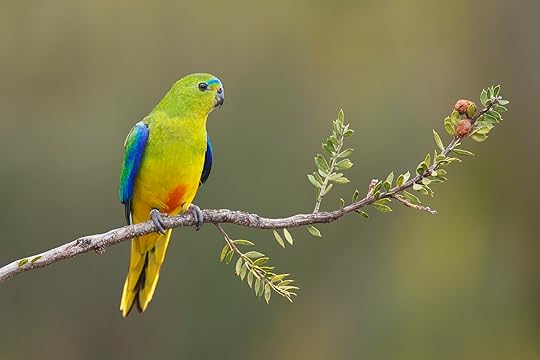
This is technically well-written and a fitting commentary on our times — which is why I’m rounding up instead of down — but the whole thing left me a bit cold. This has plenty of five star reviews, so your experience may well be more positive.
Profile Image for David.
301 reviews1,436 followers
July 14, 2021
This is a strange book that seems to exist in a fever dream. The world is burning and body parts are disappearing from the characters. Unfortunately, one of those things is true and the other is magical realism. The main characters (three adult children) cruelly attempt to keep their aging mother alive, indifferent to her pain and tearful cries to let her go. The adult children can be read as images of us, the readers, whose indifference and cruelty cause needless suffering in this world. This is a powerful and disconcerting work.
Profile Image for Akvilina Cicėnaitė.
Author 23 books342 followers
Read
February 3, 2021
Šiemet sau pasižadėjusi skaityti daugiau australų literatūros, metus pradėjau su vienu iš gerai žinomų šiuolaikinės prozos vardų. Richardą Flanaganą lietuvių skaitytojai turbūt labiausiai pažįsta iš 2014 m. Bookerio prizą laimėjusio romano „Siauras kelias į tolimąją šiaurę“ ir 2007 m. pasirodžiusios „Guldo žuvų knygos“. O man į rankas pateko praėjusių metų rudenį išleistas naujausias Flanagano romanas sunkiai išverčiamu pavadinimu „The Living Sea of Waking Dreams“.

Jautrus, skaudus, gražia literatūrine kalba, vietomis trūkinėjančiais sakiniais parašytas tekstas – ne tiek apie gyvenimą, kiek apie mirtį. Pagrindinės veikėjos Annos motina, aštuoniasdešimt septynerių Francie, atsiduria ligoninėje. Jos prognozės liūdnos, bet artėjančiai motinos mirčiai ima priešintis vaikai. O tuo tarpu už palatos lango – liepsnojantys miškai, žūstantys gyvūnai ir žmonės atpažįstamuose 2019-2020 m. Australijos gaisrų sezono vaizdiniuose; nyksta geltonpilvių žolinių papūgėlių rūšis; nyksta ir Anna, pradedant dingusiais pirštais, keliu, ranka – nykimas, kurio geriau nematyti, pasislėpti nuo jo instagrame. Magiškasis realizmas pasitelkiamas tarsi tuomet, kai sielvartui ir siaubui išreikšti nebepakanka žodžių.

Tematinių linijų daug, jos kryžiuojasi ir atkartoja viena kitą vienijamos netekties motyvo: Annos ir sūnaus santykiai; vidutinio amžiaus moters virsmas nematoma; priklausomybė nuo narkotikų ir socialinių tinklų; lytinė prievarta ir jos trauma; mirtis ir teisė į orią mirtį; aplinkosauga ir klimato kaita... Gali kilti klausimas, ar šioje bandomų užgriebti temų gausoje nepaskęsta toji linija, kuri man pasirodė pagaviausia – teisės į humanišką mirtį, motinos ir dukros ryšio. Kita vertus, į mirštančią Francie galima žvelgti ir kaip į nykstančios gamtos alegoriją, o dingstančios žmonių kūnų dalys gali žymėti ir nykstančias gamtos rūšis.

Savo trumpais skyreliais romanas primena netrukus lietuviškai pasirodysiantį Colum McCann „Apeirogon“, o dingimo motyvas, nors kitokių prasmių persmelktas, iškyla vėlgi lietuviškai prabilsiančioje Yoko Ogawa „The Memory Police“. Skaitysiu ir kitus Flanagano kūrinius, o šį rekomenduoju – būtų smalsu palyginti įspūdžius.

„The more she thought about it the more she wondered if maybe that‘s what humans can‘t do. Live with beauty. That it‘s beauty they can‘t bear. That what was really vanishing wasn‘t all birds and fish and animals and plants, but love. Perhaps that‘s what she was really trying to stop vanishing before it was too late. Sometimes she felt love had dried up like a riverbead in drought.“
Profile Image for Joy D.
3,133 reviews330 followers
September 3, 2021
“It wasn’t enough for Terzo that their mother had not died. It wasn’t enough that she lived in her sea of waking dreams. In Terzo’s view, she had to live like us, rationally, in a rational universe. And as there was to be no death, nor could there be any other life.”

Eighty-seven-year-old Francie is in a Tasmanian hospital. Her health is declining. Her three adult children, Anna, Terzo, and Tommy, decide to keep her alive as long as possible, requiring ever-increasing efforts. Anna, the primary character, experiences vanishing body parts, as if she is being erased, and no one notices. The story is set against a backdrop of the recent Australian wildfires.

This book portrays how guilt can negatively influence actions. The kids love their mother, so shouldn’t they do everything possible to keep her alive? Isn’t life better than death? Even when Francie begs to be “let go” they willfully misunderstand her. It raises the issue of quality of life. [Obviously, people currently dealing with these situations may want to avoid this book for now.]

The author comments on how social media distracts people from addressing important matters: “The more things changed the harder people stared into their screens, living elsewhere, the real worlds now no more than a simulacrum of the screen world, their real lives the shadow of their online lives. The more people vanished the more they asserted themselves online as if in some grotesque equation or transfer.”

It also provides commentary on the decline of the natural world and the importance of engaging in it. The writing is powerful. It is a sad story, and at times deeply disturbing, but definitely thought-provoking.
Profile Image for Tony.
1,030 reviews1,911 followers
Read
July 23, 2021
We are, it says here, all of us, vanishing. Indeed, perhaps it is something in being human that we understand this. We are all, each of us, exiting, some with an exit strategy and others accepting a fait accompli. Some of us go whole while others go piece by piece. But we all have a shelf-life. Use or freeze by . . .

And as the climate warms, as the forests burn, we take things with us.

These are the parallel themes that Richard Flanagan weaves together in this novel. The main protagonist, Anna, finds that body parts are vanishing: one finger, then another, a knee, a breast, an eye. Her no-account son starts to vanish too. She has (had) three brothers. Two vanished in less magical ways. Before they exit, they conspire to keep their aged mother alive through the wonders of modern medicine. Mum resents this.

Not a bad idea for a novel, a good working outline. Flanagan sprinkles in topical ideas: priestly child abuse, Tasmanian fires, climate change, hidden Swiss bank accounts, and the endangered orange-bellied parrots.

Yet there was nothing subtle about the telling, and the strengths that have made me a fan of Flanagan's work - great characterizations, lovely writing - were missing here, I thought. There was more of stuff like this:

A scream gathered in her throat, her mouth fell open, but from it sprang only a collapsing, endless space into which she was terrified she might disappear. It was as if she wanted to vomit something but there was nothing something everything nothing.

I thought the orange-bellied parrots deserved better:


Profile Image for Nick.
117 reviews
October 6, 2020
I have something everything nothing to say about this book.

It's a fever dream, this story of Annie and her dying mother Francie, a dream of vanishing body parts, apocalyptic flame and orange bellied parrots.

It's Flanagan's slow motion horror; his indictment on modern society. It's a plea to disconnect from the virtual world/reconnect with the beauty in the world before it is too late.

It's arrogant, muscular, beautiful and grotesque. It's angry and despairing and horrified.

I liked and I didn't like this book. It's like nothing else I've read. It's the feeling of 2020 in written form. I'm not sure I'd recommend it. I will give it 5-stars.
Profile Image for Lisa.
3,783 reviews491 followers
October 4, 2020
This beautiful little bird is the critically endangered orange-bellied parrot and it has a surprising role to play in the resolution of Richard Flanagan's magnificent new novel.  I place it here because its plight is one of the catalysts for the book.

The Living Sea of Waking Dreams is Flanagan's eighth novel, and it may very well be his best ever.  Some of it is confronting, but there's good reason for it to be, and as Davy suggests when he's pondering the predictability of stories, it's ok that there are things that are just entertainment but if they don't mean anything, that's not great.
Shouldn't stories work towards something that we can't get anywhere else? he said.  It wouldn't be enough, sure.  But maybe it would be something. (p.144)

In this novel Flanagan does indeed work towards something that we can't get anywhere else.  Sure, there are sideswipes at the banks impoverishing hard-working self-funded retirees and at politicians who fail the people, but there are two issues of much greater significance that Flanagan deals with, united under the umbrella that we're just not paying attention.  (You might remember that 'paying attention' was the theme of this year's superb Melbourne Writers' Festival too).  The novel begins with the extraordinary image of Anna's vanished finger, soon to be followed by a vanished knee.  There's no accident, no pain, no blood, just a quiet disappearance that other people don't even notice.  They really don't notice.

It's a metaphor, of course.  It's to draw our attention to the way we just don't notice the way our world is becoming compromised beyond repair.  We just don't notice the quiet extinction of unique species, and most of us are too distracted to notice the slowly advancing catastrophe of our over-heating planet.  Flanagan is merciless in showing how our preoccupation with trivia blinded us to the inexorable future — until last summer, when the mercury soared and Australia burned and our cities were swathed in smoke and we knew that the burned wildlife were the pitiful remnants of just the ones that we could still see.   All over Australia there are people who will read Flanagan's novel remembering the horror and the fear and the sense of doom.  Words like apocalypse were tossed around by journalists, but we were living it, and now, as summer approaches, many of us are dreading it instead of happily anticipating the joy of the beautiful Australian summers that we grew up with.  This novel forces us to think about last summer and how it's coming for us again.

This devastating world is the background for a more intimate story... about an issue much closer to home for those who have elderly parents.  Anna's ageing mother is dying, and her children will not let her die.  Anyone who's been through this time in a parent's life knows that it's a delicate situation: Anna's brother Tommy has accepted the inevitability of her death, but her other brother Terzo is determined that everything that can be done, will be done, with no expense or effort spared.  And because he is a bombastic venture capitalist with influential friends, and because he bullies Anna into siding with him, and because the hospital is afraid he will go to the media and sue, Francie undergoes a succession of unwarranted medical interventions that will make any empathetic reader weep.

Flanagan is too wise a novelist to be simplistic about this.  There is a back story about these three siblings who used to be four, and there are reasons for Anna's heartlessness in refusing to accede to her mother's wish to be free from pain.

To read the rest of my review please visit https://anzlitlovers.com/2020/10/04/t...
Displaying 1 - 30 of 805 reviews

Can't find what you're looking for?

Get help and learn more about the design.