

What do you think?

The Russian Baltic Fleet in the Time of War and Revolution, 1914–1918: The Recollections of Admiral S.N. Timirev
The translation of these memoirs brings an important and authoritative historical source to those interested in Russian or naval history who are unable to access them in the original Russian. Their author, Rear Admiral S N Timiryov, was well placed to make observations on the character of many of the significant commanding officers and also many of the operations of the Baltic Fleet from the beginning of the war in 1914 up to exit from it in 1918. He trained with many of the key figures and shared battle experience with them in the Russo-Japanese War of 1904-05 and the siege of Port Arthur; and he spent a year in Japan as a prisoner of war with a number of them. In his subsequent career in the Navy he had roles which brought him into contact with new recruits as well as with many serving officers, and as the Executive Officer on the imperial yacht Shtandart for some years, he came into contact with senior members of the navy establishment and of the government, including the imperial household. His memoirs also exhibit an unusual degree of self-awareness. Written in Shanghai in 1922, these memoirs remained unknown to scholars for several decades. Since their publication in New York in 1961, in the absence of access to authoritative archives, many historians in the West used them as a source for the study of the role of the Navy in the Russian revolution, particularly as it unfolded in the north. They have also been used as a source in numerous studies of the naval war in the Baltic, and following the fall of the Soviet Union they were re-published in Russia and are regarded there as an authoritative source on the history both of the revolution and of the Russian Navy in the First World War. This first English-language edition, complemented by extensive notes and commentary on issues which may not be familiar to many, will fascinate scholars and naval historians alike.
- GenresMilitary History
250 pages, Kindle Edition
First published January 1, 1961
Ratings & Reviews
Friends & Following
Create a free account to discover what your friends think of this book!
Community Reviews
Displaying 1 - 2 of 2 reviews

January 8, 2025
A 100-year old memoir of an Imperial Russian naval officer’s WWI and early Russian Revolution experiences, while serving in the Baltic Sea Theater of the war.
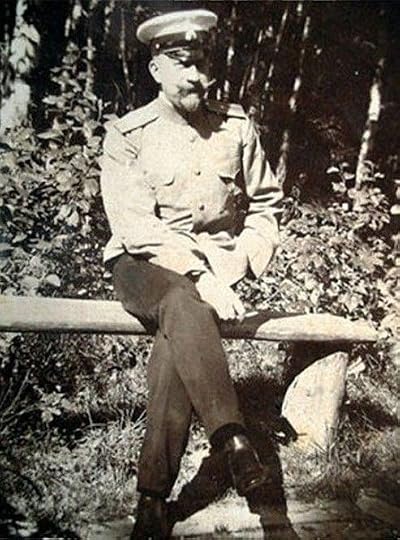
Sergey Nikolayevich Timiryov (1875-1932), Helsinki 1915
My dead tree version was 238-pages. It had a UK 2020 copyright. This book includes: Photos, a Map, Appendices, Footnotes, Bibliography, and an Index.
Stephen C. Ellis is an Australian PhD historian of the Russian Revolution émigré history. He has translated and written 2-books on early 20th Century Russian history with naval orientation. This is the first book I’ve read by the author.
This book was an advanced work. It’s strongly recommended having a background knowledge of: early 20th century naval history, including WWI and the Russian Revolution before reading it. Familiarity with period naval tactics and doctrine, eastern Baltic Sea geography and late Imperial Russian society would also be helpful.
TL;DR Synopsis
The Russian Baltic Fleet in the Time of War and Revolution, 1914–1918 was a 100-year old memoir of a 47-year old, ex-Imperial senior Russian naval officer written from exile in China at the end of the Revolution.
The narrative describes the WWI naval war in the Baltic Sea from Timiryov’s perspective as a serving fleet officer. In begins just before the war’s declaration and ends just before the Treaty of Brest-Litovsk which ended Russia’s participation in the war. It describes combat operations, some in detail, the organizational behavior of the Russian Navy, and the event and effects of the two successive revolutions on the fleet.
Militarily, this book was somewhat uneven in its level-of-detail. The operational level of the war in the Baltic are well-documented. Timiryov’s engagements were likewise well-done. Technical details were authentic. Strategy was remarkably absent from discussion. Importantly, the book provided a detailed description of the organizational culture of the Imperial Russian Navy Baltic fleet. Timiryov’s personnel analysis identified the primary influencers and their effect on the Baltic fleet’s wartime performance. Every military organization’s culture, creates a resistance to organizational change. It should be noted that almost all serving officers of the Imperial Russian Navy were from the nobility. Timiryov describes how the Revolution, occurring amidst wartime, went about crushing the Navy’s existing cultural system to the detriment of its warfighting capability.
Ellis’ Translator’s Commentary and Notes provided an essential aid in reading this book.
This book was about Timiryov's professional life written from the perspective of his émigré status. Whilst trying for a level-of-objectivity, his: class, education, training, and personality come through in his experiences during WWI and the Revolution. Interestingly, very little of his family life is exposed.
The Review
Timiryov wrote this book in 1922. It surfaced, almost 40-years later long after he’d passed. It was first published (in Russian) in the United States during the Cold War. Its suspected it was withheld until referenced individual’s had passed to avoid their punishment. This is the first English translation.
This book was not what I expected, despite the title and the publisher’s summary.
I had expected a WWI Russian naval military history. I wanted the details of how the Imperial Russian Navy credibly resisted the superior Imperial German Navy. I knew it involved use of naval mines. I received less a military history, and more of a description of the professional life of an Imperial Russian Naval fleet officer in the chaos of both wartime and the subsequent Revolution. It was a different history lesson. Part of it was naval mining, but the most important part was insight into late 19th Century Russian military organizational behavior and its officer corps. Note that despite WWI occurring in the early 20th Century, both the Imperial Navy’s and the Timiryov’s formative period were products of at least 25-years earlier—a different time?
Timiryov wrote this book for three purposes: 1) To document the operations of the “hounourable [sic] service” in WWI he’d devoted his life to. (The Soviets were unlikely to.) 2) To vindicate his leaving the service in wartime. 3) To call out Russian’s, particularly brother officers who had either honored or betrayed their service and class.
In general, the book’s prose was good. Note that this was a translation from pre-modern Russian. The translated prose was credible. Good copyediting left the book well-groomed. The prose level was more approachable than many academic military histories, but more technical than popular histories.
The book assumed an understanding of early 20th Century naval history. It could be technically dense in places. For example, naval artillery and naval mining was discussed in detail. You’re expected to know what the result of a ship being “bracketed” by an enemy salvo forecasts. Likewise, period naval tactics, techniques and procedures were discussed with only a hint of "how to". However, both operational-level and tactical-level descriptions were in a military reporting fashion.
The high-level strategy of the German and Russian powers, was discussed only by implication. “Support the northern flank of the front with naval gunfire support” was as explicit as it got. The reader was left to intuit the Russian attritive offensive and barrier defensive naval mining strategy whilst maintaining a Fleet in Being .
Missing from the book was the historical Baltic Fleet Composition for both the Russians and the Germans, and more than just a class description (destroyer, cruiser, pre-Dreadnought, etc.). In addition, the naval building program, while mention, contained no detail. For example, the Russian production of the important Novik class destroyers were the most modern and useful fleet asset.
Both the climate and the geography on the Black Sea Theater’s naval operations and their affect was not discussed.
You were expected to know the duration of the “Campaigning Season” in the Baltic was about May to October. In the early 1900’s the Baltic would completely freeze on a line east of Stockholm leaving ships frozen in port November to April. These immobilized ships became hotbeds of revolution.
I also thought the book would have benefitted from a greater discussion of the theater’s geography. For example, a skerry is a small rocky island, too small for habitation, or simply a rocky reef. The Finnish Baltic coast has strings of them. They were somehow fortified to provide submarine-proof corridors of transit along the Finnish coast.
Naval history is about charts and maps. There was one map. It could have been greatly improved. The map was a commercially sourced, “line map” with some marine features and ports. Important topographical features are omitted from it. Its presentation and annotation inadequately supported the narrative. Only most of the place names found in the narrative were on the map. A period Atlas with place names was needed to be kept on-hand for reference of geographical features. This was particularly useful in following the events of the Battle of Moon Sound, which resulted in Timiryov’s promotion to rear admiral.
There were three photographs. The photos were good. Although I think Timiryov’s cruiser Baian should have been included. Representative diagrams of mine sweepers, torpedo boats and destroyers would have been helpful. I have previously had to spend hours over warship pictures describing the evolution in importance of the lesser known “small ships” during the naval “guerrilla” warfare of WWI’s Narrow Seas.
The Bibliography was contemporary, but brief.
Timiryov’s memoir was a story of: men, ships and organizations in contention.
Timiryov mentions almost every fleet officer serving in the Baltic. Ellis included a footnote with a thumbnail professional summary for all theses officers. Many were: executed, murdered, died in prison or died abroad. The only admiral dwelt on deeply with their effect on shaping strategy and including their politics was Nikolai Ottovich von Essen (1860 -1915). Individuals were most likely to be mentioned favorably when they were combat veterans. He also held “Bureaucrats” and “Careerists”, particularly officers who became Bolsheviks in contempt.
The Russian fleet was unprepared for the war. They were still rebuilding from the disastrous Russo-Japanese War. They had few modern ships. In general, Timiryov did not dwell too deeply on the technology of naval war machinery, their application and evolution during the war. Most importantly, Russia had a large cadre of combat-proven officers. Whilst the Germans had not recently fought an all-out naval war.
In the Baltic, both sides’ capital ships designed for the Mahanian Decisive Battle were too valuable to risk. However, in the Baltic the Germans had the superior fleet, despite most facing the British in the North Sea. The western half of the Baltic became a German lake and the east a Russian corral.
The technology of the torpedoes and underwater mines made capitol ships vulnerable to light vessels including submarines. The Germans had a clear numeric and qualitative edge in submarines, particularly minelaying submarines. Timiryov laments the Russian submarine service. He praises the British subs that infiltrated into the Baltic, patrolled with success, and stayed using Russian bases. Use of small ships resulted in naval “guerrilla” warfare between: fast cruisers, submarines, destroyers minelayers and minesweepers. Mine laying and minesweeping was unending. No large ship entered shallow water without it being swept. Minefields were constantly being: planted, replenished and extended. Technology should also be seen to include Signals Intelligence . Initially, the Russians has an advantage with this.
Timiryov’s narrative revealed the organizational behavior of the Navy. They were a clubby, well-paid bunch in an service with 300-years of tradition. They were all of the same social class, in a class divided society. I noted in the narrative all the folks mentioned by name were nobles and occasionally middle class, whilst only particularly odious working class and peasants were identified by name. Naval officers were more highly educated and trained than their peers in the civil service or Army. They all went to the same service schools and had likely served at one time with each other. Also, the recent Russo-Japanese War had separated the sheep from the goats in the service. Folks did their time in position and rank, then moved-up in rank and postings. Timiryov was an insider and career-wise on-track. Very few naval officers received other than glowing descriptions from him. He was good at his job. In addition, he was the right age (~40) to achieve high-rank in a war.
A peculiar aspect of the narrative was Timiryov family life. He was married and had a son. Both of these were important socially and career-wise. Anna Timiryova (the wife) is mildly infamous. Ellis included snippets of her published correspondence in Notes. Her writing was very different from her husband’s. During the war she entered into an affair with Timiryov’s close friend and navy superior Admiral Alexander Vasilyevich Kolchak. Kolchak was also married. During the Russian Civil War, Timiryova left Timiryov, for Kolchak. Kolchak was leading an army fighting the ‘Reds’ in Siberia. She became a political prisoner after Kolchak was betrayed and executed. Interestingly, Timiryov writes glowingly of Kolchak in the memoir?
Actively engaged in the war in forward positions, Timiryov never anticipated the revolution. He was also not “political”—the Empire’s Navy was his career and livelihood. The first (Republican) revolution did not affect the Navy too seriously. They seized control of the machinery of the government, keeping it much the same as Czarist times. The second (Bolshevik) revolution, had serious consequences for the navy. They intended to re-fashion Russian society in the midst of a war.
A navy is a large, complex, powerful and expensive organization. Technocrats are necessary at all levels for its function. In the Russian Imperial Navy those were the noble-class officers. A peasant or working-class Boatswain's Mate had no skill or training in the maneuvering of a formation of large ships at sea in the fog. The Bolsheviks tore down the hierarchy of the Navy—during wartime. They created “Sailor’s Committees”. The sailors elected their ship’s: officers, Captains, and Admirals. The Bolshevik leadership knew they had to co-op a part of the Navy’s officer corps to keep it functioning. That message did not reach down to all levels, and process was taken-up unevenly. Elite ships and bases in the combat zone, either did not revolt or elected their standing officers to ensure their safety. Ships and bases in the rear rapidly “democratized”, sometimes killing or imprisoning their officers. The war at sea suffered. Ships and strategic locations were lost and operations failed. Overtime, the entire Navy was run by Sailor’s Committees. Enough officers declared for the Bolsheviks’ to keep it functioning, although not at its previous level.
As an admiral in the combat zone Timiryov was insulated from the revolution until the winter of 1917. Then, the fleet was “iced-in” in winter quarters. There, he watched the organization that defined him, get torn down, putting him and his brother officers in what they considered an intolerable position. He was part of a mass resignation of officers. They maintained they couldn’t perform their duty being subordinated to committees and commissars. No small part of this resignation, was their loss of: authority, privilege, respect and reward whilst retaining responsibility.
Timiryov and his colleagues were fortunate to have “left the service” in independence-seeking Finnish Helsinki. There they were able to surreptitiously melt into the population. (Spitefully, without pension or back pay.) Had they been in winter quarters closer to the capitol, they likely would have been imprisoned or executed?
Eventually, Timiryov joined the Russian diaspora resulting from the Russian Civil War. He worked as a steamship captain out of the Republic of China’s Shangahai. It was a popular destination for Russian emigres. He passed in 1932, age 58 of throat cancer. There was no mention in the memoir he smoked, but it was fashionable at the time.
Summary
The greatest strength of this book was its giving a first person narrative of WWI naval operations and the Russian Revolution by a man-of-the-times. It put the reader in a position to compare and contrast the historical events found in military and political histories for the period, most written in the west, at a different level-of-detail and remove.
Ellis does a fine job at the translation from the Russian. His notes and afterward were essential reading. Note that in my reading it was sometimes hard to determine when Timiryov was conveying ideas with humor or satire without Ellis’ notes.
This memoir was a story of: men, ships and organizations, including political ‘parties’ in contention. Its Russian-oriented focus showed that the WWI Baltic naval conflict in a lot of detail not commonly found in most WWI naval histories. In addition, Timiryov’s coping with the dramatic, changes of the revolution and the conflicts it generated with his core beliefs was almost tragic. He was lucky he wasn’t killed.
However, this book was also hard-to-read. Its 100+ years old, in-translation, and from the member of a society which has been completely erased. It assumed a then contemporary context which no longer exists. A lot of preparation in period, regional, military and political history was needed to follow along.
This is a worthwhile read for someone who already has a background in early 20th Century military and diplomatic, and Russian history to know more about the naval war fought during WWI in the Baltic Sea.
It’s also a narrative of how a 19th Century military officer could deal with the societal disaster of a revolution. The advent of the socialist society in Russia took place during war and continued with years of: war, famine, terror, censorship, oppression, imprisonment and death. (This memoir was meant to circumvent Soviet censorship.) The lives of those, like Timiryov who refused to toe the party line, resulted in: hardship, misery and exile.
Readers of this book may also be interested in: A Naval History Of World War 1 by Paul G. Halpern (my review), Fighting the Great War at Sea: Strategy, Tactics and Technology by Norman Friedman (my review), Russia: Revolution and Civil War 1917-1921 by Antony Beevor and The Eastern Front: A History of the First World War by Nick Lloyd (my review).
Sergey Nikolayevich Timiryov (1875-1932), Helsinki 1915
My dead tree version was 238-pages. It had a UK 2020 copyright. This book includes: Photos, a Map, Appendices, Footnotes, Bibliography, and an Index.
Stephen C. Ellis is an Australian PhD historian of the Russian Revolution émigré history. He has translated and written 2-books on early 20th Century Russian history with naval orientation. This is the first book I’ve read by the author.
This book was an advanced work. It’s strongly recommended having a background knowledge of: early 20th century naval history, including WWI and the Russian Revolution before reading it. Familiarity with period naval tactics and doctrine, eastern Baltic Sea geography and late Imperial Russian society would also be helpful.
TL;DR Synopsis
The Russian Baltic Fleet in the Time of War and Revolution, 1914–1918 was a 100-year old memoir of a 47-year old, ex-Imperial senior Russian naval officer written from exile in China at the end of the Revolution.
The narrative describes the WWI naval war in the Baltic Sea from Timiryov’s perspective as a serving fleet officer. In begins just before the war’s declaration and ends just before the Treaty of Brest-Litovsk which ended Russia’s participation in the war. It describes combat operations, some in detail, the organizational behavior of the Russian Navy, and the event and effects of the two successive revolutions on the fleet.
Militarily, this book was somewhat uneven in its level-of-detail. The operational level of the war in the Baltic are well-documented. Timiryov’s engagements were likewise well-done. Technical details were authentic. Strategy was remarkably absent from discussion. Importantly, the book provided a detailed description of the organizational culture of the Imperial Russian Navy Baltic fleet. Timiryov’s personnel analysis identified the primary influencers and their effect on the Baltic fleet’s wartime performance. Every military organization’s culture, creates a resistance to organizational change. It should be noted that almost all serving officers of the Imperial Russian Navy were from the nobility. Timiryov describes how the Revolution, occurring amidst wartime, went about crushing the Navy’s existing cultural system to the detriment of its warfighting capability.
Ellis’ Translator’s Commentary and Notes provided an essential aid in reading this book.
This book was about Timiryov's professional life written from the perspective of his émigré status. Whilst trying for a level-of-objectivity, his: class, education, training, and personality come through in his experiences during WWI and the Revolution. Interestingly, very little of his family life is exposed.
The Review
Timiryov wrote this book in 1922. It surfaced, almost 40-years later long after he’d passed. It was first published (in Russian) in the United States during the Cold War. Its suspected it was withheld until referenced individual’s had passed to avoid their punishment. This is the first English translation.
This book was not what I expected, despite the title and the publisher’s summary.
I had expected a WWI Russian naval military history. I wanted the details of how the Imperial Russian Navy credibly resisted the superior Imperial German Navy. I knew it involved use of naval mines. I received less a military history, and more of a description of the professional life of an Imperial Russian Naval fleet officer in the chaos of both wartime and the subsequent Revolution. It was a different history lesson. Part of it was naval mining, but the most important part was insight into late 19th Century Russian military organizational behavior and its officer corps. Note that despite WWI occurring in the early 20th Century, both the Imperial Navy’s and the Timiryov’s formative period were products of at least 25-years earlier—a different time?
Timiryov wrote this book for three purposes: 1) To document the operations of the “hounourable [sic] service” in WWI he’d devoted his life to. (The Soviets were unlikely to.) 2) To vindicate his leaving the service in wartime. 3) To call out Russian’s, particularly brother officers who had either honored or betrayed their service and class.
In general, the book’s prose was good. Note that this was a translation from pre-modern Russian. The translated prose was credible. Good copyediting left the book well-groomed. The prose level was more approachable than many academic military histories, but more technical than popular histories.
The book assumed an understanding of early 20th Century naval history. It could be technically dense in places. For example, naval artillery and naval mining was discussed in detail. You’re expected to know what the result of a ship being “bracketed” by an enemy salvo forecasts. Likewise, period naval tactics, techniques and procedures were discussed with only a hint of "how to". However, both operational-level and tactical-level descriptions were in a military reporting fashion.
The high-level strategy of the German and Russian powers, was discussed only by implication. “Support the northern flank of the front with naval gunfire support” was as explicit as it got. The reader was left to intuit the Russian attritive offensive and barrier defensive naval mining strategy whilst maintaining a Fleet in Being .
Missing from the book was the historical Baltic Fleet Composition for both the Russians and the Germans, and more than just a class description (destroyer, cruiser, pre-Dreadnought, etc.). In addition, the naval building program, while mention, contained no detail. For example, the Russian production of the important Novik class destroyers were the most modern and useful fleet asset.
Both the climate and the geography on the Black Sea Theater’s naval operations and their affect was not discussed.
You were expected to know the duration of the “Campaigning Season” in the Baltic was about May to October. In the early 1900’s the Baltic would completely freeze on a line east of Stockholm leaving ships frozen in port November to April. These immobilized ships became hotbeds of revolution.
I also thought the book would have benefitted from a greater discussion of the theater’s geography. For example, a skerry is a small rocky island, too small for habitation, or simply a rocky reef. The Finnish Baltic coast has strings of them. They were somehow fortified to provide submarine-proof corridors of transit along the Finnish coast.
Naval history is about charts and maps. There was one map. It could have been greatly improved. The map was a commercially sourced, “line map” with some marine features and ports. Important topographical features are omitted from it. Its presentation and annotation inadequately supported the narrative. Only most of the place names found in the narrative were on the map. A period Atlas with place names was needed to be kept on-hand for reference of geographical features. This was particularly useful in following the events of the Battle of Moon Sound, which resulted in Timiryov’s promotion to rear admiral.
There were three photographs. The photos were good. Although I think Timiryov’s cruiser Baian should have been included. Representative diagrams of mine sweepers, torpedo boats and destroyers would have been helpful. I have previously had to spend hours over warship pictures describing the evolution in importance of the lesser known “small ships” during the naval “guerrilla” warfare of WWI’s Narrow Seas.
The Bibliography was contemporary, but brief.
Timiryov’s memoir was a story of: men, ships and organizations in contention.
Timiryov mentions almost every fleet officer serving in the Baltic. Ellis included a footnote with a thumbnail professional summary for all theses officers. Many were: executed, murdered, died in prison or died abroad. The only admiral dwelt on deeply with their effect on shaping strategy and including their politics was Nikolai Ottovich von Essen (1860 -1915). Individuals were most likely to be mentioned favorably when they were combat veterans. He also held “Bureaucrats” and “Careerists”, particularly officers who became Bolsheviks in contempt.
The Russian fleet was unprepared for the war. They were still rebuilding from the disastrous Russo-Japanese War. They had few modern ships. In general, Timiryov did not dwell too deeply on the technology of naval war machinery, their application and evolution during the war. Most importantly, Russia had a large cadre of combat-proven officers. Whilst the Germans had not recently fought an all-out naval war.
In the Baltic, both sides’ capital ships designed for the Mahanian Decisive Battle were too valuable to risk. However, in the Baltic the Germans had the superior fleet, despite most facing the British in the North Sea. The western half of the Baltic became a German lake and the east a Russian corral.
The technology of the torpedoes and underwater mines made capitol ships vulnerable to light vessels including submarines. The Germans had a clear numeric and qualitative edge in submarines, particularly minelaying submarines. Timiryov laments the Russian submarine service. He praises the British subs that infiltrated into the Baltic, patrolled with success, and stayed using Russian bases. Use of small ships resulted in naval “guerrilla” warfare between: fast cruisers, submarines, destroyers minelayers and minesweepers. Mine laying and minesweeping was unending. No large ship entered shallow water without it being swept. Minefields were constantly being: planted, replenished and extended. Technology should also be seen to include Signals Intelligence . Initially, the Russians has an advantage with this.
Timiryov’s narrative revealed the organizational behavior of the Navy. They were a clubby, well-paid bunch in an service with 300-years of tradition. They were all of the same social class, in a class divided society. I noted in the narrative all the folks mentioned by name were nobles and occasionally middle class, whilst only particularly odious working class and peasants were identified by name. Naval officers were more highly educated and trained than their peers in the civil service or Army. They all went to the same service schools and had likely served at one time with each other. Also, the recent Russo-Japanese War had separated the sheep from the goats in the service. Folks did their time in position and rank, then moved-up in rank and postings. Timiryov was an insider and career-wise on-track. Very few naval officers received other than glowing descriptions from him. He was good at his job. In addition, he was the right age (~40) to achieve high-rank in a war.
A peculiar aspect of the narrative was Timiryov family life. He was married and had a son. Both of these were important socially and career-wise. Anna Timiryova (the wife) is mildly infamous. Ellis included snippets of her published correspondence in Notes. Her writing was very different from her husband’s. During the war she entered into an affair with Timiryov’s close friend and navy superior Admiral Alexander Vasilyevich Kolchak. Kolchak was also married. During the Russian Civil War, Timiryova left Timiryov, for Kolchak. Kolchak was leading an army fighting the ‘Reds’ in Siberia. She became a political prisoner after Kolchak was betrayed and executed. Interestingly, Timiryov writes glowingly of Kolchak in the memoir?
Actively engaged in the war in forward positions, Timiryov never anticipated the revolution. He was also not “political”—the Empire’s Navy was his career and livelihood. The first (Republican) revolution did not affect the Navy too seriously. They seized control of the machinery of the government, keeping it much the same as Czarist times. The second (Bolshevik) revolution, had serious consequences for the navy. They intended to re-fashion Russian society in the midst of a war.
A navy is a large, complex, powerful and expensive organization. Technocrats are necessary at all levels for its function. In the Russian Imperial Navy those were the noble-class officers. A peasant or working-class Boatswain's Mate had no skill or training in the maneuvering of a formation of large ships at sea in the fog. The Bolsheviks tore down the hierarchy of the Navy—during wartime. They created “Sailor’s Committees”. The sailors elected their ship’s: officers, Captains, and Admirals. The Bolshevik leadership knew they had to co-op a part of the Navy’s officer corps to keep it functioning. That message did not reach down to all levels, and process was taken-up unevenly. Elite ships and bases in the combat zone, either did not revolt or elected their standing officers to ensure their safety. Ships and bases in the rear rapidly “democratized”, sometimes killing or imprisoning their officers. The war at sea suffered. Ships and strategic locations were lost and operations failed. Overtime, the entire Navy was run by Sailor’s Committees. Enough officers declared for the Bolsheviks’ to keep it functioning, although not at its previous level.
As an admiral in the combat zone Timiryov was insulated from the revolution until the winter of 1917. Then, the fleet was “iced-in” in winter quarters. There, he watched the organization that defined him, get torn down, putting him and his brother officers in what they considered an intolerable position. He was part of a mass resignation of officers. They maintained they couldn’t perform their duty being subordinated to committees and commissars. No small part of this resignation, was their loss of: authority, privilege, respect and reward whilst retaining responsibility.
Timiryov and his colleagues were fortunate to have “left the service” in independence-seeking Finnish Helsinki. There they were able to surreptitiously melt into the population. (Spitefully, without pension or back pay.) Had they been in winter quarters closer to the capitol, they likely would have been imprisoned or executed?
Eventually, Timiryov joined the Russian diaspora resulting from the Russian Civil War. He worked as a steamship captain out of the Republic of China’s Shangahai. It was a popular destination for Russian emigres. He passed in 1932, age 58 of throat cancer. There was no mention in the memoir he smoked, but it was fashionable at the time.
Summary
The greatest strength of this book was its giving a first person narrative of WWI naval operations and the Russian Revolution by a man-of-the-times. It put the reader in a position to compare and contrast the historical events found in military and political histories for the period, most written in the west, at a different level-of-detail and remove.
Ellis does a fine job at the translation from the Russian. His notes and afterward were essential reading. Note that in my reading it was sometimes hard to determine when Timiryov was conveying ideas with humor or satire without Ellis’ notes.
This memoir was a story of: men, ships and organizations, including political ‘parties’ in contention. Its Russian-oriented focus showed that the WWI Baltic naval conflict in a lot of detail not commonly found in most WWI naval histories. In addition, Timiryov’s coping with the dramatic, changes of the revolution and the conflicts it generated with his core beliefs was almost tragic. He was lucky he wasn’t killed.
However, this book was also hard-to-read. Its 100+ years old, in-translation, and from the member of a society which has been completely erased. It assumed a then contemporary context which no longer exists. A lot of preparation in period, regional, military and political history was needed to follow along.
This is a worthwhile read for someone who already has a background in early 20th Century military and diplomatic, and Russian history to know more about the naval war fought during WWI in the Baltic Sea.
It’s also a narrative of how a 19th Century military officer could deal with the societal disaster of a revolution. The advent of the socialist society in Russia took place during war and continued with years of: war, famine, terror, censorship, oppression, imprisonment and death. (This memoir was meant to circumvent Soviet censorship.) The lives of those, like Timiryov who refused to toe the party line, resulted in: hardship, misery and exile.
Readers of this book may also be interested in: A Naval History Of World War 1 by Paul G. Halpern (my review), Fighting the Great War at Sea: Strategy, Tactics and Technology by Norman Friedman (my review), Russia: Revolution and Civil War 1917-1921 by Antony Beevor and The Eastern Front: A History of the First World War by Nick Lloyd (my review).

August 20, 2026
The main focus of these memoirs is the various personalities within the Russian Baltic fleet as opposed to the naval engagements of the war in the Baltic. As such it is a little turgid at first, but once the revolutionary period begins, it becomes quite interesting.
Timirev is very much against the Kerensky government and even more so against the "revolutionary deepeners", the Bolsheviks who seized power soon after. He pulls no punches in criticising them, considering their supporters on shore, and amongst the sailors, as a rabble, as ignorant, as little more than a murderous mob.
He details how the growth of revolutionary consciousness undermined the morale of the fleet, still fighting the Germans, and how in the battle for Riga, this led several boats to inaction and abandonment of their stations, though by no means all.
The Bolsheviks sought to change the command structure, effectively breaking the single line of command, by installing political commissars upon the ships who would interfere with the decision making process. Seeing this as making it an ineffective fighting force, Timirev resigned his post.
The translator's note is useful in explaining ranks within the Russian Fleet, as well as more background on Timirev and the navy itself. 90% of officers came from the nobility, and it is thus understandable why so many sympathised with the Tsarist regime, and in turn why some of them were seen as legitimate targets by the new regime and its supporters.
However, the Bolsheviks were also conscious of purging all those with technical expertise, so the excesses were limited to a degree.
In all a rare and interesting perspective on the revolutionary period.
Timirev is very much against the Kerensky government and even more so against the "revolutionary deepeners", the Bolsheviks who seized power soon after. He pulls no punches in criticising them, considering their supporters on shore, and amongst the sailors, as a rabble, as ignorant, as little more than a murderous mob.
He details how the growth of revolutionary consciousness undermined the morale of the fleet, still fighting the Germans, and how in the battle for Riga, this led several boats to inaction and abandonment of their stations, though by no means all.
The Bolsheviks sought to change the command structure, effectively breaking the single line of command, by installing political commissars upon the ships who would interfere with the decision making process. Seeing this as making it an ineffective fighting force, Timirev resigned his post.
The translator's note is useful in explaining ranks within the Russian Fleet, as well as more background on Timirev and the navy itself. 90% of officers came from the nobility, and it is thus understandable why so many sympathised with the Tsarist regime, and in turn why some of them were seen as legitimate targets by the new regime and its supporters.
However, the Bolsheviks were also conscious of purging all those with technical expertise, so the excesses were limited to a degree.
In all a rare and interesting perspective on the revolutionary period.
Displaying 1 - 2 of 2 reviews