What do you think?
Rate this book


336 pages, Paperback
First published January 12, 2021
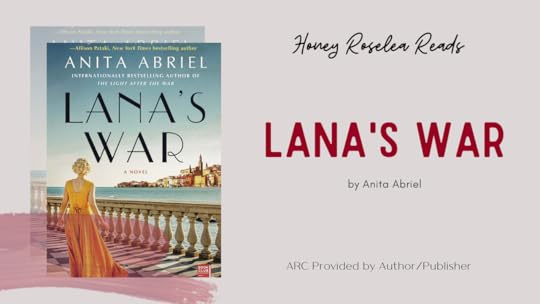
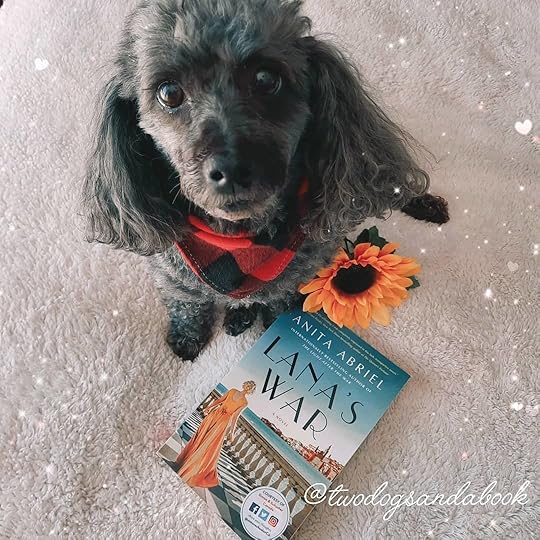
Plotwise, the novel moves rapidly. Abriel spends no time letting Lana get comfortable upon her arrival in Cap Ferrat, ushering her and her allies from one tense situation to another, so the story never lags. At times, though, the pace works against her, since she tends to resolve conflicts very quickly, often summarizing their conclusion in a paragraph or two, which undermines a lot of the drama and tension. While there is definitely some Inglourious Basterds-style uneasiness as Lana flirts with German officers—especially the one who killed her husband—all of the action (aside from Lana’s husband’s death) takes place offscreen. And though Abriel plants the seeds of mistrust in every interaction Lana has with other people, none of the major characters in her life turn out to be duplicitous, which feels like a missed opportunity. It’s almost as though Abriel came to like all her characters so much that she couldn’t bear to have any of them (except the Nazis) do bad things. The effect is that this is a spy novel whose stakes never feel as high as they should.
Part of the problem is that Abriel’s interest in the espionage seems to flag as soon as the romance between Lana and Guy begins, which puts a lot of pressure on their relationship to carry the novel. Unfortunately, because Abriel spends so little time developing characters and relationships, Lana and Guy are flat and seem to lack even a minimum amount of the chemistry one would expect from two people who suddenly decide they are in love with each other, and their relationship, which is supposed to be the heart of the novel’s final two thirds, feels sentimental rather than authentic (unlike, say, Lana’s relationship with Odette).
Abriel’s style is also a limitation. The prose is not what I would call smooth or elegant; Lana seems to have a stockpile of three total bodily reactions (gasps, gulps, and blushes), and the dialogue often feels stilted. Abriel also does the classic pop-fic thing where she presents a scene and then, rather than trusting her reader to figure out the significance of what has happened, immediately explains the significance in the protagonist’s interior monologue. It would be like watching that exquisite scene in Inglourious Basterds where Shosanna and Hans Landa are eating strudel in the café and then a voiceover comes on and is like “Shosanna felt extremely uncomfortable because the man sitting across from her killed her family. How could she sit here, laughing and eating strudel, while thoughts of their bodies riddled with bullets flashed through her head.” What's the deal, Anita: are you afraid that I’ve forgotten he killed her family, or are you worried that I might not be able to figure out why that encounter could be unpleasant? And do you really need to explain for the eighth time what will happen if Odette gets caught?
Despite all the above things, the plot is interesting enough, and, for the most part, it’s a decent book. The ending, though, completely derails it. It’s awful; the resolution of Lana and Guy’s story is trite and illogical—apparently, Guy doesn’t know how to use a telephone—and Abriel sends off all the rest of her characters with neat little summaries of the major events that have occurred in their lives over the decade since the war ended. Here, too, the sentimentalism is strong; everybody is living their dream life, the streets are paved with rose petals, and someone has probably invented a 0-calorie croissant with all the flavour of the original. The Hallmarkian vibes are too much for this mildly-jaded soul to bear. This review ended up being more negative than I intended; this is a completely innocuous, occasionally engaging novel. However, I can't say that my life is measurably better for having read it. It did make me want to eat tomatoes in olive oil and wash it down with some wine, though. Unless you're really into intersections of historical fiction and conventional romance tropes, I'd go read, I dunno, All the Light We Cannot See or Schindler's Ark, instead.