No one saw her leave, and no one knows where she went...
It's a perfectly typical day for Lowell Mitchell at her perfectly ordinary university in Massachusetts. She goes to class, chats with friends, and retires to her dorm room. Everything is normal until suddenly it's not--in the blink of an eye, Lowell is gone.
Facts are everything for Police Chief Frank Ford. He's a small-town cop, and he knows only hard evidence and thorough procedure will lead him to the truth. Together with the wise-cracking officer Burt Cameron, the grizzled chief will deal with the distraught family, chase dead-end leads, interrogate shady witnesses, and spend late nights ruminating over black coffee and cigars. Everyone tells him what a good, responsible girl Lowell is. But Ford believes that Lowell had a secret and that if he can discover it, this case will crack wide open.
Considered one of the first-ever police procedurals and hailed as an American mystery milestone, Last Seen Wearing--based on a true story--builds suspense through its accurate portrayal of an official police investigation. Hillary Waugh, who earned the title of Grand Master from the Mystery Writers of America, went on to create several memorable series, but this classic crime novel ranks among his finest work.
This next installment in the Library of Congress Crime Classics series will keep readers in suspense until the final page.
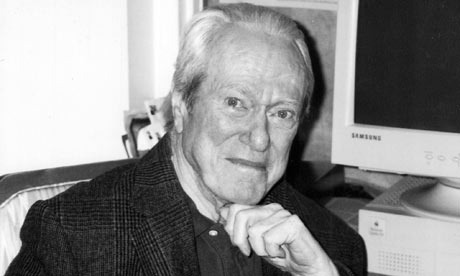
Hillary Baldwin Waugh was a pioneering American mystery novelist. In 1989, Waugh was named a Grand Master by the Mystery Writers of America.
During his senior year at Yale, Waugh enlisted in the United States Navy Air Corps and, after graduation, received his aviator's wings. He served in Panama for two years, flying various types of aircraft. While in military service, Waugh turned his hand to creative writing, completing and publishing his first novel Madam Will Not Dine Tonight in 1947. He quickly published two more novels, but they were not very well received.
In 1949, as the result of reading a case book on true crime, Waugh decided to explore a realistic crime novel. With the cooperation of his fiancée, who was a student at Smith College, Waugh set his police procedural Last Seen Wearing... in a fictional women's college. Published in 1952, the book was a significant success and is now considered a pioneering effort exploring relentless police work and attention to detail.
After Last Seen Wearing..., Waugh went on to publish more than thirty-five additional detective novels, many aptly described as "hard boiled". Pseudonyms include "Elissa Grandower," "Harry Walker" and "H. Baldwin Taylor."
Waugh married Diana Taylor, and the couple had three children. Waugh died on December 8, 2008.
2025/Though this does slow down at times, it is better than I remembered from 10 years ago. It truly is an unadulterated (hear that, McBain!) police procedural. An even earlier one is Lawrence Treat’s “V. as in Victim”, which I haven’t read. So, for anyone looking for a pure *early* police procedural, this is probably the one to read.
2014/
I'll give this 4 stars (though it's probably, in truth, a touch under...), and leave my (typically) overoptimistic first impressions (below) alone.
An early and 'classic' example of the police procedural, it is still rooted in pulp and early 50's noir, and is important in that it pointed the way towards a more realistic type of crime writing.
It's a good book, and one that deserves to be back in print, and one that crime aficionados, at least, will definitely want to take a look at. Written at the age of 30, it was probably (just a guess) the high-point of Waugh's career.
---------------------------------
Waugh was a prolific writer of mysteries for over 30 years, but one who has now been largely forgotten. His works are out of print, and little read. I found this one recommended by Julian Symons in his Classic Bloody Murders (https://www.goodreads.com/book/show/9...).
Written in 1952, it was a pioneering and therefore classic example of the police-procedural (-- before writing L.S.W., Waugh had been writing, unsuccessfully, private dectective novels). The writing is quite good, taut, not at all dated -- though the society he is describing (an ideal girls college in the Boston-area suburbs of 1950) is certainly one that has passed. This is supposed to be one of his best books. Later, in the 1960's, he ended up writing 'tough' procedurals based on his experiences hanging about with the NYPD.
I'll rate the book when I'm done with it (likely 4 or 5 stars). Though it isn't flawless (I'm not sold completely, for example, on Waugh's handling of the chief cop, Ford... as a character...who isn't completely believable -- though many of the other characters are), there's no question that those who are into the genre (aficionados) will like this one, espcially given its early date.
This detective story is set in a college for young women in the state of Massachusetts. A student disappears, setting off an investigation.
It is very centered on police procedures—lacking in nuance and character development. The missing student is the only character we feel any relation to. Her diary contents were revealed to us when the detectives read it for clues about her various relationships and friendships.
The book was published in 1952, an era when college professors were sacrosanct, but my initial suspicions were pointing to them.
We follow the investigation with the fruitless pathways taken by the detectives, but gradually, by a strong work ethic, they find the body of the young woman and narrow down the range of suspects.
The entire story has a 1950s feel. Search warrants were not needed as they entered and rummaged through the suspect’s house!
Given when it was published, there are surprisingly frank conversations on sexual behaviour—abortion is brought up. And the aspect of male college professors taking sexual advantage of their young students makes the book ahead of its time.
My edition is slightly over 200 pages. The ending is abrupt; after all, the suspect must go on trial.
One of those novels that consistently ranks in any top 100 mysteries of all time list. It's long been a book that I've been meaning to check out, but I haven't been able to find a copy from any of the used books sites that I go to. So I resorted to the library, and was glad I did. This is a straight-up procedural, following the case of a missing college student from the points of view of the police force. Apparently, this was a first-of-its-kind, setting the stage for about a hundred Ed McBain novels, and about ten thousand Law and Order episodes.
What's nice, though, is how riveting this book is. It doesn't resort to tricks, or impossible murders, or quirky detectives. It just unfolds like an actual police investigation, the detectives getting closer and closer to the truth. It's dated, but in a good way, like a time capsule that shows you how college students lived in the early 1950s.
“That’s what the police business is all about. A lot of leg work, a lot of disappointments, and a lot of waiting.”
During the last year I’ve become interested in classic mystery/crime books, including the Golden Age of Mystery and other classics into the 50s and 60s. And, I’m not alone in this interest, as the last decade has seen a huge increase or renewal in reading and discussing classic crime books. There are some great publishing sources for reading the best of American and British classics. For America authors there is The Library of Congress Crime Classics, bringing back to print works from the 1860s to the 1960s, and Penzler Publishing's American Mystery Classics. For British classic authors, there is British Library Crime Classics, which include many short story collections (and many of those are edited by my friend and classics expert Martin Edwards). I’m making a bit of a research project in approaching what I want to read in these revived stories, looking for books and authors associated with impacting the world of crime fiction in ways that intrigue me. Of course, my love of mystery/crime reading has its roots in the Golden Age's Queen of Mystery, Dame Agatha Christie, and I have been lately adding more and more of the British Library Crime Classics short story collections and the reissued LOC classics and Penzler classics. And, let me say that the covers for all of the reissued publications are why I buy the print copies; they are amazing covers. I have started my renewed reading in earnest with an American author and book entitled Last Seen Wearing by Hillary Waugh, a novel credited with being the first critically acclaimed and successful in the sub-genre of police procedurals.
What the reader gets is just that, a murder case which is step by step what the police are doing to solve it. The focus is the police work. The police themselves, including the police chief in charge, are only developed as characters as far as what their police work shows about them. They aren’t portrayed as especially brilliant or intuitive, just as regular people doing their best in an often difficult job. Chief Frank Ford is gruff and not emotional, but he’s indefatigable in his pursuit of the guilty. Detective Sergeant Burton Cameron has a college education and an extended vocabulary, which he likes to use to annoy the Chief. Home life and life outside that of police work is left unexplored. The reader only learns that Chief Ford’s wife is most considerate of his being on a case and has food waiting for him when he arrives home, and the chief has a teenage daughter. Those relationships are not examined. The only character sketches being developed are pictures of who the victim was and who fits the profile of the murderer.
The story is straight forward, no complex layers of past history and subterfuge. Of course, there are secrets uncovered about the victim and the murderer, as those come with unraveling how two people come together, and one ends up dead. Hillary Waugh was influenced by the radio show Dragnet in which the focus is on “just the facts.” Chief Ford and his men (again, it’s 1950, explaining the absence of women) doggedly pursue the evidence to assure justice. The social mores of the time period are ever present in the uncovering of evidence.
The narrative opens on March 3rd,1950, and Lowell Mitchell is a freshman student at Parker College for Women in Bristol, Massachusetts. By nighttime, her roommate and friends realize that the last time anyone has seen her was at noon on that day. The housemother of the dorm complex and the warden of the school are notified in the wee hours of the morning on the 4th, and it’s determined that Lowell didn’t check out to leave the campus. Wanting to avoid any scandal or publicity, Ms. Kendall, the warden, waits until the afternoon to notify the police.
Chief Frank Ford is called in to find the girl, who appears to have vanished into thin air. But, with the first interview of those who were in Lowell's dorm on the night she goes missing, the story becomes one of what Chief Ford does to conduct first a missing person’s investigation and then, a murder investigation. The amount of legwork to find a missing person when that person’s destination is unknown is enormous, and being the time setting is 1950, this is police work at its most basic, including written records and reports, chasing down leads in person, interviewing countless people on campus and some off-campus, and searching for evidence to find this young woman. No cell phones, no computers, no tracking devices to help. The reader is not privy to any side bars of information from characters or flashbacks. What the reader learns is what Chief Ford learns, and it's learned when he learns it. It's an interesting process to watch unfold, and I won't spoil it by recounting it here.
One of the challenges for me in reading this early police procedural or many of the classics is the lack of character development. I’m usually a reader and reviewer who is passionate about characters, their many layers and continuing development, especially when in a series. However, the early police procedural isn’t about character development. It’s about the story, the resolution of the crime. I’ve already mentioned that Chief Ford is a blank where his past is concerned, or his present is probed. No psychological study or explanations offered here for a character’s behavior, other than what the victim’s thinking behind her actions and what motivated the murderer. So, it’s with great surprise that I found myself thoroughly engaged in this book, avidly following the investigation along with the police. There were never any tricks or smoke and mirrors to divert the reader’s attention from the facts. I must admit that I felt I knew who the guilty party was early on, but that didn’t interfere with my enjoyment of watching the investigation unfold. I wanted the guilty caught, and I was cheering the police on to uncover the evidence leading to resolution.
One of the great assets to this book being a part of the Library of Congress Crime Classics series is that it contains an introduction by a contemporary writer or scholar. Last Seen Wearing is indeed fortunate to have Leslie Klinger as the author/scholar setting the stage for this book and author. Please don’t skip the introduction. It’s brilliant. And, another fascinating addition are the footnotes throughout the book defining a word, identifying a location, or clarifying allusions. There aren't so many footnotes as to be distracting, just enough to be helpful, and the convenience of having them at the bottom of the page was well thought out.
I enthusiastically recommend Last Seen Wearing. It is Hillary Waugh’s only novel featuring Chief Ford, but it’s only the beginning of his police procedurals. I will be reading more of those. Just when I think I've got my reading tastes all figured out, something comes along to surprise me, and I wouldn't have it any other way.
Recommended by Indrani Sen. Glad that I read this book, as it's a long time that I have read an old school police procedural .The camaraderie and to and fro wordplay between the two police detectives was amusing. The lack of concern for invasion of personal space by police and press would have been considered insensitive and would have come under scrutiny if the book was set in the modern Era. Would love to explore more books by the author.
This is one more author whose gender I wrongly guessed ( female was my guess ).
This was my first experience with Hillary Waugh and I enjoyed it very much. Old school police drama, it features a small police force in Massachusetts investigating the disappearance of a young woman, a student at a boarding school, who disappears without any explanation. The story focusses on the Chief of Police, Frank Ford, a grizzled, experienced cop and one of his detectives, Cameron, as they methodically search for clues to Lowell Mitchell's disappearance. It's not an exciting, gruesome mystery in any way, but the relationship between Ford and Cameron is great, both characters are interesting, the story flows nicely as the two work through each avenue of investigation. The story was written in 1952, and has a feel for many detective movies I've seen from that time. It was a refreshing story and excellent read. Highly recommend to anyone and I will definitely find more Hillary Waugh books to read.
A very well done police procedural about the search for a college freshman who goes missing. Coincidentally it is set during March in a fictional town in Massachusetts (which I suspect is Holyoke) so that added a bit to my enjoyment.
I really liked the diary-like way this was written -- it helped build the tension as time passed with Lowell Mitchell still missing.
Exactly what it says on the tin: Lowell Mitchell, typical college girl, disappears into thin air in broad daylight. Within 12 hours, the local police are on the case, trying to determine what happened, why, and who else may be involved in the disappearance.
This is one long narrative, broken up by timestamped subheadings. We follow the case from the moment Lowell disappears on March 3, 1950 until the moment the police tie up the final loose ends of their case about a month and a half later. Mixed into the narrative are transcripts, diary entries, letters, and newspaper articles. We meet the major players of the case: the girl's parents, the various police officers, the DA, various ancillary characters from the college and town. If this was a Law & Order episode, it'd be the first half, covering the police investigation only.
I wouldn't call this a thriller or even really a suspense novel, but it was definitely an edge-of-your-seat read, following along as facts are uncovered. The police have a theory (Lowell left to have an abortion); the father emphatically states that his daughter Would Never; he hires a private detective with some theories of his own.
This novel has well earned its moniker as one of the best crime novels of all time, and I thoroughly enjoyed reading it. It's set at a small women's college in the 1950s, and the idea of a student disappearing resonated with me, because this actually happened at my college - the year before I started, a female student disappeared from the campus and was found dead in the nearby town. (IIRC, a local had murdered her.) I still remember, nearly 25 years later, how the school sent out letters to the parents of all incoming freshmen reiterating the safety of the students/campus.
There's no way this story could've happened this way in real life in the age of social media and the internet. Cherish this for what it is. Any fan of police procedurals will thoroughly enjoy this.
Last Seen Wearing is given much attention as one of the first police procedurals. V as in Victim (1945) by Lawrence Treat was actually the first, but a copy of that is almost impossible to find these days even when the form has become so popular. Here Waugh makes a creditable effort, especially for 1952, at verisimilitude, authenticity, and hard-bitten realism, which still comes off a bit softer than what came later. There's also a gruff, insulting, rather vicious at times bromance between the two lead characters. This is a real page turner proceeding inexorably with logic, order, and suspense. The number of warrantless searches and other legal violations, however, was astonishing. Without a solid confession the perp is going to walk. That's not what the author is thinking or wants the reader to think, but in the world of authenticity and hard-bitten realism that's the likely outcome. This case of a missing college student was inspired by the disappearance in December 1946 of Bennington College student Paula Jean Welden, as was Shirley Jackson's novel Hangsaman (1951). The two novels couldn't be more different. [4★]
The Library of Congress has been republishing some older mystery novels that have been unjustly forgotten. The new editions have footnotes explaining some of the older or outdated terms. This is a briskly paced mystery—one of the first police procedurals. I never think of radio influencing literature, but of course that happened when almost everybody got their entertainment from radio. This book was inspired by Dragnet, which later made the leap to TV. There are no brilliant private investigators or phenomenally gifted cops here. This is a world where everybody's white and violence is never random. Sexual mores and double standards were different in 1950. For starters, the female college students in this book weren't allowed to wear jeans off campus. The ending is a bit abrupt, but I still liked it. As usual, skip all the introductory information because it gives away far too much.
Last Seen Wearing by Hillary Waugh (1952) has been entered in the Library of Congress Crime Classics collection...The book deserves it...Considered one of the first Police Procedurals it can be seen as a fore-runner to crime fiction like the 87th Precinct series. The plot...a Freshman is missing from a small town girls college in rural Massachusetts and the local police dept. lead by Chief Ford go to work to find her. That's it, that's all....but boy, does this case get involved and every detail is observed. Very well written and exciting (although I felt the ending was a touch clipped) I recommend to any fan of Police Procedurals...also I'm going to read more by author Waugh...-4.5 outta 5.0...but considering it's history in crime fiction I'll give it a 5.0! Oh yeah!
This was a re-issue from the Library of Congress Crime Classics. It was first published in 1952 and based on a true story. It's considered the first police procedural novel ever.
Rounding up my stars; given the option, this would be between 3.5 and 3.75 stars.
This is on a lot of "100 best mysteries" lists because it's among the first police procedurals; published in 1952, it predates Ed McBain's 87th Precinct novels. And it's a good one. A young woman in a woman's college goes missing. Was she kidnapped or did she leave of her own will? Did anyone see her leave? Will she contact her parents?
Worried parents, a small town police force, ambitious district attorney, helpful and not so helpful fellow students, all appear, but mostly this follows Chief Fred Ford leaning heavily on 30+ years of police experience to find ways to winnow down the possibilities as the investigation goes on for weeks and clues are scarce.
This is a solid example of its kind and something of a template for many that came after. Waugh was a competent writer, though like every other writer saddled with some of the attitudes and beliefs of his time period -- there is a casual sexism throughout this book -- and some of the dialog feels a little like '50s movie dialog.
Famous for being one of the first police procedurals ever. Simply written but I liked all the decisions the writer had made here, the unorthodox ending included.
I was surprised to see this referenced as "one of the first police procedurals", since I usually think of books like the Inspector French series ('20s-'50s) as in that first wave of books that focus on the methodical solution of crimes. I will say that this was a pretty grim and sordid story, and while it was well -written I didn't enjoy it as much as I'd hoped.
Capably written and understated. The central character, a single support mother, is convincingly portrayed as a practical, realistic and caring woman - a real trooper. Not by any means a book one can’t put down. Perhaps in the British cozy mystery genre and not my usual cup of tea.
I enjoyed this entry in the Library of Congress Crime Classics series. It was written in 1952, and said to be one of the very first police procedurals.
My only quibble with book is that they've chosen to use footnotes, and those tend to pull one out of the story. And most, if not all, seemed unnecessary to me. There's always the choice to skip them, but it was very hard for me to ignore them.
Two examples of the silliest and most annoying: • page 66: a letter was postmarked "Highland Falls, N.Y.*"
"*Highland Falls is a small village about fifty miles north of New York City, the birthplace of Charles Durning and one-time residence of singer Billy Joel."
There is no connection to either Durning or Joel in this mystery. Really distracting!
• page 110: a reporter whistles "You Can't Be True, Dear.*"
"*A popular song by the German composer Hans Otten and lyricist Gerhard Ebeler written in the 1940s, with English lyrics by Hal Cotten. It was recorded several times in 1948: by Dick Haymes and the Song Spinners, by Dick James, by Vera Lynn, and by Ken Griffin/Jerry Wayne. This last version made it to #1 on the Billboard bestseller chart and remained there for seven weeks, and was likely the one known to the reporter in 1950. Pat Boone also recorded the song in 1959, Connie Francis had a hit with it in 1963, and Patti Page made a big success of it in 1965."
Mildly interesting, but totally irrelative to the plot and to my enjoyment of the book. Just served as a distraction from the story!
Part of the Library of Congress Crime Classics series, ‘Last Seen Wearing’ is a police procedural from an era in which apparently police were not constrained by search warrants, Miranda warnings, or other civil rights protections that shape today’s crime fiction. It’s hard not to think about how many real-life crimes were “solved” by police running rough shod over innocent people’s; witness the relentless interrogation of one young woman in this book who is only a witness. The plot is simple: college student Lowell Mitchell disappears from her dorm room at lunchtime one day in March, and is never seen again. Has she met with foul play, or is she a runaway or a suicide? It is not a spoiler to say that Det. Frank Ford quickly decides she’s “in trouble” and that becomes his chief avenue of investigation. There’s some clever deciphering of diary entries and lots of intimidation of suspects and witnesses; Lowell’s poor parents don’t get the kid glove treatment. Interesting as a period piece, but, wow, what a world to inhabit.
A young woman goes missing from a Massachusetts women's college in March of 1950. What follows is a police procedural, widely believed to be the first police procedural novel. Earlier mystery novels showcased the work of eccentric genius amateur detectives or hardboiled private investigators. In this case, the mystery is solved by thorough methodical police work. There is no eureka moment of brilliant insight, just systematic investigation of every possibility until the solution is the only option left. Might not be to everyone's taste, but I found it very interesting.
Incidentally, the book is part of a series of rediscovered American crime novels being published by the Library of Congress. I bought a copy from the Library of Congress gift shop while on a trip to Washington DC.
Gripping police procedural—the first of its kind? None of the characters are characters, and only the police chief and detective sergeant have personalities and can really think. Everyone else is caught in the machine—including the victim and the murderer, neither of whom we really meet. It’s all very suspenseful, though it never raises its voice.
One worrisome thing is how the one girl is interrogated—suddenly, it’s clear we’re in the fifties, when a female victim is someone who can be emotionally abused and treated like a cheap tart so that the cops can get their evidence. One nice thing is that the young sergeant seems to realize that this kind of abuse might be wrong.
I spent the whole book being confused why an author named Hillary (I assumed a woman) would have such flat female characters. Turns out, Hillary is a man, which explains the "lamppost" women who fail the Bechdel test. This novel reminded me of what David Simon said about creating The Wire, of wanting to show the side of police detectives who don't do the work out of altruism, but out of ego instead.
Last Seen Wearing—considered the first police procedural novel—was a compelling, enjoyable murder mystery with an unnecessary sexist bent. Waugh likely based the story on the unsolved disappearance of Bennington College student Paula Jean Welden in 1946 (which may have also been an inspiration for Shirley Jackson’s novel Hangsaman).
The story was well-paced and carefully crafted to keep readers’ attention, but I lowered my rating for the poorly-drawn female characters and incredibly sexist dialogue. The main female characters were either sexualized by the lead male characters or portrayed as silent servants. Police Chief Ford, an otherwise likable character who loves his teenaged daughter, lusts after Lowell—the missing girl—and another young woman. At one point he describes Lowell in a sexualized fashion and tells his senior detective that she was “built for sex” and that “she’s got what will drive a guy crazy. Hell, I can feel it myself and I’m fifty-eight years old.” About the other young woman, who he calls “a cheap little girl,” he says, “She didn’t even have a bra on ... I was sitting on the table looking down the front of her.” Both young women’s sexual lives and supposed promiscuity are discussed in intricate detail. On the other hand, Ford’s wife exists to bring him food, liquor, and cigars, and I don’t believe she had a single line in the whole book. Most other women are sidelined as characters, aside from a housekeeper who Ford uses to collect evidence against a suspect.
I’m sure all of this wasn’t too outlandish at the time, but I found it excessive, unpleasant, and unnecessary to advancing the plot. There were other ways the police could have gone about finding out what happened to Lowell than speculating about how fuckable she was and how horny she made them, and Ford’s wife could have been developed into a more well-rounded character, even if she was still relegated to a supporting role. Another author writing at the same time could have easily written this book without such overt sexism.
That said, I liked the mystery and procedural elements of this book, and enjoyed the dynamic between Ford and his detective Cameron. (Very much an Inspector Lewis/Endeavour dynamic: lesser-educated, street-smart lead cop and highly-educated, sometimes oblivious junior cop.) If Waugh had written other books with these two policemen I would read them. It was hard to assign the novel a rating, given that the plot was, for me, four stars and the sexism/treatment of female characters one star. If you like murder mysteries and police procedurals, I’d recommend giving this book a shot, but be aware of its particular flaw. Like all problematic books/music/shows, it should be consumed thoughtfully and critically. Do you think Waugh could have left the sexist elements out and still had a great mystery?
This mystery from 1950 is a prototypical example of the police procedural. Lowell Mitchell, a pretty freshman at Parker College, disappears from her dorm, dressed for leaving the campus. Chief Ford believes in old-fashioned police work, and he sets his team on a dogged pursuit of every possible physical clue. Checking the train and bus stations, interviewing her friends and dates, even trying to interpret the missing girl's diary. Dealing with the distraught family and a self-serving private investigator.
What really struck me was the sexism of those times. I could understand that Chief Ford's original hypothesis is that the girl was pregnant, visited an illegal abortionist and died on the table - I think that those situations did indeed happen pre- Roe vs. Wade. I could understand that the police asked all her numerous dates for help.
What really stuck in my craw was the drilling down on the girl's sexual behavior. Which of her dates had gotten to first base with her? Was she the type of girl who would have premarital sex? There are pages and pages of this stuff. The most shocking part was the arrest and relentless bullying of another girl who is observed to enter and leave a suspect's house at compromising hours. Surely even in 1950 it was not an arrestable offense for two unmarried people to spend a few hours together at night, unchaperoned?
I don't know whether I should interpret those scenes as representative of the times, or whether these were included as a mild form of titillation of the reader.
Anyway, I liked the methodical sleuthing work that comprised most of the book, but this sexist bullying spoilt it for me.
This is an early police procedural mystery. Set in 1950 in Bristol, Massachusetts, the tale depicts the nitty gritty of a police investigation into the disappearance and murder of a student at an all-girls college at a time when it involved grunt work, legwork and intuition, and successful resolution of the crime and the arrest and conviction of the perpetrator was dependent upon a police officer’s instinct, and a bit of luck.
The story moves along slowly as it delves into the weeds and the minutia associated with the case. It focuses on the police chief and the principal detective, and the steps that they take to investigate and solve the puzzles that the crime presents. There are no unexpected twists in the tale.
To some extent it is a period piece with white male police officers, a wealthy white victim who is described as a good girl attending college to obtain a Mrs. degree (land a husband), and her ideal American upper class happy family. The forensics such as DNA testing that one associates with modern day police procedurals, as well as the hard boiled detectives found in noir mysteries from the 1940s are lacking. The police do not obtain search warrants, or read people their rights before questioning them as they would today since this story was written before the US Supreme Court decisions mandating such procedures. Action sequences, car chases and shootouts that are associated with such tales are also missing. Instead this is the type of story that one might associate with the radio and television show Dragnet, which was popular in that era, where the detective and police officer encouraged witnesses to just provide the facts!
I picked up this "Library of Congress Crime Series" novel at a library. On the back it says this book is "considered one of the first-ever police procedurals and hailed as a milestone..."so I thought it might be interesting to read. It was published in 1952, and it is a kind of time capsule of crime solving and social mores of that era. Apparently, no warrants were needed to search homes and cars and no Miranda rights were read. What is very jarring to modern day sensibilities, however, was the prevailing misogyny and sexism permeating this case. There were "good girls" and "bad girls" and "tarts". And how a woman dressed was given great weight as to her culpability in luring a man. It was a book of it's time, and should be read as such. But it also showed how hard, repetitive police work could solve a crime. And I found myself very interested in the solving of this case, and how the detectives got their perpetrator.
The author, Hillary Waugh, earned the title of Grand Master from the Mystery Writers of America, and the introduction to this book was in itself very interesting. Apparently Raymond Chandler suggested that Last Seen Wearing should be in a list of the hundred greatest crime novels of all time. And it goes over how this was one of the first books to humanize the fictional detective, rather than make him a brilliant, eccentric Sherlock Holmes type character. All in all, an interesting read for many reasons.