

What do you think?

Ethical Dilemmas of a Civil Servant
What is ethics? How important is ethics in the context of governance? What are the challenges that hinders an officer's pursuit of ethical conduct? Does it pay to remain ethical while the unethical, seemingly, rules the roost? Is it worth paying the price of being ethical? These questions are but refrains of the thought process of every civil new and seasoned. These questions cloud his judgment. And also affect his productivity. For some unlucky few, these questions may even bring forth a lifetime of torment. Even more unfortunate are those whose conscience never raises these questions. What makes matters worse is the absence of any well-defined, legally tenable, and universally acceptable model code of conduct for officers that defines ethics. Coupled with political vendetta this spells the perfect recipe for disaster for them. This book is an attempt to contextualise a framework that will help civil servants make a learned decision in the face of the aforementioned questions. It is an aid to help them find their moral compass.
369 pages, Kindle Edition
Published June 29, 2020
Ratings & Reviews
Friends & Following
Create a free account to discover what your friends think of this book!
Community Reviews
Displaying 1 - 30 of 54 reviews

September 22, 2020
Summary
(Throwback Review)
Civil Services Exam conducted by UPSC is one of the toughest exams in India. Only those who are exceptional and get a high rank will be able to enter the Indian Administrative Service (IAS). This book, written by Anil Swarup contains several anecdotes from his three-decade-long journey as an IAS officer.
The importance of this book
For some people in India, an IAS officer generally means two archetypes. One is of a struggling honest officer who is regularly mistreated by the ministers or political leaders for his honesty and is transferred multiple times without allowing him to settle anywhere as he is an obstruction for them to get a bribe from various corporates. The second archetype is that of a corrupt bureaucrat who is ready to do any malpractice for making monetary benefits and also for career advancement by keeping the 'right' persons on the 'right' side. It is true that like earlier days, really talented youngsters are still opting for IAS/IFS/IPS. Some are opting out of it too due to the above two archetypes. It is here where this book plays a pivotal role. Mr Swarup clearly outlines
*What does it mean to be an IAS officer in India?
*What are his powers?
*What are his limitations?
*What he should be careful about especially during the initial part of his career?
*What are the ethical dilemmas he will have to face and how to tackle it?
*What should an IAS officer do after retirement?
The previous two archetypes of people about IAS will be broken after we finish this book. It enables us to create a new archetype that an IAS officer is someone who can play a pivotal role in the development of our country and that Corruption is not an indispensable part in IAS but a rare aberration that is present just like in any other profession.
Some interesting topics discussed in this book
Is honesty alone enough for a Civil Servant?
This is one of the most important questions I had in my mind before reading this book. The author had wonderfully depicted it in this book. The honest only bureaucrat stops being the prime instrument available with the State to execute plans and programmes. He smells a rat in every file. Hence, he brings execution to a grinding halt. For him, honesty pays because he leads an honourable life as an honest officer. He revels in being recognised as a crusader against the dishonest. His professional achievements being the trophies o the victims of his crusade. In this way, he does a huge disservice to his Key Responsibility Area, i.e. service to the nation and its people. Moreover, he also does very little to encourage initiative or instil motivation among those working with him. The honest- only officers forget the fact that they are paid not merely to remain honest but to perform as well. So in short blunt honesty is not enough a bureaucrat. Efficiency is also equally important. Even for projects which do get delivered, it usually is too late to attain the desired impact. The honest officers should not use all his virtues for the crusade against the dishonest they need to use it for evolving better systems and for inspiring colleagues to perform. They should not be crusaders. They should be doers.
Most essential quality that an IAS officer should have
Almost all the IAS officers occupy leadership positions right from the beginning of their careers be it a Sub Divisional Magistrate, a District Magistrate or the Head of a Department. Even in the Secretariat jobs, each officer has to lead a team. Hence, the objective should be to select such persons who have leadership qualities or have the potential to become leaders worthy of respect. The training should also centre on honing leadership skills. Perhaps this is not what is being done now. The maximum age of entry into the civil service has gone up. Hence, to mould them into leaders becomes extremely difficult. They are already set in their ways like hard-boiled eggs. Training assumes an important aspect of moulding theses entrants into accomplished leaders. The maximum age of entry has to be brought down to 26. The training itself has to be focused on imparting the appropriate skills and attitude that would enable the officer to evolve as a leader.
Bureaucrats vs Journalists
There was a journalist who made so many attacks against the author. But the author ignored his personal attacks even after the journalist repeatedly attacked him thorough his newspaper. The author was the Director of Information at that time and was responsible for granting accreditation to newspapers to become eligible for receiving advertisements from the government. Such advertisements were the lifeline for most of the local newspapers. When the journalist's paper who was continuously attacking the author also came up for consideration, the author cleared his case without even thinking twice because it fulfilled all the prerequisites for accreditation. The journalist came to meet the author when the clearance reached him. He confessed that he was convinced that he will never receive accreditation. The journalist also stopped misbehaving with the author and the other officers from that day onwards.
What the author did is a valuable lesson for everyone of us. The best way to respond if you have been wronged is “letting go”. Revenge ties you back to the person you’re trying to get payback from, instead of walking away. Revenge keeps you focused on the mistreatment and doesn’t allow you to move forward and progress in your life. This is a very valuable lesson that everyone, especially young IAS officers who has all the power to take revenge if they want.
RSBY
Rashtriya Swasthya Bima Yojana (RSBY) is one of the most important contributions of the author during his career. It is one of the best Health insurance schemes in the world for people who are below the poverty line. The objective of RSBY is to protect BPL families from financial liabilities arising out of health problems that involve hospitalisation. I myself had witnessed the tremendous implications in this program multiple times, and this program saved so many poor peoples life. This world’s first-ever cashless, paperless and portable health insurance scheme that came to be recognised all over the world shows us that despite all the drawbacks and political pressures, an IAS officer has the power to influence millions of people and change their life in the best way possible for a better future.
What is next for a Civil Servant after retirement?
Bureaucratic talent can’t be allowed to be wasted post-retirement. But according to the author the methodology of post-retirement selection needs to change. Civil Servants who enjoyed a reasonably sound reputation begin to change as they approach superannuation. Every government is willing and happy to reward those that play ball. The signal to other civil servants is clear. Toe the line and get rewarded. On several occasions, the reward is bestowed irrespective of the experience or the competence of the officers concerned. These are rewards for ‘services rendered, not very different from a reward.

The best way to prevent this complicated situation according to the author is entrusting an institution like Union Public Service Commission (UPSC) with nominating the candidates for post-retirement assignments, and the government can pick up one from the shortlisted candidates. The officer will then not feel beholden to the government for the assignment. It will virtually eliminate the quid-pro-quo attitude, which is currently prevalent in Civil Service.
Other interesting topics discussed in this book in a nutshell
* Has Civil Service lost its charm?
* Are civil servants mere puppets in the hands of Ministers and Political leaders?
* Nexus of good movement that identifies, understand, appreciate, replicate and scale up good work that is being done by the civil servants.

* How to avoid the dishonest practices of using an official driver and car of the department for personal use, overspending for a makeover of the office, bullying junior officers, canvassing for certain ‘lucrative’ assignments?
* How to take actions against the sons of MP’s and MLA’s who think that they can do anything against the law and get away with it?
* How to deal with loitering cows on the road which are causing a public nuisance and has the potential to generate traffic jams and even communal riots?
* How divine intervention will help you in dealing with government officials who never agree what their seniors are saying?
* How to deal with the situation of implementation of new technology in offices to enable its smooth functioning but causing loss of jobs to many people?
* How to deal with the continuous transfers that an honest bureaucrat will have to face in his career?
* Is it easier to rule the civil servants than getting into civil service?
* Has the institution of the Collector gathered rust over a period of time or is it still a coveted one among civil servants?
* Why there was an uproar when the United States patent office granted the patent to Rice-Tec company on Basmati rice lines and grains and how was the problem tackled?

* What actually happed during the demolition of the Babri Masjid in Ayodhya?
* What actually happened during operation blue star?
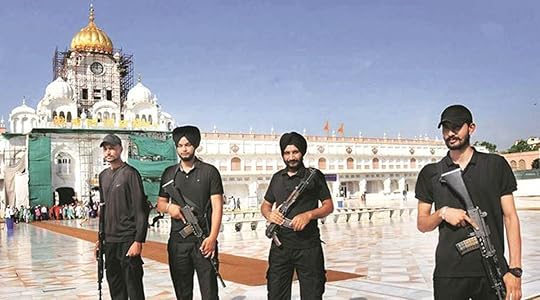
* How ethical is it to transfer an officer who was attempting to correct the wrong and how to tackle this complicated situation?
* Why as a society, we have come to accept the rights of those who copy more than those of the ones who hold the copyright?
* How to tackle the problems created by grace marks and reservations in our educational system?
* How to work together with honest officers and deal with the media while dealing with complicated problems? The way he dealt with Anita Karwal during the CBSE question paper issue was praiseworthy.
* How unpunctual Bureaucrats damage the reputation of not only their office but also the whole country?
My favourite lines from this book
“ Transfer for civil servants, like death, is inevitable. Just like Hindu philosophy, you will be born again to carry on with your excellent work in your new department. Hence, the transfer shouldn’t matter at all to a civil servant.”
Verdict
5/5
This is hands down one of the best books written about civil servants. The author's storytelling capabilities and his ability to narrate how he solved complicated situations with humour, experience and leadership are praiseworthy. This book is a must read if you are a civil servant or if you are aspiring to be a civil servant. It will also be a great choice for you if you are working as a manager or are in any leadership position and also for the younger generation who want to be a great leader in the future. Books like this has not only the potential to create great Civil servants but also can even change the future of an entire country.

Civil Services Exam conducted by UPSC is one of the toughest exams in India. Only those who are exceptional and get a high rank will be able to enter the Indian Administrative Service (IAS). This book, written by Anil Swarup contains several anecdotes from his three-decade-long journey as an IAS officer.
The importance of this book
For some people in India, an IAS officer generally means two archetypes. One is of a struggling honest officer who is regularly mistreated by the ministers or political leaders for his honesty and is transferred multiple times without allowing him to settle anywhere as he is an obstruction for them to get a bribe from various corporates. The second archetype is that of a corrupt bureaucrat who is ready to do any malpractice for making monetary benefits and also for career advancement by keeping the 'right' persons on the 'right' side. It is true that like earlier days, really talented youngsters are still opting for IAS/IFS/IPS. Some are opting out of it too due to the above two archetypes. It is here where this book plays a pivotal role. Mr Swarup clearly outlines
*What does it mean to be an IAS officer in India?
*What are his powers?
*What are his limitations?
*What he should be careful about especially during the initial part of his career?
*What are the ethical dilemmas he will have to face and how to tackle it?
*What should an IAS officer do after retirement?
The previous two archetypes of people about IAS will be broken after we finish this book. It enables us to create a new archetype that an IAS officer is someone who can play a pivotal role in the development of our country and that Corruption is not an indispensable part in IAS but a rare aberration that is present just like in any other profession.
Some interesting topics discussed in this book
Is honesty alone enough for a Civil Servant?
This is one of the most important questions I had in my mind before reading this book. The author had wonderfully depicted it in this book. The honest only bureaucrat stops being the prime instrument available with the State to execute plans and programmes. He smells a rat in every file. Hence, he brings execution to a grinding halt. For him, honesty pays because he leads an honourable life as an honest officer. He revels in being recognised as a crusader against the dishonest. His professional achievements being the trophies o the victims of his crusade. In this way, he does a huge disservice to his Key Responsibility Area, i.e. service to the nation and its people. Moreover, he also does very little to encourage initiative or instil motivation among those working with him. The honest- only officers forget the fact that they are paid not merely to remain honest but to perform as well. So in short blunt honesty is not enough a bureaucrat. Efficiency is also equally important. Even for projects which do get delivered, it usually is too late to attain the desired impact. The honest officers should not use all his virtues for the crusade against the dishonest they need to use it for evolving better systems and for inspiring colleagues to perform. They should not be crusaders. They should be doers.
Most essential quality that an IAS officer should have
Almost all the IAS officers occupy leadership positions right from the beginning of their careers be it a Sub Divisional Magistrate, a District Magistrate or the Head of a Department. Even in the Secretariat jobs, each officer has to lead a team. Hence, the objective should be to select such persons who have leadership qualities or have the potential to become leaders worthy of respect. The training should also centre on honing leadership skills. Perhaps this is not what is being done now. The maximum age of entry into the civil service has gone up. Hence, to mould them into leaders becomes extremely difficult. They are already set in their ways like hard-boiled eggs. Training assumes an important aspect of moulding theses entrants into accomplished leaders. The maximum age of entry has to be brought down to 26. The training itself has to be focused on imparting the appropriate skills and attitude that would enable the officer to evolve as a leader.
Bureaucrats vs Journalists
There was a journalist who made so many attacks against the author. But the author ignored his personal attacks even after the journalist repeatedly attacked him thorough his newspaper. The author was the Director of Information at that time and was responsible for granting accreditation to newspapers to become eligible for receiving advertisements from the government. Such advertisements were the lifeline for most of the local newspapers. When the journalist's paper who was continuously attacking the author also came up for consideration, the author cleared his case without even thinking twice because it fulfilled all the prerequisites for accreditation. The journalist came to meet the author when the clearance reached him. He confessed that he was convinced that he will never receive accreditation. The journalist also stopped misbehaving with the author and the other officers from that day onwards.
What the author did is a valuable lesson for everyone of us. The best way to respond if you have been wronged is “letting go”. Revenge ties you back to the person you’re trying to get payback from, instead of walking away. Revenge keeps you focused on the mistreatment and doesn’t allow you to move forward and progress in your life. This is a very valuable lesson that everyone, especially young IAS officers who has all the power to take revenge if they want.
RSBY
Rashtriya Swasthya Bima Yojana (RSBY) is one of the most important contributions of the author during his career. It is one of the best Health insurance schemes in the world for people who are below the poverty line. The objective of RSBY is to protect BPL families from financial liabilities arising out of health problems that involve hospitalisation. I myself had witnessed the tremendous implications in this program multiple times, and this program saved so many poor peoples life. This world’s first-ever cashless, paperless and portable health insurance scheme that came to be recognised all over the world shows us that despite all the drawbacks and political pressures, an IAS officer has the power to influence millions of people and change their life in the best way possible for a better future.
What is next for a Civil Servant after retirement?
Bureaucratic talent can’t be allowed to be wasted post-retirement. But according to the author the methodology of post-retirement selection needs to change. Civil Servants who enjoyed a reasonably sound reputation begin to change as they approach superannuation. Every government is willing and happy to reward those that play ball. The signal to other civil servants is clear. Toe the line and get rewarded. On several occasions, the reward is bestowed irrespective of the experience or the competence of the officers concerned. These are rewards for ‘services rendered, not very different from a reward.
The best way to prevent this complicated situation according to the author is entrusting an institution like Union Public Service Commission (UPSC) with nominating the candidates for post-retirement assignments, and the government can pick up one from the shortlisted candidates. The officer will then not feel beholden to the government for the assignment. It will virtually eliminate the quid-pro-quo attitude, which is currently prevalent in Civil Service.
Other interesting topics discussed in this book in a nutshell
* Has Civil Service lost its charm?
* Are civil servants mere puppets in the hands of Ministers and Political leaders?
* Nexus of good movement that identifies, understand, appreciate, replicate and scale up good work that is being done by the civil servants.
* How to avoid the dishonest practices of using an official driver and car of the department for personal use, overspending for a makeover of the office, bullying junior officers, canvassing for certain ‘lucrative’ assignments?
* How to take actions against the sons of MP’s and MLA’s who think that they can do anything against the law and get away with it?
* How to deal with loitering cows on the road which are causing a public nuisance and has the potential to generate traffic jams and even communal riots?
* How divine intervention will help you in dealing with government officials who never agree what their seniors are saying?
* How to deal with the situation of implementation of new technology in offices to enable its smooth functioning but causing loss of jobs to many people?
* How to deal with the continuous transfers that an honest bureaucrat will have to face in his career?
* Is it easier to rule the civil servants than getting into civil service?
* Has the institution of the Collector gathered rust over a period of time or is it still a coveted one among civil servants?
* Why there was an uproar when the United States patent office granted the patent to Rice-Tec company on Basmati rice lines and grains and how was the problem tackled?
* What actually happed during the demolition of the Babri Masjid in Ayodhya?
* What actually happened during operation blue star?
* How ethical is it to transfer an officer who was attempting to correct the wrong and how to tackle this complicated situation?
* Why as a society, we have come to accept the rights of those who copy more than those of the ones who hold the copyright?
* How to tackle the problems created by grace marks and reservations in our educational system?
* How to work together with honest officers and deal with the media while dealing with complicated problems? The way he dealt with Anita Karwal during the CBSE question paper issue was praiseworthy.
* How unpunctual Bureaucrats damage the reputation of not only their office but also the whole country?
My favourite lines from this book
“ Transfer for civil servants, like death, is inevitable. Just like Hindu philosophy, you will be born again to carry on with your excellent work in your new department. Hence, the transfer shouldn’t matter at all to a civil servant.”
Verdict
5/5
This is hands down one of the best books written about civil servants. The author's storytelling capabilities and his ability to narrate how he solved complicated situations with humour, experience and leadership are praiseworthy. This book is a must read if you are a civil servant or if you are aspiring to be a civil servant. It will also be a great choice for you if you are working as a manager or are in any leadership position and also for the younger generation who want to be a great leader in the future. Books like this has not only the potential to create great Civil servants but also can even change the future of an entire country.

Read
July 7, 2020As an author of "Ethical Dilemmas of a Civil Servant " it would unethical of me to comment on the book or rate it. However, I must confess that I enjoyed penning down my thoughts and experiences on this critical subject of ethics amongst civil servants and the challenges that bureaucrats face in pursuing an ethical path. My personal experience makes me believe that honesty pays. It pays to be ethical. I hope that readers will enjoy reading the book and perhaps benefit from it.

August 9, 2020
Having attended lecture by the author where he was absolutely brilliant, I picked this up with grand expectations. I was looking for some in-depth analysis of the ethical dilemmas that confront a civil servant in India. I was hoping that the book would serve me as a moral compass in my career ahead in handling ethical dilemmas.
However I am really disappointed with the way the book turned out to be. My understanding of ethical dilemma is a situation where the choice is between two morally right options and not between a right and wrong option. However most of the examples given in the book are generally straightforward where there is hardly any dilemma at all.
Secondly, instead of in-depth analysis of some situations and detailing about why a particular option was preferred over another (and I am sure many such situations would have come in the illustrious career of sir), he has chosen to rather present numerous stories without much real analysis.
However what put me off the most was that in nearly every story the author has shown how others have faltered in their moral duty. While criticizing others is fine and much required, but the title induced me into thinking that examples would be from situations where the author himself faced an ethical dilemma.
Having said that the book may have been a victim of my huge expectations and the fact that I was looking forward to preserve it as a source of reference in future. It is entirely possible that someone with no preconceived ideas and interested in a light read might find this very delightful.
However I am really disappointed with the way the book turned out to be. My understanding of ethical dilemma is a situation where the choice is between two morally right options and not between a right and wrong option. However most of the examples given in the book are generally straightforward where there is hardly any dilemma at all.
Secondly, instead of in-depth analysis of some situations and detailing about why a particular option was preferred over another (and I am sure many such situations would have come in the illustrious career of sir), he has chosen to rather present numerous stories without much real analysis.
However what put me off the most was that in nearly every story the author has shown how others have faltered in their moral duty. While criticizing others is fine and much required, but the title induced me into thinking that examples would be from situations where the author himself faced an ethical dilemma.
Having said that the book may have been a victim of my huge expectations and the fact that I was looking forward to preserve it as a source of reference in future. It is entirely possible that someone with no preconceived ideas and interested in a light read might find this very delightful.

January 1, 2021
The book started on good note with the author giving us a glimpse into his early life and his probation and early postings. The ethical dilemmas mentioned in most of the cases are not ethical dilemmas but a straight choice between right and wrong, between courage and cowardice. However the way they have been brought out by the end of the chapter seem to glorify the author's deeds by pitting them against inaction. As the book progresses this even starts to focus on other's dilemmas, which are mostly corruption versus honest behaviour. As the book further comes closer to the end, the author's political biases become too apparent where he compares two states and designates one have better system and administration and the other marred with several issues. A point to note here is that the developmental indices tell us a different story altogether. Also not to mention him lauding the political leaders for their action, on the contrary to reports in news about the apparent inaction.

December 19, 2020
This book is part of a series of books I'm reading to better understand Indian Bureaucracy and life of civil servants.
What a disappointing book though !
1. The cover, paper quality and formatting of this books feels like it's a textbook. The endless pages of Foreword and gratitude is symbolic of how government in India functions - every person who helped achieve a task wants to be appreciated. The higher the post, the greater the extent of appreciation.
2. 'Never judge a book by its cover'. And so I started reading. But the writing lacks imagination. The book reads like a very long essay of examples. It does ask the right questions some times but the response it conjures to those questions is painful to read.
Do yourself a favor. Instead of buying this book, save $2 of your money and $100 worth of pain that comes from reading a poorly written narrative.
What a disappointing book though !
1. The cover, paper quality and formatting of this books feels like it's a textbook. The endless pages of Foreword and gratitude is symbolic of how government in India functions - every person who helped achieve a task wants to be appreciated. The higher the post, the greater the extent of appreciation.
2. 'Never judge a book by its cover'. And so I started reading. But the writing lacks imagination. The book reads like a very long essay of examples. It does ask the right questions some times but the response it conjures to those questions is painful to read.
Do yourself a favor. Instead of buying this book, save $2 of your money and $100 worth of pain that comes from reading a poorly written narrative.

May 4, 2021
Cracking a Civil Services exam is the most sought-after dream of every graduate student. It has become a notion to go for union public services commission, at least once in your life. It has also been considered as the toughest exam that a student could appear for. Although most of the aspirants desire to come in top hundred list and apply for Indian Administration Services post, but there are still some students who give their attempts not only for IAS but also for other sectors like railways and diplomacy. The reason this exam is treated as a coveted one, is because of the good opportunities it provides, along with a sense of esteem and confidence. In Indian Society, being an ias oficer is tantamount to standing at the highest peak of a mountain. Not that it is overrated, as it really demands years of persistent efforts along with an unscathed determination and a potent willpower to continue following the same path. Like other families, ours too spends a lot of time discussing about the aspects and prospects of an assuring career.
This is the actual reason behind my picking up of this book to read. Anil Swarup, a former and retired ias officer, wrote this informative book in order to present a clear picture, by keeping aside all the rumours and confusions related to the very job. He started his journey by doing masters in political science. Later he opted for upsc examination and got selected with good numbers. As the title says it all, this book basically focuses on the ethics behind every decisions and the respective dilemmas associated with it. What he wanted to convey is simply the life one gets to live after clearing the exam. It doesn't give any strategies and methods for preparation, rather it is an empirical account of author's personal life. Through numerous chapters, it talks about the transfers and varied posts which the author was assigned for during the span of thirty-eight years. He informed the readers about the invariably political influence and the impact it created on his self and public image. Also he talked about the famous coal spam and the merciless assaination of our lady prime minister in detail.
Truth be told, i didn't like the ending chapters much. For a moment, it felt like an academic syllabus, which seemed quite boring to read. Nevertheless the first few chapters along with the brief descriptions interested me the most. It surely provides a depth knowledge about this profession, which could help any aspirant to make a firm decision. As a casual reader, i myself get an idea which would definitely work for me in future, some way or the other.
My Rating - 4.2 /5
This is the actual reason behind my picking up of this book to read. Anil Swarup, a former and retired ias officer, wrote this informative book in order to present a clear picture, by keeping aside all the rumours and confusions related to the very job. He started his journey by doing masters in political science. Later he opted for upsc examination and got selected with good numbers. As the title says it all, this book basically focuses on the ethics behind every decisions and the respective dilemmas associated with it. What he wanted to convey is simply the life one gets to live after clearing the exam. It doesn't give any strategies and methods for preparation, rather it is an empirical account of author's personal life. Through numerous chapters, it talks about the transfers and varied posts which the author was assigned for during the span of thirty-eight years. He informed the readers about the invariably political influence and the impact it created on his self and public image. Also he talked about the famous coal spam and the merciless assaination of our lady prime minister in detail.
Truth be told, i didn't like the ending chapters much. For a moment, it felt like an academic syllabus, which seemed quite boring to read. Nevertheless the first few chapters along with the brief descriptions interested me the most. It surely provides a depth knowledge about this profession, which could help any aspirant to make a firm decision. As a casual reader, i myself get an idea which would definitely work for me in future, some way or the other.
My Rating - 4.2 /5

August 4, 2020
I would recommend this book to all those who look towards Civil Services as a career but are somewhere internally struggling with the dilemma of how you would handle various situations over the course of your long career. It gives you the option of available courses of action and how there is always a choice.
It is also a good book to refer to during your actual preparation as it tells you what ethics look like in the administrative setting.
It is also a good book to refer to during your actual preparation as it tells you what ethics look like in the administrative setting.
July 5, 2020
I read this book in the aftermath of reading the author's first book and attending two talks by him in Bangalore and Hyderabad(one which I organized). Having followed his work and talks extensively, I was in a position of already knowing a lot about the incidents that he describes. However, the last few chapters gave me a perspective into what his views are on several issues that continue to plague different sectors & the hindrances an honest officer faces. As an entrepreneur, I could in many ways relate to instances of red tape that he recounts. Unlike the "Citizen Charters" seen on most government websites or offices, his adoption of technology and increased transparency have enabled citizens to truly gain the rights these charters proclaim.
For someone who doesn't know the author or his work, he describes several instances where he was faced with ethical dilemmas while taking big decisions on behalf of the government with livid details. In some instances, there are small couplets/poems in Hindi(with translations in English) penned by him that captures these scenarios with all the emotions that come along with it. In some measure, it is an extension of his previous book. I see him being more forthcoming in this book than his previous book. For someone aspiring to join the services or is in his/her early years, this book and by extension his wisdom will serve as a guide to handle these dilemmas on a more day-to-day basis.
For someone who doesn't know the author or his work, he describes several instances where he was faced with ethical dilemmas while taking big decisions on behalf of the government with livid details. In some instances, there are small couplets/poems in Hindi(with translations in English) penned by him that captures these scenarios with all the emotions that come along with it. In some measure, it is an extension of his previous book. I see him being more forthcoming in this book than his previous book. For someone aspiring to join the services or is in his/her early years, this book and by extension his wisdom will serve as a guide to handle these dilemmas on a more day-to-day basis.
This entire review has been hidden because of spoilers.
July 17, 2020
Un-Bureaucrat Anil Swarup’s “Ethical Dilemmas” As a Govt Servant
Mr. Anil Swarup
Retired IAS and Secretary to Coal and Education Ministry, Govt of India, is one of the few un-bureaucrat like bureaucrats in the country.
His book ‘Ethical Dilemmas of a Civil Servant’ is an attempt to highlight some of the dilemmas that civil servants face during their career. Almost all youngsters, some of whom aspire to become civil servants, are blessed with a lot of energy, purpose and enthusiasm amongst them. This is also true of youngsters who get into the service. However, officers who put in a couple of decades or more in the service, this enthusiasm seems to wane, bordering on cynicism in some cases. They feel that only such officers climb the ladder as they have learnt the tricks of the trade. While recognizing the ground reality, this book also attempts to dispel these misapprehensions. Yes, there are movers and shakers but there are an equal, if not more, number of officers that have made the civil service proud.
Mr. Swarup, in his Book, has tried to narrate his journey as a bureaucrat. The book portrays its author’s elegance, intellectuality, sincere and committed personality as a Civil servant.
Mr. Anil Swarup who himself is a well known Inspirational Leader, and a passionate bureaucrat with a career span of 38 years, has also tried to give an insight into how to be an effective leader in his book.
Since he has spent his days and nights resolving different social, political issues and dealing with corruption, he has also suggested how to approach and solve complex problems and how to develop decision making while instances of reverse auction and developing an understanding of technology and international practices – as each decision of an IAS officer impacts millions of lives.
In his book, Mr Swarup has made his reader feel that he is neither a bureaucrat nor a politician, but a responsible citizen of India who is working for the welfare of the country.
He has enabled the reader to clearly understand the real problems and how to deal with the upcoming challenges of keeping the egos aside. While giving the real life examples he has recognized and defended his Colleagues. His writing also shows his sense of humor and optimistic attitude changing the stereotype image of a Civil Servant.
The Book is a source of inspiration and motivation for a common man to understand from Mr. Anil Swarup, Retired IAS and Secretary to Coal and Education Ministry that how can a Bureaucrat working at higher position with high profiled people be fearless, honest and committed towards his duties.
Dr. Sonali Mishra
INDIAN OBSERVER POST
Mr. Anil Swarup
Retired IAS and Secretary to Coal and Education Ministry, Govt of India, is one of the few un-bureaucrat like bureaucrats in the country.
His book ‘Ethical Dilemmas of a Civil Servant’ is an attempt to highlight some of the dilemmas that civil servants face during their career. Almost all youngsters, some of whom aspire to become civil servants, are blessed with a lot of energy, purpose and enthusiasm amongst them. This is also true of youngsters who get into the service. However, officers who put in a couple of decades or more in the service, this enthusiasm seems to wane, bordering on cynicism in some cases. They feel that only such officers climb the ladder as they have learnt the tricks of the trade. While recognizing the ground reality, this book also attempts to dispel these misapprehensions. Yes, there are movers and shakers but there are an equal, if not more, number of officers that have made the civil service proud.
Mr. Swarup, in his Book, has tried to narrate his journey as a bureaucrat. The book portrays its author’s elegance, intellectuality, sincere and committed personality as a Civil servant.
Mr. Anil Swarup who himself is a well known Inspirational Leader, and a passionate bureaucrat with a career span of 38 years, has also tried to give an insight into how to be an effective leader in his book.
Since he has spent his days and nights resolving different social, political issues and dealing with corruption, he has also suggested how to approach and solve complex problems and how to develop decision making while instances of reverse auction and developing an understanding of technology and international practices – as each decision of an IAS officer impacts millions of lives.
In his book, Mr Swarup has made his reader feel that he is neither a bureaucrat nor a politician, but a responsible citizen of India who is working for the welfare of the country.
He has enabled the reader to clearly understand the real problems and how to deal with the upcoming challenges of keeping the egos aside. While giving the real life examples he has recognized and defended his Colleagues. His writing also shows his sense of humor and optimistic attitude changing the stereotype image of a Civil Servant.
The Book is a source of inspiration and motivation for a common man to understand from Mr. Anil Swarup, Retired IAS and Secretary to Coal and Education Ministry that how can a Bureaucrat working at higher position with high profiled people be fearless, honest and committed towards his duties.
Dr. Sonali Mishra
INDIAN OBSERVER POST

July 29, 2020
This is the second book by the author, first was a collection of anecdotes where he discusses the events which took place in his tenure of IAS and changes, he tried to bring in the system while being an important part of it. This book is all about the ethical choices which we all have to make in our life while working as an individual and author through his experiences tries to guide us.
This book is divided into 5 parts where authors give his insight on the philosophy concerning with ethics, events which occurred in his life when he was a bureaucrat, he also talks about the dilemmas which a person faces as a civil servant, hiccups which occur while improving the governance system and at last he gives us guidance through his words as to the steps which we should follow to be a good human being. The author has discussed events from his joining in the service to his last year in the Central Ministry as a Secretary.
This book is a must-read for anyone who wants to know in detail about the working of a civil servant specifically in the state which is infamous for numerous things i.e. Uttar Pradesh and also for anyone who is interested in reading the anecdotes relating to public office.
This book is divided into 5 parts where authors give his insight on the philosophy concerning with ethics, events which occurred in his life when he was a bureaucrat, he also talks about the dilemmas which a person faces as a civil servant, hiccups which occur while improving the governance system and at last he gives us guidance through his words as to the steps which we should follow to be a good human being. The author has discussed events from his joining in the service to his last year in the Central Ministry as a Secretary.
This book is a must-read for anyone who wants to know in detail about the working of a civil servant specifically in the state which is infamous for numerous things i.e. Uttar Pradesh and also for anyone who is interested in reading the anecdotes relating to public office.
September 25, 2020
The book is about "ethical dilemmas" but there is hardly any discussion on what are the competing principles/ values which created a particular dilemma for the author when he was faced with the described situations during his stints and how he weighed them against each other to finally arrive at a conclusion/ decision (except in few chapters). It contains snippets (or short stories) recollected from the career of the author as an IAS officer and poses 'a posteriori' ethical questions at the end of each chapter, which are posed as 'things to ponder over'.
1. Chapters which are just recounting of experiences with lessons but not dilemmas: Baptism by Fire, Nakal Mafia, Divine Intervention, Whose Car, A Dead End, Transfer Industry?, And They All Fell Down, Unsung, Battle Lost War Won, A Failed Attempt, Regaining the Aroma, Foundation to Universal Health, A Secure Solution (I did wonder if anyone would try to down a plane using bullets; nobody in the room thought of rocket mortars etc), Speed Money, A Tacit Assurance, Half Truths, UDAY, The Sunlight and the Shadow, Shit Happens, Stumbling through the Dark, Delusion, Vedic Board, Cauldron on Boil
2. Chapters where the author is clear about what he wants to do and there does not seem to be any dilemma in the narration: Above the law, Chungi Chor, Paying Obeisance?, Minor Irritation, Copy That, Stepping In?, A Recipe for Disaster, No Baggage, Noose-Paper Ads, Out of Court, In Prison and Out, Shadow Play, Battling the Bats, A Brick Wall, A Roadmap Again, Beyond Time
3. Chapters where a dilemma posed before another person but not the author: It is not personal, His Master's Voice, Battered Not Broken, Whose Copyright, A Question of Authority, The Rai Effect, Letting Go, Intellectual Dishonesty
4. Chapters with a posteriori dilemma posed by the author: Overload?, Lost and Found, Overreach, A New Hat, IT, A Meaty Decision, Intervention to Bloom, Of Kicks and Kickbacks, Joy Rides, Brothers Beyond Borders, Extra Constitutional Authority
5. Chapters with a priori dilemma before the author: On the Horns of Dilemma, Free Ride, In Defence Of, Case of a Briefcase, To Leave or not?, Doing My Karma, Sacrificial Lambs, Elusive Reward, Fighting it Out, A search for trust, Silent Conscience, Falling for Crumbs
I have not covered all the chapters here.
The book is terse and compact and the author speaks to the point and matter-of-factly. I feel that the book touches the surface of the experience of the author and the fuller version of things can only emerge after more prodding. Some of the issues also need deeper consideration.
The book does not talk about the true nature of power i.e. power that surreptitiously bends public rules for private ends, creates systems and institutions for private benefits and thus creates a system of "legalized loot". Everything in the book gives an impression of hunky-dory drift in a background of corruption, about which one cannot do anything. Corruption is an infraction but legalized loot is not. The point is touched upon in Extra Constitutional Authority but there is no discussion of actual instances of power play behind schemes and decisions.
I also feel that the author's repeated insistence on "honesty is not enough" may do great disservice to the cause of financial propriety in public offices. We do need people who call out the financially dishonest ones and themselves stay financially honest. As for the much talked about "efficiency", it is well known that today efficiency is not seen in terms of core work of bureaucracy but in terms of management of all kinds of vested interests. Every bureaucrat thinks he is more efficient than the other. We cannot advocate against honesty and advocate for this type of efficiency.
I also do not feel inclined to agree that reducing average age of entry to 26 would work wonders in terms of giving a better value system to the entrants in the service. The system is in bad shape and its values have become questionable. Poor public service delivery is the hallmark value. In such an atmosphere, there is no guarantee that a younger mind would seek to change these values instead of adopting them himself/ herself. There are already examples of some of these younger entrants using social media to share frivolous things like photos of files etc on their desks to show the world that they are working hard. We need neither TikTokers nor messiahs in the bureaucracy. We need normal people who know how to act professionally.
1. Chapters which are just recounting of experiences with lessons but not dilemmas: Baptism by Fire, Nakal Mafia, Divine Intervention, Whose Car, A Dead End, Transfer Industry?, And They All Fell Down, Unsung, Battle Lost War Won, A Failed Attempt, Regaining the Aroma, Foundation to Universal Health, A Secure Solution (I did wonder if anyone would try to down a plane using bullets; nobody in the room thought of rocket mortars etc), Speed Money, A Tacit Assurance, Half Truths, UDAY, The Sunlight and the Shadow, Shit Happens, Stumbling through the Dark, Delusion, Vedic Board, Cauldron on Boil
2. Chapters where the author is clear about what he wants to do and there does not seem to be any dilemma in the narration: Above the law, Chungi Chor, Paying Obeisance?, Minor Irritation, Copy That, Stepping In?, A Recipe for Disaster, No Baggage, Noose-Paper Ads, Out of Court, In Prison and Out, Shadow Play, Battling the Bats, A Brick Wall, A Roadmap Again, Beyond Time
3. Chapters where a dilemma posed before another person but not the author: It is not personal, His Master's Voice, Battered Not Broken, Whose Copyright, A Question of Authority, The Rai Effect, Letting Go, Intellectual Dishonesty
4. Chapters with a posteriori dilemma posed by the author: Overload?, Lost and Found, Overreach, A New Hat, IT, A Meaty Decision, Intervention to Bloom, Of Kicks and Kickbacks, Joy Rides, Brothers Beyond Borders, Extra Constitutional Authority
5. Chapters with a priori dilemma before the author: On the Horns of Dilemma, Free Ride, In Defence Of, Case of a Briefcase, To Leave or not?, Doing My Karma, Sacrificial Lambs, Elusive Reward, Fighting it Out, A search for trust, Silent Conscience, Falling for Crumbs
I have not covered all the chapters here.
The book is terse and compact and the author speaks to the point and matter-of-factly. I feel that the book touches the surface of the experience of the author and the fuller version of things can only emerge after more prodding. Some of the issues also need deeper consideration.
The book does not talk about the true nature of power i.e. power that surreptitiously bends public rules for private ends, creates systems and institutions for private benefits and thus creates a system of "legalized loot". Everything in the book gives an impression of hunky-dory drift in a background of corruption, about which one cannot do anything. Corruption is an infraction but legalized loot is not. The point is touched upon in Extra Constitutional Authority but there is no discussion of actual instances of power play behind schemes and decisions.
I also feel that the author's repeated insistence on "honesty is not enough" may do great disservice to the cause of financial propriety in public offices. We do need people who call out the financially dishonest ones and themselves stay financially honest. As for the much talked about "efficiency", it is well known that today efficiency is not seen in terms of core work of bureaucracy but in terms of management of all kinds of vested interests. Every bureaucrat thinks he is more efficient than the other. We cannot advocate against honesty and advocate for this type of efficiency.
I also do not feel inclined to agree that reducing average age of entry to 26 would work wonders in terms of giving a better value system to the entrants in the service. The system is in bad shape and its values have become questionable. Poor public service delivery is the hallmark value. In such an atmosphere, there is no guarantee that a younger mind would seek to change these values instead of adopting them himself/ herself. There are already examples of some of these younger entrants using social media to share frivolous things like photos of files etc on their desks to show the world that they are working hard. We need neither TikTokers nor messiahs in the bureaucracy. We need normal people who know how to act professionally.

April 15, 2024
"For any idea to fructify and be sustainable in the government, it has to be politically acceptable, socially desirable, technologically feasible, financially viable, administratively doable, and judicially tenable."
This single quote summarises the work of a civil servant and brings out the ethical dilemmas in the services. Anil Swarup, an outstanding former IAS officer who had held many important positions in the bureaucracy has delivered on what he promised in the book's title. The book is filled with various anecdotes from his services, where the author writes about what he did in those situations. At the end of it, he asks questions of ethics to the reader. This exercise is quite helpful in understanding the dilemmas a civil servant faces.
The book is written in easy-flowing language which makes it a quick read. However, I would recommend to future readers to take their time with each dilemma presented in the anecdotes. Take some time to self-introspect your plan of action if placed in the same situation.
I thoroughly enjoyed reading the book. I would have liked more anecdotes, but that is just my curiosity talking. I would highly recommend you to read this book if you are interested in civil services and the complexity of their work.
This single quote summarises the work of a civil servant and brings out the ethical dilemmas in the services. Anil Swarup, an outstanding former IAS officer who had held many important positions in the bureaucracy has delivered on what he promised in the book's title. The book is filled with various anecdotes from his services, where the author writes about what he did in those situations. At the end of it, he asks questions of ethics to the reader. This exercise is quite helpful in understanding the dilemmas a civil servant faces.
The book is written in easy-flowing language which makes it a quick read. However, I would recommend to future readers to take their time with each dilemma presented in the anecdotes. Take some time to self-introspect your plan of action if placed in the same situation.
I thoroughly enjoyed reading the book. I would have liked more anecdotes, but that is just my curiosity talking. I would highly recommend you to read this book if you are interested in civil services and the complexity of their work.

November 7, 2020
Anil Swarup contends that bureaucracy gets a bad rep in the media and some urbane critics in journalism. The counter-view is offered in this book. It does admit that there are quite a few corrupt officers but it also emphasizes the course that led them there. Political masters no doubt would enjoy subservient slaves ; in such a case it is for the bureaucrat himself to preserve his honour. Ethics pays in the long run according to Swarup.
He also gives a long arc of corruption in the UP gov't. How the dismally performing state fell into the trap of politics, casteism etc in the times of Mayawati and the likes.
The nature of the role is often at cross-purposes , which he describes well using :
'mukhaqar si zindagi ke ajab se afsane he
yahan teer bhi chalane he aur parinde bhi bachhane he '
He also gives a long arc of corruption in the UP gov't. How the dismally performing state fell into the trap of politics, casteism etc in the times of Mayawati and the likes.
The nature of the role is often at cross-purposes , which he describes well using :
'mukhaqar si zindagi ke ajab se afsane he
yahan teer bhi chalane he aur parinde bhi bachhane he '
Read
September 7, 2020After having read “Not Just a Civil Service” I was looking very much forward to Anil Swarup’s next book “Ethical Dilemma of a Civil Servant”.
When a person like me started to engage with the Indian Bureaucracy, it was quite perplexing, and at times overwhelming. But I discovered that it is as always about people, about finding common ground and uniting in the purpose of the issue at hand, be it education, health or other aspects of development.
Mr. Anil Swarup in his second book provides a deeper insight into the functioning of the civil service by providing specific examples, and also analyses these examples with regard to ethics. He describes his own experiences in a number of departments and how he managed to move matters and issues in these departments by engaging his teams and convincing his superiors. Though Mr. Anil Swarup in many ways is an extraordinary person in his courage, a courage that is based on his unwavering adherence to ethics and purpose, the examples are full of learning for anyone who is working with civil servants. In many of the chapters you also meet other civil servants that represent the same adherence to purpose and also one or two politicians that are principled on the ethical front.
So while this book makes interesting and useful reading for people like me who work extensively with civil servants, students that are aspiring to become civil servants and people who are interest in the Indian Government and its functioning, the book is also important because it sets a standard for ethics in government. Not through setting out an academically thought out framework, not through a protest movement, not through moral lecturing. Mr. Swarup does not at all proclaim to have all the answers or to be a spokesman for better ethics among civil servants. That is not his style nor his purpose.
Just as he has influenced his fellow civil servants, and the people he has worked with and served in his long carrier as a civil servant, in the same manner he is by example showing the world what a person can do when he follows his convictions, adheres to his ethical believes and where one of the most important of those ethics is to work towards positive results.
The book is very readable and inspiring for anyone who wish to have positive impact on this world in whatever field we are working.
When a person like me started to engage with the Indian Bureaucracy, it was quite perplexing, and at times overwhelming. But I discovered that it is as always about people, about finding common ground and uniting in the purpose of the issue at hand, be it education, health or other aspects of development.
Mr. Anil Swarup in his second book provides a deeper insight into the functioning of the civil service by providing specific examples, and also analyses these examples with regard to ethics. He describes his own experiences in a number of departments and how he managed to move matters and issues in these departments by engaging his teams and convincing his superiors. Though Mr. Anil Swarup in many ways is an extraordinary person in his courage, a courage that is based on his unwavering adherence to ethics and purpose, the examples are full of learning for anyone who is working with civil servants. In many of the chapters you also meet other civil servants that represent the same adherence to purpose and also one or two politicians that are principled on the ethical front.
So while this book makes interesting and useful reading for people like me who work extensively with civil servants, students that are aspiring to become civil servants and people who are interest in the Indian Government and its functioning, the book is also important because it sets a standard for ethics in government. Not through setting out an academically thought out framework, not through a protest movement, not through moral lecturing. Mr. Swarup does not at all proclaim to have all the answers or to be a spokesman for better ethics among civil servants. That is not his style nor his purpose.
Just as he has influenced his fellow civil servants, and the people he has worked with and served in his long carrier as a civil servant, in the same manner he is by example showing the world what a person can do when he follows his convictions, adheres to his ethical believes and where one of the most important of those ethics is to work towards positive results.
The book is very readable and inspiring for anyone who wish to have positive impact on this world in whatever field we are working.

July 27, 2022
This book clearly gives an idea of distinction of the thought process of an administrator and an outsider. I love to go through it. Author have asked many questions, which do not have any definite answer ( I have listened the Ted talk of Mr Swarup, and it made me feel that authour is actually making conversation with me). It actually provides the inside process and gives the glimpses of actual situation an administrator goes through. I admire the book from first page to last page. About to start his book "not just a civil servant".
February 20, 2021
It's easy to blame the 'Sarkari' babus and the government all the time but do very little to help and support them. Anil Swarup through his lucid writing pens his journey in capacities starting as an SDM in UP to that of a Secretary in the GoI. The dilemma is for real, but decisions have to be made for the good of the people and that of the state. He illustrates the meaning of 'service' in civil services through his short but tall experiences. Rising to the challenges that unfold from his bosses and political masters. He paves the path of being ethical or in simple words non-corrupt.
August 9, 2020
A very apt, insightful and masterful book about the challenges/dilemmas faced by Civil servants face regularly. It is a book that breaks the shackles of convoluted speak on ethical issues. It is straightforward, unbiased and ethically enlightening.I feel that it's a book that comes from a place of genuine truth.The core message is loud and clear : Being ethical pays in the long run.
What makes this book stand out from others is that it speaks freely and frankly on matters which civil servants cannot. Be it the conduct rules or the mysterious nature of administration, no one really knows how things work in the corridors of government.
In fact, many incidents narrated by author from his personal experience remind me of several of my encounters too. It would be even more enriching if you would incorporate challenges of other civil services across the spectrum such as ICLS, IIS, IRS etc. in your future books as well. Kudos to the author for picking the best and the richest of anecdotes!
While making a compelling case for being ethical, it doesn't shy away from clarifying that honesty is not a licence for non performance. It categorically states that a Civil servant ought to perform, ought to deliver. There is no other way around it.
Mostly, it highlights the real life experiences of the author as an IAS officer posted in various capacities through out his lifetime. It is an enriching read for young administrators.
In a way, it is like an Ethical GPS which guides you to the right direction. A must read for all in-service civil servants and more importantly for those who aspire to be one. In a nutshell, it is relevant for anyone in a leadership position whether in public or private sector.
Lastly, the essence of the book is best encapsulated in these lines:
"मुक्तसर सी जिंदगी के अजब से अफसाने है,
यहाँ तीर भी चलाने हैं और परिन्दें भी बचाने हैं "
What makes this book stand out from others is that it speaks freely and frankly on matters which civil servants cannot. Be it the conduct rules or the mysterious nature of administration, no one really knows how things work in the corridors of government.
In fact, many incidents narrated by author from his personal experience remind me of several of my encounters too. It would be even more enriching if you would incorporate challenges of other civil services across the spectrum such as ICLS, IIS, IRS etc. in your future books as well. Kudos to the author for picking the best and the richest of anecdotes!
While making a compelling case for being ethical, it doesn't shy away from clarifying that honesty is not a licence for non performance. It categorically states that a Civil servant ought to perform, ought to deliver. There is no other way around it.
Mostly, it highlights the real life experiences of the author as an IAS officer posted in various capacities through out his lifetime. It is an enriching read for young administrators.
In a way, it is like an Ethical GPS which guides you to the right direction. A must read for all in-service civil servants and more importantly for those who aspire to be one. In a nutshell, it is relevant for anyone in a leadership position whether in public or private sector.
Lastly, the essence of the book is best encapsulated in these lines:
"मुक्तसर सी जिंदगी के अजब से अफसाने है,
यहाँ तीर भी चलाने हैं और परिन्दें भी बचाने हैं "

April 12, 2024
When I was doing my graduation, my parents often asked me to meet my father's seniors who were all IAS officers. Since he himself is a civil servant, securing an audience with such august personalities came relatively easily to me. I used to be confused regarding the content of such impending conversation. What should I ask them? Am I supposed to impress them? How proficient do I need to be in my language and in my inquisitive ability to prevent them from judging me a fool? Fortunately, those meetings went much better than my expectations due to the informal nature of the seniors. However, there was this one common officer who was idolized by all of them alike. I didn't know who Mr. Anil Swarup was back then. However, now that I have read his first book, I am not at all surprised as to why all of them held him in such high regard
A very interesting aspect of this book was mentioned in the foreword of this book by Mr. Gurucharan Das. He says that, "It should be read by every civil servant. Subsequently, it should be re-read in the interval of every 5 years". I believe that this says it all. Being a working professional, you will come across many situations in life in which you may never convincingly claim the best course of action in a given situation. Ethical dilemmas of all kinds visit us and we are left wondering about our insatiable desire to be gainfully employed back in the day :P:P
I will briefly touch upon those issues that I had always struggled with as I grew up. Mr. Swarup's words have shone a clarifying light on them. Let's take honesty as the first issue. I have often heard people talking about this virtue in negative connotations, as if, it is the single largest obstacle in their path to progress. On the other end of the spectrum, there are dead honest people who have stretched honesty to point of inactivity. They are colloquially referred to as "Lakir ke fakir". Mr. Swarup has rightly pointed it out in his book that honesty alone is not enough. It is a necessary but not a sufficient condition to ensure people's welfare or in delivering services to the consumer. Problem with this attitude is that honesty becomes an end in itself. Such "honest-only" seem to forget that they are paid not merely to maintain their personal ethical principle but to perform as well. In their enthusiasm to hunt down the bad guys, they end up making no effort towards evolving systems that can reduce, if not eliminate, the incidence of corrupt practices. However, evolving systems is a time-consuming process and may not provide immediate fodder for publicity. Hence, it is overlooked. Furthermore, he highlights that remaining financially honest is not good enough as intellectual honesty can be the difference between a boon and a bane
When it comes to speaking the truth, there are very few civil servants who possess the gumption to openly speak on the topic of reservation. He has explained that the overall availability of reserved jobs against the backdrop of huge unemployment is miniscule. Moreover, on account of obsession with reservation in government services, the "across-the-board-upliftment" of such disadvantaged section of society has suffered. Even those who have benefitted from reservation consider it beneficial to remain backwards so as to continue to reap the benefits. They don't get integrated into the social setup because they don't want to surrender their distinct identity which is interlinked with their perceived disadvantage. Instead of raising the level of those who are socially and economically backward, we have attempted to lower the bar while political action has shifted towards managing relative discrimination within a reserved category. As the reservation pie grows larger, in effect it becomes an instrument of exclusion rather than inclusion and the tragedy is that reservation pie is growing but the job pie is not
He has touched upon various issues which a civil servant or any working professional of any kind can draw inspiration from but since he is a civil servant, he has used his own journey to highlight the change required in the role that the civil servants play in today's world. He claims that the civil servants need to transform into facilitators instead of behaving like an authority. The steel frame of our nation i.e. the bureaucracy must not be allowed to turn into a steel cage. And in order to ensure that, he has underlined the importance of dissent in the system. Dissent brings forth certain aspects of an issue which may not be considered as valid by the majority opinion at that particular point of time, however, expression of it must be encouraged as it keeps the door open for wisdom dawning at some later date (as happened in the case of ADM Jabalpur Vs Shivkant Shukla, 1976 in which Justice HR Khanna's dissenting views later turned into a law)
It is an absolutely essential read and I cannot overstate its beauty
A very interesting aspect of this book was mentioned in the foreword of this book by Mr. Gurucharan Das. He says that, "It should be read by every civil servant. Subsequently, it should be re-read in the interval of every 5 years". I believe that this says it all. Being a working professional, you will come across many situations in life in which you may never convincingly claim the best course of action in a given situation. Ethical dilemmas of all kinds visit us and we are left wondering about our insatiable desire to be gainfully employed back in the day :P:P
I will briefly touch upon those issues that I had always struggled with as I grew up. Mr. Swarup's words have shone a clarifying light on them. Let's take honesty as the first issue. I have often heard people talking about this virtue in negative connotations, as if, it is the single largest obstacle in their path to progress. On the other end of the spectrum, there are dead honest people who have stretched honesty to point of inactivity. They are colloquially referred to as "Lakir ke fakir". Mr. Swarup has rightly pointed it out in his book that honesty alone is not enough. It is a necessary but not a sufficient condition to ensure people's welfare or in delivering services to the consumer. Problem with this attitude is that honesty becomes an end in itself. Such "honest-only" seem to forget that they are paid not merely to maintain their personal ethical principle but to perform as well. In their enthusiasm to hunt down the bad guys, they end up making no effort towards evolving systems that can reduce, if not eliminate, the incidence of corrupt practices. However, evolving systems is a time-consuming process and may not provide immediate fodder for publicity. Hence, it is overlooked. Furthermore, he highlights that remaining financially honest is not good enough as intellectual honesty can be the difference between a boon and a bane
When it comes to speaking the truth, there are very few civil servants who possess the gumption to openly speak on the topic of reservation. He has explained that the overall availability of reserved jobs against the backdrop of huge unemployment is miniscule. Moreover, on account of obsession with reservation in government services, the "across-the-board-upliftment" of such disadvantaged section of society has suffered. Even those who have benefitted from reservation consider it beneficial to remain backwards so as to continue to reap the benefits. They don't get integrated into the social setup because they don't want to surrender their distinct identity which is interlinked with their perceived disadvantage. Instead of raising the level of those who are socially and economically backward, we have attempted to lower the bar while political action has shifted towards managing relative discrimination within a reserved category. As the reservation pie grows larger, in effect it becomes an instrument of exclusion rather than inclusion and the tragedy is that reservation pie is growing but the job pie is not
He has touched upon various issues which a civil servant or any working professional of any kind can draw inspiration from but since he is a civil servant, he has used his own journey to highlight the change required in the role that the civil servants play in today's world. He claims that the civil servants need to transform into facilitators instead of behaving like an authority. The steel frame of our nation i.e. the bureaucracy must not be allowed to turn into a steel cage. And in order to ensure that, he has underlined the importance of dissent in the system. Dissent brings forth certain aspects of an issue which may not be considered as valid by the majority opinion at that particular point of time, however, expression of it must be encouraged as it keeps the door open for wisdom dawning at some later date (as happened in the case of ADM Jabalpur Vs Shivkant Shukla, 1976 in which Justice HR Khanna's dissenting views later turned into a law)
It is an absolutely essential read and I cannot overstate its beauty
January 22, 2026
Reading Ethical Dilemmas of a Civil Servant by Anil Swarup is less like reading a book and more like being invited into a quiet, closed-door conversation of the Indian state. It does not shout. It does not sermonize. It observes. And therein lies both its credibility and its constraint.
At its core, the book is an account of lived ethics, not ethics as a syllabus topic, but ethics as something that bleeds into transfers, files, silence, and survival. Swarup presents governance not as a battlefield between good and evil, but as a suffocating maze where choices are constrained long before a decision-maker even arrives at the crossroads. This realism is refreshing, particularly in a country where integrity is often portrayed either as sainthood or as stupidity.
What struck me most was the ordinariness of the dilemmas. There are no cinematic whistleblowing moments. No dramatic revolutions. Instead, there are small compromises, delayed actions, selective courage, and calculated restraint. This is uncomfortable to read, because it mirrors reality. Ethics here is not heroic; it is negotiated. It is exhausting. It is lonely.
However, this is where my critical disagreement begins.
The book treats ethical dilemmas primarily as individual moral encounters, when in reality they are systemically manufactured outcomes. The narrative implicitly suggests that stronger character, better judgment, or personal courage can resolve ethical conflicts. But this framing is incomplete. Ethical erosion in Indian bureaucracy is not merely a failure of individuals, it is the predictable consequence of institutional incentives that reward obedience, punish dissent, and romanticize neutrality.
By focusing on “what a civil servant should do,” the book largely avoids asking the more dangerous question:
Why is the system designed in a way that makes ethical behavior costly?
Transfers as punishment, ambiguity as control, political insulation as myth, these are structural realities. Ethics cannot be sustainably practiced in an ecosystem where transparency is optional and accountability is asymmetric. Integrity, in such a system, becomes a personal tax rather than a professional norm.
There is also a noticeable restraint in the narrative, an unspoken line the author does not cross. Names remain unnamed. Power centers remain abstract. One understands the reason: discretion is deeply ingrained in the civil services ethos. But the result is a book that diagnoses symptoms while hesitating to name the disease. For a reader with a critical mind, this feels like an ethical dilemma in itself.
And yet, dismissing the book for what it does not do would be unfair.
Its greatest contribution lies elsewhere: it dismantles naïve idealism. It forces the reader, especially aspirants to confront a hard truth: entering public service does not automatically make one ethical, nor does ethics guarantee institutional protection. The book prepares you not for examinations, but for moral fatigue.
In that sense, Ethical Dilemmas of a Civil Servant functions as a warning disguised as guidance.
My final takeaway is unsettling but necessary:
Ethics in governance, as currently structured, is less about choosing the right action and more about deciding how much of oneself one is willing to lose while remaining functional.
At its core, the book is an account of lived ethics, not ethics as a syllabus topic, but ethics as something that bleeds into transfers, files, silence, and survival. Swarup presents governance not as a battlefield between good and evil, but as a suffocating maze where choices are constrained long before a decision-maker even arrives at the crossroads. This realism is refreshing, particularly in a country where integrity is often portrayed either as sainthood or as stupidity.
What struck me most was the ordinariness of the dilemmas. There are no cinematic whistleblowing moments. No dramatic revolutions. Instead, there are small compromises, delayed actions, selective courage, and calculated restraint. This is uncomfortable to read, because it mirrors reality. Ethics here is not heroic; it is negotiated. It is exhausting. It is lonely.
However, this is where my critical disagreement begins.
The book treats ethical dilemmas primarily as individual moral encounters, when in reality they are systemically manufactured outcomes. The narrative implicitly suggests that stronger character, better judgment, or personal courage can resolve ethical conflicts. But this framing is incomplete. Ethical erosion in Indian bureaucracy is not merely a failure of individuals, it is the predictable consequence of institutional incentives that reward obedience, punish dissent, and romanticize neutrality.
By focusing on “what a civil servant should do,” the book largely avoids asking the more dangerous question:
Why is the system designed in a way that makes ethical behavior costly?
Transfers as punishment, ambiguity as control, political insulation as myth, these are structural realities. Ethics cannot be sustainably practiced in an ecosystem where transparency is optional and accountability is asymmetric. Integrity, in such a system, becomes a personal tax rather than a professional norm.
There is also a noticeable restraint in the narrative, an unspoken line the author does not cross. Names remain unnamed. Power centers remain abstract. One understands the reason: discretion is deeply ingrained in the civil services ethos. But the result is a book that diagnoses symptoms while hesitating to name the disease. For a reader with a critical mind, this feels like an ethical dilemma in itself.
And yet, dismissing the book for what it does not do would be unfair.
Its greatest contribution lies elsewhere: it dismantles naïve idealism. It forces the reader, especially aspirants to confront a hard truth: entering public service does not automatically make one ethical, nor does ethics guarantee institutional protection. The book prepares you not for examinations, but for moral fatigue.
In that sense, Ethical Dilemmas of a Civil Servant functions as a warning disguised as guidance.
My final takeaway is unsettling but necessary:
Ethics in governance, as currently structured, is less about choosing the right action and more about deciding how much of oneself one is willing to lose while remaining functional.

August 12, 2020
There is a common thread in most memoirs written by retired IAS. Narration of how they came to terms with the power their posts brought, a generous mention of people they worked with , how at times they saw wrongs being done around them and could not help and finally how they developed good relations / impressed politicians and other powerful people despite remaining uncompromising and ethical. This book has all of these. Some anecdotes will make good sessions in LBSNAA. The basic premise of the book that Honesty pays in the long run, is also bang on . The book will make a good reading ( even inspiring one ) for new civil servants.
That said- the book is written cautiously. While it is very openly and honestly critical of some like Sanjay Gandhi and Amar Singh , it kind of just pass through some others. Author is careful in his opinion of present PM, ministers like Piyush Goel and Modi style of govt. Even gives credit to UP CM Adityanath for stopping "nakal mafia." 《ha ha ha 》
For me two major points in the book were very unsettling. He has been quite vocal in his criticism of Vinod Rai...even in his first book . Here he questions Vinod Rai's ethics ....I disagree. It is Mr. Swarup's limited understanding of CAG audit and his being too much into the episode that bars his ability to see objectively. In another chapter , he mentions dissent of Mr. Lavasa as EC against Mr. Modi's campaign in 2019 election , in very guarded manner...almost touching disapproval. He hasten to close the chapter without going into the issues under consideration lest he ends up saying anything remotely against Mr. Modi. For me, dissent represents a power for civil servant to speak his mind even when all others around have decided to close their eyes or have stated their pricetags. A book on ethical dilemmas questioning dissent of an EC , is regretful.
Book in general is alright. Simple language , a quick read , could have been edited better to avoid some repetitions.
That said- the book is written cautiously. While it is very openly and honestly critical of some like Sanjay Gandhi and Amar Singh , it kind of just pass through some others. Author is careful in his opinion of present PM, ministers like Piyush Goel and Modi style of govt. Even gives credit to UP CM Adityanath for stopping "nakal mafia." 《ha ha ha 》
For me two major points in the book were very unsettling. He has been quite vocal in his criticism of Vinod Rai...even in his first book . Here he questions Vinod Rai's ethics ....I disagree. It is Mr. Swarup's limited understanding of CAG audit and his being too much into the episode that bars his ability to see objectively. In another chapter , he mentions dissent of Mr. Lavasa as EC against Mr. Modi's campaign in 2019 election , in very guarded manner...almost touching disapproval. He hasten to close the chapter without going into the issues under consideration lest he ends up saying anything remotely against Mr. Modi. For me, dissent represents a power for civil servant to speak his mind even when all others around have decided to close their eyes or have stated their pricetags. A book on ethical dilemmas questioning dissent of an EC , is regretful.
Book in general is alright. Simple language , a quick read , could have been edited better to avoid some repetitions.
This entire review has been hidden because of spoilers.
August 26, 2020
पूर्व आईएएस अधिकारी के अनुभवों पर आधारित पुस्तक
*पुस्तक चर्चा*
*Ethical Dilemmas of A Civil Servant, Anil Swarup, Unique Publishers (New Delhi)*
एक लोकसेवक (Civil Servant) की नैतिक दुविधाओं पर पूर्व आईएएस अधिकारी अनिल स्वरूप की अंग्रेजी में लिखी पुस्तक 'Ethical Dilemmas of A Civil Servant' पढ़ने का अवसर मिला, जिसे यूनिक पब्लिशर्स, नई दिल्ली ने प्रकाशित किया।
इस पुस्तक की विषयवस्तु सरकारी अधिकारियों की नैतिक कार्रवाई से सम्बंधित है। एक लोकसेवक को अपने जीवन में किन-किन नैतिक दुविधाओं का सामना करना पड़ता है, उसका लेखा-जोखा लेखक ने अपने संस्मरणों से बहुत ही स्पष्ट रूप से अपने पाठकों के सामने रखा है। अपने कैरियर के दौरान एक लोकसेवक को लगातार इस दुविधा का अनेक बार सामना करना पड़ता है कि क्या उसे नैतिक उपायों को अपनाना चाहिए या त्वरित व्यक्तिगत लाभ प्राप्त करने के रास्ते पर चलना चाहिए। पुस्तक में लोकसेवकों की व्यावहारिक कठिनाईयों की चर्चा की गयी है।
यह पुस्तक एक लोकसेवक की कहानी का वर्णन करती है, जो अपने पाठकों को यह बताती है कि उसने अपने जीवन में नैतिक दुविधाओं का कैसे सामना किया। इस पुस्तक की प्रस्तावना जाने-माने लेखक और स्तम्भकार गुरुचरण दास ने लिखी है। इस पुस्तक का स्पष्ट सन्देश है कि एक लोकसेवक के लिए नैतिक होना ही लाभकारी है। एक पाठक के रूप में मैं इस पुस्तक को केंद्र और राज्य सरकारों के अधिकारियों द्वारा पढ़े जाने की अनुशंसा करता हूँ। वर्तमान में मैंने इस पुस्तक का अंगरेजी संस्करण ही देखा है। बेहतर हो कि इसका हिंदी संस्करण भी प्रकाशित हो, ताकि एक बड़ा पाठक-वर्ग भी लेखक के अनुभवों का लाभ ले सके।
- केशव राम सिंघल
*पुस्तक चर्चा*
*Ethical Dilemmas of A Civil Servant, Anil Swarup, Unique Publishers (New Delhi)*
एक लोकसेवक (Civil Servant) की नैतिक दुविधाओं पर पूर्व आईएएस अधिकारी अनिल स्वरूप की अंग्रेजी में लिखी पुस्तक 'Ethical Dilemmas of A Civil Servant' पढ़ने का अवसर मिला, जिसे यूनिक पब्लिशर्स, नई दिल्ली ने प्रकाशित किया।
इस पुस्तक की विषयवस्तु सरकारी अधिकारियों की नैतिक कार्रवाई से सम्बंधित है। एक लोकसेवक को अपने जीवन में किन-किन नैतिक दुविधाओं का सामना करना पड़ता है, उसका लेखा-जोखा लेखक ने अपने संस्मरणों से बहुत ही स्पष्ट रूप से अपने पाठकों के सामने रखा है। अपने कैरियर के दौरान एक लोकसेवक को लगातार इस दुविधा का अनेक बार सामना करना पड़ता है कि क्या उसे नैतिक उपायों को अपनाना चाहिए या त्वरित व्यक्तिगत लाभ प्राप्त करने के रास्ते पर चलना चाहिए। पुस्तक में लोकसेवकों की व्यावहारिक कठिनाईयों की चर्चा की गयी है।
यह पुस्तक एक लोकसेवक की कहानी का वर्णन करती है, जो अपने पाठकों को यह बताती है कि उसने अपने जीवन में नैतिक दुविधाओं का कैसे सामना किया। इस पुस्तक की प्रस्तावना जाने-माने लेखक और स्तम्भकार गुरुचरण दास ने लिखी है। इस पुस्तक का स्पष्ट सन्देश है कि एक लोकसेवक के लिए नैतिक होना ही लाभकारी है। एक पाठक के रूप में मैं इस पुस्तक को केंद्र और राज्य सरकारों के अधिकारियों द्वारा पढ़े जाने की अनुशंसा करता हूँ। वर्तमान में मैंने इस पुस्तक का अंगरेजी संस्करण ही देखा है। बेहतर हो कि इसका हिंदी संस्करण भी प्रकाशित हो, ताकि एक बड़ा पाठक-वर्ग भी लेखक के अनुभवों का लाभ ले सके।
- केशव राम सिंघल

May 9, 2021
Having been in the service for over three decade, Author tries to recollect various instances in his various Bureaucratic roles where he had been in Dilemma and had to take a decision.
Starting from his stint in State Government to various roles in Central Government up till the Secretary level, he revisited the major dilemma he faces and shares his perspectives, rationale and ethical attitude while being at the helm of decision making.
From ensuring that honest officers don't get punished for not getting in line to chalking out schemes and initiatives which potentially took the nation out of crisis and steered it towards the path of development and prosperity, there is a lot to learn for those in the service as well as those aspiring to be a Civil servant in near future.
Personally, I find the last few chapters very interesting and informative from an aspirant perspective. Not only these chapters dealt with contemporary issues but there was clear diagnosis of what is going wrong and what can be done to cure the ailments.
Key takeaways for me:
1. Be clear. Know who you are & why you want to be in service in the first place. You are the author of your own Life.
2. Solutions has to be Politically acceptable, Socially desirable, Technologically feasible, Financially visible, Administratively doable, Judicially tenable.
Starting from his stint in State Government to various roles in Central Government up till the Secretary level, he revisited the major dilemma he faces and shares his perspectives, rationale and ethical attitude while being at the helm of decision making.
From ensuring that honest officers don't get punished for not getting in line to chalking out schemes and initiatives which potentially took the nation out of crisis and steered it towards the path of development and prosperity, there is a lot to learn for those in the service as well as those aspiring to be a Civil servant in near future.
Personally, I find the last few chapters very interesting and informative from an aspirant perspective. Not only these chapters dealt with contemporary issues but there was clear diagnosis of what is going wrong and what can be done to cure the ailments.
Key takeaways for me:
1. Be clear. Know who you are & why you want to be in service in the first place. You are the author of your own Life.
2. Solutions has to be Politically acceptable, Socially desirable, Technologically feasible, Financially visible, Administratively doable, Judicially tenable.

February 1, 2021
Ethical Dilemmas of a Civil Servant
“The Ethical Dilemmas of a Civil Servant” is a series of essays by a famous bureaucrat, Anil Swarup (also known for “Not Just a Civil Servant”) with a foreword by Gurcharan Das, author of In retrospect, the series of essays are relevant not only for bureaucrats but also for any public leader or a corporate employee.
The series of essays authored by Anil Swarup bring to the fore the usual dilemmas faced by a person of authority and responsibility. The author also gives enough headspace to think what responses the readers might envision vis-a-vis similar dilemmas in their lives. Further, the author also mentions how he tackled those dilemmas per se.
The interesting part of the ways in which Mr. Swarup dealt with those situations lies in the realistic solutions he used - the fine line he treaded - the pragmatist approach he adopted. In reality, the situations don’t go to the extremes of Michael Sandel’s lectures and they don’t even warrant such extreme responses. Thus, the simplicity is the ornamental part of this book.
Being the most evolved species, moral principles and ethics are crucial for a meaningful life and the author has put it well before all the readers making it an interesting read of the season.
“The Ethical Dilemmas of a Civil Servant” is a series of essays by a famous bureaucrat, Anil Swarup (also known for “Not Just a Civil Servant”) with a foreword by Gurcharan Das, author of In retrospect, the series of essays are relevant not only for bureaucrats but also for any public leader or a corporate employee.
The series of essays authored by Anil Swarup bring to the fore the usual dilemmas faced by a person of authority and responsibility. The author also gives enough headspace to think what responses the readers might envision vis-a-vis similar dilemmas in their lives. Further, the author also mentions how he tackled those dilemmas per se.
The interesting part of the ways in which Mr. Swarup dealt with those situations lies in the realistic solutions he used - the fine line he treaded - the pragmatist approach he adopted. In reality, the situations don’t go to the extremes of Michael Sandel’s lectures and they don’t even warrant such extreme responses. Thus, the simplicity is the ornamental part of this book.
Being the most evolved species, moral principles and ethics are crucial for a meaningful life and the author has put it well before all the readers making it an interesting read of the season.

August 25, 2024
A refreshing, practical read that brought me back to the real world. Mr. Swarup's writing is concise and flows well.
The book is catchy and begins well. The author's experiences in the ground level bureaucracy was more refreshing to hear than his jaunt with the Central government. His ethical stances were clearer (or perhaps, to me as a young man) in the younger stages with a clear black and white. While in the mid-career phase, it moved to greyer territory with the author's biases showing up.
He does some damage control and focuses on the key-word "action" that tends to justify his more controversial and risky stances. Maybe 5 years down the line as the preface suggests, I may think differently? Also, as pointed out by other reviewers, there aren't clear-cut ethical dilemmas in the author's examples. There's one right, clear choice while there are other choices that are ethically wrong but rationally justifiable in a different context. " My choices as a civil servant" would perhaps be more appropriate.
All said and done, I am grateful to the author for a unique perspective that is both thought-provoking and invigorating. His clear writing also helps get to the point quickly (Maybe it's the years of writing briefs that helped).
The book is catchy and begins well. The author's experiences in the ground level bureaucracy was more refreshing to hear than his jaunt with the Central government. His ethical stances were clearer (or perhaps, to me as a young man) in the younger stages with a clear black and white. While in the mid-career phase, it moved to greyer territory with the author's biases showing up.
He does some damage control and focuses on the key-word "action" that tends to justify his more controversial and risky stances. Maybe 5 years down the line as the preface suggests, I may think differently? Also, as pointed out by other reviewers, there aren't clear-cut ethical dilemmas in the author's examples. There's one right, clear choice while there are other choices that are ethically wrong but rationally justifiable in a different context. " My choices as a civil servant" would perhaps be more appropriate.
All said and done, I am grateful to the author for a unique perspective that is both thought-provoking and invigorating. His clear writing also helps get to the point quickly (Maybe it's the years of writing briefs that helped).
August 14, 2020
What I love about Mr. Anil Swarup is his directness. His ability to speak clearly and honestly without the need to ornament his journey is what makes this book a great read. This book is full of anecdotes from Mr. Swaup's career as a civil servant. He gives us interesting insights into conversations and incidents that one wouldn't have heard of earlier in the media. One particular incident that stuck with me was Baba Ramdev's attempt to make a Vedic board (on the lines with ISCE, CBSE, etc.)! The larger construct of ethics and ethical dilemmas one faces in difficult situations is wonderfully explained here. He also makes a good case of bureaucracy, especially when a lot of people may have developed a cynical lens of looking at it. He shows how honest and ethical bureaucrats can transform governance and impact the quality of life of the citizens for the better. This book is worth a read even if you are not a bureaucrat as it gives a great peek into the workings of bureaucracy that every citizen should be aware of.
January 3, 2022
I opened this book with a lot of expectations to understand the Indian bureaucrats and their struggles. The author described his life from the earliest of his tenure. High praises for the life he had lived and the actions he initiated. As the name suggested, I wanted to look into the ethical dilemma, a situation in which you have to make the least undesirable choice or outcome among many undesirable choices, unfortunately I found none. In the beginning, he makes a case for qualities like honest, efficient, not Pliable and their antonyms. Throughout the book, the same formula is repeated again and again for an honest person against a dishonest person, efficient one against inefficient ones and pliable officers versus non-pliable officer. Reality is much more complicated than these. Half through the book, his political inclination smirks at the title of the book. This book gives the impression that rarely matches the reality. Safe to say, it did not even come closer to fulfill the hopes it offered in the title.

January 30, 2021
Ethical Dilemmas of a Civil Servant by Anil Swarup- This book is the second autobiographical commentary on his life as a Government officer. His first book Not Just a Civil Servant was received well and appreciated by readers. Author has added new chapters which make the reader think on fundamental questions. Book charms the reader to continue reading is that it replete with personal examples and anecdotes which make it interesting reading. Book contains his work done post- retirement in States. These chapters bring out his dilemma in performance at the top level. In chapter, each issue has been thoroughly thrashed out at about five parameters. It is a worth reading good read book. One chapter on legal amendment by States related to reservation in government service is well researched and throws light on coming incidents. Author needs to write one more book in which he must share how his family members helped him in his busy schedule of work.
December 31, 2020
The Ethical Dilemmas of a Civil Servant is a great insight into the life of civil servants and the situations they face. Particularly situations where they have to face up to political or other pressure. It leaves you with the thought that ethics and morality are individual to officers of the civil services and all civil servants should not be tarred with the same brush. The civil services has come in for a lot of flak over the years yet it has several individual islands of excellence and probity as exemplified by Mr. Anil Swarup in several incidents narrated by him. He has pulled no punches while narrating specific instances and this itself points to his mettle. The language is easy to read, the narrative is well set-up and the book holds your attention. My congratulations to the author. All in all a great read and a useful book to read for youngsters beginning their careers.

July 21, 2020
Gives a good overview of the career of Shri Anil Swarup. The book starts on a very promising note where the author argues that just being honest is not enough, one has to get things done! Then the author goes on to give many anecdotes of his stints in various positions in state and central government. many chapters end with ethical questions, but the author stops there without going deep in the ethical analysis. One can get a good understanding of the problems ailing the civil services today. towards the end, the author gives some good suggestions to overcome these problems like fine-tuning the selection and training process to get leaders instead of just academically smart people. Overall the book provides an understanding of the life of a civil servant and how systems work.
August 21, 2020
This book is a treasure chest for new Civil Servants, aspirants and general public. Without limiting to ethical analysis, the author has gone on to chronicle his rich and diverse career spanning more than three decades and in various govts and departments. The numerous instances in the book serve as a guide to creatively dealing with complex situations, assist the aspirants in their ethics preparation and provides a window into hereto hidden life of a bureaucrat.
The book is an absolute page turner written in simple language. The seemingly complex issues like Babri Masjid, etc are dealt in a bipartisan way.
All in all another major book from the author which somewhats overlaps his earlier book titled ‘Not just a civil servant’.
Looking forward to more detailed analysis of some particular instances or theme of administration in future.
The book is an absolute page turner written in simple language. The seemingly complex issues like Babri Masjid, etc are dealt in a bipartisan way.
All in all another major book from the author which somewhats overlaps his earlier book titled ‘Not just a civil servant’.
Looking forward to more detailed analysis of some particular instances or theme of administration in future.
Displaying 1 - 30 of 54 reviews