Once again, Steven A. McKay transports us back to fifth century Northern Britain, revisiting the tribal conflicts of Celtic nations vying for dominance after Roman supremacy has faded. Not only are the Celts fighting each other, but the Saxon invader plans to plunder and conquer the entire island of Britain. The great battle leader, Arthur, defies the Saxons in the South while Bellicus the Druid seeks to bolster the warlord's cause by sending troops from the North, a plan held up by conflict in that region.
A contest of crowns sees Bellicus and his friend, Centurion Duro, manipulated like pawns in a game, here to face some of the most dire circumstances of their association. McKay writes the characters effectively, with their old married couple bickering and their courage and selfless sacrifice all believable in turn. Other characters serve well to colour the backdrop of this world: a queen working for peace and consolidation of her rule; an insecure king, spurred to action; an ambitious elder druid and his mysterious and bewitching apprentice; the Celtic and Saxon warriors, so alike yet so different. The growing double-threat of Saxon domination and Christian indoctrination tear at the security of Bellicus' world. In other words, the novel is never short of conflict and none of it feels artificial.
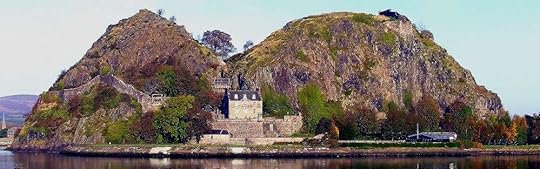
Points go to the power of McKay's world-building. He has studied the real locations of his castles and settings and infused the story with their geography, painting a word-portrait that conveys the power and doom of those structures, from the highest ramparts right down to their darkest, hidden chambers. You see it, hear it and smell it (even when you'd rather not!). Elements from previous novels (a hidden tunnel, for instance) are reintroduced here, but with new circumstances and consequences. We see not only how the nobles lived in their citadels, but how the poorer classed lived in their tiny hovels, many lit only by the light of day. The darkness of the age is powerfully reflected in its settings.
McKay writes to his strengths. He has a knack for fights and battles, and while some authors get muddle in the confusion of battle, McKay keeps just the right characters in focus. Fight scenes are fresh, brutal and convincing. You can see and smell the details of battle.
While fully capable of waxing poetic--he has placed lyrics in the mouths of singing characters--McKay has an admirably economical, simple and direct prose writing style, which advances plot rapidly and with as few words as necessary.
This novel, above all the other McKay novels which I have praised, nearly made me cry (yes, only nearly; I'm heartless) for reasons which I will not spoil. As ever, I look forward to the next adventure of the Warrior Druid of Britain.