

What do you think?

The Wartesaal Trilogy #2
The Oppermanns
First published in 1934 but fully imagining the future of Germany over the ensuing years, The Oppermanns tells the compelling story of a remarkable German Jewish family confronted by Hitler's rise to power. Compared to works by Voltaire and Zola on its original publication, this prescient novel strives to awaken an often unsuspecting, sometimes politically naive, or else willfully blind world to the consequences of its stance in the face of national events -- in this case, the rising tide of Nazism in 1930s Germany.
The past and future meet in the saga of the Oppermanns, for three generations a family commercially well established in Berlin. In assimilated citizens like them, the emancipated Jew in Germany has become a fact. In a Berlin inhabited by troops in brown shirts, however, the Oppermanns have more to fear than an alien discomfort. For along with the swastikas and fascist salutes come discrimination, deceit, betrayal, and a tragedy that history has proved to be as true as this novel's astonishing, profoundly moving tale.
The past and future meet in the saga of the Oppermanns, for three generations a family commercially well established in Berlin. In assimilated citizens like them, the emancipated Jew in Germany has become a fact. In a Berlin inhabited by troops in brown shirts, however, the Oppermanns have more to fear than an alien discomfort. For along with the swastikas and fascist salutes come discrimination, deceit, betrayal, and a tragedy that history has proved to be as true as this novel's astonishing, profoundly moving tale.
432 pages, Paperback
First published January 1, 1933
About the author
Lion Feuchtwanger
163 books281 followersLion Feuchtwanger was a German Jewish emigre. A renowned novelist and playwright who fled Europe during World War II and lived in Los Angeles from 1941 until his death.
A fierce critic of the Nazi regime years before it assumed power precipitated his departure, after a brief internment in France, from Europe. He and his wife Marta obtained asylum in the United States in 1941 and remained there in exile until they died.
A fierce critic of the Nazi regime years before it assumed power precipitated his departure, after a brief internment in France, from Europe. He and his wife Marta obtained asylum in the United States in 1941 and remained there in exile until they died.
Ratings & Reviews
Friends & Following
Create a free account to discover what your friends think of this book!
Community Reviews
Displaying 1 - 30 of 369 reviews

February 3, 2014
[Revised, shelves and pictures added 6/21/22]
What was it like for Jews in Germany leading up to the time when they were herded into concentration camps? This remarkably prescient novel, written in 1934, almost a decade before the US involvement in WW II, tells us.
All the horrible things that were to come were not obvious in 1934. Many folks, including many Jews, thought that Hitler used his anti-Semitic platform of hate simply to get elected to power. Shortly after that, he took over absolute power in a coup, so what would be the point of actually carrying out a program to eliminate Jews from Germany?
At first some Jews thought that their solidarity as Jews would protect them from the secret societies of thugs that were officially sanctioned by the German government. There was an initial belief by some Jews that “the rowdies would be punished.” Jews laughed over drinks at the ridiculous stuff in Hitler’s Mein Kampf.
The novel follows the Oppermanns, a well-to-do extended German Jewish family that owns the premier furniture store in Berlin. Siblings and cousins help manage the store and others are medical doctors and scholars. (That's all I will say about the characters in the story, so, no more about plot.) They live in impressive houses and have maids and chauffeurs. But we also see everyday German Jews, the sales clerks, who barely get by and have to live in apartment buildings alongside their brownshirt tormenters.
We see the return of the cultured man to barbarism, one theme that gives this novel its literary and historical value. Little by little the noose tightens on the Jews. We watch the incremental rise of officially-sanctioned hatred.
As the persecution escalated some Jews changed their names so as not to be identified as Jews. Jewish boys were bullied in school by classmates and teachers alike. Slander incited Germans against certain Jews who were criticized by name in the newspaper, such as a medical researcher supposedly conducting “experiments on Aryans.”
Soon customers in the furniture store refused to be served by Jewish salesmen. German friends dropped away, giving cold shoulders to Jews in clubs. Even servants and doormen start treating Jews disrespectfully. Eventually the police came for Jews in the night to beat them up and torture them before returning them home.
All of this predicted in 1934. A well-written and frightening read.
The theme and the historical time period of this book, that of the initial stages of the persecution of Jews, reminds me of two other books I have reviewed: The Death of My Adversary by Hans Keilson, and The Discontinuity of Small Things by Kevin Haworth. The latter is about Jews in Denmark during the early occupation of that country by the Germans.

This book is the middle book of The Wartesaal Trilogy. The first book in the series is Success: Three Years in the Life of a Province (1930) and the last is Exit (1940). The German Jewish author (1884-1958) managed to escape to the US in 1941.
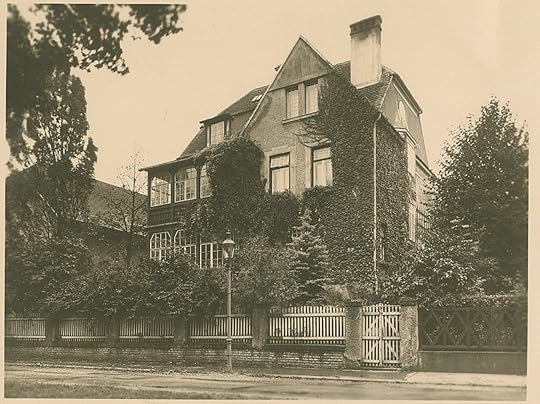
Top photo of a Jewish home in Vienna confiscated by the Nazis from nytimes.com
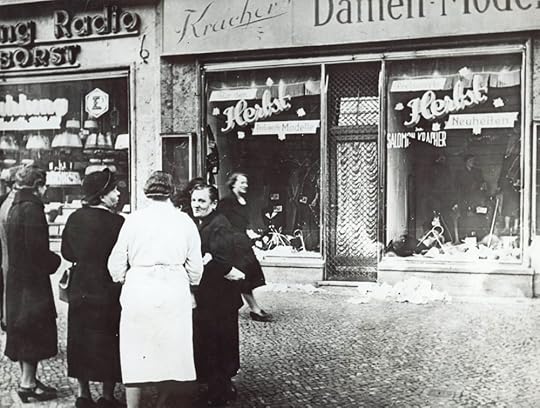
A Jewish-owned store after Kristallnacht in 1938 from wbur.org
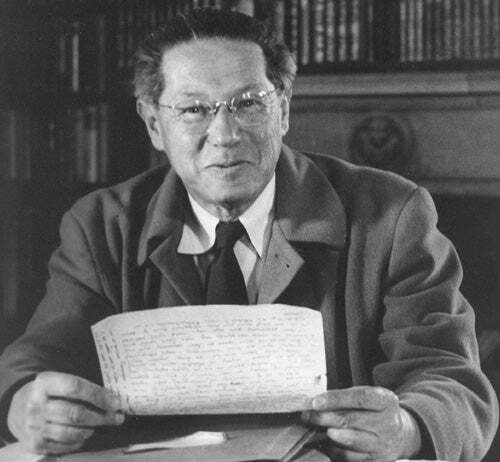
The author from dw.com
What was it like for Jews in Germany leading up to the time when they were herded into concentration camps? This remarkably prescient novel, written in 1934, almost a decade before the US involvement in WW II, tells us.
All the horrible things that were to come were not obvious in 1934. Many folks, including many Jews, thought that Hitler used his anti-Semitic platform of hate simply to get elected to power. Shortly after that, he took over absolute power in a coup, so what would be the point of actually carrying out a program to eliminate Jews from Germany?
At first some Jews thought that their solidarity as Jews would protect them from the secret societies of thugs that were officially sanctioned by the German government. There was an initial belief by some Jews that “the rowdies would be punished.” Jews laughed over drinks at the ridiculous stuff in Hitler’s Mein Kampf.
The novel follows the Oppermanns, a well-to-do extended German Jewish family that owns the premier furniture store in Berlin. Siblings and cousins help manage the store and others are medical doctors and scholars. (That's all I will say about the characters in the story, so, no more about plot.) They live in impressive houses and have maids and chauffeurs. But we also see everyday German Jews, the sales clerks, who barely get by and have to live in apartment buildings alongside their brownshirt tormenters.
We see the return of the cultured man to barbarism, one theme that gives this novel its literary and historical value. Little by little the noose tightens on the Jews. We watch the incremental rise of officially-sanctioned hatred.
As the persecution escalated some Jews changed their names so as not to be identified as Jews. Jewish boys were bullied in school by classmates and teachers alike. Slander incited Germans against certain Jews who were criticized by name in the newspaper, such as a medical researcher supposedly conducting “experiments on Aryans.”
Soon customers in the furniture store refused to be served by Jewish salesmen. German friends dropped away, giving cold shoulders to Jews in clubs. Even servants and doormen start treating Jews disrespectfully. Eventually the police came for Jews in the night to beat them up and torture them before returning them home.
All of this predicted in 1934. A well-written and frightening read.
The theme and the historical time period of this book, that of the initial stages of the persecution of Jews, reminds me of two other books I have reviewed: The Death of My Adversary by Hans Keilson, and The Discontinuity of Small Things by Kevin Haworth. The latter is about Jews in Denmark during the early occupation of that country by the Germans.
This book is the middle book of The Wartesaal Trilogy. The first book in the series is Success: Three Years in the Life of a Province (1930) and the last is Exit (1940). The German Jewish author (1884-1958) managed to escape to the US in 1941.
Top photo of a Jewish home in Vienna confiscated by the Nazis from nytimes.com
A Jewish-owned store after Kristallnacht in 1938 from wbur.org
The author from dw.com

March 12, 2023
This book is powerful, so it will be hard to do it justice in my review, but I'll try. It was written in 1934. The author saw what was coming in Germany, so was lucky enough to get out of the country to let the rest of the world know what was happening there. The Oppermann's are a wealthy German Jewish family who own a chain of furniture stores. Gustav is the eldest, who prefers to leave the running of the business to his brother Martin, and Edgar is a respected surgeon in his field. Their sister is married to an American who prefers to live in Germany. They have many influential friends and community standing. The Nationalist Party is small, but has infiltrated all areas of German life in an insidious manner. When Hitler becomes Chancellor, all Hell breaks loose and the life of a Jew becomes worthless.
What is chilling about this novel is the disbelief of the Oppermann's and others like them that this could happen at all. Surely someone could step up and put an end to this madness. How could the government allow this to happen? How could non-Jews see what was going on and not speak up? Surely it couldn't go on for long. Well, we all know it didn't work out that way, and this book gives us a small window into how and why.
Especially horrifying to me were the similarities of what happened then and what seems to be happening now in the U.S and other countries. The attitude of "It can't happen here" is wrong on many levels. All it takes is a few influencers to decide that a certain group of people are inferior, and convincing others of their truth.
" They have gambled on the stupidity of the masses with alarming accuracy."
Exactly.
What is chilling about this novel is the disbelief of the Oppermann's and others like them that this could happen at all. Surely someone could step up and put an end to this madness. How could the government allow this to happen? How could non-Jews see what was going on and not speak up? Surely it couldn't go on for long. Well, we all know it didn't work out that way, and this book gives us a small window into how and why.
Especially horrifying to me were the similarities of what happened then and what seems to be happening now in the U.S and other countries. The attitude of "It can't happen here" is wrong on many levels. All it takes is a few influencers to decide that a certain group of people are inferior, and convincing others of their truth.
" They have gambled on the stupidity of the masses with alarming accuracy."
Exactly.

March 17, 2023
They were all absolutely mad, the whole lot of them. The whole country had become a lunatic asylum.
The Oppermanns, first published in 1934, is a prescient view of the coming of the Holocaust and the total annihilation of sanity as the Nazi government seizes control of Germany. I think some of the questions we have all asked ourselves in the aftermath of World War II have been “How did this happen?” and “Where were the decent German people?” This novel goes a long way toward answering those questions and the answer is frightening.
First there is the natural desire not to think anyone could be as cruel or inhumane as the Nationalist party proved to be. It was an early mistake to assume this simply could not happen.
Nero might have put over such dime-novel stuff in burning Rome. But things like that were impossible today, in the era of the telephone and printing press.
Substitute “cell phone” for “telephone” and “internet” for “printing press” and how far do you think we might be from making that same mistake a second time? Perhaps not as far as we would wish. The first thing to disappear is tolerance and respect for differing opinions.
They drove along the broad streets in the West End of Berlin, resided in their great houses, and did not want to see what was going on in other places, not even in the cellars of their own buildings.
Some scary trends in our own world, should make us hyper-attentive to what happened in 1934 in Germany. It took the world and the German people by surprise and the fear was palpable, as it is in this book.
Children were taught that they belonged to the state and not to their parents.
Neighbor spied on neighbor, son on father, friend on friend. Conversations in flats were carried on in whispers, for words spoken aloud might be heard through the walls. One was afraid of one’s friends, of one’s employees, of the waiter who served one’s meals, of the man sitting next to one in the streetcar.
Everything was a lie, only one thing about them was genuine–their Hate!
The Oppermanns are ordinary businessmen, who happen to be Jewish. They are the third generation and think of themselves as Germans, they love Germany, they feel secure in their lives. Even as the story opens, we see them as doomed. We know what lies ahead, what the world will discover when the camps are liberated in 1945. How did anyone endure those ten long years? Survive them? What did all that hate and horror accomplish for anyone?
History teaches us lessons, if we are willing to learn. But are we? Does the impact diminish the further we get from the occurrence? Are we doomed, as the Germany of the Oppermanns is, to always live with injustice and insanity at our back door and fear in our hearts?
Gustav Oppermann pens the following words to himself and then passes them to his nephew:
It is upon us to begin the work.
It is not upon us to complete it.
Perhaps none of us can ever complete it, but it is incumbent upon us to begin it and to pass it to the next generation and hope the lesson is heard and believed.
I found this book to be very powerful, particularly because of the date of its publication. Look what was already known to the world in 1934! War was not declared until 1939, and the worst was yet to come.
The Oppermanns, first published in 1934, is a prescient view of the coming of the Holocaust and the total annihilation of sanity as the Nazi government seizes control of Germany. I think some of the questions we have all asked ourselves in the aftermath of World War II have been “How did this happen?” and “Where were the decent German people?” This novel goes a long way toward answering those questions and the answer is frightening.
First there is the natural desire not to think anyone could be as cruel or inhumane as the Nationalist party proved to be. It was an early mistake to assume this simply could not happen.
Nero might have put over such dime-novel stuff in burning Rome. But things like that were impossible today, in the era of the telephone and printing press.
Substitute “cell phone” for “telephone” and “internet” for “printing press” and how far do you think we might be from making that same mistake a second time? Perhaps not as far as we would wish. The first thing to disappear is tolerance and respect for differing opinions.
They drove along the broad streets in the West End of Berlin, resided in their great houses, and did not want to see what was going on in other places, not even in the cellars of their own buildings.
Some scary trends in our own world, should make us hyper-attentive to what happened in 1934 in Germany. It took the world and the German people by surprise and the fear was palpable, as it is in this book.
Children were taught that they belonged to the state and not to their parents.
Neighbor spied on neighbor, son on father, friend on friend. Conversations in flats were carried on in whispers, for words spoken aloud might be heard through the walls. One was afraid of one’s friends, of one’s employees, of the waiter who served one’s meals, of the man sitting next to one in the streetcar.
Everything was a lie, only one thing about them was genuine–their Hate!
The Oppermanns are ordinary businessmen, who happen to be Jewish. They are the third generation and think of themselves as Germans, they love Germany, they feel secure in their lives. Even as the story opens, we see them as doomed. We know what lies ahead, what the world will discover when the camps are liberated in 1945. How did anyone endure those ten long years? Survive them? What did all that hate and horror accomplish for anyone?
History teaches us lessons, if we are willing to learn. But are we? Does the impact diminish the further we get from the occurrence? Are we doomed, as the Germany of the Oppermanns is, to always live with injustice and insanity at our back door and fear in our hearts?
Gustav Oppermann pens the following words to himself and then passes them to his nephew:
It is upon us to begin the work.
It is not upon us to complete it.
Perhaps none of us can ever complete it, but it is incumbent upon us to begin it and to pass it to the next generation and hope the lesson is heard and believed.
I found this book to be very powerful, particularly because of the date of its publication. Look what was already known to the world in 1934! War was not declared until 1939, and the worst was yet to come.

June 16, 2023
This is the second book in the Wartesaal (Waiting Room) Trilogy and the narrative takes place in the period just before and after Adolf Hitler’s appointment as Chancellor of the German Reich early in 1933. The topic of the novel is the brutal persecution of Jewish people by the ‘Völkische’ (meaning the racist Nazis; ‘völkisch’ is an adjective and means ‘ethnic’ but there is no good translation of this word in the derogatory way it is used as a noun in the book), using the fictional example of the Oppermann siblings and their families.
Apparently Feuchtwanger wrote this book in the late summer of 1933, i.e. before the Nazis overran Europe and before anyone could imagine that such a thing as the holocaust could happen. It is touching and very sad how Feuchtwanger, himself a Jew having had to flee his country, keeps making excuses for the German people as a whole, asserting that the majority of Germans are decent people, afraid to speak up, and that the rest of the world would never permit an evil minority of fascist lunatics with crazy race theories to destroy his Germany, anyway. How wrong he was on both counts: not only were all Germans complicit in the atrocities to come, but the rest of the world did very little to stop the holocaust.
This book is highly recommended to everyone, especially those who were born late in the 20th century or in the 21st century, and who perhaps are in danger of forgetting what happened in Europe before and during WW2.
Apparently Feuchtwanger wrote this book in the late summer of 1933, i.e. before the Nazis overran Europe and before anyone could imagine that such a thing as the holocaust could happen. It is touching and very sad how Feuchtwanger, himself a Jew having had to flee his country, keeps making excuses for the German people as a whole, asserting that the majority of Germans are decent people, afraid to speak up, and that the rest of the world would never permit an evil minority of fascist lunatics with crazy race theories to destroy his Germany, anyway. How wrong he was on both counts: not only were all Germans complicit in the atrocities to come, but the rest of the world did very little to stop the holocaust.
This book is highly recommended to everyone, especially those who were born late in the 20th century or in the 21st century, and who perhaps are in danger of forgetting what happened in Europe before and during WW2.

March 15, 2017
Introduction, by Ruth Gruber
Author's Note
--The Oppermanns
The New York Times Book Review, by Fred T. March (March 18, 1934)
Author's Note
--The Oppermanns
The New York Times Book Review, by Fred T. March (March 18, 1934)
Read
March 29, 2023I cannot bring myself to assign stars to this book because I honestly don't know what I'd be rating. The story OF the book (as opposed to the story IN the book) is remarkable. This novel, which is about the experiences of an established German-Jewish family as the Nazis came to power in the early 1930s, was written in 1932 and published in 1933. To put this date in perspective, Hitler was appointed Chancellor of Germany in January of that year; in February he used the burning of the Reichstag (i.e., parliament) as an excuse to seize absolute power. In other words, Feuchtwanger wrote the book as the events he describes were taking place. "In real time," as every review of the book puts it.
The novel begins with a well-off, respectable German Jewish family celebrating a milestone birthday. Over the course of the chapters that follow we see the deterioration of their status in Germany as the power of the Nazis grows: the business decisions they wrestle with as people become more and more unwilling to buy from Jewish stores or accept treatment from Jewish doctors or representation by Jewish lawyers; how individual members (adults and teens) react to the violent Brown Shirts in the streets, the rumors they hear of torture and death, the appointment of a Nazi official as head of the school attended by the family kids. They debate: such things can't be happening in modern Germany ("A few rowdies wanted to throw a Jew out of a subway train. Well, what of it? They were arrested and would get the punishment they deserved"), or they're temporary and surely civilized Germans will never allow it to continue; do they leave Germany? Where can they go? Stay? Protest? What should people of reason and integrity do in these circumstances? Fight? Be willing to die as a martyr to Reason and Decency?
In short, it's a story we've encountered before. The language too is familiar in it its tone, and we've met this kind of bourgeois German family before. ("The Oppermann's" was originally conceived as a screenplay. It became a novel when the funders of the film backed out under the weight of political pressure. Remnants of that earlier incarnation are clearly evident in the book in the pacing and set pieces.)
Familiar, yes. But never have we encountered a novel like this, on this subject, written precisely as it was happening. Knowing this fact makes reading the book a chilling experience. The author obviously could not, in 1932/3, know what horrors lay ahead. But we do. Questions the characters wrestle with -- "Was it not an impossible undertaking to make a law of anti-Semitism? How was one to know was who was a Jew and who was not?" -- become quite something else to the modern reader who knows that the Nazis made themselves quite adept at sorting out these kinds of questions. And the German people buy into it -- slowly at first, and then in great numbers.
We read passages like this, a meditation by an educator, a man of principle for whom the Nazi propaganda, the rallies and parades with their enthusiastic crowds, beggar belief. Surely people can't believe what the "Leader" and his followers are saying. Why, Hitler is a fool, nearly illiterate! Even the German he used in writing Mein Kampf was terrible: ("The greatest living German, the Leader of the German movement, was not familiar with the rudiments of the German language."
But disdain for something so effete as this is swept away effortlessly by a fist. Does one dare voice a criticism, even softly to a neighbor? No. "If one dared openly to espouse the cause of reason, then the whole herd of Nationalist newspapers would begin to bellow."
So the characters argue and hold their thoughts close, make jokes about "the probable fate of the Leader, whether he would end up as a barker at a fair or as an insurance agent," rationalize ("Do you really believe that, because a few thousand young armed ruffians roam about in the streets, there is an end of Germany?"), keep a low profile. And yet, as one character -- a teenage girl, one of the few characters who sees things clearly -- observes, "It is easy to let the barbarians loose but difficult to get them back into their box."
We know where all this is leading. We know how terrifyingly prescient the author of this book was.
But we also shudder with baleful recognition. I was shaken by how familiar it sounds now to my American ears and eyes: "For months the most eminent experts in the art of lying had been scattering billions of lies throughout the country by means of the most modern devices."
And: "The new authorities were crafty and foolish, but they did do something. That was what the people wanted, and they were impressed by it. Even the Leader, just because of that crafty simplicity of his, untainted by the slightest critical faculty, and on account of his unbending, cast-iron beliefs, was the right man for the people -- the necessary antithesis to the men of yesterday."
I find that I have no lens through which I can look at "the Oppermanns" dispassionately. How can I experience a book like this on its own terms? Do I read the book as historical fiction? As an eyewitness report written "in real time" by a man preternaturally alert to what might (and did) happen?
Or as a warning?
The novel begins with a well-off, respectable German Jewish family celebrating a milestone birthday. Over the course of the chapters that follow we see the deterioration of their status in Germany as the power of the Nazis grows: the business decisions they wrestle with as people become more and more unwilling to buy from Jewish stores or accept treatment from Jewish doctors or representation by Jewish lawyers; how individual members (adults and teens) react to the violent Brown Shirts in the streets, the rumors they hear of torture and death, the appointment of a Nazi official as head of the school attended by the family kids. They debate: such things can't be happening in modern Germany ("A few rowdies wanted to throw a Jew out of a subway train. Well, what of it? They were arrested and would get the punishment they deserved"), or they're temporary and surely civilized Germans will never allow it to continue; do they leave Germany? Where can they go? Stay? Protest? What should people of reason and integrity do in these circumstances? Fight? Be willing to die as a martyr to Reason and Decency?
In short, it's a story we've encountered before. The language too is familiar in it its tone, and we've met this kind of bourgeois German family before. ("The Oppermann's" was originally conceived as a screenplay. It became a novel when the funders of the film backed out under the weight of political pressure. Remnants of that earlier incarnation are clearly evident in the book in the pacing and set pieces.)
Familiar, yes. But never have we encountered a novel like this, on this subject, written precisely as it was happening. Knowing this fact makes reading the book a chilling experience. The author obviously could not, in 1932/3, know what horrors lay ahead. But we do. Questions the characters wrestle with -- "Was it not an impossible undertaking to make a law of anti-Semitism? How was one to know was who was a Jew and who was not?" -- become quite something else to the modern reader who knows that the Nazis made themselves quite adept at sorting out these kinds of questions. And the German people buy into it -- slowly at first, and then in great numbers.
We read passages like this, a meditation by an educator, a man of principle for whom the Nazi propaganda, the rallies and parades with their enthusiastic crowds, beggar belief. Surely people can't believe what the "Leader" and his followers are saying. Why, Hitler is a fool, nearly illiterate! Even the German he used in writing Mein Kampf was terrible: ("The greatest living German, the Leader of the German movement, was not familiar with the rudiments of the German language."
But disdain for something so effete as this is swept away effortlessly by a fist. Does one dare voice a criticism, even softly to a neighbor? No. "If one dared openly to espouse the cause of reason, then the whole herd of Nationalist newspapers would begin to bellow."
So the characters argue and hold their thoughts close, make jokes about "the probable fate of the Leader, whether he would end up as a barker at a fair or as an insurance agent," rationalize ("Do you really believe that, because a few thousand young armed ruffians roam about in the streets, there is an end of Germany?"), keep a low profile. And yet, as one character -- a teenage girl, one of the few characters who sees things clearly -- observes, "It is easy to let the barbarians loose but difficult to get them back into their box."
We know where all this is leading. We know how terrifyingly prescient the author of this book was.
But we also shudder with baleful recognition. I was shaken by how familiar it sounds now to my American ears and eyes: "For months the most eminent experts in the art of lying had been scattering billions of lies throughout the country by means of the most modern devices."
And: "The new authorities were crafty and foolish, but they did do something. That was what the people wanted, and they were impressed by it. Even the Leader, just because of that crafty simplicity of his, untainted by the slightest critical faculty, and on account of his unbending, cast-iron beliefs, was the right man for the people -- the necessary antithesis to the men of yesterday."
I find that I have no lens through which I can look at "the Oppermanns" dispassionately. How can I experience a book like this on its own terms? Do I read the book as historical fiction? As an eyewitness report written "in real time" by a man preternaturally alert to what might (and did) happen?
Or as a warning?

January 20, 2024
Remarkable, readable, sobering. Lion Feuchtwanger wrote this novel about a successful, bourgeois German Jewish family’s growing realization of the horror of the Nazi Party’s ascendance essentially in the midst of the events he described: it was written in 1933, that fateful year itself. Aficionados of the Enlightenment, particularly brother Gustav (who is writing a biography of Lessing in his spare time), the Oppermanns are fully German in their outlook, and their increasing marginalization becomes apparent to them in fits and starts, with much disbelief and denial. How to respond? What is their moral obligation? What can they withstand?
The translation is a little clumsy at times, and I struggled to remember all the characters, but that didn’t really matter: it was terrific, and it foregrounded how we can know, but not know, and shut our eyes to knowing, both about our own peril and, always, that of others. Even as Feuchtwanger’s book became a bestseller, governments around the world continued to know but not know, appeasing Hitler and turning away Jewish refugees for many years. A particularly relevant read in present times, but perhaps it always would be.
“What history had taught him was surprise, a tremendous surprise that each time those in jeopardy had been so slow in thinking about their safety. Why, in the devil’s name, had so many French aristocrats been so asinine as to be caught in the Revolution, whereas any schoolboy nowadays knows that the writings of Rousseau and Voltaire, decades earlier, had indicated precisely what would happen?”
“…it is easy to let the barbarians loose but difficult to get them back into their box. Barbarism has its charm.”
“Could it really be true that this folly was destined to swallow up all the rest? Did people really want to let lunatics rule instead of locking them up? Germany, my Germany.”
The translation is a little clumsy at times, and I struggled to remember all the characters, but that didn’t really matter: it was terrific, and it foregrounded how we can know, but not know, and shut our eyes to knowing, both about our own peril and, always, that of others. Even as Feuchtwanger’s book became a bestseller, governments around the world continued to know but not know, appeasing Hitler and turning away Jewish refugees for many years. A particularly relevant read in present times, but perhaps it always would be.
“What history had taught him was surprise, a tremendous surprise that each time those in jeopardy had been so slow in thinking about their safety. Why, in the devil’s name, had so many French aristocrats been so asinine as to be caught in the Revolution, whereas any schoolboy nowadays knows that the writings of Rousseau and Voltaire, decades earlier, had indicated precisely what would happen?”
“…it is easy to let the barbarians loose but difficult to get them back into their box. Barbarism has its charm.”
“Could it really be true that this folly was destined to swallow up all the rest? Did people really want to let lunatics rule instead of locking them up? Germany, my Germany.”

May 8, 2017
I cannot say it any better than the New York Times. "Extraordinary....No single historical or fictional work has more tellingly or insightfully depicted... the insidious manner in which Nazism began to permeate the fabric of German society than Lion Feuchtwanger's great novel." The Jewish owners of a furniture company and one of their sons face pressures in 1933 Germany.

January 3, 2012
A superb and surprising novel, written in the first year Hitler was Chancellor (1933) and yet capturing in frightening detail the horrors that were to come. Feuchtwanger did not anticipate the Holocaust but he did see clearly how the Nazi terror against Jews would evolve and how Jews would react in largely inadequate ways.
Since THE OPPERMANNS was published in 1934, I can use it in my novel (the sequel to A Flood of Evil) covering the same period. At least one of my major characters (Anna) would have access to the book and in Germany, Berthold could well have seen the NYT review published in early 1934. I think Feuchtwanger's perspective can be used to stimulate serious introspection and discussions.
Since THE OPPERMANNS was published in 1934, I can use it in my novel (the sequel to A Flood of Evil) covering the same period. At least one of my major characters (Anna) would have access to the book and in Germany, Berthold could well have seen the NYT review published in early 1934. I think Feuchtwanger's perspective can be used to stimulate serious introspection and discussions.

May 30, 2024
Some authors write about what they observe, while others delve into the past for clues about what may transpire in the future. Lion Feuchtwanger's novel, The Oppermanns, offers a sense of chilling clairvoyance based on his experience of life in Berlin within Nazi Germany in 1933.
The members of the Oppermann family are wealthy, liberal, public-spirited & cultured German-Jews with an aura of emancipation, of blending readily within the fabric of life in Berlin, at least until the rise of Adolf Hitler, when clamps are placed on their social lives and their family business becomes gradually imperiled.
Gustav Oppermann is accomplished, has a nice house on a quiet Berlin street, a family & a mistress 20 years younger than himself, while brother Edgar is a notable surgeon-scientist & another brother, Martin runs the family furniture business, one which all have a vested interest in, with their grandfather's portraits casting a large shadow over the family & the business Immanuel Oppermann founded.
The Oppermanns have traditionally sold higher quality furniture than their competitors, while working with non-Jewish craftsmen to supply the furniture & with an often-quoted line from the Talmud providing guidance: It is upon us to begin the work; it is not upon us to finish it.
Obviously, there is considerable tension in 1930s Berlin & a pessimistic view of the future, with a brother-in-law talking of learning Hebrew & moving to Palestine. But hopefully, this is all just a temporary phase, as even some Jewish families post Christmas trees in their windows in an attempt to feel in sync with their neighbors.
Little by little, their personal freedom & the ability of the Oppermann furniture business to function as it had for so very many years is eroded. Non-Jews begin making demands on the business, as Jews are increasingly seen as un-German, even anti-German. Martin's gifted son is harassed at his school, even though his mother is an Aryan, leading to an unfortunate outcome for the lad.
At least for a time, Gustav is alone among the Oppermanns in feeling that the country of Goethe & Kant is in no long-term danger from the brown-shirted thugs & a Hitler now fully empowered by Hindenburg. Gustav went on working & living, for "the barbarian might be wallowing in the place of the former chancellor but it didn't worry him."
However, as laws are changed to disenfranchise Jews, "the Oppermann family inseparability had now become the only thing that remained securely their own."
For...
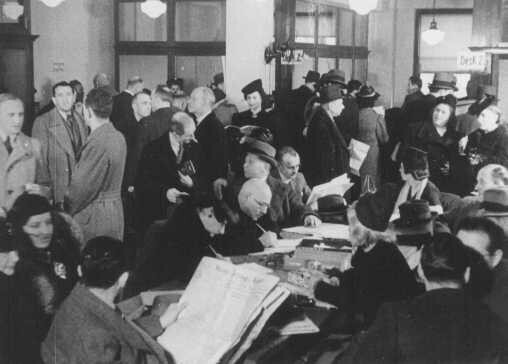
While there are a great many tales of the Holocaust & what led up to it, The Oppermanns is a book I wasn't aware of but happily discovered via the reviews of fellow readers at G/R.
In spite of some reservations that include occasional stereotypical descriptions of Jews & non-Jews and a perceived weakness of development in the 2nd half of the novel, perhaps because the manuscript for the novel was initially meant to be a screenplay that was later rejected, I found the book very much worth reading & recommend it highly.
Joshua Cohen's preface to The Oppermanns is extraordinary & extremely helpful in framing the time & place for Lion Feuchtwanger's novel, suggesting that to ignore the lessons of this novel is to "neglect the history the novel preserves with artistry, agony & passion." Beyond that, Cohen compares the Trump-inspired storming of the U.S. Capitol on January 6th 2021 to the Hitler-instigated Reichstag Fire.
Beyond that, in my own view, there are multiple alarming similarities between 1930s Germany and America in the 3rd decade of the 21st century, making the reading of Lion Feuchtwanger's novel even more compelling.
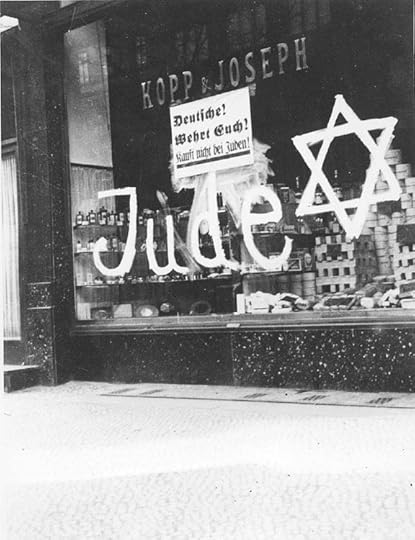
*There is an "alternate ending" with the new edition. **Within my review are images of the author, Lion Feuchtwanger; 1933 Berlin after rising hostility aimed at Jewish shop owners; German Jews crowding the Palestinian Emigration Office in Berlin in search of transit documents.
The members of the Oppermann family are wealthy, liberal, public-spirited & cultured German-Jews with an aura of emancipation, of blending readily within the fabric of life in Berlin, at least until the rise of Adolf Hitler, when clamps are placed on their social lives and their family business becomes gradually imperiled.
Gustav Oppermann is accomplished, has a nice house on a quiet Berlin street, a family & a mistress 20 years younger than himself, while brother Edgar is a notable surgeon-scientist & another brother, Martin runs the family furniture business, one which all have a vested interest in, with their grandfather's portraits casting a large shadow over the family & the business Immanuel Oppermann founded.
The Oppermanns have traditionally sold higher quality furniture than their competitors, while working with non-Jewish craftsmen to supply the furniture & with an often-quoted line from the Talmud providing guidance: It is upon us to begin the work; it is not upon us to finish it.
Obviously, there is considerable tension in 1930s Berlin & a pessimistic view of the future, with a brother-in-law talking of learning Hebrew & moving to Palestine. But hopefully, this is all just a temporary phase, as even some Jewish families post Christmas trees in their windows in an attempt to feel in sync with their neighbors.
Little by little, their personal freedom & the ability of the Oppermann furniture business to function as it had for so very many years is eroded. Non-Jews begin making demands on the business, as Jews are increasingly seen as un-German, even anti-German. Martin's gifted son is harassed at his school, even though his mother is an Aryan, leading to an unfortunate outcome for the lad.
At least for a time, Gustav is alone among the Oppermanns in feeling that the country of Goethe & Kant is in no long-term danger from the brown-shirted thugs & a Hitler now fully empowered by Hindenburg. Gustav went on working & living, for "the barbarian might be wallowing in the place of the former chancellor but it didn't worry him."
However, as laws are changed to disenfranchise Jews, "the Oppermann family inseparability had now become the only thing that remained securely their own."
For some minutes they sat in silence, two heavily built men. Gustav was not smiling; Martin shed his poise & dignity, Edgar the impregnable self-confidence of a successful scientist, Jaques Lavendel (brother-in-law) his optimistic skepticism. Their heavy heads were bowed, their deep-set eyes stared into space.Today, while gathering for Passover, sitting together & reciting the Haggadah, "that extremely ancient Aramaic ballad, the Oppermanns still had their nucleus but in future, they would be scattered to all the 8 winds."
They were strong men, each with a power in his own particular sphere, well-equipped to withstand an enemy or a cruel blow of fate. But their confidence had vanished; for what they had to face, they felt it in their bones, was neither the attack of a single enemy nor a single stroke of fate.
It was an earthquake, one of the great upheavals of concentrated, fathomless, worldwide stupidity. Pitted against such an elemental force, the strength & wisdom of the individual was useless.
For...
in present-day Germany, every instinct hostile to culture was considered a virtue and the moral code of the caveman was vested with the dignity of a state religion, while the world at large was indifferent. They would flee but one day hopefully they would return to Germany and it would be great & sane, as it used to be.Much like the 1900 year wait for the Messiah, they continued to stubbornly wait for their eventual freedom. Presently, "everything in Germany was a lie and only one thing about the Germans was genuine: their hate."
While there are a great many tales of the Holocaust & what led up to it, The Oppermanns is a book I wasn't aware of but happily discovered via the reviews of fellow readers at G/R.
In spite of some reservations that include occasional stereotypical descriptions of Jews & non-Jews and a perceived weakness of development in the 2nd half of the novel, perhaps because the manuscript for the novel was initially meant to be a screenplay that was later rejected, I found the book very much worth reading & recommend it highly.
Joshua Cohen's preface to The Oppermanns is extraordinary & extremely helpful in framing the time & place for Lion Feuchtwanger's novel, suggesting that to ignore the lessons of this novel is to "neglect the history the novel preserves with artistry, agony & passion." Beyond that, Cohen compares the Trump-inspired storming of the U.S. Capitol on January 6th 2021 to the Hitler-instigated Reichstag Fire.
Beyond that, in my own view, there are multiple alarming similarities between 1930s Germany and America in the 3rd decade of the 21st century, making the reading of Lion Feuchtwanger's novel even more compelling.
*There is an "alternate ending" with the new edition. **Within my review are images of the author, Lion Feuchtwanger; 1933 Berlin after rising hostility aimed at Jewish shop owners; German Jews crowding the Palestinian Emigration Office in Berlin in search of transit documents.
April 22, 2023
My attention was drawn to this by my invisible Goodreads online friends (those soul mates whom I’ve never seen in the flesh but with whom I share interests in books) who read books that have been forgotten or gone out of favor. I am certainly glad I did, because the facts behind this tale are enticing. Here is a novel written a few years before Hitler’s invasion of Poland and the start of the second world war, where he is referred to as the “leader” of a small movement of ultra-nationalists. What floors me is that the author could only vaguely have imagined what was to come later, thus his perspective was naïve in a sense, uncolored by the history of WWII and its aftermath that we now know so well. That alone makes this book worthy of my time. It is well written in its native language, I am sure, however the fact that it was created almost a century ago, and translated from German for an English-speaking readership, more European than American, makes it clumsy in places. But the prose shines in others, and the ideas and storyline contribute to the astonishing fact of its unique perspective in history. I recommend highly.
The novel is set in Berlin, told from the perspective of an un-orthodox Jewish family who have been entrenched in high German culture for well over a century, living comfortably from the business created by their patriarch, Immanuel Oppermann, whose dark old oil portrait that hangs lovingly on their wall. The business succeeds like an Ikea or discount store today, offering inexpensive, less durable furniture for more common folk unable to afford the high standard of “German” quality. The main protagonist is a bit of an intellectual “playboy”, a bachelor celebrating a relative life of leisure and comfort. But the strain of ultra-nationalist arising from the less educated and increasingly aggrieved class is gaining momentum. As is well known, their “leader” gains power through political maneuvering after starting a street campaign of violence – this novel captures the growing fears and outright terror of Gustav Oppermann and his siblings as they are nearly paralyzed with the slow-moving coup. The Oppermanns, and their teenaged children, and several Jewish friends associated with their business and linked by community give a panoply of responses to the rising concerns. Even the schools, long a bastion of liberalism, sees its instructors succumbing to replacement by the “cunning” nationalists – that mindset that, though uneducated, has the street cleverness to know how to manipulate by fear (sound familiar)? The grass roots Brown Shirts movement is at first derided (“My Battle” or Mein Kampf is often joked about with its clumsy and naïve ravings). Those speaking against the loyal nationalists, and the street thugs enforcing compliance, are whisked to prison or “concentration camps” for re-education. The terror is real and the good Germans are afraid to speak against the tyranny. And then the Reichstag fire, which even at the time most people know it was staged to justify a purge of “communists” (meaning leftists, meaning Jews, meaning non-Aryans and defectives, etc). You know the rest. Gustav leaves his country, returns in disguise as a peasant and is shocked by the apathy and fear and seeming normalcy of German people outside of the hotbed of Berlin & other big cities. The acquiescence is seemingly benign, the banality of evil (Arendt?).
All books have myopia for their time and unconscious bias, most authors assuming the readers have historical and cultural context. What makes this book unique is that the reader has a vantage of knowing how the future manifests (like reading old science fiction about todays world). What is chilling to me is how incredibly durable is will to power in human beings and how incredibly common is the tactic of discrediting the “other”, often leading to intolerance. It continues over the globe today, and its sickness is in us now, in our hearts if we let that seed take root.
The Oppermanns is the cautionary tale of all cautionary tales. It is not dull, in places it sparkles, in others it has ordinary details of life from a place and time in history that are simply fascinating. I highly recommend it. Though written a very long time ago, and translated clumsily in parts, the plot and perspective and its relevance today made this a most meaningful and enjoyable, albeit terrifying, read.
The novel is set in Berlin, told from the perspective of an un-orthodox Jewish family who have been entrenched in high German culture for well over a century, living comfortably from the business created by their patriarch, Immanuel Oppermann, whose dark old oil portrait that hangs lovingly on their wall. The business succeeds like an Ikea or discount store today, offering inexpensive, less durable furniture for more common folk unable to afford the high standard of “German” quality. The main protagonist is a bit of an intellectual “playboy”, a bachelor celebrating a relative life of leisure and comfort. But the strain of ultra-nationalist arising from the less educated and increasingly aggrieved class is gaining momentum. As is well known, their “leader” gains power through political maneuvering after starting a street campaign of violence – this novel captures the growing fears and outright terror of Gustav Oppermann and his siblings as they are nearly paralyzed with the slow-moving coup. The Oppermanns, and their teenaged children, and several Jewish friends associated with their business and linked by community give a panoply of responses to the rising concerns. Even the schools, long a bastion of liberalism, sees its instructors succumbing to replacement by the “cunning” nationalists – that mindset that, though uneducated, has the street cleverness to know how to manipulate by fear (sound familiar)? The grass roots Brown Shirts movement is at first derided (“My Battle” or Mein Kampf is often joked about with its clumsy and naïve ravings). Those speaking against the loyal nationalists, and the street thugs enforcing compliance, are whisked to prison or “concentration camps” for re-education. The terror is real and the good Germans are afraid to speak against the tyranny. And then the Reichstag fire, which even at the time most people know it was staged to justify a purge of “communists” (meaning leftists, meaning Jews, meaning non-Aryans and defectives, etc). You know the rest. Gustav leaves his country, returns in disguise as a peasant and is shocked by the apathy and fear and seeming normalcy of German people outside of the hotbed of Berlin & other big cities. The acquiescence is seemingly benign, the banality of evil (Arendt?).
All books have myopia for their time and unconscious bias, most authors assuming the readers have historical and cultural context. What makes this book unique is that the reader has a vantage of knowing how the future manifests (like reading old science fiction about todays world). What is chilling to me is how incredibly durable is will to power in human beings and how incredibly common is the tactic of discrediting the “other”, often leading to intolerance. It continues over the globe today, and its sickness is in us now, in our hearts if we let that seed take root.
The Oppermanns is the cautionary tale of all cautionary tales. It is not dull, in places it sparkles, in others it has ordinary details of life from a place and time in history that are simply fascinating. I highly recommend it. Though written a very long time ago, and translated clumsily in parts, the plot and perspective and its relevance today made this a most meaningful and enjoyable, albeit terrifying, read.

November 14, 2020
The New York Times Book Review March 18, 1934 by Fred T March gives a wonderful account of this extraordinary read.
….."The Oppermanns are a well-to-do, cultured, respected tribe, rooted in that soil which fostered the German democracy of 1830 and 1848 and before and since--a background which has nurtured the flower of German intellectualism since the French Revolution. They are not, as it happens, very politically minded…….Gustav, talented and reflective, a man of fifty now, still a batchelor pursuing the arts and literature and attractive women has been working for sometime on the monumental work 'Life of Lessing'........The Oppermann children are in schools and already begin to develop their own youthful philosophies. The social circle and in-laws are a mixed group of several racial strains, including brilliant people……...They are a more or less typical German group of lazy culture, or specialised interests, blind to the forces assembling for the coming Armageddon……"
Rich people have the power to move money around and so do the Oppermanns although technically on the face of it lose everything, their generational furniture stores, their beautiful houses, however they still have the house in Lugarno where they have escaped to.
The hatred that is spawned by the Nazis is effective with the general population on the likes of the Oppermanns who it appears have suffered very little after the end of WW1 but where many ordinary Germans have found life a struggle. The rich, like the Oppermanns, if able to see the writing on the wall, leave the country. So it is for Gustav who idles away his time in a bit of a day dream in the south of France that is until through an acquaintance who visits him presents him with documentations of the atrocities that are now occurring in concentration camps. Gustav reads and is disturbed by the accounts. It's by some fortune that he has encountered another expat whereby they become friends, Georg Teibschitz is a look alike Gustav Oppermann, he gains the other's passport. Georg has other identity papers that he can use. Gustav in his naivety returns to Germany where he, himself, ends up in a concentration camp. The author gives Gustav the sense of this internment as an experimental exercise but it's not long before Gustav understands his own stupidity. Still, powerful friends come to his aid and he is released. Back in France, his health never recovers.
Of course now the world is well aware of such atrocities but the author writing in the mid 30's has created a more or less a prophetic novel for at this time the full extent of the horrors were still to come.
….."The Oppermanns are a well-to-do, cultured, respected tribe, rooted in that soil which fostered the German democracy of 1830 and 1848 and before and since--a background which has nurtured the flower of German intellectualism since the French Revolution. They are not, as it happens, very politically minded…….Gustav, talented and reflective, a man of fifty now, still a batchelor pursuing the arts and literature and attractive women has been working for sometime on the monumental work 'Life of Lessing'........The Oppermann children are in schools and already begin to develop their own youthful philosophies. The social circle and in-laws are a mixed group of several racial strains, including brilliant people……...They are a more or less typical German group of lazy culture, or specialised interests, blind to the forces assembling for the coming Armageddon……"
Rich people have the power to move money around and so do the Oppermanns although technically on the face of it lose everything, their generational furniture stores, their beautiful houses, however they still have the house in Lugarno where they have escaped to.
The hatred that is spawned by the Nazis is effective with the general population on the likes of the Oppermanns who it appears have suffered very little after the end of WW1 but where many ordinary Germans have found life a struggle. The rich, like the Oppermanns, if able to see the writing on the wall, leave the country. So it is for Gustav who idles away his time in a bit of a day dream in the south of France that is until through an acquaintance who visits him presents him with documentations of the atrocities that are now occurring in concentration camps. Gustav reads and is disturbed by the accounts. It's by some fortune that he has encountered another expat whereby they become friends, Georg Teibschitz is a look alike Gustav Oppermann, he gains the other's passport. Georg has other identity papers that he can use. Gustav in his naivety returns to Germany where he, himself, ends up in a concentration camp. The author gives Gustav the sense of this internment as an experimental exercise but it's not long before Gustav understands his own stupidity. Still, powerful friends come to his aid and he is released. Back in France, his health never recovers.
Of course now the world is well aware of such atrocities but the author writing in the mid 30's has created a more or less a prophetic novel for at this time the full extent of the horrors were still to come.

February 17, 2024
Many novels have been written about the rise of Nazism in Germany, of the initial gradual ostracization of the Jews and then, with Hitler's swift and unimpeded rise to absolute power, their outright persecution leading up to the implementation of the Final Solution in 1942.
This novel is unique in its being written and published as the events occurred, well before the immensity of the Holocaust could have been contemplated.
Through the story of one family and its friends and colleagues, we are given a view of the transition of German Jews from contempt for Hitler and his brown-shirt minions to the realization that there is no escaping the Nazi nightmare.
The Oppermanns have an ingrained belief that they are Germans, no different from other Germans, and that the German people would reject Hitler's racial demagogy marking the Jews as Germany's enemy. This belief is shattered as event follows event and it becomes clear that the German people have, as a whole, embraced Hitler's ideology.
It is 1932/33 and the Oppermanns are a prominent Jewish family who have been in Berlin for several generations. They are three brothers, quite representative of such families: the brother who successfully manages the family business, the doctor, a professor and a leader in his area, and Gustav, the intellectual, who is probably the closest to representing the author and through whose perspective and experiences most of the narrative flows.
Berthold, the seventeen year-old son, in a heartbreaking inner monologue, paints the tragedy of the assimilated German Jews: he is a German through and through, one of his uncles died in the Great War fighting for Germany, he loves German culture and language, he loves Germany, and now, suddenly, he doesn't belong, he isn't German. Then what is he? Berthold is unable to grasp this change.
Until nearly the very end of the novel, and well after the more astute members of his family have lost hope, Gustav still believes that Hitler can't prevail. He remains confident that Germans are a moral people and that millions of them, good and conscientious people, would rise up against Hitler's regime.
His words of wisdom when he realizes that the German people have succumbed to the Nazi ideology, travel through the ages to our times as a warning beacon, as relevant now as they were then.
Millions of Germans were good people, he says, people of character, and certainly any individual act of murder and torture by the Government is just that, an individual act that does not impinge on the general character of the German people. But any group of people resembles a human body made up of individual cells, and when there are too many contaminated cells, the whole body is infected, sometimes beyond repair.
This novel is unique in its being written and published as the events occurred, well before the immensity of the Holocaust could have been contemplated.
Through the story of one family and its friends and colleagues, we are given a view of the transition of German Jews from contempt for Hitler and his brown-shirt minions to the realization that there is no escaping the Nazi nightmare.
The Oppermanns have an ingrained belief that they are Germans, no different from other Germans, and that the German people would reject Hitler's racial demagogy marking the Jews as Germany's enemy. This belief is shattered as event follows event and it becomes clear that the German people have, as a whole, embraced Hitler's ideology.
It is 1932/33 and the Oppermanns are a prominent Jewish family who have been in Berlin for several generations. They are three brothers, quite representative of such families: the brother who successfully manages the family business, the doctor, a professor and a leader in his area, and Gustav, the intellectual, who is probably the closest to representing the author and through whose perspective and experiences most of the narrative flows.
Berthold, the seventeen year-old son, in a heartbreaking inner monologue, paints the tragedy of the assimilated German Jews: he is a German through and through, one of his uncles died in the Great War fighting for Germany, he loves German culture and language, he loves Germany, and now, suddenly, he doesn't belong, he isn't German. Then what is he? Berthold is unable to grasp this change.
Until nearly the very end of the novel, and well after the more astute members of his family have lost hope, Gustav still believes that Hitler can't prevail. He remains confident that Germans are a moral people and that millions of them, good and conscientious people, would rise up against Hitler's regime.
His words of wisdom when he realizes that the German people have succumbed to the Nazi ideology, travel through the ages to our times as a warning beacon, as relevant now as they were then.
Millions of Germans were good people, he says, people of character, and certainly any individual act of murder and torture by the Government is just that, an individual act that does not impinge on the general character of the German people. But any group of people resembles a human body made up of individual cells, and when there are too many contaminated cells, the whole body is infected, sometimes beyond repair.

September 13, 2026
Lo scrittore Lion Feuchtwanger [1884-1958] è noto soprattutto per la trilogia di Flavio Giuseppe dove narra la storica conquista di Gerusalemme da parte delle legioni Romane dell’imperatore Vespasiano e suo figlio Tito: questa trilogia non l’ho ancora letta benché io sia arrivato con questo romanzo al terzo libro che leggo dell’autore.
“I fratelli Oppermann” che ho appena terminato di leggere è il racconto di una Germania che, uscita sconfitta nella I guerra mondiale e strangolata politicamente e economicamente dal trattato di pace di Parigi, trova dopo qualche anno a reagire affidando le sorti del suo governo allo sconosciuto Hitler e alle masnade delle camicie brune che invocano l’emarginazione sociale ed economica degli ebrei tedeschi.
Questo romanzo sceglie una famiglia simbolo di ebrei tedeschi, i tre fratelli Oppermann, ricchi industriali, benvoluti protagonisti del tessuto sociale e politico del loro tempo che pian piano ma inesorabilmente dovranno “aprire gli occhi”, rendersi conto dell’isolamento in cui vengono progressivamente a trovarsi e chi prima e chi tardivamente decidersi ad abbandonare la Germania che non è più la loro patria ma un luogo da dove fuggire per salvare almeno la vita.
Questo romanzo realista e pessimista è una lettura scioccante che racconta con imparziale obiettività quanto avvenne nella Germania hitleriana nel periodo precedente l’ideazione della “soluzione finale”.
“I fratelli Oppermann” che ho appena terminato di leggere è il racconto di una Germania che, uscita sconfitta nella I guerra mondiale e strangolata politicamente e economicamente dal trattato di pace di Parigi, trova dopo qualche anno a reagire affidando le sorti del suo governo allo sconosciuto Hitler e alle masnade delle camicie brune che invocano l’emarginazione sociale ed economica degli ebrei tedeschi.
Questo romanzo sceglie una famiglia simbolo di ebrei tedeschi, i tre fratelli Oppermann, ricchi industriali, benvoluti protagonisti del tessuto sociale e politico del loro tempo che pian piano ma inesorabilmente dovranno “aprire gli occhi”, rendersi conto dell’isolamento in cui vengono progressivamente a trovarsi e chi prima e chi tardivamente decidersi ad abbandonare la Germania che non è più la loro patria ma un luogo da dove fuggire per salvare almeno la vita.
Questo romanzo realista e pessimista è una lettura scioccante che racconta con imparziale obiettività quanto avvenne nella Germania hitleriana nel periodo precedente l’ideazione della “soluzione finale”.

March 1, 2022
Jewish author Lion Feuchtwanger wrote THE OPPERMANNS in 1933, just months after Hitler rose to power. He wrote this book in exile, in France.
The story starts in November 1932. The Oppermanns are a wealthy, prosperous, cultured Jewish family in the furniture business. Yet change is in the air. There is rising unemployment in Germany, there is some evidence of rising antisemitism in the streets and there is a fascist fool called Adolf Hitler saying nasty things, gaining popularity every day. Yet, the Oppermanns don't feel threatened by these developments. Lulled by a false sense of security, they think that the Germans are simply too civilized, nobody could really take the grotesque Adolf Hitler, a clown with a Charlie Chaplin moustache, seriously.
However, we know the story: Hitler rises to power in 1933. The Oppermanns will lose everything: their business, their money, their homes, most of their friends. As the Nazi laws take hold, many Jews managed to escape, other were trapped inside Germany, many committed suicide.
The novel is narrated from the perspective of various members of the family, their friends and acquaintances. In this way, Feuchtwanger achieves a realistic representation of the multifarious reactions of the Germans when Hitler finally rose to power.
This is a gripping cautionary novel: it alerts us to the dangers of fascism. It is premonitory as well, as it anticipates the nightmarish reign of terror that swept over Germany for 12 years.
This novel is included in the DW list of 100 Must Read German Novels. Highly recommended.
The story starts in November 1932. The Oppermanns are a wealthy, prosperous, cultured Jewish family in the furniture business. Yet change is in the air. There is rising unemployment in Germany, there is some evidence of rising antisemitism in the streets and there is a fascist fool called Adolf Hitler saying nasty things, gaining popularity every day. Yet, the Oppermanns don't feel threatened by these developments. Lulled by a false sense of security, they think that the Germans are simply too civilized, nobody could really take the grotesque Adolf Hitler, a clown with a Charlie Chaplin moustache, seriously.
However, we know the story: Hitler rises to power in 1933. The Oppermanns will lose everything: their business, their money, their homes, most of their friends. As the Nazi laws take hold, many Jews managed to escape, other were trapped inside Germany, many committed suicide.
The novel is narrated from the perspective of various members of the family, their friends and acquaintances. In this way, Feuchtwanger achieves a realistic representation of the multifarious reactions of the Germans when Hitler finally rose to power.
This is a gripping cautionary novel: it alerts us to the dangers of fascism. It is premonitory as well, as it anticipates the nightmarish reign of terror that swept over Germany for 12 years.
This novel is included in the DW list of 100 Must Read German Novels. Highly recommended.

September 22, 2014
I have a very special relationship with this book.
Growing up in the former Soviet Union, I remember well the reactions to 6-Day War - in the streets, from the neighbors, at school (for the most part, anti-Semitic). We had an especially sadistic history teacher who took pleasure in calling on Jewish students to report on the news in the morning and to make them condemn "Israeli aggressors". I refused to do so, and imagined myself right in the middle of "The Oppermanns". This book was a huge support to me during a very difficult time. So were the other books by Feuchtwanger, but "The Oppermanns" is still very special to me.
Growing up in the former Soviet Union, I remember well the reactions to 6-Day War - in the streets, from the neighbors, at school (for the most part, anti-Semitic). We had an especially sadistic history teacher who took pleasure in calling on Jewish students to report on the news in the morning and to make them condemn "Israeli aggressors". I refused to do so, and imagined myself right in the middle of "The Oppermanns". This book was a huge support to me during a very difficult time. So were the other books by Feuchtwanger, but "The Oppermanns" is still very special to me.

October 13, 2022
An incredible piece of literature that leaves one feeling sad and perplexed at why the world can be so cruel and why it was so cruel. Lion Feuchtwanger wrote this as the destruction was happening in 1930’s Germany. Never have I been moved by an authors words. And never have I been so sad as to what happened to these characters. And millions of real people who were effected. I hope this book can give some insight to everyone. And this should be required reading in schools.

December 11, 2023
Das Schicksal einer jüdischen Familie schrieb Feuchtwanger im Herbst 1933. Er gibt Einblick in das Familienunternehmen, in den Schulalltag einer Klasse unter neuen nationalsozialistischen Lehrer und in die "Behandlung" der Häftlinge in den Konzentrationslagern in der Zeit nach dem Machtantritt Hitlers. Der zweite Teil um den Schüler Berthold Oppermann, wie ergeht es ihm unter dem Lehrer Vogelsang. Menschenwürde und Charakterstärke waren für mich die zentralen Themen im 2. Teil der Trilogie "Wartesaal". Geschwister Oppermann waren eindringlicher als der erste Teil "Erfolg".

January 25, 2018
Amazing that this book was written in 1934. Even the most pessimistic people could not have imagined how bad things would really get and how long it would last.

April 16, 2009
The Oppermanns is a beautifully written and touching novel that was included in my reading for a class in the University of Chicago Basic Program where we studied "Degenerate Art" during the Third Reich. Feuchtwanger's novel is a moving story of a Jewish families in 1930s Germany who are divided in their views about how to respond to both the actual physical and economic threats from the rising National Socialist movement. The family members represented the varying views of changes that were occurring in Germany of the nineteen-thirties with some taking a more benign view and others showing more concern by moving to Paris and elsewhere. As the book begins the Nazis were gaining more political control and the cultural and economic environment was beginning to change in Germany because of it. For the first time in its history, the Oppermann’s furniture business was forced to take on an approved Aryan partner in order to keep it running. This is a move that contributes to their eventually losing it altogether. The family must endure ever more personal tragedies as the worst becomes a reality. Those family members who departed from Germany were proven to be more prescient in their caution as the ones who stayed too long found not just upheaval in their lives but real danger from the increasing limits placed on Jewish families and other "undesirables".
Most of all this historical novel captured the cultural and political changes that made possible the burning of books and display of "degenerate art". As such I would recommend it to anyone interested in understanding the history of Germany in that era.
Most of all this historical novel captured the cultural and political changes that made possible the burning of books and display of "degenerate art". As such I would recommend it to anyone interested in understanding the history of Germany in that era.

April 25, 2026
3,5 Sterne
Zwiespältig blick ich der Lektüre nach. Einerseits war es eine große Leistung Feuchtwangers, noch im Jahr der Machtübernahme ein solch wichtiges Buch zu veröffentlichen, in der er die wahre Natur der nationalsozialistischen Gesellschaft einer breiteren Öffentlichkeit außerhalb, des hermetisch abgeriegelten Deutschland, offenbart; es war auch ganz richtig, dies in Form eines Romans zu tun, ich denke, in der Form erreichte es mehr Menschen.
Andererseits merkt man dem Buch aber auch die wenige Zeit an, die Feuchtwanger dafür aufgewandt hat; das ganze Buch wirkt in seiner gesamten Form etwas lose. Er spinnt viele Fäden, aber nur wenige davon ganz zuende. Der Hauptfaden ist unzweifelhaft Gustav, der älteste der Brüder Oppermann. Diesem widmet der Autor merkhaft mehr Zeit und Zeilen, als etwa den Brüdern Martin und Edgar, deren Fäden sich nach dem beschriebenen fatalen Pogrom, welcher die Familie endgültig auseinanderzwingt, verlieren.
Dann aber liegt viel Kraft in der nüchternen, nicht von Pathos bestimmten Prosa, die Feuchtwanger konsequent durch das ganze Buch hinweg verwendet. Er beschreibt - oder deutet oft viel mehr an - verschiedene jüdische Schicksale in dieser Zeit; verschiedene Perspektiven und Blickwinkel; verschiedene Gründe, trotz latenter und realer Gefahr, trotzdem in Deutschland zu bleiben. Wer sich fragt, warum nicht alle Juden nach Machtübernahme das Weite suchten, dem werden hier einige Gründe genannt.
Zuletzt aber war ich von Feuchtwangers Sprache hier nicht sonderlich beeindruckt. Es ist kein literarisches Kunstwerk, aber ein wichtiges Buch, das den Zeigenossen die Kalamität der Nazis nahebrachte und uns heutigen Lesern in unserem politischen Klima vielleicht auch nicht gänzlich kalt lässt.
Zwiespältig blick ich der Lektüre nach. Einerseits war es eine große Leistung Feuchtwangers, noch im Jahr der Machtübernahme ein solch wichtiges Buch zu veröffentlichen, in der er die wahre Natur der nationalsozialistischen Gesellschaft einer breiteren Öffentlichkeit außerhalb, des hermetisch abgeriegelten Deutschland, offenbart; es war auch ganz richtig, dies in Form eines Romans zu tun, ich denke, in der Form erreichte es mehr Menschen.
Andererseits merkt man dem Buch aber auch die wenige Zeit an, die Feuchtwanger dafür aufgewandt hat; das ganze Buch wirkt in seiner gesamten Form etwas lose. Er spinnt viele Fäden, aber nur wenige davon ganz zuende. Der Hauptfaden ist unzweifelhaft Gustav, der älteste der Brüder Oppermann. Diesem widmet der Autor merkhaft mehr Zeit und Zeilen, als etwa den Brüdern Martin und Edgar, deren Fäden sich nach dem beschriebenen fatalen Pogrom, welcher die Familie endgültig auseinanderzwingt, verlieren.
Dann aber liegt viel Kraft in der nüchternen, nicht von Pathos bestimmten Prosa, die Feuchtwanger konsequent durch das ganze Buch hinweg verwendet. Er beschreibt - oder deutet oft viel mehr an - verschiedene jüdische Schicksale in dieser Zeit; verschiedene Perspektiven und Blickwinkel; verschiedene Gründe, trotz latenter und realer Gefahr, trotzdem in Deutschland zu bleiben. Wer sich fragt, warum nicht alle Juden nach Machtübernahme das Weite suchten, dem werden hier einige Gründe genannt.
Zuletzt aber war ich von Feuchtwangers Sprache hier nicht sonderlich beeindruckt. Es ist kein literarisches Kunstwerk, aber ein wichtiges Buch, das den Zeigenossen die Kalamität der Nazis nahebrachte und uns heutigen Lesern in unserem politischen Klima vielleicht auch nicht gänzlich kalt lässt.

March 12, 2026
"They had cynically broken their solemn guarantees, trampled the law underfoot and substituted caprice, disorder and brutality for order and civilisation. Germany had become a madhouse in which the patients had overpowered their warders. Did the world recognise that? And what were they doing?"
It seems history is doomed to repeat itself. This was a chilling read. It concentrates on the Oppermanns, an affluent family of Jews living in Berlin around 1932, and after Hitler takes power. This seems to have cropped up in my reading lately, Crooked Cross being the best of its kind, in my opinion.
It seems history is doomed to repeat itself. This was a chilling read. It concentrates on the Oppermanns, an affluent family of Jews living in Berlin around 1932, and after Hitler takes power. This seems to have cropped up in my reading lately, Crooked Cross being the best of its kind, in my opinion.

April 5, 2025
This book was written in 1933 by Lion Feuchtwanger and it is remarkable for its prescience. It correctly predicted the concentration camps and the danger of the Nazi regime against its Jewish citizens. Sadly there are some parallels to the Nazification of America today.
The author was himself Jewish and an established author and playwright and quickly became an enemy of the Nazi regime. He fled Germany early on and wrote this novel in exile. It has a strong autobiographical slant. The author had no illusions about what was going to happen to freedoms and Jewish citizens in Germany.
Lion made his way to France and after an arrest by the Vichy in France he was given asylum in the United States and survived the war.
4.5 stars. The writing is good but it is really the historical significance of this book in 1933 and its eyes wide open aspect that makes it so special.
The author was himself Jewish and an established author and playwright and quickly became an enemy of the Nazi regime. He fled Germany early on and wrote this novel in exile. It has a strong autobiographical slant. The author had no illusions about what was going to happen to freedoms and Jewish citizens in Germany.
Lion made his way to France and after an arrest by the Vichy in France he was given asylum in the United States and survived the war.
4.5 stars. The writing is good but it is really the historical significance of this book in 1933 and its eyes wide open aspect that makes it so special.

September 5, 2020
Like reading a work of genuine prophecy; it was back then and it seems ever more that it is again now.

September 20, 2017
Allucinante. Scritto nel 1932-33. Era sotto gli occhi di tutti quel che stava succedendo, nessun tedesco può dirsi inconsapevole, e quindi innocente. Europei, tedeschi, ebrei vedevano e non volevano vedere, con diverse motivazioni: l'equilibrio politico, la convenienza economica, l'incredulità che potesse accadere ancora.
Oggi con Il Giornale di Sallusti viene regalato il Mein Kampf, se fosse un modo per far comprendere la storia sarebbe encomiabile, ma purtroppo è una becerata per vendere 4 copie in più. Epperò nel MK c'era scritto chiaro e tondo il manifesto di Hitler, non se lo è inventato DOPO essere andato al potere lo sterminio degli ebrei, era un punto fermo del programma, è andato al potere anche per quello.
Leggere romanzi di questo periodo scritti DURANTE colpisce quasi più delle testimonianze, perché il romanzo ha necessità di un lasso di tempo per la mediazione e la resa letteraria. E quindi – soprattutto quando sono così lucidi e ben scritti come questo – sono di una forza incredibile.
Il valore di F. è eccellente: la storia, la narrazione, lo stile, l'intreccio, l'acume psicologico, e pure certa leggerezza ironica con cui tratteggia i fratelli O. Martin, Gustav, Edgar e la sorella Klara, sposata a un ebreo americano, riflettono magistralmente quel ceto medio-alto ebreo che ha visto arrivare la tempesta ma prima non ci ha creduto, poi non ha creduto al "proprio a me" e poi al "fino a questo punto?".
Alla fine delle peripezie i fratelli riescono a mettersi in salvo ma solo al prezzo di perdere un pezzo di sé, lasciato per sempre in Germania (in questo così simili al Mann di La Decisione).
Perché strappati dalla loro Patria, Martin il commerciante rinuncia alla dignità del distacco (così Buddenbrook prima, così bottegaio dopo), Edgar lo scienziato deve reiniziare da capo come un esperimento interrotto a metà, e Gustav il letterato alla fine è il più colpito forse in virtù o per colpa del suo spirito liberal.
Non riesce a capacitarsi di tanta "stupidaggine". Ma l'esempio più sublime è il Preside François coltissimo e di buon animo, di solida morale e principi, che prima non si capacita dello scempio della lingua tedesca perpetrato dai nazisti e dal Mein Kampf, poi non riesce a capire come un ratto come Vogelstand possa ascendere così in alto, che vorrebbe scegliere di stare dalla parte della giustizia ma tra moglie (quell'epiteto di Burraschetta è meravigliosamente perfetto) e quieto vivere, non si decide mai.
Poi, in sua vece, decise Hitler.
Oggi con Il Giornale di Sallusti viene regalato il Mein Kampf, se fosse un modo per far comprendere la storia sarebbe encomiabile, ma purtroppo è una becerata per vendere 4 copie in più. Epperò nel MK c'era scritto chiaro e tondo il manifesto di Hitler, non se lo è inventato DOPO essere andato al potere lo sterminio degli ebrei, era un punto fermo del programma, è andato al potere anche per quello.
Leggere romanzi di questo periodo scritti DURANTE colpisce quasi più delle testimonianze, perché il romanzo ha necessità di un lasso di tempo per la mediazione e la resa letteraria. E quindi – soprattutto quando sono così lucidi e ben scritti come questo – sono di una forza incredibile.
Il valore di F. è eccellente: la storia, la narrazione, lo stile, l'intreccio, l'acume psicologico, e pure certa leggerezza ironica con cui tratteggia i fratelli O. Martin, Gustav, Edgar e la sorella Klara, sposata a un ebreo americano, riflettono magistralmente quel ceto medio-alto ebreo che ha visto arrivare la tempesta ma prima non ci ha creduto, poi non ha creduto al "proprio a me" e poi al "fino a questo punto?".
Alla fine delle peripezie i fratelli riescono a mettersi in salvo ma solo al prezzo di perdere un pezzo di sé, lasciato per sempre in Germania (in questo così simili al Mann di La Decisione).
Perché strappati dalla loro Patria, Martin il commerciante rinuncia alla dignità del distacco (così Buddenbrook prima, così bottegaio dopo), Edgar lo scienziato deve reiniziare da capo come un esperimento interrotto a metà, e Gustav il letterato alla fine è il più colpito forse in virtù o per colpa del suo spirito liberal.
Non riesce a capacitarsi di tanta "stupidaggine". Ma l'esempio più sublime è il Preside François coltissimo e di buon animo, di solida morale e principi, che prima non si capacita dello scempio della lingua tedesca perpetrato dai nazisti e dal Mein Kampf, poi non riesce a capire come un ratto come Vogelstand possa ascendere così in alto, che vorrebbe scegliere di stare dalla parte della giustizia ma tra moglie (quell'epiteto di Burraschetta è meravigliosamente perfetto) e quieto vivere, non si decide mai.
Poi, in sua vece, decise Hitler.

February 5, 2026
Feuchtwanger wrote this book in real time and correctly foreshadowed the worst outcomes. His clear vision of the horror that was about to engulf Germany is uncanny. He knew what was happening and called it out loudly. The book is screaming "Holocaust ahead" as the threats against Jewish society ramp up.
While written in ~1933, it is set in 1933 Berlin. It tracks the Opperman family, a long established successful manufacturer of furniture. The Nationalist party (NAZI) is ascending and Hitler takes over the German Chancellorship in January of that year. The family is gravely threatened and horrible social terror and policing commence. German businesses must sell to non-Jewish "investors".
"The Oppermans" has the immediacy of a newspaper report. In the illuminating introduction by Joshua Cohen (The Netanyahus Pulitzer), he explains that the author fled to London and was contracted to write a screenplay. The producers got scared off and and Feuchtwanger recast his work as a novel. Soon, Feuchtwanger is evacuated to the U.S. with the help of famous third parties. He was writing this book while on the Nazi hit list.
Although it is journalistic, "The Oppermans" has the literary qualities of a great classic novel. The characters are deeply set forth and understood. The destruction of the Opperman Family is heart wrenching. The erudition is profound. Talmud and Classic references abound. The central theme from the Talmud "It is not your duty to finish the work, but neither are you free to neglect it" embodies the spirit of our tragic protagonist Gustav. He could not find a solution but he bore witness.
While written in ~1933, it is set in 1933 Berlin. It tracks the Opperman family, a long established successful manufacturer of furniture. The Nationalist party (NAZI) is ascending and Hitler takes over the German Chancellorship in January of that year. The family is gravely threatened and horrible social terror and policing commence. German businesses must sell to non-Jewish "investors".
"The Oppermans" has the immediacy of a newspaper report. In the illuminating introduction by Joshua Cohen (The Netanyahus Pulitzer), he explains that the author fled to London and was contracted to write a screenplay. The producers got scared off and and Feuchtwanger recast his work as a novel. Soon, Feuchtwanger is evacuated to the U.S. with the help of famous third parties. He was writing this book while on the Nazi hit list.
Although it is journalistic, "The Oppermans" has the literary qualities of a great classic novel. The characters are deeply set forth and understood. The destruction of the Opperman Family is heart wrenching. The erudition is profound. Talmud and Classic references abound. The central theme from the Talmud "It is not your duty to finish the work, but neither are you free to neglect it" embodies the spirit of our tragic protagonist Gustav. He could not find a solution but he bore witness.

February 18, 2017
The Oppermanns by Lion Feuchtwanger
I've always been a bit obsessed with WWII and a few years ago I set myself a project of reading fiction that was written just as Nazism was taking hold in Germany. I wanted to get a sense of how people felt while their world was turning upside down - not at the point when down was up or when it had finally righted itself. The Oppermanns was still unread on my shelf when our own politics-as-usual started to become quite unusual and my project became personal. This family saga is suspenseful and moving, but the novel's real interest is as an historical artifact. Feuchtwanger was a bestselling author and this is the testament and call to resistance he wrote after being driven out of Germany in 1933. As events overtake them, his characters behave in equally understandable but not equally honorable ways. Feuchtwanger debates their reactions to the new order but - with rare prescience - has no doubt that that order is completely rotten and will end in utter destruction. Although I'm sure that the particulars of our era will play out differently, Feuchtwanger makes it clear that the first step to installing any corrupt system is to attack facts, reason and coherence. The Oppermanns is not just an eerie echo of today's news, but also a heartening reminder that some will defend the truth at all costs.
I've always been a bit obsessed with WWII and a few years ago I set myself a project of reading fiction that was written just as Nazism was taking hold in Germany. I wanted to get a sense of how people felt while their world was turning upside down - not at the point when down was up or when it had finally righted itself. The Oppermanns was still unread on my shelf when our own politics-as-usual started to become quite unusual and my project became personal. This family saga is suspenseful and moving, but the novel's real interest is as an historical artifact. Feuchtwanger was a bestselling author and this is the testament and call to resistance he wrote after being driven out of Germany in 1933. As events overtake them, his characters behave in equally understandable but not equally honorable ways. Feuchtwanger debates their reactions to the new order but - with rare prescience - has no doubt that that order is completely rotten and will end in utter destruction. Although I'm sure that the particulars of our era will play out differently, Feuchtwanger makes it clear that the first step to installing any corrupt system is to attack facts, reason and coherence. The Oppermanns is not just an eerie echo of today's news, but also a heartening reminder that some will defend the truth at all costs.

October 21, 2020
What history had taught him was Amazement. A tremendous amazement that each time those in jeopardy had been so slow in thinking about their safety.
It was an interesting point of view about the 1930s in Germany. How Jewish people (of course not only them, but the book was mostly about them) watched what was happening. I was asking myself, whether I would have behaved (and believed in) the same. The most horrifying thing is, that probably I would have.
There were moments when I couldn't understand why Lion Feuchtwanger wrote this or that, but most of such paragraphs later turned out to be needed.
As a novel - 4 stars, but as a reminder and a warning - 5 stars.

November 6, 2011
The Oppermanns is a compelling, poignant novel written in late 1933 about a prosperous Jewish family’s first year living in Berlin under Nazi rule. The family consists of three brothers and one sister: Gustav, Martin, Edgar and Klara, and with the exception of unmarried Gustav, their spouses and children. They had inherited the three generations old family business of making inexpensive furniture and they have always thought of themselves as intelligent, educated Germans.
The novel begins on November 16, 1932. It is Gustav Oppermanns 50th birthday but he wakes up with a very vague uneasy feeling. Since he is a totally non-political man and hasn't paid very close attention to what is happening in Germany, he cannot identify the cause of his unease. Following some self-examination, he realizes that he has actually become indifferent. Disturbed by this insight, he writes out a postcard to send to himself, moving words from the Talmud that in the end will be an important driving force in Gustav’s life:
Dear Sir
Take note of this for all your life:
It is upon us to begin the work,
It is not upon us to complete it.
Yours very truly,
Gustav Oppermann
The Nazis have been gaining ground and things are beginning to change in Germany because of it. For the first time in its history, the Oppermann’s furniture business is forced to take on an approved Aryan partner in order to keep it running. This is a move that contributes to their eventually losing it altogether. Not long after that, Edgar, a prominent surgeon known for a very successful cure he developed called the Oppermann Treatment, is forced out of his clinic, falsely accused of mistreating his Aryan patients. But saddest of all is the story of Berthold, the 17 year old son of Martin and his non-Jewish wife, Liselotte. Berthold finds himself faced with an increasingly hostile Nazi teacher and his student followers when he refuses to “aryanize” a history report. Young and idealistic, Berthold is eventually driven to suicide.
Ultimately, the family is forced to flee Germany and Gustav goes into exile in Switzerland. He, like Feuchtwanger, had never taken Hitler seriously in the beginning. After all, how could this silly little man with the funny mustache, who couldn’t even write a good German sentence in Mein Kampf, rule a country like Germany? But after Berthold’s suicide, his eyes are opened and he begins to read everything he can about events in Germany. Gustav eventually makes the decision to return to Germany under a false identity and see for himself just what is happening and to records these things.
As he travels around Germany, he collects all kinds of examples of Nazi abuses, but one day he is caught, arrested and sent to a concentration camp.
What makes The Oppermanns so interesting is that it has the distinction of being the first story of its kind to tell about life under the Nazis and how it affected people opposed to Hitler. Feuchtwanger had based this story on reports he heard from people who had fled Germany for what they thought would be the safety of France and it is probably one of Feuchtwanger's better novels, at least in my opinion. Feuchtwanger had himself taken refuge in Paris when Hitler became chancellor of Germany and friends warned him not to return home – the Nazis had already been searched his home and he was on the list of banned books that were subsequently burned. Feuchtwanger remained in France until 1940 when he was arrested and placed in an internment camp for future deportation to a concentration camp and certain death. He is one of the artists that were rescued by Varian Fry (see my review In Defiance of Hitler: the Secret Mission of Varian Fry by Carla Killough McClafferty.)
The Oppermanns is a straight forward story that, when reading it with hindsight, contains a great deal of prescience, almost prophetically so. As a work of historical fiction, it is a good book for YA readers because it is not a complicated or terribly sophisticated work, requiring a great deal of background knowledge to make it understandable. This accessibility would have a great deal of appeal to a high school age reader interested in history, or those who simply like historical novels. When The Oppermanns was first published in the United States, it was extraordinarily popular, spending a good number of weeks on the NYTimes Bestseller List. However, in the American version the ending was changed from the original German, which is unfortunate since I think the ending Feuchtwanger wrote made The Oppermanns a more powerful book. Nevertheless, it is still a very worthwhile book to read.
This book is recommended for readers’ ages 14 to adult
This book was purchased for my personal library.
The novel begins on November 16, 1932. It is Gustav Oppermanns 50th birthday but he wakes up with a very vague uneasy feeling. Since he is a totally non-political man and hasn't paid very close attention to what is happening in Germany, he cannot identify the cause of his unease. Following some self-examination, he realizes that he has actually become indifferent. Disturbed by this insight, he writes out a postcard to send to himself, moving words from the Talmud that in the end will be an important driving force in Gustav’s life:
Dear Sir
Take note of this for all your life:
It is upon us to begin the work,
It is not upon us to complete it.
Yours very truly,
Gustav Oppermann
The Nazis have been gaining ground and things are beginning to change in Germany because of it. For the first time in its history, the Oppermann’s furniture business is forced to take on an approved Aryan partner in order to keep it running. This is a move that contributes to their eventually losing it altogether. Not long after that, Edgar, a prominent surgeon known for a very successful cure he developed called the Oppermann Treatment, is forced out of his clinic, falsely accused of mistreating his Aryan patients. But saddest of all is the story of Berthold, the 17 year old son of Martin and his non-Jewish wife, Liselotte. Berthold finds himself faced with an increasingly hostile Nazi teacher and his student followers when he refuses to “aryanize” a history report. Young and idealistic, Berthold is eventually driven to suicide.
Ultimately, the family is forced to flee Germany and Gustav goes into exile in Switzerland. He, like Feuchtwanger, had never taken Hitler seriously in the beginning. After all, how could this silly little man with the funny mustache, who couldn’t even write a good German sentence in Mein Kampf, rule a country like Germany? But after Berthold’s suicide, his eyes are opened and he begins to read everything he can about events in Germany. Gustav eventually makes the decision to return to Germany under a false identity and see for himself just what is happening and to records these things.
As he travels around Germany, he collects all kinds of examples of Nazi abuses, but one day he is caught, arrested and sent to a concentration camp.
What makes The Oppermanns so interesting is that it has the distinction of being the first story of its kind to tell about life under the Nazis and how it affected people opposed to Hitler. Feuchtwanger had based this story on reports he heard from people who had fled Germany for what they thought would be the safety of France and it is probably one of Feuchtwanger's better novels, at least in my opinion. Feuchtwanger had himself taken refuge in Paris when Hitler became chancellor of Germany and friends warned him not to return home – the Nazis had already been searched his home and he was on the list of banned books that were subsequently burned. Feuchtwanger remained in France until 1940 when he was arrested and placed in an internment camp for future deportation to a concentration camp and certain death. He is one of the artists that were rescued by Varian Fry (see my review In Defiance of Hitler: the Secret Mission of Varian Fry by Carla Killough McClafferty.)
The Oppermanns is a straight forward story that, when reading it with hindsight, contains a great deal of prescience, almost prophetically so. As a work of historical fiction, it is a good book for YA readers because it is not a complicated or terribly sophisticated work, requiring a great deal of background knowledge to make it understandable. This accessibility would have a great deal of appeal to a high school age reader interested in history, or those who simply like historical novels. When The Oppermanns was first published in the United States, it was extraordinarily popular, spending a good number of weeks on the NYTimes Bestseller List. However, in the American version the ending was changed from the original German, which is unfortunate since I think the ending Feuchtwanger wrote made The Oppermanns a more powerful book. Nevertheless, it is still a very worthwhile book to read.
This book is recommended for readers’ ages 14 to adult
This book was purchased for my personal library.

May 26, 2024
First, some background: I was recently rereading the correspondence between my father and his younger brother in the years following WW2. My uncle mentioned that he’d just read this book and how it triggered intense emotions about living through the era it describes.
The book, with its prescient (it was written in late 1933) early warning about Nazism, had such glowing reviews that I was intrigued; I also wondered if it might have something relevant to say about the creeping fascism south of the border.
Sadly, no; this hasn’t aged well. The story itself is quite gripping – the Oppermans, three brothers and a sister, are a prosperous, fully assimilated Jewish family in Berlin at the start of Hitler’s regime. Gustav, the central character, is a writer and man of letters. Initially the family is able to ignore the rising levels of antisemitism but can’t escape the consequences when it impacts the family business. What’s more, Gustav signs a document protesting the deteriorating political situation: immediately his life is in danger and he’s forced to leave for Switzerland. His nephew commits suicide rather than submit to a humiliating punishment at school for questioning Aryan history, and the rest of the family are eventually forced leave for Switzerland too. While in exile, Gustav initially retreats from politics, but after being confronted by a friend with documented atrocities, returns to Germany with a false identity to do what he can to expose antisemitism. In this he isn’t really successful but is arrested and spends months in a concentration camp, before being spirited out to France by influential friends.
But there are major, major flaws. First, Feuchtwanger doesn’t have anywhere near the eloquence of a Stephan Zweig – his writing is primarily concerned with the moral dimension and is inconsistent at best. The arguments are often laboured and full of mundane detail but in other places, significant events (like Gustav’s rescue from the camp) are glossed over. In addition, much of the description is bald statement and reads like a film script (I wasn’t surprised to learn that the work started out as a play).
As if that wasn’t enough, the characters are more stereotypes than real people, and the excessive and repetitive descriptions of their physical attributes quickly became really tiresome.
I don’t know how much of this was due to the translation, but the English certainly felt leaden and unimaginative with far too much literal translation (who would write that a friend’s face was “yellowish-brown”, rather than tanned or ruddy? Or that “he was preparing the snack of food to take with him”?) Gah!
So, while I was sympathetic to the theme of the Oppermanns, it was a long slog. As a historical document it is worthy reading, but don’t take the three stars as a recommendation.
One thing that did strike me though – the way the Oppermanns mocked Hitler’s Mein Kampf for its coarse style more than its incendiary content: that did resonate with the way Trump’s bumbling incoherence and mannerisms seem of more interest to the press than his fascist messaging.
The book, with its prescient (it was written in late 1933) early warning about Nazism, had such glowing reviews that I was intrigued; I also wondered if it might have something relevant to say about the creeping fascism south of the border.
Sadly, no; this hasn’t aged well. The story itself is quite gripping – the Oppermans, three brothers and a sister, are a prosperous, fully assimilated Jewish family in Berlin at the start of Hitler’s regime. Gustav, the central character, is a writer and man of letters. Initially the family is able to ignore the rising levels of antisemitism but can’t escape the consequences when it impacts the family business. What’s more, Gustav signs a document protesting the deteriorating political situation: immediately his life is in danger and he’s forced to leave for Switzerland. His nephew commits suicide rather than submit to a humiliating punishment at school for questioning Aryan history, and the rest of the family are eventually forced leave for Switzerland too. While in exile, Gustav initially retreats from politics, but after being confronted by a friend with documented atrocities, returns to Germany with a false identity to do what he can to expose antisemitism. In this he isn’t really successful but is arrested and spends months in a concentration camp, before being spirited out to France by influential friends.
But there are major, major flaws. First, Feuchtwanger doesn’t have anywhere near the eloquence of a Stephan Zweig – his writing is primarily concerned with the moral dimension and is inconsistent at best. The arguments are often laboured and full of mundane detail but in other places, significant events (like Gustav’s rescue from the camp) are glossed over. In addition, much of the description is bald statement and reads like a film script (I wasn’t surprised to learn that the work started out as a play).
As if that wasn’t enough, the characters are more stereotypes than real people, and the excessive and repetitive descriptions of their physical attributes quickly became really tiresome.
I don’t know how much of this was due to the translation, but the English certainly felt leaden and unimaginative with far too much literal translation (who would write that a friend’s face was “yellowish-brown”, rather than tanned or ruddy? Or that “he was preparing the snack of food to take with him”?) Gah!
So, while I was sympathetic to the theme of the Oppermanns, it was a long slog. As a historical document it is worthy reading, but don’t take the three stars as a recommendation.
One thing that did strike me though – the way the Oppermanns mocked Hitler’s Mein Kampf for its coarse style more than its incendiary content: that did resonate with the way Trump’s bumbling incoherence and mannerisms seem of more interest to the press than his fascist messaging.
Displaying 1 - 30 of 369 reviews