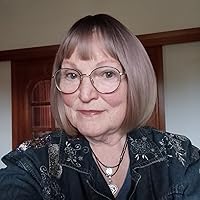
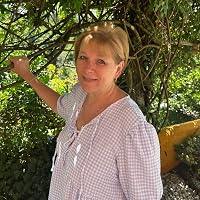
Jean was born in Lancashire and educated in Manchester. She has written many novels and short stories for magazines and collections, several of which have been adapted for radio and television. She has lived for more than twenty years in a cottage in Cornwall, England, with her husband.
After the death of her parents, Dorcas Wilde had become her elderly aunt's companion. As a gentle woman, her life consisted of a cup of chocolate at eight, dinner at one, tea time between the hours of four and five and supper at seven. She read her book, tried her hand at needlepoint, took a walk if the weather permitted or played backgammon or piquet with her relative. Minus a periodic dance or musical evening, her life was dull.
’She was so sheltered. So motionless.’
Dorcas wanted a life and home of her own. She was a spinster in her anxious twenties. Unexpectedly, the five-and-thirty year old farmer, Edward 'Ned' Howarth, sent her a letter and asked for her hand in marriage. Her highly-critical and snooty aunt, upon finding this out, thought he was after her estate and sought it through a union with Dorcas.
’All this. The tall house and long garden, linen on high shelves and clothes in deep closets, old-fashioned jewellery in locked boxes, chiming clocks in silence rooms. All this, which her maiden aunt cannot take with her at the last but would if she could, and clutter heaven.’
Little did either lady know at that time that Ned was in love with the fair Dorcas and his offer was genuine. He had deep feelings for her for several years but from afar. Initially, her intentions were to say no to his request. She knew little about him except that he was kindhearted but in a different class from herself. In the end she accepted; together, they broke with social convention. For that, she was disinherited.
My review is based on the 1979 Signet paperback version, BY OUR BEGINNINGS, though the story was also known as KIT'S HILL referring to Ned's home. It is available on Kindle and published by Endeavor Press. This historical fiction was thick with history and heavy descriptions of the setting; the time and places felt very real. And, referring to the initial year of 1760, everything was at a slower pace. As it was meant to be.
I absolutely loved Ned's character. He was strong in spirit, a good listener and loaded with homespun common sense. But he was also a working man, his local dialect matched his status. It was a commoner’s brogue that was well-written and authentic-sounding for the eighteenth century. If I had to pick an interesting person, someone I would love as a neighbor or friend? It would be Ned, hands-down.
For all my enthusiasm, I only know a few people I would recommend this book to unreservedly. The 18th-century history was well-researched and deeply moving. The writing was crackerjack. I was mesmerized by the richness of the prose and the individuality of Ms. Stubb's characters. Each of them contributed to the plot and sent the message: that nothing in this world is permanent.
The downside was that same writing I mentioned above required an effort for me to read. The dialect had abbreviated words and an earthy vocabulary; many of which I had to look up to find their definitions. Some were quirky, others were interesting. It took me over a week to read which is very unusual for me. I also have to admit that that I did not want their story to end. It was that good.
This was a sweet story that spans over 30+ years. It is not a fast-paced storyline but it covered the ensuing years nicely without feeling rushed. We follow Miss Dorcas Wilde's life from spinsterhood to bride, motherhood, and eventually being a grandmother. It explores class differences, small town living along with small town mentality. I really enjoyed this as it was just a well told story and kept within the realm of reality. For those looking for romance within an action/adventure setting this is not for you but if you're looking for a story to pass the time with good character development then give this novel a try. It's very charming.
Ned Howarth's letter to the beautiful Miss Dorcas Wilde is wonderful. Heartfelt and hesitant it reveals his heart. After all a man can dream and a 'cat can look at a queen'. This rare look into the rural life of a farming family in the high hills of Lancashire County in the late 1700's, over thirty years, is a treat. Dorcas and her adjustment to the life and the adjustment of others to her shows Dorcas' tenacity in this life changing journey she undertakes. The inhabitants of Kits Hill are hesitant about her and no-one more so than the housekeeper, Betty Ackroyd, who until now has held a position of power. And this is just the beginning! The first in a quartet originally published in 1980. The passing of time has not diminished the appeal of this enjoyable story of the Howarth generations at the farm on Garth Fells.
Originally published in 1978 this book definitely is as valid today as it was then. This historical romance set in the 18th century begins the saga of the Howarth family...or at least one segment of this family. The Howarths have lived on their farm, Kit’s Hill, for longer than anyone can remember and it is Ned’s turn to bring home a wife and continue his line. He has his eye on a woman and has had it there for three years before finally summoning up courage to write her a proposal of marriage that actually begins the story of Ned and orphaned parson’s daughter Dorcas Wilde.
Dorcas has been lady’s companion to her spinster aunt for three years and the two are like chalk and cheese and yet, can she marry outside of the station she has been raised in even though she is too poor to catch a man she might pair well with...an educated man...perhaps a parson like her father. Dorcas can have her own home, a husband, children and a life of her own with Ned though she knows nothing of farms or what living on a farm might entail. And yet...living as she has for the past three years versus that other path...well...what is a woman of twenty-five to do? What path should she choose? Of course she chooses Ned or the family line and future books in the series would not have been written. But what about this book? What did I think? Well…
What I liked: * Ned: a good man who is honest and wise and simple who truly loves Dorcas...he knew all along they would wed though I am not sure his rosy view of what would be came about as quickly as he thought it would. * Dorcas: intelligent, caring, perhaps a bit distant at time but a force to be reckoned with and quite capable of holding her own. When she finds and embraces “love” it is a marvelous thing. * The slow build of the relationship between Ned and Dorcas * The look into life long ago and all that it entailed – it was not an easy life and once again it made me think about how much easier life is today with birth control, educational options, less change of starvation...and so many other things. Even doing laundry back then was more difficult than it is today. * The “authentic-old” feel of the writing with dialect (sometimes difficult to understand) * The googling I did to try to find out more about terms used in the book...tenterhooks, saddle-stick and others
What I did not like: * The slower pace to the story – much slower than most more modern stories * Being reminded of the difficulties faced by those living in the 18th century * The dialect that was difficult to totally understand – just as I liked it I disliked it
Did I enjoy this book? Yes Would I read more in this series? I think so
Thank you to Sapere Books for the ARC – This is my honest review.
Great plot, H and h have a class divide that causes angst for many people in this lovely romance, set in late 1700s. The characters are not perfect, but they are so real and I felt their sorrows and joys. It's a great read, and I enjoyed it.
Saw the blurb and was compelled to pick this up with little investigation on my part. I saw the romance of a yeoman farmer and a daughter of a gentleman during the mid-Georgian period in Lanchashire and had a feeling about it. And it wasn't long before I realized that I'd probably picked something up that would rival Poldark in its sweeping settings, atmosphere, deftly drawn characters, and the beginning of a family saga set in interesting times of a market town emerging as a manufacturing center on the cusp of the industrial revolution. In the end, it was all that and delightfully it was only the beginning to the saga. I definitely want more of the Howarths of Kit's Hill.
The story opens with yeoman farmer, Ned Howarth, proud owner of Kit's Hill farm tucked in the rugged land within sight of the Pennines, setting out to do something amazing in the eyes of his people. He is a freeman, of a very little education, and situated well financially. Instead of courting a woman from his class, he sends his letter to the refined, well-educated, and genteel Miss Dorcas Wylde. Ned sets in motion something that will engulf his whole life and bring change to a place and people who have remained much the same for long time past.
Dorcas lost both her parents and her home in the south of England and now lives as poor companion to her aunt, a long time spinster. Miss Wylde is adamant that Dorcas refuse the upstart farmer who dared lift his eyes to a well-bred lady while he stunk of the muck of the farm. Dorcas hesitates. Ned's honesty, his sincerity, and his feelings for her move her in a way that factor against his circumstances. And truly, what can she really look forward to with no real income and life with a crotchety spinster aunt. Dorcas wants to be doing. So against her better judgment, her aunt, and her friends at the vicarage, she finally agrees to Ned Howarth's proposal.
Ned knows that he cares for Dorcas more than she, him, but he can be patient. Meanwhile, he'll let her set up as mistress of Kit's Hill. He is determined that his wife will retain her refinements. But even Ned doesn't realize how hard it really is for Dorcas to be shunned by all her friends, be looked on with suspicion and animosity by his acquaintance, and struggle with finding her place in his world. However, Dorcas has a spine made of steel and the people of the village and Kit's Hill soon learn the nature of the woman who has joined them in their hardy world. Dorcas stands beside Ned as his partner and together make a life even as the world is on the move around them.
Over many years, life brings hope, love, heartbreak, sorrow, and growth for the people of Kit's Hill and beyond.
Alright, so I got a bit of a surprise once I started reading this story. I thought I was getting a good class-difference romance in an uncommon setting. I blame myself for not paying close attention because once I looked more closely at the details I saw that it was clear and it was me who missed it. Yes, I got my romance though it wasn't the forefront, but it was only part of a larger picture. Dorcas and Ned are the foundation of the story, but it encompasses the history of the place and people as well as a saga that expands into the next generations. The Howarth story takes place over many years. There is lots of description, history, side stories, and a broad cast of characters that are all woven together into one story.
I truly enjoyed this one and I think the comparison to Poldark worthy. The style of writing feels authentic and has the flavor of the classical writers. It can be ponderous and I felt the length of it at times. I'm convinced the page count isn't accurate on the listing, but I don't know for sure because my e-reader version only tracked by location. Not that I wasn't engaged or was bored, but I a few times I thought it was drawing to an end. Of course, when it didn't and other events came, I realized that the author was right. There were still things that needed to be said. The crisis point for Ned and Dorcas was so well-written. It was beautiful in its fury and feeling. I liked all the historical details and the life of those times. The author made the people come to life for me. There was no glossing over or romanticism. Life was hard and raw back then and thus so were the stories of these folk.
All in all, I was fascinated and loved this historical saga that built from the romance of an unlikely pair. I will definitely be picking up the next book to continue on with the Howarth story. I would recommend this for historical fiction and lovers of sweeter long- building historical romance.
I received this book to read in exchange for an honest review.
A few summers ago I sat with my husband on a hillside high above the North Lancashire coastal plain, enjoying a picnic while we watched a mail van meandering, Postman Pat style, through the lanes linking the farms and hamlets on the lower slopes. We discussed how isolated it must be living in such an area, and the problems that could arise if the roads were closed by weather or obstructions, or the internet or phone connections failed.
This book is set in that area, but in the second half of the 18th century, a time long before such luxuries as internet and even roads were available to the local people, when settlements were linked by rough tracks, subsistence farming was the norm for many and everyone's lives and routines revolved around a strange combination of Christian and Pagan traditions and superstitions.
Into this environment comes Dorcas, an educated young lady who takes a risk and breaks with convention when she marries farmer Ned Heaton. Life isn’t easy for someone used to town living but she and Ned grow close and learn from each other, and through her ability to study, Dorcas introduces innovations that benefit not just Ned's farm but those of some of their neighbours.
The story follows the family from Ned’s first rough courtship until the couple are elderly and their children grown up, and gives us a fascinating look at the early days of the Industrial Revolution and how it affected families and communities.
The book is so well researched that I felt by the end I had been gently educated as well as entertained. One aspect of it I particularly liked was the writer’s ability to imply dialect with just a few subtle changes in speech – as a Lancashire lass myself, I know that true Lancashire dialect would be almost unreadable in print. So we see Ned – and later his older son William – able to switch easily between the coarse, strong dialect of the local workers and the much more genteel speech of Dorcas and her old friends and family.
I have to say I’m not usually a big fan of sagas and would generally never enjoy one enough to give it 5 stars. But the well developed characters, outstanding sense of time and place and overall readability and enjoyability of the book means I have made an exception in this case – a very well deserved 5 stars from me.
Dorcas lives a dull life as a companion to her aunt. She has no dowry so sees little chance of marrying and having her own home. Unknown to Dorcas she has an admirer, a local farmer, who has watched her from afar for several years and who finally writes to her proposing marriage. Her aunt and her friends are astounded at the insolence of the man and initially Dorcas refuses. Ned does not give up easily and continues to write describing his house, life and prospects. Dorcas becomes intrigued by his persistence and the prospect of escaping from her aunt - who then tries to bribe her with jewellery and threatens to cut her out of her will. Dorcas agrees to marry Ned but this when her real problems start – she is shunned by her friends in the town and she is not wanted by the people in her new home as she is an outsider.
I wasn’t sure that this book was for me at the start as I found it very difficult to get into. The style of writing was difficult to read and the characters in the story seemed very much to be caricatures – middle and upper class = bad, lower class = good. I struggled with it but persevered and gradually became absorbed in the story. This, for me, was a 3.5/4 star book – hard to get into (but worth it when I did) and too often there were long descriptive passages that were boring and did nothing to advance the story.
I liked the romance, they grew to love each other and the class differences were well represented.
spoiler SPOILER SPOILER SPOILERK SPOILER SPOILER
My issue with this book is 1. closed door love scenes and 2. very gross details, like characters dying of gangrene or losing all of their teeth or a very difficult childbirth where they describe the death of a baby and how the dead baby looked after they finally were able to have the birth. It was really disturbing.
Enchanting story. Lancashire 1760, at kits hill farm. Dorcas Wilde lives with her aunt and agrees to a marriage to Ned Howarth the marriage throughout the year's is not all plain sailing. I really enjoyed this book, wonderfully written by the author, excellent right till the end. A truly Heartbreaking tale that will touch your heart. Loved it well worth five star's
I thought I was going to really enjoy this book - it started off so well! Unfortunately, it took forever to get to the point.
This is the story of Dorcas Wilde a young woman in her twenties, orphaned by her father's death, now living with her wealthy spinster aunt in 1760s Lancashire, England. They live in a small village in a nice townhome. They are not titled yet are members of the middle to upper class.
Dorcas has tired of her life with her aunt and can foresee if she should not marry how her days will be spent: reading the paper to her aunt and listening to her complain and gossip about the village folk. When finally she receives a proposal from a yeoman farmer Ned Howarth from the tiny hamlet of Garth, located about 12 miles outside of Dorcas's village, she reluctantly accepts, if only to get out from under her aunt's thumb. Her aunt promptly cuts her out of her will and refuses to speak to her, her husband or their children for the next 10 years. I found the aunt to be a rude and spiteful woman. Dorcas is in the latter half of her 20s. She's heading towards being a spinster herself and a well-off farmer wants to marry her. Get with the program, Aunt!
The best part of this book were the letters between Ned and Dorcas (unfortunately they were only the first few pages of the novel) as they discussed the possibility of marriage. According to my Kindle, I'd read a ridiculous 40% of the book before they'd finally agreed to get married. Everything prior was the dithering and complaining and bargaining for a married life I thought I, as a reader, might never see.
Finally Dorcas moves out to Ned's farm, and predictably, she brings her learned ways to improve the farm introducing better growing practices and varied crops that introduce more nutrients to the soil for the crops that follow. There is an indication these farming and growing practices are newly invented, and not found anywhere else in their region at this time. The farmers here have been relying on the same practices and techniques of their grandfathers before them and are reluctant to change. Dorcas comes up against ignorance and stereotypes (gentlewomen cannot be successful farmers) and eventually overcomes them. Ned and Dorcas eventually have three children who grow to adulthood, after losing their first child in a stillbirth. The novel spans the years 1760s to the mid 1790s.
It is the time of the Industrial Revolution and there are many changes and alterations in the working life of the lower class. There are mills built and burnt in protest, although I admit to completely scrolling past these bits, as they were incredibly dry and did nothing to further the plot of the main characters. There is a canal channel built to more easily transport goods to London; the reader will endure several pages of dialogue from the complaining Aunt as her back garden is cut out alongside her neighbors to make way for the canal to move through town.
The best scenes are those that take place at the farm, Kit's Hill, excluding the chapters about the visiting drovers. I know the drovers/droving were a crucial aspect to rural life in this time period, bringing animals for purchase and news from afar for farmers to receive. I've read other books where story lines surrounding drovers were well-handled, but not so much here. These bits just felt like more to read. However, I did enjoy reading about the farming and gardening practices, the landscape of the property, the design of the house, the layout of the rooms, the various ways Dorcas improves the property. It is a little improbable that she lives there a mere few months or years and immediately sees what needs changing or improving to the house or farm, but I consent there must be a way for Dorcas to get her figurative foot in the door, and nothing impresses a farmer more than creating higher yields and growing enough crops to feed his livestock all winter.
I struggled with the changing of the years over the course of the novel and the respective character ages. If the year wasn't mentioned, if the author didn't make note of the year of the children's births, or their present age as the novel progressed, then it wouldn't irritate me that by the end of the novel Charlotte, their second child, married at 18, returns home with an 7-year-old son and a 5-year-old daughter, which would put her at 25 years of age, and yet, William, first born son, is quoted as saying at around the same time, "I am a man of twenty and one years of age..." If Charlotte is 25 years of age, William ought to have been reaching 27 or 28 years old. I am a stickler for dates and the progression of a character's age through the course of a novel. If you're going to mention dates of importance, fact check, do the math, and make sure they're correct. You don't want your reader doing it for you and finding you in error.
I give this book 3 stars. Dorcas was a character to be admired and the historical details were interesting, but they often bogged the book down. I don't think I will be reading more of this series as I didn't care enough about the characters at the end of this one to learn what happened to them.
This entire review has been hidden because of spoilers.
Dorcas faces a life of spinsterhood acting as companion of her man-hating spinster aunt, when one day she receives a letter containing an unexpected proposal of marriage from a farmer she has met occasionally in the market. He offers an escape from what seemed inescapable - but at what cost? Everyone around them both appears to disapprove of the marriage - should she choose it, and if she does, will they ever find happiness together?
This is called a saga for a good reason. It's not badly written, but I found it to feel fairly long-drawn out and pointless, though I realise that some people may like the 'saga-style' story that tells the story of a generation or few with no particularly obvious storyline or plot. All in all, I had no particular difficulty finishing it, but was left wondering why I had bothered (I think the answer is that (a) I had said I would review it, and (b) I kept hoping that it would improve, because I wanted to like it). I didn't hate it, but I don't think I'll be trying more by the author, and certainly wouldn't continue with this series.
Note that I received a complimentary copy of the book from NetGalley. I was not required to write a positive review and this is my considered opinion of the book.
This book was received from the Author, and Publisher, in exchange for an honest review. Opinions and thoughts expressed in this review are completely my own
This lovely historical romance set in the 18th century begins the saga of the Howarth family. The Howarths have lived on their farm, Kit’s Hill, for longer than anyone can remember and it is Ned’s turn to bring home a wife and continue his line. Three years have passed before finally summoning up courage to write her a proposal of marriage that actually begins the story of Ned and orphaned parson’s daughter Dorcas Wilde.
Dorcas has been lady’s companion to her spinster aunt for three years, and it’s been daunting to say the least. Society dictates that can’t she marry outside of the station she has been raised in even though she is too poor to catch a gentleman. Thinking she might pair well wit an educated man perhaps someone like her father.
She can’t continue living as she has for the past three years. She sets her mind on having her own home, a husband, children and a life of her own with Ned though she knows nothing of farms or what living on a farm might entail.
4.5/5 stars rounded up! This book is absolutely lovely and charming, and the storytelling is just beautiful. Every time I picked up "Kit's Hill", I felt like I was transported back to the Georgian Era seeing the story unfold before my eyes.
This is the first book I have read by Jean Stubbs, and I can't wait to read more! She exquisitely brings the story and characters to life, and truly makes you feel like you know each and every one of them. Everything ranging from the characters' interactions, to their inner thoughts, etc. truly felt so real and vivid. Ms. Stubbs' writing makes you feel like you are a part of the family watching the characters go through everything.
This book has so much in it: It is romantic, sweet, and heartbreaking at times yet hopeful in others, and I could not wait to see what happened chapter after chapter as time passed in the book. There is so much heart in this story.
If you love historical fiction, I HIGHLY recommend this book.
Thank you so much to Sapere Books for a copy of this book. I truly enjoyed it!
This beautifully written story of the Howarth family and Kid's Hill begins in mid-18th century England where a country farmer courts a young spinster lady.
The social divisions here are stark as young Dorcas must decide to live her years out in servitude to her prickly, eccentric and wealthy aunt or grasp the opportunity to marry regardless of societal conventions of the era. It is a profoundly different life from her well-bred beginnings which she must mull over before accepting such an unusual proposal.
The many characters are well described and developed as are the various relationships between the occupants of Kit's Hill. The changing landscape and customs of the people are discussed and molded into a very intricate plot and family saga.
I would recommend to readers of historical fiction and plan to read the next book in this interesting and well documented story.
This isn’t a brilliant book. This is more than a romance; maybe not thematically all that complex, yet enough to be thought-provoking and engaging. I was not aware that it was written in the late ‘70s when I started it. I didn’t find it dated in the least.
Themes of privilege, educational disparities, opportunity disparity, gender equality, social change, views on marriage - truly a lot here.
The author has done an outstanding job of historical research!
I loved the period details, and family saga. This book truly depicts the times, it's the struggles, strong willed women and men and depicts the pros and cons of industrialization. Excellant historical fiction, well researched and written, with very strong, memorable characters. I shed some tears and enjoyed some laugher. Ordered book two! Enjoy.
Ms Stubbs is a wonderful story teller similar to the one she includes in her novel.This book brings life back into the hills and vales of old Lancashire and reminds us of our roots. This is a book that can truly be called a historical love story: the love of a family working together through changing times. I look forward to continuing the story through the rest of the chronicles.
This was not the easiest book to read because of the language used but I understood why, the book being set in the later part of the 18th century and therefore it was the way people spoke. So for me true to life and so interesting to read how people lived at that time. It’s a great family drama.
This book was just what I needed to get through the sporadic book slump I've been having for the past few months. It was slow paced but still engaging. You feel for the characters and wish the best for them. I'm looking forward to the continuation of this family saga in book 2.
Really enjoyed reading this book. It doesn't have any shocking moments, but it doesn't need any. It's simply about life during a time where honesty, goodness and generosity were more valued than gold. Got so caught up with it I didn't realize I was at the ending at wasn't ready for it. I might just have to read the next one.
Colorful accounting of 18th Century Lancaster country life
Wonderfully detailed telling of authentic 18th Century Lancaster country life and the changes wrought in the landscape and people with the coming of the industrial revolution.
I enjoyed the dynamics of relationships developed through trials and fortitude. Developing a family of trust and caring. Never letting society rule their behavior and practice what is right.
Lovely and lyrical. Moved easily through the time and made me feel as though I were there. Excellent dialogue and just enough of the dialect to make it real. I loved it and am looking forward to the next, although I won't love the time as much since it has moved on to the industrial revolution.
The story is interesting, but I struggle with the leaps through time that takes place often. Not sure if I’m interested enough to attempt the second story but will try!
I read this book sometime in the 1980's and loved it so much I have been trying to find it ever since. I found it on the internet today and can't wait to get a used copy. Great characters, a loving marriage, and enjoyable insights into that century.
I absolutely loved the first book from The Brief Chronicles series, Kit's Hill, was a wonderful read. I am giving this historical a well deserved five plus stars.
An interesting story about the lives of the different so ca!led classes of the Eng!ish as England moved into the industrial age. A good historical novel.