

What do you think?

The Atomic Bazaar: The Rise of the Nuclear Poor
In his shocking and revelatory new work, the celebrated journalist William Langewiesche investigates the burgeoning global threat of nuclear weapons production. This is the story of the inexorable drift of nuclear weapons technology from the hands of the rich into the hands of the poor. As more unstable and undeveloped nations find ways of acquiring the ultimate arms, the stakes of state-sponsored nuclear activity have soared to frightening heights. Even more disturbing is the likelihood of such weapons being manufactured and deployed by guerrilla non-state terrorists. Langewiesche also recounts the recent history of Abdul Qadeer Khan, the scientist at the forefront of nuclear development and trade in the Middle East who masterminded the theft and sale of centrifuge designs that helped to build Pakistan’s nuclear arsenal, and who single-handedly peddled nuclear plans to North Korea, Iran, and other potentially hostile countries. He then examines in dramatic and tangible detail the chances for nuclear terrorism. From Hiroshima to the present day, Langewiesche describes a reality of urgent consequence to us all. This searing, provocative, and timely report is a triumph of investigative journalism, and a masterful laying out of the most critical political problem the world now faces.
192 pages, Hardcover
First published July 17, 2003
About the author
William Langewiesche
19 books162 followersWilliam Archibald Langewiesche was an American author and journalist who was also a professional airplane pilot for many years. From 2019, he was a writer at large for The New York Times Magazine. Prior to that, he was a correspondent for The Atlantic and Vanity Fair magazines for twenty-nine years. He was the author of nine books and the winner of two National Magazine Awards.
He wrote articles covering a wide range of topics from shipbreaking, wine critics, the Space Shuttle Columbia disaster, modern ocean piracy, nuclear proliferation, and the World Trade Center cleanup.
He wrote articles covering a wide range of topics from shipbreaking, wine critics, the Space Shuttle Columbia disaster, modern ocean piracy, nuclear proliferation, and the World Trade Center cleanup.
Ratings & Reviews
Friends & Following
Create a free account to discover what your friends think of this book!
Community Reviews
Displaying 1 - 30 of 60 reviews

October 6, 2008
Langewische looks at nuclear proliferation with the eye of an expert. He offers both good news and bad. On the good news side is that it is indeed very difficult to craft a reliable nuclear bomb of the Hiroshima sort. Dirty bombs are another thing, but he believes that the public fear of them far outweighs their potential for harm. The NPT, or Nuclear Non-proliferation Treaty is viewed as both a saving grace in the effectiveness it has had during the Cold War, and a problem today inasmuch as it is a blatant exercise in hypocrisy. The treaty traded five nations having a nuclear monopoly for other nations gaining access to nuclear technology for peaceful purposes. Guess which side did not hold up their end? So why should the USA, which has broken its pledge to non-nuclear states to help them gain non-weapons based nuclear expertise, get to tell them what they can and cannot do? He points out that the major nations cannot really risk a nuclear confrontation because of MAD (mutually assured destruction), but notes that with the spread of nuclear weapons to more and more third world nations, nuclear weapons have become the weapon of choice for poor nations. It is no longer impossible for lesser nations to buy or develop their own nuclear technology. This is a chilling thing, but the wars they will fight are likely to be local in nature. I suppose that is an upside. And maybe if their nationhood is threatened the way the USA and USSR viability was threatened, they may think twice.
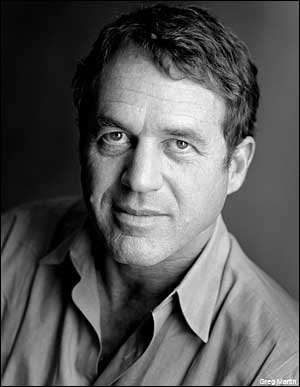
William Langewiesche - from his Facebook page
Langewische devotes considerable attention to the exploits of AQ Khan, the father of the Pakistani bomb. It seemed to me a poor choice for him to have done so. This material is available elsewhere. He would have done better to explore in depth some other aspects of his large, well-informed knowledge. One item that was particularly informative was his discussion of a policy wonk reporter busily documenting everything in an obscure journal read only by those in the nuclear industry. That was quite interesting.
This is a good read, one that offers some new information and perspectives on a serious policy issue, a bit wonky, but that’s ok by me.
=============================EXTRA STUFF
The author's FB page
Langewiesche has written several books. These originate in his articles. Here are a few links to sites where you can find many of his outstanding articles. Take a look. You will not be sorry.
Articles in Vanity Fair
More, on Longform.com
And if that is not enough, links to more on The Electric Typewriter
William Langewiesche - from his Facebook page
Langewische devotes considerable attention to the exploits of AQ Khan, the father of the Pakistani bomb. It seemed to me a poor choice for him to have done so. This material is available elsewhere. He would have done better to explore in depth some other aspects of his large, well-informed knowledge. One item that was particularly informative was his discussion of a policy wonk reporter busily documenting everything in an obscure journal read only by those in the nuclear industry. That was quite interesting.
This is a good read, one that offers some new information and perspectives on a serious policy issue, a bit wonky, but that’s ok by me.
=============================EXTRA STUFF
The author's FB page
Langewiesche has written several books. These originate in his articles. Here are a few links to sites where you can find many of his outstanding articles. Take a look. You will not be sorry.
Articles in Vanity Fair
More, on Longform.com
And if that is not enough, links to more on The Electric Typewriter

January 3, 2023
Rigoroso e appassionante, alla maniera di Langewiesche: PREOCCUPANTE, al solito.

July 5, 2026
Inchiesta giornalistica sulla storia recente della proliferazione nucleare, che offre al lettore una serie di interessanti prospettive sul tema: che per un gruppo terroristico è molto più difficile di quanto si possa immaginare appropriarsi del materiale necessario ad assemblare una bomba atomica; che, venuto meno il sistema di equilibri e alleanze garantito dalla Guerra Fredda, il nucleare è diventata l’arma di scelta anche di molti paesi “poveri”; che le tecnologie e le informazioni necessarie per costruire armi atomiche sono ormai facilmente accessibili e alla portata di quelle nazioni che abbiano voglia e risorse per appropriarsene; che nessun tentativo di arginare la proliferazione (sanzioni, normative, sforzi diplomatici, controlli del flusso dei materiali etc.) potrà impedire a chi lo voglia di costruirsi un arsenale atomico; che, nonostante tutto, un olocausto atomico globale è alla prova dei fatti uno scenario inverosimile nel mondo post Guerra Fredda, e la logica della deterrenza, anche a livello locale, rimane ancora valida.
Ampio spazio è dedicato alla vicenda dello scienziato Abdul Quadeer Khan, il “padre” dell’atomica pakistana, vicenda che appare paradigmatica di molte delle conclusioni citate sopra.
La nota negativa del libro è una certa assenza di struttura: il saggio è un collage di articoli precedentemente pubblicati in cui si avverte la mancanza di una sufficiente rielaborazione o riscrittura nell’ottica di un testo unitario. A parte questo, è una lettura altamente informativa e, nonostante il libro sia apparso per la prima volta quasi vent’anni fa, quanto mai attuale.
Ampio spazio è dedicato alla vicenda dello scienziato Abdul Quadeer Khan, il “padre” dell’atomica pakistana, vicenda che appare paradigmatica di molte delle conclusioni citate sopra.
La nota negativa del libro è una certa assenza di struttura: il saggio è un collage di articoli precedentemente pubblicati in cui si avverte la mancanza di una sufficiente rielaborazione o riscrittura nell’ottica di un testo unitario. A parte questo, è una lettura altamente informativa e, nonostante il libro sia apparso per la prima volta quasi vent’anni fa, quanto mai attuale.

February 16, 2026
Tre stelline e mezza. In certi tratti si dilunga un po' su particolari non così rilevanti, ma offre una interessante disanima sulla proliferazione atomica da parte di governi di Stati meno sviluppati e attentatori vari.

March 5, 2026
Questo saggio si legge come un’inchiesta vera e propria, capace di mostrare quanto sia complesso e poco trasparente il mondo della proliferazione nucleare. Langewiesche racconta la storia di A.Q. Khan (il leggendario Prometeo del Pakistan) e del suo network come se stesse aprendo una finestra su un mercato sotterraneo fatto di scambi, interessi e ambiguità che raramente arrivano al grande pubblico. La sua scrittura è diretta, asciutta, e riesce a rendere chiari anche temi molto tecnici.
Le potenze nucleari appaiono piene di contraddizioni - è smontata l’idea che esistano “buoni” e “cattivi” - spesso complici del sistema che dicono di voler fermare. Langewiesche non punta il dito in modo semplice, ma mostra un mondo pieno di zone grigie, dove scienziati, politici e servizi segreti entrano ed escono dal quadro con motivazioni tutt’altro che pure.
Il messaggio finale è tosto: secondo l’autore, la proliferazione nucleare ormai non è qualcosa che possiamo davvero “bloccare”. Le conoscenze circolano, i materiali pure, e soprattutto l’essere umano con le sue debolezze rimane imprevedibile. Più che sperare di chiudere questo bazar, dobbiamo capire come convivere con un mondo in cui esiste.
Conclusione un po’ amara, ma estremamente lucida.
Le potenze nucleari appaiono piene di contraddizioni - è smontata l’idea che esistano “buoni” e “cattivi” - spesso complici del sistema che dicono di voler fermare. Langewiesche non punta il dito in modo semplice, ma mostra un mondo pieno di zone grigie, dove scienziati, politici e servizi segreti entrano ed escono dal quadro con motivazioni tutt’altro che pure.
Il messaggio finale è tosto: secondo l’autore, la proliferazione nucleare ormai non è qualcosa che possiamo davvero “bloccare”. Le conoscenze circolano, i materiali pure, e soprattutto l’essere umano con le sue debolezze rimane imprevedibile. Più che sperare di chiudere questo bazar, dobbiamo capire come convivere con un mondo in cui esiste.
Conclusione un po’ amara, ma estremamente lucida.
November 2, 2025
Un reportage essenziale per capire quanto sia fragile il confine tra progresso scientifico e follia geopolitica.

January 1, 2013
Gives a great perspective on how easy it could be for terrorists to get their hands on nuclear material from one of the former Soviet secret nuclear cities, where international efforts are now trying to warehouse the stuff. A short, gripping book, very illuminating and hard to put down.
August 5, 2013
William Langewiesche’s new book is a compelling mix of narrative reporting, profiles of striking individuals, and scenaric thinking about the contemporary nuclear proliferation. His focus is on the mechanisms by which access to nuclear weapons technology is broadening, and what this broadening access means about the likelihood that terrorists will be able to launch a nuclear attack on a Western target. The book focuses strictly on the threat of full-blown nuclear bombs, disregarding the question of radiological attacks.
The most interesting chapter in the book addresses the question of what it would take for would-be nuclear terrorists to put together a bomb without state sponsorship. Artfully weaving together detailed reporting of on-the-ground conditions facing would-be nuclear terrorism entrepreneurs with vivid scenaric imaginings of how they would have to conduct their business in the face of that environment, the narrative takes the reader on an virtual journey along the route that illicit nuclear material would have to travel to get to the United States in the form of a bomb.
Langewiesche begins in Russia, looking at nuclear facilities that indeed seem to be lightly guarded. What it would take for nuclear material from one of these facilities to somehow end up in the hands of terrorists who would want to use it to attack the United States? He dismisses as improbable the possibility that material stolen by strong-arm methods could make it out of the country. An inside job would be feasible, he concedes, but this raises the question of how an insider would execute the necessary next steps: getting it out of the country (say, via the Caucasus) would still be difficult; finding a trusted buyer (say, in Istanbul) almost impossible; secretly constructing a bomb from the material fraught; and smuggling the device (say, across the Mexican border) to its intended target challenging. Langewiesche notes that each step would require dealing with a different network of bad actors, any of whom might betray the process. One of Langewieche’s most arresting passages comes with his programmatic suggestion as to how the US might want to collaborate with some of these bad actors:
"A tired joke often repeated is that the best way to transport an atomic bomb is inside a bale of marijuana. The point, of course, is that the borders are wide open. The analogy, however, is fundamentally misleading, because a small amount of highly enriched uranium (HEU) is worth far more than any conceivable load of narcotics, and it moves in a miniscule marketplace as a one-shot deal, dangerous to everyone involved, difficult to replace, and of infinitely greater importance to stop. Indeed, the proximity between the two trades may seem an unfortunate coincidence, but it could be turned into a fortunate one if the differences were exploited in a quiet conversation with a few key people. The problem is that those people are not likely to be local officials. Finding them would require casual exploration along the preexisting line of defense, in remote valleys below high mountain passes, around certain ports, and especially along the national boundaries that cross smuggling routes—borders aligned primarily east and west in Central Asia, and north and south on the Caucasian side of Caspian Sea. More fundamental, it would require accepting that regions beyond government control are rarely as chaotic as they seem to be to Western officials. The foundation work for effective interdiction would involve poking around meekly, usually by taxi, sometimes with an amateur translator and guide. The purpose would not be to recruit peasant armies and spies, but to get a feel for the informal or nongovernmental functioning of power. In most areas, only two or three people are at the top, and they tend to be at once aggressive and benevolent men with interests larger than just the movement of drugs. Their names would quickly become apparent. Some might be dangerous to approach, but most would be hospitable to strangers. On the second or third trip back, a Western agent might make it known that if ever a load of genuine HEU showed up, a large bounty would be paid…."
On the basis of decades of reporting from lawless regions, Langewiesche concludes that these smuggle routes, which appear to Western eyes terribly threatening, are in fact “tightly sewed up, nothing moves without notice, and any transborder activity requires approval.” The trick is to have the patience to find out who the real authorities are, and the temerity to partner with them.] His summary judgment is that, absent a state sponsor, a non-state actor would have little chance of successfully pulling off a nuclear attack.
Having dismissed the prospect of freelancing nuclear terrorists, Langewiesche turns his attention to a different global market for nuclear weapons, the very active one in which states rather than private actors are the buyers. Here Langewiesche recounts with brio the story of Pakistan’s chief nuclear engineer Abdul Qadeer Khan, who led Pakistan into the nuclear weapons club in 1998, while at the same time running a vast business selling nuclear bomb-making technology to other states. The arc of Khan’s life runs from his childhood as a refugee of the Indian partition in the 1940s; to Holland in the 1970s, where Khan developed the expertise to build bombs and stole the necessary blueprints; through the 1980s, when Khan, now back in Pakistan, set up a series of front companies that allowed him to buy, mainly from European engineering companies, the “dual use” equipment (above all, centrifuges) necessary for Pakistan to enrich uranium; to the 1990s, when Khan leveraged his job as the hero of Pakistan’s nuclear program to build a lucrative personal business empire selling bomb-making technologies to clients such as Libya, North Korea, Iran, and more. Langewiesche argues that although vanity and cupidity motivated Khan’s business, it was his powerful resentment about the “second class citizenship” of the Global South that helped him justify it, and his hero-status in Pakistan’s corrupted political culture that made him believe that he could get away with it.
The final chapter deals with the unraveling of Khan’s business. For most of the decade before 9-11, Khan was hiding his business as the world’s leading nuclear proliferator in plain sight. Relying exclusively on open sources, a sharp-eyed nuclear industry journalist named Mark Hibbs reported through the 1990s and into 2004 on Pakistan’s central role as a nuclear proliferator, helping to create a public record of events that US counter-proliferation experts continue to claim that US clandestine services knew nothing about. In the end, Khan’s fall came through a complex series of events, the linchpin of which was the decision of his Libyan customers in late 2003 to come clean about the fact that they had contracted with Khan and Pakistan for a $100m turnkey nuclear weapons facility. Confronted by the CIA with undeniable evidence of Khan’s activities, Pakistani President Mushareff in February 2004 placed Khan under house arrest and forced him to make a public mea culpa. By that time, of course, Iranian enrichment efforts were already in swing, and the prospect of a second unstable Islamic country getting a bomb loomed large.
The most interesting chapter in the book addresses the question of what it would take for would-be nuclear terrorists to put together a bomb without state sponsorship. Artfully weaving together detailed reporting of on-the-ground conditions facing would-be nuclear terrorism entrepreneurs with vivid scenaric imaginings of how they would have to conduct their business in the face of that environment, the narrative takes the reader on an virtual journey along the route that illicit nuclear material would have to travel to get to the United States in the form of a bomb.
Langewiesche begins in Russia, looking at nuclear facilities that indeed seem to be lightly guarded. What it would take for nuclear material from one of these facilities to somehow end up in the hands of terrorists who would want to use it to attack the United States? He dismisses as improbable the possibility that material stolen by strong-arm methods could make it out of the country. An inside job would be feasible, he concedes, but this raises the question of how an insider would execute the necessary next steps: getting it out of the country (say, via the Caucasus) would still be difficult; finding a trusted buyer (say, in Istanbul) almost impossible; secretly constructing a bomb from the material fraught; and smuggling the device (say, across the Mexican border) to its intended target challenging. Langewiesche notes that each step would require dealing with a different network of bad actors, any of whom might betray the process. One of Langewieche’s most arresting passages comes with his programmatic suggestion as to how the US might want to collaborate with some of these bad actors:
"A tired joke often repeated is that the best way to transport an atomic bomb is inside a bale of marijuana. The point, of course, is that the borders are wide open. The analogy, however, is fundamentally misleading, because a small amount of highly enriched uranium (HEU) is worth far more than any conceivable load of narcotics, and it moves in a miniscule marketplace as a one-shot deal, dangerous to everyone involved, difficult to replace, and of infinitely greater importance to stop. Indeed, the proximity between the two trades may seem an unfortunate coincidence, but it could be turned into a fortunate one if the differences were exploited in a quiet conversation with a few key people. The problem is that those people are not likely to be local officials. Finding them would require casual exploration along the preexisting line of defense, in remote valleys below high mountain passes, around certain ports, and especially along the national boundaries that cross smuggling routes—borders aligned primarily east and west in Central Asia, and north and south on the Caucasian side of Caspian Sea. More fundamental, it would require accepting that regions beyond government control are rarely as chaotic as they seem to be to Western officials. The foundation work for effective interdiction would involve poking around meekly, usually by taxi, sometimes with an amateur translator and guide. The purpose would not be to recruit peasant armies and spies, but to get a feel for the informal or nongovernmental functioning of power. In most areas, only two or three people are at the top, and they tend to be at once aggressive and benevolent men with interests larger than just the movement of drugs. Their names would quickly become apparent. Some might be dangerous to approach, but most would be hospitable to strangers. On the second or third trip back, a Western agent might make it known that if ever a load of genuine HEU showed up, a large bounty would be paid…."
On the basis of decades of reporting from lawless regions, Langewiesche concludes that these smuggle routes, which appear to Western eyes terribly threatening, are in fact “tightly sewed up, nothing moves without notice, and any transborder activity requires approval.” The trick is to have the patience to find out who the real authorities are, and the temerity to partner with them.] His summary judgment is that, absent a state sponsor, a non-state actor would have little chance of successfully pulling off a nuclear attack.
Having dismissed the prospect of freelancing nuclear terrorists, Langewiesche turns his attention to a different global market for nuclear weapons, the very active one in which states rather than private actors are the buyers. Here Langewiesche recounts with brio the story of Pakistan’s chief nuclear engineer Abdul Qadeer Khan, who led Pakistan into the nuclear weapons club in 1998, while at the same time running a vast business selling nuclear bomb-making technology to other states. The arc of Khan’s life runs from his childhood as a refugee of the Indian partition in the 1940s; to Holland in the 1970s, where Khan developed the expertise to build bombs and stole the necessary blueprints; through the 1980s, when Khan, now back in Pakistan, set up a series of front companies that allowed him to buy, mainly from European engineering companies, the “dual use” equipment (above all, centrifuges) necessary for Pakistan to enrich uranium; to the 1990s, when Khan leveraged his job as the hero of Pakistan’s nuclear program to build a lucrative personal business empire selling bomb-making technologies to clients such as Libya, North Korea, Iran, and more. Langewiesche argues that although vanity and cupidity motivated Khan’s business, it was his powerful resentment about the “second class citizenship” of the Global South that helped him justify it, and his hero-status in Pakistan’s corrupted political culture that made him believe that he could get away with it.
The final chapter deals with the unraveling of Khan’s business. For most of the decade before 9-11, Khan was hiding his business as the world’s leading nuclear proliferator in plain sight. Relying exclusively on open sources, a sharp-eyed nuclear industry journalist named Mark Hibbs reported through the 1990s and into 2004 on Pakistan’s central role as a nuclear proliferator, helping to create a public record of events that US counter-proliferation experts continue to claim that US clandestine services knew nothing about. In the end, Khan’s fall came through a complex series of events, the linchpin of which was the decision of his Libyan customers in late 2003 to come clean about the fact that they had contracted with Khan and Pakistan for a $100m turnkey nuclear weapons facility. Confronted by the CIA with undeniable evidence of Khan’s activities, Pakistani President Mushareff in February 2004 placed Khan under house arrest and forced him to make a public mea culpa. By that time, of course, Iranian enrichment efforts were already in swing, and the prospect of a second unstable Islamic country getting a bomb loomed large.
June 12, 2012
This little book is packed with info interesting to me as a lay reader (ie, all I know about nuclear science and nuclear proliferation is what I've absorbed from occasional newspaper articles) and it's accessibly-written, too. I see there's an Amazon review that severely critiques Langewiesche's description of the science in the nuclear bombs that went off over Japan -- fair enough, I don't know enough about the subject to notice such errors. My interest was in the details of how nuclear proliferation happened. Langewiesche's account jumps around a bit and spends more time than necessary on the personal life of Abdul Qadeer Khan, the Pakistani nuclear scientist who stole info on making nuclear bombs and leaked it to other countries. Nonetheless, I found the narrative eye-opening.
"While dragging the United States into a disastrous war in the pursuit of phantom weapons programs in Iraq, the US government condoned the tangible actions of Pakistan, which . . . was delivering nuclear weapons capabilities into the hands of America's most significant enemies, including regimes with overt connections to Islamic terrorists." Oh, the irony. (I've read documentation from elsewhere about the stuff in the first clause, and this book documents the stuff in the second. Seems to me that juxtaposing the two constitutes context for thinking about the big picture, not a cheap political shot.)
This quote from a Pakistani source stood out for me, too: "The best way to fight proliferation is to pursue global disarmament. Fine, great, sure, if you expect that to happen. But you cannot have a world order in which you have five or eight nuclear weapon states on the one hand, and the rest of the international community on the other. There are many places like Pakistan, poor countries which have legitimate security concerns every bit as legitimate as yours. And yet you ask them to address these concerns without nuclear weapons, while you have nuclear weapons and everything else? It is not a question of what is fair or right or wrong. It is simply not going to work."
"While dragging the United States into a disastrous war in the pursuit of phantom weapons programs in Iraq, the US government condoned the tangible actions of Pakistan, which . . . was delivering nuclear weapons capabilities into the hands of America's most significant enemies, including regimes with overt connections to Islamic terrorists." Oh, the irony. (I've read documentation from elsewhere about the stuff in the first clause, and this book documents the stuff in the second. Seems to me that juxtaposing the two constitutes context for thinking about the big picture, not a cheap political shot.)
This quote from a Pakistani source stood out for me, too: "The best way to fight proliferation is to pursue global disarmament. Fine, great, sure, if you expect that to happen. But you cannot have a world order in which you have five or eight nuclear weapon states on the one hand, and the rest of the international community on the other. There are many places like Pakistan, poor countries which have legitimate security concerns every bit as legitimate as yours. And yet you ask them to address these concerns without nuclear weapons, while you have nuclear weapons and everything else? It is not a question of what is fair or right or wrong. It is simply not going to work."

Read
February 5, 2009In this sobering report, William Langewiesche (formerly at The Atlantic Monthly and now at Vanity Fair) asserts that there is no way to prevent Third World countries from obtaining nuclear weapons. We can only "accept the equalities of a maturing world in which many countries have acquired atomic bombs, and some may use them," he claims. Critics praised Langewiesche's concise, clearheaded prose and rigorous investigation techniques. However, they were disappointed that the previously published articles comprising the book had not been more thoroughly reworked into a fluid narrative, which results in an awkward structure, clumsy transitions, and multiple repetitions. A few also questioned his choice to end the book with a chapter on Mark Hibbs, a journalist covering the nuclear industry. Although The Atomic Bazaar is not a perfect book, critics agreed that it is an extremely important one.
This is an excerpt from a review published in Bookmarks magazine.

October 20, 2013
The Atomic Bazaar is a short read, but highly informative. Though, it would be more accurate to label it a biography of sorts regarding one Dr. Abdul Q. Khan, as the majority of the book deals with him. In fact, one could go so far as to say AQ Khan is the foremost nuclear proliferator.
It highlights that for a terrorist group to steal a whole bomb is implausible, but to steal enriched uranium is plausible. From there, it would just be a matter of obtaining the hardware, which the egotistical Khan would be more than willing to provide for the right price.
Langwiesche makes his disdain for US nuclear and foreign policy very well known. This aside, the book is very straightforward. At times, the prose seems more like a fiction novel than a journalistic report. This is not a negative thing; rather, different than I expected.
The Atomic Bazaar is a well-researched read, and a recommended start for anybody curious to know more about nuclear proliferation.
It highlights that for a terrorist group to steal a whole bomb is implausible, but to steal enriched uranium is plausible. From there, it would just be a matter of obtaining the hardware, which the egotistical Khan would be more than willing to provide for the right price.
Langwiesche makes his disdain for US nuclear and foreign policy very well known. This aside, the book is very straightforward. At times, the prose seems more like a fiction novel than a journalistic report. This is not a negative thing; rather, different than I expected.
The Atomic Bazaar is a well-researched read, and a recommended start for anybody curious to know more about nuclear proliferation.

April 5, 2010
I very rarely read non-fiction policy books like this, much to the chagrin of my Georgetown government professors, I'm sure...but I REALLY LOVED another non-fiction book by this author (The Outlaw Sea -- read it! read it!) so I figured I'd give this one a try. I definitely liked it and found it eminently more readable than most others of the genre -- maybe because he used to be a Vanity Fair reporter, he really knows how to make a topic accessible without dumbing it down too much. His political leanings (staunch Democrat and opponent of GW Bush, war in Iraq, etc) are very apparent, but don't overwhelm the story. In fact, that's what he does well here -- tells a story, while still giving you a pretty good factual-based commentary on nuclear proliferation.

September 17, 2013
I find this book educational; it gives enough historical details, so I highly recommend it to readers. We can be educated about the real nature of nuclear weapons- why it has been a hot issue among the powerful nations. Having read this book, I had realization that as an Asian living in a developing country, there is reason to be scared of your neighbors. Though I hate nuclear proliferation, I find it somehow reasonable that in the name of national security – since declaring war between two countries is unpredictable nowadays, it is not uncalled for this ambition just the likes of hostile reactions between Pakistan and India in 1998. Moreover, having read this book has revved my interest up in reading books on history, politics, and current affairs.

October 5, 2009
The Atomic Bazaar dives into the main issues surrounding nuclear weapons. Those issues are; the primarily defensive nature of nuclear bombs (unless someone is crazy enough to use one), the problem with nations that have bombs telling other nations they should not have them, as technology increases it will be harder to keep these weapons out of people hands, and how the threat of terrorism is amplified because of the amount of damage that one person could inflict. This book also gives a short chronological history of nuclear weapons.

July 24, 2013
There is no more scathing indictment of the callowness of the Bush administration.

August 19, 2025
Una lettura che offre uno spaccato approfondito sul sottobosco del nucleare, in particolare sulle dinamiche legate al suo utilizzo bellico per i paesi non inclusi nel trattato di non belligeranza. Tra le righe, però, emerge anche la visione talvolta supponente, opinionata e a tratti razzista di Langewiesche, che parla sprezzantemente di “paesi di serie A” e “paesi di serie Z”. La ricerca, quasi maniacale, mette a disposizione una grande quantità di dati, ma lascia poco spazio all’elemento umano. Più che un libro, è un lungo articolo travestito da libro: apprezzabile come insight storico e per avere un “bel” quadro generale del tema e dei sotterfugi politici.

February 4, 2018
Little more than a biography of A.Q. Kahn, this book doesn't really describe an international atomic weapons trade (other than try to dispel the notion that one exists). What the book does do--successfully--is explain how incredibly difficult the weapon manufacturing process is, from securing enough nuclear material, to the technology required to unlocking its full potential. Where the book falls short is it rarely leaves Pakistan. A more comprehensive book would have included a lengthy trip to India, as well as visits to Belarus, Iraq, North Korea, and perhaps a few other locations.
August 26, 2019
This review is based on an audio version of the book. Nuclear proliferation made interesting. Even though the book is now well more than 10 years old, it still feels timely. You don’t have to have much prior knowledge of the nuclear industry or weapons to enjoy this book. It ranges from interesting tidbits such as the hole in the fence that workers use at a Soviet nuclear facility in order to bypass the tedious security checks, to a lengthy description of Pakistan’s entry into the nuclear arms race. Credit also goes to Tom Weiner for his excellent narration.

March 13, 2026
3.5
Langewiesche ci offre una disamina lucida e spassionata delle vicende legate alla diffusione della “bomba dei poveri” senza scadere nel grottesco catastrofismo. Da leggere, ancor più nei tempi odierni di smarrimento politico e culturale.
“Se si fosse andati fino in fondo, avremmo assistito precisamente a quella guerra insensata che molti vedono come uno dei pericoli maggiori del possesso dell'atomica da parte di paesi con istituzioni politiche e militari inaffidabili, catene di comando e controllo rudimentali, fonti di informazione inadeguate, e «finestre di opportunità» troppo strette.”
Langewiesche ci offre una disamina lucida e spassionata delle vicende legate alla diffusione della “bomba dei poveri” senza scadere nel grottesco catastrofismo. Da leggere, ancor più nei tempi odierni di smarrimento politico e culturale.
“Se si fosse andati fino in fondo, avremmo assistito precisamente a quella guerra insensata che molti vedono come uno dei pericoli maggiori del possesso dell'atomica da parte di paesi con istituzioni politiche e militari inaffidabili, catene di comando e controllo rudimentali, fonti di informazione inadeguate, e «finestre di opportunità» troppo strette.”

February 4, 2018
c'è un seguito ed è la Corea del Nord.

September 11, 2018
A slender but highly informative book on this fascinating and scary topic. By turns reassuring and unnerving. Recommended for those whose interests lean in this direction.

Read
March 31, 2025Very Informative Book.

September 19, 2025
Saggio interessante sulla storia dell' atomica post WWII
Non particolarmente intrigante come libro ma si fa leggere bene
Non particolarmente intrigante come libro ma si fa leggere bene

October 30, 2025
I listened to the audio book for a large portion. Could have done without the Indian / Pakistani accent but it reads well on audio. In fact better than reading, as it is dense content with heavy complex background.
This book felt like a slight departure from Langewiesche's earlier writing styles (90s) but still clear and clean writing with that subtle edginess and humor that gives life to the words.
This book felt like a slight departure from Langewiesche's earlier writing styles (90s) but still clear and clean writing with that subtle edginess and humor that gives life to the words.

July 9, 2025
Very inciteful examination of the proliferation of nuclear weapons to the 3rd World
August 31, 2008
I bought this book because Langewiesche had written "The Outlaw Sea", which I thoroughly enjoyed. Second, I believe that nuclear proliferation is a most serious, growing problem that does not get anywhere near enough, sustained attention.
Langewiesche takes the reader through a possible scenario of a terrorist attempting to assemble an atomic bomb of sorts, involving Russian nuclear instatllations and the Kurdish border (Iraq-Turkey). The author concludes that the scenario, from a terrorists's point of view, is a very difficult one to realise, but that the Western governmental safeguards are not the one that would prevent it from happening.
The book then turns to the Pakistani Dr.Khan and his worldwide network of procuring and exporting 'nuclear parts' to state actors (Libya, North Korea ...) and who (e.g. US government ..) knew what when about his activities, and what they did or did not do about this proliferation activity.
Having read this book, I got a very queasy feeling. This is a very, very messy world. Nuclear proliferation will continue to go on unchecked if government decision-makers consider it a negotiation chip and if this issue remains subject to all manner of related and unrelated rivalries (e.g. economic; nuclear export business). The IAEA (Int'l Atomic Energy Agency, part of the UN) promotes the use of civil nuclear power and atempt to check its military application. Bottom-line control, at borders, with regard to export licenses, international shipping, secret service's agendas, is not working. One can only hope that this chaotic mess somehow prevents a limited nuclear war between developing country states, further illegal exports from the West and a terrorist organisation utterly bent on making a nuclear point.
Langewiesche takes the reader through a possible scenario of a terrorist attempting to assemble an atomic bomb of sorts, involving Russian nuclear instatllations and the Kurdish border (Iraq-Turkey). The author concludes that the scenario, from a terrorists's point of view, is a very difficult one to realise, but that the Western governmental safeguards are not the one that would prevent it from happening.
The book then turns to the Pakistani Dr.Khan and his worldwide network of procuring and exporting 'nuclear parts' to state actors (Libya, North Korea ...) and who (e.g. US government ..) knew what when about his activities, and what they did or did not do about this proliferation activity.
Having read this book, I got a very queasy feeling. This is a very, very messy world. Nuclear proliferation will continue to go on unchecked if government decision-makers consider it a negotiation chip and if this issue remains subject to all manner of related and unrelated rivalries (e.g. economic; nuclear export business). The IAEA (Int'l Atomic Energy Agency, part of the UN) promotes the use of civil nuclear power and atempt to check its military application. Bottom-line control, at borders, with regard to export licenses, international shipping, secret service's agendas, is not working. One can only hope that this chaotic mess somehow prevents a limited nuclear war between developing country states, further illegal exports from the West and a terrorist organisation utterly bent on making a nuclear point.

November 15, 2007
A fascinating look at the acquisition of nuclear arms by Pakistan, as well as other countries. The book gave enough scientific explanation for me to be able to follow the details. Meanwhile, the personal stories of the scientists, politicians, and reporters were what really pulled this book together for me. Unfortunately, the book seems to be comprised of articles written for other purposes and the author did little to pull them together into a cohesive or flowing narrative. Thus, from one chapter to the next, there was often a shift in perspective or location that was somewhat disjointed.
Perhaps the most interesting chapter analyzed what it would take for a terrorist group to build a nuclear bomb without state sponsorship or state knowledge. Reviewing the conditions of protection of nuclear materials and the scientific requirements, Langewiesche makes clear that it would be possible, though not simple.
Perhaps the most interesting chapter analyzed what it would take for a terrorist group to build a nuclear bomb without state sponsorship or state knowledge. Reviewing the conditions of protection of nuclear materials and the scientific requirements, Langewiesche makes clear that it would be possible, though not simple.
June 18, 2007
If you liked William Langeweische's American Ground or his writings from the Atlantic Monthly, this is a good book to have.
Ever wonder just how easy it is to build a nuclear bomb? Just take two uranium tablets (at 75 lbs. each), a ladder, and... No spoilers!
Langeweische does a good job countering the prevailing notion that our biggest nuclear threat is terrorism. Langeweische argues that third world countries are much more likely to obtain nukes and then spread them, (see part III) about Pakistan's A.Q. Khan ("The Wrath of Kahn"). LW puts you behind the scenes in today's nuke market and contextualizes the rise of third-world nuclear powers.
Particularly good/horrifying moment: the book begins with a 15 page description of the processes involved in a nuclear explosion. Eeeeeee...
Ever wonder just how easy it is to build a nuclear bomb? Just take two uranium tablets (at 75 lbs. each), a ladder, and... No spoilers!
Langeweische does a good job countering the prevailing notion that our biggest nuclear threat is terrorism. Langeweische argues that third world countries are much more likely to obtain nukes and then spread them, (see part III) about Pakistan's A.Q. Khan ("The Wrath of Kahn"). LW puts you behind the scenes in today's nuke market and contextualizes the rise of third-world nuclear powers.
Particularly good/horrifying moment: the book begins with a 15 page description of the processes involved in a nuclear explosion. Eeeeeee...

May 15, 2007
An Atomic Bazaar indeed! And yet, somewhat akin to an ALA conference.
"...in Pakistan the intent to sell nuclear-weapons technology lay clearly in view. In 1989, for instance, the Khan Research Laboratories held the first international conference in what would be a fifteen-year series of occasional courses and symposia on issues pertaining to uranium enrichmentment and centrifuges.....By the end of the 1990's the Khan Research Laboratories were sending salesmen to international arms shows - in Malaysia, Indonesia, Abu Dhabi, and back home in Karachi - where they set up booths and passed out A.Q. Khan buttons and brochures advertising their conventional and nuclear products(158).
Seriously though, this book is really intruiging and a slim 179 pages.
"...in Pakistan the intent to sell nuclear-weapons technology lay clearly in view. In 1989, for instance, the Khan Research Laboratories held the first international conference in what would be a fifteen-year series of occasional courses and symposia on issues pertaining to uranium enrichmentment and centrifuges.....By the end of the 1990's the Khan Research Laboratories were sending salesmen to international arms shows - in Malaysia, Indonesia, Abu Dhabi, and back home in Karachi - where they set up booths and passed out A.Q. Khan buttons and brochures advertising their conventional and nuclear products(158).
Seriously though, this book is really intruiging and a slim 179 pages.

September 21, 2008
Fascinating analysis on the underground of nuclear trafficking. Langewiesche analyzes the skill set a group of terrorists would need to have in order to get a hold of and detonate a nuclear bomb. He only lost me when he got technical on the bombs themselves, but he managed to keep things relatively accessible even to a technoidiot like me.
Yet he doesn't play down the threat. America and Russia we don't really need to worry about; the failsafes in place (even on the bombs themselves) make it extremely difficult for terrorist organizations to have the necessary skill set and resources. Now if Iran builds a bomb, we may have a different set of problems.
Yet he doesn't play down the threat. America and Russia we don't really need to worry about; the failsafes in place (even on the bombs themselves) make it extremely difficult for terrorist organizations to have the necessary skill set and resources. Now if Iran builds a bomb, we may have a different set of problems.
Displaying 1 - 30 of 60 reviews