

What do you think?

Murder Under The Microscope: A Personal History of Homicide
In this compelling and chilling memoir, a top forensic investigator lifts the lid on the most notable and notorious murder investigations of his forty-year career.
How is murder investigated and what role does forensic science play in solving cases? In this gripping book Jim Fraser gives a unique insight into forensic science and examines in detail some of the UK's most high-profile murder investigations in recent decades, including the deaths of Rachel Nickell, Damilola Taylor and Gareth Williams the GCHQ code breaker.
Drawing on his personal experience as a forensic scientist and cold case reviewer, Fraser reveals how each of these cases unfolded as a human, investigative and scientific puzzle, and how some were solved and why others remain unsolved or controversial even today.
How is murder investigated and what role does forensic science play in solving cases? In this gripping book Jim Fraser gives a unique insight into forensic science and examines in detail some of the UK's most high-profile murder investigations in recent decades, including the deaths of Rachel Nickell, Damilola Taylor and Gareth Williams the GCHQ code breaker.
Drawing on his personal experience as a forensic scientist and cold case reviewer, Fraser reveals how each of these cases unfolded as a human, investigative and scientific puzzle, and how some were solved and why others remain unsolved or controversial even today.
352 pages, Hardcover
First published October 1, 2020
Ratings & Reviews
Friends & Following
Create a free account to discover what your friends think of this book!
Community Reviews
Displaying 1 - 30 of 34 reviews

June 18, 2021
Forensic specialist Jim Fraser is the Research Professor in Forensic Science at the University of Strathclyde and a commissioner on the Scottish Criminal Cases Review Commission. He has over four decades experience as an expert witness, case reviewer, consultant, policy adviser and researcher.

Professor Jim Fraser
During his career Professor Fraser worked on many murder cases, but only a few left a permanent impression. Cases embedded themselves in Fraser's memory for one of the following reasons: they involve serial killers, child victims, miscarriages of justice, poor investigations, or police misconduct - or they remain unresolved or contentious.
In this book, Fraser shares memories of some of his most memorable cases.
- Robert Black was a Scottish serial killer and pedophile who was suspected of abducting and killing at least 11 children in the 1980s. In 1990, Black was convicted of killing 4 girls.
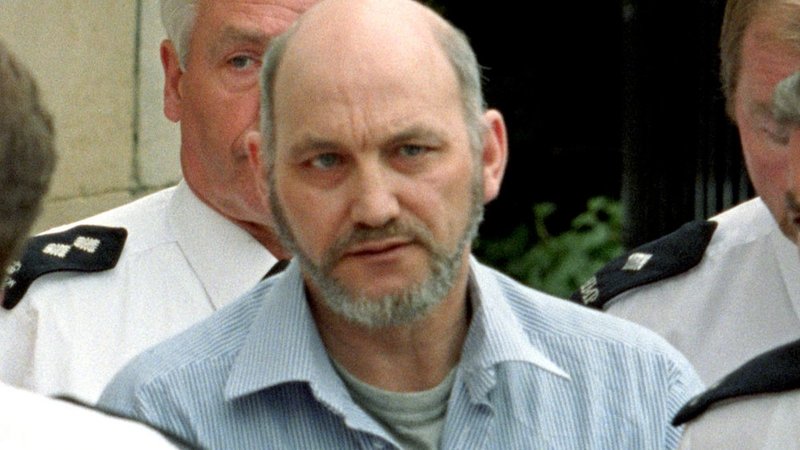
Robert Black
Black was a loner who spent much time on the road. His crimes were spread over six years and occurred across the UK, involving six police forces and two jurisdictions: Scotland and England. Each police force and forensic lab had its own procedures, and there were rivalries that impeded the search for the killer. Professor Fraser writes about the police investigations, the 200,000 people interviewed, the 60,000 statements taken, and the hundreds of items forensically examined.
Once Black was a serious suspect, Fraser and his colleagues were tasked with finding trace evidence from the victims on Black's possessions.....and hair or fibers from Black on the dead children's clothing. This search took YEARS, but nothing conclusive was found, and the trial had to proceed without trace evidence.
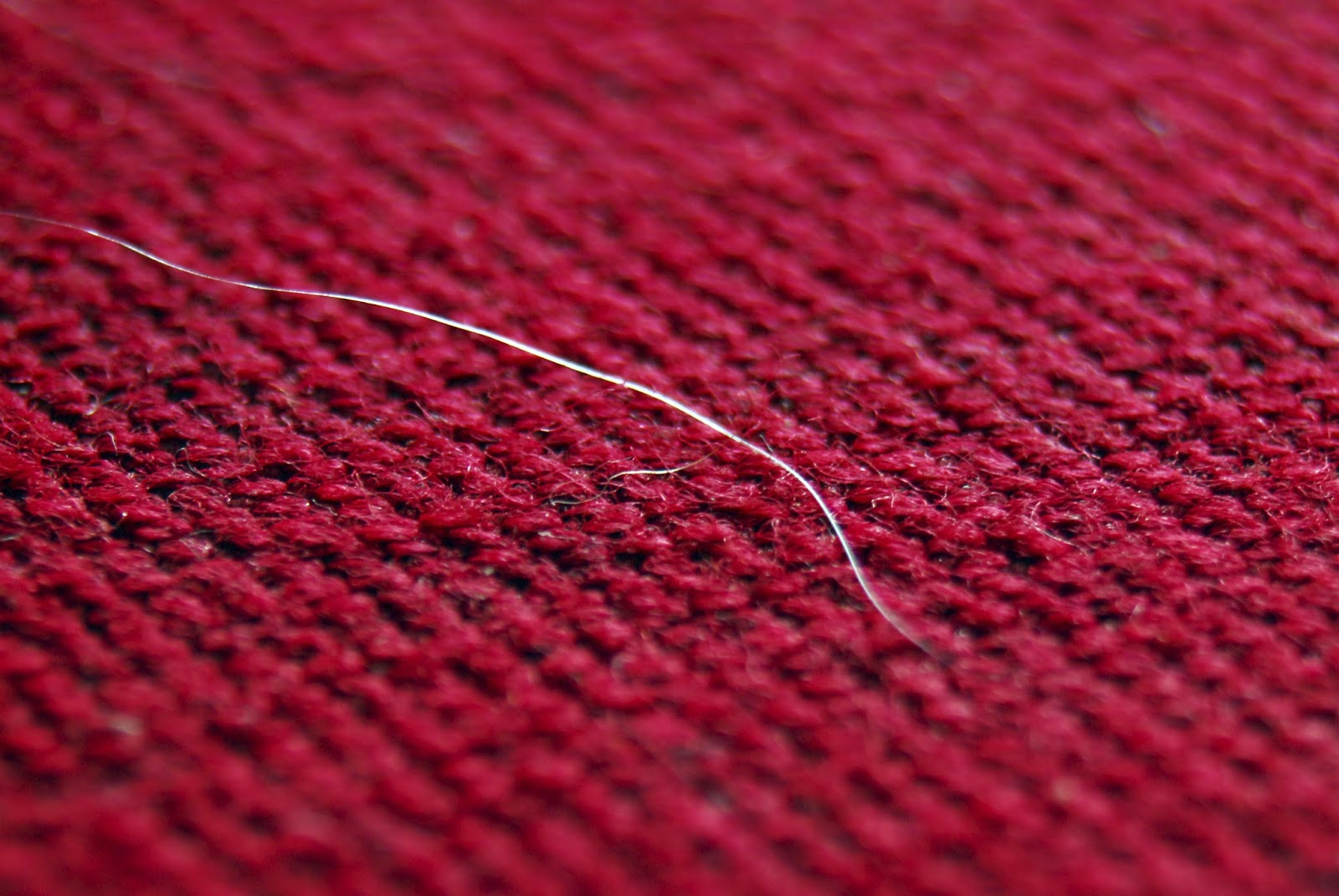
Example of trace evidence
Luckily there was enough circumstantial evidence - Black being seen near various crime scenes - to get him convicted.
*****
- The Yorkshire Ripper, Peter William Sutcliffe, was an English serial killer. In 1981, he was found guilty of murdering 13 women and attempting to murder seven others.
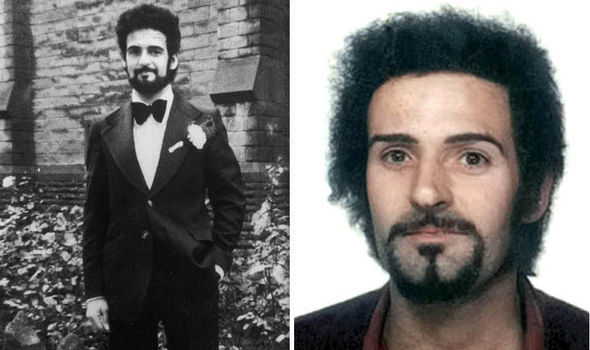
Peter William Sutcliffe
Professor Fraser observes that the Yorkshire Ripper case was one of the most notorious in UK police history because it was ineptly investigated. Sutcliffe was interviewed by the police NINE TIMES before he was arrested, his car was seen near crime scenes, and when he denied even having a vehicle, no one bothered to check.
Before Sutcliffe was identified as the killer, forensic researchers were asked to look for fibers from the murderer's clothing on the victims. However, this was a lost cause. Fraser points out that no one knew what the murderer was wearing, or what color or type of fibers were involved, or whether the Ripper wore the same clothes for each of the crimes. Thus the search was time-consuming, expensive, and futile.
In the end, the Yorkshire Ripper case spawned recommendations to improve police investigations.
*****
In 1996, Michael Stone attacked Lin Russell, and her daughters, 6-year-old Megan and 9-year-old Josie, with a hammer. Lin and Megan were killed, and Josie was badly injured but survived.

Michael Stone
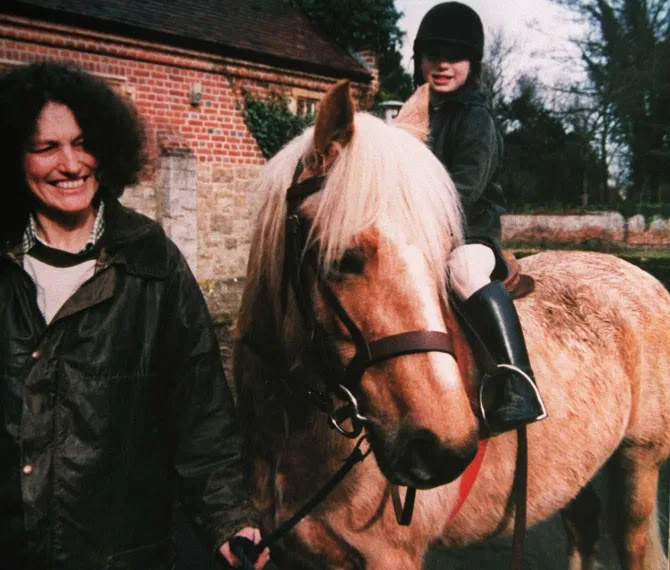
Lin and Megan Russell
When the Russells' bodies were discovered on a country lane, Professor Fraser was called to the crime scene. He describes what he saw and thought. The police - wanting to DO SOMETHING - collected a good deal of material from around the bodies (a lot of it trash) for forensic analysis, but this yielded no evidence. Two months later local residents found a hammer in a hedge near the crime scene....a hedge allegedly searched by the cops.
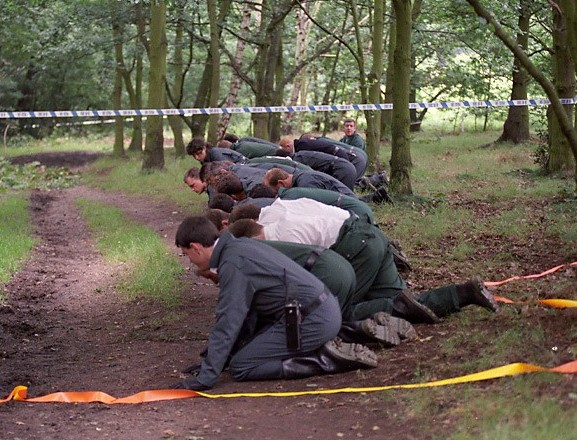
Examination of the crime scene in the Russell Case
A year after the murders, a BBC Crimewatch program appealed for witnesses and information, and a psychiatrist said the e-fit (composite drawing) resembled a patient he'd treated called Michael Stone. Stone was arrested and charged with the murders of Lin and Megan Russell.
The prosecution case was largely circumstantial: Stone resembled the e-fit of a man seen near the murder scene; he had a history of violence; he was a drug user; he was familiar with the area where the crime was committed; a witness saw Stone with blood on his clothing; and after his arrest Stone told jail-mates he did it.
It took two trials, but Stone was eventually convicted. Fraser describes the investigation and Stone's trials in detail, and observes "Perhaps the most surprising aspect of the case, and the one that baffles many people, including me, was that no forensic evidence was found to incriminate Stone. Did someone miss evidence at the scene? Did I miss something at the scene? Was something lost in the lab? Or was there nothing to be lost?"
*****
- Stephen Downing: In 1974, at the age of 17, Stephen Downing was convicted of killing a woman named Wendy Sewell. Then in 2001, the Court of Appeal ordered Downing's release on bail pending appeal.

Stephen Downing
In September, 1973 Wendy Sewell was walking in a cemetery during her lunch break when she was attacked.
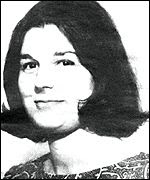
Wendy Sewell
Downing, who's described as having a low IQ, worked in the cemetery as a gardener. When questioned by the police, Downing - who was splattered with blood - confessed to the crime. Downing later revoked his confession, but was found guilty.
When Downing was released on bail 27 years later - because his confession was coerced and the blood spatter evidence was questionable - Professor Fraser was called to reappraise the case. The forensic expert was asked to carry out an extensive review, order any further testing that was required, and re-examine the bloodstains.
The police were disturbed because if Downing was innocent, their past judgments and actions might come under scrutiny, and individual and organizational reputations might be at stake.
Fraser discusses his review of the Sewell case, including his opinion about the sloppy police work. Because of investigative mistakes Downing was exonerated, but he may have been guilty.
*****
- Damilola Taylor: In 2000, 10-year-old Damilola Taylor was walking home from a London library when he received a gash to his thigh. The cut severed an artery and Damilola died within a couple of hours.
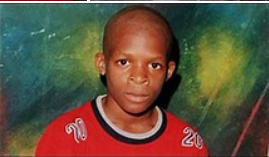
Damilola Taylor
Four youths were arrested and put on trial in 2002, but there were no convictions.
Afterwards, three new suspects - Rickey Preddie, Danny Preddie, and Hassan Jihad - were arrested, and a second trial was scheduled for 2006. Professor Fraser was asked to review the case before the new trial.

Rickey Preddie
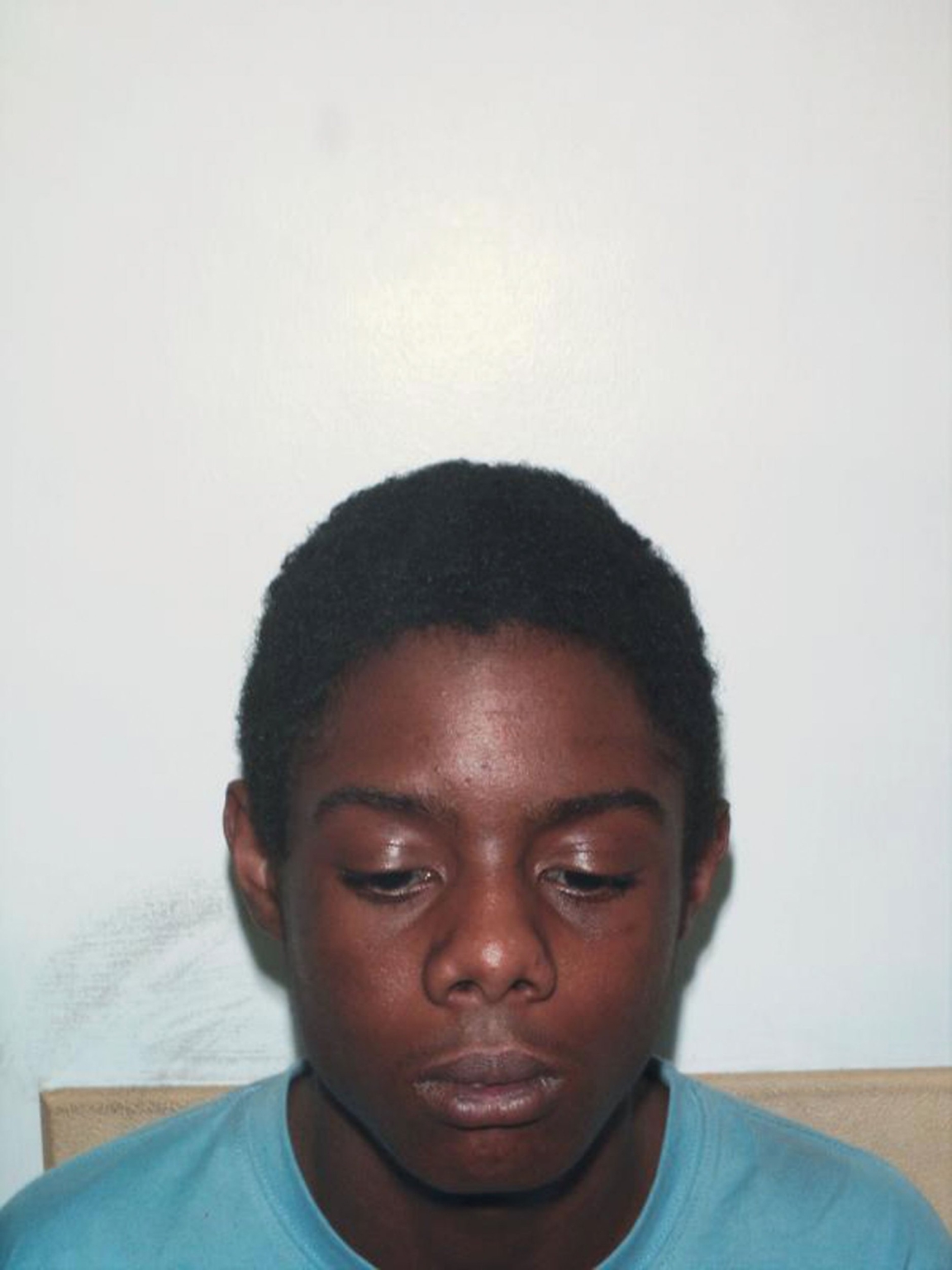
Danny Preddie
Fraser describes the police investigations and the forensic work - especially fiber analysis - in detail. He concludes that problems with the Taylor case were due to sloppy work by the Metropolitan Police (Scotland Yard) and the cops' use of old entrenched practices rather than new modern ones.
Nevertheless, Ricky and Danny Preddie were convicted of murdering Damilola, and Hassan Jihad was found not guilty.
*****
Rachel Nickell was found dead on Wimbledon Common in 1992, with her two-year-old son trying to get her up.
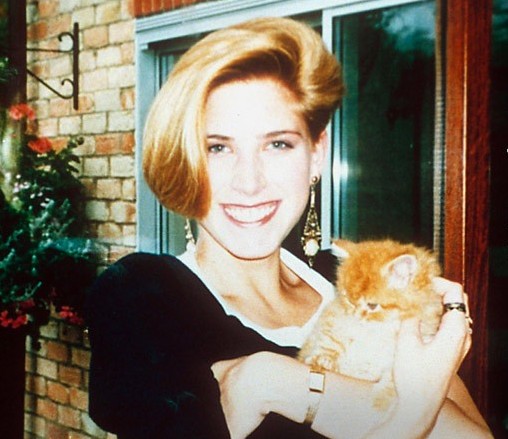
Rachel Nickell
Rachel was partially undressed and had been stabbed 49 times. There was no forensic evidence and a profiler was brought in. The profiler speculated that the killer was single, between 20 and 30, lived close to the common, had poor social skills, had a deviant sexual fantasy life, used pornography, and suffered from a sexual dysfunction.
There were other assaults on women around that time, and police speculated they were committed by the same perp.
In August, 1992 the authorities released an e-fit compiled from descriptions given by women who were attacked. A caller said the picture resembled his neighbor Robert Napper.
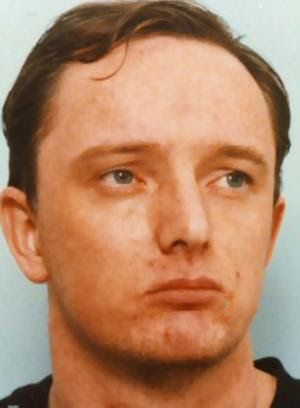
Robert Napper
Napper was interviewed by the police and told to come to the station to provide a DNA sample. Napper didn't appear and the cops didn't follow up. Napper came under suspicion on at least two subsequent occasions, but wasn't arrested. In fact the police were concentrating on another suspect for the Nickell killing, who proved to be innocent.
When Samantha Bisset and her 4-year-old daughter were killed in 1993, a fingerprint at the crime scene pointed to Robert Napper. Napper was arrested and convicted of killing the Bissets, and eventually pleaded guilty to killing Rachel Nickell.
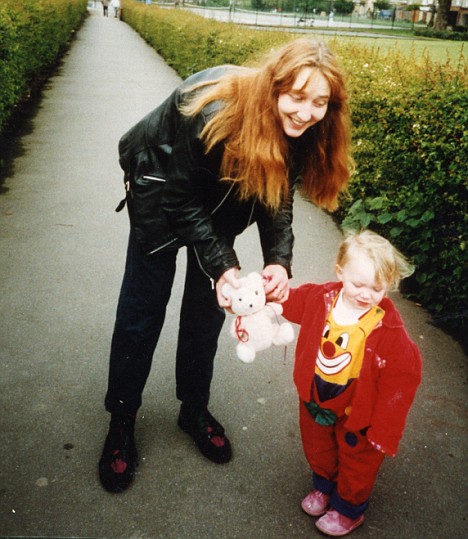
Samantha Bisset and her daughter
Professor Fraser devotes many chapters to the Nickell case, and once again talks about poor practices of the Metropolitan Police as well as contamination of evidence before/during forensic analysis.
*****
Gareth Williams, a GCHQ cryptologist, was found dead inside a large holdall in his London flat. Williams appeared to have suffocated, but decomposition made it impossible to determine the cause of death.
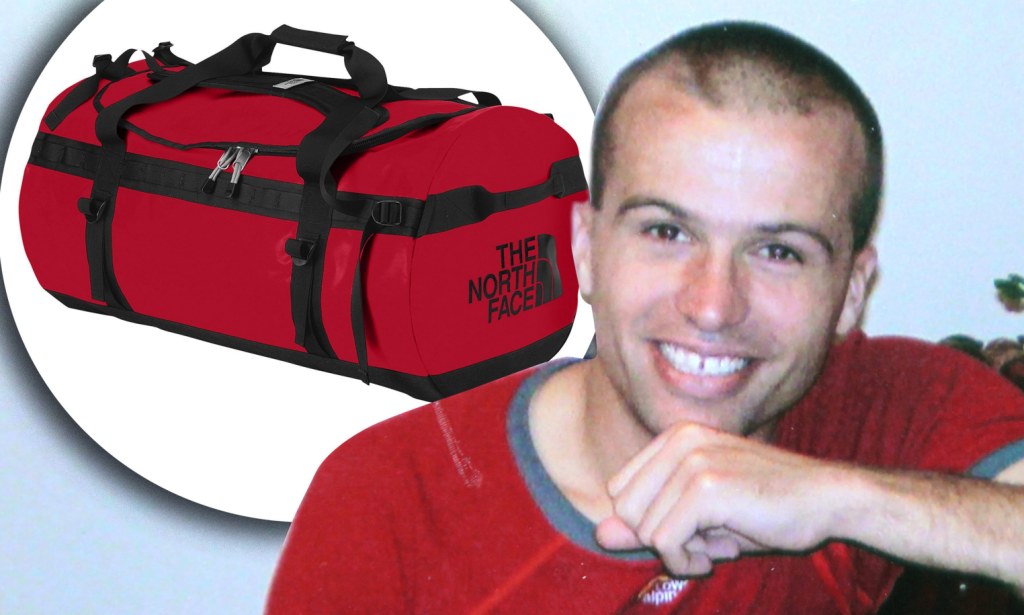
Gareth Williams was found dead in a red holdall
The holdall was padlocked on the outside, and the biggest problem with the case was determining if Williams locked himself in the holdall (which would have been VERY difficult) or whether someone else locked him in.
Williams' death was shocking for a number of reasons, including the fact that he failed to show up for two meetings and GCHQ (an intelligence agency that employs spies) took TWO WEEKS to follow up and find his body. Investigators found wigs and expensive women's clothing in Williams' apartment, and there were suggestions he was a cross-dresser and indulged in sex games.
People associated with Williams were questioned, but GCHQ was EXTREMELY secretive and obstructive. A year into the investigation the case was still unresolved, in part because the security services interfered with/stymied police inquiries.
Professor Fraser and another expert were asked to review the case, and Fraser thoroughly describes the crime scene, the Coroner's inquest, Williams' history, and the police investigation. The intelligence agencies were more cooperative once the forensic specialists were on board, but the case was never resolved, and Fraser speculates about the reasons.
*****
In chapters about the above cases Fraser sometimes mentions other similar investigations, so the reader gets a broad overview of the UK justice system. One thing is clear: the quick and easy forensic work seen on TV shows like CSI: Crime Scene Investigation - which exposes the killer in a day or two - is far from realistic.

Forensic investigators on the TV show CSI: Crime Scene Investigation
At least CSI: Crime Scene Investigation has a whole lab full of investigators. TV shows like Bones, NCIS, and Lucifer each have one forensic expert who's a genius about everything. 😄
I'd recommend the book to readers interested in true crime and forensics.
You can follow my reviews at https://reviewsbybarbsaffer.blogspot.com

November 5, 2020
I just ... for me, this was just marred by the author constantly laying into the Police, repetitively so the the title could easily have been ‘why the Police suck at investigating murder’ and that became the main point. It started to really bore me, not because I have any basis to disbelieve him, but because it’s not what I bought the book to read so maybe devoting one chapter to the problems with the system would have been better than bringing up the same gripes continually . I thought it would be about the authors own experiences in forensic science but actually it was more about ‘here are all the ridiculous things the police and other scientists have done over the years’

January 14, 2021
A fascinating insight into some of the most well known criminal cases in the UK from the pen of a forensic investigator who was involved in them all.
Putting the emotion of it aside must be very difficult but the author manages to teach us something about the realities of the multi layered cases where so many different people of differing perspectives and professionalism come together to try and find the truth.
The science of it is absolutely compelling and not at all as you see it in drama shows. I came away from this one with a better understanding of what can be achieved and it was all entertaining as well.
Recommended. I'll be seeking out more like this.
Putting the emotion of it aside must be very difficult but the author manages to teach us something about the realities of the multi layered cases where so many different people of differing perspectives and professionalism come together to try and find the truth.
The science of it is absolutely compelling and not at all as you see it in drama shows. I came away from this one with a better understanding of what can be achieved and it was all entertaining as well.
Recommended. I'll be seeking out more like this.

January 12, 2021
Thank you to Atlantic Books for the arc of Murder Under the Microscope by Jim Fraser.
5 star read!- This is such a compelling, interesting and intriguing book about Jim's career in forensic science! It is so interesting in reading about real life cases right from the experts and the facts and what actually happened in the forensic side of things!! Such a great read!!
5 star read!- This is such a compelling, interesting and intriguing book about Jim's career in forensic science! It is so interesting in reading about real life cases right from the experts and the facts and what actually happened in the forensic side of things!! Such a great read!!
October 6, 2020
This was an amazing book! Completely compelling and hugely interesting. Many of the cases featured happened within my lifetime and I was familiar with them, which gave an extra facet to the book, for me at least.
The author obviously had a fantastic career and was clearly an expert in his field. His frank descriptions of the institutionally inflexible, inconceivably incompetent and frequently incomprehensible actions of the Metropolitan police force came as no real surprise, but what was surprising is that the truth is even worse than rumour and conjecture. Fraser exposes the ineptitude of the police investigations behind some of the highest profile murder cases in the United Kingdom, but at no point does one get the impression that he has any particular axe to grind or that he bears any animosity towards the police force. Indeed, his treatment of them comes across as respectful and sincere. He is simply giving us an account of his experiences while working on these cases, and the result is quite shocking. However, Fraser does give away his years of institutional experience by his over-liberal use of acronyms, which I found a little annoying, not to mention unnecessary. There is nothing like the gratuitous use of acronyms to separate those who 'know' from those who don't, and to put those on the outside firmly in their place.
Fraser tells his stories in a dizzily haphazard style, which is somewhat confusing. While writing about one case, he habitually hares off into an account of a completely different case by way of illustrating a particular point, which often had me wondering why we suddenly appeared to have moved on to a new case when the previous one was still unfinished. Although this did make each case study a little difficult to negotiate, it also gave us yet more insight into a fascinating occupation. Also, a little restructuring of the book's chapterisation would also have helped. Currently, a new case begins with a new chapter, but different stages of the same case also have their own chapters. This causes added confusion while the reader attempts to try to ascertain exactly where he is and what is going on. A better way would have been to split the different case studies into separate sections, each of which would then be chapterised.
Despite the disorganised structure and meandering prose-style, this is an exceptionally good book. I read it from cover to cover in two days - foreword, introduction, afterword and all, and I am about to begin it all over again. No mean feat for a non-fiction book to gain my interest so completely.
I received a free copy of this book from the publishers via Netgalley in return for an unbiased review.
The author obviously had a fantastic career and was clearly an expert in his field. His frank descriptions of the institutionally inflexible, inconceivably incompetent and frequently incomprehensible actions of the Metropolitan police force came as no real surprise, but what was surprising is that the truth is even worse than rumour and conjecture. Fraser exposes the ineptitude of the police investigations behind some of the highest profile murder cases in the United Kingdom, but at no point does one get the impression that he has any particular axe to grind or that he bears any animosity towards the police force. Indeed, his treatment of them comes across as respectful and sincere. He is simply giving us an account of his experiences while working on these cases, and the result is quite shocking. However, Fraser does give away his years of institutional experience by his over-liberal use of acronyms, which I found a little annoying, not to mention unnecessary. There is nothing like the gratuitous use of acronyms to separate those who 'know' from those who don't, and to put those on the outside firmly in their place.
Fraser tells his stories in a dizzily haphazard style, which is somewhat confusing. While writing about one case, he habitually hares off into an account of a completely different case by way of illustrating a particular point, which often had me wondering why we suddenly appeared to have moved on to a new case when the previous one was still unfinished. Although this did make each case study a little difficult to negotiate, it also gave us yet more insight into a fascinating occupation. Also, a little restructuring of the book's chapterisation would also have helped. Currently, a new case begins with a new chapter, but different stages of the same case also have their own chapters. This causes added confusion while the reader attempts to try to ascertain exactly where he is and what is going on. A better way would have been to split the different case studies into separate sections, each of which would then be chapterised.
Despite the disorganised structure and meandering prose-style, this is an exceptionally good book. I read it from cover to cover in two days - foreword, introduction, afterword and all, and I am about to begin it all over again. No mean feat for a non-fiction book to gain my interest so completely.
I received a free copy of this book from the publishers via Netgalley in return for an unbiased review.

October 10, 2020
Murder Under the Microscope is a gripping account of Jim Fraser's career in forensic science. A well respected and highly regarded authority in the field , Fraser was involved in the original investigations or later reviews of some of the most infamous murders in the UK's recent history. It was fascinating to see his perspectives on cases such as that of the murder of Damilola Taylor and those of Lin and Megan Russell which I vividly remember , and also on older but no less famous cases like that of the Yorkshire Ripper or notorious child killer Robert Black. Though clearly a well qualified expert, Fraser is not too jargon heavy and does not belabour the science making the book easy to read for the layman. He is also very forthright about the flaws and failings in the investigations and the limitations of what is achievable by the forensic science ,and critical of how investigations have been handled in past, where flaws such as narrowminded thinking, poor handling of evidence, coercion of confession and antagonism towards experts have been revealed and have compromised convictions.
Although the writing is clear , structurally there could have been some improvements , it would have been better to have each chapter cover a single case, but instead there seemed to be random chapter breaks that interrupted the flow of the case study.
I read and reviewed an ARC courtesy of NetGalley and the publisher, all opinions are my own.
Although the writing is clear , structurally there could have been some improvements , it would have been better to have each chapter cover a single case, but instead there seemed to be random chapter breaks that interrupted the flow of the case study.
I read and reviewed an ARC courtesy of NetGalley and the publisher, all opinions are my own.
April 8, 2021
This book was solidly good for me, but it wasn't life changing the way Sue Black's All That Remains and Richard Shepherd's Unnatural Causes were. I wasn't a fan of Fraser's writing style, which often hopped all over the places, going from case to case, year to year, and location to location with little to no warning. I also felt it was more focused on the facts of cases, which is fine, but the blurb seemed to promise either a more personal memoir, or a book more about forensic science. As it was, there was no memoir in this really, we never learnt about Fraser's personal life, and the forensic science was very basic stuff that, if you've read a lot of nonfiction on the topic, as I have, you've already read before a dozen times.
So, in my opinion this was good, but if you're looking for a book about death, or about forensic science, All That Remains and Unnatural Causes are more to that taste.
So, in my opinion this was good, but if you're looking for a book about death, or about forensic science, All That Remains and Unnatural Causes are more to that taste.

May 26, 2023
I thought this book was not only interesting but very close to reality. The frustration is palpable. I’m friends with both police officers and forensic analysts and nothing in this book rang untrue. For a closer look at the multiple problems of relying on DNA, a good book is Inside the Cell: The Dark Side of Forensic DNA by Erin E Murphy.

April 29, 2021
A fascinating look at the complexities of forensic science and how crime scenes are analysed to ensure criminals are brought to justice. Despite its heavy topic, the book is easy to digest and for anyone unfamiliar with this area of science. I was glued to this book because it was a) well written and b) thoroughly interesting. The author does - like some other reviewers have noted - show some disdain for the police at times, but this is usually because of their mistakes at the crime scene or the overall investigation.
I would certainly read another book by this well respected author. I can only imagine that he has dozens of other stories to tell.
I would certainly read another book by this well respected author. I can only imagine that he has dozens of other stories to tell.
July 3, 2024
My first ever memoir! A Scottish forensic scientist details his involvement in various murder cases over the years. I acknowledge that the book isn't especially well-written and someone not especially interested in the topic might struggle a bit but I personally loved it and found the contents especially interesting. He goes into the science behind some forensics as well as the different procedures across the country and talks in great detail about how the police very often screw everything up.

November 9, 2020
Jim Fraser is a forensic scientist and cold case reviewer, he has been doing this job practically his whole life and in this book he delves into different cases spanning across his career and giving insight into each one of them. In this gripping book Jim examines in detail some of the UK's most high-profile murder investigations in recent decades, including the deaths of Rachel Nickell, Damilola Taylor and Gareth Williams the GCHQ code breaker.
This book was really interesting to read as a true crime fan. There was a lot of information about forensic science and how it plays its role in these types of cases. There was a nice mixture of cases that I have and haven't heard about, some that I had also read in Unnatural Causes by Dr Richard Shepherd, although not as much detail, but it was nice to read about them from a different point of view.
There were some points that I felt like it dragged a little bit in places, sometimes the acronyms were a bit too much and trying to go back and find out what they stood for would take some effort (as I was gifted a copy of this from NetGalley).
I really liked that there were lots of asterisks placed throughout the book so you could read more information about what has been said at your own pace so it didn't take away from what you were reading.
This is a must read for true crime fans, especially those who are interested in the forensic side of things and forensic science history. I would have liked some more examples of what is done for certain tests i.e. looking for DNA and blood sampling etc, but overall it was a good book written by someone who has had a full and fascinating career which shows in his writing.
Thank you to NetGalley and the publisher for gifting me a copy in exchange for an honest review.
This book was really interesting to read as a true crime fan. There was a lot of information about forensic science and how it plays its role in these types of cases. There was a nice mixture of cases that I have and haven't heard about, some that I had also read in Unnatural Causes by Dr Richard Shepherd, although not as much detail, but it was nice to read about them from a different point of view.
There were some points that I felt like it dragged a little bit in places, sometimes the acronyms were a bit too much and trying to go back and find out what they stood for would take some effort (as I was gifted a copy of this from NetGalley).
I really liked that there were lots of asterisks placed throughout the book so you could read more information about what has been said at your own pace so it didn't take away from what you were reading.
This is a must read for true crime fans, especially those who are interested in the forensic side of things and forensic science history. I would have liked some more examples of what is done for certain tests i.e. looking for DNA and blood sampling etc, but overall it was a good book written by someone who has had a full and fascinating career which shows in his writing.
Thank you to NetGalley and the publisher for gifting me a copy in exchange for an honest review.

September 23, 2020
Fascinating read.
I find books like this fascinating. The author has worked as a forensic scientist for over 40 years. He's worked on thousands of cases, and in this book presents a few 'stand out' ones.
True crime books are interesting anyway-but rather than just retelling what is generally known about a case or cases-it's so much better to have someone telling us who was right in the middle of the happenings. Someone who tested various evidence. Someone who was instrumental in helping catch the perpetrator.
After a bit of a long-winded intro-and I am a person who always has to read prologues/intros etc-it quickly gets going, and is cracking. Informative, yet highly readable. Cases I'd heard of, and a few I hadn't. Crimes in the UK.
I give this 4 stars, as there were just two areas which seemed a bit slower to read than the rest of it. A fascinating read for the most part, but I found a few areas a bit tedious. Then it was back to very interesting reading again.
I find books like this fascinating. The author has worked as a forensic scientist for over 40 years. He's worked on thousands of cases, and in this book presents a few 'stand out' ones.
True crime books are interesting anyway-but rather than just retelling what is generally known about a case or cases-it's so much better to have someone telling us who was right in the middle of the happenings. Someone who tested various evidence. Someone who was instrumental in helping catch the perpetrator.
After a bit of a long-winded intro-and I am a person who always has to read prologues/intros etc-it quickly gets going, and is cracking. Informative, yet highly readable. Cases I'd heard of, and a few I hadn't. Crimes in the UK.
I give this 4 stars, as there were just two areas which seemed a bit slower to read than the rest of it. A fascinating read for the most part, but I found a few areas a bit tedious. Then it was back to very interesting reading again.

July 26, 2026
3.5 stars. This book would have been better titled, 'The Incompetence of the UK Police.' It is not the book you might expect. I went into it hoping for forensic revelations, and lightning bolt moments e.g. the blue thread or spot of blood that solved the case. Turns out, real life is nothing like CSI or other shows. In fact, Fraser's analyses of famous UK murder and rape cases is a litany of bodged police work, with the police failing to understand, properly process, or budget for forensic analysis. To read the cases is to feel immense sadness and disappointment at the suffering and death caused by failure in police procedure. For that reason, I could not give this book a higher rating as I came away feeling terribly depressed.
In particular the case of Robert Napper, dominates the pages. Napper was a serial rapist and murderer, who was identified by several members of the public, brought in for questioning, but released each time. The reasons beggar belief. The police thought he was 'too tall' to be the rapist. Napper told police when he was caught lingering in a dark alley near a previous rape scene. The police noted he was 'strange, abnormal, and a possible rapist,' but he convinced them he was 'out for a walk', and they released him. His neighbour identified him from an e-Fit and police brought him in, then ASKED him to come back for a DNA sample. He never showed up. They didn't pursue it.
It was only when Napper went into a printers and asked for headed paper with the Met Police logo that he was arrested. He had weapons in his house, a London A-Z with pivotal locations marked upon it. Guess what? He went to jail briefly for the weapons offences. No one asked him any questions about the rapes and murders.
I was fuming my way through this book.
In particular the case of Robert Napper, dominates the pages. Napper was a serial rapist and murderer, who was identified by several members of the public, brought in for questioning, but released each time. The reasons beggar belief. The police thought he was 'too tall' to be the rapist. Napper told police when he was caught lingering in a dark alley near a previous rape scene. The police noted he was 'strange, abnormal, and a possible rapist,' but he convinced them he was 'out for a walk', and they released him. His neighbour identified him from an e-Fit and police brought him in, then ASKED him to come back for a DNA sample. He never showed up. They didn't pursue it.
It was only when Napper went into a printers and asked for headed paper with the Met Police logo that he was arrested. He had weapons in his house, a London A-Z with pivotal locations marked upon it. Guess what? He went to jail briefly for the weapons offences. No one asked him any questions about the rapes and murders.
I was fuming my way through this book.
February 2, 2022
Another example of a slightly mis-titled book, as it was more about what can go wrong with forensic science and its use by police to solve crime, than a personal memoir. If anyone thought forensic science was perfect, or the forensic evidence was unquestionable, this book will dis-illusion you very quickly. In fact, the failings of police cultures and organisations in working with forensic science were quite frightening. The author clearly has great experience and some well-founded concerns. It suggests that rather than having extensive procedures that no-one remembers or follows, focus more on some general principles.
I am not from the UK so was not familiar with the crimes in this book (but read a lot of UK crime writers), but found it interesting.
Agreeing with other reviewers, the structure was confusing, and it needed a stronger editorial hand. Either go with one crime per chapter, or one theme per chapter - don't mix them. The use of a footnote on every page was also unnecessary. If it is worth saying, put it in the main text.
I am not from the UK so was not familiar with the crimes in this book (but read a lot of UK crime writers), but found it interesting.
Agreeing with other reviewers, the structure was confusing, and it needed a stronger editorial hand. Either go with one crime per chapter, or one theme per chapter - don't mix them. The use of a footnote on every page was also unnecessary. If it is worth saying, put it in the main text.

September 14, 2020
Fraser is a highly experienced forensic scientist and here he uses high profile cases to explain his profession and its successes, challenges and - inevitably - it’s limitations.
He worked on high profile investigations such Damilola Taylor, Rachel Nickell and Megan and Lin Russell.
He also busts some myths about the case of Gareth Williams - the GCHQ spy - whose body was found in a locked sports holdall.
I liked his style which is detailed and does not pull any punches when it comes to criticising key players such as the labs funded by the government to test key evidence.
I also liked that Fraser is not at all self-aggrandising.
Overall I was left with the understanding that forensic science is painstaking and skilled work. Any errors can jeopardise a whole case and lead to humiliation in court.
I’d recommend this to anyone who likes true crime but also has an interest in the science behind it.
He worked on high profile investigations such Damilola Taylor, Rachel Nickell and Megan and Lin Russell.
He also busts some myths about the case of Gareth Williams - the GCHQ spy - whose body was found in a locked sports holdall.
I liked his style which is detailed and does not pull any punches when it comes to criticising key players such as the labs funded by the government to test key evidence.
I also liked that Fraser is not at all self-aggrandising.
Overall I was left with the understanding that forensic science is painstaking and skilled work. Any errors can jeopardise a whole case and lead to humiliation in court.
I’d recommend this to anyone who likes true crime but also has an interest in the science behind it.
August 21, 2020
This was an enlightening and illuminating read. The memoirs of a leading forensic scientist who provides his own - forgive me - forsesic account of some of the major cases that he was involved in including Rachel Nickell, Damilola Taylor and Gareth Williams, the GCHQ code breaker.
His accounts are detailed and demonstrate the care and professionalism of his work and he is not slow to criticise the police investigations if he felt this justified.
He helps explain why some cases are solved and others not and his keen eye for detail brings the investigations to life.
Fascinating.
His accounts are detailed and demonstrate the care and professionalism of his work and he is not slow to criticise the police investigations if he felt this justified.
He helps explain why some cases are solved and others not and his keen eye for detail brings the investigations to life.
Fascinating.

December 28, 2023
When I began to read this I was enjoying it, and then I got about half way and it began to stink. The book was marred by Fraser constantly laying into the police and the work they do, and ‘don’t do’ on crime scene investigations. The main point became why he thinks police suck at investigating into murder cases, rather than it being an inside scoop on high profile cases, promised by the title of the novel. I didn’t purchase the book to read about what is ‘wrong’ with the system, I brought it to read about high profile cases Jim Fraser worked on. I found his writing in the second portion of the book very cocky, and he seems quite up himself.
‘Most of the issues that bedevilled the Vacher case and which are seen throughout this book can be linked to the culture of police organisations.’
It was quite a fascinating novel, and did write enjoy his writing in the beginning but I REALLY struggled through the second portion. Although Fraser does manage to teach the readers something about the realities of the multi-layered cases where so many different people of differing perspectives and professionalism come together to try and resolve and figure out the truth, I think the police bashing was annoying and made the book more so a punishment to read.
The public feel they have a reasonably clear sense of how the police organisation works. That they are generally misinformed is largely a consequence of the ways in which the institution, its officers and its working methods are presented in the media — Tim Newburn
Statements about policing he makes, that jumped at me and annoyed me:
Police culture can be summed up in four words: mission, action, pragmatism and control. Policing is considered to have a moral imperative; it's not just a job, it's the job - a job primarily about action, as we have seen. A job that can only be understood and experienced from the inside by those in the know.
The group's choice of problem highlighted for me two crucial aspects of police culture that I have experienced throughout my career and that we have seen repeatedly in the cases in this book. First, the need for action, ideally immediate action and the type of thinking that goes with it: fast thinking, intuitive thinking, emotional thinking. Second, the belief in technological solutions when there may be more effective alternatives, even when the technology is not fully understood.
In relation to police training and knowledge of forensic science, the report stated: 'A recurrent theme ... was the lack of awareness at all levels, particularly the operational levels.'
How many people will we train?
For how long? In what subjects? How will we keep them up to date? How much will it cost? Who will be doing their job while they are being trained?
Another angle on the issue of scientific knowledge is illuminating. We are in the midst of a worldwide measles crisis, with increasing numbers of parents choosing not to have their children vaccinated, resulting in a loss of herd immunity. Is this a knowledge problem? I have a degree in life sciences and spent much of my career working as a professional biologist.
Do I fully understand the risks for and against inoculation?
I'm not sure, but I trust the advice of the professionals around me and make the decision on that basis. Trust is the problem, not knowledge.
1.35
‘Most of the issues that bedevilled the Vacher case and which are seen throughout this book can be linked to the culture of police organisations.’
It was quite a fascinating novel, and did write enjoy his writing in the beginning but I REALLY struggled through the second portion. Although Fraser does manage to teach the readers something about the realities of the multi-layered cases where so many different people of differing perspectives and professionalism come together to try and resolve and figure out the truth, I think the police bashing was annoying and made the book more so a punishment to read.
The public feel they have a reasonably clear sense of how the police organisation works. That they are generally misinformed is largely a consequence of the ways in which the institution, its officers and its working methods are presented in the media — Tim Newburn
Statements about policing he makes, that jumped at me and annoyed me:
Police culture can be summed up in four words: mission, action, pragmatism and control. Policing is considered to have a moral imperative; it's not just a job, it's the job - a job primarily about action, as we have seen. A job that can only be understood and experienced from the inside by those in the know.
The group's choice of problem highlighted for me two crucial aspects of police culture that I have experienced throughout my career and that we have seen repeatedly in the cases in this book. First, the need for action, ideally immediate action and the type of thinking that goes with it: fast thinking, intuitive thinking, emotional thinking. Second, the belief in technological solutions when there may be more effective alternatives, even when the technology is not fully understood.
In relation to police training and knowledge of forensic science, the report stated: 'A recurrent theme ... was the lack of awareness at all levels, particularly the operational levels.'
How many people will we train?
For how long? In what subjects? How will we keep them up to date? How much will it cost? Who will be doing their job while they are being trained?
Another angle on the issue of scientific knowledge is illuminating. We are in the midst of a worldwide measles crisis, with increasing numbers of parents choosing not to have their children vaccinated, resulting in a loss of herd immunity. Is this a knowledge problem? I have a degree in life sciences and spent much of my career working as a professional biologist.
Do I fully understand the risks for and against inoculation?
I'm not sure, but I trust the advice of the professionals around me and make the decision on that basis. Trust is the problem, not knowledge.
1.35

July 13, 2025
I am a fan of this genre but not this book. Strangely the author doesn’t seem to have made any major contribution or breakthrough to the cases involved. He seems to have a chip on his shoulder and spends the whole book describing the police as corrupt. I would say he may be right in some cases but that’s not what this book was supposed to be about. Lots of confusing abbreviations. I’ve read superior books with in depth discussions and a clear correlation between the evidence and prosecution. Well written but his editor should have suggested he focus on miscarriages of justice because that is clearly his interest.

January 6, 2021
While the aspects of this book that actually covered forensic science were fascinating and insightful, the narrative was largely focussed on the police force and the author’s opinions on their incompetence and ignorance. It was certainly intriguing to see some of the evidence of this and to get glimpse at how disjointed the system is - particularly the fractured relationship between the police and the labs - but it got incredibly repetitive and I feel like the book should’ve been marketed more as a focus on policing and the force rather than a look at forensic science.
January 2, 2022
I started this book slightly apprehensive after reading some of the reviews and while I understand where they may be coming from, I think they are off the mark. In this book, the author outlines a number of well known cases in the UK and details where things have gone wrong in the investigation. I don't think that it was the author "coming in to save the day", but explaining that things in these cases aren't always as open and closed as the public are led to believe. Overall, I thoroughly enjoyed this book.
October 30, 2020
I really enjoyed this I was familiar with most of the cases discussed, and it was interesting to hear about it from a forensic investigative perspective. It was written in a way that is accessible to readers with a lot of little knowledge of the science and how it works. I feel the book challenged some of my beliefs about the reliability of DNA analysis and the use of fingerprints. I would certainly recommend to anyone interested in true crime and forensic science.

June 20, 2021
The forensic aspects of the book are fascinating. But the author spends a significant amount of time discussing what other departments / services (especially the police) did wrong. He has valid points however he spends so much time harping on the issue that it comes across as a personal vendetta, which is very off-putting. I listened to the audio so perhaps my view is colored by the narrators tone of voice while reading these parts.

September 15, 2020
This book is a MUST for true crime/forensic science fanatics!
Fascinating portrayal of crime scene analysis and the logistics involved in gaining evidence, shown through real life true crime stories and the perpetrators.
Shows how easy it is to contaminate evidence or miss essential samples within the investigations. Enlightening.
Fascinating portrayal of crime scene analysis and the logistics involved in gaining evidence, shown through real life true crime stories and the perpetrators.
Shows how easy it is to contaminate evidence or miss essential samples within the investigations. Enlightening.
February 12, 2022
Some interesting bits but not what I expected. I thought it would be like Dick Shepherd's book Unnatural Causes which is excellent. This one is hard going in parts. It points out errors in the police system and why crime fiction and their tv adaptations are in many ways inaccurate and unrealistic eg profiling doesnt really go on and other areas are more hit and miss than you think.

September 4, 2023
His scene examination and exhibit examination sections are interesting and a clear wealth of knowledge can be seen. However most of the chapters fall into rambling about the faults of others and the entire book is speckled thru with his 'c u next tuesday' kind of attitude. Interesting work stories....but a bit of a dick.
October 28, 2020
An interesting insight into the role of forensics in several high profile cases and what can happen when findings are misinterpreted or procedures not followed.
Thanks to Netgalley, Atlantic Books, and Jim Fraser for the ARC of this book in return for an honest review.
Thanks to Netgalley, Atlantic Books, and Jim Fraser for the ARC of this book in return for an honest review.

November 6, 2020
A fascinating tale of how evidence detection and analysis is used to add to the evidence given in court to convict (or exonerate) suspects. It was interesting to learn how forensic evidence is not as black and white as one might be led to believe. Really interesting and I learned a lot.

June 24, 2021
It should have been intriguing
I had high hopes for this book. I’ve read others similar and found them absolutely absorbing. Whilst parts were interesting I unfortunately found the writing style quite flat.
I had high hopes for this book. I’ve read others similar and found them absolutely absorbing. Whilst parts were interesting I unfortunately found the writing style quite flat.
May 6, 2024
A fascinating look at the complexities of forensic science and how crime scenes are analysed to ensure criminals are brought to justice. Despite its heavy topic, the book is easy to digest and for anyone unfamiliar with this area of science.

April 12, 2022
The rather depressing reality of how forensics really intersects with police work.
Displaying 1 - 30 of 34 reviews