This course addresses some of the eternal questions that man has grappled with since the beginning of time. What is good? What is bad? Why is justice important? Why is it better to be good and just than it is to be bad and unjust?
Most human beings have the faculty to discern between right and wrong, good and bad behavior, and to make judgments over what is just and what is unjust. But why are ethics important to us?
This course looks at our history as ethical beings. We'll travel into the very heart of mankind's greatest philosophical dilemmas - to the origins of our moral values and the problem of ethics. Are ethics universal, absolute and unchanging - or are they culturally relative, changing, and man-made? Furthermore, we'll delve into the creation of ethical systems - not just for ourselves, but also for society at large. And we will consider the ongoing process of establishing ethical frameworks for society.
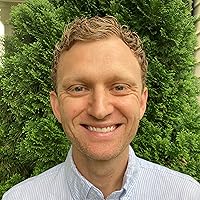
Peter Kreeft is an American philosopher and prolific author of over eighty books on Christian theology, philosophy, and apologetics. A convert from Protestantism to Catholicism, his journey was shaped by his study of Church history, Gothic architecture, and Thomistic thought. He earned his BA from Calvin College, an MA and PhD from Fordham University, and pursued further studies at Yale. Since 1965, he has taught philosophy at Boston College and also at The King’s College. Kreeft is known for formulating “Twenty Arguments for the Existence of God” with Ronald K. Tacelli, featured in their Handbook of Christian Apologetics. A strong advocate for unity among Christians, he emphasizes shared belief in Christ over denominational differences.
A brilliant, brilliant audio presentation which every person needs to hear. Please, listen to this, take your time, consider the questions, even argue if you like, but don't ignore this.
The other day I was at a book presentation and overheard a lady saying to some others 'I don't have time for philosophy, it's too hard keeping up with real life, let alone philosophy!' I nearly cried.
The things Professor Kreeft discusses in this course concern the very foundations of our society, law, culture and education system, our understanding of humanity and everything important to it.
But as a culture, often we don't have time to think deeply, to self-question, or even to consider history except to assert how far we've moved beyond it. This unquestioning (even if unexpressed) faith in progressivism—that we get better and smarter as the years go by, that we know better now than we did then—is perhaps one of the biggest fallacies—blindness’s—of our age.
Kreeft discusses the central, monumental ideas of Socrates, Plato, Aristotle, Augustine, Aquinas, Descartes, Machiavelli, Kant, Hobbes, Locke, Rousseau and more, clarifying their claims and setting them against each other, shedding light on some of the assumptions we see every day in news pieces and encounter whenever we go near a university.
Why do we believe the things we do? Are they really true? How do we know?
This course is a challenge, a call to think, to cast aside indifference and comfort, to step outside of the cave and seek something more than shadows on the wall. I beg you to try it.
One of the signs a book (or in this case, a collection of lectures) has made an impact on my mind is if it incites further questioning, leads me into new intellectual and conceptual territory, and spawns an insatiable desire to learn more! This course has made it into such a category of influences. Whereas previously ethics seemed dry and boring, it now seems a vivid, interesting, and complex world of ideas. It is a privilege to be an engaged listener in history's Great Conversation.
“You want to think for yourself, but you don’t want to think by yourself.” This is what Kreeft brings to the table on the topic of ethics--he brings the listener the ideas of philosophers throughout history. He explores the foundations of ethics, not just through case studies like what most other books offer that I’ve read on the topic of ethics. A nice dive into the ideas of philosophers over time.
I am listening to the book second time after year or so and I appreciate this course more than before. Professor Kreeft did an amazing job with the design of the course as well as reading it. He made a subject like 'History of Ethics' as enjoyable as any other best seller!
Now, take that with a pinch of salt! Since I have a keen interest in the subject, there is a possibility that I am influenced (*biased*). Nonetheless, it is a great book. I never listened to or read any other book which so effortlessly summarizes the work of some of the world's greatest philosophers of all time. By the way, this is a book on 'history', so that's what it is - a book / course on history. It more than makes up for the lack of depth with apt summary of the stand each philosopher took through their books / talks / lives. It also brings all those great philosophers 'in conversation' with each other - debating and discussing varied questions like what is good, what is evil, what is a human, what is the purpose of life etc.
The professor is indeed biased (who isn't?) and he even says so himself. But - and this is important - he is honest and gives you a great overview of philosophical thought over the centuries. Also, as he said himself, he is not a great philosopher, he is a teacher of philosophy, and when he occasionally gives his own arguments you know that those are his arguments and you are invited to agree with him or not. That is exactly the objective of the course: have you thinking for yourself.
At some point (around 3/4 of the course) I thought about giving it 4 stars, but then it picked up the pace again and finishes beautifully! Solid, deserved 5 stars!
I was honestly sad when the course ended, and I do plan on taking it again. Recommended.
Ethics: A History of Moral Thought by Prof. Peter Kreef. This work on ethics was very well presented with an enjoyable amount of history and a solid dose the eternal questions we face on right and wrong, good and bad. It was very informative to have it presented with a strong historical timeline which made me feel like I was watching our civilization build up our foundation of values marble stone by marble stone. And to see how the great minds had such different perspectives and reached differing conclusions makes me realize how we will always struggle to find the common ground as we integrate all of the diverse cultures of our world.
this was a good course, interesting, but ultimately strangely unenlightening. I think I've discovered why philosophy will ultimately never really hold my interest as a subject - it always comes down to arguing terms, and then deciding that words don't really mean anything anyway, or only what we think they mean - it all melts away like a snowflake in your palm. This course does do a good job of presenting the ancient viewpoint, and then contrasting that with revolutionaries as they pop up - Machiavelli, Rousseau, etc. In the end, I found nothing of real interest or salience for my life in this course, nothing to hold on to.
Excellent author! He is able to do that most difficult thing: make philosophers comprehensible (and in an amusing way too)!! I listened to this in order to try to understand what a dear friend was trying to teach, and found much to think about. This author is so good i am willing to see how well he can explain the summa theologica of Aquinas. Something i'm not sure id ever attempt, but with Kreeft writing the 'cliff notes' version, then maybe there's hope after all.
Brilliant analysis of Ethics in light of philosophy. Sure, this approach may not lend itself to giving you all the answers, but it will leave you asking the right questions. For example, I walked away asking myself why, for all our advances, modernized nations have the highest suicide rates, and "underdeveloped" nations have some of the lowest. Why is happiness elusive? What is the greatest good and why haven't we found it?
Föreläsningsserie om etikens och moralens framväxt med start Sokrates. Varje lektion tar upp en (eller ett par) filosofer på området. Totalt 14 lektioner a 30-40 min. Jag tyckte första halvan var bäst då den drar upp etikens fundament och stora frågeställningar. I stort bra och läs(hör)värd då den ger en enkel och bra förståelse för de viktigaste filosofernas position inom området. Jag gillade också att professorn var uppmuntrande och själv mycket intresserad av området.
Mac talked of running the half marathon at the London Marathon with some new friends he's made in London. I was excited by this, thinking maybe I could get fit enough to join him. Started surfing to the Running Times website and generally getting caught up in the desire to get back to running. . . .
I enjoyed these lectures. I'm always amazed by how he's able to present this material without being dry, overly technical, or boring. Kudos to Peter Kreeft! Worth relistening to if you're interested in the subject of ethics.
the course is very interesting and easy to listen to. I would have given it a higher rating If not for the complete omission of Darwinizm that blew up the old way of understanding ethics.
SUMMARY/ EVALUATION: SELECTED: Inspired by some research I was doing for my librarian position at Coastline College, I had been searching the library on a theme of “Ethics. So appropriately this was a result. I liked that this would give information on multiple past philosophers. ABOUT: Kreeft alerts the listener to what is coming in the next chapter and what material would be beneficial to read before the lecture; such as Plato’s “Apology”, Plato’s “The Republic”, or Machiavelli’s “Prince" and then the listener is treated to explanations of these (and other) works, with admonitions to ask one’s own questions and apply conscious thought. OVERALL OPINION: Just what I had hoped it would be. I borrowed this through my library Libby app, and liked it enough to think I would listen more than once, so got a more permanent version from Audible.
AUTHOR: Peter Kreeft (Excerpt from Wikipedia entry) “Peter John Kreeft (/kreɪft/;[3] born March 16, 1937) is a professor of philosophy at Boston College and The King's College. A convert to Catholicism, he is the author of over eighty books[4] on Christian philosophy, theology and apologetics. He also formulated, together with Ronald K. Tacelli, Twenty Arguments for the Existence of God in their Handbook of Christian Apologetics.[5][6]”
NARRATOR: John Lee (Excerpt from Wikipedia article) "Lee was born in England with Irish ancestry.[1] His father worked as a carpenter and other men in his family were blacksmiths, brick layers and plumbers.[1] Lee himself has worked in agriculture, picking fruit, which he considers much more difficult than voice acting.[1] Career Lee has narrated hundreds of audiobooks.[1] "His trademark rich, smooth voice with its hint of a growl turns the word into a seduction", according to AudioFile.[1] He has won numerous Audie Awards and AudioFile Earphones Awards, and he was named a Golden Voice by AudioFile in 2009.[1] In film, he portrayed the mysterious Trevor Goodchild in Peter Chung's Æon Flux. Other voice credits include Meier Link in both Vampire Hunter D: Bloodlust and Vampire Hunter D, Pavlo Zaitsev in episode 16 of Ghost in the Shell: Stand Alone Complex, Jason Wynn in HBO's Spawn animated series, and Aristotle in Reign: The Conqueror. John also had a role as a voice actor playing Cid Bunansa in the video game Final Fantasy XII. Lee was also the producer and screenwriter for the 2001 film Breathing Hard, in which he played the character John Duggan. His Æon Flux co-star Denise Poirier plays his wife Carol."
*ME: I have always enjoyed this narrator, so even when I wasn't understanding the content fully, I was putting faith in John Lee that it was worthwhile hearing.
Very down-to-earth, pithy, and compelling introduction to primarily Western moral ethics (though he does devote one chapter to Eastern moral ethics he summarized in essence as generally in agreement, but with different ends in mind). Organized into several lectures beginning with Socrates and ending with Sartre (followed by his chapter on Eastern moral ethics), Kreeft introduces the big moral questions and how many important moral ethicists/philosophers have answered those questions throughout history. He references specific works from these ethicists and is structured as a sort of self-study, sometimes ending with prompts to read parts of these works or with some question to contemplate. Ends with a unique synthesis (or admission of a lack-thereof one) and frames a practical benefit for an individual interested in these questions.
An eloquent set of lectures on the great thinkers on ethics, starting with Socrates and ending with Sartre ( who typical of our modern age denies that humankind can have any ethical purpose). Kreeft combines his audio lectures with an excellent pdf bibliography and a host of questions in each lecture that challenges you to think about the subject.His survey shows how each philosopher starts with the insights of a predecessor and tries to answer questions left unanswered or unproven.- from Socrates to Plato, Plato to Aristotle, Aristotle to Aquinas and on it goes.An excellent introduction to the intellectual quest over the last 2400 years to answer the most basic question of all- how to live a good life.
You really can't go wrong with Peter Kreeft. Once again, he takes one of philosophy's most challenging subjects and makes it approachable without oversimplifying it.
In *Ethics*, Kreeft has a gift for explaining complex philosophical ideas with remarkable clarity, while weaving in modern-day examples that keep the material engaging and surprisingly enjoyable. Rather than feeling like a dense academic text, the book feels like a conversation with a brilliant teacher who genuinely wants you to understand.
Whether you're new to philosophy or have studied it for years, this is an excellent introduction to ethical thinking. Kreeft reminds us that philosophy isn't just an abstract exercise—it's about learning how to live well.
A basic overview of a few of the main western philosophers with a small summary of eastern philosophy at the end. I think he has a great audio voice and delivery (I listened to him deliver in lecture format). However, he is OBVIOUSLY Christian and this informs/ guides all of his personal takes on each philisopher/ philosophy. I think if he let go of his dogmaticly religious viewpoint it would have made for a better introductory experience. However, he gives an intelligent and well-said intro as well as final summation that are well worth a listen about what ethics is and how it is important in our lives.
The Idea of the Good This course provides an overview of moral philosophy, with emphasis in greek philosophy (Socrates, Plato and Aristotle). The lectures are organized in order to develop an dialogue between the various philosophers in a way that gives to the listener a better understanding of the diversity of thought. Particularly good is the lecture about Maquiavel. Particularly bad is the omission of pragmatism thought (Pierce, Dewey and James) and its idea of moral philosophy. One has in this course a good introduction in the matter.
A series of lectures about the philosophers and moral thought done by Peter Kreeft a Professor at Boston college. I listened to the audiobook. Kreeft has a wonderful teaching voice. Comparing ethics of the different philosophers to your own is a bit taxing but fun. This is not just for listening. You have to ask yourself these questions instead of letting yourself be lead by each philosopher. Remember you are a philosopher yourself. Argue.
Sometimes a little dry and I had to use my concentrating face / rewind and play again when I had the kids around 😂 but overall 👌🏻 reminds me of about a whole semester or year of Honors class (great books) that I certainly hadn’t kept in my head properly. It isn’t necessarily stuck in my head now again, but it’s helpful to read/reflect on older thinking and philosophy so as to make modern life less Chicken Little and more eternity-oriented.
As with all of the Professor’s work, I loved this. And as with everything by Kreeft, I will go through this again. I’ve never read his books or listened to his lectures only once. Specifically to this course, I really enjoyed the lectures on Machiavelli, Kant, and Satre. Satre being my favorite (the lecture not his ethics or lack thereof). Can’t wait to go through this again.
Kreeft is so good. I love reading his books. It provides a refreshing look at thinkers through the ages. He’s a humble philosopher with an appreciation for ancient thinkers. Ideas lead to ethical standards. We can pretend like we’re an advanced society by not “imposing” ideals but that’s lazy thinking. All ideas are connected to rejection or acceptance of previous ones.
Overall good coverage of the major ethical philosophies. A few illustrations were distracting. Professor Kreeft sounded very flat and monotone, as if reading from a manuscript. This made a normally difficult subject harder to listen too.