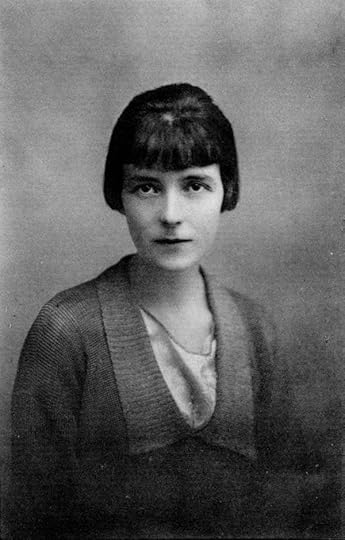
Brings to light Mansfield's relationships with Virginia Woolf and D. H. Lawrence, her unhappy and occasionally bisexual liaisons, her affair and marriage with John Middleton Murry, her desperate battles with tuberculosis, and her struggles as an artist
I’ve read three biographies of KM and although the other two were written after this one and claimed to have new revelatory material (who she caught gonorrhoea from!) and a greater insight into Mansfield because written by women this one for me is still by a country mile the best. Alpers doesn’t interpret her through faddish ideas or theories, he doesn’t try to psychoanalyse her or turn her life into a cause celebre for feminists, he’s never up on a high horse dishing out blame. What he does do is order with great artistry all the material available to him and bring Mansfield vividly and affectionately to life. This is a good old fashioned biography written with palpable love for his subject. I’d recommend it to anyone interested in her tragic short life.
Katherine Mansfield I admit to feeling some relief to have finally finished this book. It was fascinating, but oddly consuming. It felt like it took me an eternity to read, both because the subject matter was far from easy reading, but also because I began it during the holiday period, expecting to have ample time to devote to it, only to instead be frequently busy, snatching time when I could. Still, at least the reading itself has finished. Having first learned about Mansfield in primary school and been required to read some of her short stories in high school, it was overdue that I make an effort to read more by and about her. Although I was frustrated with her at many points in this biography, she was persistently compelling, and I read the last chapter very slowly, trying to delay her death a little. Katherine Mansfield and her husband, John Middleton Murry I do think this is one the best biographies I have read recently, one that dove deep without feeling like it was exploiting its subject. At times I was shocked by the utter lack of sense of Mansfield, many of her friends, and her eventual husband. Mansfield in particular seemed unnervingly self-serving. The only time she seemed to look beyond herself was when her brother died, but that too seemed to be about her, not him. I bristled slightly when she objected to the way Robert Graves talked about the war. It may not have been to her taste, and that is fine, but this was a man actually experiencing the worst aspects of war, so surely, he has every right to talk it in whatever tone he saw fit? She was in many ways unaffected. With the exception of her brother, who she didn't know that well, she was insulated from most of the practicalities of the war. But as ever, she was able to circle it back to herself. You may be able to tell that I didn't exactly like Mansfield! She annoyed me often, yet she was fascinating, and she was surrounded by equally fascinating people. Her illness and death was sad, I had utter sympathy for her during this period. I wish her husband had been more useful during this time. I think she had an interesting take on things, particularly in her fiction. And to be clear, I didn't hate her! I admired her in many ways, and had she lived longer, she may have grown as a person. It is fascinating to consider the part her husband played in building her legacy, and the image of her we have today. He did an incredible job, even if he did so against the wishes expressed in her will. I feel conflicted by the sheer volume of her private writing that he published. I want to read it, although I am not sure she wanted it read... I do think he genuinely loved her and couldn't bear the thought of her being forgotten. He was one of the first to recognize her talent, and he was determined to ensure she was remembered. He succeeded, and I give him credit. I don't think his motivation was money or clinging to her fame. He seemed to mean well. I would love to read his difficult to find, notoriously inaccurate (due to his appalling memory) autobiography! The longer I have spent thinking about him, the more he has grown on me. I sympathise too with his tough luck in his personal life. Two wives died from TB, the third was abusive, the fourth apparently happy, at last. He seems to have been well meaning, and was quite attractive, both in looks and personality. I think his life might have been a bit easier if he was better at asserting himself, but perhaps that was part of the attraction to Katherine. She knew what she wanted and went after it boldly. I admire her for that, as much as the writing. John Middleton Murry
The most glowing recommendation I can give this book is that since I have finished reading it, I have thought of it constantly! With time my irritation with aspects of her behavior has diminished, and I remain fascinated by her. I have other biographies, but I especially like this one for feeling like it was on her side, without being blinded by admiration. She emerges from this a real, complex, sometimes irritating, sometimes admirable woman. This has been one of my reviews that I am simply not happy with, yet don't know what to take out, what to add in! Eventually I want to read her journals and letters. After that I expect to revisit this book, and possibly this review too. This book also prompted me to buy a biography of D.H. Lawrence. He crops up here for a while, before a falling out that is almost patched up before her death. That LM didn't make more of an effort to get the book Mansfield left for Lawrence in her Will annoyed me greatly. However, the whole Mansfield/LM dynamic feels like more than I want to get into here! Her book too is one I want to find. D.H. Lawrence, Katherine Mansfield, Frieda Lawrence and John Middleton Murray (1914)
Very well written and thorough biography of Mansfield. I have read other bios of her plus her letters and journals. I am an admirer of her stories and it is interesting how she invests her characters with such loving emotion, yet in life, she was often caustic. This bio, unlike others does not blame Middleton Murray for her untimely death or for being left abandoned in France. Finances and job obligations as well as her illness resulted in frequent separations of the couple. It is tragic that her life was cut short by tuberculosis and that her talent was only partially realized. One imagines that many more stories would have been produced had she had the gift of time.
Kudos to Alpers for the richly detailed, deeply researched work he did. He was a New Zealander who, like Mansfield, made his career elsewhere. Surely he was thus privy to an innate sense of what Katherine Mansfield May have felt, especially when writing about her early life in NZ. Alpers does an excellent job of presenting Mansfield, admirably balancing a clear affection for her while exposing some of her less noble foibles. At times, however, the book suffers from a surfeit of details. Some of his phrasing suffers also from an abundance of elegance. The contemporary reader is no longer attuned to such stylings. A good preparation for reading Mansfield.
I picked this book up at a church sale. I had no clue who Katherine Mansfield was. I am really glad that I read it. She was a contemporary of Lawrence and Woolf, if she had not died of TB at 34, we may all know a lot more about he.
I bought this copy of Antony Alpers' The Life of Katherine Mansfield from a used bookstore and started reading it that day. It took me around a week to finish, but during that week I was consumed constantly with thoughts on Mansfield's life, her work, and her personal relationships.
Mansfield seems to be a very interesting figure; from what I can gather, it's difficult for her biographers to grab a hold on her: Was she an inveterate liar? Adulteress? Bisexual? Was her lifestyle "reckless" or just a natural, personal reaction to the times and personal struggles she lived through? But like a wet fish, she slips through their grasps. Perhaps this elusiveness is part of the reason why so many biographers have flocked to her: she's had nearly 10 biographies published about her, with undoubtedly more to come—a statistic, frankly, which is out of proportion with her present critical and public attention.
This inability to attain a full hold of her is what I found to happen here: Mr. Alpers' view of her is oddly tinged with a simultaneous mix of sentimentality and disapproval. But somehow the whole thing is pulled off, perhaps because Alpers has the benefit of being able to shout "Breaking News!" at us, the readers, because he has access to exclusive conversations he conducted with Mansfield contemporaries (Ida Baker; George Bowden; Murry himself; and more) as well as a slew of newly-uncovered sources.
Sometimes Alpers makes a few writing mistakes—repulsively transmuting Mansfield's letters and journal entries into prose, usually in the form of irritating questions, and perhaps dismisses a bit too much of her work as being of inferior quality, but he manages to clear up many past confusions about Mansfield's life (Gurdjieff's treatment of her, for one), making the book, at its core, worthwhile.
On the last day of her life, her husband, John Middleton Murry came to visit her in Fontainebleau—and passed away from a fatal hemorrhage after running up the stairs to show him how much Life was left in her. Regardless of what you—or any of her biographers think—of her as, one thing is undeniable: she was remarkable.
Dreadfully dense book or perhaps written in a dense style that defeats flowing reading. But then the subject is a person hard to understand beneath her shallow flitting life. Perhaps there was nothing there just as the times she was in was so self examining beyond absurdity.



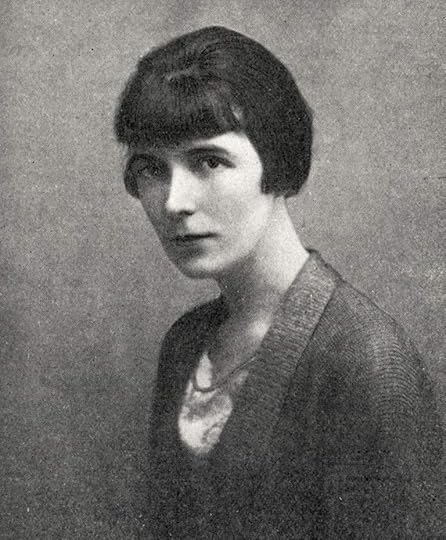
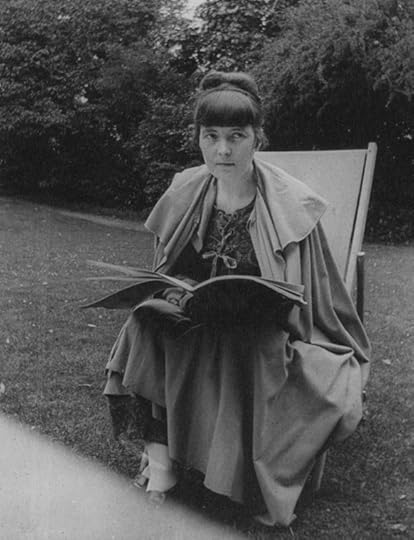


 Lieutenant Frederick G. Goodyear © IWM (HU 115193) />