

What do you think?

Irish Fairy and Folk Tales
James Stephens (1882-1950), an Irish poet and story writer much admired by James Joyce, was famous for his retelling of Irish folk tales and mythology. This collection of ten tales includesn "The Boyhood of Fionnâ", "Oisíns Mother" and "The Wooing of Becfol".
252 pages, Paperback
Published January 1, 2020
About the author
James Stephens
448 books48 followersJames Stephens was an Irish novelist and poet. James' mother worked in the home of the Collins family of Dublin and was adopted by them. He attended school with his adopted brothers Thomas and Richard (Tom and Dick) before graduating as a solicitor's clerk. They competed and won several athletic competitions despite James' slight stature (he stood 4'10" in his socks). He was known affectionately as 'Tiny Tim'. He was much enthralled by tales of military valour of his adoptive family and would have been a soldier except for his height. By the early 1900s James was increasingly inclined to socialism and the Irish language (he could speak and write Irish) and by 1912 was a dedicated Irish Republican. He was a close friend of the 1916 leader Thomas MacDonagh, who was then editor of "The Irish Review", manager of the Irish Theatre and deputy headmaster in St Enda's, the radical bilingual Montessori school run by PH Pearse, and spent most with MacDonagh in 1911. His growing nationalism brought a schism with his adopted family.
James Stephens produced many retellings of Irish myths and fairy tales. His retellings are marked by a rare combination of humour and lyricism (Deirdre, and Irish Fairy Tales are often especially praised). He also wrote several original novels (Crock of Gold, Etched in Moonlight, Demi-Gods) based loosely on Irish fairy tales. "Crock of Gold," in particular, achieved enduring popularity and was reprinted frequently throughout the author's lifetime.
Stephens began his career as a poet with the tutelage of "Æ" (George William Russell). His first book of poems, "Insurrections," was published in 1909. His last book, "Kings and the Moon" (1938), was also a volume of verse.
During the 1930s, Stephens had some acquaintance with James Joyce, who mistakenly believed that they shared a birthday. Joyce, who was concerned with his ability to finish what later became Finnegans Wake, proposed that Stephens assist him, with the authorship credited to JJ & S (James Joyce & Stephens, also a pun for the popular Irish whiskey made by John Jameson & Sons). The plan, however, was never implemented, as Joyce was able to complete the work on his own.
During the last decade of his life, Stephens found a new audience through a series of broadcasts on the BBC.
James Stephens produced many retellings of Irish myths and fairy tales. His retellings are marked by a rare combination of humour and lyricism (Deirdre, and Irish Fairy Tales are often especially praised). He also wrote several original novels (Crock of Gold, Etched in Moonlight, Demi-Gods) based loosely on Irish fairy tales. "Crock of Gold," in particular, achieved enduring popularity and was reprinted frequently throughout the author's lifetime.
Stephens began his career as a poet with the tutelage of "Æ" (George William Russell). His first book of poems, "Insurrections," was published in 1909. His last book, "Kings and the Moon" (1938), was also a volume of verse.
During the 1930s, Stephens had some acquaintance with James Joyce, who mistakenly believed that they shared a birthday. Joyce, who was concerned with his ability to finish what later became Finnegans Wake, proposed that Stephens assist him, with the authorship credited to JJ & S (James Joyce & Stephens, also a pun for the popular Irish whiskey made by John Jameson & Sons). The plan, however, was never implemented, as Joyce was able to complete the work on his own.
During the last decade of his life, Stephens found a new audience through a series of broadcasts on the BBC.
Ratings & Reviews
Friends & Following
Create a free account to discover what your friends think of this book!
Community Reviews
Displaying 1 - 14 of 14 reviews

February 3, 2024
Irish writer James Stephens (d. 1950), a contemporary and friend of James Joyce, was a staunch Irish nationalist who had an abiding interest in the rich folklore of his native land. A successful author of original novels and poetry, he was also known for his many retellings in English of ancient and medieval Irish legends (he could both read and write the original Gaelic), ten of which are included in this short collection, first published in 1920. Most of the tales here originally go back to the period before the Christianization of Ireland (which took place in the 5th century A.D., mostly through the missionary activity of St. Patrick), but a few, at least in the form they have here, reflect the times just after that.
My interest in folklore is long-standing, but I'm more of a dabbler than a systematic student, let alone an expert. Back in my community college days, I read extensively in a book on Irish legends (though not the whole book), the author/title of which I don't remember, and I could recognize some names and references that appear here as well; but most of the material here was new to me. Stephens' intent here, of course, is not scholarly; rather, it's to retell the tales in written form in a way that's essentially faithful to the original(s), so that ordinary modern readers can experience and enjoy them simply as stories, in their own right. (The closest parallel I can think of is The Heroes of Asgard: Tales from Scandinavian Mythology by Annie and Eliza Keary, though the Keary sisters were writing for younger readers and Stephens for adults.) IMO, he succeeds in that. These selections have their surreal elements, some more so than others; but the surrealism doesn't totally overwhelm the plots as it does in the early parts of The Mabinogion, and the behavior of the characters is more realistically consistent.
Our first tale, and the most surreal, is "The Story of Tuan mac Cairill," as told by the title character, who supposedly was a miraculously long-lived grandson of Noah who for centuries lived in the form of various animals, recounting the history of Ireland as he experienced it to one Abbot Finnian, in the early days of Irish Christianity, after Tuan's own conversion. (According to the very short Introduction to this edition, which is mostly a brief summary of Stephens' life, this legend is first attested in the 11th century; but I would surmise the oral tradition to be much older.) Most of the stories tell of events in the life of the pre-Christian warrior Fionn [pronounced as "Foon"] mac Uail (spelled as Finn mac Cuail in the other book I mentioned above), starting with his boyhood. (One of his fellow warriors is named Conan; that was probably where Robert E. Howard got the name, though his source was probably Bulfinch's Mythology.) "Becuma of the White Skin" focuses on the pre-Christian High King Conn and especially his son Art (also familiar names from the other book); the last story, "Mongan's Frenzy," is also supposedly told to an abbot, but recalls pre-Christian events said to take place some twelve generations earlier.
It's difficult to tell exactly how closely Stephens follows his sources, and he doesn't document them. But he appears to have had a genuine (and patriotic) interest in the authentic folkloric tradition, and a sincere concern for preserving the substance of the material. That argues for a pretty faithful rendition; and wherever I could relate elements of the tales to glimpses of the lore that I've gotten from other Celtic folklore-inspired fiction, my general knowledge of social and cultural conditions in ancient and Dark Ages Ireland (and elsewhere in Europe) as a history major, and what points of contact there are with my other admittedly scanty reading in medieval literature and folklore theory, Stephens' telling seems consistent. The picture of a warlike society, a country divided into petty kingdoms that owe a loose loyalty to the suzerainty of the High King at Tara, the high view of warrior camaraderie and personal honor and word-keeping, the view of wives as chattels mainly valued for their looks (but also of women as, sometimes, fierce warriors) reflects the realities of that period. Faery (the Celtic Otherworld) and its denizens also bulk large in these stories, as they do in other sources I'm aware of. Stephens' literary style here contains a vein of pithy wisdom, often lyric descriptions of the natural world, quaint turns of phrase and folk humor that probably also derives directly from the Gaelic originals.
Obviously, much of this material is fictional. How much of it is pure imaginative storytelling like the Jack Tales, how much of it the oral storytellers believed to be true (and how they came to think that), and how much if any of it actually reflects some basis in historical reality, would be vexed and subjective questions. I personally believe that Conn, Art, and Fionn at least were probably actual persons (St. Patrick believed that Fionn was, according to an appended quote from his writings), though their exploits as recounted here are clearly wildly embroidered, and that Ireland probably actually did experience varied waves of immigration from the mainland over the long centuries of its prehistory, with later comers like the Celts probably inclined to interpret earlier ones as magical beings. But that's speculative; and it's not a necessary type of speculation to enjoy the tales for what they're worth. If you have an interest in this type of material (the fountainhead from which the modern literary genre of fantasy springs!), you'll probably find this a solidly worthwhile read.
My interest in folklore is long-standing, but I'm more of a dabbler than a systematic student, let alone an expert. Back in my community college days, I read extensively in a book on Irish legends (though not the whole book), the author/title of which I don't remember, and I could recognize some names and references that appear here as well; but most of the material here was new to me. Stephens' intent here, of course, is not scholarly; rather, it's to retell the tales in written form in a way that's essentially faithful to the original(s), so that ordinary modern readers can experience and enjoy them simply as stories, in their own right. (The closest parallel I can think of is The Heroes of Asgard: Tales from Scandinavian Mythology by Annie and Eliza Keary, though the Keary sisters were writing for younger readers and Stephens for adults.) IMO, he succeeds in that. These selections have their surreal elements, some more so than others; but the surrealism doesn't totally overwhelm the plots as it does in the early parts of The Mabinogion, and the behavior of the characters is more realistically consistent.
Our first tale, and the most surreal, is "The Story of Tuan mac Cairill," as told by the title character, who supposedly was a miraculously long-lived grandson of Noah who for centuries lived in the form of various animals, recounting the history of Ireland as he experienced it to one Abbot Finnian, in the early days of Irish Christianity, after Tuan's own conversion. (According to the very short Introduction to this edition, which is mostly a brief summary of Stephens' life, this legend is first attested in the 11th century; but I would surmise the oral tradition to be much older.) Most of the stories tell of events in the life of the pre-Christian warrior Fionn [pronounced as "Foon"] mac Uail (spelled as Finn mac Cuail in the other book I mentioned above), starting with his boyhood. (One of his fellow warriors is named Conan; that was probably where Robert E. Howard got the name, though his source was probably Bulfinch's Mythology.) "Becuma of the White Skin" focuses on the pre-Christian High King Conn and especially his son Art (also familiar names from the other book); the last story, "Mongan's Frenzy," is also supposedly told to an abbot, but recalls pre-Christian events said to take place some twelve generations earlier.
It's difficult to tell exactly how closely Stephens follows his sources, and he doesn't document them. But he appears to have had a genuine (and patriotic) interest in the authentic folkloric tradition, and a sincere concern for preserving the substance of the material. That argues for a pretty faithful rendition; and wherever I could relate elements of the tales to glimpses of the lore that I've gotten from other Celtic folklore-inspired fiction, my general knowledge of social and cultural conditions in ancient and Dark Ages Ireland (and elsewhere in Europe) as a history major, and what points of contact there are with my other admittedly scanty reading in medieval literature and folklore theory, Stephens' telling seems consistent. The picture of a warlike society, a country divided into petty kingdoms that owe a loose loyalty to the suzerainty of the High King at Tara, the high view of warrior camaraderie and personal honor and word-keeping, the view of wives as chattels mainly valued for their looks (but also of women as, sometimes, fierce warriors) reflects the realities of that period. Faery (the Celtic Otherworld) and its denizens also bulk large in these stories, as they do in other sources I'm aware of. Stephens' literary style here contains a vein of pithy wisdom, often lyric descriptions of the natural world, quaint turns of phrase and folk humor that probably also derives directly from the Gaelic originals.
Obviously, much of this material is fictional. How much of it is pure imaginative storytelling like the Jack Tales, how much of it the oral storytellers believed to be true (and how they came to think that), and how much if any of it actually reflects some basis in historical reality, would be vexed and subjective questions. I personally believe that Conn, Art, and Fionn at least were probably actual persons (St. Patrick believed that Fionn was, according to an appended quote from his writings), though their exploits as recounted here are clearly wildly embroidered, and that Ireland probably actually did experience varied waves of immigration from the mainland over the long centuries of its prehistory, with later comers like the Celts probably inclined to interpret earlier ones as magical beings. But that's speculative; and it's not a necessary type of speculation to enjoy the tales for what they're worth. If you have an interest in this type of material (the fountainhead from which the modern literary genre of fantasy springs!), you'll probably find this a solidly worthwhile read.
December 2, 2023
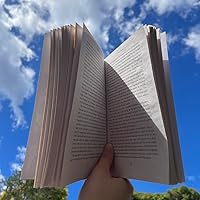
most of this was a 5 star read for me but the magic of it started to die off a bit near the end, 4.5 stars!
I picked this book up because my Irish heritage was just attracted to the cover and the title - but when I say I was not expecting the words in these pages to be so impactful, I mean it. I’ve never read a book with such stunningly simple and beautiful writing. I had to put the book down because I just had to stare at the wall and cry a lil. I have had to refrain from voice-to-texting my boyfriend an entire chapter in this book because I just NEED to share my love for it (and I think I’ve already sent him enough). Fionn’s connectednesses to the earth - and the humans and the animals in it makes my heart ache because people today (myself included) are so disconnected to all these things.
Here are my two favourite quotes for two very different reasons:
"Listening in the dark to the bundle of noises, which make a noise, he could disentangle them, and assign a place, and a reason to each gradation of Sound that formed the chorus: There was the patter of a rabbit, and there The scurrying of a hare; A bush rustled yonder, but that brief rustle was a bird; The pressure was a wolf, and this Hesitation a fox; the scrapping Yonder was, but a a rough leaf against bark, And the scratching beyond, it was a ferrets claw. Fear cannot be where knowledge is, and Fionn Was not fearful. His mind, quietly busy on all sides, picked up one sound and dwelt on it. "a man" said Fionn,And he listened in that direction, back towards the city. A man it was, almost as skilled in darkness as Fionn Himself."
______________________________
Master’ said Mac an Dàv.
‘What is it my good friend?’
‘Let me throw a little small piece of rock at the king of Leinster.’
‘I will not’
‘a little bit only, a small bit about twice the size of my head’,
‘I will not let you’ said Monaghan. When the King had gone by Mac groaned a deep and dejected groan ‘oaw ooah’, said he. the man who had tied his sandal, said then: ‘are you in pain, honest man?’
‘I’m not in pain’, said Mac an Dàv.
‘well what was it that knocked the hell out of you like the yelp of a sick dog, honest man?’
‘Go away’, said Mac an Dàv ‘go away. You flat faced nosy person’
‘there is no politeness left in this country’, says the stranger, and he went away to a certain distance from there, he threw a stone at Mac an Dàv’s nose and hit it.
I picked this book up because my Irish heritage was just attracted to the cover and the title - but when I say I was not expecting the words in these pages to be so impactful, I mean it. I’ve never read a book with such stunningly simple and beautiful writing. I had to put the book down because I just had to stare at the wall and cry a lil. I have had to refrain from voice-to-texting my boyfriend an entire chapter in this book because I just NEED to share my love for it (and I think I’ve already sent him enough). Fionn’s connectednesses to the earth - and the humans and the animals in it makes my heart ache because people today (myself included) are so disconnected to all these things.
Here are my two favourite quotes for two very different reasons:
"Listening in the dark to the bundle of noises, which make a noise, he could disentangle them, and assign a place, and a reason to each gradation of Sound that formed the chorus: There was the patter of a rabbit, and there The scurrying of a hare; A bush rustled yonder, but that brief rustle was a bird; The pressure was a wolf, and this Hesitation a fox; the scrapping Yonder was, but a a rough leaf against bark, And the scratching beyond, it was a ferrets claw. Fear cannot be where knowledge is, and Fionn Was not fearful. His mind, quietly busy on all sides, picked up one sound and dwelt on it. "a man" said Fionn,And he listened in that direction, back towards the city. A man it was, almost as skilled in darkness as Fionn Himself."
______________________________
Master’ said Mac an Dàv.
‘What is it my good friend?’
‘Let me throw a little small piece of rock at the king of Leinster.’
‘I will not’
‘a little bit only, a small bit about twice the size of my head’,
‘I will not let you’ said Monaghan. When the King had gone by Mac groaned a deep and dejected groan ‘oaw ooah’, said he. the man who had tied his sandal, said then: ‘are you in pain, honest man?’
‘I’m not in pain’, said Mac an Dàv.
‘well what was it that knocked the hell out of you like the yelp of a sick dog, honest man?’
‘Go away’, said Mac an Dàv ‘go away. You flat faced nosy person’
‘there is no politeness left in this country’, says the stranger, and he went away to a certain distance from there, he threw a stone at Mac an Dàv’s nose and hit it.
Read
October 25, 2024Bit difficult to rate and sometimes to read, even though the style is relatively simple. They’re stories and tales that ask you to sit with them and hang around for a while before they’ll let up their truths.

July 31, 2026
I love a god fairytale and being of Irish descent, decided to give this book a try when I found it in a used bookstore. It was difficult to get fully into as I do not have an understanding of geography in Ireland, or if the people’s described. It was almost as if I was reading a 3rd book in a series without the benefit of having read the first two. It was interesting and the bits of humor I did grasp were funny.

October 6, 2026
Very informative, I like the way this guy tells a tale. But I will say it took me about a year of picking this up and putting it down so not the most engrossing writing.

February 7, 2026
I can’t help but feel like I didn’t enjoy it the most I could have because of things being difficult to follow and not knowing the kingdoms and characters beforehand. I feel like I read the second book in a series except there isn’t a first book. The story of Fionn and the salmon of wisdom is the highlight for me because the rest of the stories were boring in my opinion.

May 27, 2023
A fascinating insight into early post-Christian Irish culture, dense with wit, chronicling a value-laden oral tradition that dancingly demonstrates that peoples' reconciliation between their pre-invasion mythology and the coming of the "new god" through the adventures of the legendary Fionn.
Also, my young daughter bought this with her own money while visiting the UK for the first time and gave it to me for my birthday, so it should go without saying that it's my favorite book on our shelves.
Also, my young daughter bought this with her own money while visiting the UK for the first time and gave it to me for my birthday, so it should go without saying that it's my favorite book on our shelves.
January 26, 2024
A well written piece of literature and a tale of morality some of which I think missed the mark in some places however it doesn't detract from the overall story. My biggest frustration with this book was the names of the characters and not being able to prounce most of them. Otherwise I really enjoyed this book.

March 1, 2021
I could not get into it. May try again another time.
April 25, 2022
A good book. I enjoyed Stephen's style and definitely intend to look into more of his work.

August 28, 2022
Hard to stay focused at times but some parts were good.

March 13, 2023
I love fairytales ❤️
December 15, 2024
I would've liked a couple more fairies and less stupid men, but otherwise a decent collection

December 30, 2024
dopo aver visitato l'Irlanda e da grande amante di libri fantasy questa lettura è stata molto piacevole
Displaying 1 - 14 of 14 reviews