

What do you think?

Raw Deal: Horrible and Ironic Stories of Forgotten Americans
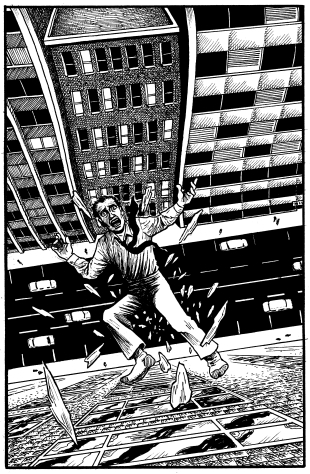
The perfect tonic for anyone who's sick of inspiring tales of triumph over adversity, "Raw Deal" chronicles the lives of 22 of America's most wretched victims--who did nothing wrong but nonetheless suffered horrible fates. 22 full page portraits.
304 pages, Paperback
First published June 5, 1998
About the author
Ken Smith
256 books12 followersLibrarian note:
There is more than one author in the Goodreads database with this name
This profile may contain books from multiple authors of this name
There is more than one author in the Goodreads database with this name
This profile may contain books from multiple authors of this name
Ratings & Reviews
Friends & Following
Create a free account to discover what your friends think of this book!
Community Reviews
Displaying 1 - 9 of 9 reviews

November 4, 2018
"SOME THINGS ARE JUST NOT RIGHT."
As I started reading this, I realized I'd read it already 15 years ago. But I enjoyed it so much, I read it again. I guess I just love a good tragedy.
Ken Smith does a great service here in unearthing 22 mostly-unknown stories. He reads big books so you don't have to, boiling the stories down to 20 page summaries. I do a minor disservice in boiling them down to 20 word summaries. But hopefully that will spur you to read the book.
"Are you fed up with all the self-affirming, ego-inflating, think-positive-and-you-can-win hogwash that pervades our times? ... if you think life is tough, read RAW DEAL and find out just how bad it can get when bad things happen to good people."
Some stories are not surprising. Lessons: don't be non-white; don't fight the government; don't fight big business.
But some are eye-opening. You'd think that if you invent radio, or discover gold, or find a way to extract oil from the ground, or invent a way to make rubber useful, that you'd get rich and famous. Think again!
I also love Ken's Guide to the Bible, which is how I discovered this author.
Below I link to some of the sources used in making this book. In a few cases I swapped-out a more recent reference.
1. US treats an African man as sub-human. Surprised? Ota, the Pygmy in the Zoo
2. Before radio, there were dedicated lines bringing the music of the Telharmonium into your home. (Thaddeus Cahill didn't really get a raw deal except for being affected by a stock marker crash. Radio just eventually replaced his invention.) Magic Music from the Telharmonium
3. Frank Olson worked on germ warfare but had second thoughts after taking LSD. Falls dead from a window. Ken Smith treats Frank Olson's death as an accident or suicide. Acid Dreams: The CIA, LSD and the Sixties Rebellion. There are other opinions, but surely the CIA doesn't murder people? A Terrible Mistake: The Murder of Frank Olson and the CIA's Secret Cold War Experiments
4. Chyenne chief tries to make peace with the white man. Spoiler alert: The Massacre at Sand Creek
5. Horace Wells discovers anesthesia makes dentistry less painful. Others claim credit. Discovers anesthesia makes suicide less painful. A Calculus of Suffering: Pain, Professionalism, and Anesthesia in Nineteenth-Century America
6. Prairie dogs. Cute, harmless, good for the ecosystem. So, of course we kill 4,500,000,000 of them (99.75 percent). Flame-throwers prove particularly effective. Waste of the West: Public Lands Ranching
7. Is Plutonium good for you? Let's find out! (Shh! Don't tell the "volunteers"!) The Human Radiation Experiments
8. John Sutter tries to build a utopia, but is ruined and bankrupted after the discovery of gold in his creek. Fool's Gold: The Decline and Fall of Captain John Sutter of California
9. Who invented radio and wireless phones? To Be Greater Than Marconi: The Nathan B. Stubblefield Story
10. Killed (probably) for blowing the whistle. The Death Of Karen Silkwood
11. James Garfield might have survived his bullet wounds if doctors would have stopped sticking their dirty fingers in them, and if they had let him eat food rather than boofing bourbon and beef-broth up his butt.Garfield
12. Remember the little girl that fell down a well? Such a copy-cat! Trapped! The Story of Floyd Collins
13. The governor commuted Leo Frank's life sentence, because he probably didn't kill that girl. That didn't stop a mob and the KKK from breaking him out of jail to kill him. A Little Girl Is Dead
14. Invents vulcanized rubber. Never makes a dime from it. Congress, on advice of big business, denies his patent. But hey, a company named itself after him 40 years after he dies! India Rubber Man: The Story of Charles Goodyear
15. Got into Harvard at 9, but not allowed to enroll until 11. Becomes a university professor at 17. Mercilessly mocked by the press, he retreats from the public eye and takes only menial jobs. The Prodigy: A Biography of William James Sidis, America's Greatest Child Prodigy
16. Wilhelm Reich. This one seems out of place. His ideas are kooky, especially later in his life. But was the government right to burn all his books? Wilhelm Reich: The Man Who Dreamed of Tomorrow
17. Paiute chief tries to make peace with the white man. Spoiler alert: Life Among The Piutes: Their Wrongs And Claims
18. Massacre by the Wobblies, or massacre of the Wobblies? You decide. Solidarity Forever: An Oral History of the IWW
19. Edwin Drake discovers how to get oil out of the ground. Did he strike it rich? Heck no. Big business screwed him good. The Greatest Gamblers: The Epic of American Oil Exploration
20. Lincoln freed the slaves! Except for composer Thomas Greene Wiggins who was just too valuable to be let free. (Obviously, many others had similar fates.) Blind Tom, the Black Pianist-Composer (1849-1908): Continually Enslaved
21. Edwin Armstrong invents a better type of radio called FM. The government, at the request of big broadcasters, does all it can to make it fail. Armstrong's fight for FM broadcasting: one man vs big business and bureaucracy
22. Guy gets PTSD and amnesia and half of a face blown off from serving in WWI. Gets no love from the government because they don't want to admit that their records of who was in the army are imperfect. Jerry Tarbot: The Living Unknown Soldier
Full-page black and white llustrations for each chapter by Mack White.
As I started reading this, I realized I'd read it already 15 years ago. But I enjoyed it so much, I read it again. I guess I just love a good tragedy.
Ken Smith does a great service here in unearthing 22 mostly-unknown stories. He reads big books so you don't have to, boiling the stories down to 20 page summaries. I do a minor disservice in boiling them down to 20 word summaries. But hopefully that will spur you to read the book.
"Are you fed up with all the self-affirming, ego-inflating, think-positive-and-you-can-win hogwash that pervades our times? ... if you think life is tough, read RAW DEAL and find out just how bad it can get when bad things happen to good people."
Some stories are not surprising. Lessons: don't be non-white; don't fight the government; don't fight big business.
But some are eye-opening. You'd think that if you invent radio, or discover gold, or find a way to extract oil from the ground, or invent a way to make rubber useful, that you'd get rich and famous. Think again!
I also love Ken's Guide to the Bible, which is how I discovered this author.
Below I link to some of the sources used in making this book. In a few cases I swapped-out a more recent reference.
1. US treats an African man as sub-human. Surprised? Ota, the Pygmy in the Zoo
2. Before radio, there were dedicated lines bringing the music of the Telharmonium into your home. (Thaddeus Cahill didn't really get a raw deal except for being affected by a stock marker crash. Radio just eventually replaced his invention.) Magic Music from the Telharmonium
3. Frank Olson worked on germ warfare but had second thoughts after taking LSD. Falls dead from a window. Ken Smith treats Frank Olson's death as an accident or suicide. Acid Dreams: The CIA, LSD and the Sixties Rebellion. There are other opinions, but surely the CIA doesn't murder people? A Terrible Mistake: The Murder of Frank Olson and the CIA's Secret Cold War Experiments
4. Chyenne chief tries to make peace with the white man. Spoiler alert: The Massacre at Sand Creek
5. Horace Wells discovers anesthesia makes dentistry less painful. Others claim credit. Discovers anesthesia makes suicide less painful. A Calculus of Suffering: Pain, Professionalism, and Anesthesia in Nineteenth-Century America
6. Prairie dogs. Cute, harmless, good for the ecosystem. So, of course we kill 4,500,000,000 of them (99.75 percent). Flame-throwers prove particularly effective. Waste of the West: Public Lands Ranching
7. Is Plutonium good for you? Let's find out! (Shh! Don't tell the "volunteers"!) The Human Radiation Experiments
8. John Sutter tries to build a utopia, but is ruined and bankrupted after the discovery of gold in his creek. Fool's Gold: The Decline and Fall of Captain John Sutter of California
9. Who invented radio and wireless phones? To Be Greater Than Marconi: The Nathan B. Stubblefield Story
10. Killed (probably) for blowing the whistle. The Death Of Karen Silkwood
11. James Garfield might have survived his bullet wounds if doctors would have stopped sticking their dirty fingers in them, and if they had let him eat food rather than boofing bourbon and beef-broth up his butt.Garfield
12. Remember the little girl that fell down a well? Such a copy-cat! Trapped! The Story of Floyd Collins
13. The governor commuted Leo Frank's life sentence, because he probably didn't kill that girl. That didn't stop a mob and the KKK from breaking him out of jail to kill him. A Little Girl Is Dead
14. Invents vulcanized rubber. Never makes a dime from it. Congress, on advice of big business, denies his patent. But hey, a company named itself after him 40 years after he dies! India Rubber Man: The Story of Charles Goodyear
15. Got into Harvard at 9, but not allowed to enroll until 11. Becomes a university professor at 17. Mercilessly mocked by the press, he retreats from the public eye and takes only menial jobs. The Prodigy: A Biography of William James Sidis, America's Greatest Child Prodigy
16. Wilhelm Reich. This one seems out of place. His ideas are kooky, especially later in his life. But was the government right to burn all his books? Wilhelm Reich: The Man Who Dreamed of Tomorrow
17. Paiute chief tries to make peace with the white man. Spoiler alert: Life Among The Piutes: Their Wrongs And Claims
18. Massacre by the Wobblies, or massacre of the Wobblies? You decide. Solidarity Forever: An Oral History of the IWW
19. Edwin Drake discovers how to get oil out of the ground. Did he strike it rich? Heck no. Big business screwed him good. The Greatest Gamblers: The Epic of American Oil Exploration
20. Lincoln freed the slaves! Except for composer Thomas Greene Wiggins who was just too valuable to be let free. (Obviously, many others had similar fates.) Blind Tom, the Black Pianist-Composer (1849-1908): Continually Enslaved
21. Edwin Armstrong invents a better type of radio called FM. The government, at the request of big broadcasters, does all it can to make it fail. Armstrong's fight for FM broadcasting: one man vs big business and bureaucracy
22. Guy gets PTSD and amnesia and half of a face blown off from serving in WWI. Gets no love from the government because they don't want to admit that their records of who was in the army are imperfect. Jerry Tarbot: The Living Unknown Soldier
Full-page black and white llustrations for each chapter by Mack White.

December 14, 2012
"Horrible and Ironic Stories of Forgotten Americans" This book took half a year for me to read because it was so depressing. I had to keep putting it aside. Worst story was about a poor little pygmy who was displayed in the Bronx Zoo monkey house.

July 31, 2012
Ken Smith is the author of the fantastic Ken's Guide to the Bible. This one's not that essential, but it's still a great read: he sorts through the annals of American history seeking the most compelling narratives of people getting screwed up the ass you'll ever find. Some of the stories are inspiring, some are hilarious, some are just enraging, and all of them are hugely depressing -- but not one of them is boring. Ken's given us a tonic for all the bullshit "just work hard and do the right thing and you'll prosper" fables that are woven into the American world-view, and we should thank him for it. The best ones: IWW martyr Wesley Everest, nuclear power industry victim Karen Silkwood, hapless inventor Nathan Stubblefield, and the poor goddamn prairie dog.

September 1, 2007
Written on a very low reading level, but interesting stories that push you to reevaluate some of your preconceptions.

June 11, 2018
Perfect late-night insomnia reading. I've read this book over and over, literally dozens of times, and I'm always entertained, fascinated, and eventually pissed-off...
August 2, 2019
Some interesting stories here and there, but the formula got repetitive towards the end.
February 25, 2024
Not the most uplifting book I have ever read. But it was one of the more interesting ones that I have read.
It is 22 true stories about average Americans from all walks of life. and in different times in history, who put their faith in the belief that if you work hard, play by the rules and have faith in the system and your fellow man you will achieve the American Dream. But due to one reason or another they fail spectacularly.
Like I said, it's not the most uplifting book I ever read. But in a dark, weird way it was.
It is 22 true stories about average Americans from all walks of life. and in different times in history, who put their faith in the belief that if you work hard, play by the rules and have faith in the system and your fellow man you will achieve the American Dream. But due to one reason or another they fail spectacularly.
Like I said, it's not the most uplifting book I ever read. But in a dark, weird way it was.

June 29, 2011
This was a non-fiction collection of short biographies of people who had a raw deal in life, supposedly. After reading it, I would argue that some of these people were privileged folks that had many of their advantages taken from them and some of them made some poor decisions, but many of them were innocent people that got screwed over again and again.
At any rate, it's an interesting history lesson. It's no surprise that two of these stories are about Native American peacemakers that got repeatedly screwed by white invaders and their broken promises. But did you know that there used to be "teleharmonium" wires that ran alongside the telephone wires, that brought music into homes and businesses? Apparently the guy who invented this machine got screwed over. The inventors of vulcanized rubber and FM radio also got screwed and died penniless and alone.
The most compelling story in my opinion was the one about Karen Silkwood, the woman who was poisoned with radioactivity and then run off the road and killed for investigating serious safety breaches in the plutonium processing factory where she was working. There was also a doozy about a guy who worked for the CIA who got dosed with LSD without his consent by a coworker, and ended up committing suicide.
This is not the book of the century, but I did learn some things. Good for when you want to read a chapter that only takes a few minutes.
At any rate, it's an interesting history lesson. It's no surprise that two of these stories are about Native American peacemakers that got repeatedly screwed by white invaders and their broken promises. But did you know that there used to be "teleharmonium" wires that ran alongside the telephone wires, that brought music into homes and businesses? Apparently the guy who invented this machine got screwed over. The inventors of vulcanized rubber and FM radio also got screwed and died penniless and alone.
The most compelling story in my opinion was the one about Karen Silkwood, the woman who was poisoned with radioactivity and then run off the road and killed for investigating serious safety breaches in the plutonium processing factory where she was working. There was also a doozy about a guy who worked for the CIA who got dosed with LSD without his consent by a coworker, and ended up committing suicide.
This is not the book of the century, but I did learn some things. Good for when you want to read a chapter that only takes a few minutes.
March 6, 2011
Kurt Vonnegut once said: "...but I am suspicious of belly laughs as entirely happy experiences. The only way to get a belly laugh, I've found, is to undermine a surface joke with more unhappiness than most mortals can bear."
In that context, this book is great for a belly laugh. Some of it is black comedy, some of it is genuinely tragic, and most of it is a good read. It's not the most elegant writing, and the self-contained chapters make it good bathroom reading. It's worth a read, especially if you're going through a rough patch and could use a good dose of schadenfreude.
In that context, this book is great for a belly laugh. Some of it is black comedy, some of it is genuinely tragic, and most of it is a good read. It's not the most elegant writing, and the self-contained chapters make it good bathroom reading. It's worth a read, especially if you're going through a rough patch and could use a good dose of schadenfreude.
Displaying 1 - 9 of 9 reviews