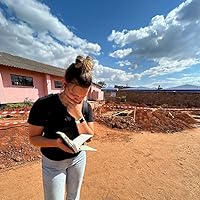
oooh this book made my blood BOIL. I started adding tabs to pages (for things that I both didn’t like and liked about the book) and made 51 markings. Obviously, I’m not going to go through every one of those notes or this will be a book of its own but I will touch on some things. I’ll start with things I didn’t like or disagreed with and then (hopefully) end it on a good note by writing down some things that I did like! I’m not very argumentative or very articulate, but these are just my thoughts (and will therefore be probably unorganized and not very strong).
Let me just first say that this book is very anti-feminist. It was written in the 70s when the feminist movement, you could say, was gaining more attention and she had some pretty strong things to say in opposition to it.
1. “It was, in fact, the woman, Eve, who saw the opportunity to be something other than she was meant to be - the repent convinced her that she could easily be “like God” - and she took the initiative. We have no way of knowing whether a consultation with her husband first might have led to an entirely different conclusion. Perhaps it might. Perhaps if she had put the question to him and he had had to ponder the matter he would have seen the deadly implications and have refused the fruit. But Eve had already tried it. She had not been struck dead. She offered it to her husband. How could he refuse? Eve was undoubtedly a beautiful woman. She was the woman God had given him.” (pg. 15)
-This made me SO angry reading this. She pretty much blamed Eve for The Fall. I’m not going to lie, the Bible is pretty clear that it was Eve who was deceived first. That’s not what I’m mad about - I get that! However, if you’re going to put blame on Eve, I think also we should think of Adam who didn’t even hesitate and ate the fruit just like Eve. But noooo, it’s not his fault! I mean, Eve was a beautiful woman - HOW COULD HE REFUSE? What the freaking heckkk that’s just ARGH not even close to the truth. For Elisabeth Elliot’s sake, I would agree that maybe things would be different if she asked Adam first what she thought! However, I believe that The Fall was a human problem, not necessarily a woman problem. I believe that if Adam didn’t eat the fruit that day, I would be pretty certain he would another day.
2. Multiple times throughout the book, Elisabeth Elliot makes the stance of womanhood=motherhood. For example, she mentioned how when her daughter told her that when she wanted to grow up, she wanted to be a mom and then Elisabeth said “when the day came at last when you knew you were a women indeed, you came to tell me about it and your eyes shone” (pg. 21). Another example is more straight forward: “But surely motherhood, in a deeper sense, is the essence of womanhood” (pg. 53).
-For so many reasons, I do not believe in or agree with this. Some people may not be able to have kids or, heaven forbid, some people may not want kids! I do not think being a mother makes you any less or any more of a women! I do not think your life starts when you finally discover that you want to be a mom. I do agree that we have an awesome gift, a gift to bring life to the world! That’s so awesome! And if we believe that this is your calling, then have babies! YAY :) But again, that does not define your womanhood or femininity - AT ALL.
3. I think, as a whole, I did not agree with her opinions about men and women’s roles. She says, “God created male and female, the male to call forth, to lead, initiate, and rule, and female to respond, follow, adapt, submit” (pg. 50). She also says things like “This is a woman’s place and all of us need to know what our place is to be put in it” (pg. 54) or “For it is in the nature of the woman to submit” (pg. 55) which obviously makes me squirm a little. I understand that the bible says that women are to submit - I’m not disagreeing with that. My problem is why are we limited by that! I think God made us beautiful human beings who are capable of many beautiful things and why are we limiting ourselves?
4. “You can create a climate for him according to your attitude, and this is part of your job as a wife. The home you make and the atmosphere of that home is the world he comes back to from the world of his work. Let it be a place of beauty and peace” (pg. 101)
-Honestly, this quote isn’t that bad other than the “this is part of your job as a wife”. NO IT IS NOT! If I ever am going to be a wife in the future, man, I would love to have the house nice and clean and smelly and refreshing when my husband comes back from work. However, it’s going to be that way because I LOVE my husband and want him to be happy, NOT because it’s my job!! No, no, no, no! So what if the woman works??? Is it not in the husband’s job description to make the home all nice?? No, it’s just a women’s role, of course…
5. “Common sense has told women in all societies in all ages that the care of the home was up to them.” (pg. 132)
-nope, I would say that the social constructs of the world has put them in a position where the care of the home was up to them. Definitely don’t think its common sense. I think men can care for a home just as well as women.
6. Generally speaking, she talks a lot about how men are to be the providers and workers and the women are supposed to be the mothers and the home makers. On pg. 132, she talks briefly about how this always isn’t the case (and in my head I’m getting excited!!): “I know many seminary students’ wives who have to work in order to pay their husbands’ tuition and the grocery bills. Obviously the husbands must do some of the housework and child care. This is a temporary expedient and most of them, husbands and wives, look forward to the day when things will be normal again”
-What exactly is normal, may I ask?? The idea that the women may be the breadwinner in the family long term is completely unfathomable to her and I just don’t agree! There was a time in my life (this was temporary; however I do not doubt my parents wouldn’t have minded this long term) when my mom went to work everyday and my dad was the one who woke us up and made us breakfast and took us to school and cleaned the house - why is that not a possibility and not just a temporary “we’ll suck it up until it returns to ‘normal’”?
7. She contradicts herself quite often too. She talked about how some of her friends chose being single in order to serve others, but then she also states how women are fundamentally created FOR men and that our only purpose in life is to be a helper and a companion for men. I, personally, would say that we are fundamentally created to bring glory to God and to build his Kingdom but I guess that’s just me?
8. On page 64, she talks about how during a talk with seminary students, one women brought up a topic about how seminary programs are based on the assumption that the students were men. Elisabeth Elliot then went into detail about a blind seminary student she knew: “I have never heard John complain that the whole world operates as though everybody can see. Of course the world operates that way. Most people can see. John accepts this as a matter of course, never whines or even refers to his blindness and makes a way for himself in spite of the (to us) impossible limitations of his life” aka blind people suck it up in a world full of able-seeing people so therefore women should suck it up in a male dominated society? No, I don’t agree with that or even the argument for John, the blind student. People in minorities shouldn’t have to suck it up or realize that their disability or limitations is something that cannot be changed or helped.
9. “What a real woman wants is a real man. What a real man wants is a real woman. It is masculinity that appeals to a woman. It is feminity that appeals to a man. The more womanly you are, the more manly your husband will want to be” (pg. 149) - this perspective, I would argue, is very outdated and definitely doesn’t align with my views on the LGBTQ+ community. Toxic masculinity is a serious issue and I also don’t understand the idea of what a “real” man/woman is.
10. I saved the best (or you could say worse) for the end. Chapter 32 is so concerning in so many ways. Elisabeth Elliot is trying to make an example for how in a household, when husband and wife know their place and their “jobs”, that lives can go on smoothly. I completely understand this, however, she used the WORST example for this. The couple she talks about is this girl who is in her mid teens (so maybe 15/16??) and her husband who is 11 YEARS OLD!! I’m sorry what???? That’s not only illegal but so horrible and awful and disheartening. And not only that, these people are in a polygamist relationship which is EVEN WORSE! And Elisabeth Elliot is kind of like, well they made it work so you should too, which is completely barbaric. This chapter really scared me that she would not only write about this type of “marriage” (can I even call it that? They’re literally children) but pretty much agree with it. This was almost a last straw for me with Elisabeth Elliot and made me really analyze her and her views. I cannot think of an argument that would make this situation remotely acceptable.
BUT HAVE HOPE! There are some good things (surprise surprise)!! I would say that most of the points which I agreed about was the idea of a christian marriage and what it means to be married under God.
1. “The fact that I am a woman does not make me a different kind of Christian, but the fact that I am a Christian does make me a different kind of woman” (pg. 43) - I love this and I think it is so true!! I would argue that this idea can also be applied to men but still I think the idea rings true.
2. “Thank God for a loyalty not only to each other but a common higher loyalty which you and Walt share - loyalty to God, whose call you’ve heard.” (pg. 67) - I think at a basic level, that is something that makes a godly christian marriage stand out from other marriages and I think that this is incredibly important to remember.
3. “We are all unfinished, a long way from what we ought to be, but if we can look at ourselves and one another from God’s point of view, we’ll know where we ought to be going and in which direction our relationship should move.” (pg. 90) - I was pleasantly surprised and happy to find that Elliot didn’t paint the idea of men being the hero in the relationship, but instead explaining how both man and woman sin and are like stray sheep. I think this was a good analogy and reminded me of the grace of God to us, both man and woman.
4. “Drawing near to God means drawing nearer to each other and this means growth and change” (pg. 93) - yes I love it!
5. “The gifts either of us had were not that we might flaunt them but that we might use them for the sake of other people” - I think this is a very good reminder of the calling that God has given us - to love the Lord your God and to love your neighbor. Of what little I know of Elisabeth Elliot, I do know she was a missionary in South America and I know she must have had to give up many luxuries for the sake of spreading the gospel, something which I find very admirable.
6. “So there is union in marriage two separate persons made one in the flesh, and, if they are Christian, one in Christ, subject to His leadership.” - amen!! Kind of wish I read this when I was engaged, or at least in a relationship (so its more applicable in my life) but I still this is something important and good to ponder over as I think about what my future relationships may look like.
7. “We must take up the cross - this is to submit to Christ’s authority. And we must follow - this is continued obedience. This is the road not to confinement, to bondage, to a stunted or arrested development, but to total personal freedom.” - I totally agree with this! I think my problem (something that I need to work on) is that I don’t necessarily see how these same idea can be applied to a sinful human male (as in women submit to men). But nevertheless, I love the reminder of the freedom we have in Christ.
Overall, I agreed with a lot about what she had to say about having a godly marriage but pretty much nothing about what she said about women's rights and “roles”. This review took me two days to write (a lot of taking out stuff...) and I'm getting tired or writing it all haha. End of the day, though, I think this topic is something that I need to actively pray about and study more but ultimately give it up to God.