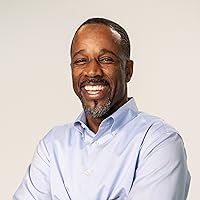
Learn twelve key lessons from Dunkin Donuts former CEO Robert Rosenberg that offer critical insights and a unique, 360-degree perspective to business leaders and managers on building one of the world's most recognized brands.
For entrepreneurs fighting for survival and leaders in growing businesses facing critical strategic decisions, competition is always fierce, and the future is never certain. Throughout all the chaos and the noise, you need a mentor that has seen a business through all the ins and outs and can offer guidance that will exponentially tip the odds in your favor to succeed.
Robert Rosenberg took over as CEO of Dunkin Donuts in 1963, 13 years after the first restaurant was founded by his father, William. In his remarkable 35-year run, he grew the company from $10 million in sales to over $2 billion, with more than 3,000 outlets. Through his tenure, Robert learned important lessons on running and scaling a family business.
In Around the Corner to Around the World, Rosenberg shares his insider perspective on all the dramatic highs and lows that are part of the Dunkin Donuts story to guide you to your own success story.
Around the Corner to Around the World
Distills the characteristics of a successful company through all phases of growth. Provides a new perspective on the dramatic story behind the rise of one of the world's most iconic brands. Tells the first-hand account (including essential lessons learned) from the tenure of one of the most successful CEO runs in modern business history. Reveals some of the dramatic and surprising plot turns in the story of Dunkin's rise to global prominence.
Robert Rosenberg was the CEO for 35 years at Dunkin' Donuts and I was curious about what insights he would share about the company and about his career in this book. This book is a dissection on the company's business strategies and what challenges and accomplishments the company has faced over the different eras from its early days in 1963 to Rosenberg's retirement in 1998. I was hoping for a book that focused more so on the history, culture, and I wanted to learn about how the company became the massive juggernaut it is today. Overall I felt like I learned a lot from this book, but I am clearly not the type of audience that this book is written for. There is a lot of business and marketing jargon, tons of different names and personnel to sift through, and what seems to be endless numbers and statistics thrown at me... much of which is not what I wanted to read about. What I wanted was to learn more about the company's history, culture, and how the products came to be in a storytelling fashion. I certainly got a little bit of that out of this book, especially during the early days, which is what I enjoyed the most out of this. I just wished the book entirely focused on this and not on the in depth business side of things. So all in all, this negative rating is not towards Rosenberg or the book itself. I think it's written very well and he clearly is a very knowledgeable and smart businessman. It's just not for me. If you're in the business industry, if you are a CEO, or if you're in business school, then I think you'd get a lot more out of this book than I would.
As someone who grew up in the northeast and consumed a lot of Dunkin over the years, I was excited to pick this one up and revisit the history of the donut / coffee company. Inside it, I found some fun business and product stories, many of which brought me back to the Coolata and Munchkin-filled days of my youth.
The book itself is fairly simple, but it’s still a fun and enjoyable read, especially for fans of the Dunkin brand. Though it won’t necessarily change your life, it will be a good complement to a brand that likely already has. Check it out if you run on Dunkin yourself.
I really enjoyed this story from Robert Rosenberg. Tons of great lessons on what it takes to run and grow a strong business that can outperform competitors and drive value for customers, employees, management, and all stakeholders. Having recently read Good to Great by Jim Collins and Skin in the Game by Nassim Taleb, there were many similar themes that Robert highlighted directly from his experience running Dunkin' over 35 years as one of the most successful and longest tenured CEOs.
I think this is a great book for anyone in the franchising world (food or services), or anyone looking to explore business management skills.
My main takeaways are:
Leadership / Management: - As a CEO, your "primary job is to recruit and retain great people". "Create an environment where good people can work." - You must align your employees incentives with the business through compensation structures. Stock options are a wonderful way to attract and retain top talent" - Create a BUDGET!!! Have each department "assess the risks inherent in their budget and to assess a probability of the risk actually occurring". - Adapt your strategy --> "The world is constantly changing, and if an enterprise doesn’t change with the times, it will perish. We had a mindset and processes that encouraged change as a way of life. We were constantly watching our competitors and others in our industry" - Fail Fast and Cheap --> "First, jump in early but don’t bet the whole company. Second, if the gambit works, move to iterate. If it didn’t, resist arrogance and stubbornness, admit failure, then close the whole thing down—and fast. There’s a lot of pressure in business to avoid risk, but one of the hallmarks of good executives is their willingness to make decisions." - Interacting with your Board of Directors --> maintain trust, never go into a meeting where there will be a vote without getting a count beforehand - To reach the top, you must manage upward as well as you manage down - The best CEOs come from within companies --> "Of the eighty-one newly named CEOs at those companies from 2014 through 2016, sixty-two were “lifers” who’d spent most of their careers with the company."
Other Life Lessons: - “When the student is ready, a teacher will appear.” Many times, the “teacher” came in the form of a book I was reading. - Define a personal mission (what you want to be over the next three to five years). One should also establish a set of objectives or financial goals—in essence, what you want to have quantitatively. Lastly, it’s useful to decide on the four to six strategic levers you plan to pull to allocate the scarce resources of time and money to achieve your mission and objectives
Franchising: - Franchising internationally is VERY DIFFICULT. You are relinquishing control of your brand in that country, along with often a reduced royalty. - Unit economics and profitability for your franchisees is the most important. If they don't make money, you don't make money.
I read this book a few years ago but don’t recall my impression of it and decided to give it another read given how quick this book is and how nostalgic I am for Dunkin’ any time I am not at home in Boston.
This is a fairly standard business memoir written by the former CEO of Dunkin’. Though it was originally his father’s business, a lot of what Dunkin' is today is because of the changes and decisions that Rosenberg made. He takes the readers through the history of the company (and misadventures along the way). He explicitly states clear lessons based on those experiences that readers can apply to their businesses.
This reads more like a business school case study than it does a memoir, but it lacks the rigor of a real case study. That made this book hard to connect with as it was not personal enough to feel narrative-driven but wasn’t serious enough to be purely educational. It’s possible this is uniquely a problem for me though and it won’t be an issue for others.
I enjoyed learning a bit more about my favorite hometown chain, and I’m glad I read this. I don’t know if I would have finished it if it was about any other place.
“Growing any business is not for the faint of heart; not in 1950 when Dunkin' began, not during the years I was at the helm, 1963-98, and certainly not today.” | As a Dunkin’ loyalist, I was drawn to this book simply by its affiliation to the brand. While there were some Munchkins (if you will) of interesting historical facts about the company, the book primarily reads as a short form wisdom book for those aspiring to for-profit leadership. At times, I struggled to follow the numerous names of executives who intertwined with the storyline, but can see Rosenberg’s overarching mission of ‘a dozen lessons learned’ as being fulfilled.
This book could be aptly renamed to “How Dunkin’ Donuts Decimated Mister Donut.”
Jokes aside, this is an informative and engaging business memoir. I’ve been a Dunkin’ fan for many years now, but Dunkin’ today seems completely different than how it was in the beginning, of course. I wish I could time travel to the founding and try a cup of coffee and fresh donut from the OG Dunkin’ Donuts!
If you've never been at Dunkin Donuts imagine a bakery/cafe where Fat Thursday is every day.
Books about big companies tend to aim at 2 things: - general advice about the importance of good leadership etc. - stocks, obligations,
Those things were in this book as well but a big part of the book was filled with precise and industry-specific examples.
From "Around the Corner to Around the World" you will learn about: - running bakery/cafe - how eating habits affect offers of companies from the food industry - how the franchising model works from inside - how trends in the food industry evolved over the years - how does it look to be a part of a large enterprise (after being acquired).
Lately, I hunt for books about particular industries and this one is definitely one of the best
I just finished Around the Corner to Around the World: A Dozen Lessons I Learned Running Dunkin Donuts. I never thought a business book could be a page turner but this one is. I must reveal that Bob Rosenberg is a friend but it in no way affects this review. But bravo for a great success. The story of Dunkin’ Donuts is fascinating. As a matter of information it is the only fast food store I ever enter. I love their donuts and coffee which is better than Starbucks whose coffee always tasted burned. Back to the book. I enjoyed watching Bob's growth and development as a leader and the awesome growth of Dunkin’ Donuts. Bob's executive skills are nothing short of awesome. He comes off as an incredible leader. Not someone who blames others but someone who can see mistakes, failures if you will and quickly reverse them. And this leader shows the ability to hire a cohort of fabulous executives and he knew how to treat them. How to bring them along. How to get the best out of them while helping them attain their personal objectives. This CEO was a fantastic strategist. I am awed by his success and the story he tells. There is a lot for an upcoming executive to learn from this book. The prose is so great it reads like a mystery. I loved watching Dunkin’ Donuts grow. This book should be assigned reading in every business school. If you want to watch a great leader develop a business from infancy to the great corporation it became read this book. You won't be disappointed.
There isn't much to say about this book. It wasn't really for me. I was hoping for more info about dunkins' food. This works very well as a business book it just wasn't what I was hoping for.
Around the Corner to Around the World is by Robert M. Rosenberg - the 35-year CEO who grew the company from $10M in sales to over $2B (more than 13k stores in more than 40 countries in January 2020). Its story from its humble beginnings in Quincy, MA in 1950 to now is one of grit, perseverance, reinvention, and luck. Some interesting facts I learned from this book:
On February 6, 1968, the renamed Universal Food Systems went public as Dunkin’ Donuts Incorporated with an offering price of $20 per share. They were the third fast-food company to go public following McDonald’s and Kentucky Fried Chicken.
Most businesses around the world are family owned and managed. Yet, amazingly, only 30% successfully transition to the second generation. Fewer still make it to the third. Often, the reasons stem from family conflict. And, more often, that breakdown arises from changing roles and poor communication.
Michael Tushman, Harvard Business School organizational theorist and manuscript advisor, maintains that only a small fraction of businesses make it beyond 40 years. To make it into that elite circle requires a certain amount of ambidexterity: the ability to simultaneously protect the core yet experiment and adapt to an ever-changing marketplace.
The main tasks of a CEO mentioned in the book are: decide on the strategy (what the company should and shouldn’t be); recruiting and retaining talent to execute the strategy; act as the Chief Communications Officer; be effective at Crisis Management.
I loved the story when Fidelity Magellan Fund analyst Peter Lynch came to visit and then began recommending the stock - sending the stock climbing and becoming its largest shareholder.
After discovering that someone was buying up the stock and they were going to be the target of a hostile attack, they were able to convince Allied-Lyons, a large UK conglomerate that had a history of stepping in to save other great brands from the clutches of hostile predators, to bid on the company. Ownership changed over January 1, 1990. They became part of the FTSE in the UK. In March of 1993, they agreed to take over Baskin-Robbins’ US operations—all 1500 or so retail stores and 5 ice cream manufacturing plants. The second important and pressing strategic issue was the acquisition of Mister Donut - their main US competitor.
Donuts were now only 15% of sales. Coffee is over 60% and in some markets as high as 65%. Yet, advertising still features Michael Vale as Fred the Baker. They really were “Dunkin’ Coffee, not Dunkin’ Donuts.” Their entire marketing focus changed as they became clearer about their positioning. The agency Holiday Hill then created the great campaign “America Runs on Dunkin’.”
This is a great story of a company that has evolved with the times and customers’ changing wants and needs. I remember as a child liking Dunkin Donuts better than Mister Donuts and then noticing the “Mister” change to “Dunkin”. I will never forget my daily morning runs to Dunkin on Jackson Street in Chicago with the guys. “Large cream and sugar” was yelled out the moment I set foot in the store.
I'm not a fan of Dunkin Donuts the way others are, have no stake in the arguments over who has the better donuts/pastries/coffee/etc. But I'm familiar with the brand, do enjoy food-type of books that look at the stories behind the brands and thought this would be a good read. I don't know anything about the author, and so thought this might be a good pickup.
The book is basically a business-type lesson by the former CEO, Rosenberg. It's a little of his life, his background, how he joined Dunkin, what he learned, his experiences (successes and failures), and more. It's mostly business/MBA type speak that are very much about running a business from the perspective of someone who is looking back on his career.
It wasn't for me. I thought this might be more of a "self-help" type of layperson guide rather than something pretty specific to say an MBA or someone with an interest in a Dunkin's franchise, etc. As this has never been an area of interest, I would say a lot of this didn't really apply to me in terms of experiences or being relatable as a read.
That said, there is definitely an audience for this book. As mentioned: someone pursuing an MBA, someone who is interested in a Dunkin's franchise, a food historian or Dunkin's aficionado with an interest in business who loves the brand and might be more interested in hearing from a former CEO. Rather niche audiences, perhaps, but there's one that definitely out there.
So if you're just a layperson like me this is probably skippable but I didn't mind buying this as a bargain buy to read on my own time. If I could have done it differently I probably would have gone with a library borrow instead.
Around the Corner to Around the World: A Dozen Lessons I Learned Running Dunkin' Donuts by Robert Rosenberg Publisher: HarperCollins Leadership Genre: Business & Investing Release Date: October 13, 2020
Around the Corner to Around the World by Robert Rosenberg is a great resource for people wanting to succeed in the business world.
Growing up in Massachusetts, I could not pass up an opportunity to read about the history of Dunkin' Donuts. Dunkin' was an integral part of my life. "It's time to make the donuts."
The was a fascinating book about the history of Dunkin' and includes twelve lessons learned along the way. While I do not have any business aspirations, I did enjoy the journey home while reading this book.
I'm so grateful to Robert Rosenberg, HarperCollins Leadership, and NetGalley for providing me with a free copy of this ARC ebook in exchange for my honest review.
Wow. Robert Rosenberg's story about the rise of Dunkin' Donuts to Dunkin Brands is unique. The very first Dunkin' was created less than two blocks away from me in Quincy on South Artery Street. The book reads like a true business book with history of Dunkin'.
Three key takeaways: 1. Dunkin' was very savvy with hostile takeovers and successfully defended themselves using different methods (using an ESOP and white knight strategy). 2. Retail is very operations-focused, you'll often see CEOs be former COO's which is atypical compared to other industries. However, Robert focused on not only the strategic operations but also financial metrics (EPS, same-store sales, product rollout, etc) to drive the ship. 3. Product innovation matters. The innovative munchkin (donut holes) helped save Dunkin'. The iced coffee, coolattas, bagels, etc helped push same-store sales above projections.
This was an interesting look into the behind-the-scenes world of Dunkin’ Donuts but it was a bit stiff and business preachy. I was expecting more of a tell-all drama-rag and less of a TED talk. Don’t get me wrong, there was a fair amount of drama as the business took serious ups and downs over the 50+ years since inception. However, the 12 business lessons at the end of each chapter were lost on me. In Rosenberg’s defense, the title of the book does mention the “dozen lessons” but I still somehow thought this would more of an engaging memoir. That said, I gave it four stars because I love Dunkin’ and it was still fascinating to learn how it came to be what we know today. The interview with the author at the end of the audiobook was a fun surprise.
I wanted to like this book. I am a big fan of Dunkin' and was excited to see what seemed like a fun history of the company interspersed with some things the CEO learned along the way come out. However, a few chapters in I realized that wasn't what the book was going to be. To be sure, the author does recount some stories like that in his book but more often that not he gets bogged down in his lessons and the "numbers" of the business during certain periods of his time at Dunkin'. That may be appealing to some people but it just wasn't my cup of tea (or coffee).
I learned about business, economic trends, and the rise and falling times of leadership from this book. The story of Dunkin rising from a local doughnut shop within a regional food chain to a global brand is filled with lessons applicable for business leaders like myself today. This includes understanding how franchising is a pillar to economic growth in America and how a local business concept doesn't scale well into other countries. Author and longtime CEO of Dunkin, Robert Rosenberg, is practical and very matter of fact in this board sharing the journey of the franchise personally and professionally.
I read this pursuing the magic I felt while reading Sam Walton: Made In America, but it wasn't as interesting. It was very detailed and I would recommend it to others but it just wasn't for me, a bit dull. I also realized that I've never been to a Dunkin Donuts.
This short inspiring read about growing a brand and corporation covers a lot of ground - family business, change, business strategy, marketing, brand management, franchising, and a CEO memoir. Although this is an engaging read, it is organized like an extensive business case study. Every business challenge is evaluated from strategic, organizational, communication and crisis management angles and impact.
This is a nice book, especially for young entrepreneurs. This has six eras, each with a checkup and different lessons you can pick and use in your own business. This book also has a storyline, and is a very nice book for anybody, whether you are a customer who wants to look behind the scenes or an entrepreneur who wants to grow his business.
I have been curious to hear how big chains got to where they are now. I enjoyed hearing about all the history and work that went into the business we know today as Dunkin. Rosenberg was clear and honest about what it looked like to become CEO of Dunkin Doughnuts at 25.
“When the student is ready, and teacher will appear” -Rosenberg
From what I can see, donuts DO NOT have corners. They are ROUND. This is misleading information that I can't believe got published. I'm giving it three stars because it inspired me to go get some blueberry munchies, the best thing you can get at Dunkin' Donuts.
A great memoir not only for business folks but if you just want to reminisce about Dunkins. I grew up in Massachusetts. Dunkins' coffee is part of my DNA.
A light read on the experience of Bob Rosenberg and the history of Dunkin Donuts, one of the most iconic brands in food. It’s a good overview of the company and its trials throughout the years.
A fantastic read, I couldn't put it down, and the book goes into much more detail than most of the books I've read so far on franchises and how they operate in general.