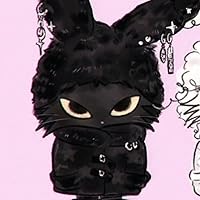
„Фантасмагория“ е сатирична поема от Луис Карол, отпечатана за първи път през 1869 г. Заглавието той заема от Магическия фенер на илюзиониста Етиен-Гаспар Робъртсън, чиито представления са много популярни в Англия през 19 век. Разделена е на песни (cantos), което е характерно за дълги, сериозни произведения. “Божествена комедия” на Данте например. Това ѝ придава известно достолепие, докато всъщност се въртим в абсурдния спектакъл на обществения ред. Сюжетът е простичък. Един малък призрак посещава къщата на някой си мистър Тибс. Срещата им, може да се каже, е съдбовна.
Разбира се, поемата е по-скоро забавна, отколкото страшна. Чуден калейдоскоп от политика, право, образование, възпитание, архитектура, литература, предразсъдъци, правила, изобщо всичко, за което се досещате. Лекотата, с която Луис Карол ни води през тази история, е присъща само на човек, който е приел играта като най-високо занимание на ума. Това е причината „Фантасмагория“ да бъде харесвана и от децата, и от възрастните. „Много ме бива да изобретявам разни неща“, казва Белият конник на Алиса. И това е самата истина. Сред многобройните изобретения на Карол е дори Скрабъла.
„Фантасмагория“ е поема-игра. Математическо уравнение на обществото, за чието решение Карол използва думи. Дали изобщо има отговор е спорно, защото така или иначе числовите стойности от двете страни на равенството трябва да са еднакви. Не можем да избягаме от Огледалото.
The Reverend Charles Lutwidge Dodgson, better known by the pen name Lewis Carroll, was an English author, mathematician, logician, Anglican clergyman and photographer.
His most famous writings are Alice's Adventures in Wonderland and its sequel Through the Looking-Glass as well as the poems "The Hunting of the Snark" and "Jabberwocky", all considered to be within the genre of literary nonsense.
Oxford scholar, Church of England Deacon, University Lecturer in Mathematics and Logic, academic author of learned theses, gifted pioneer of portrait photography, colourful writer of imaginative genius and yet a shy and pedantic man, Lewis Carroll stands pre-eminent in the pantheon of inventive literary geniuses.
Most comical ghost story I've come across! MUST READ! . . One winter night, at half-past nine, Cold, tired, and cross, and muddy, I had come home, too late to dine, And supper, with cigars and wine, Was waiting in the study.
There was a strangeness in the room, And Something white and wavy Was standing near me in the gloom— I took it for the carpet-broom Left by that careless slavey.
But presently the Thing began To shiver and to sneeze: On which I said “Come, come, my man! That’s a most inconsiderate plan. Less noise there, if you please!”
“I’ve caught a cold,” the Thing replies, “Out there upon the landing.” I turned to look in some surprise, And there, before my very eyes, A little Ghost was standing!
He trembled when he caught my eye, And got behind a chair. “How came you here,” I said, “and why? I never saw a thing so shy. Come out! Don’t shiver there!”
He said “I’d gladly tell you how, And also tell you why; But” (here he gave a little bow) “You’re in so bad a temper now, You’d think it all a lie. . . . . . . . . . . . . . . . . . . . . . . . . . . . . . . . . “A Spectre has first choice, by right, In filling up a vacancy; Then Phantom, Goblin, Elf, and Sprite— If all these fail them, they invite The nicest Ghoul that they can see.
“The Spectres said the place was low, And that you kept bad wine: So, as a Phantom had to go, And I was first, of course, you know, I couldn’t well decline.”
“No doubt,” said I, “they settled who Was fittest to be sent Yet still to choose a brat like you, To haunt a man of forty-two, Was no great compliment!”
“I’m not so young, Sir,” he replied, “As you might think. The fact is, In caverns by the water-side, And other places that I’ve tried, I’ve had a lot of practice:
“But I have never taken yet A strict domestic part, And in my flurry I forget The Five Good Rules of Etiquette We have to know by heart.” . . . . . . . . . . . . . . . . . . . . . . . . . . . . . . . . “At least,” I said, “I’m glad to find A Ghost is not a dumb thing! But pray sit down: you’ll feel inclined (If, like myself, you have not dined) To take a snack of something:
“Though, certainly, you don’t appear A thing to offer food to! And then I shall be glad to hear— If you will say them loud and clear— The Rules that you allude to.”
“Thanks! You shall hear them by and by. This is a piece of luck!” “What may I offer you?” said I. “Well, since you are so kind, I’ll try A little bit of duck.
“One slice! And may I ask you for Another drop of gravy?” I sat and looked at him in awe, For certainly I never saw A thing so white and wavy.
And still he seemed to grow more white, More vapoury, and wavier— Seen in the dim and flickering light, As he proceeded to recite His “Maxims of Behaviour.”
Падате ли си по фантасмагориите на Луис Карол? Е, тогава едва ли бихте искали да пропуснете и тази „Фантасмагория” – остроумна поема в седем „песни”, издадена за първи път преди леко над 150 години. Изпълнена с шеговити намигвания към викторианските нрави и типичните за епохата истории за духове и призраци, „Фантасмагория” е преведена на български от Теменуга Маринова и умело илюстрирана от художничката Теменуга Станчева. Изданието на PiBooks ще зарадва ценителите на любопитните литературни находки. Прочетете ревюто на "Книжни Криле": https://knijnikrile.wordpress.com/202...
"Главно действащо лице в поемата е един не толкова страшен, колкото чудат призрак. Веднъж изпратен в къщата на стареца Тибетс, на призрака не му остава нищо друго, освен да всява страх. Страховсяващите му умения обаче не успяват да трогнат самотния мъж и клетият дух е принуден да смени подхода. Вместо да плаши, той решава да разкаже малко повече за своя безплътен свят."
‘Phantasmagoria And Other Poems’ by Lewis Carroll was written in 1869 and is a anthology of poetry by Lewis Carroll who is most famous for writing ‘Alice In Wonderland’.
I am not a massive poetry fan but the poems were quite good, some I found I got into more than others and I did find some humour in some of the poems. A good poetry book and worth a read especially if you are a fan of classic poetry.