

What do you think?

The Five Fists of Science
True story: in 1899, Mark Twain and Nikola Tesla decided to end war forever. With Twain's connections and Tesla's inventions, they went into business selling world peace. So, what happened? Only now can the tale be told - in which Twain and Tesla collided with Edison and Morgan, an evil science cabal merging the Black Arts and the Industrial Age. Turn of the century New York City sets the stage for a titanic battle over the very fate of mankind.
112 pages, Paperback
First published May 31, 2006
About the author
Matt Fraction
1,190 books1,904 followers"How he got started in comics: In 1983, when Fraction was 7 years old and growing up in Kansas City, Mo., he became fascinated by the U.S. invasion of Grenada and created his own newspaper to explain the event. "I've always been story-driven, telling stories with pictures and words," he said.
Education and first job: Fraction never graduated from college. He stopped half a semester short of an art degree at Kansas City Art Institute in Missouri in 1998 to take a job as a Web designer and managing editor of a magazine about Internet culture.
"My mother was not happy about that," he said.
But that gig led Fraction and his co-workers to split off and launch MK12, a boutique graphic design and production firm in Kansas City that created the opening credits for the James Bond film "Quantum of Solace."
Big break: While writing and directing live-action shoots at MK12, Fraction spent his spare time writing comics and pitching his books each year to publishers at Comic-Con. Two books sold: "The Last of the Independents," published in 2003 by AiT/Planet Lar, and "Casanova," published in 2006 by Image Comics.
Fraction traveled extensively on commercial shoots. Then his wife got pregnant. So Fraction did what any rational man in his position would do -- he quit his job at MK12 to pursue his dream of becoming a full-time comic book writer.
Say what? "It was terrifying," said Fraction, who now lives in Portland, Ore. "I was married. We had a house. We had a baby coming. And I just quit my job."
Marvel hired Fraction in June 2006, thanks largely to the success of his other two comics. "I got very lucky," he half-joked. "If it hadn't worked out, I would have had to move back in with my parents.
- 2009. Alex Pham. Los Angeles Times.
Education and first job: Fraction never graduated from college. He stopped half a semester short of an art degree at Kansas City Art Institute in Missouri in 1998 to take a job as a Web designer and managing editor of a magazine about Internet culture.
"My mother was not happy about that," he said.
But that gig led Fraction and his co-workers to split off and launch MK12, a boutique graphic design and production firm in Kansas City that created the opening credits for the James Bond film "Quantum of Solace."
Big break: While writing and directing live-action shoots at MK12, Fraction spent his spare time writing comics and pitching his books each year to publishers at Comic-Con. Two books sold: "The Last of the Independents," published in 2003 by AiT/Planet Lar, and "Casanova," published in 2006 by Image Comics.
Fraction traveled extensively on commercial shoots. Then his wife got pregnant. So Fraction did what any rational man in his position would do -- he quit his job at MK12 to pursue his dream of becoming a full-time comic book writer.
Say what? "It was terrifying," said Fraction, who now lives in Portland, Ore. "I was married. We had a house. We had a baby coming. And I just quit my job."
Marvel hired Fraction in June 2006, thanks largely to the success of his other two comics. "I got very lucky," he half-joked. "If it hadn't worked out, I would have had to move back in with my parents.
- 2009. Alex Pham. Los Angeles Times.
Ratings & Reviews
Friends & Following
Create a free account to discover what your friends think of this book!
Community Reviews
Displaying 1 - 30 of 207 reviews

June 26, 2013
Wonderful reading!!!
Creative Team:
Writer: Matt Fraction
Illustrator: Steven Sanders
TESLA V. EDISON: DAWN OF GENIUSES
I read this book the very same day that I bought it (back then, on June, 2013).
I loved it!!!
It was a fun graphic novel to read. It seems that not much people know about this graphic novel and it is a shame since it's quite good.
The creative team of Matt Fraction, as writer, and Steven Sanders, as illustrator, is remarkable since they understand each other in how to present the story, since even there are moments where there is not dialogues and the very art tells gracefully the panel.
I didn't think twice to buy the graphic novel since the heroes in the story are Mark Twain, Nikola Tesla and Bertha Von Suttner. And while I admit that I didn't know about Bertha Von Suttner before this reading, I am always a fan of Mark Twain and specially of Nikola Tesla.
The nasty villains are none other than Thomas Edison, J.P. Morgan, Andrew Carnegie and Guglielmo Marconi.
All characters are manage quite well, but I have to highlight the way of how Twain was developed since it was absolutely wonderful.
It's great to read a story that you can't predict how it will develop not even less how it will end.
This story doesn't have the typical ending and that's one of its charms.
This book is cleverly written, stylish drawn, with a masterful character development, and indeed truly fun to read.
Totally recommended.
Creative Team:
Writer: Matt Fraction
Illustrator: Steven Sanders
TESLA V. EDISON: DAWN OF GENIUSES
I read this book the very same day that I bought it (back then, on June, 2013).
I loved it!!!
It was a fun graphic novel to read. It seems that not much people know about this graphic novel and it is a shame since it's quite good.
The creative team of Matt Fraction, as writer, and Steven Sanders, as illustrator, is remarkable since they understand each other in how to present the story, since even there are moments where there is not dialogues and the very art tells gracefully the panel.
I didn't think twice to buy the graphic novel since the heroes in the story are Mark Twain, Nikola Tesla and Bertha Von Suttner. And while I admit that I didn't know about Bertha Von Suttner before this reading, I am always a fan of Mark Twain and specially of Nikola Tesla.
The nasty villains are none other than Thomas Edison, J.P. Morgan, Andrew Carnegie and Guglielmo Marconi.
All characters are manage quite well, but I have to highlight the way of how Twain was developed since it was absolutely wonderful.
It's great to read a story that you can't predict how it will develop not even less how it will end.
This story doesn't have the typical ending and that's one of its charms.
This book is cleverly written, stylish drawn, with a masterful character development, and indeed truly fun to read.
Totally recommended.

July 19, 2018
Story: 4 stars!
Art: 4 stars!
This was an interesting premise. I love a good alternative take on history or historical figures. I really enjoyed the story and the art was really good. However, toward the end the art was too dark and without contrast. During the most exciting part it was difficult to figure out what was happening. I ended up just going by the dialogue. I had to deduct a star for confusion. Other than that it was a good story.
Art: 4 stars!
This was an interesting premise. I love a good alternative take on history or historical figures. I really enjoyed the story and the art was really good. However, toward the end the art was too dark and without contrast. During the most exciting part it was difficult to figure out what was happening. I ended up just going by the dialogue. I had to deduct a star for confusion. Other than that it was a good story.

September 18, 2017
This 10th anniversary edition just has a few pages of sketches and a new cover.
I liked the concept of having all of these historical figures in a comic. But I found the magic aspect "hokey" given that these were all men of science. I would rather see Tesla go up against Edison using some steampunky science stuff instead. You can see the roots of Fraction's writing style here but it's not fully formed yet. The story isn't nearly as engrossing as Fraction's Iron Man or even X-Men runs.
Received an advanced copy from Image and Edelweiss in exchange for an honest review.
I liked the concept of having all of these historical figures in a comic. But I found the magic aspect "hokey" given that these were all men of science. I would rather see Tesla go up against Edison using some steampunky science stuff instead. You can see the roots of Fraction's writing style here but it's not fully formed yet. The story isn't nearly as engrossing as Fraction's Iron Man or even X-Men runs.
Received an advanced copy from Image and Edelweiss in exchange for an honest review.

November 30, 2017
This is a highly engrossing historical fiction, sci-fi graphic novel!
The art itself vas a very steam punk gothic look and its gorgeous!
I probably spent a good thirty minutes alone just flipping through it and admiring the art alone.
This is a young adult graphic novel but I appreciate the author tying in important figures from the past in such an engaging manner. It never was boring to me because so much personality was given to each character and having the real person's mini bio at the beginning with the character introduction was very helpful to put the story in place and set the scene.
There's a great mystery element to this graphic novel that kept me reading until the end.
I would recommend this book for as young as middle school but anyone can appreciate it.
The art itself vas a very steam punk gothic look and its gorgeous!
I probably spent a good thirty minutes alone just flipping through it and admiring the art alone.
This is a young adult graphic novel but I appreciate the author tying in important figures from the past in such an engaging manner. It never was boring to me because so much personality was given to each character and having the real person's mini bio at the beginning with the character introduction was very helpful to put the story in place and set the scene.
There's a great mystery element to this graphic novel that kept me reading until the end.
I would recommend this book for as young as middle school but anyone can appreciate it.
May 25, 2011
Given the premise of this book, I had high expectations for a historical-fantasy adventure. But this turned out to be an unfortunate example of a great concept ruined by poor execution. The basic premise is this: a group of inventors and industrialists (Thomas Edison, J.P. Morgan, Andrew Carnegie, etc) have begun to dabble in the dark arts and are planning to summon a Lovecraftian horror to devour New York City. (I have no idea why--the reader is given no insight into their actions.) Nikola Tesla and Mark Twain build a giant robot to stop them. The End. That's seriously the extent of the story. There's very little plot development and almost no characterization, other than a few disposable Twain-esque witticisms. I was really surprised to see a book with so much promise fizzle out so disappointingly. The lack of depth leaves this book feeling like a cheap League of Extraordinary Gentlemen rip-off. I'm not sure what the big deal is with Matt Fraction. People seem to like his stuff, but if this is any indication, he's highly overrated.

March 17, 2015
This was one of several digital books I bought for my birthday and only getting to read them now. There was a Matt Fraction Comixology sale so I got a couple of them.
Five Fists of Science sounds like a Jonathan Hickman book, with alternate timelines and speculative fiction thrown into the mix but with the trademark Matt Fraction humor. Granted, it's an early Fraction work but several story beats that he utilizes are already in the work.
Steven Sanders is an indie superstar. I wonder when he's going to get his own breakout creator-owned title like Sex Criminals or Saga. He's pretty good and he's on the cusp of it.
Five Fists of Science sounds like a Jonathan Hickman book, with alternate timelines and speculative fiction thrown into the mix but with the trademark Matt Fraction humor. Granted, it's an early Fraction work but several story beats that he utilizes are already in the work.
Steven Sanders is an indie superstar. I wonder when he's going to get his own breakout creator-owned title like Sex Criminals or Saga. He's pretty good and he's on the cusp of it.

October 10, 2014
I was kinda disappointed with this. I expected a lot more out of Fraction. Fraction made me like The Punisher and I HATED The Punisher. There was so much crazy over so few pages. The concept is a little tired. It's yet another piece of media that's jumped on the Abraham Lincoln: Vampire Hunter train. Tesla and Mark Twain team up to take down JP Morgan and Thomas Edison. Apparently Edison and Morgan worship Cthulhu...I don't know. There's a Yeti in there too. I feel like Fraction just said "Hey, a lot of people like these things, let's cram them into one book!"
There was also the issue of everyone kind of looking the same. Most scenes are poorly lit, so the art is very shadowy and dark. You have a bunch of characters that all look pretty similar and dress almost exactly alike. Half the time I didn't know which character I was reading and I had to keep backtracking to figure it out.
The pacing was a little too quick, so I had to backtrack to make sure I was following everything correctly too. I read a lot of comics, this shouldn't have been so difficult to follow, especially considering the story is pretty weak and simple.
I did enjoy Twain's dialogue. Especially his sales pitches for Tesla's Dynamo.
It wasn't terrible, I just didn't like it all that much. I probably wouldn't recommend it to anyone since there are so many other comics someone could spend their money on, and a lot of those comics would be written by the same guy. Overall, this was just a big let down.
There was also the issue of everyone kind of looking the same. Most scenes are poorly lit, so the art is very shadowy and dark. You have a bunch of characters that all look pretty similar and dress almost exactly alike. Half the time I didn't know which character I was reading and I had to keep backtracking to figure it out.
The pacing was a little too quick, so I had to backtrack to make sure I was following everything correctly too. I read a lot of comics, this shouldn't have been so difficult to follow, especially considering the story is pretty weak and simple.
I did enjoy Twain's dialogue. Especially his sales pitches for Tesla's Dynamo.
It wasn't terrible, I just didn't like it all that much. I probably wouldn't recommend it to anyone since there are so many other comics someone could spend their money on, and a lot of those comics would be written by the same guy. Overall, this was just a big let down.

September 19, 2020
زیبا بود :دی

September 27, 2010
This short graphic novel is fun, sciency and awesome. Tesla is a "mad scientist" that creates a machine capable of destroying a great deal. Mark Twain markets it as a "peace machine". When there is a lack of buyers for this, Twain convinces Telsa to market it with stage showmanship. Hilarity ensues.
The plot thickens when some evil geniuses make a tower to summon black magic, and their leader is none other than Tomas Edison. Pod people, giant roots, and Leviathan tear up a bit of New York City.
All in all, this was a fun little story. I wish they could have made a whole series out of the concepts herein, but one short little story will have to suffice.
The plot thickens when some evil geniuses make a tower to summon black magic, and their leader is none other than Tomas Edison. Pod people, giant roots, and Leviathan tear up a bit of New York City.
All in all, this was a fun little story. I wish they could have made a whole series out of the concepts herein, but one short little story will have to suffice.

September 12, 2017
I received a free copy of this book from Edelweiss in exchange for an honest review
There wasn't necessarily anything I hated about this book, but the entire thing felt really rushed and fell kind of flat. Especially disappointing because I know what Matt Fraction can do and this is far from his best work. The premise has been done before - take some historical figures and have them battle it out with a mix of steampunk-science and magic - but it can still be entertaining if done well. This entire book felt very rushed and I feel like a lot of the problems and oversights - for example, WHY are the villains doing this? we'll never know - could have been fixed by making it a two volume story instead of just the one.
Also a lot of the characters look very similar and the villains really have no personality other than 'we are evil' so I stopped trying to tell them apart about halfway through. Still, I love Tesla and it was entertaining enough for the most part, just a lot less depth than I was expecting. Also it just really made me want the next volume of Black Monday Murders so if you're feeling underwhelmed by this I would definitely recommend that as a substitute.
There wasn't necessarily anything I hated about this book, but the entire thing felt really rushed and fell kind of flat. Especially disappointing because I know what Matt Fraction can do and this is far from his best work. The premise has been done before - take some historical figures and have them battle it out with a mix of steampunk-science and magic - but it can still be entertaining if done well. This entire book felt very rushed and I feel like a lot of the problems and oversights - for example, WHY are the villains doing this? we'll never know - could have been fixed by making it a two volume story instead of just the one.
Also a lot of the characters look very similar and the villains really have no personality other than 'we are evil' so I stopped trying to tell them apart about halfway through. Still, I love Tesla and it was entertaining enough for the most part, just a lot less depth than I was expecting. Also it just really made me want the next volume of Black Monday Murders so if you're feeling underwhelmed by this I would definitely recommend that as a substitute.

June 8, 2018
I was a little confused the whole time, like there was something I was missing. It's been a while since I've had American history and I thought maybe there was something I was missing that I would have gotten if I was a little more up to date with the historical characters. I know about Tesla and Mark Twain but my knowledge of the others is vary basic and more than a little dusty.
June 20, 2018
Eh. I thought it was hard to follow. I'm not sure if it was the format or the context. I wanted to like it but it fell short.

October 27, 2015

The League of Extraordinary Gentlemen meets the wrong side of Hellboy in this steampunky twist on historical fiction.
I’ll admit that, in this reader’s mind, the premise alone started things out on a 5-Star note. Nikola Tesla and Mark Twain—real life friends and historical dynamos of brilliance in their own distinct ways, joining their forces of guile and wit in the name of world peace? Bring it.

This graphic novel starts out strong with a curious setup spanning multiple continents, and a dose of political intrigue. The above-par artwork and addition of aged concept sketches all add an appealing charm and grit to the whole ambiance. Mark Twain may be out of money and out of his element, but he’s not lacking in gumption or the cunning to seize upon an opportunity. And what Nikola Tesla lacks in social skills he more than makes up for in mechanical genius and vigilante justice. And then… things took a sharp turn down Dark Magic crazy lane. The resulting narrative is frequently disjointed, and it can take a moment to reorient from one page turn to the next.
The characterization of both Tesla and Twain felt spot on most of the time (as far as I can discern from personal research) -- from Twain’s cynical pragmatism to Tesla’s regimented personality quirks. I can’t speak to the Baroness Bertha von Suttner as a character, as I hadn’t heard of her until coming across this graphic novel. But I can’t say I cared much for the portrayal of her—as she seemed like more of a token female than a necessary contributor to the team. Not to mention the moments of flagrant objectification, which is vaguely ridiculous considering she would have been 56 years old.
Note: The authors do at least admit in the ‘Our Character’ profile at the beginning that they took “great liberties” with the Baroness’ age and appearance, for which they “should probably apologize.” Yes, yes they should. (While they’re considering that, they might also want to apologize for depicting her as willing to prostitute herself. Just a thought.) I do highly recommend giving the character profiles a solid look before proceeding, as it does something to help separate the plausible from the fantastically convenient.
While somewhat satisfying, the ending carried a lack of resolution that felt like more of a plot lapse than an intentional setup for any continuation. In the final analysis, I wished the story could have aspired to more. Because the greatness of Tesla and Twain deserves it—even in fiction.
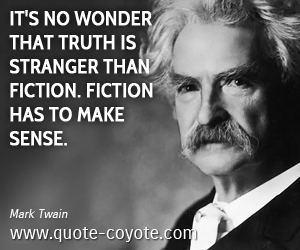
I think this reader was hoping for a little less preternatural weirdness and a little more this: https://www.youtube.com/watch?v=gJ1Mz...

April 7, 2012
Fun, yet way over the top. The fine art by cartoonist/co-creator Steven Sanders appears in muddy black tones for some Lovecraft-inspired scenes involving the protagonists.
This is sort of a Gilded Age version of League of Extraordinary Gentlemen, or that sort of thing. Despite the really witty dialogue, I prefer the historical biographies of these characters. But, you know, this is kind of fun.
Mildly recommended.
This is sort of a Gilded Age version of League of Extraordinary Gentlemen, or that sort of thing. Despite the really witty dialogue, I prefer the historical biographies of these characters. But, you know, this is kind of fun.
Mildly recommended.

October 9, 2009
Steampunky adventures with Mark Twain and Nikola Tesla! This was fun, if not very complex or deep. Poor awkward, nervous, brilliant, neurotic Tesla--my favorite parts were anytime he was on stage. Since we seem to have everyone from Jane Austen to Abraham Lincoln to Oscar Wilde to Queen Victoria fighting crime/vampires/zombies these days, can't we get Tesla in on more of that action?
February 10, 2009
i like science...and this comic was dull. and at times made no sense because the illustration was vague and tried to imply what was going on.

December 20, 2013
Instantly forgettable. Given the subject matter and the characters, that's quite an achievement.

October 8, 2017
No lie, the best part of this book was definitely the artwork. It’s lush and beautiful. The lines themselves are like little sketches, and Sanders adds in little jokes in the back of several frames. The colors are vibrant, and they help set the mood for each scene.
It’s really too bad that the rest of the book is a mess. I’ve read several graphic novels by Fraction before, and this one seems incredibly weak in comparison. The premise is good—famous figures duking it out for the fate of mankind? Sign me up!
But the actual execution…
Full review at A Writer Reads.
It’s really too bad that the rest of the book is a mess. I’ve read several graphic novels by Fraction before, and this one seems incredibly weak in comparison. The premise is good—famous figures duking it out for the fate of mankind? Sign me up!
But the actual execution…
Full review at A Writer Reads.

September 29, 2017
I liked the premise, and I wanted it to be good, but for a book about science, starring scientists, with science in the title, it was not very scientific. It was more about summoning horrors and battling them with giant robots. The plot went approximately nowhere, there was little character development (and what was there barely made sense), and both heroes and villains were fairly one-dimensional. But the art was great!

June 9, 2018
Book club choice for June. To keep it simple, this just wasn’t my cup of tea and honestly, I just must not get it - or I missed something. Probably more my fault than the authors’. But, it was one of our club challenges and if nothing else, it got us out of our comfort zones and reading something different!

January 27, 2013
One of the conundrums of alternate history is how does one balance the "rule of cool" with the demands for plausibility. Often when the author throws plausibility out the window it can hurt the story. Yet there are times when an author fully embraces alien space bats plot device and creates something extraordinary.
The Five Fists of Science is a steampunk graphic novel created by writer Matt Fraction and artist Steven Sanders. The novel follows a crime-fighting Nikola Tesla, a broke Mark Twain and younger-then-she-ought-to-be Bertha von Suttner as they team up to bring about world peace through superior firepower. Before the story even begins we are introduced to Mark Twain who breaks the fourth wall by assuring us that this story is true, only that everything has been changed. Release the alien space bats!
The plan is simple: convince the nations of the world to buy Tesla's new secret weapon. With everyone owning the most powerful weapon ever invented, the likelihood of war would be greatly diminished. When the world leaders do not buy it, Twain comes up with a hoax to better sell the weapon. Fights are staged in New York between "monsters" created by Tesla's own science, which are defeated by Tesla's weapon. Twain is on hand to boast about the weapon to the grateful citizens.
Dark forces, however, seek to prevent our good-intentioned team from ensuring world peace. Yeti-hunter Thomas Edison, dark wizard John Pierpont Morgan, sinister Andrew Carnegie, and nervous-eater Guglielmo Marconi are working together to build a bizarre new skyscraper, named the Innsmouth Tower, on whose building site many construction workers have already died in mysterious accidents. All this leads to a climatic battle-scene between science and magic.
While the personalities of the villains may have been tweaked, Twain's humor and Tesla's quirks were effectively captured and Bertha worked well as the cliche hot steampunk girl. Plausibility hounds, however, may not enjoy the amount of liberties taken with the source material. Furthermore, though the story was entertaining, the artwork was very dark. To dark even, there were times where I had to squint to figure out what was going on. Nevertheless, seeing some of my favorite historical figures do battle with one of the classic figures of horror is enough for me to recommend The Five Fists of Science to anyone looking for a good alternate history comic.
The Five Fists of Science is a steampunk graphic novel created by writer Matt Fraction and artist Steven Sanders. The novel follows a crime-fighting Nikola Tesla, a broke Mark Twain and younger-then-she-ought-to-be Bertha von Suttner as they team up to bring about world peace through superior firepower. Before the story even begins we are introduced to Mark Twain who breaks the fourth wall by assuring us that this story is true, only that everything has been changed. Release the alien space bats!
The plan is simple: convince the nations of the world to buy Tesla's new secret weapon. With everyone owning the most powerful weapon ever invented, the likelihood of war would be greatly diminished. When the world leaders do not buy it, Twain comes up with a hoax to better sell the weapon. Fights are staged in New York between "monsters" created by Tesla's own science, which are defeated by Tesla's weapon. Twain is on hand to boast about the weapon to the grateful citizens.
Dark forces, however, seek to prevent our good-intentioned team from ensuring world peace. Yeti-hunter Thomas Edison, dark wizard John Pierpont Morgan, sinister Andrew Carnegie, and nervous-eater Guglielmo Marconi are working together to build a bizarre new skyscraper, named the Innsmouth Tower, on whose building site many construction workers have already died in mysterious accidents. All this leads to a climatic battle-scene between science and magic.
While the personalities of the villains may have been tweaked, Twain's humor and Tesla's quirks were effectively captured and Bertha worked well as the cliche hot steampunk girl. Plausibility hounds, however, may not enjoy the amount of liberties taken with the source material. Furthermore, though the story was entertaining, the artwork was very dark. To dark even, there were times where I had to squint to figure out what was going on. Nevertheless, seeing some of my favorite historical figures do battle with one of the classic figures of horror is enough for me to recommend The Five Fists of Science to anyone looking for a good alternate history comic.

July 30, 2007
As a good, inquisitive American boy, I had a great love of Thomas Edison, inventor of the lightbulb, the wizard of Menlo Park. The older I get, the more unsavory details I learn about him—his patent disputes, his dealings with early moviemakers. Last year, I visited the Nikola Tesla museum in Belgrade, Serbia, and learned about their dispute over AC and DC (the current, not the band). Tesla’s AC was much safer than Edison’s DC, yet Edison, due in part to smear tactic, won out.
The introduction to Five Fists of Science retells this story as it introduces the main characters in this historical fiction superhero comic. It stars Tesla and Mark Twain as good guys, looking for world peace (and millions of dollars) and Edison, J.P. Morgan, Marconi, and Andrew Carnegie as villainous frauds who also dabble in the dark arts. The idea of Tesla as a science hero (akin to Alan Moore’s Tom Strong) is really clever, but the main star is Twain. Matt Fraction writes Twain as a fast-talking barker promoting Tesla’s latest invention, a giant exoskeleton that could bring about world peace through Mutually Assured Destruction. Turning other scientists into cloak-wearing Dark Arts practitioners makes less sense.
This book is a lot of fun. Fraction loosely blends Moore’s Tom Strong and League of Extraordinary Gentlemen, using real (American) celebrities from the turn of the century. Steven Sanders does a good job distinguishing between all the white guys, though I wish some of the night-time fights could’ve been a bit clearer to read—Tesla’s first appearance is especially hard to figure out.
The introduction to Five Fists of Science retells this story as it introduces the main characters in this historical fiction superhero comic. It stars Tesla and Mark Twain as good guys, looking for world peace (and millions of dollars) and Edison, J.P. Morgan, Marconi, and Andrew Carnegie as villainous frauds who also dabble in the dark arts. The idea of Tesla as a science hero (akin to Alan Moore’s Tom Strong) is really clever, but the main star is Twain. Matt Fraction writes Twain as a fast-talking barker promoting Tesla’s latest invention, a giant exoskeleton that could bring about world peace through Mutually Assured Destruction. Turning other scientists into cloak-wearing Dark Arts practitioners makes less sense.
This book is a lot of fun. Fraction loosely blends Moore’s Tom Strong and League of Extraordinary Gentlemen, using real (American) celebrities from the turn of the century. Steven Sanders does a good job distinguishing between all the white guys, though I wish some of the night-time fights could’ve been a bit clearer to read—Tesla’s first appearance is especially hard to figure out.

April 16, 2014
Ben Folds once stated "Sometimes you'll love the cover and that's precisely why you'll love the book." Sadly, this was not the case here. The notion of a graphic novel detailing Nikola Tesla and Mark Twain's creation of a giant fighting robot to bring about world peace through mutually assured destruction was interesting. Add in Thomas Edison, J.P. Morgan, and other prominent financiers dabbling in black magic in an effort to control the world. How could it possibly go wrong? Apparently in every conceivable way.
The artwork was lackluster, with each character being virtually indistinguishable from one another. Thomas Edison, J.P. Morgan, Andrew Carnegie, and Mark Twain all simply fell into the category of "old man with white hair" though I believe Carnegie wore a hat once, so he at least had that going for him. The dialogue was stilted, the plot was paper-thin, the characters lacked any soul or capacity for growth, and I can hardly believe that the real-life counterparts of these characters referred to themselves as "a genius" in their entire lifetimes as each of the comic instantiations do within the course of a few pages.
This book just made me sad because it represents such a hugely missed opportunity.
The artwork was lackluster, with each character being virtually indistinguishable from one another. Thomas Edison, J.P. Morgan, Andrew Carnegie, and Mark Twain all simply fell into the category of "old man with white hair" though I believe Carnegie wore a hat once, so he at least had that going for him. The dialogue was stilted, the plot was paper-thin, the characters lacked any soul or capacity for growth, and I can hardly believe that the real-life counterparts of these characters referred to themselves as "a genius" in their entire lifetimes as each of the comic instantiations do within the course of a few pages.
This book just made me sad because it represents such a hugely missed opportunity.

July 15, 2008
And now for something completely different.
Five Fists of Science is the story of how Mark Twain teams up with Nikola Telsa and Baroness Von Suttner to foil the evil machinations of John Morgan, Andrew Carneige, Thomas Edison, and Guglielmo Marconi. How to foil such an evil constortium of diabolical genusis? Why, through the application of SCIENCE! Science in the form of mecha, specifically. Well, just one mech, really. Ok two, but one is so small that it’s mostly there for a throwaway joke (“It’s SCIENCE!” “I though science would be bigger, somehow.”).
Way too much fun. I highly recommend.
Five Fists of Science is the story of how Mark Twain teams up with Nikola Telsa and Baroness Von Suttner to foil the evil machinations of John Morgan, Andrew Carneige, Thomas Edison, and Guglielmo Marconi. How to foil such an evil constortium of diabolical genusis? Why, through the application of SCIENCE! Science in the form of mecha, specifically. Well, just one mech, really. Ok two, but one is so small that it’s mostly there for a throwaway joke (“It’s SCIENCE!” “I though science would be bigger, somehow.”).
Way too much fun. I highly recommend.

April 6, 2015
A problem of high expectations here. Matt Fraction takes Nikola Tesla, Mark Twain, and several others to fight against Thomas Edison, J.P. Morgan and others. Why? Because the latter group has decided to summon some Lovecraftian hell beasts for reasons that never actually explained. Tesla and Twain build a giant robot to combat this threat.
Don't get me wrong, I'm all for mindless action with little or no reasons behind it but this just didn't do it for me. Aside from odd witticism from Twain no one really stood out for me and I just wondered what the heck was going on for most of the time.
Don't get me wrong, I'm all for mindless action with little or no reasons behind it but this just didn't do it for me. Aside from odd witticism from Twain no one really stood out for me and I just wondered what the heck was going on for most of the time.

September 20, 2015
A vigilante Nicole Tesla & Mark Twain fight Lovecraftian black magicians and venture capitalists using giant mechs and carnival flimflam.
Sounds awesome, right? And it is. But it's completely let down by muddy, dark art that makes it difficult to see what's going on, a rushed pace that leaves no time for explanation, and character designs that are hard to tell apart (apart from the title pair).
Shame. It should have worked.
Sounds awesome, right? And it is. But it's completely let down by muddy, dark art that makes it difficult to see what's going on, a rushed pace that leaves no time for explanation, and character designs that are hard to tell apart (apart from the title pair).
Shame. It should have worked.

April 18, 2012
Tesla and Mark Twain as a pair of down on their luck entrepeneurs devise a scheme to make some money. What they don't know is that Edison and the banker Morgan have evil plans afoot. The two groups and their plots meet with interesting results. The story is left in place where there could be future books.
January 26, 2013
The Five Fists of Science reminds me of Jonathan Hickman's more recent comic Manhattan Projects. It takes famous figures from American history and it weaves them into a crazy science-fiction story. I loved the concept and characters, but the slower pacing and the darker art style kept me from giving it 5 stars.

October 11, 2010
I actually laughed out loud at a lot of Fraction's characterizations of Mark Twain. Great early stuff from one of todays most prominent comic writers. I wish he would stop writing lame-ass X-men, and pump out quality stuff like this.

May 5, 2018
entertaining story, but some of the art pages could stand to be brightened just a touch. honestly, matt fraction is a fantastic writer and can always make something (even dry steampunk-esque SCIENCE!!1!) incredible and funny
Displaying 1 - 30 of 207 reviews