While we often think of theological doctrines as truths we believe, doctrines are also meant to be practiced. For many Christians, the doctrine of the Trinity feels very mysterious. What is the Trinity? Why is understanding the doctrine of the Trinity important? How does the Trinity influence our worship and daily life?
Here’s my official, academically heavy, biography–the sort of thing that publishers ask for.
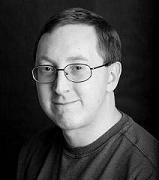
Samuel M. Powell has taught at Point Loma Nazarene University since 1986. He is the editor (with Michael Lodahl) of Embodied Holiness (originally published by InterVarsity Press, 1999, now reprinted by Wipf & Stock), and the author of The Trinity in German Thought (Cambridge University Press, 2001), Participating in God (Fortress Press, 2003), A Theology of Christian Spirituality (Abingdon Press, 2005), Discovering Our Christian Faith (Beacon Hill Press of Kansas City, 2008), and several smaller monographs. He graduated from Point Loma Nazarene University, Nazarene Theological Seminary and Claremont Graduate University and is an ordained deacon in the Church of the Nazarene. He served as secretary-treasurer of the Wesleyan Theological Society and is a member of the editorial committee of Kingswood Press. From 1999 to 2001 he participated in the John Templeton Foundation Oxford Seminars on Science and Christianity. In 2005 he won the Wesleyan Theological Society’s Smith-Wynkoop award for his book, Participating In God: Creation and Trinity. The award recognizes recent publication of distinction in a research area related to the Wesleyan/Holiness tradition. Powell attends Mission Church of the Nazarene, where he teaches an adult Sunday School class. He lives in Santee, California with his wife, Terrie. He has two children and four grandchildren.
The book started off poorly, where it sounded like the author was selecting passages to fit the message being provided, in what almost sounded like some sort of New Age religious philosophy. It was very difficult to wade through. Eventually the book went into historical background on the development of beliefs and creeds as they pertain to the Trinity, and this was something I enjoyed reading. However, then the author began discussing problems with these creeds, and actually was instructing the reader that we should not refer to the Father and Son as such. It is amazing to me that the author (according to the bio) is a professor at a Nazarene University. Is this what the Nazarene denomination believes and is teaching their students? Equally amazing is that these statements made it into publication through a Nazarene publisher (although this publisher did change their name a few years ago to remove their Nazarene heritage so perhaps I should not be surprised). I cannot recommend this book for anyone who truly wants to learn "clearly what [Wesleyans] believe and why" (as the back cover blurb states).
This entire review has been hidden because of spoilers.
This is an excellent introductory book on the Trinity. Powell elegantly balances comprehensiveness and accessibility. This is accomplished in part by doing away with constant scholarly use of notes, quotations, and references to other scholars. Instead, Powell gives primary attention to scripture, creeds, and the arguments themselves that give the church’s trinitarian dogma its primary shape. This approach has pros and cons, but on the whole I think it’s preferable for contexts like church study groups, interested lay readers, ministers’ reference library, etc. For these purposes, the book provides a very accessible guide to the logic, history, and contemporary directions for development of the doctrine of the Trinity (especially in Wesleyan traditions).