Discover the true meaning of Eid with this heart-warming story about a young boy's selfless love for his grandmother.
The short story is an English language translation of Eidgah by Munshi Premchand, the celebrated author of Indian classics such as Gaban, Godaan, and Nirmala.
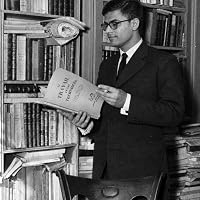
Munshi Premchand (Hindi: मुंशी प्रेमचंद) was an Indian writer famous for his modern Hindustani literature. He is one of the most celebrated writers of the Indian subcontinent,and is regarded as one of the foremost Hindustani writers of the early twentieth century.
Born Dhanpat Rai, he began writing under the pen name "Nawab Rai", but subsequently switched to "Premchand", while he is also known as "Munshi Premchand", Munshi being an honorary prefix. A novel writer, story writer and dramatist, he has been referred to as the "Upanyas Samrat" ("Emperor among Novelists") by some Hindi writers. His works include more than a dozen novels, around 250 short stories, several essays and translations of a number of foreign literary works into Hindi.
Premchand is considered the first Hindi author whose writings prominently featured realism. His novels describe the problems of the poor and the urban middle-class. His works depict a rationalistic outlook, which views religious values as something that allows the powerful hypocrites to exploit the weak. He used literature for the purpose of arousing public awareness about national and social issues and often wrote about topics related to corruption, child widowhood, prostitution, feudal system, poverty, colonialism and on the India's freedom movement.
Several of his early works, such as A Little Trick and A Moral Victory, satirised the Indians who cooperated with the British colonial government.
In the 1920s, he was influenced by Mahatma Gandhi's non-cooperation movement and the accompanying struggle for social reform. During this period, his works dealt with the social issues such as poverty, zamindari exploitation (Premashram, 1922), dowry system (Nirmala, 1925), educational reform and political oppression (Karmabhumi, 1931).
In his last days, he focused on village life as a stage for complex drama, as seen in his most famous work Godan as well as the short-story collection Kafan (1936).Premchand believed that social realism was the way for Hindi literature, as opposed to the "feminine quality", tenderness and emotion of the contemporary Bengali literature.
His writing comprise of morals, life lessons, friendship and honesty.
Festival of Eid unfolds a tale of a generous and intelligent boy who presents his grandma a gift that she expected the least.
Short and crisp. This story hits in the head. The dead parents of the child serve as a sorrowful backdrop to the story. Abhavo ki zindagi pyar se bhar di jae toh kisi daulat me kya dum hai.
The mark of a genius, no qualms this one leaves us, readers, mesmerized even decades after.
Sharing a story which gave you goosebumps as a kid is often a difficult task cause we tend to talk about it more than what we went through. The same thing will happen if anybody writes a review of Munshi Premchand's book. It's been more than a decade I read his book but still, the magical realm he has created makes me talk about his book till now. Eidgah, the festival of Eid, is a very simple book with the most powerful message. A young teenage boy, Hamid, suffering from poverty having only his grandmother to be looked after by with fake stories to cover the absence of his parents and not even a pair of shoes to go to offer his morning Namaz has really broken me down then. Eyes were filled with glitters reading how Hamid bought a tong with all little money he had for his grandmother whose hand used to get burnt each time she made roti. I read this book in my school and I could never score great marks in this subject nonetheless I accrued plenty of immeasurable lessons from his stories. Reading this book again will bring back a lot of good memories but I might not like to live it again as Munshi Premchand will once again make me numb and give me deep thoughts for days to come!
Eidgah ‘यह चिमटा कहॉं था?’ ‘मैंने मोल लिया है। ‘कै पैसे में? ‘तीन पैसे दिये।‘ अमीना ने छाती पीट ली। यह कैसा बेसमझ लड़का है कि दोपहर हुआ, कुछ खाया न पिया। लाया क्या, चिमटा! ‘सारे मेले में तुझे और कोई चीज न मिली, जो यह लोहे का चिमटा उठा लाया?’ हामिद ने अपराधी-भाव से कहा—तुम्हारी उँगलियॉँ तवे से जल जाती थीं, इसलिए मैने इसे लिया।
I think its one of the best literary works by Premchand. Written in pre-independence era Premchand brings out the innocence and love of a child,Hamid, for his grandmother Ameena .Even though Hamid is orphan and poverty stricken ,oblivious to all this he cares for his grandmother and instead of enjoying Eid and getting himself a present gets his grandma a pair of "tongs". Though the story is very simple but it touches the heart of the reader. और अब एक बड़ी विचित्र बात हुई। हामिद कें इस चिमटे से भी विचित्र। बच्चे हामिद ने बूढ़े हामिद का पार्ट खेला था। बुढ़िया अमीना बालिका अमीना बन गई। वह रोने लगी। दामन फैलाकर हामिद को दुआऍं देती जाती थी और आँसूं की बड़ी-बड़ी बूंदे गिराती जाती थी। हामिद इसका रहस्य क्या समझता!
A good story but the translation should have been better. Too many grammatical errors. I've read Premchand's stories in Hindi back in school and though I don't remember them, I know they were all good. The emotions in this story would probably be better felt if I had read it in hindi itself or had read a better translated one. Only rating the story. Not the translation.
Such a lovely short story. It was my first read of premchand and I am planning to read more of his Books, although it was a translated work I enjoyed it a lot. Also quick damage control to my reading goal.
A somewhat naive, but still movingly sweet story, written in a wonderful manner which manages to pass the moral of the story without making it sound like moralizing.
He is considerate, kind, smart and also fiscally prudent. At a young age in school, I read Eidgaah as a part of the curriculum and since then I have been in love with this character. Also, kudos to him for making a pair of iron tongs hip. I mean, this boy is giving off some serious marketing lessons. This novel is in Hindi, my mother tongue. Yet, I am writing this review in English, not because I consider Hindi inferior, but because I want more and more people to read Hindi Literature. I hope this review reaches the right audience and they pick Premchand. The simplicity of his characters and raw depiction of the village life of India make him a stalwart of Hindi Literature.
If you are looking for a short read to add to your Reading Challenge 2024, Eidgaah and many other short stories by Munshi Premchand are the answer for you.
Munshi Premchand’s Idgah is a short story that plays out over the course of a few hours, on the day of Eid. A group of villagers, all dressed in their festive best, walk three kos to the nearest idgah to offer namaaz, to celebrate the festival—and, importantly for the younger and more materialistic of the lot, to revel in the joys that the local mela, set up for the occasion, has to offer. Among those who have gone to the idgah and from there to the fair is Haamid, an orphan between four and five years old. Haamid, who lives with his very poor old Dadi, living a hand-to-mouth existence. Even as Haamid clutches the three paise Dadi has been able to give him to spend today, he watches his friends Mohsin, Mehmood, Nooray and Sammi enjoying themselves, going on the Ferris wheel, buying toys, stuffing themselves with sweets… What will Haamid buy with his precious three paise?
I loved this story. It is a classic example of why Premchand is regarded as one of India’s greatest writers. A short, poignant, empathetic little tale of what it is like to be poor, but not a pathetic tale: never tragic and depressing (on the contrary, it is, in its depiction of the children and their toys, delightfully humorous). Haamid comes across as a very believable child, naïve but also wise in the way children can sometimes be. His interactions with his friends, and the character sketches that emerge from those interactions, are very true of children: rivals one moment, brutally teasing and badgering each other moment, yet swiftly doing an about turn and being caring, loving, best friends the next.
A wonderful little story about love and understanding. As a story almost completely about children, and with children as the main characters, this is a memorable one. Plus, of course, Premchand’s writing is impeccable, his descriptions vivid and unforgettable: “लाखों सिर एक साथ सिजदे में झुक जाते हैं और एक साथ घुटनों के बल बैठ जाते हैं। कई बार यही क्रिया होती है, जैसे बिजली की लाखों बतियां एक साथ प्रदीप्त हों और एक साथ बुझ जाएँ, और यही क्रम चलता रहा।…”
I read this one back when I was going through a phase of revisiting stories I'd heard about as a kid but never actually sat down with. Premchand was always this name in the background of my hindi textbooks, but reading him as an adult is a completely different thing. You catch the weight he carries underneath all that simplicity and different stories.
This story is short, barely a few pages, but it has this quiet ache running through it that I wasn't ready for. A little boy heading to the Eid fair, excited about the small joys any child would be, and then this heartbreaking awareness creeps in about how differently the world treats people based on money. There's a moment where he notices another kid, and that silent recognition between them hit me harder than any dramatic scene could.
There's dignity in his characters even when circumstances are cruel. It's not sentimental, just honest. I found myself thinking about the grandmother in the story long after, the small sacrifices she makes that the boy only half understands. That's the thing about Premchand, you feel like you're reading something simple, and then you turn the page and realise it's carved something into you.
The translation I read was decent, though I sometimes wonder what the original Hindi carries that English can't quite hold but it was a good short read and Premchand never disappoints!!
Possibly the best short story for kids by any writer of the world. Its a heart touching story of a small muslim boy Hamid and his Grandmother Ameena. His parents are dead due to disease. On the day of Eid, he is all set to visit the idgah to offer special prayers. Orphaned as he is, his only centre of love is his grandmother. Oblivious to the suffering around him, his misfortune of being parent-less, Hamid is innocence personified.
Despite the grinding poverty he lives in, he sees the beauty around: the smiling fields, the sun-kissed earth, his grand mom’s warm lap in which he so lovingly cuddled himself…
His unfortunate grandmother is worried that her little grandson will not be able to enjoy his Eid the way other boys will. She bemoans her lot for being without a support; her miserable existence but Hamid couldn’t care less.
Hamid with his small Idi goes with the other boys to the village fair. While all the other boys buy themselves toys, sweets, knick knacks, Hamid picks up a tong. A chimka for his grandmother… whose finger get burnt every time he turns the roti.
The beauty of the story lay in its simplicity, in its dignity, its humanity and its innocence. Idgah alongwith kafan is, and will remain one of the most widely read stories of Premchand, contributing, yet again, towards making him one of the greatest writers of all times.
Well, it's not among the greatest stories by Munshiji, but it did touch the nerve of rural India and had a huge impact on me when I was a child. Even today when I read it, I remember my upbringing in a lower middle class family in a rural environment. It's freakishly beautiful, no matter how idealistic it is. But it can not become an equal to the likes of 'Kafan' and 'Poos ki raat', which instead of leaving us covered in nostalgia, shake us to the core by being true to the harsh reality they portray.
Idgah (ईदगाह) By Munsi Premchand "Idgah" tells the story of a four-year-old orphan named Hamid who lives with his grandmother Amina. Hamid, the protagonist of the story, has recently lost his parents; however, his grandmother tells him that his father has left to earn money, and that his mother has gone to Allah to fetch lovely gifts for him. This fills Hamid with hope, and despite Amina's worry surrounding their poverty and her grandson's well-being, Hamid is a happy and positive child. The story begins on Eid morning, as Hamid sets out for the Eidgah with other boys from the village. Hamid is notably impoverished next to his friends, poorly dressed and famished-looking, and has only three paise as Eidi for the festival. The other boys spend their pocket money on rides, candies and beautiful clay toys, and tease Hamid when he dismisses this as a waste of money for momentary pleasure. While his friends are enjoying themselves, he overcomes his temptation and goes to a hardware shop to buy a pair of tongs, remembering how his grandmother burns her fingers while cooking rotis. As they return to the village Hamid's friends tease him for his purchase, extolling the virtues of their toys over his tongs. Hamid retorts with several clever arguments and before long his friends become more enamoured with the tongs than their own playthings, even offering to trade their items for his, which Hamid refuses. The story ends on a touching note when Hamid gifts the tongs to his grandmother. At first, she scolds him for making the purchase, rather than buying something to eat or drink at the fair, until Hamid reminds her of how she burns her fingers daily. She bursts into tears at this and blesses him for his kindness. This is a classic story.
“ईदगाह” मुंशी प्रेमचंद की सबसे प्रसिद्ध और भावनात्मक कहानियों में से एक है। यह कहानी हामिद नाम के एक छोटे बच्चे की है, जो अपनी दादी अमीना के साथ रहता है।
📚 कहानी किस बारे में है?
ईद के दिन हामिद दूसरे बच्चों के साथ मेले में जाता है। दूसरे बच्चे खिलौने और मिठाइयाँ खरीदते हैं, लेकिन हामिद अपनी दादी के बारे में सोचता है। वह देखता है कि रोटी बनाते समय दादी की उंगलियाँ जल जाती हैं। इसलिए अपनी सारी खुशी और इच्छाओं को छोड़कर वह मेले से चिमटा खरीदता है। हामिद का यह छोटा-सा त्याग उसकी मासूमियत, प्रेम और अपनी दादी के प्रति गहरी संवेदना को दिखाता है।
🎯 मुख्य संदेश
सच्चा प्रेम त्याग करना सिखाता है। खुशी केवल अपनी इच्छाएँ पूरी करने में नहीं, बल्कि अपनों की चिंता करने में भी है। बच्चों का मन अक्सर बड़ों से अधिक संवेदनशील और त्यागपूर्ण हो सकता है। गरीबी के बीच भी प्रेम और अपनापन इंसान को समृद्ध बना सकता है।
I’d heard a lot about this story before, and finally, I sat down to read it—and I’m so glad I did. For such a short story, Eidgah is incredibly beautiful.
What struck me the most was how vividly Premchand captures the mood of Eid—the energy in the air, the buzz in the homes, the innocent excitement of children. You can feel the day unfolding, almost smell the sweets, hear the laughter.
And at the center of it all is a boy and his tiny act of love, one that stays with you long after the story ends.
It’s gentle, simple, and yet it hits you right in the heart. Read it—just once, at least.
Such a beautiful story! Only a master storyteller can describe like this. The scene at the eidgah, the light hearted arguments between the children over their toys were described with so much talent and understanding. I often think that if such a simple story can be so beautiful, what is the need for writing complex and hi fi stories. Maybe those complex stories are for people who have lost the warmth of their hearts and still want to brag about that they read books. When Hamid returns to his granny, it is an utterly divine and beautiful scene.
This is a great piece of literature. The story of a small kid who is forced to act as an adult due to his circumstances. The plot shows how he has to compromise with his situation when other kids are enjoying a normal lifestyle he is forced to live ascetic life. There are instance where you find his urge to play with toys and to eat tasty food. That one moment when he went to fair with few penny in his hand, he decides to buy a tong for his mother(reminded how her hands used to burn while cooking the chapatis) instead of buying something for himself.
Whether you read this story as a child or as an adult, both experiences are amusing.
As children, we were fascinated by the descriptions of Mela, Khilone, and Mithaiyan, and now as adults, we appreciate the Art of Premchand's Writing, his imagery, his language, his understanding of children's psyche, and a LOT more....
But one thing is the same for both ages, and that is to cry at the end of this amazing story.
(P.S.: This Edition has BEAUTIFUL Pictures in it.)
I read this one in the midst of Holi and it's Premchand ji's idea of how festivals are only enjoyed by the rich that really struck me. I look around me and notice similar patterns. He shows how children are far more intuitive and empathetic than we could ever imagine , and he uses a very simple household item to portray it. Eidgah is an absurd tale in all its innocence, but overall a heartfelt story of love and sacrifice.
Another book having the most important characteristic of Munshi Premchand's writing.... Idgah, a simple yet moving tale of Hamid, who can think and feek beyond his age, and display traits of personality, rareky portrayed by children his age! The kindness, empathy and compassion he holds for his grandmother make this one a much worthy and beautiful read!
We read this book during our childhood as part of our curriculum, didn't get much of this story that time, but can totally relate to it. A heart warming read, the more I read this, the more it gets better.
this is my first premchand story and it left an indelible mark. the story portrays the harsh reality of destitution, and how it impacts a child's physique in doing something remarkable, i.e. to buy a chimta (tong) for his grandmother who burns her hand while making rotis (indian bread).
This entire review has been hidden because of spoilers.