Philip K. Dick’s novels are unique in style and theme.
Gnosticism, the fabric of reality, dystopian futures, the essence of Being and philosophical existentialism are the central themes of his novels and while we live and dream for PKD is the Dream that Is dreaming us living.
In this novel of personal fulfilment, challenging fate and healing, the science fiction aspects are only sketched as background details to give structure to the story and set some sort of frame to the plot. As usual in FKD books this is about philosophical doubts and alienation, and the questions raised by it, and clearly, he doesn't care much to answer them while playing havoc with the reader's beliefs.
I read somewhere that Philip K Dick was the "Poet of Paranoia"; I don't see him as a "poet", not at all; even if we consider the figures of speech of his writings, always fluid and with a unique sense of style, but as a chronicler of the anguish and the corrosive state of "To Be"... or not…
No structure, even an artificial one, enjoys the process of entropy. It is the ultimate fate of everything, and everything resists it.
Do you like Si-Fi movies? Do you ever seen or ear about "Blade Runner", Total Recall", Minority Report", and "Paycheck"? As I could find out there are 14 of his stories adapted to the cinema, and if among them there is my favourite movie, the stories are much more interesting without the Hollywoodesc "sponge of censorship" that usually sets the story on the political correctness "right tracks". The exception is Blade Runner (the original one from 1982).
While it is not among the most accomplished books written by Philip K. Dick, in my opinion, Galactic Pot-Healer is interesting as it puts before you for consideration a few philosophical questions. When I first read it, I must confess that it stroke me as an unfinished work despite the usual deep dark dry humour of PKD:
Death is very close, he thought. When you think in this manner. I can feel it, he decided. How near I am. Nothing is killing me; I have no enemy, no antagonist; I am merely expiring, like a magazine subscription: month by month.
Or if it was in its finished format, then it wasn't reviewed at all before publication, mostly due to the abrupt and downhearted end.
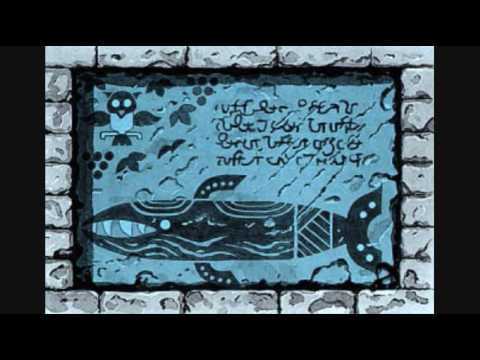
But when I started thinking about what I have just read, a more profound meaning started to emerge, which was hidden, disguised in the plot as the raising of an entire colossal cathedral from the bottom of the ocean with all the consequences that it would entail, including the "reborn" of a god and its counterpart evil.
This is not really about Sci-Fi; PKD doesn’t care much about the actual science behind, let us say, travelling from point A to another wherever point B in the Univers. But he cares, a lot, about the metaphysical questions and consequences of a human being transported from A to B. How can the journey transform each individual? And as typical in PKD he does it with speculation to lead you, the reader, to some conclusion.
Some critics state that the core of PKD's entire work is the "Nature of Reality". I have almost all his books and he, as an author, always strikes me as someone tormented and obsessed with what means to Be Human and all the theological and metaphysical questions that arise when you start questioning your existence and purpose in the physical Universe or the "other" one.
A man is an angel that has become deranged. Once they – all of them – had been genuine angels, and at that time they had had a choice between good and evil, so it was easy, easy being an angel. And then something happened. Something went wrong or broke down or failed. And they had become faced with the necessity of choosing not good or evil but the lesser of two evils, and so that had unhinged them and now each was a man.
If it was another of his books I would say, "go ahead, read it". But Galactic Pot-Healer, even being a short book (177 pages) needs some, let us say investment, from the part of the reader to be fully enjoyed if never fully understood. In the words of Sting:
Yet all the ragged souls
Of all the ragged men
Looking for their lost homes
Shuffle to the ruins
From the levelled plain
To search among the Tombstones
When the angels fall
And I can't prevent myself to mention that Galactic Pot-Healer gives us what is probably the most cooler robot in Sci-Fi literature, Willis.
Philipe K Dick is not the easiest writer for someone starting to read Science Fiction (or any other literary style), but along with Harlan Ellison, he's a very good, intriguing and interesting one.
I will stop my pitiful lucubrations and leave you with another example of the wry sense of humour of PKD:
The main character enters an automatic booth where one can get advice from different religious faiths from an A.I., and asked:
I haven't worked for 7 years and now I've got a job and I'm afraid. What if I can't do it? What if I've lost my skill?
He dialled at random and got Zen:
"Not working is the hardest work of all". Figures!
Then he switches to Puritan Ethics:
"Without work a man is nothing. He ceases to exist."
Roman Catholic:
God and God's love will accept you, you are safe in His arms."
Allah:
"Kill your foe. Overcome your enemies in a jihad"
Judaism:
"Eat a bowl of Martian fat worm soup"
And that was, maybe, the best advice of all....