El mundo en el que hoy vivimos es el que han ido conformando, principalmente, la ideología liberal y el capitalismo anglosajones. Con la caída de los regímenes comunistas en 1989, el triunfo de la concepción anglosajona del mundo pareció haber vencido a su último oponente. Desde entonces, han sido muchos los intelectuales, politólogos, economistas e historiadores británicos y norteamericanos que, desde sus tribunas globales en periódicos, revistas, universidades, escuelas de negocios y think tanks, han ido construyendo ideologías que apuntalaran dicha concepción con vocación de única alternativa posible. Pankaj Mishra analiza en profundidad ese proceso, iniciado ya durante el Imperio británico y su imposición en los países colonizados. Como afirma en la introducción, «todavía no se ha escrito la historia mundial de las ideologías liberales y la democracia después de 1945 y tampoco una sociología amplia de los intelectuales de Angloamérica. Y eso a pesar de que el mundo que hicieron y deshicieron está entrando en su fase más peligrosa. [...] 'Pero está claro desde hace mucho que la apuesta global por mercados no regulados y las intervenciones militares en su nombre han sido los experimentos ideológicos más ambiciosos de la era moderna. [...]Homo economicus, el sujeto autónomo, racional y portador de derechos de la filosofía liberal se puso a acosar a todas las sociedades con sus fantásticos planes para incrementar la producción y el consumo en todo el mundo. La jerga de la modernidad acuñada en Londres, Nueva York y Washington DC pasó a definir el sentido común de la vida intelectual pública en todos los continentes, alterando de forma radical la manera en que buena parte de la población mundial entendía la sociedad, la economía, la nación, el tiempo y la identidad individual y colectiva».
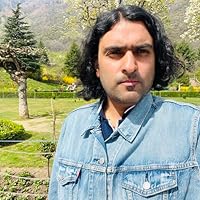
Pankaj Mishra (पंकज मिश्रा) is a noted Indian essayist and novelist.
In 1992, Mishra moved to Mashobra, a Himalayan village, where he began to contribute literary essays and reviews to The Indian Review of Books, The India Magazine, and the newspaper The Pioneer. His first book, Butter Chicken in Ludhiana: Travels in Small Town India (1995), was a travelogue that described the social and cultural changes in India in the context of globalization. His novel The Romantics (2000), an ironic tale of people longing for fulfillment in cultures other than their own, was published in 11 European languages and won the Los Angeles Times Art Seidenbaum award for first fiction. His book An End to Suffering: The Buddha in the World (2004) mixes memoir, history, and philosophy while attempting to explore the Buddha's relevance to contemporary times. Temptations of the West: How to be Modern in India, Pakistan and Beyond (2006), describes Mishra's travels through Kashmir, Bollywood, Afghanistan, Tibet, Nepal, and other parts of South and Central Asia.
If I had to pick a contemporary writer whose work has been most intellectually helpful to me Pankaj Mishra would be at the top of the list. This book is a collection of his essays over the past decade on the subject of global liberalism, criticism of which happens to be the subtext of much of his writing in general. Some of the essays were familiar to me, while some I had previous missed. Once you spend a lot of time reading a particular author you begin to be able to anticipate their arguments and I got a sense of that here. Mishra is a brilliant writer and also an entertaining polemicist about topics that raise his ire. He has an intense antipathy to Western liberal elites, whom his career success has brought him into closer proximity with. I don't have much access to such people so am reduced to having to take his word about how horrible they are. They seem like a rather unworthy elite.
Beyond that, this book evinces, like all of Mishra's work, evidence of a superhuman amount of reading and erudition. He ranges from Alexander Herzen to Muhammad Abdun to Sun Yat-Sen and back to lesser-known authors of our own moment. It was my great privilege to interview him for a podcast episode recently and I continue to consider him one of the most important writers of our generation.
There are some really great essays in here--I loved the takedown of Niall Ferguson best of all. Mishra's reviews are acerbic and angry, which is fine, but I think the book is better read in parts and not in one sitting. It felt too monotone because none of the reviews were positive. I feel dumb saying that and it's not as though I like positive things, but the essays are so relentlessly negative that they lost their punch after a while. Still, if you space them out and read them over time, this is a very good read.
This 2020 book is reprinted articles from 2008 to 2019 in the Guardian, London Review of Books, NY Times, NY Review of Books and the New Yorker. Many are available online, but it's convenient to have them collected here. The theme is a historical connection between current free market liberalism and past colonialism. Pankaj Mishra is both a novelist and essayist with an English literature degree from New Delhi living in London. His writing and concepts are challenging, and include many references to historic and contemporary authors.
The articles here were previously published as book reviews. Liberalism, as is described within 'Bland Fanatics', was an outgrowth of imperialism. Free markets once enforced by gunboat diplomacy and armed occupation are now upheld in sacred precepts of lax labor laws, low regulation and less taxation. This may seem akin to conservatism in the US but in global market capital speak it is known as liberalism. Other principles of liberalism used to spread the late 20th century creed are said to include democracy, human rights, secularism and free speech.
On Remembrance Day Mishra recalls forgotten millions of Asians and Africans who had fought in the trenches of the western front and frozen eastern forests during WWI. As the imperial powers in the Woodrow Wilson 1919 Paris Peace Conference denied colonies self rule they became more likely to prefer communism. After WWII former colonies knew that development was needed to compete but they chose central organization over individual liberties. Europe's faith in liberalism was shaken yet US power and the rhetoric of freedom and democracy grew.
Niall Ferguson is excoriated as neo-imperialist and racist, earning Mishra threats of a libel lawsuit. The culture of Islamophobia is revisited in the writings of Aayan Hirsi Ali, Bat Ye'or and others, seen from the perspective of Muslim guest workers invited to Europe after WWII. Author Salman Rushdie's memoir of life on the run after a death decree by Ayatollah Khomeini seem delusions of a celebrity western spokesman. British withdrawal from the EU is compared to the 1947 retreat from India, in terms of a reckless rush towards an unknown outcome.
An American author writes about life inside a Mumbai slum, situated between a new airport and luxury apartments built by the slum dwellers. Canadian pop shrink and YouTube guru Jordan Peters turns fascism and mysticism against gender identity politics and freaks out at Mishra on Twitter. Ta-Nehisi Coates and Barack Obama become liberal bait as social redress is switched out for drone strikes, corporate bailouts and immigrant deportations. Trump's rise was presaged by a catastrophic loss of jobs, pensions, and homes by the lower middle class.
Mishra uses these reviews as launch pads for his political exposition. It is a difficult book to read, partly for it's take on liberalism, but also for it's fleeting literary references. While nothing appears positive in this analysis of the west, it's an intriguing door to peer behind. Democracy, human rights and free trade may well be hollow words of a cynical elitist narrative. On another hand, what should be the alternatives? Autocratic regimes, arbitrary justice and planned economies? Democratic socialism might be one answer, and yet Mishra doesn't quite come out and say so.
I've been reading a bit about American liberalism lately (in the works of Chris Hedges and Thomas Frank), but this is the first book I've read to critique that august institution from the perspective of the global south. And as much as I admire the service that Hedges and Frank both perform as Socratic gadflies (biting, as Plato once memorably put it, the noble but lazy horse of the State in the hinder parts, so as to—hopefully—get its attention), I gotta say, Mr. Mishra beats the pants off of those two fellows in terms of literary style: to me, his sentences come across as a winning amalgam of Tariq Ali, Perry Anderson, and Christopher Hitchens—erudite, poised, and lofty, in other words, almost 'Olympian' in perspective and tone without being patrician, exactly (and precisely the opposite of where most political and economic journalism is tending these days).
Content-wise, too, this volume certainly rewards the inquisitive reader with much upon which to chew (despite its post-hoc assembly from previously extant essays, which can never get 5 full stars in my opinion, simply due to a certain inherent lack of unity to such a project): the essays on 1) the neo-imperialist Niall Ferguson, 2) Western Islamophobic intellectuals, 3) the truly global nature of the First World War (and its foredoomed 'Peace' process), 4) the twinned (or twined) births of Liberalism and imperialism, 5) how the discourse of "Human Rights" served the needs of the project of neoliberalism, and 6) Katherine Boo's unflinching non-fiction novel on life in the Mumbai slums, Behind the Beautiful Forevers: Life, Death, and Hope in a Mumbai Undercity (which now I really have just got to read) were as all eye-opening as they were well-researched.
Ever-so-slightly less successful for me (if only on account of their brevity) were those essays on such disparate individuals as Salman Rushdie, Ta-Nehisi Coates, and Jordan Peterson. I knew more about the first member of that trio than about the other two, and what I learned about his memoir, Joseph Anton: A Memoir, I can never unlearn, let's just say. Jordan Peterson was almost a complete cipher to me before reading about him in these pages, and shall remain so. Mr. Coates seems to be damned with faint praise here, I think, or rather complimented for his talents but chastised for the narrowness of his approach (he is encouraged to take on class and capitalism in future disquisitions on race, and chastened for lauding 8 years of the Obama administration without really tackling its drone strikes, mass deportations, or its reliance upon the magnanimity as well as the "expertise" of Wall Street).
The sole essay which left me feeling underwhelmed was the one on this rather (to me) obscure Russian novelist Alexander Herzen. Try as he might, Mr. Pankaj just could not convince me that I should read the man's novel (Who Is to Blame?: A Novel in Two Parts), much less that he had a clearer take on nineteenth century liberalism than did, say, one Karlo Marx?
I do but quibble: this was all in all a book that not only expanded my view of the world considerably, it was also simply a great read and Goldilocks of a book (neither too drily academic nor unnecessarily demotic or superficial), and I eagerly look forward to more books from this author.
When I read Age of Anger, I was profoundly impressed by Mishra's rhetorical skill, but it seemed like he was avoiding a discussion of material conditions as the big explanatory factor for why people are so damn angry. Not so with Bland Fanatics -- here, Mishra is more than willing to excoriate those Davos regulars who bemoan the loss of centrism while at the same time being more than happy to permit the neoliberal and imperial project to continue unabated. There are some great takedowns here of dorks like Niall Ferguson, there are some great reanalyses of underappreciated historical figures like Alexander Herzen, and there is -- above all else -- Mishra's wide-ranging intellect. More of this please.
A rare non-fiction book I could not put down, "Bland Fanatics" takes its title from a Reinhold Niebuhr quote, wherein he discusses the exponents of modern liberalism who exhort what they peddle--namely Western democracy--as the final form and telos of human society. In discussing the backslapping Anglo-American past 150-year period, Mishra points out the inconsistencies of the West's approach to the rest of the world, for instance Wilson deigning to grant sovereignty to the lesser Poles and Slovaks, but not daring to do so to the Egyptians or Vietnamese, specifically rejecting an audience with Ho Chi Minh in France with shall we say famous consequences.
Having sent up the incoherent, inconsistent, and myopic framework used to justify not only the interventions and authority but also the prestige of the Anglo-American century, Mishra takes aim at those who insist on its primacy yet bemoan any cracks in its hegemony, from Churchill to Powell to Niall Ferguson to Jordan Peterson. Picking over the carcass of the now discredited idea that Anglo-American liberal democracy as deployed on the unwilling and unconsulted browner peoples of the Earth is the Only Way, or a good way, or a way designed to promote anything more than crass consumerism or neocolonial dynamics, Mishra lambastes the confidence and incompetence of Americans and Britons who conflate a legacy of power with contemporary wisdom, intelligence, and legitimacy. Showing more than telling, Mishra's exclamation point to this takedown is the leadership, at present, of the free world consigned to the wild-haired and buffoonish Donald Trump and Boris Johnson, both grotesque products of generations of privilege that has insulated them as much from responsibility as it has from scruple or the ability to attempt introspection.
Although the book starts out as an exploration of the West's benighted attempts at "civilizing" (and really dominating) the non-white peoples of the Earth, especially where they sit atop resources requiring cleverer workarounds to achieve colonial exploitation, it also takes aim at the rudiments of British prestige and culture, especially where they have anchored firmer roots in its more rowdy and interventionist offspring such as America, Canada, and Australia. The Economist--which has as many subscribers in Britain as in its Commonwealth, and three times that many in America--earns special attention for the duration and particularly pointed nature of its contribution to Anglo-American economic nostrums and interventionist urgings (an editor skipping down the hallway singing "My enemy is dead!" after Pinochet's CIA-backed coup killed the democratically elected socialist president of Chile was a particularly revealing and grisly anecdote), as does Rupert Murdoch, for perhaps more obvious reasons. The BBC, and the "unteachably stupid" and ossified aristocratic class that dominates and bungles British foreign policy (as exemplified by the Eton-Oxford "chumocracy" of Cameron and Johnson, modern analogues of Lord Mountbatten, stick out as leaders whose pedigree suffices where quality is wanting) also merit merciless and entertaining scrutiny.
This collection of essays is that much more notable for being so gripping despite being about something that obviously shapes my world, but is not very front-of-mind. It is just dripping with intelligent, droll thought, elegant writing, and interesting anecdotes. I have been exhorting it to everyone I can buttonhole, and do so here as well.
This is a collection of sixteen essays published over a recent twelve year period (2008-2020) by an Indian-British writer named Pankaj Mishra. Mishra was not a familiar figure to me, though many of his ilk are quite familiar. They often frequent elite faculty lounges or exclusive intellectual or artistic subcultures; they publish in places like The London Review of Books, The Guardian, and The New York Times. Mishra appears more specifically descended from a post-colonial tradition. Despite writing polemical critiques of Western elites, capitalism, and liberalism, he often reach for literature to ground his arguments rather than sociological data or other lines of evidence. It's evident he envisions himself as an advocate and perhaps (figurative) citizen of the Global South. Although he likes to lambast the hypocrisy of Western elites, he seems to have overlooked the fact that despite his birth an India he still looks very much like a Western elite (including both his political opinions and marriage into the British aristocracy).
The collection's title is borrowed from the mid-century theologian Reinhold Niebuhr, who argued Western elites were replete with “bland fanatics,” who saw “the highly contingent achievements of our [the West's] culture as the final form and norm of human existence.” Mishra shares Niebuhr's perspective, which can be viewed as quite the opposite of thinkers like Francis Fukuyama, Yascha Mounk, or Steven Pinker. Subsequently, most of the essays are attacks on liberal triumphalism or the West's soft imperialism (i.e. Middle East adventurism) or the various moral hypocrisies of Western liberal nations, namely colonialism and racism. Sometimes this takes the form of attacking figures he views as avatars of such ideas or at least avatars of the remnants of these ideas, including Jordan Peterson, Niall Ferguson, Ayaan Hirsi Ali, or even Salman Rushdie. Other times he is identifying some purported ideal of liberalism or secular Western ethics and demonstrating that these standards are discarded when it comes to the projection and/or maintenance of power. Despite the anger, there is sometimes a surprising note of glee in these pieces because Mishra thinks to some extent figures like Donald Trump are heralds of an end to these regime.
For some reason, there are those who still think the West needs to hear these critiques. However, these ideas are quite old, tired, and bunk. Post-colonialism gathered a defined form along with many other New Left fantasies and fever dreams in the 1960s. These are also largely Western inventions despite the anti-Western positioning. The central issue with the theory is that it doesn't understand economics, political institutions, or human nature. It's a reactionary (and fairly juvenile) position driven by resentment rather than a thoughtful Machiavellian or Straussian ploy. Additionally, we have a wealth of evidence to point to that illustrates that the dominance of Western civilization is not particularly contingent. Apart from certain obvious geographic and material advantages that stretch back to the industrial revolution or further, there are likely several deep causes that contributed to the course of history. For instance, historians like Ian Morris have built indices to longitudinally measure Western civilizational maturity/power and have shown that it has more or less been the seat of power for all of recorded history if not much further back, especially if we're speaking with respect to South and East Asia. Plus, gene-culture co-evolution scholars have shown that the West benefitted from a wealth of human capital because of institutional quirks. For instance, Joseph Henrich has illustrated how the Catholic church disrupted kinship networks and foisted compensatory cooperative adaptations on Western culture. Whether we regard these differences as "contingent" or not has to do with our perspective on the interaction between human nature, technology, and material circumstances. I can understand triumphalism about the course of history is galling for those who have not been (or currently are not) beneficiaries of this history, but it seems petty to be hung up on this.
I could forgive all this if Mishra had some alternative to offer to the system he critique. However, he does not.
This collection of articles gives a highly articulate series of critiques on “liberalism” and its many contradictions, from an enormously well-read columnist. Mishra considers the global legacy of liberalism as a force for personal liberty, free-market fundamentalism, crass materialism, crusades for democracy and “universal human rights” involving “violent humanitarianism,” political correctness, the “final religion” of privatized society, governed by “the unconditional right of the owner over his property.” As he quotes the Economist magazine, “if the pursuit of self-interest, left equally free for all, does not lead to the general welfare, no system of government can accomplish it.” This incarnation of Western civilization’s core values is judged by its fruits around the world. Instead of pushing supposedly universal answers, Mishra invites listening and learning from many other people’s experience.
“Your liberalness we see plainly as only for yourselves. And your sympathy with us is that of the wolf for the lamb which he designs to eat.”
This collection of essays from across a decade covers global liberalism with a scathing and critical eye that breaks down the inconsistencies in major white western nations’ navigation of global politics. It highlights the parallels and identical nature of political extremes across the spectrum that sticks within Anglo-American liberals more often.
Unfortunately very timeless, this put a lot into perspective for me and how I perceive/engage with the current political climate.
The writing isn’t very accessible and was at times difficult to navigate. Though I’m glad to have walked away from this with an expanded vocabulary, stopping to look up terms multiple times an essay every single essay across a month and half was a difficult task and the low-energy narrator for the audiobook does not help this journey in any way, shape, or form. It’s a text that demanded numerous rereads so I wouldn’t recommend this as an introductory resource on the topic and instead something to build up to and sit with for a long while.
I‘ve become fascinated with his writing since this introduction and looking through his more recent writings on the state of the world as it exists today has continued to help shape my language surrounding it all.
CW: white supremacy, racism, sexism, colonialism, religious extremism & political extremism, war, violence, murder, references to rape & sexual violence, slavery, xenophobia
I really wanted to begin this review with the name of a fictional acid that can eat through anything. Through the jar, through the ground beneath, straight through the earth’s core and out. Technical questions about how one could store such an acid aside, the point is that there exists in our comprehension, things that can go through anything, things that respect nothing. A few times while reading the latest book of essays by Pankaj Mishra, I had that feeling, that nothing was sacred and nothing beyond reproach.
This is, as those of you who have heard and read Pankaj Mishra’s recent and previous work know, yet another collection of his essays. They come out from time to time, collecting his writing published in various places and built around a theme. The question of what that theme might be is as difficult to answer in a single sentence as are Mishra’s arguments. Yet, this perhaps is the one book where I could sense the theme clearly - how do we make sense of Brexit and Donald Trump? It is a question that has occupied western intelligentsia for over 4 years, the broad themes of which vary from the popular - David Cameroon’s ill fated confidence to Barack Obama’s white house correspondence dinner disparaging Trump - to the fictional: dealt in the season based books by Ali Smith for example. This question of what and how these two seemingly seminal events happened has probably gone through its lifecycle of academic to Netflix documentary in, again, 4 short or long years depending on how much you have followed the topic. I have followed it, a lot.
Yet, even to my jaded palette this book is refreshing. I do not use these words callously, for no one could call Mishra’s prose fresh, but the freshness I am referring to, obviously, is in the realm of ideas or in the realm of an abstract patterned reading of history. It is in the list of dramatis personae in this book that are both expected: Nail Ferguson (Watch this man), Woodrow Wilson (The man of fourteen points) or Jordan Peterson (The lure of fascist mysticism) and unexpected: the periodical The Economist (The Economist and Liberalism) and even Ta-Neisi Coates (Why do white people like what I write). And it is in the slow unfolding of argument where nothing is sacred and so nothing unexamined.
In each essay, barring a handful, Mishra explores the veins of history and thought leading unto the moment we are now living in. To reduce it to a single explanation would be to do exactly the kind of disservice Mishra doesn’t afford his subjects, so I will restrain, but the impression I was left with was of being in the company of that mythical acid - watching as it goes through the vessel to the core. Each essay references a dozen writers I do not know, some shamefully so, and presents their view point. In his choice of reading itself Mishra exudes respect for the point of view, reading deeply and carefully. I do not know if he justifies everything said in those books but I can be sure the excerpts are not used only to make a point or worse still titillate.
Yet, if you had to know, the argument in the book would be that the broad strokes of history leading up to this moment were not random or benign. This will be important when we reckon the world as it is today, circa 2020, a few decades from now. Ideas, thoughts and decisions made by leaders and thinkers a hundred years ago have trickled down to bring us to this moment. Was it their intention that this be so? I am not sure, and neither does Mishra propose to answer this question. What is important is that even in their moment, it was a choice to play notes that echo now: majoritarianism, colonialism, unequal distribution of wealth or racism. Grim reading no doubt. And often, because Mishra does not offer any solutions, it all feels pointless and cynicism creeps in. I had to put down the book and ask what, if any, was the point of a critic? Why examine without any hope of a solution. I still do not know, but perhaps the act of examining is the utmost respect a scholar can pay to the process of learning, sans prescription and without any holy cows to distract attention.
As a long time proud liberal, this book, and my teenage daughter, made me doubt how much self delusion I was in. Of course I don’t agree with everything this author said, or what my daughter said, but I do feel strongly now that the word liberal is very much tainted. I have such feelings before, but never as articulated as in this book. The undertone of imperialism and racism is so strong in the word liberalism, that I honestly don’t know what to think at this moment.
Volevo sentire come la pensa sul mondo qualcuno completamente diverso da me, nato dall'altra parte del globo. Pankaj Mishra non mi ha deluso, anzi. Questo libro è una raccolta di saggi pubblicati nell'arco di una decina d'anni, avrei dato al testo un voto di quattro stelle perchè alcuni dei saggi/recensioni soprattutto sul lavoro di altri intellettuali mi sono sembrati al pelo del datato e un po' troppo a senso unico, però adesso che ho terminato di leggerlo mi accorgo che in poche centinaia di pagine questo testo è riuscito ad illuminarmi, mi ha mostrato un punto di vista intelligente e condivisibile e mi ha aiutato ad unire i puntini per vedere meglio il disegno di insieme. Usa e Gran Bretagna ci hanno sempre raccontato la favola che loro sono i buoni e che il loro progetto è quello del mondo perfetto, la mano invisibile del mercato aggiusterà tutto e noi dovremo solo andare a mettere una crocetta su una scheda ogni quattro o cinque anni per sentirci soddisfatti e parte integrante di un mondo meraviglioso; Pankaj Mishra è bravissimo a dirti che tutto questo è vero come i videoregistratori venduti a scatola chiusa nelle piazzole dell'Autogrill, prende a pugni le nostre illusioni con la precisione di un chirurgo e smonta la narrazione dominante in maniera quasi inattaccabile. Faccio un esempio tra i tanti che mi hanno colpito: perchè ci illudiamo che la Prima Guerra Mondiale sia stata un capriccio della storia, un incidente fortuito? Le potenze europee hanno praticato una politica aggressiva e imperialista nell'ambito coloniale per tutto il XIX secolo e fino a cinque minuti prima di Sarajevo. Perchè ci stupiamo che i colpi di cannone a un certo punto abbiano varcato il Bosforo per iniziare a cadere anche sul nostro continente? Era inevitabile e sono le frottole che ci raccontiamo da sempre ad averci accecato. Reagan, Tony Blair, Clinton, Boris Johnson, Obama, Trump...Pankaj Mishra ne ha per tutti, per i cattivi e per i finti buoni, un libro che strappa il paraocchi mentale di tutti noi.
"Bland Fanatics" is a collection of critical essays written by the author over the course of a decade or so. They are all more or less scathing takes on various western ideals, phenomenons, narratives, and personalities that the author feel are off or disingenuous in one way or another. Generally, Mishra offers a different take where he paints the "West," liberalism, and/or capitalism as a great evil in various manifestations.
Most of the essays contain very valid criticisms and illustrate the need to critically view and review canon "truths" from different perspectives. They're all well-written and interesting to read, even if the reasoning often stumbles into equally flawed interpretations of history as those the author challenges in the first place. I also found the author's frequent lauding of more or less autocratic rulers and personalities troubling - not to mention, if one is trying to offer better alternatives, arguably very bad examples of what a world without the diminishing West would look like.
In short, "Bland Fanatics" offers a number of well-written polemics worth reading with a healthy serving of salt handy. It illustrates the author's desire to tear down a world order (to some extent justifiably so) and its ideals, but offers very little in its place other than an apparently naive idea that the world would be better if only he and others who think like him ran the place.
Personally, I don't think it's the best idea to tear everything down without having a plan for what comes next. After all, the current international framework - flawed as it is - with its rules, limitations, and yes, ideals, at least provides a fighting chance - albeit one fraught with injustices - for the proverbial Davids of the world. I can not see how anything Mishra offers can say the same.
Pankaj Mishra es uno de los grandes intelectuales de nuestro tiempo. Aunque me ha gustado menos que sus anteriores obras, es un libro que ayuda a reflexionar. Está escrito muy bien, cada uno de sus capítulos se puede leer de forma independiente y nos hablan tanto del mundo actual como de sus sus conexiones con la historia de los últimos siglos: desde las consecuencias del colonialismo y el imperialismo a los problemas sociales, económicos y políticos del mundo. En muchas partes del libro hay una crítica constante a un modelo neoliberal extremo liderado por Estados Unidos e Inglaterra. Como en sus otros libros, nos ayuda a mirar el mundo con una perspectiva más amplia que la del mundo Occidental.
All essays are good but some are better than others. Looks like author is so annoyed and so critical about some renowned authors that if they were alive in current world he might have slapped them so hard for misguiding or writing out of proportion that none knowing their names would have ever dared to write anything without proper research. The Economist OMG author must be burning few pages daily to get some heat in this chilling winter and financial times don't even mention it. Jokes apart this is awesome and unparalleled to anything i had read. Fully recommend to all.
Waxed eloquent. Incredibly informative. The thematic arguments in the book will make you pensive about the global mood regarding topics that are incredibly important in this age, that include fetishes of imperialism, free market, liberalism, and West's desire for political and social elitism. There is a certain beauty in his writing: it's also analytical and unvarnished prose. Mishra is at the height of his intellectual powers. One of the greatest Indian non fiction writers of our time.
* This is a collection of essays with a consistent theme dedicated to criticising mainstream liberal figures, and the environment which promotes them. Mishra is a strong polemicist and he is at his strongest when he takes the arguments of his subjects and analyses them in more detail and with more knowledge than the person making the argument. He is at his weakest when rather than engaging in debate he hurls ad hominem attacks, usually about his subjects views or comments on race or nationality. He doesn’t do this a lot and the majority of the essays are extremely thoughtful. * Concluding paragraph on Niall Ferguson: “‘Western hard power’ Ferguson blurts out in Civilisation, ‘seems to be struggling’; and the book exemplifies a mood, at once swaggering, frustrated, vengeful and despairing, among men of a certain age, class and education on the Upper East Side and the West End. Western civilisation is unlikely to go out of business any time soon, nbut the neo-imperialist gang might well face redundancy. In that sense, Ferguson’s metaphormposes in the last decade - from cheerleader, successively, of empire, Angloglobalisatoin and Chimerica to exponent of collapse theory and retailer of emollient tales about the glorious past - have highlighted broad political and cultural shifts more accurately than his writings have. His next move shouldn’t be missed.” * His essay, “Culture of Fear”, about Islamophobia is a good example of how he dismantles a series of books and writers through humour, quantum of knowledge, and strength of argument: * “The idea of a monolithic ‘Islam’ in Europe appears an especially pitiable bogey when you rgard the varying national origins, linguistic and legal backgrounds, and cultural and religious practices of European Muslims. Many so-called Muslims from secularised Turkey or syncrestistic Sindh and Java would be condemned as apostates in Saudi Arabia, whose fundamentalist Wahhabism informs most Western visions of Islam.” * “In actuality, the everyday choices of most Muslims in europe are dictated more by their experience of globalised economies and cultures than by their readings in the Qur’an or sharia. Along with their Hindu and Sikh peers, many Muslims in Europe suffer from the usual pathologies of traditional rural communities transitioning to urban secular cultures; the encounter with social and economic individualism inevitably provokes a crisis of control in nuclear families, as well as such ills as forced marriage, the poor treatment of women and militant sectarianism. However, in practice, millions of Muslims, many of them with bitter experiences of authoritarian states, coexist fritionalessly and gratefully with regimes committed to democracy, freedom of religion and equality before the law.” * Possibly one of most enjoyable parts of reading this collection is that Mishra is merciless with his treatment of historical myths or even figures whom left-leaning liberal elites hold in high regard, like Obama, Ta Nahesi Coates, and Salman Rushdie. * On World War one: “the modern history of violence shows that ostansibly staunch foes have never been reluctant to borrow murderous ideas from one another. To take only one instance, the American elite’s ruthlessness with blacks and Native Americans greatly impressed the earliest generation of German liberal imperialists, decades before Hitler also came to admire the US’s unequivocally racist policies of natinoality and immigration. The Nazis sought inspiration from Jim Crow legislation in the US South.... In light of this shared history of racial violence, it seems odd that we continue to portrary the First World War as a battle between democracy and authoritariansim, as a seminal and unexpected calamity.... many subordinate peoples simply realised ... that peace in the metropolitan West depended too much on outsourcing war to the colonies.” * “There were signs during Obama’s campaign, particularly his eagerness to claim the approbation of Henry Kissinger, that he would cruelly disappoint his left-leaning young supporters’ hopes of epohcal transformation. His acitons in office soon made is cleare that some version of bain and switch had occurred. Obama had condemned the air war in South Asia as immoral because of its high civilian toll; but three days after his inauguration he ordered drone strikes in Pakistan, and in his first year oversaw more strikes with high civilian casualities than Bush had ordered in his entire presidency. His bellicose speech accepting the Noble Peace Prize signalled that he would strengthen rather than dismantle the architecture of the open-ended war on terror, while discaring some of its fatuous rhetoric. During his eight years in office, he expanded covert operations and air military bases, he exposed large parts of it to violence, anarchy and tyrannical rulke. He not only expanded mass surveillance and government data-mining operations at home, and ruthlessly prosecuted whistleblowers, but invested his office with the lethal power to execute anyone, even American citizens, anywhere in the world... he deported millions of immigrants - Trump is struggling to reacsh OBama’s 2012 peak of 34,000 deportations a months.” * Mishra’s lack of fuck-giving about offending anyone is on display when writing that Ta Nahesi Coates panders to “liberal imperialism... [and] its patrons”: “‘My President Was Black’, a 17,000 word profile in the Atlantic, is remarkable for its missing interrogations of the black president for his killings by drones; despoliation of Libya, Yemen and Somalia; mass deportation; and craveness before the titans of finance who ruined millions of black as well as white lives. Coates has been accused of mystifying race and ‘essentialising’ whiteness. Nowhere, however, does his view of racial identity seem as static as in his critical tenderness for a black member of the 1 per cent. As long as Coates is indifferent to the links between race and interntional political economy, he is more likley to induce relief than guilt among his white liberal fans. They may accept, even embrace, an explanation that balmes inveterate bigots in the American heartland for Trump. They would absolutely baulk at the suggestion that the legatee of the civil rights movement upheld a nineteenth-century racist-imperialist order by arrogating to the US president the right to kill anyone without due process; they would recoil from the idea that a black man in his eight years in power deepend the juridicial legacy of white supremacy before passing it on to a reckless successor.”
Very polemical, albeit rendered in prose of remarkable lucidity and elegance. Of all the writings by Mishra that I have read, this strikes me as the least compelling - revealing, perhaps more transparently than in his other works, the limits of his originality. While Mishra is a formidable synthesizer of history, particularly those shaped by ideological currents - I just was not super impressed by the boiler plate talking points that are so familiar.
Mishra seems like a more erudite and rhetorically agile counterpart to Douglas Murray: a master of the polemic, capable of incisive commentary, but often undermined by a conspicuous ideological partiality and a proclivity for silly exaggeration.
I did like his criticism of Niall Ferguson and Jordan Petersen - who come across as very naive. The failure of these two at reckoning with the west’s dark past is indeed unforgivable. His criticism of Ta Nehisi Coates was also entertaining and balanced.
Other sections of the book were considerably less persuasive. As someone who is neither white nor European, I found Mishra’s dismissal of anxieties surrounding Muslim immigration - however much these anxieties may be shaped by racial prejudice - strikingly under-argued. His assertion that such immigration poses no legitimate threat to Europe lacks analytical rigor and comes across as more rhetorical than substantive. In particular, his claim that “Muslim birthrates converge with European ones” is presented without a shred of empirical support. He would do well to set up fewer strawmen to enthusiastically knock down.
Bland Fanatics has an interesting group of essays lamenting the pabulum that is called modern liberalism.
" ‘The deterioration of the intelligentsia’, Arthur Koestler wrote, ‘is as much a symptom of disease as the corruption of the ruling class or the sleeping sickness of the proletariat. They are symptoms of the same fundamental process.’ One clear sign of intellectual infirmity is the desperation with which centrists and liberals, removed from the cockpit of American power, forage for ideas and inspiration on the lumpen right" (p.151).
I usually do not like books that are pure critique but do not offer anything in lieu of solutions or redemptive qualities. This is an exception. Mishra criticizes and deconstructs some of the ideas we hold to be most sacrosanct. This indictment in itself is fairly important so I let the lack of redemptive qualities slide. My concern is that zealots would read this and somehow assume that it vindicates them, but that is not the point of the book at all. It more or less starts with the idea that their ideas are misplaced. Also the controversial essay on Jordan Peterson. That was the best rebuttal I've read. Well played Mishra ji.
Es una interesante colección de artículos. Escritos desde una periferia de origen, analizan los claroscuros de la mentalidad liberal acrílica. Sin embargo, al final termina en una recopilación de inconsistencias de mucho prohombre occidental. Sin perjuicio del cherry picking, la descripción de la inconsistencia y la debilidad por el poder, nada dice de las ideas, sino que termina siendo mera argumentación ad hominem. Tal como mucha mirada decolonial, está revisión crítica, termina siendo, al final, un inconsciente reconocimiento a las instituciones creadas por el liberalismo y la modernidad occidental.
A riveting read; for someone who deeply appreciated Hitchens scholarship this book offers the decolonised version of comparable scholarship, articulated in relatively rich verbatim quotes to carefully selected narratives from multiple ideological leanings of course in service of a brilliant takedown of western liberalism that drew its flavours from the colonial enterprise. I would include this among decolonisation 101 readings in any academic discipline!
I had previously read the first and penultimate essays in this collection in the LRB and New Yorker respectively - but how much better to read them again packaged together with his other essays. So many other authors do this, reprinting essays from elsewhere as books, as a way of being able to have a book published without having to commit to a significant writing project. Yet here, the essays really do all overlap, complement each other, and function as variations on the same theme: the end of the plausibility of the lie of liberalism, and with it, the unmasking of Western imperialism and capitalism in its dying decades.
Incredibly, there are no weak chapters. Every essay is a knock-out. The collection begins with Mishra's 2011 take-down of Niall Ferguson, the essay that arguably made Mishra's career. He took down, and in a timely fashion, a smooth-talking ever-ascendent salesman for Empire that nobody else seemed able to even attempt to take on. And every essay thereafter maintains the same pitch and tempo.
Based on his advocates, I had always suspected there was something wrong with Salman Rushdie as Voice of The East - Mishra gives a condensed summary without skipping any of the most relevant facts, and is the first to explain all that Rushdie business to me so that I get it. His short little essay on Woodrow Wilson gets so much more to the heart of the matter and is rammed full of more hard details than the entire voluminous repertoire of the feted liberal historian of the same, Margaret MacMillan.
Mishra also does something few others are generally interested or able to do: he 'provides the receipts,' as the kids are calling it these days. Here is Mishra setting up Ta-Nehesi Coates: "The most remarkable of these people were not the neoconservatives but the liberals - some of them now Coates's colleagues and supporters - who recommended war and condoned torture while advancing America's mission to bring democracy to the world's benighted. In The Fight Is For Democracy, George Packer argued that 'a vibrant, hardheaded liberalism' could use the American military to promote its values. The subtitle of The Good Fight by Peter Beinart, then the editor of The New Republic, insisted 'Why Liberals - And Only Liberals - Can Win The War On Terror And Make America Great Again.' 'It's Time To Think of Torture,' Newsweek declared a few weeks after 9/11. 'Focused Brutality,' Time recommended. 'Vanity Fair praised Rumsfeld for his 'oddly reassuring ruthlessness.' As the invasion of Iraq got under way, The Atlantic, described as 'prestigious' by Coates in his new book, walked its readers through the advantages of 'torture-lite' in a cover story. In the New York Times Magazine, Michael Ignatieff, biographer of Isaiah Berlin and professor of human rights, exhorted Americans to embrace their imperial destiny and offered his own suggestions for 'permissible duress.' Even the New Yorker, fastidiously aloof from Beltway schemers during the Cold War, published a report by Jeffrey Goldberg, the Atlantic's current editor, detailing links between al-Qaida and Iraq - links later revealed to be non-existent." He does the same in various places to great effect, including providing a similarly devastating index of "liberals, removed from the cockpit of American power, foraging for ideas and inspiration on the lumpen right." Almost every other critic doesn't bother to identify what they are arguing against, but rather characterise the argument of their imaginary opponents and then argue against this concept. Mishra provides the receipts. He names names. And quotes them. This refreshingly locates his arguments and enemies.
There is something deliciously cathartic in reading such an articulate, informed, and yet accesible voice take on the West's big liberal lie. On the cover the publishers have smartly featured a quote from The Economist (itself given gruesome, pitiless treatment in its own essay) calling Mishra the heir to Edward Said. That label has been tried on a number of people, but with Mishra it really sticks. He has that same joy for debate, that same intimidating breadth of references, that same voice that makes things plain, and that same turn to the question of what is ethical.
There is one small, yet enormous, difference: Edward Said was truly interested in transcending categories of colonizer-colonized, native-settler. Said understood that if you simply respond to a provocation by someone else who seeks to benefit by trapping you in a conflictual relationship, you empower and strengthen that conflict. So Said was always much more careful and conscious in his writing, to speak for the dispossessed, but also in a way with an eye towards moving beyond the dynamics of dispossession. Mishra has the power of intimidating referential knowledge on par with Said; Mishra shares Said's focus on winning debate and pushing his ideas over promoting his personal brand or career; and Mishra also has Said's emphasis on the just and ethical over the pragmatic. But Mishra doesn't have Said's transcendence. Perhaps this is a question of eras. Perhaps we live in times more decadent and less hopeful. I suspect that Said would disagree. Though they would also be great friends.
Pankaj Mishra, like John Gray and Will Self, is an English skeptical author. A writer of both novels and essays, his ability to illuminate the intellectual voices elided by Western intellectuals is refreshing. He has written about Buddhism and empire, J.G. Ballard and American police brutality. In his excellent "Age of Anger," Mishra showed how the current right-wing backlash against neoliberalism resembles, in many ways, the discontent of earlier periods of fervent preceding the world wars. His mining of 19th and 20th century intellectual history is terrifying (if gripping) reading. In "Bland Fanatics," he often cites Raymond Aaron and Tony Judt, historians he closely resembles in their unc-categorizable nature as they often kept a comfortable distance from the trends and schools of their times. In "Bland Fanatics," Mishra goes from essay to essay, slashing at the neoliberal muckety-mucks: David Cameron, Niall Ferguson, Tony Blair, hollow phonies like Douglas Murray or other elites who have so profoundly made politics and political discussion worse. In one essay on Coates, Mishra's pithy and succinct style is in full effect: "Today, the practices of kidnapping, predation, extraction, national aggression, mob violence, mass imprisonment, disenfranchisement, and zoning pioneered in the Atlantic have travelled everywhere, along with new modes of hierarchy and exclusion. Like Nadine Gordimer, Mishra's essays have that clear and sharp ability to polish a figure's beliefs into a polished stone. It is simple and beautiful, but the more you look at it, the more you're impressed with its intricacy. In one essay on the Russian great, Alexander Herzen, Mishra writes: "Herzen's great achievement was to identify the power that cannily assigns inescapable destinies to individuals in line with their capacity to be competitive and profitable while at the same time paying lip service to universal progress, equality and liberty." It often seems all roads lead back to empire with Mishra. And there are few solutions here, few calls to arms. There does not seem to be much demand for justice, even if, as Mishra eloquently does, there is an excellent essay on the "human rights" vs. "justice" debate in his review of Samuel Moyn. Personally, I loved moments in Tony Judt's late books where he begins slashing at hollow men like Thomas Friedman, empty power-worshippers who cashed-out on the boom and still got TV slots in the bust. I'd have loved to see more of this in Mishra's work as the "intellectual debate" of America's cable news channels is worthy of condemnation, as is seen in Matt Taibbi's excellent book "Hate, Inc." However, Mishra seems comfortable in the sky-high critiques of the "dominant establishment discourses. The essays cover huge territory, from Jordan Peterson to Brexit, and are always sharp and swift. Like Christopher Hitchens (an author Mishra prongs in these essays) he is always an author worth reading; I only selfishly wish Mishra possessed Hitch's tongue-in-cheek talents, the wink and chuckle. But perhaps the grimness of the times and the mediocrities running the world into ashes and clashes are no laughing matter--not to Mishra anyway.
This book is an amalgamation of the essays written by Pankaj Mishra in the last 10 years and published mainly in leading newspapers and journals of USA and United Kingdom.
This book deals with various themes from colonialism to free market liberalism, politics to culture, imperialism to Neo-imperialism, Intellectual Islamophobia, Brexit, human rights, weakening of Anglo-American hegemony, liberalism and about the contradictions and decline of liberalism in a very assertive manner.
Also, he does a critical commentary on Salman Rushdie’s memoir Joseph Anton, Jordan Peterson and Niall Ferguson and his love for The Economist.
The most important essays are- Watch this man, the culture of fear, Bland Fanatics, Free markets and social darwinism in Mumbai, Bumbling Chumocrats, The Economist and Liberalism.
The language is not easy and thus one needs to read this book slowly to appreciate it.
However, after a point of time it became a bit monotonous because each essay is relentlessly negative and thus lacked the balance which is extremely important to have a fair and holistic view of the happenings.
Despite this, overall the book is informative, interesting, enlightening and impressive
I found “Bland Fanatics” to be a truly invigorating and engaging read. Mr. Mishra offers up a delicious stew of essays on varied topics and personalities, but what I took away was his unrelenting and border-less erudition. He introduced me to non-Western thinkers like Chanakya, Ashoka, al-Ghazali and Liang Qichao with whom he strongly makes the case against the prevalent ideology of Western (European) racial as well as intellectual supremacy. His essay on the “Religion (and now the ‘cult’) of Whiteness” was truly thought provoking, if not terrifying for its exposure as an almost cyclical nightmare that has returned to haunt. I pray this time we can awaken in time and avoid “sleep-walking” into what could possibly be our last “calamity”(p.60). I highly recommend reading and Re-reading this book. José S.
My actual rating for this is 3.5 stars. On a high-level, I think this book is a great reminder of what the US is to the rest of the world, no matter who is in charge of the country at the time: a neo-colonialist country with a particularly ruthless version of capitalism. It also had some useful analysis of what the world “liberal” has meant here and abroad; in the words of Muhammad Abduh: “Your liberalness we see plainly is only for yourselves.” Particularly germane to the current euphoria around the election of a Democrat.
I particularly enjoyed the essays on Ta-Nehisi Coates and Salman Rushdie, maybe because I've read some of their works, or maybe because these essays were a good reminder that writers of this kind must remain solidly with the labor class. It reminded me of Camus' words on writing: "One of the temptations of the artist is to believe himself solitary, and in truth he hears this shouted at him with a certain base delight. But this is not true. He stands in the midst of all, in the same rank, neither higher nor lower, with all those who are working and struggling."
i’m too stupid to understand this (again….), but i did really like his comments on our fixation upon western (liberal) thinkers + something in the book about perceptions of western ngos as modern imperial missionaries. also the salman rushdie commentary was very interesting!!! i think this would definitely be far better if read spaced apart though- i made the mistake of reading it all in 3 days, which made it a little laborious to get through and made his critiques seem a little bit blurred together for me :(
Eloquent, précis et acerbe, Pankaj Mishra impressionne surtout par sa capacité à penser en survolant les continents et en laissant entrevoir une histoire globale. L'un des grands intellectuels et polémistes contemporains.
Un recueil d'essais et de critiques déjà publiés tournant autour des principaux défenseurs du libéralisme : "les fanatiques insipides", ce livre est parfait pour accompagner son chef d'oeuvre Age of Anger.