

What do you think?
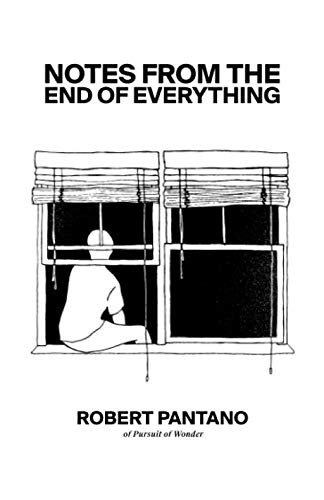
Notes from the End of Everything
The writer and creator of the YouTube channel and production house Pursuit of Wonder brings you his debut book, Notes from the End of Everything.
After being diagnosed with a brain tumor, writer John Gallo spends his time confronting his lifelong sense of fraudulence, regret, and self-misunderstanding, all while loosely chronicling the development of his cancer.
Formed out of a collection of journal-like essays posthumously discovered on his computer, we follow Gallo’s mind as he ruminates on concepts and theories of time, being, death, anxiety, creativity, despair, isolation, happiness, wonder, absurdity, and other eternal themes of life—big and small.
The work carries a tone of existentialism as well as a culmination of other complimentary and sometimes contradictory philosophies that meld into a modern, accessible take that is simultaneously dark and hopeful.
After being diagnosed with a brain tumor, writer John Gallo spends his time confronting his lifelong sense of fraudulence, regret, and self-misunderstanding, all while loosely chronicling the development of his cancer.
Formed out of a collection of journal-like essays posthumously discovered on his computer, we follow Gallo’s mind as he ruminates on concepts and theories of time, being, death, anxiety, creativity, despair, isolation, happiness, wonder, absurdity, and other eternal themes of life—big and small.
The work carries a tone of existentialism as well as a culmination of other complimentary and sometimes contradictory philosophies that meld into a modern, accessible take that is simultaneously dark and hopeful.
106 pages, Paperback
Published July 17, 2020
Ratings & Reviews
Friends & Following
Create a free account to discover what your friends think of this book!
Community Reviews
Displaying 1 - 30 of 116 reviews
August 1, 2020
I discovered this book through the author's YouTube channel, Pursuit of Wonder, which gives a wonderful dive into existential philosophy through guided experiences, short stories, and video essays.
This book gives little context and just throws you into it. We are taken through the lens of fictional narrator, John Gallo, who was diagnosed with a malignant brain tumor and had about 5 years at best left to live. The book itself is meant to be a journal, a collection of essays on Gallo's ponderings of life, his imminent death, and everything in between.
I personally like how we are given little context and thrown into the fray, as it parallels with Gallo's discovery of his incoming end. His essays, stored in his laptop as Notes from the End of Everything, were found posthumously by his family. And thus, the discovery of such essays would throw anyone into the fray, prepared or not.
The content of his essays, or the book itself, guides you through and discusses topics on the big subjects, the ones thought about and written by philosophers throughout history you've probably heard of. But this books brings all of those big subjects and condenses them into the voice of an "ordinary" person, and so becomes more relatable.
I may be biased because I adore Pursuit of Wonder, but I wholeheartedly rate this book 5 stars. It's short, it's bittersweet, but it packs a punch. And any book, philosophy or not, that leaves me contemplating it after reading deserves a good rating. Sure, it's not everyone's cup of tea, but for those who it is, for those who are on a journey of self identity or self improvement, for those needing something to hold onto, it could leave a beneficial, thought-provoking impact. And with that, I will leave my favorite excerpt:
This book gives little context and just throws you into it. We are taken through the lens of fictional narrator, John Gallo, who was diagnosed with a malignant brain tumor and had about 5 years at best left to live. The book itself is meant to be a journal, a collection of essays on Gallo's ponderings of life, his imminent death, and everything in between.
I personally like how we are given little context and thrown into the fray, as it parallels with Gallo's discovery of his incoming end. His essays, stored in his laptop as Notes from the End of Everything, were found posthumously by his family. And thus, the discovery of such essays would throw anyone into the fray, prepared or not.
The content of his essays, or the book itself, guides you through and discusses topics on the big subjects, the ones thought about and written by philosophers throughout history you've probably heard of. But this books brings all of those big subjects and condenses them into the voice of an "ordinary" person, and so becomes more relatable.
"I believe the only difference between the philosophers that are in books or on panels and the philosopher in everyone's head is the same difference between the singers on the radio and the singer in every car singing along. It's not as if everyone doesn't feel the same yearning to sing, but some people are just better at understanding the music theory and making it sound good."
I may be biased because I adore Pursuit of Wonder, but I wholeheartedly rate this book 5 stars. It's short, it's bittersweet, but it packs a punch. And any book, philosophy or not, that leaves me contemplating it after reading deserves a good rating. Sure, it's not everyone's cup of tea, but for those who it is, for those who are on a journey of self identity or self improvement, for those needing something to hold onto, it could leave a beneficial, thought-provoking impact. And with that, I will leave my favorite excerpt:
"I am not sure if conscious life is a gift, a curse, or both. To love is to lose. To think and try is to fail. To live is to die. But is it better to have done all the above, than to have not? I think it's possible. But I also think that such a possibility creates the tragedy of life. That living and loving and trying can be so wonderous and potent and beautiful that they're all worth their inevitable, tragic doom. And that such an unbelievably high level of wonderousness creates an unfathomably tragic level of doom.
How can something so tragic be so beautiful? How can something so cruel be so fair? How can someone hate and love the same thing with all their being at the same time?"

August 22, 2022
Interessante Art und Weise seine Lebensphilosophie zu vermitteln.
Der Großteil war ne 5 aber am Ende etwas zu düster und eintönig für meinen Geschmack.
Bin gespannt auf seine anderen Bücher
Der Großteil war ne 5 aber am Ende etwas zu düster und eintönig für meinen Geschmack.
Bin gespannt auf seine anderen Bücher

November 5, 2020
I discovered this book after listening to a short youtube video (https://www.youtube.com/watch?v=SNGQF...) that was an excerpt from this book. I enjoyed what I heard so I decided to give this book a shot, although I wasn't particularly expecting much. After reading just one chapter, I realized this book was significantly more impressive than I had expected.
The book is essentially a collection of short essays by a fictional character who is recently diagnosed with terminal brain cancer. The essays touch on all the different existential elements of human life such as the hedonic curse, the human condition, and accepting our own mortality.
The book is short, well written, and incredibly powerful. If you're into philosophy at all I would highly recommend this book, just prepare yourself for an existential crisis.
The book is essentially a collection of short essays by a fictional character who is recently diagnosed with terminal brain cancer. The essays touch on all the different existential elements of human life such as the hedonic curse, the human condition, and accepting our own mortality.
The book is short, well written, and incredibly powerful. If you're into philosophy at all I would highly recommend this book, just prepare yourself for an existential crisis.
June 2, 2021
I am a huge, huge fan of the youtube channel "Pursuit of wonder" and when I learned that the creator of that channel wrote a book. I had to read it. That's it. I had to read it and it didn't let me down. I am a fan of books that leave you with something to think about and just spark that interest in reflection. Not just of Self but of everything around you mostly. I am a fan of stories that dive into both science and philosophy in a creative way that brings them to life for me. Thou this was honestly a bit more philosophy. I loved it and have bought and given out copies to friends and family. Just cause it was that amazing a read for me. If any of this lights an interest in you. I HIGHLY suggest reading this. I know he has a second book out, with short stories from the channel, even before reading it I think if you love this one you should check out the second book as well.

August 12, 2021
As quoted from the book itself: “It’s strange, interesting, somewhat scary, and somewhat beautiful.”
This is a beautiful collection of journal-like thoughts from a (fictional) man who is dying and is confronting the reality of it. No sugarcoating. It’s well written, putting into words things I think and feel but am incapable of accurately expressing. It feels bleak at times, but real. Dark, yet comforting.
It’s likely a book I’ll read over and over again to remind myself of what’s important in life. Or of what’s not. :-)
Pursuit of Wonder is amazing. I love the mystery behind their creator and the author(s?) of this book as well. Highly recommend watching their Youtube videos.
This is a beautiful collection of journal-like thoughts from a (fictional) man who is dying and is confronting the reality of it. No sugarcoating. It’s well written, putting into words things I think and feel but am incapable of accurately expressing. It feels bleak at times, but real. Dark, yet comforting.
It’s likely a book I’ll read over and over again to remind myself of what’s important in life. Or of what’s not. :-)
Pursuit of Wonder is amazing. I love the mystery behind their creator and the author(s?) of this book as well. Highly recommend watching their Youtube videos.

October 4, 2022
Every morning I get up and I’m tired.
Felt that one – In fact, I felt this entire book.
Honestly, I judged the book by its pretty cover only and by the fact that I watch the authors' YouTube videos – the premise sounded promising as well – but I didn't expect much out of this book. Needless to say, my expectations have been significantly surpassed. This was one of the best books I've read this year and one of the most thought-provoking ones.
It only gets 4.5 out of 5 stars because there was some nonsense, needlessly dense paragraphs, and philosophical views I didn't quite agree with.
With that said, this is a man's journal about who received the unfortunate news that his life will end due to a terminal illness. The entire book is written in a philosophical style, occasionally wandering into the self-help genre but, mercifully, not for very long. I was largely impressed by it. It was incredibly honest and spoke some unflinching truths that, in my opinion, most people needed to hear. It gave you so many opportunities to stop and reflect.
Additionally, being philosophical and all that, it resisted dread even more than it delivered; at moments, I even had the impression that the book was anti-nihilistic. I frequently found myself thinking about Viktor's "Man's Search for Meaning" while reading it, which is another good reason to read this little gem. It had such incredible strength overall. Underrated and recommended 100%.
I have several, but a few of my favorite quotes are:
Felt that one – In fact, I felt this entire book.
Honestly, I judged the book by its pretty cover only and by the fact that I watch the authors' YouTube videos – the premise sounded promising as well – but I didn't expect much out of this book. Needless to say, my expectations have been significantly surpassed. This was one of the best books I've read this year and one of the most thought-provoking ones.
It only gets 4.5 out of 5 stars because there was some nonsense, needlessly dense paragraphs, and philosophical views I didn't quite agree with.
With that said, this is a man's journal about who received the unfortunate news that his life will end due to a terminal illness. The entire book is written in a philosophical style, occasionally wandering into the self-help genre but, mercifully, not for very long. I was largely impressed by it. It was incredibly honest and spoke some unflinching truths that, in my opinion, most people needed to hear. It gave you so many opportunities to stop and reflect.
Additionally, being philosophical and all that, it resisted dread even more than it delivered; at moments, I even had the impression that the book was anti-nihilistic. I frequently found myself thinking about Viktor's "Man's Search for Meaning" while reading it, which is another good reason to read this little gem. It had such incredible strength overall. Underrated and recommended 100%.
I have several, but a few of my favorite quotes are:
I wonder now how many days I wasted thinking I wasted days? How many days I made bad for no reason other than thinking they were bad, overlooking how good I could have made them by simply recognizing how good they already were?
In an effort to say the right things, we often avoid saying the real things. Which are usually the right things. You become a photo of a photo of a photo of yourself. A low-res, synthetic version, void of whatever uniqueness that makes you worthwhile and interesting and capable of enriched connection.
Good friendship forms out of those who know themselves well enough to create and maintain good friendship. The person who has yet to find any comfort in themselves will gnaw and pull at others in hopes of finding it, forming a sort of addictive dependency on their relationships in which they put the weight of their own wellbeing on the shoulders of others, which no good friendship can come from.
An idle mind is the devil’s workshop, so they say. Which is also to say that one’s being, in its most basic, fundamental condition, is that of anguish. That to sit with one’s self, alone with one’s thoughts, is to experience the nausea of existing as one’s self. It’s as if instead of becoming nauseous from motion in life, we become nauseas from motionlessness. Thus, our default mode is misery, and everything is but an effort of distraction.
Of course, in the act of creating, expressing, and living as one’s true self, one risks something we all dread: rejection. And worse yet, rejection on the deepest and most personal level. But if the fear of being rejected keeps us from our self, are we not, in essence, rejecting our self first? The only person we truly and inescapably have to live with. And in this, we risk living without ever fully exploring our self. Never fully being our self. Dying as someone who never saw the world and who the world never got a chance to see.
We seem to so desire certainty. An immortality. A utopic end to conflict, suffering, and misunderstanding. And yet, in the final elimination of all darkness exists light with no contrast. And where there is no contrast of light, there is no perception of light at all.

August 29, 2020
Short but intense
Robert Pantano is the creator of the YouTube channel and production house known as Pursuit of Wonder, which covers similar topics of philosophy, science, and literature through short stories, guided experiences, video essays, and more. Watching a video from Pursuit of Wonder always leaves you wondering what life is all about - and this book does exactly the same. It’s quite short but be prepared to just stare into the distance for while after reading it.
Robert Pantano is the creator of the YouTube channel and production house known as Pursuit of Wonder, which covers similar topics of philosophy, science, and literature through short stories, guided experiences, video essays, and more. Watching a video from Pursuit of Wonder always leaves you wondering what life is all about - and this book does exactly the same. It’s quite short but be prepared to just stare into the distance for while after reading it.
October 2, 2020
This book was easily my favorite of all time. The concepts, philosophy, and outlook on life felt like they were all pulled from my brain and put into paper. It’s the most raw and honest way to perceive life. Equally scary and beautiful. It covers every aspect of existence, ones self, and the universe as a whole. The impossible beauty of life and our place in it. I truly believe every human being should read this book. Phenomenal
February 12, 2021
Couldn't put it down
The reality of death is dealt with in an extremely honest fashion. Robert confronted his journey of diagnosis to the end due to a massive brain tumor.
This book will make you think about the nature and fragility of life. Robert Pantano was a very courageous man.
This book is life changing.
The reality of death is dealt with in an extremely honest fashion. Robert confronted his journey of diagnosis to the end due to a massive brain tumor.
This book will make you think about the nature and fragility of life. Robert Pantano was a very courageous man.
This book is life changing.

April 19, 2023
this book feels like the older and more composed sister to the conversations you have with your friends on long days. it’s nothing groundbreaking or unheard of and yet comforting and warm.
i liked it :)
i liked it :)

December 12, 2023
3 stars for the first 3/4 of the book, then 5 stars the end of the way through. The most visceral book I've read since "When Breath Becomes Air." This book broke my heart.
April 9, 2023
I found this book to be deep, dark, and soothing. I highly recommend it. We may tend to avoid the thought of an inevitable death or what it means to exist and a lot of the passages here tackle that head-on. Obviously, heed with caution. If one hasn't on their own terms considered dying and what it means to live, this book should likely be shelved for a later time but also it might help bring solace on such an intense topic.
I wanted to share a little piece towards the end I found beautiful and have related to my entire life:
'I think the wealth of life is found in everything or nothing.
Any moment of awareness and deep contemplation over the details of something as simple as a bug or a carpet or a chair or a tree or a pond and so on, is to experience the ultimate wealth of life.
It's not that it must be something simple or free, but that it can just as easily be.
After a point, mostly everything is only as valuable as your perception of it. The noticing and caring of the details; the wondering, learning, and experiencing of the life that coats every object and moment. To feel and know this depth of life; to consider and question everything; to feel a oneness and intrigue spur out of the mere specs in the wood floor boards and bubbles in a pond; to try your best to carry and rediscover the wonder of youthfulness throughout the whole of life. That is perhaps as good as it gets.'
I wanted to share a little piece towards the end I found beautiful and have related to my entire life:
'I think the wealth of life is found in everything or nothing.
Any moment of awareness and deep contemplation over the details of something as simple as a bug or a carpet or a chair or a tree or a pond and so on, is to experience the ultimate wealth of life.
It's not that it must be something simple or free, but that it can just as easily be.
After a point, mostly everything is only as valuable as your perception of it. The noticing and caring of the details; the wondering, learning, and experiencing of the life that coats every object and moment. To feel and know this depth of life; to consider and question everything; to feel a oneness and intrigue spur out of the mere specs in the wood floor boards and bubbles in a pond; to try your best to carry and rediscover the wonder of youthfulness throughout the whole of life. That is perhaps as good as it gets.'
September 23, 2020
I really liked the concept, but the writing style just didn’t make sense. The protagonist is supposed to be a well-established author, but his journalistic writing is pretentious, often grammatically unsound, and superfluous? I agree with another reviewer—I think Pantano unfortunately wasted an interesting concept on a book that’s trying to sound smart. I don’t know what Pantano’s writing process involved, but it reads as though he didn’t have a diverse source of editors or initial readers. I’m not familiar with Pantano’s YouTube work, but I do see how something like this book would work much better in that format.

May 28, 2026
Nu stiu cui sa recomand aceasta carte deoarece majoritatea persoanelor pe care le cunosc citesc (sau cel putin asta e impresia mea) de "placere" sau cauta sa invete ceva nou. Pot doar sa imi explic experienta mea cu aceasta carte si daca suna a ceva ce v ar putea interesa (haha urmaritorii mei multi va pup io) GO FOR IT!!
Eu cand consum media si dau note ma bazez cel mai mult pe cum ma face sa ma simt si daca ma face sa simt ceva, fie asta sentiment bun sau rau. Im no stranger to existentialism ba chiar e chestia care ma tine treaz noapte cel mai des (intr un sens rau i guess), iar cartea asta m a pus pe ganduri mai mult decat orice video de la exurb1a (iykyk). In primul rand cartea asta m a facut sa ma simt incomod si ca cea mai mare pizda, dar in acelasi timp mi a oferit o noua apreciere pentru viata pe care o traiesc. Nu stiu cum sa pun mai bine in cuvinte deoarece nu sunt prea priceput la treaba asta:(
In fine, daca si tie iti place sa SIMTI si sa contemplezi(hmmmm), indiferent de care ar fi sentimentul/subiectul de contemplat, iti recomand cartea asta.
O voi citi iar peste ceva timp si probabil ca ma voi intoarce cu inca un review daca nu gasesc un alt mod de a cope-ui cu aceasta carte.
Thanks for coming to my ted talk.
This book is not for the light hearted... I am the light hearted.
Mulțumesc lui Alex Moc pentru aceasta recomandare.❤️
Eu cand consum media si dau note ma bazez cel mai mult pe cum ma face sa ma simt si daca ma face sa simt ceva, fie asta sentiment bun sau rau. Im no stranger to existentialism ba chiar e chestia care ma tine treaz noapte cel mai des (intr un sens rau i guess), iar cartea asta m a pus pe ganduri mai mult decat orice video de la exurb1a (iykyk). In primul rand cartea asta m a facut sa ma simt incomod si ca cea mai mare pizda, dar in acelasi timp mi a oferit o noua apreciere pentru viata pe care o traiesc. Nu stiu cum sa pun mai bine in cuvinte deoarece nu sunt prea priceput la treaba asta:(
In fine, daca si tie iti place sa SIMTI si sa contemplezi(hmmmm), indiferent de care ar fi sentimentul/subiectul de contemplat, iti recomand cartea asta.
O voi citi iar peste ceva timp si probabil ca ma voi intoarce cu inca un review daca nu gasesc un alt mod de a cope-ui cu aceasta carte.
Thanks for coming to my ted talk.
This book is not for the light hearted... I am the light hearted.
Mulțumesc lui Alex Moc pentru aceasta recomandare.❤️

December 5, 2024
Wow… This book took me an embarrassingly amount of time to read…
With that being said - it’s a heavy book with heavy subject matter. A mirror into our mortality. A magnifying glass to our human fragility. A memoir and maybe even a testament to the human condition.
There’s no way you can read this book and not draw parallels to your own life and I think that’s what makes this book tough to get through (in a good way). No one likes to think that we are essentially terminal the moment we arrive on this Earth but in other ways - there’s a lot of beauty and appreciation in that.
I don’t want to really spoil or speak too much on the book but I definitely recommend it. It’ll give you a pensive reflection on your life and hopefully give you a deeper appreciation for the extraordinary and mundane that life has to offer.
With that being said - it’s a heavy book with heavy subject matter. A mirror into our mortality. A magnifying glass to our human fragility. A memoir and maybe even a testament to the human condition.
There’s no way you can read this book and not draw parallels to your own life and I think that’s what makes this book tough to get through (in a good way). No one likes to think that we are essentially terminal the moment we arrive on this Earth but in other ways - there’s a lot of beauty and appreciation in that.
I don’t want to really spoil or speak too much on the book but I definitely recommend it. It’ll give you a pensive reflection on your life and hopefully give you a deeper appreciation for the extraordinary and mundane that life has to offer.
January 20, 2025
“One never knows the last time they can.”
“Camus wrote, “There is but one truly serious philosophical problem, and that is suicide” - Shakespeare wrote, “To be, or not to be: that is the question.” Which is perhaps the most famous line in all of literature; If is this question-a question that has been uttered and conveyed in uncountable forms of literature, philosophy, science, technology, and art.”
“Camus wrote, “There is but one truly serious philosophical problem, and that is suicide” - Shakespeare wrote, “To be, or not to be: that is the question.” Which is perhaps the most famous line in all of literature; If is this question-a question that has been uttered and conveyed in uncountable forms of literature, philosophy, science, technology, and art.”
February 5, 2025
High 3. This was a read I had to be in a certain headspace for. A younger me would have hungrily devoured this, wide-eyed and nodding furiously. (Somewhat) older me finds resonance in bits and pieces, but lots of moroseness and particular perspective paradigms holding up some “universal” claims.
Overall, happy that I listened to it. It’s a book I want to have a physical copy of so I can revisit pieces in different emotional times of my life.
Overall, happy that I listened to it. It’s a book I want to have a physical copy of so I can revisit pieces in different emotional times of my life.
May 29, 2023
A unique perspective on life and everything that comes with it that has been able to give me a sense of familiarity, assurance and insight on some of the thoughts I'd be too scared to tackle on my own, Rest in peace John Gallo
July 6, 2023
I'm having an existential crisis

August 13, 2023
A book you can finish in one sit. The depth is as impactful as his YouTube videos, and I was able to read it with his voice in mind and imagine how his tone would have been, in every sentence he wrote. This guy is one of my go-to's content creators helping me go through life without losing my sanity.
September 2, 2024
“Perhaps to be human is to struggle one’s whole life to find some solid ground to stand on and then die never coming anywhere close.”

April 8, 2024
The type of book everyone must read at least once in their life.
July 16, 2021
I must admit at the start of this review, I have very mixed feelings about this book. Let me start off by explaining the structure of this book and the reasoning for it. This book is presented as a series of journal entries that were found posthumously and arranged for publication by colleagues. These range from two or three lines in length, to a couple of pages but nothing more than a few pages. Due to the short nature of the entries, the book ends up feeling very staccato and disjointed which is quite apt for the story that is unfolding.
These journal entries are written by an author recently diagnosed with a brain tumour. We find out that he has written a number of books over his life to some acclaim, but one would not particularly describe him as famous from what we are told of his work. Over the course of his journal entries we learn more of his condition as he receives more tests and how his treatment options are unfolding. Alongside his medical updates, we are taken on a philosophical journey as he ruminates on the concepts of life, death, time, universal truths, and everything in between. Each of the philosophical topics tackled here is usually tackled from a number of different angles. For example, the protagonist speaks about death at the beginning of the book as a very abstract concept due to the fact that he knows he will die but not necessarily how quickly at this point. Then later on as he realises his death is becoming more and more immanent, like the inevitable rise of the morning sun when you see the night sky turning a slight shade of blue. He talks about death as a much more solidified concept and how he feels about death.
The conflict in my feelings for this book come here. The structure and concept of the book is right up my street and, in my eyes, an incredibly creative way of dealing with some very heavy philosophical concepts delving deep into nihilism, existentialism, and other theories of philosophy. However, I found that actually reading this book very quickly became a task, a chore, something I had to do to finish the book rather than something I enjoyed. You may think, well yeah obviously you weren’t going to enjoy a book about a man slowly dying. That’s not what I mean though. What I mean is that a lot of the journal entries felt like being hit over the head with a giant club labelled “Philosophy”. It often felt overly pretentious and relied on explaining something profound yet quite simple four times in quick succession when a single sentence would have sufficed. I just found that that it was being overly smart for its own sake. It felt more of a performance piece to show the authors understanding of philosophy rather than a genuine dive into the psyche of somebody that knows exactly how and when they will die. If you enjoy being beat over the head with philosophical complexity then this may be the one for you but I had quite a tough time with it.
These journal entries are written by an author recently diagnosed with a brain tumour. We find out that he has written a number of books over his life to some acclaim, but one would not particularly describe him as famous from what we are told of his work. Over the course of his journal entries we learn more of his condition as he receives more tests and how his treatment options are unfolding. Alongside his medical updates, we are taken on a philosophical journey as he ruminates on the concepts of life, death, time, universal truths, and everything in between. Each of the philosophical topics tackled here is usually tackled from a number of different angles. For example, the protagonist speaks about death at the beginning of the book as a very abstract concept due to the fact that he knows he will die but not necessarily how quickly at this point. Then later on as he realises his death is becoming more and more immanent, like the inevitable rise of the morning sun when you see the night sky turning a slight shade of blue. He talks about death as a much more solidified concept and how he feels about death.
The conflict in my feelings for this book come here. The structure and concept of the book is right up my street and, in my eyes, an incredibly creative way of dealing with some very heavy philosophical concepts delving deep into nihilism, existentialism, and other theories of philosophy. However, I found that actually reading this book very quickly became a task, a chore, something I had to do to finish the book rather than something I enjoyed. You may think, well yeah obviously you weren’t going to enjoy a book about a man slowly dying. That’s not what I mean though. What I mean is that a lot of the journal entries felt like being hit over the head with a giant club labelled “Philosophy”. It often felt overly pretentious and relied on explaining something profound yet quite simple four times in quick succession when a single sentence would have sufficed. I just found that that it was being overly smart for its own sake. It felt more of a performance piece to show the authors understanding of philosophy rather than a genuine dive into the psyche of somebody that knows exactly how and when they will die. If you enjoy being beat over the head with philosophical complexity then this may be the one for you but I had quite a tough time with it.
July 12, 2021
Beautiful in a weird way!
It is difficult to review a book like this. Just as the book poetically tries to describe the inevitable paradoxes of human existence, in stating the meaninglessness of everything, the book ends up being an immensly meaningful and beautiful read.
It is difficult to review a book like this. Just as the book poetically tries to describe the inevitable paradoxes of human existence, in stating the meaninglessness of everything, the book ends up being an immensly meaningful and beautiful read.

November 15, 2025
It’s been a while since I’ve enjoyed every part of a book.

September 12, 2020
A meditative experience, can be deeply personal and universal. It is not meant to be a best seller, which is the beauty and the intent, I believe. Somewhere along the lines of " one needs to appreciate subtleties of the invisible, as much as grand loud expression of success".
I'd like to believe that it is written to connect with a certain state of mind that is in a cyclical repetition of dualist ideologies and philosophies, somehow revealing states of being that is usually not experienced through reading.
I'd like to believe that it is written to connect with a certain state of mind that is in a cyclical repetition of dualist ideologies and philosophies, somehow revealing states of being that is usually not experienced through reading.
December 15, 2020
I'll just say one thing; as the book went on, I've felt an increasing amount of relation between myself, the thoughts of the author and a deceased friend of mine, who I will never have the chance to contact again.
Thank you for this, thank you for the realization of how blissful one's life can be and how little of it actually matters.
Even though this is a short, journal-like book, I have still found myself reading things over and over again, trying to really find out how something felt like, and in those moments I felt the most connected to the author trying to express himself over an imaginary character.
I would recommend this piece of art to anyone open minded enough to read someone else's thoughts on the process of dying.
Thank you for this.
Thank you for this, thank you for the realization of how blissful one's life can be and how little of it actually matters.
Even though this is a short, journal-like book, I have still found myself reading things over and over again, trying to really find out how something felt like, and in those moments I felt the most connected to the author trying to express himself over an imaginary character.
I would recommend this piece of art to anyone open minded enough to read someone else's thoughts on the process of dying.
Thank you for this.

March 6, 2023
3.5
This book was interesting. It provided some existential thoughts, and it was a clever way of portraying them.
He did make contradictions, and some of his thoughts could perhaps be considered flawed. As an example, he writes “To want to change the world and make it better is truly the best use of the seemingly inevitable selfish programming of the human mind.” - yet this is, in my mind, a selfish act in that we are doing it for the sake of our own legacy.
All in all, an enjoyable read!
This book was interesting. It provided some existential thoughts, and it was a clever way of portraying them.
He did make contradictions, and some of his thoughts could perhaps be considered flawed. As an example, he writes “To want to change the world and make it better is truly the best use of the seemingly inevitable selfish programming of the human mind.” - yet this is, in my mind, a selfish act in that we are doing it for the sake of our own legacy.
All in all, an enjoyable read!
June 21, 2026
Sitting at only 100 pages, Notes from the End of Everything is a gut-punch of a book. Philosophy Youtuber Robert Pantano, wrote this short story to explore the meaning of life and death through the eyes of a prematurely terminally ill cancer patient. Its macabre lucidity might come across as jarring to some, but if you can stare long enough into the darkness of this book, Pantano’s profundity will meet you halfway.
"..it seems far more obviously likely to me that we created God and not the other way around. What is more God-like than to create the notion of God itself?”
The book is broken up into 82 sub-chapters, ranging from a few sentences to a few pages. Overall, the book reads like a personal journal. It details the mental anguish and insights our protagonist encounters in his final months; and personally, I loved this style.
Pantano’s writing was effortless. It takes immense skill to rewire philosophy into anything remotely digestible, let alone enjoyable. While of course, it’s impossible to agree with every sentiment throughout a book, the frequency and inimitability of Pantano’s wisdom far outweighs this. Many times, writers write just to write; but in Notes from the End of Everything, Pantano meticulously chooses his words so sentences have the weight of paragraphs.
"Mostly everyone is afraid of living and dying alone, but it seems that few people are afraid of living and dying without ever really knowing the person they’re afraid of being alone with.”
I will say, however, that it took me longer than expected to read this short book. I honestly think that’s because this isn’t a book I could just leisurely read without dedicating some thought to. Most times, I don’t really feel like thinking all that much, but this book had me coming back for more.
If I could sum up Notes from the End of Everything into a few words, it would be: an existential take on the five stages of grief. Even if you have never experienced grief or death in this fashion, I still think this book could resonate well if you’ve been through depression or anxiety. The observations and feelings our protagonist encounters are so specific, you can’t help but feel seen– sometimes in ways you don’t want to be. It’s like Pantano stripped the human experience of its dogma, searched in the shadowed dark corners of our minds, and identified, at the very core of things, the absurdity of life.
“In me, like everyone else, there’s an insatiable yearning to share and be shared within a world filled with hidden souls. To be understood from inside a brain is impossible to understand. To grasp at truth in a reality that constantly changes it. To squeeze out any remaining life still bottled in my head in a futile attempt to make it worth something. And so, I write.”
If this sounds a little daunting, it shouldn’t. Although this book is pretty dark, Pantano takes the time to untangle his protagonist’s thoughts so we understand that his insights follow as logically as a dying man’s thoughts could possibly be.
"At some point, the value of intelligence is no longer found in how much one knows, but how well one deals with how little they do. How well one accepts how likely it is that their strongest held beliefs and sensibilities are just as likely to be wrong and contrived as everything they disagree with and know to be nonsense.”
He speaks on personal identity, the value of art, absurdism, religion, honesty, relationships, accomplishments, suffering, what constitutes a good life, truth, knowledge, change, and the self. With this eclectic bundle of topics, Pantano is able to create an air of balance between resolute peace and assured uncertainty.
"…often, things only become good because they aren’t easy. And perhaps good things aren’t even really that good. It could be argued that if the value of accomplishing a thing is predicated, to at least some extent, on how difficult the effort is in accomplishing it, then the value is found in the effort, not the thing.”
In the same way that I sort of forget everything about a movie but my love for it every few years, I look forward to rediscovering this gem once it collects a bit of dust.
"..it seems far more obviously likely to me that we created God and not the other way around. What is more God-like than to create the notion of God itself?”
The book is broken up into 82 sub-chapters, ranging from a few sentences to a few pages. Overall, the book reads like a personal journal. It details the mental anguish and insights our protagonist encounters in his final months; and personally, I loved this style.
Pantano’s writing was effortless. It takes immense skill to rewire philosophy into anything remotely digestible, let alone enjoyable. While of course, it’s impossible to agree with every sentiment throughout a book, the frequency and inimitability of Pantano’s wisdom far outweighs this. Many times, writers write just to write; but in Notes from the End of Everything, Pantano meticulously chooses his words so sentences have the weight of paragraphs.
"Mostly everyone is afraid of living and dying alone, but it seems that few people are afraid of living and dying without ever really knowing the person they’re afraid of being alone with.”
I will say, however, that it took me longer than expected to read this short book. I honestly think that’s because this isn’t a book I could just leisurely read without dedicating some thought to. Most times, I don’t really feel like thinking all that much, but this book had me coming back for more.
If I could sum up Notes from the End of Everything into a few words, it would be: an existential take on the five stages of grief. Even if you have never experienced grief or death in this fashion, I still think this book could resonate well if you’ve been through depression or anxiety. The observations and feelings our protagonist encounters are so specific, you can’t help but feel seen– sometimes in ways you don’t want to be. It’s like Pantano stripped the human experience of its dogma, searched in the shadowed dark corners of our minds, and identified, at the very core of things, the absurdity of life.
“In me, like everyone else, there’s an insatiable yearning to share and be shared within a world filled with hidden souls. To be understood from inside a brain is impossible to understand. To grasp at truth in a reality that constantly changes it. To squeeze out any remaining life still bottled in my head in a futile attempt to make it worth something. And so, I write.”
If this sounds a little daunting, it shouldn’t. Although this book is pretty dark, Pantano takes the time to untangle his protagonist’s thoughts so we understand that his insights follow as logically as a dying man’s thoughts could possibly be.
"At some point, the value of intelligence is no longer found in how much one knows, but how well one deals with how little they do. How well one accepts how likely it is that their strongest held beliefs and sensibilities are just as likely to be wrong and contrived as everything they disagree with and know to be nonsense.”
He speaks on personal identity, the value of art, absurdism, religion, honesty, relationships, accomplishments, suffering, what constitutes a good life, truth, knowledge, change, and the self. With this eclectic bundle of topics, Pantano is able to create an air of balance between resolute peace and assured uncertainty.
"…often, things only become good because they aren’t easy. And perhaps good things aren’t even really that good. It could be argued that if the value of accomplishing a thing is predicated, to at least some extent, on how difficult the effort is in accomplishing it, then the value is found in the effort, not the thing.”
In the same way that I sort of forget everything about a movie but my love for it every few years, I look forward to rediscovering this gem once it collects a bit of dust.

July 24, 2021
Short book with thoughts and questions about life and death. It took more time to think about my life in relation to what the author is saying in the book than to actually read the book. Here are some paragraphs:
Ultimately, from the simply absurd to the complexly absurd, we fill our days with stuff merely to keep busy. An idle mind is the devil’s workshop, so they say. Which is also to say that one’s being, in its most basic, fundamental condition, is that of anguish. That to sit with one’s self, alone with one’s thoughts, is to experience the nausea of existing as one’s self. It’s as if instead of becoming nauseous from motion in life, we become nauseas from motionlessness. Thus, our default mode is misery, and everything is but an effort of distraction. Whether it’s building a model train or running a Fortune 500 company, everything is merely a method of keeping one’s self from one’s self, staying in motion for motion’s sake.
At a certain point, the reason for productivity and activity is merely to facilitate a sense of meaning and motion in life, which, in turn, facilitates the ability to say the day was not wasted. But it is only this that deems a day unwasted: the individual belief rather than the end-of-day output. And so it is of essential importance, in my opinion, that one recognizes this and synchronizes themselves with their particular value and preference of motion, but does so solely by themselves, for themselves.
I desire the good company of others, but certainly not more than I desire the good company of myself. And some level of deep solitude in life is likely required to properly make good company of yourself. And ironically, then, some level of solitude is perhaps also required to make good company of anyone else. One good friend is worth a hundred friends. Comfort with solitude is worth thousands. At the end of the day, we’re always isolated in ourselves in our own isolated sections of the universe. We are all empirically alone inside our heads, from birth till death. Even in a crowd of thousands of people, every person is ultimately a solitary receiver of everything. Everything and everyone is experienced individually, skull by skull, moment by moment, once, for all eternity. And so, you are your only real hope.
At some point for most people, a realization occurs. A realization that the answers you have access to—the answers you’re given—ultimately, are all nonsense. Not only incomplete, but mostly not even answers at all. Everyone who has taught you what you know, fundamentally knows nothing about anything. To truly know what anything is, one must first know what a thing is. And no one really does. We are all walking around completely clueless, screaming or laughing inside our heads at any given moment. We are all just looking at the skin of existence through a magnifying glass, unable to step back and see the whole thing, and unable to open it up and see inside. We see but the surface, if even that, and yet we often talk and act as if we know exactly what it is. At some point, the value of intelligence is no longer found in how much one knows, but how well one deals with how little they do. How one accepts how likely it is that their strongest held beliefs and sensibilities are just as likely to be as wrong and contrived as everything they disagree with and know to be nonsense.
Ultimately, from the simply absurd to the complexly absurd, we fill our days with stuff merely to keep busy. An idle mind is the devil’s workshop, so they say. Which is also to say that one’s being, in its most basic, fundamental condition, is that of anguish. That to sit with one’s self, alone with one’s thoughts, is to experience the nausea of existing as one’s self. It’s as if instead of becoming nauseous from motion in life, we become nauseas from motionlessness. Thus, our default mode is misery, and everything is but an effort of distraction. Whether it’s building a model train or running a Fortune 500 company, everything is merely a method of keeping one’s self from one’s self, staying in motion for motion’s sake.
At a certain point, the reason for productivity and activity is merely to facilitate a sense of meaning and motion in life, which, in turn, facilitates the ability to say the day was not wasted. But it is only this that deems a day unwasted: the individual belief rather than the end-of-day output. And so it is of essential importance, in my opinion, that one recognizes this and synchronizes themselves with their particular value and preference of motion, but does so solely by themselves, for themselves.
I desire the good company of others, but certainly not more than I desire the good company of myself. And some level of deep solitude in life is likely required to properly make good company of yourself. And ironically, then, some level of solitude is perhaps also required to make good company of anyone else. One good friend is worth a hundred friends. Comfort with solitude is worth thousands. At the end of the day, we’re always isolated in ourselves in our own isolated sections of the universe. We are all empirically alone inside our heads, from birth till death. Even in a crowd of thousands of people, every person is ultimately a solitary receiver of everything. Everything and everyone is experienced individually, skull by skull, moment by moment, once, for all eternity. And so, you are your only real hope.
At some point for most people, a realization occurs. A realization that the answers you have access to—the answers you’re given—ultimately, are all nonsense. Not only incomplete, but mostly not even answers at all. Everyone who has taught you what you know, fundamentally knows nothing about anything. To truly know what anything is, one must first know what a thing is. And no one really does. We are all walking around completely clueless, screaming or laughing inside our heads at any given moment. We are all just looking at the skin of existence through a magnifying glass, unable to step back and see the whole thing, and unable to open it up and see inside. We see but the surface, if even that, and yet we often talk and act as if we know exactly what it is. At some point, the value of intelligence is no longer found in how much one knows, but how well one deals with how little they do. How one accepts how likely it is that their strongest held beliefs and sensibilities are just as likely to be as wrong and contrived as everything they disagree with and know to be nonsense.
This entire review has been hidden because of spoilers.
Displaying 1 - 30 of 116 reviews