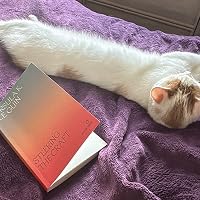
'Intensely moving, luminous and rather magnificent' The Times
It was one of the most startling moments in the modern history of the City of London. In 2011, the Occupy movement set up camp around St Paul's Cathedral. Giles Fraser, who was Canon Chancellor of the Cathedral, gave them his support. It ended in disaster.
This remarkable book is the story of the personal crisis that followed, and its surprising consequences. As Giles Fraser found himself crushed between the forces of protest, the needs of the church and the implacable City of London, he resigned, and was plunged into depression.
As his life fell apart and he battled with ideas of suicide, Fraser found himself by chance one day in Liverpool, outside the great Victorian synagogue once presided over by a distant ancestor. Suddenly he realized that there was a great deal he did not know about himself, about his relatives and about his Jewish roots.
Fraser calls this book 'a ghost story' and it is a book which is indeed filled with many ghosts. His search into his family's Jewish past makes this both a fascinating personal story and a wonderful piece of writing about the healing power of theology, in individual lives and across religious divides. It is a book about the deepest, most ancient elements in our culture, and the most modern and personal. It is throughout alive with the charm and intellectual vigour which have made Fraser such an admired and controversial preacher and broadcaster.
Giles Fraser has given an absolute gift to us in this book. He has clearly poured his heart, soul and mind into writing it. It is utterly beautiful and moving, and it reads so well that I could hardly put it down.
He skillfully writes seamlessly between biography, philosophy, history, psychology and theology with thought provoking ideas on every page. The book perfectly articulates the tension between Judaism and Christianity, and Fraser utilises his own experience in telling the tragic falling out of the two. Being an Anglican priest with Jewish heritage, and married to a Jewish wife, it's a tension Fraser feels first hand.
Although the book is specific, it's also wonderfully broad. I truly think that those seeking meaning, purpose and a sense of identity (which I think is most of us!) have a lot to gain from this book. A profound book, which is truly lovely and I can't recommend enough.
I very much found myself impacted by this book. While there were plenty of theological nuances with which I may disagree with Fraser, his personal story resonates deeply with my own in different ways. This read was personally very enriching and has caused me to reflect in deep and meaningful ways.
The writing itself was well done and the style unique. I was surprised to travel in as many different directions as we did over the course of reading. Part autobiography, part history, part theology — this book was engaging and deep in its content without being overly verbose. Fraser reflects on his personal identity as it relates to the Jewishness of his ancestors (and his own wife and children), and he reflects on the relationship between Christianity and Judaism today — and it is relationship that demands we keep thinking and writing more and more about it. We need more conversations like this, for even as I don’t agree with every conclusion, these dialogues are how we are going to find our way forward.
At some point, I thought this book may not be for a wide audience, but after finishing I think that it touches on so many different aspects, many people will find the book of value for many differing reasons.
This book is an uneasy combination of memoir and theological discussion. Memoirs are, I suppose, by definition solipsistic but this seemed especially so and, remembering the news reports about the impact of Occupy on St Pauls and Giles Fraser leaving his job, I think his account is, understandably, skewed to a particular perspective. I would have liked to know something of the thinking of those who voted for the eviction of Occupy and the challenge to Christian theology of existing within the world as it currently is. But that would have been a different book.
The more interesting part of the book for me is his analysis of the development of Christianity from Judaism. His explanation is very readable and makes me want to read more of the sources he cites.
If you don't know the meaning of that word now, you will by the time you finish the book. It's the book's theme and the word is peppered throughout.
Liminal is when someone or something is neither one thing nor the other; its status is ambiguous. Say you're literally halfway out the door and you realise you've forgotten your keys. You freeze, one foot outside, one inside, your body straddling the threshold. You are neither in the house not outside it. You belong to both the public world and the private at exactly the same time. That's liminal.
Fraser suggests he is liminal. He belongs two mutually exclusive worlds. He belongs to the CofE yet is so highly critical of it that he has struggled to reconcile himself with its actions. He is of Jewish origin, married a Jewish Israeli and is raising their boys in both faiths. He quotes Disraeli's response when asked by Queen Victoria where he stood. Disraeli replied that he was the page between the Old Testament and the Gospels.
And it's not just Disraeli who sits between worlds. Fraser finds a sect of practicing Jews in the first few centuries AD who believed Christ was the Messiah. Somewhat awkwardly we call them Jewish Christians.
Fraser finds his religious home there: on the page between Old and New Testaments, with the Jewish Christians. Between. Belonging to both worlds and neither. Ambiguous.
This is a touching, thoughtful memoir from a practiced raconteur. It's got something to please everyone: a personal trauma, theology, an underdog overcoming, some four letter words, Christian history, a ghost story, a love story, political drama, a travelogue to the River Jordan, you name it, it's in there.
I have a small hesitation though. Just how truly liminal is Giles Fraser really? How between the systems is he really? I'm not sure he's got one foot over the threshold at all. I'm not even sure he's close to the threshold.
Educated at a private boy's boarding school with a Phd from Oxford, he is a canon in the CofE. When he lost the bun fight with the Dean of St Paul's Cathedral and resigned, he was then offered the position of Bishop of Edinburgh and was asked – by the Archbishop himself – to apply for the job as Bishop of Liverpool. Have to say whenever I've quit in my job with such acrimony that friends and colleagues don't speak to me, my boss's boss doesn't get me a promotion.
When chased by the press (after again creating a drama by tweeting it out), he phoned up his friend who just happened to be the editor at the Guardian so his side of the story would get out first. He brags that he married into the Israeli equivalent of the Kennedy's. He hangs out with the Chief Rabbi (as one does). And so on.
How is he on the edge of anything? Or between anything? How is his position in any way ambiguous? Because he sounds pretty flipping embedded in the top echelon to me. I have met American nuns who stood between two armies one of which was backed by their own government and their own church, and recited the Lord's Prayer: Our Father and Mother who art in Heaven, hallowed be thy names. Now that's liminal.
The Liberation Theology priests in Latin America who physically and theologically aligned themselves with the poor against the Catholic hierarchy were not offered promotions, a column in a national newspaper, and regular broadcasting on the BBC. Instead, they were denied the priest's ability to minister mass to their flocks, told to stop publishing and publicly chastised. That was the price they paid for being on the edge of their religion, both out and in, unable to leave yet unable to silently accept what their Church is doing.
Apparently the Anglican church is gentler than the Catholic. If you're Anglican, that's reassuring. If you're Catholic, you're not surprised.
But Fraser's success then makes him Gramsci's organic intellectual– not liminal as much as an integral part of the system reinforcing the status quo. He grants the system a patina of dissent, which actually strengthens it, for which in turn it then rewards him, while he rewards himself for his outsider status.
If you're a Christian, that's reassuring. And if you're not, you're not surprised.
I like books where the author is also a broadcaster that I am familiar with, and the voice of the broadcaster comes through in the prose style as they write.
Giles Frfaser is a well known broadcaster on the BBC Radio 4 and his writing style here is fine by me. That said he takes his time to warm to his subject. in the first chapter I had to read some passages several times is he established his authorial voice. His take on Sigmund Freud seemed original to to me. I'd never read an argument for the invisibility and yet necessity of God, where the complications of the explanations were set up the way this author does, here. There were other meanders around the core subject, his journey in which he returns to Judaism after several generations of his famly went through degrees of assimilation with the Christian faith, whilst still technically being Jewish, which amused me, even as they seemed to be diversions.
But to start at the beginning of the book, with a compound crisis, a crisis in the world was a crisis in world Capitalism, where the world was reminded of how much there is a hyper wealthy 1% and a 99% who see the distance between the richest and the poorest as something to be managed or reduced. The 2008 crash in world finance and the subsequent rebankrolling of the banks being a necesssity if the 99% are going to have banking they can rely on. At which point Giles Fraser go involved as the front of St Paul's church became the site of what seemed to many to be well justified protest. Giles Fraser sides with the protesters, and when they are moved on, so he moves on. But what happened his religious vocation? That is what the book is about.
Cue long exploration of his family history, including clotted histories of people who gave themselves different names according to who they werer with, told in prose when a family tree would have simplified and assisted the narrative. Thus famkly history also serves as a history of Judaism and it's relationship with English Christianity, and English Capitalism, where English calitalism and Christianity feed into each other quite a lot in different ways. And Judaism feeds into, and draws from, both of them.
It was intriguing to read in the next chapter that in Jesus' time there may have been between 70 and 80 different schools where what we call The Old Testament could be interpreted in different ways. The difficult chapter was chapter 5 Temple. At least I found it difficult for the way it want as far away from the core experience that prompted the writing of it as it could. The core personal experience was of one of protesters against the crisis in capitalism going into St Paul's church. This old lady who was possibly not quite in her right mind, but had her instincts correctly chnneled as far as she knew was also fecally incontinent. She left a parcel that needed some careful wraping up before its removal. This froze the clergy and managers of the church probably all of whom lived their working days dressed in smart robes that were dry cleaned daily, before any dirt landed on the robes, it would be sarcasm to say they dry-cleaned their souls at confession, so please forget that I wrote that. This sets Giles Frazer on a long roundabout journey into the origins and abuses of the idea of ritual purity, and it was a journey where I took an epistomalogical break several times, and found a landing spot that I could understand only in the explanation of the origins of the idea of Kitsch as explored in Milan Kuderars book 'The Lightness of Being', a book I have never read. If anyone here wants a shorthand for kitsch then they should look at Donald Trumps redesign of The White House, where the ornamentation would seem suffocating to many, and knowing the money it takes to make government property look like that hurts even more. Kitsch is art that tells lies very loudly and dares the viewer to be offended. Kitch exemplifies false ritual purity of intent. Once I understood how kitsch hurts intentionally then all the previous journey around ritual purity started to make a more logical sense.
In the next chapter, chaptr 6 - Seven Blessings - the author seeks to explain Jewish consiousness. I am not going to say much here about it that I managed to read all of it with far fewer epistomalogical breaks than the previous chapter required and any examination of consciosness requires a degree of stamina for going through the levels of self examination through language which defeat explanation that would fit here. I am still not sure what holiness and ritual purity are, what I do wish is that the managemet of St Pauls church had enough common sense amid their in and outer holiness to deal with the distress of the elderly protester with something nearer engagment than they showed in Chapter 5. If messes in ritual spaces cannot be cleaned uo through practical every day actions then what hope is there for the deity, or cause the ritual space, is dedicated to?
The book resolves with a baptism and agreement that looks past histories of ritual and social division into the present day and a happy extended family.
This book is an interesting mix of theology and autobiography. The author is an Anglican Priest, who resigned from his position as Canon of St. Paul’s Cathedral in London in protest of the decision by the Cathedral’s Board to evict Occupy London protestors who squatted on church property. Following those events, as the author sought new employment, he discovered and explored his Jewish heritage.
The author is the descendant of Jewish emigrants who came to England seeking a better life. As part of the process they anglicized the family name and customs. One branch included a Rabbi, who was referred to as a Reverend, while the author’s branch made the ultimate anglicization by converting to Christianity.
The book describes his family history, and his attempt to reconcile his Jewish and Christian heritage while acknowledging both the fraught relationship between the two religions, and the great differences in beliefs between them.
It ends with the hope that the children born of his second marriage to a Jewish woman who is a member of a prominent Israeli family, who are being raised in both religious traditions will be able to bridge those gaps.
The book could have been improved by including more in-depth information about the author’s personal life, and his motivations. His discussions of his life are for the most part, bareboned, as if setting forth the facts for a Wikipedia entry.
The absence of pictures, especially that of the portrait of his ancestor who was the Rabbi of a major synagogue in Liverpool whose ghost hovers over the book and inspired the author’s quest to reconcile the disparate elements of his past, detracts from the discussion of the seminal events that played a critical role in the author’s journey. The sole photo that was included as an endnote is insufficient to make up for their absence.
Giles Fraser was Dean of St Paul's Cathedral when the Occupy movement set up tents next to St Paul's cathedral. The Church of England refused (and still refuses) to have a theological discussion on this question and this is Giles' response.
Giles comes at this issue from a very Jewish angle (for a Church of England vicar) but his background is to some extent Jewish and he now has a Jewish wife and so this is to be expected.
Giles explores the role of the Temple in the Jewish religion before AD70 and the interface between Christianity and Judaism and how Jesus was as Jewish as any of his ancestors but despite all of this the two religions have moved apart and often define themselves as not the other.
I doubt if anyone would agree everything that Giles writes (and that would include Giles at another point in his life) but as 'iron sharpens iron' this book provides a valuable service that most of the Church of England has failed to provide.
Fascinating and stimulating - I couldn't put this book down, perhaps in part because it defies categorisation. A theological memoir? A cultural exploration prompted by a 'Who do you think you are?' type delve into family inheritance? A lament and generously shared articulation of a painful psychological process? All of these things and more.
Giles Fraser is always an interesting and intriguing writer, often (if not especially) when being controversial or disagreeable! And this book dives headlong onto fraught territory, namely the centuries-old love/hate relationship between Jewish, Jewish-Christian, and Christian believers. Undoubtedly people on all sides will object to certain aspects, but I do sense that this is a book to take in good grace as it was written in good faith, a sincere and determined effort to wrestle with difficult things.
Self-indulgent and confused. Because his father was born Jewish but converted to Christianity and because he felt badly treated by St Pauls, he attempts to narrow the gap between Judaism and Christianity as far as theology allows. He is on the Left and sympathised with the 'occupation' of the land around St Pauls because of his ignorant prejudice against capitalism, see pages 30/31. After the sub-prime crisis, no bank was 'bailed out with public money'. Banks were taken into public ownership and later sold off, and loans were offered which were eventually repaid.
I enjoyed the book and learnt a lot, particularly about the birth of Christianity from Judaism. It's well written and obviously comes from the heart, as the author had been through a traumatic time in his life & this book is the story of that time. It is thought provoking, but I read from a position of having no faith, or more accurately the tattered vestiges of a faith that allows me to weep at Carol services and the Easter story but not pay much attention the rest of the year.
This book is part autobiographical and part reflection on the relationship between Judaism and Christianity. It is written by the former Canon of St Paul's who was resident during the Occupy movement's stay on the steps of the cathedral. I am no longer a Christian but I found the book fascinating and informative.
This is a very uneven book. Parts of it are fascinating: much of it is in a slightly angry tone. Few books grapple with the relationship between Christianity and Judaism in the time of Christ and the first few centuries thereafter and book does that. The book's attempt to weave a narrative around the author's life is only partially successful.
specifically enjoyed the chapter on kitsch - and how it is interpreted in one way in 'the unbearable lightness of being", but has a completely inverted reading here
A fascinating mix of theology and personal grappling that is beautifully written and offers an important and life-affirming perspective on the relationship between Judaism & Christianity.
When Giles Fraser resigned from his post as Canon Chancellor of St Paul's Cathedral in 2011, in protest against the Cathedral's decision to evict the Occupy London protesters, his life fell apart. Deeply upset, unemployed, and depressed, he began to drink heavily, his marriage fell apart, and for a time he even contemplated suicide. One of the things that saved his life was the decision to write everything down, a task which eventually became this book.
Another was what he describes as 'meeting a ghost': visiting the Princes Road Synagogue in Liverpool, where his great-uncle had been the minister for many years at the turn of the 20th century. This experience led Fraser to look more deeply into his own Jewish ancestry and inheritance.
The Church Times review of this memoir, apologia, theological reflection, just didn't do it justice. It made it sound as if it was all about his resignation from St Paul's and the reasons for it. It's so, so much more than that. It's a highly personal theology (as he says, St Augustine shows us that autobiography and theology are inseparably connected) of God 'choosing' a people, and what it means to be Jewish or Christian, or in his case, both. It raises questions about the possibility of healing the millennia-old divisions between the two faiths, which have been the root of such much evil, hatred and violence. There is probably not much about the practical How? but if it encourages more people to examine their own religious identity, and be more open to learning about that of others... could hatred, prejudice, and suspicion be overcome?
This is a fascinating and informative read that taught me a lot and made me think a lot.