

What do you think?

Letters to Camondo
>As you may have guessed by now, I am not in your house by accident. I know your street rather well.
The Camondos lived just a few doors away from Edmund de Waal's forebears. Like de Waal's family, they were part of belle époque high society. They were also targets of anti-Semitism.
Count Moïse de Camondo created a spectacular house filled with art for his son to inherit. Over a century later, de Waal explores the lavish rooms and detailed archives and, in a haunting series of letters addressed to Camondo, he tells us what happened next.
The Camondos lived just a few doors away from Edmund de Waal's forebears. Like de Waal's family, they were part of belle époque high society. They were also targets of anti-Semitism.
Count Moïse de Camondo created a spectacular house filled with art for his son to inherit. Over a century later, de Waal explores the lavish rooms and detailed archives and, in a haunting series of letters addressed to Camondo, he tells us what happened next.
182 pages, Hardcover
First published April 22, 2021
Ratings & Reviews
Friends & Following
Create a free account to discover what your friends think of this book!
Community Reviews
Displaying 1 - 30 of 320 reviews

December 17, 2022
History is happening. It isn’t the past, it is a continuing unfolding of the moment. It unfolds in our hands. That is why objects carry so much, they belong in all the tenses, unresolved, unsettling, essais.
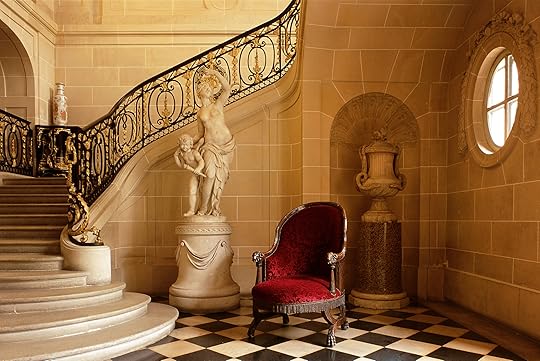
Regardless of my limited interest in the decorative arts of the 18th century Letters to Camondo was an engrossing and moving reading experience.
Reminiscent of Sebald, with Proust being present in the background as well as more explicitly, Edmund de Waal writes 58 imaginary letters to count Moishe de Camondo (1860-1935 ), a French-Jewish banker who bequeathed his Parisian mansion in the style of the Petit Trianon and his collections of eighteenth-century French furniture and art objects to the French state on his death in 1935, with the assignment that the house be maintained as a museum of which the entire interior had to remain unaltered and kept dust-free, in memory of his son Nissim who was killed in World War I.
The Musée Nissim de Camondo is a historic house museum of French decorative arts located in the Hôtel Camondo at 63, rue de Monceau, on the edge of Parc Monceau,
It is a site of mourning, lieu de mémoire. Mourning has its rituals that allow us a particular space to return to loss: you mark out an absence.
Weaving his own family story through the one of de Camondo (the Ephrussi family lived a few doors away), de Waal muses on family, history and antisemitism, by means of the emotional significance of objects.
When you pick an object up, not only do you begin to understand how it was made, it’s facture, the people who made it, but you can also, I think, begin to start to tell the story about the people whose hands it was in.
Wandering through the museum, Camondo’s house, De Waal chronicles a lost world, bringing the story of the family de Camondo to life through the letters with the collector. His thoughtful, evocative reflections, larded with a selection of family pictures and documents shed a light on the particularly haunting plight of the family members who survived Moïse de Camondo, but soon after his death would perish in the death camps. Even it is clear from the start how things will end for this Jewish family, the moment the photographs of their deportation cards appear in the book are a punch in the gut.. With his slow and careful working up to that moment, De Waal reminded me of that other compulsive and relentless pursuer for lost time and missing persons, Patrick Modiano (especially his Dora Bruder).
How had they survived? There is no one left to ask. What is it to leave something, leave someone? You want to come in and sit and be near. The space holds the chance that they have not gone.
Letters to Camondo is a thoughtful, intimate and moving testimonial on the fragility of life, identity and assimilation, particularly haunting as an illustration of the precariousness of the Jewish individual’s life during the German occupation of France, to be crushed and wiped out mercilessly, privilege and wealth, patriotism and personal sacrifices for France in the past offering only illusionary protection.
Objects might be kept dust-free, no human being will be spared the return to dust, even if some will live on through the thoughts and words of others.
For more background on the Camondos, the Ephrussis, antisemitism in France (and The House of Fragile Things: A History of Jewish Art Collectors in France, 1870 - 1945)
an enlightening essay of Julian Barnes can be found here.
(**** ½)
Regardless of my limited interest in the decorative arts of the 18th century Letters to Camondo was an engrossing and moving reading experience.
Reminiscent of Sebald, with Proust being present in the background as well as more explicitly, Edmund de Waal writes 58 imaginary letters to count Moishe de Camondo (1860-1935 ), a French-Jewish banker who bequeathed his Parisian mansion in the style of the Petit Trianon and his collections of eighteenth-century French furniture and art objects to the French state on his death in 1935, with the assignment that the house be maintained as a museum of which the entire interior had to remain unaltered and kept dust-free, in memory of his son Nissim who was killed in World War I.
The Musée Nissim de Camondo is a historic house museum of French decorative arts located in the Hôtel Camondo at 63, rue de Monceau, on the edge of Parc Monceau,
It is a site of mourning, lieu de mémoire. Mourning has its rituals that allow us a particular space to return to loss: you mark out an absence.
Weaving his own family story through the one of de Camondo (the Ephrussi family lived a few doors away), de Waal muses on family, history and antisemitism, by means of the emotional significance of objects.
When you pick an object up, not only do you begin to understand how it was made, it’s facture, the people who made it, but you can also, I think, begin to start to tell the story about the people whose hands it was in.
Wandering through the museum, Camondo’s house, De Waal chronicles a lost world, bringing the story of the family de Camondo to life through the letters with the collector. His thoughtful, evocative reflections, larded with a selection of family pictures and documents shed a light on the particularly haunting plight of the family members who survived Moïse de Camondo, but soon after his death would perish in the death camps. Even it is clear from the start how things will end for this Jewish family, the moment the photographs of their deportation cards appear in the book are a punch in the gut.. With his slow and careful working up to that moment, De Waal reminded me of that other compulsive and relentless pursuer for lost time and missing persons, Patrick Modiano (especially his Dora Bruder).
How had they survived? There is no one left to ask. What is it to leave something, leave someone? You want to come in and sit and be near. The space holds the chance that they have not gone.
Letters to Camondo is a thoughtful, intimate and moving testimonial on the fragility of life, identity and assimilation, particularly haunting as an illustration of the precariousness of the Jewish individual’s life during the German occupation of France, to be crushed and wiped out mercilessly, privilege and wealth, patriotism and personal sacrifices for France in the past offering only illusionary protection.
Objects might be kept dust-free, no human being will be spared the return to dust, even if some will live on through the thoughts and words of others.
For more background on the Camondos, the Ephrussis, antisemitism in France (and The House of Fragile Things: A History of Jewish Art Collectors in France, 1870 - 1945)
an enlightening essay of Julian Barnes can be found here.
(**** ½)

June 2, 2021
Having thoroughly enjoyed “The Hare With Amber Eyes”, I knew I was interested in reading “Letters to Camondo”.
Moise de Camondo (1860-1935), was born in Istanbul, the only son of Nissim de Camondo and Elise Fernandez.
His Family moved to France when he was a nine-year-old boy.
He grew up working for his family bank with his cousin Isaac. (who died in 1911). Several years later Moise de Camondo closed the bank down.
In 1891 he married Irene Cahen d’ Anvers, daughter of a banker.
They had two children: Nissim and Beatrice.
When the marriage didn’t last, (separated, then divorced), The children were left in Moise’s care. They lived in a mansion on rue Hamelin in the 16th arrondissement before moving to rue de Monceau in 1913.
Moise de Camondo was a private person, known as an extremely elegant gentleman and a keen sportsman. (yachting his own boat, a horseman, practiced shooting, and above all he was a collector with a passion for the 18th century).
His son, Nissim, was killed in an air battle in 1917......(a devastating loss)....
The mansion rarely came to life after the war. Visitors tended to be close friends, but scholars and antique lovers visited as well.
After the death of Nissim, Moise de Camondo devoted his mansion and collection to the memory of a son son.
On 20 January 1924, in the
‘Instructions and advice for the curators of the Musee Nissan de Comondo’, you write:
“I wish my museum to be admirably maintained and kept meticulously clean. The task is not an easy one, even with the first-class staff, of whom there must be a sufficient number for this job; but the work is made easier buy a complete vacuum cleaning system which works cheaply and marvelously well.
Due to its powerful operation, this method of cleaning should not be used for antique carpets, tapestries and silks but is this of great benefit”.
During World War II his daughter Beatrice, married Leon Bertand.
“Monseieur,”
“Your daughter Beatrice marries Leon Reinach on 10 March 1919 in the temple and this is a truly happy day. You write that your mind is at ease”.
Leon Reinach was a young man of great culture, a serious musician who studied at the Paris conservatory and a lover of poetry. He was absurdly rich, even by Camondo standards.
Leon and Beatrice were the same age and knew each other their entire lives. They both mourned Nissim.
The young couple began their married life in 63 rue de Monceau.
Later we learn how Beatrice tried to make conversion work, while her husband Leon tried to make divorce work.
The sad news is they both were murdered in Auschwitz.
This book is really beautiful — not as flamboyant in storytelling as “The Hare With Amber Eyes”.... it’s written completely different. But I liked reading the imaginary letters written to Moise de Camondo…. (fifty letters).
We learn of this beautiful man, a philanthropist, his family, his house, his art collections, his high society life, anti-Semitism, Jewish identity, and the history of the times.
Because the Camondo family had no other offspring, The mansion was transferred to the French government, which converted it into a museum after Moises’s son Nissim.
Since then the mansion has
Remained exactly the same,… as a frozen in time.
Around 50% into this book....I started to feel sad: it wasn’t full blown sad, yet. The deeper sadness was felt at the end— due to the tragedy of Camondo’ s murdered by the Nazis.
There were gorgeous descriptions of the property, the house — and the many people who visited: family, cousins, close friends, politicians, writers, scholars, musicians, and artists...
but through the letter writing — after Nissim died....a part of Moise de Camondo died too.
A sample letter:
Cher Monsieur,
“I thanks there is a tendency to imagine you alone in this house. Happiness of a collector, happiness of the solitary: tête-à-tête with things, wrote Walter Benjamin with some kindness to the condition and one of his terse notes in ‘The Arcades Project’”.
“And I know you must have been alone as you are long divorced and your son Nissim dies in the First World War and your daughter Beatrice marries and moves away”.
“This is a house full of people. There are fourteen servants — butler, under-butler, a couple of man-servants, footman, chef, chef’s assistant, odd-job man, laundry maid, Gardner, a Stoker for the boiler, a couple of mechanics for the cars — but aloneness and living with servants isn’t incompatible I believe. And you entertain, of course”.
“As I walk through these rooms with your cabinets and bronzers and marble sculptures and tapestries and gilded candelabra, I think of all those craftsman talking to each other”
“Your house is full of noise”
......and sadness.
“You do a very good job of morning, Monsieur, and I commend you”.
It was still a quiet treasure to read about the house - the library …the books ... the bookcases .... etc. the beauty that was created...the love it was built with.
“But melancholia is the extraordinary prolongation, the refusal to give up. It takes you off to detours and delays. It makes me think of Proust and his page proofs: paragraphs inserted, phrases, the fear of ending it. And I think you cannot give up your loss, cannot lose loss, cannot stop moving objects, adding, rag-picking”
“I think this is truly melancholic. Not because of what happened next. Sadness isn’t melancholic”.
”I can’t stop either”.
Edmund de Waal’s compassion, dedication, and prose — of the history, and the memories of Moise de Camondo were fascinating and moving.
Moise de Camondo (1860-1935), was born in Istanbul, the only son of Nissim de Camondo and Elise Fernandez.
His Family moved to France when he was a nine-year-old boy.
He grew up working for his family bank with his cousin Isaac. (who died in 1911). Several years later Moise de Camondo closed the bank down.
In 1891 he married Irene Cahen d’ Anvers, daughter of a banker.
They had two children: Nissim and Beatrice.
When the marriage didn’t last, (separated, then divorced), The children were left in Moise’s care. They lived in a mansion on rue Hamelin in the 16th arrondissement before moving to rue de Monceau in 1913.
Moise de Camondo was a private person, known as an extremely elegant gentleman and a keen sportsman. (yachting his own boat, a horseman, practiced shooting, and above all he was a collector with a passion for the 18th century).
His son, Nissim, was killed in an air battle in 1917......(a devastating loss)....
The mansion rarely came to life after the war. Visitors tended to be close friends, but scholars and antique lovers visited as well.
After the death of Nissim, Moise de Camondo devoted his mansion and collection to the memory of a son son.
On 20 January 1924, in the
‘Instructions and advice for the curators of the Musee Nissan de Comondo’, you write:
“I wish my museum to be admirably maintained and kept meticulously clean. The task is not an easy one, even with the first-class staff, of whom there must be a sufficient number for this job; but the work is made easier buy a complete vacuum cleaning system which works cheaply and marvelously well.
Due to its powerful operation, this method of cleaning should not be used for antique carpets, tapestries and silks but is this of great benefit”.
During World War II his daughter Beatrice, married Leon Bertand.
“Monseieur,”
“Your daughter Beatrice marries Leon Reinach on 10 March 1919 in the temple and this is a truly happy day. You write that your mind is at ease”.
Leon Reinach was a young man of great culture, a serious musician who studied at the Paris conservatory and a lover of poetry. He was absurdly rich, even by Camondo standards.
Leon and Beatrice were the same age and knew each other their entire lives. They both mourned Nissim.
The young couple began their married life in 63 rue de Monceau.
Later we learn how Beatrice tried to make conversion work, while her husband Leon tried to make divorce work.
The sad news is they both were murdered in Auschwitz.
This book is really beautiful — not as flamboyant in storytelling as “The Hare With Amber Eyes”.... it’s written completely different. But I liked reading the imaginary letters written to Moise de Camondo…. (fifty letters).
We learn of this beautiful man, a philanthropist, his family, his house, his art collections, his high society life, anti-Semitism, Jewish identity, and the history of the times.
Because the Camondo family had no other offspring, The mansion was transferred to the French government, which converted it into a museum after Moises’s son Nissim.
Since then the mansion has
Remained exactly the same,… as a frozen in time.
Around 50% into this book....I started to feel sad: it wasn’t full blown sad, yet. The deeper sadness was felt at the end— due to the tragedy of Camondo’ s murdered by the Nazis.
There were gorgeous descriptions of the property, the house — and the many people who visited: family, cousins, close friends, politicians, writers, scholars, musicians, and artists...
but through the letter writing — after Nissim died....a part of Moise de Camondo died too.
A sample letter:
Cher Monsieur,
“I thanks there is a tendency to imagine you alone in this house. Happiness of a collector, happiness of the solitary: tête-à-tête with things, wrote Walter Benjamin with some kindness to the condition and one of his terse notes in ‘The Arcades Project’”.
“And I know you must have been alone as you are long divorced and your son Nissim dies in the First World War and your daughter Beatrice marries and moves away”.
“This is a house full of people. There are fourteen servants — butler, under-butler, a couple of man-servants, footman, chef, chef’s assistant, odd-job man, laundry maid, Gardner, a Stoker for the boiler, a couple of mechanics for the cars — but aloneness and living with servants isn’t incompatible I believe. And you entertain, of course”.
“As I walk through these rooms with your cabinets and bronzers and marble sculptures and tapestries and gilded candelabra, I think of all those craftsman talking to each other”
“Your house is full of noise”
......and sadness.
“You do a very good job of morning, Monsieur, and I commend you”.
It was still a quiet treasure to read about the house - the library …the books ... the bookcases .... etc. the beauty that was created...the love it was built with.
“But melancholia is the extraordinary prolongation, the refusal to give up. It takes you off to detours and delays. It makes me think of Proust and his page proofs: paragraphs inserted, phrases, the fear of ending it. And I think you cannot give up your loss, cannot lose loss, cannot stop moving objects, adding, rag-picking”
“I think this is truly melancholic. Not because of what happened next. Sadness isn’t melancholic”.
”I can’t stop either”.
Edmund de Waal’s compassion, dedication, and prose — of the history, and the memories of Moise de Camondo were fascinating and moving.

January 14, 2023
"It is not that I don't like being clean, it is just that I'm drawn to dust. Dust comes from something. It shows something has happened, shows what has been disturbed or changed in the world. It marks time."
25% Huysmans, 75% Sebald. Read. See. Feel. Learn. Never forget.
25% Huysmans, 75% Sebald. Read. See. Feel. Learn. Never forget.

January 26, 2022
4.5★
“Dear friend,
As I am mostly English I want to ask you about the weather in Constantinople and out in the Halatte Forest where you hunt with the Lyons-Halatte in blue livery at the weekends and at Saint-Jean-Cap-Ferrat and out at sea. Gusty.
. . .
In 1913, you planted acer, Chinese privet and deep-red-leaved Prunus ceraseifera ‘Pissardii’, cherry plum trees. You were thinking ahead, of course.
This is how the English ask how you are. We talk about the weather. And trees.
I’ll ask again.”
Edmund de Waal has imagined writing to Moïse de Camondo, the owner of a grand home in Paris, addressing him as “friend” rather than as Sir or by name. He talks about the family and then the furniture and the house itself. Because it is all letters, it is written in the second person – “your house, your son”.
“ I cannot help but notice that you like furniture that changes.
In the small study is a mechanical table a la Bourgogne made by Roger Vandercruse in oak and walnut veneered with bloodwood and amaranth and tulipwood and holly and chased and gilt bronze. You press a button and a section rises, sighingly. You press this panel and a drawer exhales. These are surfaces to be caressed and let go, pressed and released. Drawers for secrets, a desk for the life you keep close. You open to a vacancy.”
I, too, have a fondness for furniture that changes – secret drawers, sliding panels, boxes with trick openings.
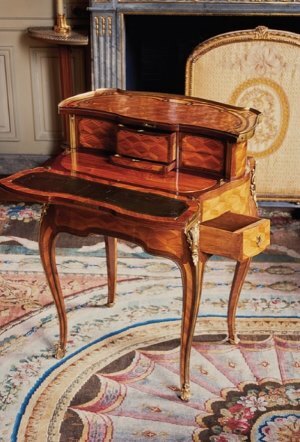
“Drawers for secrets”
As he writes through the seasons and describes this enormous house and its contents, he speaks of the man’s past and how much he must have loved his family. There’s a wonderful photo of Moïse and his son, Nissim.
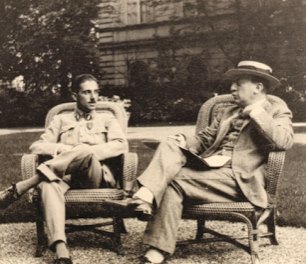
“I’ve got a photograph of you in the studio pinned up. It is during the war and Nissim must be on leave as he is a tangle of uniformed limbs in a wicker chair next to you in the garden, facing the park. The chairs are near each other and you look like you are catching up properly. You both sit the same way. I’m touched by this photo of a father and son. You must be fifty-six and have grown a little stout. I like your boater.”
Family members, painters, portraits, history. The success of the family is obvious. Then, the war comes to Paris. The Germans arrive and the Jews, who are French citizens, are restricted from holding various offices or participating in certain activities, until
“On 11 May 1941 the Institut d'Étude des questions Juives opens in Paul Rosenberg’s sequestered gallery at 21 rue la Boetie. Quotationbs by Durmont and by Petain are put on the walls. ‘The Jews came poor to a rich country. They are now the only rich people in a poor country.’ There is help on how to identify Jews with a panel of ‘French faces’ next to a full-size photograph of Leon Blum.”
And later
“There are deportation convoys from Drancy to Auschwitz on 22, 34, 37, 29 and 31 July.
. . .
On 23 July ‘Le Matin’ states that ‘to buy a Jewish household is an excellent investment which carries no risk.’”
There is more, of course, and nothing is resolved.
“History is happening. It isn’t the past. It is a continuing unfolding of the moment. It unfolds in our hands. That is why objects carry so much, they belong in all the tenses, unresolved, unsettling, ‘essais’.”
I believe de Waal uses “essais” to mean “trials” or “attempts”, as in ongoing tests of our understanding, but my French is pretty old and basic. There are a lot of untranslated French words and phrases, which might be problematic for a few readers.
It’s a remarkable and moving little book, which de Waal reads himself in the audio version. I both read and listened, because I wanted to see the photographs that were included in the print version.
There is an excellent article on the Musée Nissim de Camondo, ostensibly named for Moïse de Camondo’s son, but it was also the name of his father, who bought the land with Moïse's uncle.
https://www.townandcountrymag.com/lei...
I haven’t read The Hare With Amber Eyes: A Family's Century of Art and Loss , but I think maybe I should.
“Dear friend,
As I am mostly English I want to ask you about the weather in Constantinople and out in the Halatte Forest where you hunt with the Lyons-Halatte in blue livery at the weekends and at Saint-Jean-Cap-Ferrat and out at sea. Gusty.
. . .
In 1913, you planted acer, Chinese privet and deep-red-leaved Prunus ceraseifera ‘Pissardii’, cherry plum trees. You were thinking ahead, of course.
This is how the English ask how you are. We talk about the weather. And trees.
I’ll ask again.”
Edmund de Waal has imagined writing to Moïse de Camondo, the owner of a grand home in Paris, addressing him as “friend” rather than as Sir or by name. He talks about the family and then the furniture and the house itself. Because it is all letters, it is written in the second person – “your house, your son”.
“ I cannot help but notice that you like furniture that changes.
In the small study is a mechanical table a la Bourgogne made by Roger Vandercruse in oak and walnut veneered with bloodwood and amaranth and tulipwood and holly and chased and gilt bronze. You press a button and a section rises, sighingly. You press this panel and a drawer exhales. These are surfaces to be caressed and let go, pressed and released. Drawers for secrets, a desk for the life you keep close. You open to a vacancy.”
I, too, have a fondness for furniture that changes – secret drawers, sliding panels, boxes with trick openings.
“Drawers for secrets”
As he writes through the seasons and describes this enormous house and its contents, he speaks of the man’s past and how much he must have loved his family. There’s a wonderful photo of Moïse and his son, Nissim.
“I’ve got a photograph of you in the studio pinned up. It is during the war and Nissim must be on leave as he is a tangle of uniformed limbs in a wicker chair next to you in the garden, facing the park. The chairs are near each other and you look like you are catching up properly. You both sit the same way. I’m touched by this photo of a father and son. You must be fifty-six and have grown a little stout. I like your boater.”
Family members, painters, portraits, history. The success of the family is obvious. Then, the war comes to Paris. The Germans arrive and the Jews, who are French citizens, are restricted from holding various offices or participating in certain activities, until
“On 11 May 1941 the Institut d'Étude des questions Juives opens in Paul Rosenberg’s sequestered gallery at 21 rue la Boetie. Quotationbs by Durmont and by Petain are put on the walls. ‘The Jews came poor to a rich country. They are now the only rich people in a poor country.’ There is help on how to identify Jews with a panel of ‘French faces’ next to a full-size photograph of Leon Blum.”
And later
“There are deportation convoys from Drancy to Auschwitz on 22, 34, 37, 29 and 31 July.
. . .
On 23 July ‘Le Matin’ states that ‘to buy a Jewish household is an excellent investment which carries no risk.’”
There is more, of course, and nothing is resolved.
“History is happening. It isn’t the past. It is a continuing unfolding of the moment. It unfolds in our hands. That is why objects carry so much, they belong in all the tenses, unresolved, unsettling, ‘essais’.”
I believe de Waal uses “essais” to mean “trials” or “attempts”, as in ongoing tests of our understanding, but my French is pretty old and basic. There are a lot of untranslated French words and phrases, which might be problematic for a few readers.
It’s a remarkable and moving little book, which de Waal reads himself in the audio version. I both read and listened, because I wanted to see the photographs that were included in the print version.
There is an excellent article on the Musée Nissim de Camondo, ostensibly named for Moïse de Camondo’s son, but it was also the name of his father, who bought the land with Moïse's uncle.
https://www.townandcountrymag.com/lei...
I haven’t read The Hare With Amber Eyes: A Family's Century of Art and Loss , but I think maybe I should.

May 17, 2021
I struggled between a four and a five, because this book is nowhere near as great as Hare with the Amber Eyes, but it doesn’t try to be. It is a companion piece - another journey into the decorative arts of yesterday and the complex family trees of Europe’s briefly shining Jewish dynasties. As before, DeWaal succeeds in making me care about the first half of that equation when I didn’t think he would, and the poignancy of the second - of the failed dream of Jewish assimilation through the arts and philanthropy - is just as powerful here.
Indeed, while the book starts out seeming like quirky epistolary essays about a wealthy man and his perfectly assembled house that looks born to be a museum, and you settle in for ruminations on archives and art, this is a deceptive calm before the storm. It doesn’t take long to understand that these meditations on memory and remembrance, permanence and ephemera, are leading us to the horrific tale of anti-Semitism in France, a tale (De Waal is emphatic in stressing) that began before the Nazis and needed little encouragement from them to reach its full brutal flowering during World War II. If Hare with the Amber Eyes shows us Nazi pillages in Vienna - well, that’s a story that never stops hurting but is at least expected, Letters to Camondo collects the receipts to remind us of another face of France, a place as beloved to me as it was to Camondo. It’s painful and the book’s final chapters will haunt me for a long time.
A note on format: I started this on my Kindle - what a huge mistake. The copious illustrations are a big part of this book. I finished on my iPad which allowed me to see the pictures in full color and to enlarge them. I imagine the hard copy is beautiful. Do not Kindle or audiobook!
Indeed, while the book starts out seeming like quirky epistolary essays about a wealthy man and his perfectly assembled house that looks born to be a museum, and you settle in for ruminations on archives and art, this is a deceptive calm before the storm. It doesn’t take long to understand that these meditations on memory and remembrance, permanence and ephemera, are leading us to the horrific tale of anti-Semitism in France, a tale (De Waal is emphatic in stressing) that began before the Nazis and needed little encouragement from them to reach its full brutal flowering during World War II. If Hare with the Amber Eyes shows us Nazi pillages in Vienna - well, that’s a story that never stops hurting but is at least expected, Letters to Camondo collects the receipts to remind us of another face of France, a place as beloved to me as it was to Camondo. It’s painful and the book’s final chapters will haunt me for a long time.
A note on format: I started this on my Kindle - what a huge mistake. The copious illustrations are a big part of this book. I finished on my iPad which allowed me to see the pictures in full color and to enlarge them. I imagine the hard copy is beautiful. Do not Kindle or audiobook!

May 30, 2021
Review to come.

April 20, 2022
The author, Edmund de Waal, writes imaginary letters to Count Moïse de Camondo. They are collected here in this book. Moise, born March 15, 1860, death November 14, 1935, was an Ottoman Empire-born French banker and art collector. Edmund de Waal, author and potter was born in Odessa. The two had family ties. Both were Jewish.
In this book we follow a cultured, very wealthy Jewish family living in Paris. We observe both opulence and tragedy. We observe a Jewish family ravaged by the events of twentieth century history. Conversion to Catholicism, divorce, digging a tunnel—could there be found a means of escape for a Jew?
The book is not to be judged until reaching the end. At the end I considered giving it four stars, at the start two. As one nears the end, the writing improves. Reflections are voiced. One must compare what the family came from and where they ended. The contrast hits you and gets you thinking.
The opulence and the fixation on ownership and possession put me off at the start.
The writing near the end is excellent. Here are some lines for you to mull over:
“Nothing is resolved. History is happening. It isn’t the past. It is the continuing unfolding of the moment. It unfolds in our hands.”
“Memory is dangerous. You pick up one thread and it takes you where you don’t want to go.”
“I think you can love more than one place.”
The above lines are near the end. It is here the author reflects and draws conclusions.
The author reads the audiobook. I cannot imagine anyone else reading it. I think it is he that is the best for the job, despite that he is not a trained narrator. I have given the audiobook narration three stars. It’s good.
***********************
*Letters to Camondo 3 stars
*The Hare With Amber Eyes: A Family's Century of Art and Loss 2 stars
In this book we follow a cultured, very wealthy Jewish family living in Paris. We observe both opulence and tragedy. We observe a Jewish family ravaged by the events of twentieth century history. Conversion to Catholicism, divorce, digging a tunnel—could there be found a means of escape for a Jew?
The book is not to be judged until reaching the end. At the end I considered giving it four stars, at the start two. As one nears the end, the writing improves. Reflections are voiced. One must compare what the family came from and where they ended. The contrast hits you and gets you thinking.
The opulence and the fixation on ownership and possession put me off at the start.
The writing near the end is excellent. Here are some lines for you to mull over:
“Nothing is resolved. History is happening. It isn’t the past. It is the continuing unfolding of the moment. It unfolds in our hands.”
“Memory is dangerous. You pick up one thread and it takes you where you don’t want to go.”
“I think you can love more than one place.”
The above lines are near the end. It is here the author reflects and draws conclusions.
The author reads the audiobook. I cannot imagine anyone else reading it. I think it is he that is the best for the job, despite that he is not a trained narrator. I have given the audiobook narration three stars. It’s good.
***********************
*Letters to Camondo 3 stars
*The Hare With Amber Eyes: A Family's Century of Art and Loss 2 stars

April 14, 2022
Ive just finished reading this for the second time in two months and it is my book of the year so far.
Edmund de Waal writes like a poet, an artist, a philosopher and sometimes a historian. In Letters to Camondothis book he has produced a literary work of art that should be a European classic.
De Waal uses Camondo’s former house and objects within it to tell the story of the Camondo family as he did with The Hare with Amber Eyes, in which he told the story of his own Ephrussi family.
Both were Jewish families from the east – the Ephrussi from a dusty shtetl to Odessa then Vienna, and the Camondo from Galata in Turkey – who had moved to Paris, arriving at about the same time and eventually living in grand mansions in the same street, the rue de Monceau. They intermarried and became part of wealthy Parisian life, financiers and art collectors.
De Waal he tells this story through fictional letters to Moïse Camondo, using a conversational style to ask questions, report on his search to find answers through the archives and the great house with its precious objects that became part of the French national collection.
He opens in a gentle tone, polite, wondering what to call Camondo – not Monsieur Le Comte, it is too formal. ‘I am caught between not wanting to offend and not wanting to waste time. Monsieur is possible and dignified and might lead to Cher Monsieur …. I know we are related in complicated ways but that can wait. So I am writing to you as a friend’.
The next letter begins:
Dear friend
I’d like to ask you about the carpet of the winds….’
And then he gives a vivid word picture of the C17 Savonnerie carpet….’there are crowns and more trumpets and cascades of flowers deliquescing and stiff acanthus framing it all and it is gold and blue; the colour of the wind along the wharfs of Galata, out at sea….
I’m pleased to find that Charles Ephrussi helped you buy it as he… knew everyone, could deal with this sort of thing, charmingly, and made things happen. Charles is important to me, the cousin who set me off on my adventures.
And I suppose I want to know that you notice it. Notice that you are walking on air’.
The images de Waal conjures in his glowing description of the rug encourage us to imagine the glorious whole flowing out from what we can actually see in the accompanying illustration: a detail of trumpeters’ heads - two of the winds perhaps? Only parts of their heads are visible, from under an exquisitely carved table leg.
There are letters on objects, dynastic marriages, interlocking family ties and scandals, clubs and societies, banquet menus, the French art world; the dispersion, confusion and scattering of art, of hope and eventually of lives.
Amongst them are musings on dust and ashes, including a note that ‘To keep dust-free you need to be rich and exacting and have servants to endlessly sweep away all those traces that might show where you have come from.’
He quotes W.G Sebald.
“Ash … the very last product of combustion, with no more resistance in it … [represents] the borderline between being and nothingness. Ash is a redeemed substance, like dust….
I don't quite understand these words, but they haunt me. They feel close to the heart of what I need to ask you’.
He reflects on the impact of Camondo’s son Nissim’s death in World War I and the way that this loss pervades the house as its completion became a memorial to Nessim – a museum.
‘You make this place for your father and for your son, and you do it impeccably. It is a site of mourning, lieu de memoire’. But, he adds, this prolongs mourning drifts into melancholia.
Eventually, the Musee Nissim Camondo was handed over to the Musee des Arts Decoratifs, with careful instructions about how the house and collection are to be kept as they are, and an elegant catalogue.
Camondo and his family thought of themselves as French. But they were also Jewish, and under the Nazi rule the family was broken. The story ends with Drancy, Auschwitz and absence. Well before the end, we know why Sebald’s words on dust and ash carry such weight, why they haunt.
Edmund de Waal writes like a poet, an artist, a philosopher and sometimes a historian. In Letters to Camondothis book he has produced a literary work of art that should be a European classic.
De Waal uses Camondo’s former house and objects within it to tell the story of the Camondo family as he did with The Hare with Amber Eyes, in which he told the story of his own Ephrussi family.
Both were Jewish families from the east – the Ephrussi from a dusty shtetl to Odessa then Vienna, and the Camondo from Galata in Turkey – who had moved to Paris, arriving at about the same time and eventually living in grand mansions in the same street, the rue de Monceau. They intermarried and became part of wealthy Parisian life, financiers and art collectors.
De Waal he tells this story through fictional letters to Moïse Camondo, using a conversational style to ask questions, report on his search to find answers through the archives and the great house with its precious objects that became part of the French national collection.
He opens in a gentle tone, polite, wondering what to call Camondo – not Monsieur Le Comte, it is too formal. ‘I am caught between not wanting to offend and not wanting to waste time. Monsieur is possible and dignified and might lead to Cher Monsieur …. I know we are related in complicated ways but that can wait. So I am writing to you as a friend’.
The next letter begins:
Dear friend
I’d like to ask you about the carpet of the winds….’
And then he gives a vivid word picture of the C17 Savonnerie carpet….’there are crowns and more trumpets and cascades of flowers deliquescing and stiff acanthus framing it all and it is gold and blue; the colour of the wind along the wharfs of Galata, out at sea….
I’m pleased to find that Charles Ephrussi helped you buy it as he… knew everyone, could deal with this sort of thing, charmingly, and made things happen. Charles is important to me, the cousin who set me off on my adventures.
And I suppose I want to know that you notice it. Notice that you are walking on air’.
The images de Waal conjures in his glowing description of the rug encourage us to imagine the glorious whole flowing out from what we can actually see in the accompanying illustration: a detail of trumpeters’ heads - two of the winds perhaps? Only parts of their heads are visible, from under an exquisitely carved table leg.
There are letters on objects, dynastic marriages, interlocking family ties and scandals, clubs and societies, banquet menus, the French art world; the dispersion, confusion and scattering of art, of hope and eventually of lives.
Amongst them are musings on dust and ashes, including a note that ‘To keep dust-free you need to be rich and exacting and have servants to endlessly sweep away all those traces that might show where you have come from.’
He quotes W.G Sebald.
“Ash … the very last product of combustion, with no more resistance in it … [represents] the borderline between being and nothingness. Ash is a redeemed substance, like dust….
I don't quite understand these words, but they haunt me. They feel close to the heart of what I need to ask you’.
He reflects on the impact of Camondo’s son Nissim’s death in World War I and the way that this loss pervades the house as its completion became a memorial to Nessim – a museum.
‘You make this place for your father and for your son, and you do it impeccably. It is a site of mourning, lieu de memoire’. But, he adds, this prolongs mourning drifts into melancholia.
Eventually, the Musee Nissim Camondo was handed over to the Musee des Arts Decoratifs, with careful instructions about how the house and collection are to be kept as they are, and an elegant catalogue.
Camondo and his family thought of themselves as French. But they were also Jewish, and under the Nazi rule the family was broken. The story ends with Drancy, Auschwitz and absence. Well before the end, we know why Sebald’s words on dust and ash carry such weight, why they haunt.

April 24, 2021
Edmund de Waal is truly one of a kind. His style is beautiful, moving and original. I remember how much I loved “The Hare with Amber Eyes”, his book from 2010. “Letters to Camondo” is a loose sequel, diving even deeper into the complicated history of not only the author's ancestors but the whole vanished world of Jewish European elite. It is a strange, intimate book, full of digressions, descriptions of various pieces of art, not finished thoughts - but as a whole it is a masterpiece.
It was very disturbing to see the similarities between the anti-Semitic rhetoric from the beginning of the 20th century and anti-immigration one from our times. Why the history has to repeat itself?
Thanks to the publisher, Farrar, Straus and Giroux, and NetGalley for the advance copy of this book.
It was very disturbing to see the similarities between the anti-Semitic rhetoric from the beginning of the 20th century and anti-immigration one from our times. Why the history has to repeat itself?
Thanks to the publisher, Farrar, Straus and Giroux, and NetGalley for the advance copy of this book.

August 29, 2021
4 1/2 *

May 3, 2021
A strange postscript to the brilliant: Hare With the Amber Eyes.
The book feels somehow rushed. Some quotes are in French, others are not; one quote begins in French and then, after an interruption, finishes in English.
At one point, de Waal says that a particular recipe mentioned by de Camondo is almost certainly written about in Proust, but to look it up would be ‘taking research too far.’ This is obviously a ‘funny’ line but it does leave you wondering what this book really is? It occupies the point between memoir and historical project, and is successful on neither count. Endless lists, and occasional ‘profound’ sentences give us little in the way of historical or personal revelation.
The book is made up of letters to a man who is long dead. This gives de Waal a platform to deploy writing of a particular kind. If, for example, he has written a letter about de Camondo’s living room he will invariably end the correspondence with something like:
‘I see, Monsieur, that you are fond of candlesticks. I too like candlesticks. I wonder if you ever held a candlestick in your hands and twisted it about, looking for blemishes? After all, what is a candlestick but a place for light to brighten the darkness?’
After a while, one really does want to say: oh Edmund, do stop it.
The book feels somehow rushed. Some quotes are in French, others are not; one quote begins in French and then, after an interruption, finishes in English.
At one point, de Waal says that a particular recipe mentioned by de Camondo is almost certainly written about in Proust, but to look it up would be ‘taking research too far.’ This is obviously a ‘funny’ line but it does leave you wondering what this book really is? It occupies the point between memoir and historical project, and is successful on neither count. Endless lists, and occasional ‘profound’ sentences give us little in the way of historical or personal revelation.
The book is made up of letters to a man who is long dead. This gives de Waal a platform to deploy writing of a particular kind. If, for example, he has written a letter about de Camondo’s living room he will invariably end the correspondence with something like:
‘I see, Monsieur, that you are fond of candlesticks. I too like candlesticks. I wonder if you ever held a candlestick in your hands and twisted it about, looking for blemishes? After all, what is a candlestick but a place for light to brighten the darkness?’
After a while, one really does want to say: oh Edmund, do stop it.

November 2, 2021
Irrkunst. The art of getting lost.
Melancholia is the extraordinary prolongation, the refusal to give up.
In 1917, the Comte Moïse de Camondo lost his son Lieutenant Nissim in the Great War. The father wanted to honour his son. But history had others ideas. By the end of the Second World War, much of the family is gone, his things dispersed.
Ce que nous sommes?
What are we? What do we leave to remember the past. Remembrance of the things dispersed. The art of getting lost, then found again. Of Proust and art, beauty and joi de vivre, family and religion, and mostly trying to fit in when it seems impossible. Melancholy.
A beautiful and masterfully telling of a family through the joy and horrors of the last century. A perfect follow up to The Hare with the Amber Eyes. Can’t decide on a 4 or 5. Definitely a 5 for the elegance.
https://madparis.fr/Musee-Nissim-de-C...
Melancholia is the extraordinary prolongation, the refusal to give up.
In 1917, the Comte Moïse de Camondo lost his son Lieutenant Nissim in the Great War. The father wanted to honour his son. But history had others ideas. By the end of the Second World War, much of the family is gone, his things dispersed.
Ce que nous sommes?
What are we? What do we leave to remember the past. Remembrance of the things dispersed. The art of getting lost, then found again. Of Proust and art, beauty and joi de vivre, family and religion, and mostly trying to fit in when it seems impossible. Melancholy.
A beautiful and masterfully telling of a family through the joy and horrors of the last century. A perfect follow up to The Hare with the Amber Eyes. Can’t decide on a 4 or 5. Definitely a 5 for the elegance.
https://madparis.fr/Musee-Nissim-de-C...

June 2, 2021
This is a beautiful book—the actual thing. It is printed on glossy paper and beautifully illustrated. It feels weighty in the hand even though it is not a long book.
It tells the story of the Musée Nissim de Camondo, which is both a stately home and the personal collection of mainly 18th C. European artwork. It is a very personal collection, assembled and presented painstakingly by Moise de Camondo.
It is also the story of wealthy, assimilated, cultivated and civic-minded Jews. Upon his death, Moise named the museum for his son, Nissim, killed in WWI, and donated it to the French state. That was the mid-30’s. Subsequently, WW2, Vichy, deportations, the ugly efflorescence of anti-Sémitism throughout Europe. The remainder of the de Camondo family was killed by the Nazis. I’m not sure how the museum survived but it did and it is a beautiful and hallowed place. I can’t wait to visit it again.
The only thing that I did not like was the structuring of the book as a series of letters from the author to Moise, and the heavy use if the second person which
I find clunky and distracting. The letter format was justified because de Waal is a descendant of the Ephrussi family, another wealthy, cosmopolitan banking family who suffered similar depredations at the hands of the Nazis. So de Waal was leaning on this connection which is interesting but was an impediment to my enjoyment.
It tells the story of the Musée Nissim de Camondo, which is both a stately home and the personal collection of mainly 18th C. European artwork. It is a very personal collection, assembled and presented painstakingly by Moise de Camondo.
It is also the story of wealthy, assimilated, cultivated and civic-minded Jews. Upon his death, Moise named the museum for his son, Nissim, killed in WWI, and donated it to the French state. That was the mid-30’s. Subsequently, WW2, Vichy, deportations, the ugly efflorescence of anti-Sémitism throughout Europe. The remainder of the de Camondo family was killed by the Nazis. I’m not sure how the museum survived but it did and it is a beautiful and hallowed place. I can’t wait to visit it again.
The only thing that I did not like was the structuring of the book as a series of letters from the author to Moise, and the heavy use if the second person which
I find clunky and distracting. The letter format was justified because de Waal is a descendant of the Ephrussi family, another wealthy, cosmopolitan banking family who suffered similar depredations at the hands of the Nazis. So de Waal was leaning on this connection which is interesting but was an impediment to my enjoyment.

September 23, 2021
Exceptional. A sort of companion or adjacent book to De Waal's The Hare with Amber Eyes, featuring some of the history and several of the people first encountered in Hare. And I'd highly recommend first reading Hare, then Letters. Objects are the means by which de Waal explores a richly dramatic as well as horrifying era. In Hare, a collection of Japanese netsuke he inherited was the opening for a full and incredible exploration of his family, the Ephrussis, branches of which settled in Vienna and Paris. Moise de Camondo was a close friend of the Ephrussis, living in the same area of Paris, on the same block, families close and doing business together, marrying one another, and through these 58 imaginary letters to Camondo, de Waal tells the story of the man's life and death, his house, collections, his world and what became of it in early 20th century Paris.

July 9, 2022
De brieven uit de titel zijn anachronistisch: Edmund de Waal schrijft ze in onze tijd, maar ze zijn gericht aan Moise de Camondo, een rijke Parijse Jood die in 1935 stierf. Er lopen verschillende verbindingslijnen tussen de Waal en de Camondo. De Waal is een telg uit een andere rijke Joodse familie met vertakkingen in Parijs: de Ephrussi’s. Over die familiegeschiedenis schreef de Waal een ander prachtig boek: “The hare with amber eyes”. De Ephrussi’s en de de Camondo’s woonden in mekaars buurt rond het Parc Monceau in Parijs, waar rijke Joden een beetje samenklitten in het fin-de-siècle. Moise is dus een beetje “grootoom Camondo” voor Edmund.
Moise was een verzamelaar van achttiende-eeuwse Franse kunst, waaronder flink wat porselein. De Waal is zelf een bekende pottenbakker-kunstenaar en schreef een soort kunstgeschiedenis over porselein (The White Road).
Zo kwam het dat Edmund de Waal in het kader van kunsthistorisch onderzoek flink wat tijd doorbracht in de archieven van het Musée Nissim de Camondo, de vroegere woning van Moise, tjokvol verzamelingen antiquariaat en kunst. Moise liet al deze rijkdom na zijn dood na aan de Franse staat op voorwaarde dat ze het gebouw en de inhoud onaangeroerd zouden publiek maken als een Museum met de naam van zijn enige zoon Nissim. Nissim de Camondo sneuvelde in de eerste wereldoorlog als militaire piloot. Het museum is er nog steeds.
Terwijl de Waal door het gebouw struint, een gelakte commode openklapt, een gravure bekijkt, een boek uit de bibliotheek ter hand neemt, het porselein van een imaginair Proustiaans aspergegerecht voorziet of in de stoffige zolderarchieven huishoudrekeningen, facturen van kunstaankopen of tentoonstellingscatalogi doorploegt, schrijft hij brieven naar Moise de Camondo over zijn bevindingen en vertelt hij hem het verloop van zijn eigen leven. Wat handig is voor de lezer, die daar allemaal niet van op de hoogte is.
Maar de lezer krijgt meer dan het tragische verhaal van Moise de Camondo, we wandelen samen met de Waal ook door een stuk Franse (en Europese) cultuurgeschiedenis. We ontmoeten Proust, wiens ouderlijk huis zich in de buurt bevond en lezen zijn brief waarmee hij Moise condoleerde bij de dood van zijn zoon. Charles Ephrussi, uit het voorouderlijk geslacht van de Waal is trouwens één van de kandidaten die model zou gestaan hebben voor Charles Swann uit de Recherche van Proust. We zien nogmaals hoe de Dreyfus-affaire de pijnlijke splijtzwam van de jodenhaat in Frankrijk blootlegde. Terwijl er een hele klasse van rijke Joden is die ongelooflijk hard hun best doen om Franser te zijn dan de Fransen. Ze verzamelen oude kunst of de nieuwe impressionisten. Ze beoefenen een genereus mecenaat en zijn terug te vinden in vrijwel alle kunstminnende verenigingen (bijvoorbeeld la Société des Amis du Louvre) of in officiële patrimoniumbeheerfuncties.
Maar dan rest de Waal ook nog de intrieste taak om Moise te vertellen wat er gebeurde met zijn dochter en kleinkinderen na zijn dood en hoe bezet Frankrijk vele Joodse landgenoten opofferden aan de Nazi vervolging. Ook hier weet de Waal het persoonlijke en het historische op een meeslepende manier te verweven. Meeslepend, niet in de zin van sentimentalistisch melodrama, maar door de wreedheid van een onontkoombare feitelijkheid.
Ik heb het boek gelezen met behoorlijk wat voorkennis (“The House of Fragile Things”, James McAuley) en vlak voor een bezoek aan het Musée Nissim de Camondo, waardoor voor mij het Camondo-verhaal groter is dan alleen maar dit boek. Misschien is het een beetje een niche-boek, maar plan bij uw volgende reis naar Parijs zeker een bezoek aan het schrijn van Moise en Nissim de Camondo en lees dit boek. U zal het zich niet beklagen.
Moise was een verzamelaar van achttiende-eeuwse Franse kunst, waaronder flink wat porselein. De Waal is zelf een bekende pottenbakker-kunstenaar en schreef een soort kunstgeschiedenis over porselein (The White Road).
Zo kwam het dat Edmund de Waal in het kader van kunsthistorisch onderzoek flink wat tijd doorbracht in de archieven van het Musée Nissim de Camondo, de vroegere woning van Moise, tjokvol verzamelingen antiquariaat en kunst. Moise liet al deze rijkdom na zijn dood na aan de Franse staat op voorwaarde dat ze het gebouw en de inhoud onaangeroerd zouden publiek maken als een Museum met de naam van zijn enige zoon Nissim. Nissim de Camondo sneuvelde in de eerste wereldoorlog als militaire piloot. Het museum is er nog steeds.
Terwijl de Waal door het gebouw struint, een gelakte commode openklapt, een gravure bekijkt, een boek uit de bibliotheek ter hand neemt, het porselein van een imaginair Proustiaans aspergegerecht voorziet of in de stoffige zolderarchieven huishoudrekeningen, facturen van kunstaankopen of tentoonstellingscatalogi doorploegt, schrijft hij brieven naar Moise de Camondo over zijn bevindingen en vertelt hij hem het verloop van zijn eigen leven. Wat handig is voor de lezer, die daar allemaal niet van op de hoogte is.
Maar de lezer krijgt meer dan het tragische verhaal van Moise de Camondo, we wandelen samen met de Waal ook door een stuk Franse (en Europese) cultuurgeschiedenis. We ontmoeten Proust, wiens ouderlijk huis zich in de buurt bevond en lezen zijn brief waarmee hij Moise condoleerde bij de dood van zijn zoon. Charles Ephrussi, uit het voorouderlijk geslacht van de Waal is trouwens één van de kandidaten die model zou gestaan hebben voor Charles Swann uit de Recherche van Proust. We zien nogmaals hoe de Dreyfus-affaire de pijnlijke splijtzwam van de jodenhaat in Frankrijk blootlegde. Terwijl er een hele klasse van rijke Joden is die ongelooflijk hard hun best doen om Franser te zijn dan de Fransen. Ze verzamelen oude kunst of de nieuwe impressionisten. Ze beoefenen een genereus mecenaat en zijn terug te vinden in vrijwel alle kunstminnende verenigingen (bijvoorbeeld la Société des Amis du Louvre) of in officiële patrimoniumbeheerfuncties.
Maar dan rest de Waal ook nog de intrieste taak om Moise te vertellen wat er gebeurde met zijn dochter en kleinkinderen na zijn dood en hoe bezet Frankrijk vele Joodse landgenoten opofferden aan de Nazi vervolging. Ook hier weet de Waal het persoonlijke en het historische op een meeslepende manier te verweven. Meeslepend, niet in de zin van sentimentalistisch melodrama, maar door de wreedheid van een onontkoombare feitelijkheid.
Ik heb het boek gelezen met behoorlijk wat voorkennis (“The House of Fragile Things”, James McAuley) en vlak voor een bezoek aan het Musée Nissim de Camondo, waardoor voor mij het Camondo-verhaal groter is dan alleen maar dit boek. Misschien is het een beetje een niche-boek, maar plan bij uw volgende reis naar Parijs zeker een bezoek aan het schrijn van Moise en Nissim de Camondo en lees dit boek. U zal het zich niet beklagen.
March 24, 2026
Camondo ailesini ben de birçok sıradan kişi gibi meşhur merdivenleri ile öğrenmiştim. Hakkında sınırlı bilgim olmasına rağmen tüm ailenin trajik sonunu da elbette duymuştum. Aile hakkında okuduğum ilk kitapsa Camondo’ya mektuplar oldu. Aslında okuma listemde yoktu ama uygun fiyatlı kitaplar arasında görünce, özellikle de içindeki fotoğraflara ve kuşe kağıt baskısına bayılınca aldım, alır almaz da okudum. Hatta tesadüf ki kapakta fotoğrafı bulunan, ailenin yaşayan son üyelerinden yakışıklı Bertrant Reinach kitabı okumaya başladığım 21 Marttan tam 82 yıl önce 21 Mart 1944’te Auschwitz’te öldürülmüş.
Kitap Edmund de Waal’ın Moïse de Camondo’ya tek taralı yazdığı mektuplardan oluşuyor. Mektuplarda İstanbul da var, Proust, Paris, empresyonist ressamlar ve doğal olarak ailenin korkunç sonu da. Gerçek hikayelerden uyarlamaları okumayı seviyorum. Hele ki sanat dünyasına bu kadar önemli katkıları olan kişileri. Kitap da bu açıdan tatmin ediciydi, resimlere de ayrıca bayıldım. Umuyorum Türkçe baskısında da benzer yapı korunmuştur. Bir şey rahatsız etti okurken sadece, kitap tek taraflı mektuplardan oluşturduğu için kardeşiniz şöyle yaptı, oğlunuz böyle yaptı gibi ifadeler var. Tabii anlıyorum bazı olayları bize anlatması gerekiyor yazarın ama yine de yazılar mektup formatında olduğundan alıcı kişinin hali hazırda bildiği şeylerin bu şekilde aktarılması mantıksız geldi. Belki ben İngilizce okuduğumdan mişli geçmiş zaman olmadığı için böyle düşündüm, Türkçe’de daha iyi uyarlanmış da olabilir.
Kitap Edmund de Waal’ın Moïse de Camondo’ya tek taralı yazdığı mektuplardan oluşuyor. Mektuplarda İstanbul da var, Proust, Paris, empresyonist ressamlar ve doğal olarak ailenin korkunç sonu da. Gerçek hikayelerden uyarlamaları okumayı seviyorum. Hele ki sanat dünyasına bu kadar önemli katkıları olan kişileri. Kitap da bu açıdan tatmin ediciydi, resimlere de ayrıca bayıldım. Umuyorum Türkçe baskısında da benzer yapı korunmuştur. Bir şey rahatsız etti okurken sadece, kitap tek taraflı mektuplardan oluşturduğu için kardeşiniz şöyle yaptı, oğlunuz böyle yaptı gibi ifadeler var. Tabii anlıyorum bazı olayları bize anlatması gerekiyor yazarın ama yine de yazılar mektup formatında olduğundan alıcı kişinin hali hazırda bildiği şeylerin bu şekilde aktarılması mantıksız geldi. Belki ben İngilizce okuduğumdan mişli geçmiş zaman olmadığı için böyle düşündüm, Türkçe’de daha iyi uyarlanmış da olabilir.

July 7, 2021
niet zo mooi en diepgravend als The Hare maar toch wel erg interessant en aangrijpend

February 13, 2021
A DRC was provided by Edelweiss in exchange for a fair and thoughtful review.
Edmund de Waal's hypnotic prose is put to use yet again in a another tribute to the lost generation of early twentieth century highborn European Jews. In this book, it is the account of the French de Camondos, friends of De Waal's forbears, the Ephrussi. Count Moise de Camondo, like the Ephrussi, took his family's fortunes and build a series of houses, chiefly on le rue de Monceau, once a center of aristocratic Jewish life. He filled his homes with 18th century French antiques and art work, some of which are reproduced here, all of which he donated to France in memory of his son Nissim, lost in the First World War. Le Musee Nissim de Camondo has remained unchanged since 1936, miraculously unscathed through the Nazi occupation. de Waal wanders through the rooms, writing letters to the Count about his impressions of his treasures, which strike him as how his own ancesters the Ephrassi must have lived. "Everything is dynastic, a site plan of deadly traps." At times it can feel like a bit of a laundry list of tchotkes and materialist wallowing, but de Waal's goal is to center the collection as living artifacts of all that was lost in the face of relentless anti-semitism and to try to see beyond the futility of the Count's hopes that his collection could ever truly elevate his family to safe, secure status in France. Like de Waal's family, the de Comondos suffered terribly with the advent of World War Two, and discovering just exactly what happened to them despite their fortune, education, breeding and generousity to a brutally rejecting France is heart wrending. de Waal may paint best on his own little piece of ebony, but no one is able to convey better just how objects, however frivolous, can convey a spirit of a person if viewed in a certain light. He is a master at showing us that view; just as Proust, a close contemporary of the Count's, found the sublime in the often petty or obsessive details of haute bourgeouis Parisian life. This would be an excellent title to pair with Tom Stoppard's play Leopoldstadt, which mourns a similar family in Vienna. Read to be educated, elevated if ultimately profoundly depressed.
Edmund de Waal's hypnotic prose is put to use yet again in a another tribute to the lost generation of early twentieth century highborn European Jews. In this book, it is the account of the French de Camondos, friends of De Waal's forbears, the Ephrussi. Count Moise de Camondo, like the Ephrussi, took his family's fortunes and build a series of houses, chiefly on le rue de Monceau, once a center of aristocratic Jewish life. He filled his homes with 18th century French antiques and art work, some of which are reproduced here, all of which he donated to France in memory of his son Nissim, lost in the First World War. Le Musee Nissim de Camondo has remained unchanged since 1936, miraculously unscathed through the Nazi occupation. de Waal wanders through the rooms, writing letters to the Count about his impressions of his treasures, which strike him as how his own ancesters the Ephrassi must have lived. "Everything is dynastic, a site plan of deadly traps." At times it can feel like a bit of a laundry list of tchotkes and materialist wallowing, but de Waal's goal is to center the collection as living artifacts of all that was lost in the face of relentless anti-semitism and to try to see beyond the futility of the Count's hopes that his collection could ever truly elevate his family to safe, secure status in France. Like de Waal's family, the de Comondos suffered terribly with the advent of World War Two, and discovering just exactly what happened to them despite their fortune, education, breeding and generousity to a brutally rejecting France is heart wrending. de Waal may paint best on his own little piece of ebony, but no one is able to convey better just how objects, however frivolous, can convey a spirit of a person if viewed in a certain light. He is a master at showing us that view; just as Proust, a close contemporary of the Count's, found the sublime in the often petty or obsessive details of haute bourgeouis Parisian life. This would be an excellent title to pair with Tom Stoppard's play Leopoldstadt, which mourns a similar family in Vienna. Read to be educated, elevated if ultimately profoundly depressed.

May 2, 2021
At 63 rue de Monceau lies the Musée de Nissim de Camondo, originally the home of Jewish art collector Moise de Camondo, who left the house and its priceless collection to France after his death in memory of his son who had been killed in WW!. In spite of this generous gift, the Camondo family, as well as many other wealthy Jewish collectors, were betrayed by the nation that they felt they belonged to and many of them perished in the Holocaust. Edmond de Waal’s own family were caught up in this betrayal and he has written previously about this in his book The Hare with Amber Eyes. In this his latest book he writes a series of letters to Moise de Camondo, a result of his research into the house, the family and the collection during which he found himself frequently talking aloud to Moise. It’s a tragic story and de Waal’s book is a moving tribute to Camondo, to whom he feels a deep connection. It’s a delightful read, full of wonderful illustrations, and a compelling insight into the family’s world and the lost world of Jewish art collecting.

March 7, 2022
In Parijs staat het museum Nissim de Camondo, het oude woonhuis van de bankiersfamilie Camondo. Edmund de Waal kreeg toestemming om dit museum te onderzoeken en mocht er veel tijd doorbrengen. Met als resultaat dit (fictieve) boek, waarin hij via brieven aan Moishe de Camondo, waarin hij het huis, kunstvoorwerpen en de manier waarom meneer de Camondo het museum organiseerde aan bod laat komen.
Dus geen biografie of een lineaire geschiedenis, maar een reeks observaties en overwegingen van de schrijver zelf. Het geeft een leuk tijdsbeeld, maar desondanks is het moeilijk om grip te krijgen op het verhaal of er een emotionele band mee op te bouwen. De bril, waarmee De Waal ons het leven van de familie De Camondo laat bekijken, schept toch teveel afstand. De geschiedenis en het lot van de familie, waarbij de laatste telgen in de Tweede Wereldoorlog door de Duitsers zijn vermoord, was toch vele malen interessanter geweest dan de persoonlijke observaties van De Waal zelf.
Dus geen biografie of een lineaire geschiedenis, maar een reeks observaties en overwegingen van de schrijver zelf. Het geeft een leuk tijdsbeeld, maar desondanks is het moeilijk om grip te krijgen op het verhaal of er een emotionele band mee op te bouwen. De bril, waarmee De Waal ons het leven van de familie De Camondo laat bekijken, schept toch teveel afstand. De geschiedenis en het lot van de familie, waarbij de laatste telgen in de Tweede Wereldoorlog door de Duitsers zijn vermoord, was toch vele malen interessanter geweest dan de persoonlijke observaties van De Waal zelf.

December 18, 2021
I'm a huge fan of the author. I loved the Hare with Amber Eyes. Letters to Camondo is equally intriguing. This book, based on real letters, takes place in Paris. Having lived in that marvelous city for two years I can report that his descriptions of the city and specifically of the neighborhood are accurate. The letters are compelling and charming.

November 20, 2024
Het onderzoek van de auteur spat van de pagina’s af. Je merkt aan alles dat de auteur grondig, precies en genuanceerd te werk ging. De opzet en stijl van het boek maakt het persoonlijk, de foto’s maken het beeld. Maar het is niet voor mij. Het pakte mij niet, boeide mij op enkele hoofdstukken na niet. 2,5 ster. Het boek is leuker als je Frans kan denk ik.

February 26, 2024
Gelezen omdat we het bijpassende museum gaan bezoeken. Mooi geschreven.

July 21, 2021
Vlucht had een uur vertraging en ik ben zo'n braverik die altijd te vroeg komt. Had het boek dus voordat ik op een leuk piazzaatje zat al uit. Vond het niet zo geweldig en ik ga je uitleggen waarom. De korte hoofdstukken zorgde ervoor dat ik niet meegezogen werd in de levens van de familie Camondo. Ook de briefvorm vond ik niet denderend uitgevoerd: monsieur, ik ga je nu dit en dit en dit vertellen over jouw eigen leven, omdat ik niet de stilistische gave heb om een sterk staaltje proza te schrijven. Heb laatst De opgang van Hertmans gelezen en dat was de betere versie van dit boek. Ik ga volgende week zeker naar het museum als ik in Parijs ben en dat heb ik aan Edmund te danken, maar dit boek had ook als audiotour opgenomen kunnen worden (zo luidt mijn bescheiden mening). Ciao ragazzi.

September 19, 2022
A very intricate novel made up of letters and photographs that create the image of an archive. I found the first half to be very interesting as we got to know the people slowly but surely through the author. However, after that, there was too much factual information for me to feel connected to the characters. Although it is all biographical, the story felt fictional because of the way the information was handed to the reader. I did enjoy its comments on memory though.
August 17, 2021
Edmund de Waal once had a pottery studio around the corner and down the hill from where I now live. I think he moved away around the time I moved into my present house. I was told this quite recently and before that I didn’t have much awareness of de Waal as either a potter or a writer. I haven’t read his previous book about his family and their history. Letters to Camondo is a series of ‘letters’ addressed to Count Moïse de Camondo, the founder of the Musée Nissim de Camondo in Paris. He died in the 1930s leaving his house and collection of furniture, paintings and other artefacts to the nation, the museum being named after his son who had been killed in the First World War. Other than having a liking for the house and museum, de Waal’s connection to Camondo is that his mother’s family were neighbours and friends of Camondo, being part of the same wealthy Jewish neighbourhood and milieu. De Waal writes very carefully, very precisely, almost pedantically – his prose reminded me of John Berger (although they are very different in temperament) and I wondered if there was a connection between the precision of their prose and their work in the plastic/visual arts…but two examples are probably not enough to build a thesis.
At first Letters de Camondo seemed to be a book about Camondo and the museum and de Waal’s relationship to them. I didn’t, however, get much sense of Camondo as a person: he was wealthy, Jewish, liked horse riding and collected things. I gain even less sense of his two children. What I got a sharp sense of was his house and collection, it is these that de Waal’s prose savours. It felt as though Camondo was defined by his collection, that he only really exists because of his collection. And perhaps I don’t appreciate porcelain and veneer enough to find all this particularly engaging. And perhaps because I found Camondo and his family to be a vague entity, I also found the other half of the correspondence – de Waal – to be slightly lacking definition.
Then I realised something else was happening in the book – although it might have been happening all the time and it was just that I began to notice it: it was a book about assimilation. The Camondo family had come to France from the Ottoman Empire when Moïse was a boy and they became part of the monied elite while remaining Jewish outsiders. Camondo buys French furniture and porcelain, sells the pictures and artefacts the family brought from Istanbul. Nissim proves his love of France by enlisting during the First World War and is killed. But de Waal notes the anti-Semitic barbs thrown at the family and several years after Camondo died France was invaded and the authorities in occupied France collaborated with the Nazis in deporting Jews to the death camps. De Waal tells this last narrative, which included the deaths of Camondo’s daughter and her family, in a dispassionate way, documenting the atrocity, letting the events speak for themselves.
But, if I am right in thinking the book is about assimilation, de Waal doesn’t investigate the theme in any particular way. If the assimilation of the Camondo family into French society was a failure, de Waal does not try to draw any conclusions from this. But the Camondo family weren’t assimilating into French society as a generality, they were specifically assimilating into a social elite – their France was one of privilege and the conservation of power. (De Waal often quotes Walter Benjamin, a German Jew in France, but one with a very different attitude to the French state.) Nissim Camondo gave his life fighting in the First World War, but this was the first of a series of atrocities that tore Europe apart – the Holocaust, whose deaths included his sister, was the last of this series.
If I am not sure what to make of Letters to Camondo that might be because I am not sure what de Waal is trying to do: he raises interesting questions about the elite Jewish Camondo family and their relationship with France, but then dumps them. But maybe it is just a book about a man who collected furniture.
At first Letters de Camondo seemed to be a book about Camondo and the museum and de Waal’s relationship to them. I didn’t, however, get much sense of Camondo as a person: he was wealthy, Jewish, liked horse riding and collected things. I gain even less sense of his two children. What I got a sharp sense of was his house and collection, it is these that de Waal’s prose savours. It felt as though Camondo was defined by his collection, that he only really exists because of his collection. And perhaps I don’t appreciate porcelain and veneer enough to find all this particularly engaging. And perhaps because I found Camondo and his family to be a vague entity, I also found the other half of the correspondence – de Waal – to be slightly lacking definition.
Then I realised something else was happening in the book – although it might have been happening all the time and it was just that I began to notice it: it was a book about assimilation. The Camondo family had come to France from the Ottoman Empire when Moïse was a boy and they became part of the monied elite while remaining Jewish outsiders. Camondo buys French furniture and porcelain, sells the pictures and artefacts the family brought from Istanbul. Nissim proves his love of France by enlisting during the First World War and is killed. But de Waal notes the anti-Semitic barbs thrown at the family and several years after Camondo died France was invaded and the authorities in occupied France collaborated with the Nazis in deporting Jews to the death camps. De Waal tells this last narrative, which included the deaths of Camondo’s daughter and her family, in a dispassionate way, documenting the atrocity, letting the events speak for themselves.
But, if I am right in thinking the book is about assimilation, de Waal doesn’t investigate the theme in any particular way. If the assimilation of the Camondo family into French society was a failure, de Waal does not try to draw any conclusions from this. But the Camondo family weren’t assimilating into French society as a generality, they were specifically assimilating into a social elite – their France was one of privilege and the conservation of power. (De Waal often quotes Walter Benjamin, a German Jew in France, but one with a very different attitude to the French state.) Nissim Camondo gave his life fighting in the First World War, but this was the first of a series of atrocities that tore Europe apart – the Holocaust, whose deaths included his sister, was the last of this series.
If I am not sure what to make of Letters to Camondo that might be because I am not sure what de Waal is trying to do: he raises interesting questions about the elite Jewish Camondo family and their relationship with France, but then dumps them. But maybe it is just a book about a man who collected furniture.
April 5, 2021
I just love everything Edmund de Waal writes about. His first novel ‘The Hare with the Amber Eyes’ is one of my favorite books and ‘Letters to Camomdo’ is just as good. De Waal is a Master in writing about the world of decorative arts and their collectors. It’s a fascinating weave of stories, with the most interesting people and the stories the works tell. This novel is told in letters and I loved the very descriptive style. I will probably read this book more than once and I highly recommend it.

April 28, 2021
An excellent book. It's a little like a sequel to the hare with the amber eyes. The framing device of letters to the Count while moving through his house is very effective. It draws you in. At first it seems like an innocent consideration of art and fin de siecle Paris but it becomes apparent it's about so much more. He considers the place of this family in French society and then follows their fates in World War II. Having learned so much about them, the spare account of their murders has all the greater impact. A super read.

May 8, 2021
It's a stunningly written tragic story to Camondo, to whom de Waal feels a deep connection. It is through 58 imaginary letters to Camondo that De Waal tells the story of the man’s life and death, his house, his collections, his world and what became of it. This new book features several of the people and his journey that we first encountered in Hare with the Amber Eyes
I think the 2021 book world will be defined by those who have read Letters to Camondo and those who have not
I think the 2021 book world will be defined by those who have read Letters to Camondo and those who have not

September 17, 2022
Fascinating story, digging out the material history of one family in such a concrete way was fascinating. But compared to Hare With The AMber Eyes, this did not have the same heart and passion and I found the construction of the book self-indulgent. Nevertheless it still spurred me to visit Paris and wander around the Camondo home now a museum, the only part of the family to survive the Nazi persecution.
Displaying 1 - 30 of 320 reviews