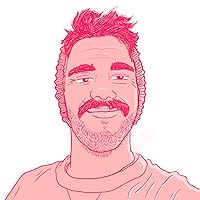
As a medical detective of the modern world, forensic pathologist Ryan Blumenthal’s chief goal is to bring perpetrators to justice. He has performed thousands of autopsies, which have helped bring numerous criminals to book. In Autopsy he covers the hard lessons learnt as a rookie pathologist, as well as some of the most unusual cases he’s encountered. During his career, for example, he has dealt with high-profile deaths, mass disasters, death by lightning and people killed by African wildlife. Blumenthal takes the reader behind the scenes at the mortuary, describing a typical autopsy and the instruments of the trade. He also shares a few trade secrets, like how to establish when a suicide is more likely to be a homicide.
Even though they cannot speak, the dead have a lot to say – and Blumenthal is there to listen.
Review May 2026 I finished this book thinking well, that escalated quickly, moving from bodies and causes of death into the systems and people behind it. I liked that it was very matter of fact, death is death and work is work, but there is satisfaction and meaning in giving a body it's name and identity back or working out what happened when no one else could. I liked how the author treated the bodies as people with stories that needed finishing, and not as corpses that had to be examined. What impressed me, was how much gets done with so little even without a gleaming lab with shiny tools, just skill and persistence.
There was much weirdness and slightly horrifying stories which are always enjoyable in a shivery horror-movie sort of way although 'enjoyable' isn't quite the right word for reading about decomposition, mass deaths and violence. Good book, recommended if you like gory sorts of science things. ____________________
Update The weirdness got even weirder. How to make blood shoot out of your eyes. The five smelliest things in the world. But then he got preachy and it was the ten things we should all do to have good, fulfilled lives. You live yours and I'll live mine. I don't necessarily want a good one anyway, I want an interesting, dramatic one even if that means suffering and tribulation in between adventures! Review to come. Also details on how to shoot blood out of your eyes. Great party trick. ____________
Reading Notes This is getting weird. Death by ostrich, murderous lions coming in through the kitchen window..... What I like very much about the book is that no one, no one at all is identified by race. It is irrelevant what colour the person is who got disembowelled by the testosterone-crazed ostrich, or who died from an elephant who first gored and then kneeled on them. It is so irrelevant but it is rare that race, colour and religion are not among the first details given about a victim. (I realise that sometimes one or all of those are important, but not for death-by-ostrich or elephant). ____________________
I've read quite a lot of forensic pathology books so I don't know why I thought this would be really different from any of the others, so far it isn't. But it is well-written and interesting, and I have hopes that once I get past the preliminary chapters, it might really be about another aspect of forensics altogether.
I often find these kinds of books fascinating, where people who do autopsies share some of their more strange or famous cases. I can think of at least 2 TV shows about a similar subject, one where the lead was a male, and one where the lead was a female. I was a fan of both shows. Being curious about death is pretty natural, I believe. This book, by Ryan Blumenthal discusses cases in Africa, which makes it unique from the start. There are a certain number of people killed by large wildlife, insects, lightening, even malaria. There are a wide array of deaths, related by the author in an interesting manner from his early years of his time at that profession. A read on the shorter side for those who are interested in this sort of medicolegal mystery. Advance electronic review copy was provided by NetGalley, author Ryan Blumenthal, and the publisher.
I am so disappointed in the ending it has kind of ruined it for me. If I was rating the first 80% of this book I would say this is a strong 4/4.5 read. The information and unique angle of this was brilliant. Yes I didn’t know what some of the science-y words meant but it didn’t distract me from my enjoyment at all. Some of the topics and scenarios were amazing and horrifying and I loved it!! However. What has really annoyed me is the baffling preachy ‘you should live your life like this’ ending. He lists 10 lessons we should all adhere to, including don’t drink alcohol, don’t drive a motorbike, make sure your loved ones know where you are every minute of everyday...like what?! Yes I understand doing ‘risky’ things places you more at risk of ending up on his slab than if you didn’t do them. But if they were that bad they would be illegal. There was also a weird 4 pointer what to look for in a partner. Utter shite. I suggest if you are reading this for the forensics and the ins ands outs of autopsies, like me, then stop at chapter 16!!!!
Highly informative and very interesting although it was a little repetitive at times. It had scope to be much longer and much better! But it is a must-read for anyone with an interest in science/pathology.
ARC received via Netgalley in exchange for my honest review. (And I have an actual copy that I got as a gift from my dad, which worked out quite well)
This is non-fiction, so it's absolutely out of my wheelhouse. So why read it? I gravitated towards this book for two simple yet connected reasons: I am a South African myself, and I actually wanted to become a forensic pathologist too (it was one of a small handful of vocational options I had been considering in high school). Needless to say, I would have found the contents of this book interesting in some way or another, even if it had turned out to be completely terrible - which luckily, it didn't.
Blumenthal's accounts of life as a forensic pathologist working in South Africa (and often other African countries) are concise and to the point, yet nearly always intriguing and insightful in some way. I do believe that I have a broader sense of what being a forensic pathologist entails, and I am grateful that this job was so expertly explained within the context of South Africa - a context that brings its own unique challenges to every aspect of life, but even if you live it yourself, it's hard to envision how those challenges impact spheres outside of your own little life and experiences. That being said, I really appreciate how Blumenthal never took the "This place is a crap-hole" approach to explaining what it's like to work under the circumstances that he has to deal with. Instead, he explains the challenges, how he and his colleagues overcome them, and how and why he believes action is necessary to rectify the shortcomings in the system that cause those challenges. In short, he's pragmatic and passionate and he calls a spade a spade, but he doesn't fall prey to trashing the country he calls home just for the sake of it.
All that being said, Autopsy could have been written (or edited) a bit better. A major issue for me was the fact that the proverbial "golden thread" between paragraphs was virtually non-existent, leading to sections of writing that are loosely connected in theme but don't have any "connective tissue" to show how one idea flows from another. This is something an editor should have picked up on, and I think with a good reshuffling of paragraphs and some clear transitions, this could be a really decent book writing-wise, although my overall reading experience was really quite enjoyable.
2.5 stars⭐ I'd like to start off by saying, I do not see eye to eye with this author.
I am not a smoker. I do not consume alcohol, I eat healthy, I exercise and I take care of my body. I would therefore probably fit the bill of a "real victim" - according to Dr. Blumenthal.
The elderly gentleman who happens to be a smoker however, does not fit the bill. Saving his life from an asthma attack is, and I quote, "a waste of time."
The author goes on to openly state that he ventured into medicine to help only the "innocent", those who are in need of medical care due to no fault of their own. So, this of course does not include; the smoker, the drinker, the overweight, those who don't wear seat belts, etc.
This is so anti-human and so completely void of all compassion, I just don't know what to say.
After having to put the book down, I did manage to continue to the very end and I was honestly only met with confusion.
The author likens himself to a superhero, a vigilante. He wants to help stop the 'bad guys'. He views himself as a moral and compassionate man.
Here is a direct quote from towards the end of the book-
"The doctor is the doctor and not the judge. It is the duty of a healthcare professional to provide care without fear, favour or judgement."
Did the author experience a sudden change of conscience? I am unsure, it is unclear.
He even goes on to say that, most lawyers he knows are smokers, but that he doesn't blame them because their line of work is stressful.
Is the author a changed man? I wish I knew!
The content written about forensic pathology is interesting, but I unfortunately felt disconnected. I wanted so much to feel the human side of these stories. I wish they had more depth instead of hopping from one thing to the other.
*Thank you so much to Jonathan Ball Publishers, the author and NetGalley for granting me a free e-copy in exchange for an honest review.
“These stories were gleaned from the trenches, amidst the blood and the guts of it all. I offer stories from my life and my ‘case book’.
I’ve read a number of memoirs written by forensic pathologists/coroners/medical examiners and the like who practice in the UK, USA and Australia, and I was curious as to how the experience might differ in a country like Africa. Ryan Blumenthal has been a forensic pathologist, working primarily in South Africa, for over twenty years. There are approximately 70,000 unnatural deaths per year in South Africa, and as one of only 56 certified forensic pathologists in the country, Blumenthal performs up to 500 autopsies a year, but the role of the profession extends beyond the physical act of completing an autopsy, forensic pathologists are also crime scene investigators, and legal witnesses who are required to give testimony in court. It is a job that requires physical and mental stamina to withstand the long hours of work, the constant exposure to death, and the need to adapt to scientific, technological and sociocultural changes.
“[Forensic medicine is] The application of medical knowledge and methodology for the resolution of legal questions and problems for individuals and societies.”
The general philosophy and practice of a forensic pathologist in South Africa is not too far removed from that of his (or her) colleagues in other countries, however they do face challenges unique to the country’s status as a developing nation, which means basic resources such as labour, electricity, running water and insect spray (vital due to the prevalence of flies) can be limited, or even absent, particularly in rural areas of the country, and in other third world areas of the African continent. Blumenthal describes what a typical autopsy and investigation entails for him, and while he is pragmatic about the lack of television’s CSI ‘fancyshmancy’ equipment, certain that the knowledge and ability of the forensic pathologist matters more, he does emphasise the importance of proper resourcing as a benefit society.
“As the Latin expression goes, ex Africa semper aliquid novi – always something new out of Africa.”
Forensic pathologists in Africa also face trauma that is unique to the culture and environment. This not only includes deaths caused by native wildlife like hippopotami, lions, elephants and kudu, as well as poisonings related to the misuse of traditional medicines, but also methods of murder such as ‘necklacing’, where a person’s torso and arms are trapped in a rubber tyre filled with gasoline and set alight. Deaths related to lightning strikes are more common in Africa than almost anywhere else. Blumenthal relates his experiences with these type of cases, as well as those from more common causes of unnatural death, such as car accidents, drug overdoses, gunshots and stabbing. I found both Blumenthal’s general observations and the details of the individual cases he shared to be fascinating.
“My wish is that this book will help to make you more aware and more mindful.”
Blumenthal’s writing is accessible with a minimal use of jargon but I do think the material could have been better organised as there is some repetition in both the information and prose. I wasn’t particularly keen on the moralising either, even though his observations and advice were generally reasonable, there were a few statements that belied Blumenthal’s claim of impartiality to the deceased.
“We close the eyes of the dead, but the dead open the eyes of the living.”
Elucidating the unique experiences and challenges faced by forensic pathologists, particularly in South Africa, overall I found Autopsy to be an interesting, informative and satisfying read.
I was really intrigued by this book because I love reading about forensic science and pathology and I was interested to see how things differ in South Africa. There were some really interesting parts in this book but overall it wasn’t what I expected. I found Blumenthal glossed over the case studies so we didn’t get to actually learn about many particularly interesting cases and how they presented etc. There was a lot of repetition especially with the conditions he’s had to work in. It was also a pretty disjointed read and he went off on a lot of tangents without finishing his original line of thought. On top of that, he was very preachy. The book finishes with him preaching about how he thinks you should live your life and starts with the fact that he quit being a doctor because he didn’t want to treat smokers, drinkers, fat people, or anyone who drives badly because they bring all ailments on themselves and he only wants to help the innocent. He seems to think he’s some sort of superhero and mentioned a few times how little he’s paid and how important he is. All in all some interesting parts but not the author or book for me
I received a copy of the ebook via NetGalley in exchange for an honest review
I ended up reading Autopsy: Life In The Trenches With A Forensic Pathologist In Africa by Ryan Blumenthal because I saw it reviewed on #bookstagram by a trusted source of true crime reviews. She seemed to really have enjoyed it, so I knew I was going to have to read it too and I am glad I did because it was fascinating! The book is split into many chapters with each covering a specific topic. I think the ways of dying chapters were the most interesting to me, but I wasn't bored with this little book once. I don't know a whole lot about being a forensic pathologist, and even though I know I could never do it myself, I was eager to learn more about what they do. I love how detailed Blumenthal gets in this book, and I especially liked that he includes a glossary of terms at the end as well as a few pictures scattered throughout.
There are definitely some graphic depictions in the book, and there were plenty of times I thought something was gross, so this isn't for the squeamish reader. This is real life, and Blumenthal doesn't hold back on details. I liked that the reader gets a specific look at what it's like doing this job in South Africa, and there are definitely some special challenges forensic pathologists have to face there. I especially loved the audiobook, although it isn't narrated by Blumenthal which would have been really cool. However, the narrator Ettienne Durandt was fantastic, and I think the audio is super helpful since I didn't know how to say half of the terms spoken of in the book. I also loved the way Blumenthal wrote this, basically speaking to the reader as though they are interested in becoming a forensic pathologist. Overall, this was a very informative and interesting book, and if you are interested in what a forensic pathologist does and don't mind having a bunch of terms thrown at you, then you will most likely really enjoy Autopsy.
I found myself turning to ‘Autopsy’ while struggling to finish another book. I could not put this book down and raced through it in no time! Many of the stories made you feel like you were in the autopsy room with Ryan. Would highly recommend - to those in the medical field and to those who are not.
Ryan gives a clear picture of what it's mean to be Forensic Pathologist. These insights are clearly based on Ryan long experience while working as a GP and forensic pathologist. He It's interesting field of science. I like the way it helps saving the living, by good understanding of the died. There are many points that I liked and made me stop and think deeply. These including; 1. What is death? One of man's greatest and most exciting experiences. Death in the process of dying is characterised by loss of function of the great organ systems (Cardiovascular, Respiratory and Nervous systems) and their coordination.
2. What is the quickest and the most painless way to die? Please focus on life. But I would like to die on the arm of a women, slightly drunk, slightly in love and due to a massive myocardial infraction. Failing that.....
3. What motivates you after the nine thousand autopsy? I think this question is important for all health professions and other field as well. I'm asking myself "what will motivate me after the nine thousand dental restoration?"
4. How to address the inequalities and divide the pie in health care system? The best answer could be found in blockchain technology. By design, blockchain is a decentralised technology. The blockchain is a sheared public leisure in which the entire pie division network will rely.
There are many other insightful ideas to be found in this book. I really did enjoyed Ryan observations in suicide. This book isn't a book of the died. This emphasised at the last chapter of the book where Ryan gives important advices in based in his observation and experience from his field of work.
As as doctor (and a student of Ryan Blumenthal; he gave us several lectures during undergraduate training) I really enjoyed reading about his outlook on forensic pathology. Would recommend to any healthcare worker to read about what happens to the ones that don’t make it to hospital.
There seemed to be no rhyme or reason to what the author was trying to convey. He just jumped from topic to topic, anecdote to anecdote which was not the least interesting to me.
There was so much right and so much wrong with this book.
Blumenthal is passionate about his line of work and, like him, I agree that the general public should be more aware of the landscape in which we live and the things that go into investigations of death. I picked up this book because I wanted to know all this and more, especially in the African context. In this regard, "Autopsy" did not disappoint.
However, I took issue with a fair amount within the book (mostly because I am an editor myself). While Blumenthal has a lot to teach and offer in this book (and does), he tends to get rather preachy and vers off-topic. I found that he is inconsistent with his explanations and chapter topics: at times he explains a concept/condition/process (sometimes over-explaining and going off-topic slightly) in detail, while at other times he glosses over a term/concept that needed even a small definition. Some chapters didn't stick to the subject and went into too much detail about something related to the main subject. This is specifically true of his list in 'Ten lessons for the living from the dead'. He made some great, honest points however he became a little preachy at times and didn't always relate the points to his line of work.
Clearly, this book has been prepared for the public but it needed a few more weeks with an editor. I found a lot of repetition in the prose. Especially in terms of words being repeated in short paragraphs ("Forensic pathology" does not need to appear six times in a three-sentence paragraph). This is a result of Blumenthal trying hard to ensure that he and the concepts he describes are understood, but was overdone and underdone at times. I also noted glaring mistakes that could have been corrected by adding a word or suffix within the sentence or word (A bronze what??).
Despite the issues, I revelled in this book and looked forward to each new discovery that the next chapter would bring. I found "Autopsy" to be extremely educational about the forensic landscape and processes in Africa. Blumenthal did a fantastic job in detailing his day-to-day life as a pathologist in Africa and I especially enjoyed his sections about lightening-related deaths and suicide. He gives readers a massive eye-opener on the current state in which we live and provides important advice on how to survive the African landscape. Blumenthal also addresses horrific topics with sensitivity and humility while still stressing that this is in fact a way of life. He makes valid observations that only someone in his industry would find glaringly obvious but that which the public should be more aware. I learnt so much in these 210 pages and had some giggles about the things that will only happen in Africa (lighting a fire with petrol, anyone?).
Blumenthal does his industry proud in "Autopsy" by portraying the harsh environment in which he works, the hardships for all involved, the processes that aid in healing the wounds caused by unnatural and natural deaths and by stressing just how important his job is to our society as a whole.
Autopsy is a look into the daily life of a forensic pathologist in South Africa. I find pathology incredibly interesting, so I was excited to read this book. However, I was really turned off early on in the book when the author proudly recounted a story about berating and refusing to treat a dying elderly man while working in a hospital. I find it arrogant and disgusting that as a doctor he would act that way, with a complete lack of compassion or duty to his patient.
Autopsy was readable and interesting when the author discussed his duties and job as a pathologist. However, it was a bit disjointed as the author has a tendency to ramble and gets a bit preachy at times. I feel like this one could have used a stronger editor or a co-writer. Just... something to reel it in a little.
I'm sure there are better books on the subject, but if you have an interest in things like true crime and pathology, Autopsy is still a decent read.
I'm grateful to NetGalley and Jonathan Ball Publishers for the opportunity to read and review Autopsy.
It’s not often that I am interested in reading non-fiction (I am a fiction girl all the way) but when I read the synopsis of Autopsy I was very much interested. I love watching true crime shows and so the Autopsy aspect has always been very interesting to me. To be honest it was a very strange book, but I am glad I read it - and was captivated some of the details, the weird and easy ways we can die, the smells of illness and death. At times clinical, at times philosophical and yet an overall compelling, eye-opening and entertaining read about a man and his passion to make the world a better place through seeking justice for victims on his autopsy table. Tightly packed with cases that give perspective on death in a way that reflects back to how precious life is. To put it simply, I really enjoyed this one and might be more open to picking up ,more non fiction in the future.
It's always a bit different in Africa, the good and the bad. It's a tough life being a forensic pathologist in South Africa, but it seems like it is also rewarding. The cases and stories in this book are intriguing, and even though I'm not sure I can stomach them in real life, it was eye-opening to read about different autopsies.
I have a huge respect for Pyan Blumenthal and his colleagues doing what they do in the different settings with expectations not always easy to fulfill. It is not a glamorous profession, and you don't do it for the money. It's easy to read between the lines that the author is doing the job he was meant to do.
Even though it is morbid, hot, the hours are long, the hands are few, it is still a rewarding job. I especially enjoyed the stories about different ways people have died (if you are allowed to say you enjoyed these stories), not because of the death themselves, but because it says a lot about South Africa, its people, and culture. Highly recommended book!
Such a strange, strange book. I am glad I read it - and was fascinated by much of the detail: the many strange and easy ways we can die; the smells of illness and death; 70kg of maggots ... and a tin of ZamBuk the most common item be found in many dead South Africans’ pockets! I think Blumenthal communicates well that being a forensic pathologist is a real calling (shocked to discover there are only around 56 in South Africa). And that life is, after all, to be lived. It’s quite unevenly written (he’s no Adam Kay, but I suspect it’s a certain kind of prison who chooses to be a pathologist...)
I HATED this book. The author's arrogance and judgemental attitude really shines through in the writing. He berates patients for lifestyle related pathologies and treads into an ethically grey area when he guilts a group of young survivors into reliving their trauma after they initially refused, all so he could get published in a medical journal. I found him utterly insufferable. He comes across as condescending to the reader with his explanations of technical terms. The book lacks cohesion and reads like jumbled thoughts he just jotted down on scraps of paper. Where the hell was his editor? He also seems to lack self awareness in the last chapter of the book, where he states doctor should not judge their patients?🤔
Probably, no definitely, my favorite read of this year👆 just wow. 📖Even though they cannot speak, the dead have a lot to say. Having lost my mom just under a month ago I found this book to bring some closure and a boat load of empathy towards the living. Well written and I felt like I wanted to mark this book with the quotes and lessons I took away while reading it in less than 24 hours.
I found this book to be a very accessibly written work on a gory and fascinating subject. The author remains detached, caring and clinical. I would recommend this book.
I finished this book in 2 days - it was hard to put down. It contains lots of interesting snippets of life as a forensic pathologist in South Africa, where the number of unnatural deaths stands significantly higher than in most other countries in the world. The author talks about the many ways people die there: from wild animal killings to gang murders to vigilante mob slayings to what have you.
Some of the more memorable cases that stood out for me were: 1) the poor guy who died of rabies from a wild mongoose that came at him out of nowhere, despite seeking treatment immediately after being bitten; 2) the hospital patient who was found dead in the ceiling of the ward where he had snuck off to take a smoke (despite having TB, which was also the cause of his death!); 3) the bongos that were struck by lightning in their zoo enclosure and sadly died; and 4) the traffic accident victim with only minor, non-life-threatening injuries, who was found to have died from carbon monoxide poisoning because ambulance personnel had placed his stretcher too near the ambulance exhaust pipe while they were attending to other accident victims!
Some other things mentioned were: pests the pathologists have to deal with (mainly flies and rats), risks that come with the job (for instance, getting infected by viruses and other pathogens from corpses), how pathologists handle having to deal with death and the macabre so often, efficient and no-so-efficient ways of ending one's life, the various tactics murderers use, as well as other interesting tidbits one gleans from being a pathologist (such as finding out what the worst smell in the world is).
What was a bit confusing for me was how the author seemed to sometimes go off-tangent and talk about something seemingly unrelated to the topic at hand. E.g. In one chapter he suddenly felt it prudent to give relationship advice after rambling on about how certain "signs" people displayed could mean they were likely not good romantic partners.
On the whole, the way the information in the book was presented was rather haphazard. Even though chapter titles tell you what to expect, chapters still read like the author is chatting with you spontaneously, and somehow the information you're hoping to glean (i.e. what the chapter title tells you it's supposed to be about) happens to pop up somewhere in this conversation. Better editing would have made the content more organised and focused, and also avoided the several linguistic errors I stumbled upon (misspellings mainly).
Still, I would recommend this title to anyone with a stomach for the gross and gruesome, who would like to live the life of a forensic pathologist, but without the risks and other hazards involved. Just don't read it while eating! (Like I did, regretfully!)
I found the first part of the book a bit off putting because he talks about how little pathologists get paid for a few chapters in a row. I think it’s fine to announce it or maybe even have a chapter about it, but multiple off handed comments about it through multiple chapters is a bit much.
The second third of the book is great, and is the reason this got three stars instead of two. It really does talk about all of the unique experiences that a forensic pathologist has in Africa. It sets the scene. Explains how the environment and infrastructure plays a role in a FP’s job. I think the most interesting chapters were about the blow fly / water issue and animals that one might encounter.
The third part of the book read like a Buzzfeed listicle. It wasn’t particularly insightful and kind of took me out of the book. This part really moved away from ‘pathologist in Africa’ to a bunch of quotes that he likes, and then it ends with him complaining about his job being taken over by robots. And that’s it. That’s how he ends the book. It really is a disappointing end to a book I was already lukewarm about.
I would have liked to have had more information of the unique insights that he has as a South African pathologist. I felt like many of the examples he gave were just scratching the surface and then he would move on. That made me feel like I was missing out on general story development. I would have liked more information about his experience with political deaths as he mentions that some pathologists have gone missing from their experience with these. It seems weird to not give a quick summary of South Africa’s political history if you’re going to mention that whole people can go missing if they “misidentify” something about a politician’s death. Seems like a missed opportunity to really set his story apart from other pathologist tales.
All in all, it was fine, but I won’t be recommending it.
This entire review has been hidden because of spoilers.
Ultimately this is probably just a 3 star book. I’ve read a lot of books by or about pathologists. This one isn’t among the best, either in terms of writing or organization.
BUT what this book gets at is the question I tend to ask myself when reading other books. ‘This is how pathology is done in Europe and/or America x but what about the rest of the world?’ So this pathologist is in South Africa, which certainly isn’t the most resource constrained environment, but definitely qualifies as a place that has to make do with less. That part was very interesting - lack of electricity, pests, and endless violent deaths (South Africa is a pretty violent place) and, interestingly, a ton of talk about lightning strikes.
So it had some really fascinating stories, and a perspective that is hard to find in published books about pathology in the west (the pop science and memoirist ones that I prefer). I loved that. Plus, my beloved Africa.
However, it was pretty poorly organized, and at times felt like a ‘how to’ guide for those considering forensics pathology, and then at times veered into preachy weirdness. So, some stuff that didn’t really work.
Overall though, I did really enjoy it.
Also, the audiobook was actually read by a South African, which is rare, so I loved that.
This book follows the life and career of Ryan Blumenthal, author and forensic pathologist in Africa. The story goes into the occurrences of death. Death by wild animals, death by nature and even high profile cases. Due to the lack of pathologists in his country, he has seen more than his fair share of cases. I highly recommend this book. Thanks so much #netgalley for the early review copy. I very much enjoyed it.
Thank you to Netgalley and Johnathan Ball Publishers for the arc of Autopsy by Ryan Blumenthal.
4 stars- ⭐⭐⭐⭐- This follows Ryan as he goes behind the scenes of the mortuary to him describing what happens in an autopsy with the instruments explained as what is used in the trade! Whilst during his career he has dealt with high profile criminals to death disaters, people struck by lightning and even by african wildlife!
So interesting, unique and detailed! I loved this! Highly recommend
As someone who has worked in the health/medical industry for 20 years I really enjoyed this book. This book is both informative and enlightening as the author takes us on a journey through his career performing autopsies in South Africa, which in itself was often times extremely challenging.
Chapter 17 titled 'Ten lessons for living from the dead' sums up this book perfectly.
A really unique look at the specific struggles forensic pathologists face in South Africa. Exposes how unnatural death is distinctive to both different regions and cultures and how this poses a challenge for pathologists world wide. An accessible read which provides insight into a field that is majorly overlooked.
As someone who has worked in the health/medical industry for 20 years I really enjoyed this book. This book is both informative and enlightening as the author takes us on a journey through his career performing autopsies in South Africa, which in itself was often times extremely challenging.