Jump to ratings and reviews
Rate this book

The Man Who Lived Underground

Rate this book
A previously unpublished novel from the author of Native Son, who was “one of the most important literary talents of contemporary America” (The New York Times): After a brutal interrogation convinces him to confess to a crime he didn’t commit, Fred Daniels flees underground in this “blazing literary meteor [that] should land in every collection” (Booklist).

225 pages, Kindle Edition

First published April 20, 2021

469 people are currently reading
8402 people want to read

About the author

Richard Wright

352 books2,232 followers
Richard Nathaniel Wright was an African-American author of powerful, sometimes controversial novels, short stories and non-fiction. Much of his literature concerned racial themes. His work helped redefine discussions of race relations in America in the mid-20th century.

Librarian Note: There is more than one author in the GoodReads database with this name. See this thread for more information.

Ratings & Reviews

What do you think?
Rate this book

Friends & Following

Create a free account to discover what your friends think of this book!

Community Reviews

5 stars
1,019 (29%)
4 stars
1,438 (41%)
3 stars
754 (22%)
2 stars
167 (4%)
1 star
47 (1%)
Displaying 1 - 30 of 551 reviews
Profile Image for Raymond.
449 reviews327 followers
March 14, 2021
Richard Wright’s books have a way of sticking with you long after you finish reading them. This was true for me when I read Native Son in college and is also true after I recently read his unpublished novel The Man Who Lived Underground. The novel tells the story of a Black man in his late 20s named Fred Daniels. One day he gets picked up by the police and is accused of murder and armed robbery. Fred tells the police he did not do it but they do not believe him. The officers beat him continuously until he confesses to committing the crime. At his first opportunity, Fred escapes from their custody and hides out in the city’s underground sewer system. While he lives underground, Fred becomes a totally different person. He does things he would not normally do, he becomes the thing that White society fears the most, a Black criminal. But this side of Fred does not last for long, he gets sick of the underground. He sees things he doesn’t want to see, the corruption of society and the system. He feels convicted and wants to return aboveground to report what he saw and turn himself in, but doing so will cost him everything.

The Man Who Lived Underground is a powerful book one that will resonate with modern readers even though it was written in the early 1940s. I love Wright’s writing in this novel, he was so vivid in his descriptions especially his details of the underground world. Wright use of alliteration and anaphoras was exceptional.

This novel could be viewed as a philosophical book since Fred learns some hidden truths while living underground. This notion is confirmed when the reader reads “Memories of My Grandmother” by Wright which is the companion essay to the novel. Wright’s daughter stated that this novel could only be published if the essay was published alongside it. In the essay, the author writes about all of the themes that inspired the novel including: his grandmother’s religious identity, invisibility, the Christ legend, the Negro problem, surrealism, jazz music, and the common theme of being falsely accused of something. It’s a long essay but I think it will be a good supplement to read alongside the novel in English classes. In my opinion most readers can go without reading the essay and let the novel stand for itself but I would only recommend it if the reader wants to get in the author’s head on the origins of novel.

Thanks to NetGalley and Library of America for a free ARC copy in exchange for an honest review. This book will be released on April 20, 2021.

Review first published here: https://medium.com/ballasts-for-the-m...
Profile Image for ♑︎♑︎♑︎ ♑︎♑︎♑︎.
Author 1 book3,801 followers
November 12, 2021
The Man Who Lived Underground is the only posthumously published novel I've read that I believe is equal to, or surpasses, the novels published during an author's lifetime. The combination of very realistic sentence-level writing with a surreal and allegorical story makes the experience of reading this novel powerful, painful, shattering.

It's hard to come to grips with the way Wright couldn't get this novel published in his lifetime--his publisher believed that the first scene in particular, of white police officers beating a black man into confessing a crime he didn't commit, was unrealistically violent. Frankly the interrogation/torture scene in The Man Who Lived Underground wasn't nearly as disturbing to me as the scene in Native Son when Bigger suffocates a woman and stuffs her body parts in a furnace. So I'm left to grapple with the only explanation that makes sense, as to why this novel wasn't published when it was written: that any amount of violence where a white man hurts a black man was deemed by the publisher to be too much for the reading public, whereas a novel about a black man murdering a white woman seemed just fine to them. What the hell, people. This is an extremely disturbing example of the way media industries massage and assuage and censor and suppress. I'm experiencing one of those moments when an artistic work totally surpasses my ability to write about how important I believe it to be. And also, of reality slapping me across the face.
Profile Image for Richard Derus.
4,179 reviews2,265 followers
July 17, 2024
$1.99 on Kindle now!

I RECEIVED A DRC FROM THE PUBLISHER VIA NETGALLEY. THANK YOU.

My Review
: Richard Wright was one of the twentieth century's crop of Great American Storytellers, a writer whose entire life of creation was a gift to a country that did not deserve his passionate voice calling into the face of its indifference that we can be better, do better, and must in order to survive.

People my age were required to read Native Son in high school English, and I am so very glad we were. I wouldn't have picked up the book any other way. It needed to be shoved on me. And wonder of wonders, the Austin (Texas) Independent School District of the early 1970s did. It was a tough thing to let myself believe, that people simply but sincerely hated for no better reason than someone was a different skin color than they were. I assumed all those yahoos were just performing their snotty, hateful idiocy like they did their fake homophobia; it seemed to me that racism against Black and Hispanic students was the same. Anything to look cool, after all, and these were teenagers whose ideas of Cool were neither self-reflective nor rebellious enough to have progressed from the 1950s their own parents were stuck in.

Then we read the equally astounding true-crime (I call racism a crime and am not likely to stop doing so) Black Like Me, an account of a white man passing as Black in the Jim Crow South. It too was gut-wrenching, but was different in kind than the novel Native Son. A factual report...well, I am quite sure that my own racism got hard, hard knocks that year. (I am fully aware that I'm complicit in racist society, that in no way am I "not a racist" just because I support Black political candidates and so on.) It's a pity we couldn't have read this jaw-dropping, intense, visceral evocation of the Other as refiner and perfecter of his Othering. It is the apotheosis of Otherness and Othering that this intense story tells its readers.

Anyone who's paid me any attention knows that I can be run off from continuing a read by child abuse, by use of the n-word, by cruelty to animals...the list goes on...and not a few unfriendlies are smirking in anticipation of taxing me with this book's abusive, rage-filled, n-word-bombing ethos...how can I give this five stars and still abandon ship with content warnings in other, arguably less offensive cases? Because Richard Wright never does a single thing to make the awfulness of PoV character Fred Daniels's world sensational. The author isn't kidding around, bedizening a story with nastiness to provoke a response. He is telling a story about how Othering a man will, over time, after many small and large blows and much deliberate infliction of every kind of pain, turn him in to the thing that he was not, did not want to be, and could not bear to know that he now was.

It worked, in its honesty and its clarity of purpose. I left the sewer Fred lived in without regret, without revulsion, and with the most horrified, profound acceptance of Fred as he was abused and neglected into being. Acceptance of his re-creation, transformation.

In the inexcusably hate-filled twenty-first century, we are fighting the battle that Fred lost all over again. There are wins...the conviction of Ahmaud Arbery's murderers...there are defeats, the gerrymandering cases standing out to me as disasters to Black people...but the trend is towards, as it ever was, the endless and pointless perpetuation of hate based on stupidity among the haters and truculence among the hated.

Books like this are strong medicine against both ends of the spectrum. Fred, a victim, sees what the System does to people, and ultimately still surrenders to it. Not to fight against the dehumanizing and brutalizing actions and inactions of the system that allows Fred to exist in the literal sewers is to acquiesce in the process of creating more Freds...and that is a moral wrong and a societal tragedy. Author Wright doesn't allow his readers the luxury of redemption. This book remained unpublished for seventy years because it is the most hopeless document of degradation's triumph I've ever read. White people of the 1940s would've been offended by the clear-eyed assertion of police violence as it happened...nowadays that illusion is gone...but they wouldn't have wanted to read about a good man surrendering his humanity regardless of that knee-jerk response. The accusing fingers pointing back at them as they called out Author Wright for his bleak treatment of Fred (theirs was the system he succumbed to, after all) were simply too on-the-nose.

There is an extended essay included with the novel entitled “Memories of My Grandmother” that enables our appalled eyes to see where so much of the story we've just read originated. The fact that Christian religion played such a big role in Wright's formation into a man capable of the kind of wordsmithing he does isn't a big surprise. I'm very grateful that the author's daughter required the essay to be published within the book containing the novel...it's a long piece and, even if you're on the fence about reading the novel, I hope you'll consider procuring it to read the essay alone. It is a marvelous explication of how each generation forms the next, for good and ill.

What Author Wright isn't, in the writing of this story, is subtle. The metaphors defining it simply aren't debatable: Whites own the sunshine and consign the Blacks to the literal sewers to eke out whatever existences they can. A Black man who's innocent of any crime is shoved into the sewer with the rest of the leavings because he's never had a place in the sunshine that was truly his. As he copes increasingly poorly with the sewers, he's not allowed to leave them; he's run away from the white police, deprived them of their fun of torturing and eventually killing him, so they say "stay there and die."

The author doesn't, then, offer Redemption to either side. It's a very uncharitable and un-Christian thing to withhold. But he's got a reason, does Author Wright: "Chickens come home to roost, don’t they?" his daughter quotes him as saying.

They very much do. The perch they roost on is, in this rare and exquisitely painful read, your complicit soul.
Profile Image for Elyse Walters.
4,010 reviews11.9k followers
May 4, 2021
“Before we get through with you, you sonofabitching nigger, we’re going to teach you something . . . “
Get the gist?

“The Man Who Lived Underground” was DEVASTATING cruelty- besides extreme injustice...,
This was our history folks!!
We are still dealing with it today!

Profile Image for Jonathan K (Max Outlier).
796 reviews213 followers
October 18, 2021
Engaging for those willing to look beneath the story

Unfamiliar with the author, I had no idea what I was about to encounter especially where a rather unique epilogue is concerned. Fred Daniels is a black man whose pregnant wife is about to give birth and gets hauled in by racist police for a murder in spite of his innocence. As luck would have it, he manages to flee underground to the city's network of sewers. What he discovers takes the reader on a journey into his mind, thoughts and innermost being. Richard engages the reader with a plot that at first seems predictable, but soon after become otherwise due to use of theme and metaphor. Eighty percent through the book, the story segues to memories of the author's grandmother which are linked to the story's creation. This is extremely rare and the shift from colloquial language to that of a highly educated author is something to behold. Having read thousands of books this is the first where this is done and well worth considering since it enlightens the reader to no end. Evidently it was originally an essay that became this short novel which demonstrates his skill in writing. I'll be reading his other books, needless to say!
Profile Image for Faith.
2,229 reviews677 followers
May 17, 2021
Fred is a laborer who is nabbed by the police one evening as he is going home from work. They suspect that he robbed and murdered his employers’ neighbors, based on no evidence other than that he is a convenient Negro. The police interrogate, beat, torture and trick Fred until he confesses to the murders that he did not commit. When an opportunity presents itself, Fred runs away and hides in the sewer. From there, he finds that he can gain entry to various businesses and also eavesdrop on the occupants. As his mental state deteriorates, Fred gains knowledge that both changes and dooms him.

As I listened to this audiobook, I kept thinking that it was important to have this published. However, I wasn’t enjoying it very much. I preferred the parts of the story that bookended Fred’s time underground. This was previously published as a short story and maybe I would have liked that more. Included in the audiobook, and ebook, is an essay titled “Memories of my Grandmother” which ties certain of the author’s experiences to the book. I can’t say that the essay helped me much.

The audiobook was read by Ethan Herisse. I believe that he is an actor, which surprised me because his reading was very flat. A more experienced narrator might have done a better job. 3.5 stars rounded up because of the author.

I received a free copy of this book from the publisher.
Profile Image for Dave.
3,658 reviews450 followers
January 13, 2021
“The Man Who Lived Underground” is a previously-unpublished novel by famed author Richard Wright (author of Native Son). This short novel was originally rejected for publication seventy years ago and now presented posthumously.

It starts out as a typical story of racial injustice where an African-American man is picked up by the police and blamed for a double murder. Beaten into submission, he signs a confession. But, rather than focus on proving his innocence, Wright takes his novel in an entirely different direction which is what makes it so fascinating.

For this man escapes and hides in the sewers, tunneling into basements. In a split second, he leaves Civilization and exists apart from it. Obviously an allegory for so many things this living underground and living an invisible life. No one knows he’s down there and no one suspects he’s hiding there.

Told from only his point of view, it is a universal tale of how easily society’s bonds are broken and how quickly we can become completely disconnected. And it also becomes an existential story about the meaning of life and how easily it is to separate and leave an unfair world. Looking at things from the outside - in his hidden cave beneath the city, the lead character thinks about what matters and what has meaning. It is thus not the same novel you may have thought you were going to read, yet a case study of what it means to be alive. Written starkly, it is impressive what a skilled writer Wright is.
Profile Image for Hannah.
2,257 reviews472 followers
January 21, 2025
This book needs to be taught in every high school. I'm sure it's on the MAGA ban list, but all the more reason to read it. There are so many layers to it! I can already imagine all the papers I would assign and want to read from the brilliant students that would be in my class, had I been an English teacher.

Written in the 1940s, it's still relevant almost a century later. It's an unlikely book in today's time with all the video surveillance and controls in place against escape; I suppose it was also somewhat unlikely in the 40s, though I couldn't say since it was before my time. But I can also see how someone might have escaped back then, even if I can't imagine someone actually living in the sewers without getting sick.

I would say this is fairly representative of Richard Wright's other works too. If you are familiar with his other books, I think you'll appreciate the uniqueness of this book as well as the comfort of the familiarity of his other works. Themes of guilt and innocence, freedom, imposed identity, the point of it all, and finding release, among many others.

I would love to see this brought to film.
Profile Image for N.
1,214 reviews58 followers
March 27, 2024
One of the most horrifying slim masterpieces I've read in a long time, I did not know that this novel was once published as a short story by Mr. Wright. Now fully restored as a novel, it is a frightening novel of fear, hopelessness, schizophrenia and the need to be seen, rather than be othered.

This is a straightforward story of a mild mannered black man, Fred Daniels, who is accused of a double murder right after receiving his payday. Two of the most cartoonishly, yet racist and realistic police officers come to life- Lawson and Murphy arrest him. Daniels escapes, and descends into a sewer where he witnesses and hears a church service, and finds himself in an underground office where he discovers a safe full of money, and diamonds, "maybe men had invented gods to feel what they could not feel, and the found comfort in the pity of their gods for them" (Wright 113). In his delirium, Fred pastes the money onto the walls, makes his way out of the sewer, and right back into the hands of his captors inevitably headed for that ending which so many young black men suffered from then, and now.

The book is written as a surreal riff on jazz, about a man who has been othered by society so much that he needs to plead guilty to a crime he is innocent of, "it impossible for his ideas and feelings to assume the form of words" (Wright 142).

Ultimately what makes this a slim masterpiece of terror and horror against black men is, according to Wright himself from his essay, Memories of my Grandmother, "for two thousand years, the world has been killing people like Fred Daniels for saying what Fred Daniels was saying, perhaps for saying less guilty things than those Fred Daniels tried to say" (Wright 204). Black men in the South were conditioned to feel guilty the moment they were arrested because they knew they were defeated from hideous racism, "he waited for them to question him so that he could give a satisfactory account of himself" (Wright 6).

I think there will be comparisons of this novel to Wright's masterwork "Native Son" in which is naturalistic literature at its most apparent- circumstance, time and place all contribute to a tragic and horrifying, unfair downfall simply because black Americans were not seen as anything but an issue to be rid of- it's even awful that Lawson and Murphy kill Fred because even they knew of his innocence, his knowledge of corruption in the police department would come out- but of course, fear would keep Fred from doing this. This is a timely and relevant novel that seems like has been gaining traction as another work of protest literature that aims to ask white readers to ask themselves on how they treat "the othered".
Profile Image for Lisa (NY).
2,139 reviews823 followers
September 5, 2021
A terrifying, timely, gut-punch of a novel about a black man unjustly arrested and his descent into the underground. Like the men in Wright's other novels, Fred Daniels loses his way in a racist world in which he is an outsider.
Profile Image for Lulu.
1,090 reviews136 followers
March 12, 2021
This story sucked me in and it did not let me go! Simply put, it’s a masterpiece.

Thanks to @netgalley and @libraryofamerica for providing a copy of this book in exchange for my honest opinion.
Profile Image for Donna.
544 reviews234 followers
May 8, 2021
This was both an easy and difficult book to read. It was easy to read because the writing flowed like water, both turbulent, same as that which rushes through the sewers, and mesmerizing, same as that which ripples in a reflecting pool. Yet it was difficult to read because of the terrible truths conveyed by that writing and the casual violence and injustice it detailed, perpetrated upon the main character, Fred Daniels, an innocent black man wrongly accused of murder. It was also difficult to read as he faced an emotional crisis of epic proportion that made his mistreatment and legal peril seem tame in comparison.

This is the first time this story has been published in its original, uncut version and thus, presented uncensored as the author had intended it to be. Previously, during the author’s lifetime, it was only published in short story form which eliminated much of the more powerful and revelatory scenes, especially at the beginning and the end. It’s not difficult to see why a publisher was reluctant to see this full length version go to print when it was first written, considering those times. But it is fortunate the author’s wishes to have it published in complete form are finally being honored in the present.

Despite it having been written many decades ago in the ‘40’s, never has this story been more relevant than in today’s world. And as the author had hoped at one point, this story is now accompanied by a second one in which he details his inspiration for the story and how his grandmother fit into it. He was also inspired quite a bit by surrealism which very much shows. At times, I didn’t know if what I was reading was really happening or was some feverish nightmare, waking or otherwise. It kept me off balance, but never tipped me over into the absurd, except when causing me to reflect on how racial injustice during that time is still just as systemic today, and how citizens can be ripped so easily from society, this inflicted upon them by its own institutions that no longer protect, but turn on its own.

Recommended for book clubs and individuals who wish to read something important that’s both familiar and very different.
Profile Image for chantel nouseforaname.
786 reviews400 followers
March 24, 2022
Yo this book was so incredibly difficult to read. It was beyond unsettling and so graphic in its execution that I had to walk away from it. I didn’t ever know if I was coming back but yesterday I decided to give it another shot.

I’m on the fence about the story but it’s the second part of the book, an essay called Memories of My Grandmother that made engaging with this work spiritually redeemable.

I’m telling you that Richard Wright minced no words and spared no details illustrating the realities that America did not wish then and still does not want to engage with surrounding police brutality. It was necessary but that doesn’t make the stripping away of life, not by murder but by damage, any easier to read.

Reading this book, felt like the equivalent of being a witness to a horrible r-pe. Being in the room with these men as they committed a violent act against another human being and being powerless to do anything about it. It also viscerally describes the psychological aftermath in situations such as this by turning the story into something where nothing means everything and everything, nothing. Wright exemplifies that writing can be brilliant and shattering in the flip of a few pages. It was jarring. Destabilizing. I honestly don’t even know how I got through it. I get it though. I also felt so deeply in my spirit for Kalief Browder, God rest his soul. I also felt deeply in my spirit for Sandra Bland, the Central Park 5 and others, but especially those in which an ordinary day, after a day of work or school, turned into something completely fucking insane and world shattering for everyone involved, their families and every Black person living that had to witness it.

My soul.

Memories of my Grandmother helped though, and I’m very grateful that Richard Wright had wanted these to be published together. A mercy upon us.
Profile Image for PattyMacDotComma.
1,776 reviews1,057 followers
dnf-abandoned
August 24, 2021
Only partly read
I know it's real and I know it's important, but after reading 15%, I also know the writing isn't going to pull me through this story of horrifying racial abuse.

Its historical significance is unquestioned. It would have been explosive if it had been published when it was written 80 years ago, but publishers rejected it. Now it feels like what we're still seeing on the news.

This story itself is going to be every bit as rough as it's been said to be, and for anyone who needs reminding, they'll want to read and share it. It feels like too much for me at the moment, but thanks to NetGalley for the copy for review.

Read this review instead.
https://www.theguardian.com/books/202...
Profile Image for Royce.
420 reviews
July 22, 2021
I am not sure what to write about this book, as it is painful to read much of it, because it tells the story of a young man leaving his job at the end of his work day, confronted by three police officers, accused of a crime and beaten and tortured to the point he confesses to a crime he did not commit. Unbelievable to think this was written in 1945. On the one hand, Richard Wright had incredible foresight, because much of what he describes exists today, but on the other hand, it is incredibly sad and tragic that it still exists. I read the newly published LOA version that included the longer, full version of the story and Memories of My Grandmother. Mr. Wright explains how his grandmother’s religious beliefs and practices inspired his story. He explained beautifully how an innocent person will be so incredulous and unbelieving when accused of a crime, while a guilty person will provide a quick easy explanation, thereby admitting he/she committed the crime. I will provide a direct quote from Mr. Wright as he explains so much better than me, “I believe that the man who has been accused of a crime he has not committed is the very person who cannot adequately defend himself...his shock and outraged attitude toward the charges throws him into an emotional stew which makes him blind to what he is being accused of. ...he is trying to fight for his status as a human being...just because he is innocent.” On the other hand, he said “when I see or hear a person offer a quick alibi for something he is supposed to have done, I at once have my suspicions that the man is guilty.” Read it, you will not regret it.
Profile Image for Quo.
343 reviews
February 17, 2022
Somewhere within the fragments of Richard Wright's The Man Who Lived Underground is a publishable novel but in my view, it was with good reason that the book was only posthumously published, well more than a half century after the author's death. However, some clues as to the intended nature of the novel occur as a kind of epilogue in the author's commentary, "Memories of my Grandmother".


As the story unfolds, Fred Daniels, a 29 year old African-American is accosted by police en route home from work, summarily victimized by police at a station who have a visceral dislike of dark-skinned people & forced to sign a confession to 2 murders that Daniels obviously did not commit.

As the underpinning of a sociological study of racism in America 80 years ago, the book is of considerable interest; as a novel, the story fails to succeed. While it is good to celebrate the life of a gifted writer and further, to admit that such a travesty of justice is ever-present in the U.S., the reader still has every right to ask that The Man Who Lived Underground succeed on its own merits.

During an untended moment of his captivity, Fred Daniels manages to escape & to take refuge within a sewer system, in time detailing its septic ecology & noticing a dead black baby amidst the flotsam he encounters. This represents "an obscene vision, as he listened to the water rushing past in the somber shadows." Daniels sloshed on down the sewer...
standing directly under the manhole cover & looked down to see a stagnant pool of sludge covered with grey-green scum lit to distinctness by the falling columns of light. At intervals the scum would swell & a balloon pocket would rise slowly & spherically, filling with a gaseous air, glistening with a greenish sheen, and then burst with a hissing sound. He shook his head to break the spell. He could stand no more.
In spite of a lack of light & holding only a few matches which miraculously haven't become wet, Daniels fashions a small enclave for himself in a dirt clearing just above the gushing sewerage. In time, he uses a metal bar to dig his way into various interior spaces, overhearing people singing within a gospel church & the sound of a audience in a movie theater.
Later, glancing through a crack, he spies a man opening a safe and quickly memorizing the combination, he somehow burrows in after hours to steal the contents, including $100 bills. Eventually, Daniels adds diamonds to his collection, having managed to infiltrate a jewelry store after it closes. At no time are any traces of his stealth & vandalism in entering these premises discovered.


However, this is not Aeneas in the Underworld, or Dante visiting the Inferno, or Stephen Dedalus in "the abode of the damned"; for in the world of Fred Daniels, it is the area above the sewers that carries maximum threat for a black man in America. At some point, Daniels has a transformational dream and groggy from lack of sleep, has a vision...
it shrank with a nameless feeling that something was trying to capture him, for he felt that it possessed unlimited power that once captured, he could never be free again. And then a strange new knowledge overwhelmed him. He was all the people and with this knowledge, he banished all doubt & loss.

He now knew the inexpressible value & importance of himself. He must assert himself, must devise a means of action to convince those who lived above-ground of the death-like quality of their lives. He felt these things through images & at some time in the near future, he would rise up from the underground, forsake this haven, walk forth & say something to everybody.
Daniels does in fact emerge, reads that he is no longer in the news as a murder suspect, confronts the police who were responsible for his imprisonment, finding that they no longer have an interest in him, having assigned the murders to "an Italian man", who apparently was also among the "usual suspects."

Given the opportunity to return freely to his wife & newborn child, Daniels chooses not to do so. I will not reveal how the novel ends, except to indicate that I suspect that the author wasn't able to fashion a conclusion equal to his design for the novel.

Richard Wright's writing is at times exceptional, even if the story-line ultimately failed to adhere. While I have not read a biography, Wright's life was an amazing tale in itself, a largely self-educated man who grew to admire Mark Twain, Gertrude Stein and surrealism in art.

My guess is that he aspired to develop a new approach to his fiction with this novel but never managed to settle on a format to achieve this. Wright also sensed a link between his love of free-form, non-sequential Jazz music and paintings by Salvador Dali.


"Memories of My Grandmother" is in many ways a more nuanced story & perhaps the key to what the author hoped to embed within this novel. His grandmother, an invalid, was a substantial influence & her bedrock belief in Seventh Day Adventism as a religious stance, channeling it into every waking moment, caused Wright to feel imprisoned by yet another seemingly inflexible system, eventually compelling him to break free and to flee at the age of 15.

The Man Who Lived Underground was offered to the editors at Harper & Row at a time when Richard Wright's literary star was brightly shining, at a period between the publication of 2 very successful novels, Native Son & Black Boy. In my opinion, the book was rejected not because of its treatment of racism in America, which the author's other novels did as well but because there was some important component missing from it.

Essentially, there existed an interesting framework for a book & much of the required development but lacked the needed touches to bind it all together in a meaningful format. While I enjoyed reading the novel & reveled in some of its images, the tale seemed not to be fully realized.

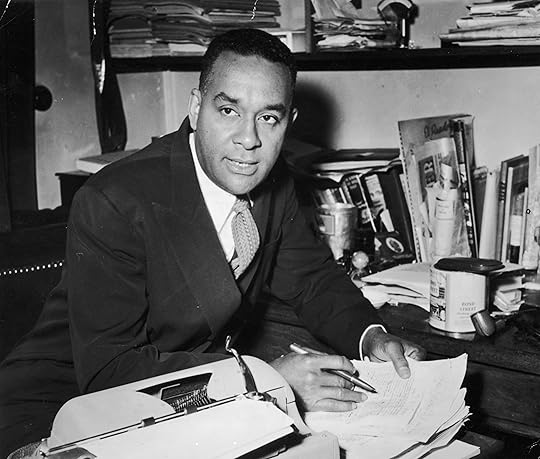
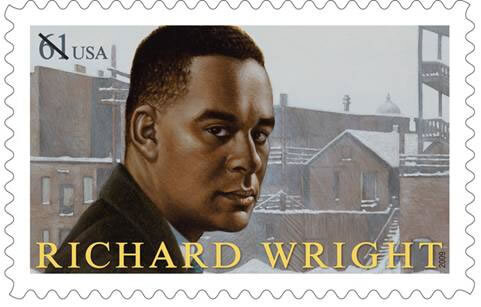
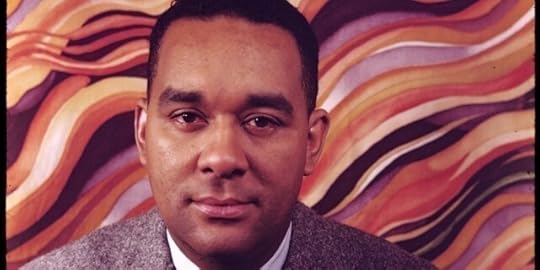
*Within my review are 3 images of Richard Wright, including one on a postage stamp.
Profile Image for Alan (on December semi-hiatus) Teder.
2,706 reviews250 followers
August 5, 2021
Underground Son
Review of the Library of America hardcover edition (Unpublished manuscript from 1941/42, first published April, 2021)

I read Richard Wright's autobiography Black Boy (1945/2020) in its 75th Anniversary expanded edition only earlier this year, thanks to a subscription to Shakespeare & Co.'s Year of Reading Lost Treasures. It was interesting to read there in the biographical timeline information about the lost, unfinished and/or unpublished early Wright works such as the first published story The Voodoo of Hell's Half Acre (1923) [no copies have been found of the newspaper where it was first printed], the unfinished early novels Little Sister (1939) & Black Hope (1941) and the early rejected novels such as Cesspool (1935) [later published as Lawd Today! (1963)], Tarbaby's Dawn (1937, still unpublished) and The Man Who Lived Underground (1941-42). As fate would have it, the latter has now been published in 2021.

The plot is easily summarized.

This newly published 2021 edition includes the essay Memories of my Grandmother which provides an extremely thorough background to the themes which are either overt or hidden in The Man Who Lived Underground. At first you can't even imagine how Wright's grandmother's religious faith would even relate to the novel, but Wright explains it with a great amount of detail. Even the fantastical story about someone living underground was based on a real-life incident in Hollywood, California that Wright read about in a True Detective magazine. The religious parallel to an innocent man condemned for crimes he didn't commit and who later 'rises' was the main metaphor that I drew from the story, but Wright's essay explains so much more about his grandmother's view of the world which was not 'real' to everyone else.

80 years later, this story still has the power to shock and disturb. The Library of America has filled a significant publishing gap in Wright's works by finally producing this excellent edition which includes Afterwords by Wright's daughter and grandson.

Trivia and Links
‘It couldn’t be more relevant’: the unseen Richard Wright novel finally getting its due by David Smith for The Guardian April 22, 2021.

Kenya Barris adapting The Man Who Lives Underground for Paramount by Lacey Rose for The Hollywood Reporter, June 23, 2021.
Profile Image for Mary.
476 reviews944 followers
September 1, 2021
Part 1 was gritty and real, part 2 was very surreal, part 3 was a combination of both - with a perfect ending - but really, I wonder if part 2 was actually how it ended, and part 3 never happened, or maybe nothing happened after part 1 except

A book from the 1940's seemingly sent as a perfect companion to the horror of summer 2020.
Profile Image for L.S. Popovich.
Author 2 books459 followers
January 11, 2025
A posthumously published novel by Wright, who told this story in his collection Eight Men. The expanded version is full of pathos and rage. Injustice in America was nowhere better elaborated than this author's poignant works.
This makes for a great shorter foray into the awful relations between races at this time. Like his protagonists in Outsider and Native Son, Wright takes a Dostoyevskian view toward crime. The commission of crime seems to entail a poisoning of the soul. Guilt is excruciating. But as the author details in his breathtaking afterward, the strained innocence of his protagonist and his subsequent desperation are a direct product of a sort of inherited guilt, a put-upon guilt, a construct of society capable of physically destroying a person.
In short, this is a tale of a wrongly accused man who lives underground briefly, pulling off absurd though ultimately unrecognized revenge from the shadows because there was only one fate waiting for him from the beginning, the fate he was doomed to suffer as a result of arbitrary factors inherent in society.
A powerful and heart-wrenching and absorbing tale which is slightly overshadowed by his 2 masterpieces. Obviously worth reading for his unadorned portrayal of hatred and despair, and the surprising essay included in the addition, which greatly enhances the reading experience.
Profile Image for Michelle.
653 reviews192 followers
June 9, 2021
This is a previously unpublished novel by literary great Richard Wright. In its original publication it was a short story. Here it is presented alongside Wright's thoughts on his upbringing, religion and influences.

Fred Daniels is an honest upright man. He is a husband and soon-to-be father. Then one day he is rustled up by the cops and accused of a crime he did not commit. He is beaten, brutalized and forced to sign a confession. When he sees his chance he escapes and runs underground. Down in the darkness he is able to see more as a man apart from the world.

The Man Who Lived Underground has so many parallels with today's world. The section that follows - "Memories From My Grandmother" - gives us insight into his writing process. Why certain characters were chosen and the symbolism behind some of the events in the book. I am always thrilled to get a peek inside a writer's mind but this one had special meaning. I thought I knew all of what Wright was getting at. But my perception was limited to my experience. Learning about Richard Wright's early life and belief systems gives you another lens in which to view the book. I would highly recommend that readers take time to delve into this essay and reread the book from Wright's perspective.
Profile Image for Andre(Read-A-Lot).
693 reviews285 followers
July 10, 2021
Right from the start, you clearly understand why this novel could not have been published in 1940s America. The world wasn’t ready then, and only now are people ready to engage the story of Fred Daniels. A young Black man who is accosted on his way home from his job as a laborer and is brutally beaten inside a police station until he signs a confession, copping to a crime he barely understands, much less commits. And that is just the beginning! Part of the book contains the essay, Memories of my Grandmother, which I humbly suggest you read first. The opening line is what made me go all in, “I HAVE NEVER WRITTEN anything in my life that stemmed more from sheer inspiration, or executed any piece of writing in a deeper feeling of imaginative freedom,……”

So reading that makes you want to see why he feels so strongly about this work and the essay rewards the reader in providing insights as to how this brilliant piece of writing came together. I believe having this information prior to reading the actual novel is extremely helpful as you ponder the unraveling of Fred’s mind or is it the unveiling of the collective mind of the aboveground, as Fred is underground contemplating his next move and how his life will be impacted by his admission of guilt. Because, we’re all guilty! Right! Right? Richard Wright is genius. And this stand as proof. The Man Who Lived Underground is not to be simply read, but experienced. It is an experience I will look to have more than once. Amazing!!!
Profile Image for sandra. .
6 reviews1 follower
February 3, 2021
Richard Wright is my favorite author so when I saw that this book was forthcoming I knew I had to request a prepub edition. Netgalley provided me a copy in exchange for a review.

I read Wright's "Native Son" and was instantly enamored by his writing. I've read all of his fiction and consider his lesser-known works such as "The Long Dream," "Lawd Today!," and "The Outsider" as near perfect novels.

The Man Who Lived Underground was originally published as a short story and included in the "Eight Men" anthology. This is the full, unedited story published for the first time.

It is very classically Wright in content, but the writing style is different. I feel that it still feels unfinished, even though the afterward essay (also penned by Wright) deems it as complete.

I still believe everyone should read this story, but it's not the same Wright that I know.
Profile Image for Sanjida.
486 reviews61 followers
June 24, 2021
This is a surreal, profound, brilliant, and also angry (because Wright) piece of literature. It deserves to be recognized as a classic.
Profile Image for Cody.
989 reviews301 followers
August 7, 2025
To accomplish what is doubtlessly his most gonzo novel, the normally arrow-straight Wright deploys some pretty fantastical dream logic to—no shit—exorcise the lingering creep of his long-dead Grandma. The gift here is that “Man Underground,” originally pared down and defanged into a publishable short story form in the 1940s, finally gets the full fettle of its original length. The whole deal turns out to have been Wright’s most singular, outré novel all along. You don’t have to trust me on the wonkiness, all of it endearing, with so august a name on the cover; he may be well regarded for a reason.

Trust too his instincts and just go with it—the unlikelier things get the more they reveal, paradoxically. The addended essay “Memories of My Grandmother” finds Wright explicating his sometimes fuck-odd thought process behind his character’s none-more-literal absorption under the, um, ground. It’s the rare companion piece that is essential.

I do believe the entire novel is a honeycomb of metaphors, but I’m also unable to parse between sub, super, meta, and surface texts, so…hey, did I mention there were cop car chases and shit? Yeah! And, even more mind-altering, it turns out the organist from Floyd didn’t write Native Son, after all. This will doubtlessly inform any remaining future listens to “Astronomy Domine,” at least for me.


*Fun fact for kids: both of them would’ve been ‘Wright, Dick’ back in the days we young weans passed our endless summer days (and summer nights!) decoding that greatest of all postmodernist doorstops, the Telephone Directory. Talk about your literary puzzles—Finnegans, everywhere, blush.
Profile Image for Qiana Groves.
350 reviews64 followers
April 26, 2021
The Man Who Lived Underground tells a tale that far too many black men can relate to. A black man getting off from work and being wrongfully accused of a double homicide that he did not commit. Not only did he not commit the murders, but the arresting police officers know that he didn't as well. "'I think he'll do, Lawson,' said the tall, raw-boned policeman who had not spoken before."

Frank Daniels is an upstanding citizen, working and trying to provide for his family. His only crime was being a black man in the wrong place at the wrong time. Not only was he wrongfully accused, but he was also beaten and tortured until he confessed to a crime he did not commit. "He filled his dry mouth with cold water and was in the act of swallowing when he saw a white fist sweeping toward him; it struck him squarely in the stomach at the very moment he had swallowed the water and and his diaphragm heaved involuntarily and the water shot upward through his chest and gushed forth at his nostrils, leaving streaks of pain in its wake. At the same instant the glass leaped from his fingers and bounded with a ringing twang into a corner. Coughing, he pitched prone on the floor, face first, and lay twitching. Pain balled in his stomach and he began to gag amid his coughing as more water trickled through his nostrils and lips."

After his confession, the "nice" officers, Lawson, Johnson, and Murphy, take Frank to see his pregnant wife. "No one can say we mistreated him if we let 'im see his old lady, hunh?" She gets so worked up seeing her bloodied and bruised husband and immediately goes in to labor. Being the nice officers that they are, they hurriedly get Mrs. Daniels to the hospital so her baby can be delivered. It's at that hospital that Frank decides to run. "A tremor of relief went through his body and he dropped to his knees and his hands reached for the curved rim of the the manhole cover. The siren hooted its warning and, with a gasp of physical strength, he jerked the cover far enough off the manhole to admit his body. Resting the weight of his body on both of his arms, with his fingers clutching at the rim of the manhole, he swung his legs quickly over the opening and lowered himself quickly into the rustling, watery blackness of the underground."

Frank is only in "the underground" for three days, but of course it feels like so much longer to him. He embarks on a journey that is somewhat enlightening. Helping him to see himself and others in their true form. "And again he was overwhelmed with that inescapable emotion that always cut down to the foundations of life here in the underground, that emotion that told him that, though he were innocent, he was guilty; though blameless, he was accused; though living, he must die; though possessing faculties of dignity, he must live a life of shame; though existing in a seemingly reasonable world, he must die a certainly reasonless death."

The start of this book was extremely hard for me. Reading about the torturing of an innocent black man, while waiting on the verdict on the George Floyd case, in addition to reading about Ma'Khia Bryant was draining. It brought tears to my eyes just knowing that a book written so long ago still has relevance. Once I was able to push through that, the book flowed, and I enjoyed it. Richard Wright is a true wordsmith. I loved the eloquence of the writing; I loved the themes, and the way the book ended held true to reality. I am forever grateful to whoever decided this book needed to be introduced to the world.
Profile Image for Octavia.
366 reviews80 followers
November 1, 2022
An Extraordinary Masterpiece written by Richard Wright! This novel follows Fred Daniels, a Black man; walking two blocks to the bus line. We learn that the protagonist is tired because he has just gotten paid for his job. Even so, Fred is looking forward to church the next day and the feeling of contentment is satisfying, at that moment. UNTIL...
After reading his novel, it reminded me of why Richard Wright has always been my favorite male author. He was Blessed with the Gift & capability of drawing readers right into the pages of his novels. I felt the same way after reading, Black Boy, years ago. I must admit, that was my favorite book by this author, until now. There are so many wonderful elements of this novel. The Rhythmic Flow of The Man Who Lived Underground is Phenomenal. But, that's just the tip of the iceberg.
this one will have you wondering, from beginning to end...
By the time I reached page 52, I thought: Excellent! Then, at page 102, I thought: Brilliant! Then reaching page 179, my thoughts: Pure Genius!
Richard Wright's writings will Forever keep him on the Top 10 Influential Black
Authors List. Lastly, this novel was initially denied publication in 1941 because the subjects that were addressed were deemed "unbearable" at that time. Still and all, the descendants of Richard Wright brought it back to life, 80 years later.
Profile Image for michal k-c.
894 reviews121 followers
April 22, 2021
the accompanying essay really pulled this together for me. Wright detailing what it was like reading Gertrude Stein to some of his friends in a poorly lit basement was a big highlight, and explicitly calling his writing jazz and also mentioning his handling of schizophrenia made me wonder - has anyone ever written on schizoanalysis and jazz? seems like there's maybe something there but i am not going to pursue the thought any further than that. anyway the novel is like Ellison meets Dostoevsky.
Profile Image for Derek.
1,843 reviews140 followers
February 5, 2022
This isn’t a perfectly told tale but the concept is brilliant. The novel is apparently predicated on a real story but both title and plot seem intimately linked to Dostoyevsky’s Notes from the Underground. How perfect to think of Dostoyevsky’s alienated protagonist in the context of America’s racial landscape? Of course, it’s really uncanny to see the author’s description of police abuse in light of modern controversies.
Profile Image for Mandy.
3,621 reviews331 followers
March 27, 2021
When The Man Who Lived Underground was turned down by his publisher in 1940, Richard Wright, perhaps best known today for his novel Native Son, put the manuscript to one side. Shortly afterwards he reworked some of the themes into a short story, which was accepted for publication. The full novel is now published for the first time, with a companion essay “Memories of my Grandmother” and an afterword from his grandson Malcolm Wright, which put the novel into context. And what a novel it is, powerful, moving, and with unavoidable modern resonances, which make reading it a visceral and disturbing experience. It’s the story of Fred Daniels, who while walking home after work one day, is picked up by the police and accused of a double murder. The police are determined to “solve” the case and randomly pick on Daniels as the culprit. He manages to escape their custody, jumps into a manhole, and spends some time underground where his life takes on an almost surreal aspect. As well as being an all too familiar indictment of police brutality towards black men both then and now, the book is also an intriguing allegory of black experience in general, often forced underground, or into the “lower depths”, unseen, but the allegory is never forced or didactic and can, in fact, be ignored, and the work taken as a realistic portrayal of a man on the run. Morality, crime and guilt, racism, culpability and injustice are all explored in this relatively short text, and I found it a compelling read.
Displaying 1 - 30 of 551 reviews

Can't find what you're looking for?

Get help and learn more about the design.