

What do you think?
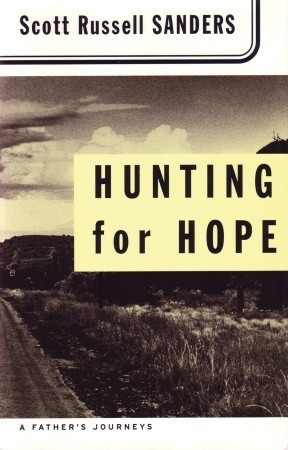
Hunting for Hope: A Father's Journeys
After an angry confrontation with his son on a hiking trip intended to restore their relationship, Scott Sanders realizes that his own despair has darkened his son's world. In Hunting for Hope he sets out to gather his own reasons for facing the future with hope, finding powers of healing in nature, in culture, in community, in spirit, and within each of us.
- GenresMemoirNonfictionEssays
200 pages, Paperback
First published August 25, 1998
About the author
Scott Russell Sanders
72 books131 followersScott Russell Sanders is the award-winning author of A Private History of Awe, Hunting for Hope, A Conservationist Manifesto, Dancing in Dreamtime, and two dozen other books of fiction, personal narrative, and essays. His father came from a family of cotton farmers in Mississippi, his mother from an immigrant doctor’s family in Chicago. He spent his early childhood in Tennessee and his school years in Ohio, Rhode Island, and Cambridge, England.
In his writing he is concerned with our place in nature, the practice of community, and the search for a spiritual path. He and his wife, Ruth, a biochemist, have reared two children in their hometown of Bloomington, in the hardwood hill country of southern Indiana. You can visit Scott at www.scottrussellsanders.com.
In August 2020, Counterpoint Press will publish his new collection of essays, The Way of Imagination, a reflection on healing and renewal in a time of climate disruption. He is currently at work on a collection of short stories inspired by photographs.
In his writing he is concerned with our place in nature, the practice of community, and the search for a spiritual path. He and his wife, Ruth, a biochemist, have reared two children in their hometown of Bloomington, in the hardwood hill country of southern Indiana. You can visit Scott at www.scottrussellsanders.com.
In August 2020, Counterpoint Press will publish his new collection of essays, The Way of Imagination, a reflection on healing and renewal in a time of climate disruption. He is currently at work on a collection of short stories inspired by photographs.
Ratings & Reviews
Friends & Following
Create a free account to discover what your friends think of this book!
Community Reviews
Displaying 1 - 28 of 28 reviews

September 29, 2023
Catching Up…
This will be more about my feelings about what I read…
In his book, the author shares about when the Shawnee and Chippewa (and others) would go out on their hunts or vision quests or long journeys.
He mentions how each traveler would carry in a small rawhide pouch various tokens of spiritual power--perhaps a feather, a bit of fur, a claw, a carved root, a pebble or a shell.
These were not simply magical charms; they were reminders of the energies that sustain all of life.
By gathering these talismans into their “medicine” pouch, the hunter, traveler, or visionary seeker was recollecting the sources of healing and bounty and beauty.
I do know that if my medicine pouch were filled with a need for control and answers, I would easily be seized with fear… or panic, rage, despair or exasperation. Does this sound familiar?
But what if? What if the "tokens" in that pouch are not a magic wand to undo life, but instead, the power and the freedom to embrace the life we have been given?
Not the circumstances we are in…but this amazing Life?
Even in the chaos of these months, past 4 years even, we were to give ourselves permission to see the beauty of this amazing Life?
The gift of life is truly in this present moment.
I love Blaise Pascal’s reminder that, “In difficult times carry something beautiful in your heart.”
In recent days, I haven’t thought specifically about carrying a medicine pouch, but I do have determination, love, HOPE, faith, a will to live peacefully, joy, and the freedom to help activate healing and redemptive forces in the people who are around me.
Okay. So, it isn't a sacred claw or bit of fur. But it works. Every time.
I don't know what each of us as readers are carrying in our medicine pouch today. I hope that whatever it is, it has the gift to nourish and heal.
And…
That we know how to use our Power.

September 14, 2013
I find this "Hunting for Hope" book awful. It's like that Barbara Ehrenreich "holy shit, poor people exist and they're JUST LIKE US" Nickled & Dimed book, only if she hadn't bothered to even do a bit of slumming by working as a waitress, maid, and Walmart cashier, but rather just ran into a waitress on the street and almost said "hi." And instead of quoting Marx she quoted the letters of the Apostle Paul. And if she weren't a journalist, and thus had prose like that of a 10th grader just learning how to be pretentious, and not yet having encountered the word "trite." To wit, the opening:
"On a June morning high in the Rocky Mountains of Colorado, snowy peaks rose before me like the promise of a world without grief. A creek brim full of meltwater roiled along to my left, and to my right an aspen grove shimmered with new leaves. Bluebirds darted in and out of holes in the aspen trunks, and butterflies flickered beside every puddle, tasting the succulent mud. Sun glazed the new grass and licked a silver sheen along the boughs of pines.
"With all of that to look at, I gazed instead at my son's broad back as he stalked away from me up the trail. Sweat had darkened his gray T-shirt in patches the color of bruises. His shoulders were stiff with anger that would weight his tongue and keep his face turned from me for hours...."
Then there's this gem of a sentence, at the end of the second page:
"I wished to track our anger to its lair, to find where it hid and fed and grew, and then, if I could not slay the demon, at least I could drag it into the light and call it by name."
Dreck like this is the reason I hate memoir as a genre--too much of it is self-indulgent bullshit like this, of overprivileged white folk droning on about how their unimaginably privileged / First-World problems have given them these earth-shattering insights into the Human Condition. I've suffered through thirty pages of this steaming pile of horseshit, and so far I've learned that some upper-middle-class white guy can afford whitewater rafting excursions to "discover the source of that strife" between him and his then-17-yr-old son, the "strife" being how "For the previous year or so, no matter how long our spells of serenity, Jesse and I had kept falling into quarrels, like victims of malaria breaking out in fever. We might be talking about soccer or supper, about the car keys or the news, and suddenly our voices would begin to clash like swords."
And in the first several pages he's already told his readers the source of that "strife:" he's pessimistic about the state of the world. He and his son keep "falling into quarrels" because, his son tells him, "Your view of things is totally dark. It bums me out. You make me feel the planet's dying and people are to blame and nothing can be done about it. There's no room for hope. Maybe you can get by without hope, but I can't. I've got a lot of living still to do. I have to believe there's a way we can get out of this mess. Otherwise what's the point? Why study, why work--why do anything if it's all going to hell?"
And then the author pisses and moans like some privileged wanker who's never known actual despair, and likely not even minor problems like running out of shampoo: "Had I really deprived my son of hope? Was this the deeper grievance--that I had passed on to him, so young, my anguish over the world? Was this what lurked between us, driving us apart, the demon called despair?"
OH MY GOD, SOME PRIVILEGED FUCKWAD TEEN RESENTS HIS PRIVILEGED FUCKWAD DAD FOR BEING A WET BLANKET, SO THEY GO CAMPING. ALERT THE MEDIA.
This book reads like an Onion article. I wish it were satire, but sadly it's not. How the hell can someone who's clearly never known deprivation and despair have the slightest bloody thing to say about hope? And it's also discouraging to read people praising Sanders' ridiculously cliched and amateurish prose. It makes me miss the subtlety and abstraction of the Tom Clancy novels I read when I was 15.
"On a June morning high in the Rocky Mountains of Colorado, snowy peaks rose before me like the promise of a world without grief. A creek brim full of meltwater roiled along to my left, and to my right an aspen grove shimmered with new leaves. Bluebirds darted in and out of holes in the aspen trunks, and butterflies flickered beside every puddle, tasting the succulent mud. Sun glazed the new grass and licked a silver sheen along the boughs of pines.
"With all of that to look at, I gazed instead at my son's broad back as he stalked away from me up the trail. Sweat had darkened his gray T-shirt in patches the color of bruises. His shoulders were stiff with anger that would weight his tongue and keep his face turned from me for hours...."
Then there's this gem of a sentence, at the end of the second page:
"I wished to track our anger to its lair, to find where it hid and fed and grew, and then, if I could not slay the demon, at least I could drag it into the light and call it by name."
Dreck like this is the reason I hate memoir as a genre--too much of it is self-indulgent bullshit like this, of overprivileged white folk droning on about how their unimaginably privileged / First-World problems have given them these earth-shattering insights into the Human Condition. I've suffered through thirty pages of this steaming pile of horseshit, and so far I've learned that some upper-middle-class white guy can afford whitewater rafting excursions to "discover the source of that strife" between him and his then-17-yr-old son, the "strife" being how "For the previous year or so, no matter how long our spells of serenity, Jesse and I had kept falling into quarrels, like victims of malaria breaking out in fever. We might be talking about soccer or supper, about the car keys or the news, and suddenly our voices would begin to clash like swords."
And in the first several pages he's already told his readers the source of that "strife:" he's pessimistic about the state of the world. He and his son keep "falling into quarrels" because, his son tells him, "Your view of things is totally dark. It bums me out. You make me feel the planet's dying and people are to blame and nothing can be done about it. There's no room for hope. Maybe you can get by without hope, but I can't. I've got a lot of living still to do. I have to believe there's a way we can get out of this mess. Otherwise what's the point? Why study, why work--why do anything if it's all going to hell?"
And then the author pisses and moans like some privileged wanker who's never known actual despair, and likely not even minor problems like running out of shampoo: "Had I really deprived my son of hope? Was this the deeper grievance--that I had passed on to him, so young, my anguish over the world? Was this what lurked between us, driving us apart, the demon called despair?"
OH MY GOD, SOME PRIVILEGED FUCKWAD TEEN RESENTS HIS PRIVILEGED FUCKWAD DAD FOR BEING A WET BLANKET, SO THEY GO CAMPING. ALERT THE MEDIA.
This book reads like an Onion article. I wish it were satire, but sadly it's not. How the hell can someone who's clearly never known deprivation and despair have the slightest bloody thing to say about hope? And it's also discouraging to read people praising Sanders' ridiculously cliched and amateurish prose. It makes me miss the subtlety and abstraction of the Tom Clancy novels I read when I was 15.

February 25, 2017
Each chapter is an essay regarding a particular reason to have hope in a world that often looks rather bleak. Topics covered include an appreciation of nature, of skill, of simplicity, etc.. Most of the topics were interesting and had some rather insightful points that I found relatable, but a few of them kind of came off as duds. For the most part it felt like one of those books where you sort of nod your head and agree at most of the things said, but nothing feels really groundbreaking. I don't think I'll recall anything in particular a few years from now, but I've said that before about books only to be proven wrong. The writing is nice - the nature bits are well described. It's worth a read if you're into environmentally friendly, lifestyle non-fiction.

November 13, 2008
Scott is one of the most humble, gentle, humane people I've known - and his writing is simply a pleasure. Here, he confronts his son's question: why should I be optimistic in such an age as this? Scott's answers - or better, his journey toward those answers - are forthright, hard-earned, and real. Scott's thoughtful reflections are a balm.

June 16, 2019
I purchased this book years ago when I was taking a class about how to write creative nonfiction. From a list of approved authors, I was supposed to choose any memoir or book of essays, report what I learned, and then mimic the author's style of writing. All I remembered from that experience was this book reflects on nature and I enjoyed it.
I picked up the book again because my son showed me he was reading it. He's been dealing with philosophical and spiritual issues for years now and he thought this book might help. I don't know how far he read before it ended up on his bedroom floor mixed up with clothes, papers, and other debris. I was looking for something else and thought I'd borrow it back. Since I didn't remember the details, I wanted reassurance it would lead him toward hope. I didn't need to worry.
The book begins with the author's son feeling discouraged by his dad's negativity and despair about the state of the world and the people in it. That gives Sanders the idea of writing a list of his reasons to hope and then turning it into a book to express those reasons and to explore his thoughts for his children and other young people. Among what he says leads him to hope are family, fidelity, wildness, beauty, skill, and simplicity. He also writes about science, love, gratitude, healing, and compassion. He acknowledges that though there are many reasons to worry and feel sad about the state of our world, we can open our eyes and hearts to positive, happy, hopeful things. Detailing his experiences with nature and creation are a big part of how he connects to and expresses those thoughts. His son asks if he believes we can change. He says he does. His thoughts are important and helpful.
Since, I don't think my son finished reading this book, I think I'll put it back under the teenage tornado in his room. I imagine he will find it again. If he continues reading, Sanders will point him in a potentially hopeful direction.
My only complaint is I wearied of reading about Sanders' thoughts and experiences. I'd prefer to be challenged by something that teaches and challenges me a little more. Maybe it's just a mood thing.
I picked up the book again because my son showed me he was reading it. He's been dealing with philosophical and spiritual issues for years now and he thought this book might help. I don't know how far he read before it ended up on his bedroom floor mixed up with clothes, papers, and other debris. I was looking for something else and thought I'd borrow it back. Since I didn't remember the details, I wanted reassurance it would lead him toward hope. I didn't need to worry.
The book begins with the author's son feeling discouraged by his dad's negativity and despair about the state of the world and the people in it. That gives Sanders the idea of writing a list of his reasons to hope and then turning it into a book to express those reasons and to explore his thoughts for his children and other young people. Among what he says leads him to hope are family, fidelity, wildness, beauty, skill, and simplicity. He also writes about science, love, gratitude, healing, and compassion. He acknowledges that though there are many reasons to worry and feel sad about the state of our world, we can open our eyes and hearts to positive, happy, hopeful things. Detailing his experiences with nature and creation are a big part of how he connects to and expresses those thoughts. His son asks if he believes we can change. He says he does. His thoughts are important and helpful.
Since, I don't think my son finished reading this book, I think I'll put it back under the teenage tornado in his room. I imagine he will find it again. If he continues reading, Sanders will point him in a potentially hopeful direction.
My only complaint is I wearied of reading about Sanders' thoughts and experiences. I'd prefer to be challenged by something that teaches and challenges me a little more. Maybe it's just a mood thing.

December 10, 2023
I wanted to enjoy this more than I did. I appreciate his perspective but believe that what was said with two words should have been said with one. Overall, not something I regret having read, but certainly something I would not choose to read again.

May 14, 2017
A book every father should read.
Lovely.
Lovely.
September 18, 2016
This book was painful. I read it as a begrudging sort of solidarity with my wife who was assigned this book for a college class. [Don't even get me started on the problems with assigning this book to students.]
Anyway, the book chronicles Sanders's search for hope after an argument with his son. Okay, so first of all, Sanders conflates a search for hope with a search for meaning amidst a life of privilege. He so desperately wants to be important enough to warrant the praise of Krakauer's Into the Wild or Frankl's Man's Search for Meaning.
Something Sanders is good at? Writing about nature. I am by no means an outdoor enthusiast, but he was able to describe nature and the environment in a way that made the idea of sleeping on the frozen ground after hiking and sweating all day seem worth it. There was a point in the book when I thought Sanders was going to make his search for hope into a plea for people to treat the environment better and to preserve the Earth for future generations.
But... No such luck.
Instead, he spends seemingly endless pages describing a version of nature that seeks to make you feel guilty for liking grocery stores and mattresses. With this point, Sanders makes it clear that he doesn't understand anyone that works paycheck to paycheck or that didn't receive a liberal education extolling the values of Thoreau and memorizing poetry.
My biggest problem with all of this is not that he developed this view of the world or that he decided to chronicle his existential crisis. To each their own and all that. However, I cannot manage to get past the authoritative tone of superiority with which he tries to present his subjective understanding of the world as objective Truth.
Anyway, the book chronicles Sanders's search for hope after an argument with his son. Okay, so first of all, Sanders conflates a search for hope with a search for meaning amidst a life of privilege. He so desperately wants to be important enough to warrant the praise of Krakauer's Into the Wild or Frankl's Man's Search for Meaning.
Something Sanders is good at? Writing about nature. I am by no means an outdoor enthusiast, but he was able to describe nature and the environment in a way that made the idea of sleeping on the frozen ground after hiking and sweating all day seem worth it. There was a point in the book when I thought Sanders was going to make his search for hope into a plea for people to treat the environment better and to preserve the Earth for future generations.
But... No such luck.
Instead, he spends seemingly endless pages describing a version of nature that seeks to make you feel guilty for liking grocery stores and mattresses. With this point, Sanders makes it clear that he doesn't understand anyone that works paycheck to paycheck or that didn't receive a liberal education extolling the values of Thoreau and memorizing poetry.
My biggest problem with all of this is not that he developed this view of the world or that he decided to chronicle his existential crisis. To each their own and all that. However, I cannot manage to get past the authoritative tone of superiority with which he tries to present his subjective understanding of the world as objective Truth.
July 2, 2010
Scott Russell Sanders writes with a beautiful economy and grounded sensibility that makes him intensely readable. Like, you'll read a sentence and all you can think is, "wow, that's exactly how I've been feeling about that issue, but articulated with incredible eloquence and grace." That said, there are times when his vision of what our society must become in order to stop destroying the earth is a little bit candy and lollipops... I'd love to be able to believe that his vision of caring, interconnected communities who worry about others more than themselves and voluntarily limit their consumption might be possible, but I'm not sure that's the case. Still, SRS is a must-read author for anyone working in conservation or environmental fields. One of those writers that lifts you up, makes you think, and infuses hope.

September 15, 2012
This summer I was talking to a friend who is rather pessimistic about the state of our nation and world. He has a degree in ecology/environmental-something and he knows exactly what a hole we are working ourselves into. He told me that he has had a hard time finding hope in our crazy, consumer driven age. This book opens with that same kind of situation. The following premise of the book is the author searching for and validating reasons to have hope even in the midst of the destruction in which we are living. It is a collection of essays by a very good writer, so the prose is distinctive and poignant.
January 23, 2008
This is a true story about the author's relationship with his children, and specifically his son. I enjoyed this read because of how deeply the author explores his emotions and behavior towards his son, and how this in turn strongly influences his sons growth. I also value highly his continued struggle to be a better father figure (although he is great anyways!), and I think this is partly because of the high esteem I have for my own father (who gave me this book). It isn't long, but read it, especially if you like the outdoors.

June 26, 2011
Sander's son states that he has lost hope for the future and the world in general. He wonders what the point of everything is if the world keeps going in the direction it is going. Sanders then sets out to find out what hope is and what he can do to restore that in his son and his son's generation. Most of the book is really quite interesting, there were a few parts that I felt bogged down in and skipped. I think many of the issues he covers are dead on and we do need to jump on board to save our planet, our youth, and ourselves.
April 27, 2008
Scott Russell Sanders was a professor of mine in college. I love this collection of short stories, it helps to try and answer the question... in this world of ours, is there any reason left to hope? Sanders not only gives us reasons, but he forces us to face the good aspects of our own lives.
November 4, 2008
I read an excerpt from this book last quarter and felt called to read it. I'm often torn between feeling like the world is going to hell and wanting to save it, maybe this book will give help me with some of my indecision.
April 7, 2013
The writing is good.
I do not agree with Sanders opinion that skills are going to waste. For every old skill that is fazed out, a new one replaces it. And all the skills that are fazed out are no longer necessary, so to hold on to them is useless. (they are still written about however.)
I do not agree with Sanders opinion that skills are going to waste. For every old skill that is fazed out, a new one replaces it. And all the skills that are fazed out are no longer necessary, so to hold on to them is useless. (they are still written about however.)

October 29, 2013
If you have cynicism, fatigue from the weight of the world and sometimes just wonder how we haven't blown everything up already, then read this book for a change of heart. The characters can relate and the story is mixed with forays into the meaning and souces of hope.
October 29, 2015
I read this book for school, and I must say that Mr. Sanders is a very good writer. His word pictures are fresh and stories mesh well. But this book didn't line up with my Christian beliefs, so it's not one I would have chosen to read on my own.

April 25, 2007
I never have read this all the way through. I just read chapters at a time and never in order. I really do not think you have to read all of it to understand what each chapter is saying.

May 18, 2007
Scott is deeply honest, exposing his own shortcomings and frustrations while reminding us to strive for more out of each other and life. The book is centering, healing.
September 19, 2007
As a father, Sanders looks for answers to his children's and his students' questions about hope. Lots of great nature descriptions here as well.

June 20, 2008
Get this one for next Father's Day! Lots and lots of preachable great stuff from Mr. Sanders, including church-appropriate readings.

July 11, 2008
a brilliant book by one of my favorite professors whose class made (and this book) made me look at my relationship with one of my parents in a wonderful way.


October 21, 2010
Sanders helps the reader find beauty in human experience. Great messages, and especially welcome in times of trial.

January 21, 2013
Possibly my favorite non- fiction ever. Beautifully written and perfect thing to boost spirits on a bad day.

July 29, 2016
A really good book of essays ( I re-read it recently and I rarely do that). Some things to aspire to as a human being and as a father.
April 1, 2015
Loved it. Gave copies as gifts.

Read
July 25, 2018One of my favorite books about fatherhood is Scott Russell Sanders' Hunting for Hope. The book begins with an angry conflict between Sanders and his teenaged son, Jesse, as they trek through the Rockies on a hiking trip. The growing distance between father and son becomes clear as Jesse challenges his father's despair about climate change, the destruction of the natural world, and the seemingly inevitable decline of planet Earth as we know it. Sanders' life work as a nature writer has been to fight the commercial, economic, and cultural status quo—important, but seemingly futile work that left young Jesse resentful and wondering what hope his generation has if his father's generation has given up. This sparks in Sanders a new kind of work that seeks to move past what has been lost and instead focus on how amazing our world truly is. Thus, the book proceeds through Sanders' reflection on things that provide him with hope—like Wildness, Family, Simplicity, Fidelity. Sanders reflects on a time he and Jesse worked, together with his son-in-law and that young man's father, to prepare firewood for the winter; four men, splitting logs and bonding in the woods. He shares how overwhelmed he feels sometimes with his electronics, correspondence, obligations, and how a dinner at a friends' farm and a glorious sunset can revitalize him. Sanders still recounts science about how humanity is failing our planet, but he always brings the story back around to an antidote. The result of Hunting for Hope is a collection of life's beautiful experiences, enough to convince us, and hopefully Jesse, that there is always a reason to hope.
Displaying 1 - 28 of 28 reviews