Jump to ratings and reviews
Rate this book

Long Players: Writers on the Albums that Shaped Them

Rate this book
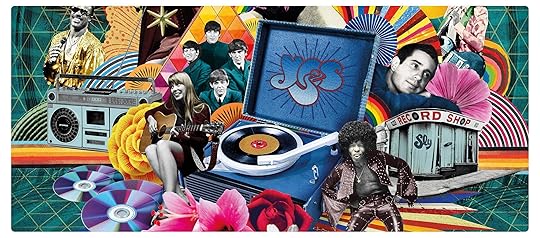
Fifty great writers reflect on the albums that shaped them in this captivating collection curated by the New Statesman 's Tom Gatti.

Our favorite albums are our most faithful we listen to them hundreds of times over decades, we know them far better than any novel or film. These records don't just soundtrack our lives but work their way deep inside us, shaping our outlook and identity, forging our friendships and charting our love affairs. They become part of our story.

In Long Players , fifty of our finest authors write about the albums that changed their lives, from Deborah Levy on Bowie to Daisy Johnson on Lizzo, Ben Okri on Miles Davis to David Mitchell on Joni Mitchell, Sarah Perry on Rachmaninov to Bernardine Evaristo on Sweet Honey in the Rock.

Part meditation on the album form and part candid self-portrait, each of these miniature essays reveals music's power to transport the listener to a particular time and place. REM's Automatic for the People sends Olivia Laing back to first love and heartbreak, Bjork's Post resolves a crisis of faith and sexuality for a young Marlon James, while Fragile by Yes instils in George Saunders the confidence to take his own creative path.

This collection is an intoxicating mix of memoir and music writing, spanning the golden age of vinyl and the streaming era, and showing how a single LP can shape a writer's mind.

Featuring writing from Marlon James, Ali Smith, George Saunders, Bernardine Evaristo, Ian Rankin, Rachel Kushner, Ben Okri, Patricia Lockwood, Sarah Perry, Neil Gaiman, Tracey Thorn, Clive James, Eimear McBride, Neil Tennant, Daisy Johnson, David Mitchell, Esi Edugyan, Deborah Levy, among many others.

224 pages, Hardcover

First published June 10, 2021

9 people are currently reading
467 people want to read

About the author

Tom Gatti

2 books3 followers

Ratings & Reviews

What do you think?
Rate this book

Friends & Following

Create a free account to discover what your friends think of this book!

Community Reviews

5 stars
25 (11%)
4 stars
73 (34%)
3 stars
91 (42%)
2 stars
18 (8%)
1 star
5 (2%)
Displaying 1 - 30 of 48 reviews
Profile Image for Peter Boyle.
581 reviews742 followers
October 7, 2021
What a terrific idea for a book this is. Edited by Tom Gatti of the New Statesman, it's a collection of pieces from fifty different writers about their favourite album - where they were in their life when they first heard it, what they like most about it and why it continues to mean so much to them.

And quite an esteemed list of authors it features too, with the likes of George Saunders, Eimear McBride and Marlon James all providing an account of their most treasured LPs. I found that the pieces I enjoyed most were about albums I shared a love for. Olivia Laing remembers those teenage years of playing R.E.M.'s Automatic for the People in her bedroom, and a letter from a pen-friend that had the lyrics of the gorgeous Find the River twisted around the envelope. Jason Cowley talks about his love for Talk Talk's magnificent The Colour of Spring and how he used to listen to it on a Walkman during a dreary two-hour bus commute to a job in London. The standout essay for me was David Mitchell discussing the first time he heard Joni Mitchell's Blue, a vivid recollection of buying the cassette the day after completing his A-Levels and pressing play, transforming his "understanding of what songs could do and what singers could be."

All in all, it's a wonderful blend of memoir and music criticism. My only complaint was that some of the pieces were too short - I found myself settling in for a good story of how the writer came to love an album I also admired, when it ended all too soon. But I have to say that I thoroughly enjoyed this engaging book, and it often sent me to Spotify to replay old favourites, and investigate intriguing bands and albums that I had yet to encounter.
Profile Image for Z..
320 reviews87 followers
January 27, 2022
Read about a third and then skimmed a few later essays. It's a quick read but not really engrossing enough to make it worth seeing through.

Apparently this started as an article (series?) in the New Statesman, and while these pieces would be fun to browse in a periodical there's nothing here to really justify the book treatment. The individual entries rarely exceed two pages, and, given the personal focus ("writers on the albums that shaped them"), that means there's hardly time to get past the obligatory "My older brother gave me this record when I was in high school and from then on nothing was the same!"-type stuff before we're on to the next essay. Some of the writers do their best within these parameters—Marlon James and Patricia Lockwood are both predictably evocative, for instance—but the format just doesn't lend itself to any kind of in-depth discussion of the music itself, let alone anything substantial about how that music might intersect with the particular writer's more literary concerns. (Though these questions are sometimes interesting to ponder independently; for instance, would you have expected the guy who wrote a 700-page, Booker Prize-winning novel about an episode in the life of Bob Marley to pick... a Björk record?)

Editor Gatti apparently asked the writers to choose albums based on their personal significance rather than any sort of objective goodness, but—as other reviewers on here point out—the selections nevertheless tend towards the canonical (two Bowies, two Joni Mitchells, A Love Supreme, Revolver, OK Computer) with only occasional surprises (Lizzo's Cuz I Love You). I'm not entirely convinced that some of these writers were really as hip in their formative years as their selections imply, and the predictability undercuts the unique, individual element which is supposed to be the main selling point in the first place. More selfishly, there are hardly any albums represented here which I have any strong ties to myself, and half the fun of this sort of thing is reading someone else's eloquent gushing about one of your own faves.

Finally—if I may put on my millennial hat for a moment—while Gatti's introductory essay about the evolution of the album as a form is one of the stronger pieces of writing here, his concerns that the advent of streaming and playlists have weakened the impact of albums as unified artistic works seem laughably out of touch in a media landscape where a Kendrick Lamar album can win the Pulitzer Prize (in fairness, Gatti does mention this), a listening party for a new Kanye LP can sell out a stadium and set streaming records, YouTube album reviewer Anthony Fantano is profiled in the New York Times, and trading "Topsters" (charts ranking the creators' favorite releases) is a beloved hobby of online music obsessives across genres and platforms. If anything, I'd argue easy access to virtually everything every recorded has created more appreciation for albums, especially obscure ones, than they could ever enjoy back in the days when fans were limited to radio singles and whatever they could scrounge from catalogs and their local record stores.

In short: albums aren't going anywhere anytime soon. But if I want good writing about them I'll probably just stick to 33 1/3 .
Profile Image for Michelle Curie.
1,082 reviews458 followers
March 30, 2021
I was born in the mid-90s, which means I'm just about old enough to having witnessed and experienced the rise of the walkman, the joy of buying CDs and their overthrow by streaming services. In the age where everything is available digitally, however, there's magic to be found in the conscious, the analog, the Long Players. This is a love story dedicated to this particular sentiment.


So apparently this is the book version of an article published by the New Statesman in 2017, in which writers were asked to name their favourite albums. In here, reporter Tom Gatti allows them to expand on their choices, retell their memories of first listens and everything connected to the experiences that were to follow.

It's like a love letter to the power of music. Before diving into the guest features, Gatti dedicated about a fifth of the book to the development of music listening and while meant as only an introduction, this was probably my favourite part of this whole thing. He raises some interesting points, too, how the way music is listened to has always affected the product itself, and that it isn't a new phenomenon only emerged after artists had begun to get their songs into Spotify playlists:

"Since pop music made its way onto the wireless in the sixties, long noodling introductions have been avoided by bands in search of a radio hit. The jukebox introduced the 'shuffle' in the fifties; the cassette enabled mixtapes (proto-playlists) in the seventies and eighties."

The guest features are, as so often with these books, a mixed bag. I appreciate that in the appendix a short one-sentence biography of the writers featured in here was included, as with many, I had no clue who they were. I think the pleasure of this is the greatest if you do, and also know the music they chose to talk about. What they've got to say is sometimes nostalgic and sometimes relatable, occasionally however mundane and boring. Some things are amusingly relatable, like David Mitchell talking about Blue by Joni Mitchell (1971):

"For a youth whose most exotic jaunt has been around the youth hostels of North Wales, the song's setting – a lamplit room, a Mediterranean breeze, a holiday fling – made me yearn to be somebody else, anywhere but here."

Gatti did a good job of covering a variety of writers and albums. To be honest, though, aren't many surprises in here; as one would expect the picked ones include artists like David Bowie, Joni Mitchell, Radiohead and the Smiths, but you might not have seen Lizzo's Cuz I Love You (2019) coming, necessarily.

All in all, this was a quick read, feeling a bit like a coffee table book that one might pick up and read a page or two of before returning to more urgent matters. If I'm completely honest, the New Statesman articles probably suffice, but for those who like to dwell on the nostalgia of an album, this might bring comfort and a sense of their own sentimentality.
Profile Image for Dickon Edwards.
69 reviews59 followers
November 11, 2021
A light, journalistic non-fiction book that began as a New Statesman magazine article. There's some worthwhile aspects here, chief among them for me being the contributions by Clive James, Daljit Nagra, Ali Smith, and Daisy Johnson.

The editor's introduction is a fascinating history of the album, which stretches from the invention of the vinyl record, to the development of the 'album' as an artistic musical statement rather than a compilation, to Tim Burgess's Twitter-based album listening parties which began in 2020 as a result of the pandemic.

Unfortunately, most of the pieces in this book are ephemeral. One exception is Clive James's tribute to Duke Ellington, which is written with passion and a sense of pure voice. James died in 2019 after a long period of serious illness. When did he write this piece? Was it close to the end? I don't know because it's just copyrighted 'the Estate of Clive James, 2021'. But the fact James treated this commission so seriously, when his days were so numbered, while some of the healthier contributors wrote so forgettably, is a salutary lesson.
Profile Image for Phil.
625 reviews31 followers
September 13, 2022
It’s hard to give this book more than 3 stars, simply because of its nature as a series of short magazine columns. Taken away from the context of weekly page filler the invitation is to expect more than 500 words of nostalgia from the special guest contributor, but that’s all you will get. Of course, collected and placed one after the other, the similarities of every entry is amplified so it’s hard to read more than a couple at a time anyway, all of which are essentially saying how they found this album in their teens and it profoundly affected them - and there’s a suspiciously high number of New Statesman writers in the list.

Those caveats aside though, the idea is a good and the writers - from Will Smith to Ali Smith - do their best and offer a broad selection of albums to read about. Joni Mitchell is obviously the writer’s songwriter of choice, as the only artist with two records. The introduction is a nice read, covering the history of the rise and fall of the album as a concept - from the creation of the long playing record, through the 60s and 70s apotheosis of the coherent “album”, to the prevalence of the shuffle button (or worse, the AI curated playlists on Spotify or Amazon).

So, enjoyable, but never rises above its format.
Profile Image for Cailean McBride.
Author 5 books2 followers
April 12, 2021
In his introduction to this pretty fascinating — if frustrating — book, Tom Gatti confesses that the project began life as a newspaper feature article. You can actually see this in the final product and it is at once its greatest strength and weakness.

To talk about it as a strength first, Gatti has assembled an interesting and diverse array of writers to discuss an album that particularly influenced them (as opposed to being merely a personal favourite). Some of the choices are prosaically obvious (you kind of know that Neil Gaiman will go for a Bowie album but it’s somehow more surprising that Deborah Levy does also) but some are more unusual and the best of these personal reflections are the ones that don’t so much talk about the albums themselves but use them as a springboard for a more intimate and sometimes even confessional piece.

Before we even get to these, it’s worth spending some time on the longest sustained piece of writing in the book; that of Gatti’s introduction. This is almost worth the price of admission on its own and it’s a detailed, thoughtful and personal rumination on the former importance of album as an artform in itself and its subsequent decline in the rise of the streaming playlist. I probably take exception with Gatti’s claim that Michael Jackson’s Thriller represents the album’s peak as an artform. It may reign supreme in terms of sales figures but I’m not sure that can ever be the full story. There are surely albums that had more lasting cultural impact than Thriller — The Dark Side of the Moon or Ziggy Stardust, for example — and in terms of sheer chronology, Thriller was the hardly the last album that was also a global cultural landmark. (I’d perhaps reserve that honour for Nirvana’s Nevermind.)

But really all this does is demonstrate Gatti’s premise that the album’s power comes from subjectivity and our personal responses to those that speak most directly to us. And Gatti’s wide-ranging discussion on the rise and fall of the album is certainly well-argued and persuasive. (Although again I might dispute the ‘fall’ side of the argument and the extent to which the album has been usurped by the DIY playlist. There are, I feel, a great many excellent albums being produced and listened to today and while streaming might have diluted their impact, I’d argue that the concomitant decline in bricks-and-mortar retailers and of a centralised and influential music press play an equal part in the album’s decline).

I mentioned frustrations above and the first of this is one of format. I’m reading an electronic ARC so of course I may not be experiencing the book in its final form but it seems rather text-centric at the moment. In his introduction, Gatti rightly points out that one of the album’s central attractions was its artwork and it seems to me the book is crying out for some sort of coffee-table format that could highlight this crucial aspect. However, it might be that the book merely hasn’t had its artwork or design finalised yet or that there may be prohibitions in getting the permissions to reproduce the artwork.

The second frustration is that while the vast majority of the writers’ contributions are fascinating in their own right, most feel way too short. Some are only a few paragraphs long and some give the impression of being dashed out hurriedly. This works for some, which are offer an evocative snapshot of a time and place, but some are rather maddening in setting up a fascinating discussion that uses the album in question as its springboard and which are not allowed to reach their full potential. There’s definite scope for a longer book here, or one that went for quality rather than quantity.

That said, one of the real joys of the book is the constant element of surprise it offers. There’s something really rather nice in discovering a new album because it’s been paired with a writer you admire — and vice versa, discovering a new writer because you unexpectedly share their taste in music.

There are lots of absolute gems in here — and perhaps just a couple of disappointments. It’s surprising, for example, given the prominence of pop and music culture is in their work at just how lacklustre the contributions of Gaiman and Ian Rankin are. However, this is more than made up elsewhere, with fascinating and insightful pieces of Clive James, Ben Okri, Will Self, Rachel Kushner, Sandeep Parmar, Marlon James and Daljit Nagra in particular.

But another joy, if perhaps a subsidiary one, is that the book impels you to reconsider the albums in your own life and settle on the ones that influenced you. This doesn’t necessarily mean in a directly creative sense, although it can do. Nor does it mean ‘favourite’. More the ones that changed you, stayed with you, made you who you are, made you do what you’ve done with your life. Albums can do that (in a way that a playlist never will) and that alone makes this a worthwhile little book and one that you’ll almost certainly dip into time and again.
Profile Image for N.S. Ford.
Author 8 books30 followers
July 28, 2021
This review first appeared on my blog - https://nsfordwriter.com - on 3rd June 2021.

I enjoyed this celebration of music albums and how they affect our lives. My favourite part was the introduction by Tom Gatti (deputy editor of the New Statesman), in which he traces the history of albums, the threat from the trend for streaming and shuffling individual tracks, discusses format snobbery and talks about some of the most important albums in his life (including Radiohead’s The Bends, which is also one of mine). This is followed by fifty short pieces in which writers – some I already knew of, some I didn’t – talk about albums which mean a lot to them. It’s supposed to be about albums that are, or were, ‘cherished’ but not necessarily favourites.

There is a diverse representation of writers, genres and musical eras. David Bowie and Joni Mitchell are each featured twice. I hadn’t heard of some of the albums, while others I knew of but were not to my taste. However, I was quite excited to see four of my very favourites included: The Beatles’ Revolver (thank you, Alan Johnson), Kraftwerk’s The Man-Machine (via Neil Tennant), Radiohead’s OK Computer (from Sarah Hall) and Talk Talk’s The Colour of Spring (Jason Cowley). I do think there is a bias towards the albums or musicians that critics usually cite as the greatest. Everyone will be judged by their music taste in a book like this. No one is going to contribute something that will render them terribly uncool. Unless they did, and it wasn’t included. There are at least two snipes at Genesis (why do ‘musos’ hate them so much?), which reminded me of Paul Morley in A Sound Mind (also published by Bloomsbury) shuddering to think that a Genesis track could be the last song he ever heard.

Some of the pieces were very interesting, while others I had to skim. I preferred the writing which focused mainly on memoir, as it was more readable than descriptions of the music. In summary, I liked the book but not enough to want to re-read.

Thank you to Bloomsbury for the advance copy via NetGalley.
Profile Image for Guy Clapperton.
91 reviews2 followers
May 3, 2023
My brother gave me this book for Christmas and it’s done a lot to broaden my listening, which is presumably the idea. Albums I was unaware of, some I’d forgotten and a couple of favourites are all present and thanks to streaming services I was able to listen to loads of the music as I went. Of course I didn’t like all of them but music is very individual.

So why only three stars? Well, the book tries to cram 50 albums into 200 pages and there are a lot of blank pages - in other words it’s surface stuff, some albums getting as little as two pages.

As a cue to listen to stuff this works. As a book in its own right it needed either to be twice or three times the length or to focus on ten rather than fifty albums.
Profile Image for Ella Brady.
38 reviews2 followers
Read
June 19, 2025
Have definitely discovered some new albums!!!
Profile Image for Matthew Pennell.
239 reviews7 followers
April 12, 2022
Interesting concept, but the actual pieces themselves are frustratingly short.
Profile Image for Sarah.
69 reviews4 followers
December 20, 2021
As with all these types of collections, this is something of a mixed bag; while none of the pieces here are truly awful, it's clear that some of the contributors didn't quite get the brief, and as a result, they wind up slipping into bland journalism rather than confessional experience. But at its best, this is a beautiful illustration of music's revelatory power - both to open up new worlds of the intellect and imagination, and to speak the truth of where you are, whether physically or emotionally.
Profile Image for Amanda.
Author 2 books27 followers
May 25, 2021
Fifty writers, including Ali Smith, Ben Okri and Daisy Johnson, were tasked with identifying the album that means the most to them.

The contributors range in age from vinyl era, through cassettes and Walkmans, to CDs and on to Spotify. Some first hear the music at raves, at live events, on The Tube (an anarchic Channel 4 live music TV show), or while hanging out in the local record shop, others are introduced to the album by a brother. Some played it to death at a particular point in their life, others still listen to their choice regularly, decades later, and are so familiar with it that they recognise every ‘nylon-string-squeak’. On first hearing their selection, some authors have an instant ka-POW! moment, ‘like a bomb going off in my head’ (Meg Rosoff), while for others, the album is a slow burn.

The albums selected include rock/pop classics and lesser-known acts, plus classical recordings and a soundtrack.

I went in expecting a track-by-track listing, but few authors do this, giving a more general appreciation of the music in relation to themselves, often at a specific point in their lives.

First impressions are that this book is a compilation album bought for just one or two thrillers, with the remaining fillers making up the run time. But, as you go deeper, an overarching narrative takes hold. In writing about an album, the authors write about the impact of music on their lives, and about what music means to the listener.

Often, the album speaks at some level to the writer. Marlon James’ selection ‘caught me at a particular time in my life’. Neil Gaiman’s choice ‘made me who I am’. David Mitchell recognises that ‘when writing is good, people pay attention for fear of missing out on the next fresh pleasure’. George Saunders describes listening to his album for the first time as being a moment of clarity in which ‘a window was thrown open in my mind: to make something beautiful might mean to make something even you, the artist, don’t fully understand’, and he quotes director Hiro Murai ‘finding by doing’.

Memories prompted by music are specific, with times of day, weather conditions, the smell of a record shop, and whether the listener was standing or sitting.

Music can be nostalgic, a reminder of ‘lost innocence…of tragic waste and dreams that will never materialise’ (Lionel Shriver). It can be a mirror on the soul, a directive on how to be, who we could be. It can be an escape ‘I shed skins to that music’ (Preti Taneja), or escapist theatre. Music is a belonging, an ownership, an influencer and informer (Gaiman’s choice sent him ‘to the school library aged thirteen to borrow 1984’). Music is a place (Daljit Nagra).

I didn’t recognise all the contributors, in fact, probably only about half the total by name alone. An appendix in the end papers lists the authors with a one-line micro-biography. I would have preferred the biography at the end of each piece.

My thanks to NetGalley and Bloomsbury Publishing Plc (UK & ANZ) for the ARC.
50 reviews
June 2, 2021
Everyone has “that” album don’t they. The one that defines that critical point in their life, soundtracks those transformational times. Simon Bates “Our Tune”. But longer. Here Tom Gatti (Deputy Editor of the New Statesman and a former editor of the Saturday Review section of the Times) collects together fifty articles previously published in the NS where a variety of journos / authors / poets tell us about “their” album. What could be more enticing? Top quality wordsmiths setting out what made their ears tingle. We are promised “an intoxicating mix of memoir and music writing, spanning the golden age of vinyl and the streaming era, and showing how a single LP can shape a writer’s mind.”

Across the 50 writers contributing mini essays are some names I knew and a lot I didn’t. The Word magazine alumni are well represented via David Hepworth (“Sail Away” – Randy Newman), Mark Ellen (“The B-52’s” – B-52’s) and Kate Mossman (“The Rhythm of the Saints” – Paul Simon). There’s also Will Self, Billy Bragg, David Mitchell, Alan Johnson, Clive James, Iain Rankin, Neil Gaiman, Tracey Thorn and Neil Tennant. Plus a much longer list of writers which mostly made obvious my ignorance of British authors that don’t write crime books.

The albums covered are diverse and occasionally familiar– hip hop to mop tops, Mos Def to Miles Davis. You’d expect to find Bowie, Joni Mitchell and REM. Safe bets. I would also have bet on – and lost money on – Hendrix, Cream or CSNY. No doubt my middle of the road taste in reading, and old man’s musical interests.

Reading them back to back in one tome, rather than as a shortish article in a magazine like NS proved to be less of a page turner than expected. Why? Well for one thing, there’s the problem of a writer you don’t know eulogising about an album you haven’t heard. And I suppose because not one of the 50 albums spoke to me as it did to the writers (who to be fair, here and there paint some vivid pictures). Also, my familiarity with the ex Word contributors left me nonplussed – Hepworth not choosing Springsteen? Ellen not going for Dylan? Mossman not writing about Queen?

The original articles (still to be found on the NS website) came with a bio and pictures. The version I read (Kindle) gave just the author’s name and the album, and my frustration levels had already climbed – having to Google each unknown name before I read their essay – by the time I found the thumbnail summary bios at the back of the book. They really should be ahead of each album, ideally with pictures of the author and the album cover.

In fact the bit that worked the best for me was Gatti’s introduction. The only longer form piece, a well crafted description of how the way music is experienced has changed which draws heavily on Gatti’s history, and is all the better for it. Few will agree with his choice of “Thriller” as the ultimate long player, but I enjoyed how he made his case.
Profile Image for Elaine.
150 reviews9 followers
January 5, 2025
As a fan of both music and literature, Long Players by Tom Gatti immediately piqued my interest. The premise is simple yet captivating: a collection of essays where writers share the one album that has been a touchstone in their lives. For someone like me, who loves exploring the deep connections between art forms, this book promised to be an immersive experience. And to some extent, it delivered.

The introduction is a standout. Gatti’s passion for the project shines through, setting the stage for what could have been a symphony of perspectives on music and life. His enthusiasm is infectious, and it’s clear that this was a labour of love. By the end of the introduction, I was fully invested, ready to dive into the essays and discover new albums and authors.

The structure of the book—short, bite-sized essays—makes it perfect for dipping in and out of. It’s the kind of book you can keep on your nightstand and read between other commitments. However, this format also proved to be a double-edged sword. While some essays struck a chord, others felt a little flat. The brevity often left me craving more depth, especially when a writer’s connection to an album was particularly intriguing.

One of the unexpected joys of reading Long Players was the way it compelled me to pause and listen. Albums I hadn’t encountered before, or hadn’t revisited in years, suddenly became part of my soundtrack for the week. It’s a testament to the book’s concept that it doesn’t just make you want to read—it makes you want to listen. And, of course, my never-ending TBR pile grew even longer as I added authors whose essays stood out.

That said, I couldn’t help but feel the book might have been better suited to a different medium. The essays originally appeared in print, and while they’re engaging in print, they’d be even more compelling as a podcast series. Hearing the contributors discuss their chosen albums, perhaps interspersed with snippets of the music itself, would add a dynamic layer that’s hard to replicate on the page.

Overall, Long Players is an enjoyable read, especially for music lovers and those who relish discovering the personal stories behind artistic choices. But it’s not without its limitations. It’s a book that will expand your playlists and introduce you to new voices, but it might leave you wishing for a bit more depth and resonance.
Profile Image for Adam.
364 reviews5 followers
July 21, 2022
Like other reviewers, I enjoyed Tom Gatti’s introductory essay, but found many of the contributions to be too short. Gatti does a nice job of summarizing the history of musical recording formats and now they formed (and constrained) people’s listening habits. He also reminds us that some features of digital music today are not entirely novel (today’s reigning playlist was prefigured by mix cassette tapes, and before that, jukeboxes).

Many of the contributor’s intensely personal experiences and responses to albums are related to the musical format of the album at the time. And many of the writers having been teenagers in the 90s means that a lot of those albums were on cd’s, played on repeat in dark bedrooms, or on cassettes played on walkmans on public transit.

Being approximately the same age as the editor and many (it seems) of the writers, I could immediately relate to a lot of this reminiscing. And reminiscing is how most of the entries could be summarized. As a result, these entries conjure the complex emotional experiences of adolescence more so than describe the albums per se. Which is a terrific, very touching kind of read. All the more reason why the brevity of the entries are lamentable.

A couple highlights. I really like how Will Harris elaborated an insight from Warren G in his essay on the “Regulate…G Funk Era” album:
“...rhythm is both inadequate to life and much more than it. Rhythm exceeds what can be said; it transcends material hardship and brings that hardship into relief. But in the moment of flow, everything becomes synonymous. It’s a philosophy you feel in your toes, an aporia in which sound and self dissolve and become briefly one whole. Which is to say, you can only understand it while you’re listening to it” (101).

And Rachel Kushner, in her essay on The Gun Club’s “Mother Juno:”
“I remember what I felt the first time I heard it. Which is to say, I remember what it felt like to want to exist only and totally in the present tense” (184).
2,827 reviews73 followers
December 31, 2023
“In that shadowy era before the internet, buying an LP on spec was a risky venture. Your only means of hearing an album before handing over your non-refundable £5.49 was by listening to someone else’s copy - in which case you could just tape it. Printed reviews came and went at the speed of discarded magazines, and DJ’s opinions were available only in real time. No podcasts, no archives, no nothing. For old releases, all you could do was try to divine the quality of the material from cover art and song titles. A dud left you with a gambler’s despair. The reward for striking gold, however, was a who-dared-won bliss, possibly unknowable in an age when music is cheaper than tap water.”

This was how David Mitchell chose to open up his contribution, and for me his is easily the best too. Gatti’s excellent introduction burst through the pages with an excitable energy which really encapsulates the magic and magnetism of music, though I was a bit surprised by the oversight of the humble cassette tape, which was scarcely mentioned. But I was pleased to see some love sent the way of the much maligned compact disc.

I'm familiar with most of the writers and albums discussed, and although I sometimes disagreed with many of the opinions, I still got a lot of pleasure from other’s enthusiasm and the language they use to describe the sheer joy they drew from the music, which is what it’s all about. I was also exposed to a lot of new and interesting music too, which was fun to hunt down. Too many of the pieces were too short, but there was still plenty to enjoy.
69 reviews1 follower
August 3, 2021
Do you ever just sit and listen to an album? I mean really listen, not just as background music but as the main thing that you are doing?

I have to say that I’ve not done that for a long time, just sat and listened from the start to the end of an album. This book has changed that for me.

Gatti has asked a number of famous authors, such as Bernardine Evaristo and Ali Smith, to write a short essay on the album that changed their lives. It was fascinating to read about how the albums impacted on the lives of the authors. Marlon James’s essay on Bjork’s album Post has made me reach for my Spotify account so that I could listen to it. Whilst thanks to David Mitchell I’ve now got Joni Mitchell’s Blue album on repeat. I also have a new found respect for the work of Ms Dynamite and how her music pushed forward a feminist agenda.

If you love authors and music then this makes a great read, and may make you really appreciate just sitting and listening to a whole album again.

Thanks to @bloomsburypublishing for gifting me advance e-access to the book which is out now.
Profile Image for Poppy Flaxman.
175 reviews6 followers
November 23, 2021
I thoroughly enjoyed this collection of writers on the albums that shaped them. I went in expecting more long form essays on each album but was met with these short bites of writing that captured what an album meant to each person. The shortness of each piece makes sense once you realise that this started out as a newspaper series.

The introduction from Tom Gatti is a brilliant exploration of what the album itself is and how we interact with it from vinyl through to spotify streams. I learned so much from the information he effortlessly weaved in to the intro.

I think this would be the perfect present for the music lover in your life - especially if you're unsure as to how much of a reader they are. The length of each installment lends it to being the perfect 'waiting-at-the-bus-stop' or coffee table book. Easy enough to slip in and out of as you please.

I've been introduced to a host of new albums alongside reminiscing about some old favourites which was lovely.

Thank you to the publishers for sending me a copy.
Profile Image for Scott.
999 reviews5 followers
December 17, 2021
Long Players, or LP, began as a feature in New Statesman where Tom Gatti is deputy editor. The basic premise is that a noted author can submit a mini-essay on an album that was important to them for a variety of reasons. This book is a collection of 50 of the responses. The albums are varied: ranging from Mozart to Lizzo. However, there is a clear preference for modern music among the contributors & their selections are impressive. One of the strengths of the book was being offered a glimpse as to why a personal favorite album (OK Computer, Maxinquaye, Kind of Blue etc) would move someone else so deeply. Music is one of my passions, so this book was a big hit for me. I will definitely be buying a copy of this for my personal library & will be checking out several of the albums that I was unfamiliar with. I do wish that a few of the pieces had more to do with the writers' creative process, but considering the space restraints I can see why this wasn't always possible.
939 reviews6 followers
August 7, 2021
Really enjoyed this book, fabulous opening essay about the importance of music but also of albums and listening to them in one go, rather than the pick and mix of streaming playlists. How albums developed the art form in various ways, as reflected in the following smaller pieces from an assortment of writer's writing about an album that was significant to them. Some really embraced the challenge and rite delicate beautiful pieces on their albums, Marlon James on Bjork's Post, David Mitchell on Joni Mitchell's Blue, Daisy Johnson on Lizzo and Bernadine Evaristo on Sweet Honey in the rock, to name a few. All genres of music are featured, including jazz, classical, rap, hip hop, folk, pop, rock, indie. A book you can dip into, that got me digging through my music collection. Wonderful.

With thanks to netgalley and the publisher for an ARC in exchange for an honest review.
Profile Image for MaryEllen Clark.
323 reviews11 followers
December 9, 2022
I wanted to read this book because I loved the premise, great writing about great music - famous writers talking about their favorite LP albums. What could be better for me? I first read the essay by George Saunders, a genius writer about his favorite album Fragile by Yes (prog music Gods in my book!), but then put it down for several months because I had never heard of most of the other authors (British and younger generation) and in some cases the albums they loved. I picked it up again this week, and fell in love with it, reading it with an open mind for exploration this time, rather than confirmation! The writing is exceptional - describing the experience of actually listening to an ALBUM (a lost art these days) and the lasting impact the first listening has on one's life. AND, now I have a list of new authors and books I want to read, and albums I want to relisten to!
Profile Image for Tatiana Lucia.
11 reviews1 follower
March 23, 2025
I really like the concept and execution of this book. The shortness of each section meant that it was easy to pick up and put back down again, but because each section is so similar it quickly became boring to read to many subsequent chapters at a time. Also, there was a surprising lack of depth in so many of these stories, and while i recognize that everyone has a different personal experience, i was hoping to read more unique and deep connections with albums rather than the repetitive “i listened to it as a teenager and i have loved the band ever since and did i mention that i saw them live X amount of times?” which as i said before, became repetitive and not interesting.

But overall it is a good read especially if you are looking to expand your music knowledge as there is a very broad range of genre included.
Profile Image for Lucien.
192 reviews1 follower
September 20, 2025
Fascinating concept! But the essays are far too short and, because of the enforced brevity, they tend to follow a surface-level and tedious format: a few paragraphs about their own childhood, a paragraph or two about first hearing said album, maybe a couple sentences about a song or two from the album, and then a paragraph or two about what they currently listen to. These essays feel formulaic and dashed-off, lacking the deeper, sustained insight that starting with more idiosyncratic voice and longer format -- then paring it down as needed for this project's specifications -- could have offered.

I was hoping for insightful meditations on the albums and their songs (and was also hoping for a wider range of albums beyond the overwhelmingly white aesthetic represented here), but each "essay" held less than a paragraph of what I was hoping to read pages and pages of.
Profile Image for Michel Schynkel.
404 reviews10 followers
April 20, 2022
Wat een heerlijk boekje. Tom Gatti legde aan een hele hoop schrijvers de vraag voor welke LP een belangrijke rol in hun leven speelde. Onder die schrijvers grote namen als Jonathan Coe, Colm Tôibin, Teju Cole, George Saunders en Ian Rankin, maar ook tal van mij onbekende auteurs. Hun bijdragen zijn echter stuk voor stuk de moeite waard om lezen. En al even leuk: dit boekje werkte zo aanstekelijk dat het me ook nog een keertje diep in mijn eigen platenkast deed duiken.
Profile Image for martha.
92 reviews1 follower
May 5, 2022
I’ll be honest, I only bought this book because I recognised a couple of my favourite writers on the back cover. However, I was pleasantly surprised by it and I loved reading about how people experience music, especially so-called ‘formative’ albums. There was a real range of albums, from Lizzo to Joni Mitchell, and the various writers wrote about their most influential music is such a beautiful way that reminded me how connecting music can be. A really calm and reassuring read.
Profile Image for Sean Flack.
64 reviews1 follower
June 20, 2022
A chocolate gift box of varying quality. Sometimes you'll have one that you wish would last forever, while others are unpleasant almost immediately. I like the idea of the book, especially since the best music writing is always personal, but the essays in this are too short. I would have loved to spend more time with certain writers and their albums. But it'll be a good coffee table book; one you can casually skim while I'm in the other room making coffee.
Profile Image for Annarella.
14.2k reviews165 followers
August 14, 2021
If you are a music lover this is a must read as it's an interesting and thought provoking collection of essays about music and how it shaped the life of the writers.
I discovered some new musician, listened to some of the albums and love what I read.
Highly recommended.
Many thanks to the publisher and Netgalley for this ARC, all opinions are mine
Profile Image for Sean.
133 reviews1 follower
May 11, 2022
"Long Players" has a stellar roster of writers (George Saunders, Neil Gaiman, Marlon James), and as a music geek, there are plenty of essays to enjoy, but too often, the essays are too short to really resonate. It's a good collection, and a perfect book to bring along on a flight. Just don't expect a "Long Players" to linger after you read it.
39 reviews1 follower
October 26, 2022
A filler series in a magazine inexplicably turned into a book. Essays are too short for most of the contributors to get much past "my elder sibling introduced me to this" and virtually none of them had anything new or interesting to say about the albums in question. Not a single article made me want to give any of the albums a spin, either ones that were new to me or ones I already knew.
380 reviews2 followers
June 26, 2021
Much as I expected - I didn't know of half the authors and I wasn't familiar with half the albums listed. I found it quite interesting all the same and will now try to track down some of the albums I haven't heard before.
Displaying 1 - 30 of 48 reviews

Can't find what you're looking for?

Get help and learn more about the design.