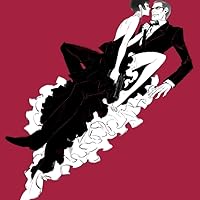
Eileen Chang is the English name for Chinese author 張愛玲, who was born to a prominent family in Shanghai (one of her great-grandfathers was Li Hongzhang) in 1920.
She went to a prestigious girls' school in Shanghai, where she changed her name from Chang Ying to Chang Ai-ling to match her English name, Eileen. Afterwards, she attended the University of Hong Kong, but had to go back to Shanghai when Hong Kong fell to Japan during WWII. While in Shanghai, she was briefly married to Hu Lancheng, the notorious Japanese collaborator, but later got a divorce.
After WWII ended, she returned to Hong Kong and later immigrated to the United States in 1955. She married a scriptwriter in 1956 and worked as a screenwriter herself for a Hong Kong film studio for a number of years, before her husband's death in 1967. She moved from New York to Los Angeles in 1972 and became a hermit of sorts during her last years. She passed away alone in her apartment in 1995.
Her short story collection Lust, Caution and Other Stories, is one of the greatest collections I have ever read, this one is not as great, but I am not sure if she can surpass that work with any other. In here we get the story of the love life of a man, well, the complicated love-life of this particular man, who has a thing for women that are independent in a culture that at the time did not support it, as well as this same view repelling him. Yes, he is a very confusing man. He is also not likable, because of what he believes in, how he speaks, and acts, and all his secrets, but he was enthralling to read about, particularly his experiences.
"There were two women in Zhenbao's life: one he called his white rose, the other his red rose. One was a spotless wife, the other a passionate mistress. Isn't that just how the average man describes a chaste widow's devotion to her husband's memory - as spotless, and passionate too?
Maybe every man had two such women - at least two. Marry a red rose and eventually she'll be a mosquito-blood streak smeared on the wall, while the white one is 'moonlight in front of my bed'. Marry a white rose and before long she'll be a grain of sticky rice that's gotten stuck to your clothes; the red one, by then, is a scarlet beauty mark just over your heart."
Red Rose, White Rose by Eileen Chang is set in Shanghai during the 1940s. The novella revolves around Tong Zhenbao and his attitude towards women as well as life in general. Stemming from a poor family he is the prototype of a social climber and self-made man who subordinates everything and everyone to his plans. He is the product of an education that still treasured traditional Chinese – i.e. strictly patriarchal – values while society was already heading into modern times. He has been faithful to his resolution to “create a world that was ‘right’, and to carry it with him wherever he went” and has no reason to complain. And yet, he isn’t happy in his ideal world. Love is a particularly difficult matter for Zhenbao because his view of life requires that he is the absolute master of his “little pocket-size world” including the women around him. Strong women who do as they wish, especially if they trespass the bounds that society sets them, shake him and attract him at the same time.
It’s a rather unsentimental picture of love and marriage that Eileen Chang paints in her novella Red Rose, White Rose. The simple and despite all powerful language of the author leaves hardly any doubt about relationship being in her eyes nothing but a constant fight for control over the other.
Chang's poetic and striking imagery evokes emotions and moods that perfectly express the humanity of the characters she writes about. Even when said characters are completely horrible, she finds a way to highlight the fact that they're just human and suffering in their own, sometimes small and petty, way.
In the end, Chang finds a way to use words in the most effective and beautiful way possible. Truly great.
Wow! i have been greatly looking forward to Eileen Chang and she's every bit as good as I had heard. It's been so long since I've been so completely blown away by a writer and she manages it effortlessly even in translation! Love this! I'm looking forward to reading more from her very soon!
This is a book about a man, Zhenbao, in Shanghai in the 1940s and all the women he's met, slept with and loved. Some passages are brilliant, I loved the style and her way with words is enviable but story-wise this was lacking something. When he falls in love with a married women and they decide to give their relationship a shot, I really started liking the plot too. But then he decides it would be shameful for his mother, leaves her and marries a woman he does not like one bit. While maybe realistic, it left me disappointed.
That said: I was so impressed by Chang's writing style that I definitely want to read more of her. This is the "bad" thing about these Penguin Mini Classics. So many great authors to discover, so little time.
Red Rose, White Rose is the type of book that translates into English well. The short, snappy syntax gives the book a stoic tone that fits well with the main character's personality. It also creates suspense as the book charts the main character's relationships. You are constantly wondering if he will maintain his composure or not, and the book builds up to several of these critical moments along the way. I was surprised to find it so riveting, but there you have it.
“One was a spotless wife, the other a passionate mistress”
“Maybe every man has had two such women – at least two. Marry a red rose and eventually she’ll be a mosquito-blood streak smeared on the wall, while the white one is ‘moonlight in front of my bed.’ Marry a white rose, and before long she’ll be a grain of sticky rice that’s gotten stuck to your clothes; the red one, by then, is a scarlet beauty mark just over your heart.”
“Zhenbao had launched his career the proper way, by going to the West to get his degree” — right, because now we all do that.
from the way it’s described, it sounds like he is the perfect golden boy, untarnished, absolutely successful.
“the average man’s life, no matter how good, is only a ‘peach blossom fan.’ ”
“From that day on, Zhenbao was determined to create a world that was ‘right,’ and to carry it with him wherever he went. In that little pocket-size world of his, he was the absolute master.”
“The lively ones were the overseas Chinese; mixed-blood girls went even farther.”
“Zhenbao met a girl named Rose. She was his first love” “and because she wasn’t completely English she acted more English than the English themselves”
“This kind of woman was common enough in foreign countries, but in China it would never do. Marrying her, then transplanting her to his hometown – that would be a big waste of time and money, not a good deal at all.”
“Rose knew that she had already lost him”
“But … this would not do. Rose, after all, was a decent girl. This sort of thing was not for him. Rose’s body leapt out of her clothes, leapt onto his body, but he was his own master. Afterward, even he was surprised by his self-control. He’d hardened his heart and taken Rose home. ”
“Of course … she was like this precisely because her husband couldn’t control her”
“So many people in the world – but they won’t be coming home with you. When night fell and silence took over – or when, as could happen at any time, you stood at the brink of death – there in the dark, you needed a wife you really loved, otherwise there would be nothing but loneliness.”
“It’s a woman’s prerogative to change her mind.”
“Maybe. But you’re just the opposite. You deny yourself when in fact you like to eat and play around as much as I do.”
he and mrs wang (jiaorui) are speaking in riddles. the peanut butter, busy men, heart as an apartment,
“She seemed smart and straightforward, but with the emotions of a still-maturing girl – even though she was a wife already. That, for him, was her most appealing feature. There was a danger here, a danger much greater than simple lust” — wait is the movie lust, caution based off of this short story??
“The mind of a child and the beauty of a grown woman: the most tempting of combinations.”
“Standing in the doorway, he watched Jiaorui for a long time, tears welling up in his eyes, because he and she were really in the same place now, two people together, body and soul.”
“After a moment, she said, The house that you wanted has been built.”
“He showed off in front of her, and she showed off in front of him”
career girls.
“In front of other people his attitude toward Jiaorui was a little stiff”
“When a woman likes a good man it’s because she thinks she can trap him.”
“The situation was beyond repair. He’d thought that he had it all under control and that he could stop whenever he wanted, but now things had rushed forward on their own, there was no use in even arguing”
“Zhenbao’s immediate impression, however, was of a vague, enveloping whiteness”
“Zhenbao was her God, and assuming that role was no problem for him.” oof
“Zhenbao was silent for a while. He didn’t look at Jiaorui. ‘Well, and how are you?’ he asked the empty air. Jiaorui was silent, but after a pause she said, ‘Just fine.’ The same question and same answer as before, but now they had an entirely different meaning.”
confronting those from your past. but also, reminds me of oscar wilde.
“Zhenbao reviewed the scene that morning: yes, she had grown old. But even this he envied. He looked at his wife. Eight years of marriage and still no trace of experience. She was hollow and spotless. She always would be.” — to be marked by time and age, is that such a bad thing?
“None of Zhenbao’s friends liked Yanli, even though she was pretty, quiet, and refined, just the wife for someone else, a perfect backdrop for men busily engaged in vigorous, freewheeling conversation.”
“the next day zhenbao made a fresh start and went back to being a good man.” — what a cryptic ending. and that doesn’t really happen though, aren’t you always plagued by your past acts, no longer how nonchalant you want to appear?
What an odd ‘ending!’ If I can even call it that?? I’m left with a quizzical look on my face, my brows thoughtfully furrowed. The ending feels like an ellipsis instead of a period. All that build up, that battering storm and heavy rain! but what’s left is a small stagnant puddle - still - muddled with dirt that’s settled at the bottom.
Nevertheless, I would honestly read anything Eileen Chang has written. Her mail, a contract, her grocery list, a post-it note. Her writing truly evokes!
A beautifully crafted story about the pitfalls of patriarchy for women, and a fascinating example of early feminist Chinese writing. Lovely language and perfectly subtle.
A neat little novella that evocatively uses its late-modernist, Western-influenced-yet-still-Chinese, 1940s Shanghai setting to elaborate on the opening passage:
"There were two women in Zhenbao's life: one he called his white rose, the other his red rose. One was a spotless wife, the other a passionate mistress. Isn't that just how the average man describes a chaste widow's devotion to her husband's memory - as spotless, and passionate too?
Maybe every man had two such women - at least two. Marry a red rose and eventually she'll be a mosquito-blood streak smeared on the wall, while the white one is 'moonlight in front of my bed'. Marry a white rose and before long she'll be a grain of sticky rice that's gotten stuck to your clothes; the red one, by then, is a scarlet beauty mark just over your heart."
Chang's novella is, among other things, a subtle examination of how gender dynamics shape relationships. Zhenbao's women are divided into polar extremes reminiscent of the 'Damned Whores and God's Police' of Anne Summers' book of that name. I liked how Chang cleverly tantalises the reader with a closer, more rounded examination of the female characters, only to have Zhenbao re-enter the scene and pull the character profile back into the male subjectivity where the characters are once again viewed through his judgement.
Here on this lovely spring afternoon, Zhenbao looked around at the world he had made. There was no way to destroy it.
This feels like I've uncovered a secret of some sorts but it looks like something I already know. I feel like I have met every single one of these people before. The prose was honestly so fitting for the tone set here -- very firm, very upright, no-nonsense and yet so vivid. It's definitely not what I would describe as mind-blowing but that's what I love about it. It FITS. I'd kill to be able to have this congruency. The way Chang writes metaphors (the fuckin "marry a red rose" starting paragraphs might just now be one of my favourite openers ever) is so addictive and yet it feels so essential to me somehow. Like it's salt in meat.
I suppose my one gripe is the final sentence of this: What is THAT supposed to mean. What IS a good man. Was he ever actually one? I know Chang probably had very literary valid reasons for just ending the story like this after that constrained denouement with Zhenbao in the bathroom but ???????? ok
The way Zhenbao, "the ideal modern Chinese man", categorises the women, is an interesting element of this story: Rose, who "because she wasn't completely English ... acted more English than the English themselves", is one of the "mixed-blood girls, whose status is so entirely undefined"; Jiaorui, like whom "there weren't really many women ..., not among the pure Chinese", is an example of the overseas Chinese, "the lively ones" who "have the bad habits of the Chinese and the bad habits of foreigners as well"; and his 'white rose' 'pure Chinese' wife Yanli, with "a shy shrinking manner" and a "face flushed with resentment, like a slave girl's" when he calls her stupid, who becomes "a brave little wife" with "self-confidence", "status" and "sympathy" only once he's disgraced himself thoroughly.
The story of the persevering and successful career man, Zhenbao, and the intricacies, challenges and tragedy of his bi-polar love life. Unfortunately, somewhere between the energetic passions and childlike insouciance of his mistress and the tranquil nullity of his wife, is a man divorced of purpose, and as the novella's content follows its form, so does the story lose purpose as it gradually trails off into a tired reminiscence of a life devoid of vitality.
3.5 Writing that lures you in. Tactical and elusive character building and sharp story telling to top it all off. A fun read making you loath its character and question the ending yet sigh at the conclusion, moral greyness of it all.
Eileen Chang has a talent for grasping the character of people and their everyday life, their struggles and flaws. That is exactly what she does here. Her characters become alive through her words.