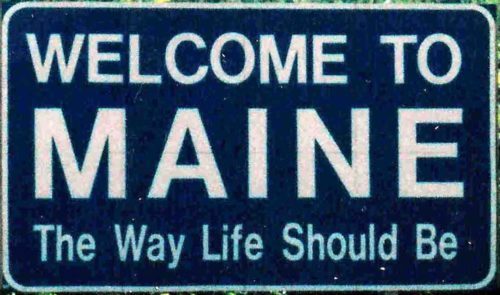
It's hard not to read Jonathan Lethem's newest novel, The Arrest, without thinking of the fundamental parallels it has with our reality after COVID-19. The book depicts life in the small, fictional community of Tinderwick, Maine, in the aftermath of a cataclysmic event that has essentially wiped out all technology, and electricity. Phones, tablets, televisions, computers, and electric light no longer function. Cars and, confusingly, guns, have also ceased to function in this narrative.
Tinderwick, located on a peninsula, has learned to adapt to the catastrophe and has moved on. They farm the land to make food and reuse what they can from the time before the life-altering event, known colloquially to them as "The Arrest", because it arrested life as they previously knew it. You can see how this would strike many parallels to our current situation; COVID-19 was our "Arrest". Life as we knew it changed. Things you could once do, simple things like going to see your family, became impossible, even illegal. You could no longer do so many of the simple things we take for granted.
You could no longer go to the movies, or out to a restaurant, or on vacation to another country. Some people weren't even allowed to leave their homes, and were under hard lockdown. Life as we knew it, reality as we knew it, had been "arrested". Though published during the pandemic, in November 2020, I don't know when Lethem began writing this book, and so can't say whether this striking similarity represents intent or just seeming prescience on behalf of the author, but I found it very interesting, in any case.
Going back to the story itself, it mainly revolves around a small group of characters which include the main protagonist, Sandy, who is referred to by his nickname of Journeyman for the vast majority of the novel, his sister Maddy, and Sandy's Hollywood producer friend Peter Todbaum. Sandy, who does not live in Maine, turned out to be visiting his sister's organic farm in Tinderwick when the Arrest took place, and so, with planes and other means of long-range travel no longer operating, he is permanently stuck there, and becomes part of the community.
The community's perimeter is guarded by a hardcore faction known as the Cordon. They protect the community from anything that may be lurking outside in the post-apocalyptic world and wishing to get into their community to do them harm, and in exchange the community gives them food produced by their methods and farms. It's a good little arrangement, until one day a massive silver "supercar" comes barreling down the road, straight for the community. Who is behind the wheel? How does this special car still function, when all others were rendered inoperable? And what does the pilot of this strange craft want?
During the time I was reading The Arrest, its Goodreads star rating vacillated between 3.16 and 3.17 stars, finally settling on 3.17, its score at the time of this writing. That's pretty awful, so my expectations going into this book were pretty low. The book, however, surprised me, and I ended up absolutely loving it.
On the plus side, the writing is superb, and, despite the fact that this is a somewhat slower, more uneventful book, Lethem skillfully crafts a narrative that keeps you wanting to read more, and that builds brilliantly, in its final third, toward what ends up being a satisfying and mostly great ending. The book is only 307 pages, and with the amount of empty pages between some chapters, and some pages that contained only an image, I'd say this book probably wasn't more than about 260-270 pages. Yet in that abbreviated length Lethem is able to build some decent, memorable characters.
He also does a fantastic job of world-building. Tinderwick is composed of several areas and smaller towns, like Tinderwick, East Tinderwick, Granite Head, and a small island that lays between the peninsula and the Atlantic Ocean, known as Quarry Island. There's also Spodosol Ridge Farm, which is Maddy's organic farm, and the small cabin on the Lake of Tiredness. Each of these locales is wonderfully constructed by Lethem, to where I could see each of them vividly in my mind. He simply did a great job with the world-building in this story, which is especially impressive given the novel's brevity.
The book also has a wonderful antagonist, and Lethem does a good job making the mutually-dependent relationship between the citizens and the hardcore pseudo-soldiers of the Cordon a tense one, as it no doubt would be if the novel's scenario played out in the real world.
There were some things I didn't like. The explanation of what the Arrest actually was. There is only one very brief chapter (the chapters are very small in this book, only one to four pages each, which I loved) in this entire book where this is covered, and it was pretty disappointing. You would think, in a book where the Arrest is responsible for the entire reality you're immersed in, that you'd get more than one brief chapter containing the half-baked ideas of one of the characters about what the event might have been. He wonders if it was a solar flare, or one or two other things, and that's about it. From this, the reader figures out that no one in this book really knows what the Arrest actually was; no one knows what actually happened. The unfortunate thing is, this means that you, the reader, never find out either.
In a book where the Arrest wasn't the focus, but rather life after it was, I guess this makes sense. Lethem doesn't care about explaining it. That's not the point of his book. But as a reader, I found myself eager to know what it was, and I'm a little disappointed that I'll never know.
I also didn't think some parts of the Arrest that were explained made sense. Like, I get that electricity doesn't work anymore. And things with electrical components inside, like computers and televisions. And things dependent on satellites, like cell phones. Even cars; in Steven Spielberg's 2005 film War of the Worlds, all cars stopped running because the EMP (electromagnetic pulse) from the storm killed car solenoids. So maybe that's hallway plausible. Maybe something like a solar flare, or some other electrical interference, could cause those things not to work anymore.
But why did guns stop working?!
I can confidently say that no gun I've ever handled had electronic parts that would be fried by an EMP or a solar flare. There's absolutely no reason they wouldn't continue to work. So that made no sense. Really, what that was, or at least this is my theory, is that Lethem needed this reality not to have guns. He needed them not to work. Because this isn't Cormac McCarthy's The Road, where there is cannibalism and violence and constant dread and terror. Lethem's post-apocalyptic world is a friendlier, more cooperative place, where people work together and there is a strong sense of community. If guns work, presumably there'd be widespread war over resources, people would be dying left and right, and the tone and essence of this book just wouldn't make sense. So he bundled guns in with everything electronic; they just stopped working. That's fine, but it didn't make a lot of sense.
I can't recommend this book to everyone. Based on the statistics from its GR rating breakdown, you probably won't like it! Of the ratings it has to date, 64% of reviewers gave it three stars or less, and only 9% gave it the full five stars. So there were a lot of people who didn't like this book. But I'll tell you this: if you're looking for a wonderfully-written, captivating, but confusingly and simultaneously slow and uneventful post-apocalyptic tale, one that strips away the depressing and foreboding tone of The Road to offer a lighter, friendlier, far-more-enjoyable-to-read take on the genre, The Arrest is right up your alley. I really enjoyed it.