What do you think?
Rate this book


370 pages, Hardcover
First published April 13, 2021


A town like this feels so safe and apart from the outside world. You start to wonder if it’s dangerous.”--------------------------------------
“The fairy tale of it, you mean?”
“Right. False security. You stop looking over your shoulder, because the picture feels real. Nothing bad can happen when there’s a moat around the whole town, right? Battlements. Guards at the gate. But the dragon shows up anyway.”
“These are my obsessions,” Paula McLain said. “How do we survive the unsurvivable? How do we climb off the table as a victim? How did we get there in the first place?” - from the NY Times Personal articleSan Francisco Detective Anna Louise Hart has problems of her own. Something terrible has happened to her child. Her husband is not eager to see her. Needing to get away, she heads north to a place she sees as a refuge of sorts, Mendocino, the place where, after a succession of bad experiences, she had finally been taken in as a foster by a warm, supportive couple. Memories abound, marked by the presence of an enigmatic sculpture in the middle of town.
Above the roofline of the Masonic Hall and against a gauzy sky, the figures of Time and the Maiden stand sharp and white, the most iconic thing in the village. A bearded, elderly figure with wings and a scythe, braiding the hair of a girl standing before him. Her head bowed over a book resting on a broken column, an acacia branch in one of her hands, an urn in the other, and an hourglass near her feet—each object an enigmatic symbol in a larger puzzle. The whole carving like a mystery in plain sight.

Almost immediately I knew the story had to be set in Mendocino—a small coastal town in Northern California where I spent time in my twenties—and that the time frame of the narrative had to be pre-DNA, pre-cellphone, before the Internet had exploded and CSI had lay people thinking they could solve a murder with their laptop. - from the Author’s NoteHart’s work in San Francisco had centered on finding lost children. She was in a special unit for this. It’s the sort of work that leads one to sacrifice other aspects of one’s life. I pictured a missing persons expert obsessed with trying to save a missing girl and also struggling to make peace with her past. And straight away, after renting an off-the-grid cabin several miles outside of town, reconnecting with an old friend who is now the sheriff, saying Hi to some other folks and places from her days there as a kid, a local girl, the daughter of a famous actress, vanishes. Having some expertise in the field, Anna offers to help, and the game is afoot.
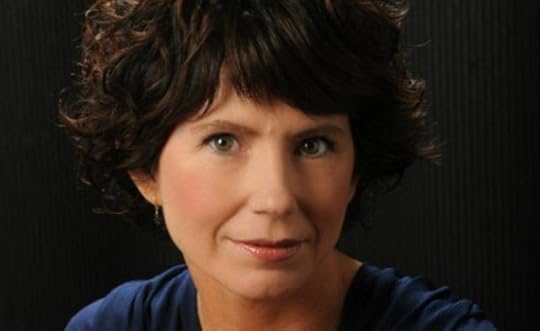
…when she started digging into the research, she realized that there had been real-life abductions in California at that time — including the kidnapping of 12-year-old Polly Klaas from her Petaluma bedroom. McLain weaves Klaas’s tragic story into the novel, reminding the reader of yet another young woman who never had a chance to shine. - from the NY Times Personal interviewIn addition to Polly, McLain incorporated into her story several real-world disappeared girls, as points of reference. She does not go into their characters much beyond rough descriptions. But this does let us know that the fictional tale she presents has a very real flesh-and-blood basis, the time she portrays presenting more peril than usual. And she does not stop there in paralleling the real and the created.
Some nights nothing happened. Other nights I would wake to a shape in the doorway, the husband’s inky silhouette. And then I would disappear inside myself, barely breathing, frozen. I vanished so expertly that I wasn’t actually in my body any longer as he peeled me away from my sister. I didn’t make a sound.It would have been easy to make this a total downer of a story, but McLain points out some of the bright sides as well. Anna recalls with great love the supportive foster family she had lived with in Mendocino, and shows how a community can come together to try to help each other, in this case reflecting the real-world effort made to find Polly Klaas when she was abducted.
Above the cloud line, an eerie yellow sphere is rising. It’s the moon, gigantic and overstuffed, the color of lemonade. I can’t stop watching it roll higher and higher, saturated with brightness, like a wound. Or like a door lit entirely by pain.Uh oh. The eeriness of the environment resonates throughout the novel, but it is also clear that Anna has an appreciation for nature, a feeling of connection, gaining a sense of comfort from it, even though it can seem very dark at times.
Firs and pines and Sitka spruce thicken around me, pushing in from all directions, black-tipped fairy-tale trees that knit shadows out of nothing, night out of day—as if they’ve stolen all the light and hidden it somewhere. God, but I’ve missed them.And building on nature’s challenge, she sees hope in people’s ability to contend with extreme and persistent difficulties.
“Krummholz” is the word for this kind of vegetation I remember from one of Hap’s [her beloved foster father] lessons, a German term that means “bent wood.” Over many decades, hard weather has sculpted the trees into grotesque shapes. The salt-rich north wind kills the tips of the branches, forcing them to dip and twist, swooping toward the ground instead of the sky. They’re a living diagram of adaptation, of nature’s intelligence and resilience. They shouldn’t be able to keep growing this way, and yet they do.She adds some lovely noir content and cadences, the sort one might expect from a female continental op, substituting a chemical solution for the usual flask, or lower desk drawer fifth. I zipped myself into a dress I couldn’t feel, so high on Ativan it could have been made of knives. Fairy tales come in for several mentions, not in a comforting way. There be monsters here.

You know, we don’t always understand what we’re living inside of, or how it will matter. We can guess all we want and prepare, too, but we never know how it’s going to turn out.


Paula McLain was born in Fresno, California in 1965. After being abandoned by both parents, she and her two sisters became wards of the California Court System, moving in and out of various foster homes for the next fourteen years. When she aged out of the system, she supported herself by working as a nurses aid in a convalescent hospital, a pizza delivery girl, an auto-plant worker, a cocktail waitress–before discovering she could (and very much wanted to) write. She received her MFA in poetry from the University of Michigan in 1996. She is the author of The Paris Wife…an international bestseller…She is also the author of two collections of poetry; a memoir, Like Family, Growing up in Other People’s Houses; and a first novel, A Ticket to Ride. She lives with her family in Cleveland.Interview