

What do you think?
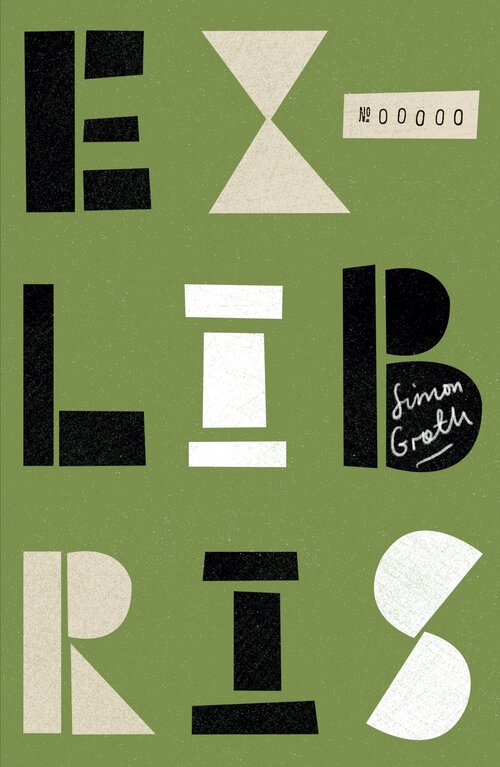
Ex Libris
A book in half a billion.
The metropole is a world of data-driven design and addled market saturation. It’s a place where every decision, every movement is tracked and interpreted by the network to curate content for the comfort and containment of its citizens, where imagination and fiction are suppressed, and where books have been abandoned in favour of instant gratification.
Against this backdrop, a loose gathering of subversives collects the scraps of texts left behind. Calling themselves free readers, they seek to reconstruct a library from fragments away from the watchful eye of the feared committee for public safety. But what begins as the story of four people drawn to a band of literary misfits becomes an epic quest for truth in a world of lies and a narrative conscious of its own fictions.
Twelve of the chapters in this book are arranged at random, with each new copy shuffled anew, one of 479,001,600 possible variations. No two copies of Ex Libris are identical, and yet all tell the same story.
‘One of Australia’s best literary innovators.’
—David Ryding, Director, Melbourne UNESCO City of Literature Office
‘A remarkable technical achievement, and a page-turning novel that celebrates the transformative power of reading, and the magic we experience as a reader.’
—Ryan O’Neill, award-winning author of Their Brilliant Careers
The metropole is a world of data-driven design and addled market saturation. It’s a place where every decision, every movement is tracked and interpreted by the network to curate content for the comfort and containment of its citizens, where imagination and fiction are suppressed, and where books have been abandoned in favour of instant gratification.
Against this backdrop, a loose gathering of subversives collects the scraps of texts left behind. Calling themselves free readers, they seek to reconstruct a library from fragments away from the watchful eye of the feared committee for public safety. But what begins as the story of four people drawn to a band of literary misfits becomes an epic quest for truth in a world of lies and a narrative conscious of its own fictions.
Twelve of the chapters in this book are arranged at random, with each new copy shuffled anew, one of 479,001,600 possible variations. No two copies of Ex Libris are identical, and yet all tell the same story.
‘One of Australia’s best literary innovators.’
—David Ryding, Director, Melbourne UNESCO City of Literature Office
‘A remarkable technical achievement, and a page-turning novel that celebrates the transformative power of reading, and the magic we experience as a reader.’
—Ryan O’Neill, award-winning author of Their Brilliant Careers
- GenresFiction
298 pages, Paperback
First published August 3, 2020
About the author
Simon Groth
23 books5 followersSimon Groth is a writer, editor, and long-time observer of publishing, technology, and creative industries. He is a contributing editor for the Writing Platform and his books include Off The Record: 25 Years of Music Street Press (with Sean Sennett, UQP, 2010), Hunted Down and Other Tales (with Marcus Clarke, if:book, 2016), and Infinite Blue (with Darren Groth, Orca Book Publishers, 2018).
With if:book Australia, Simon created a series of award-winning experimental works including the 24-Hour Book, live writing events at writers festivals around the world, and a city-wide challenge to write stories for digital billboards. His reporting on digital publishing has seen him travel the globe to discuss and explore the challenges and opportunities for writers and readers in a digital world.
With if:book Australia, Simon created a series of award-winning experimental works including the 24-Hour Book, live writing events at writers festivals around the world, and a city-wide challenge to write stories for digital billboards. His reporting on digital publishing has seen him travel the globe to discuss and explore the challenges and opportunities for writers and readers in a digital world.
Ratings & Reviews
Friends & Following
Create a free account to discover what your friends think of this book!
Community Reviews
Displaying 1 - 10 of 10 reviews

August 28, 2020
Our paths from beginning to end might alter with each retelling, but te always arrive here.
I was drawn to the crowdfunding for Simon Groth's novel Ex Libris by comments from the wonderful Ryan O'Neill (author of the highly innovative The Drover's Wives https://www.goodreads.com/review/show... and Their Brilliant Careers https://www.goodreads.com/review/show...) and O'Neill provides a foreword to the final book.
An 'ex libris', or a bookplate, is "a decorative piece of paper stuck inside the front cover of a book to show who owns it" (Cambridge Dictionary) and Ex Libris is structured so the novel that each reader receives, and reads, is unique - and indeed rather wonderfully it comes with a pre-printed personalised nameplate as well.
It takes its structural inspiration from two key sources (http://thewritingplatform.com/2019/11...)
- BS Johnson's The Unfortunates, a novel in a box, with each chapter printed as a separate booklet. The first and last chapter were fixed, but the reader was free to choose the order of the interim chapters.
- Tristano by Nanni Balestrini "was first published in 1966 in Italian. But only recently has digital technology made it possible to realise the author’s original vision" (https://www.versobooks.com/books/1518...). Each copy of the book is unique, "each has 10 chapters with 20 of a possible 30 paragraphs in different orders" (https://www.theguardian.com/books/201... resulting in 109,027,350,432,000 potential versions (= 30! / 20! = number of permutations of 10 from 30)
Ex Libris follows a combination of these approaches - the book is written in 15 chapters, with the opening and three closing chapters fixed, but the middle 12 chapters printed in a random order, unique to each reader, leading to 12! = 479,001,600 different potential versions. (see also https://dorotheamartin.de/2019-11-sim...)
What perhaps thought distinguishes this from its predecessors is the that, as O'Neill comments in his introduction, the form "perfectly mirrors the contents", in a tale about reading, information and fragmentary texts.
The story is dystopian (and close to YA) in style. Each reader will need to discover the story via their own path, and perhaps I'm better simply repeating the blurb:
The novel begins near the end, and then the 12 randomly ordered chapters fill in the backstory of 'the band of literary misfits' Inkle, Dock, Trace and High, and how they came to join the freereaders.
The free readers have a reverent attitude to the printed word, telling one of the four:
There's something you should know about the free readers. People, when they first come here, assume that all books are created equal. They're not. There are books that aim to be transformative, that enable you to look inside the mind of someone else and feel and think like them. There are books that educate, that inform you of the world around you or of a deeper truth we all understand, but which no one has yet expressed. There are books that expand your horizons, that let you imagine what might be instead of being tied to what is These are the books we're trying to piece back together. Books that take us beyond where we are now, that might inspire us to something better or greater than the experience the network has predetermined for us.
But the four gradually come to realise, each in their own way, that whatever the free readers offer, it isn't freedom. Inkle realises:
Books were supposed to be dangerous, seditious. The free readers claimed to be a liberating force—it was right there in the name - using books as a way to spread not just the ideas within them, but the vety idea of the book itself. 'The book was a symbol of knowledge that could not be mediated by the network,' Jonas had said, 'reminding ordinary people that they could hold a thought in their head independent of the machines and their protocols and algorithms.'
Inkle saw none of this in the sad fate of these fragments. She saw none of it in the hierarchy around her. What she saw was a bunch of would-be revolutionaries recreating the structures they claimed to be dismantling. In this building, you should move and talk and think, free from network interference. Instead, you were told what to do, what to read.
Maybe it was time to start properly liberating these texts. Maybe it was time the free readers lived up to their name.
A fascinating literary experiment.
Some of my own notes on the novel are below in spoilers:
I was drawn to the crowdfunding for Simon Groth's novel Ex Libris by comments from the wonderful Ryan O'Neill (author of the highly innovative The Drover's Wives https://www.goodreads.com/review/show... and Their Brilliant Careers https://www.goodreads.com/review/show...) and O'Neill provides a foreword to the final book.
An 'ex libris', or a bookplate, is "a decorative piece of paper stuck inside the front cover of a book to show who owns it" (Cambridge Dictionary) and Ex Libris is structured so the novel that each reader receives, and reads, is unique - and indeed rather wonderfully it comes with a pre-printed personalised nameplate as well.
It takes its structural inspiration from two key sources (http://thewritingplatform.com/2019/11...)
- BS Johnson's The Unfortunates, a novel in a box, with each chapter printed as a separate booklet. The first and last chapter were fixed, but the reader was free to choose the order of the interim chapters.
- Tristano by Nanni Balestrini "was first published in 1966 in Italian. But only recently has digital technology made it possible to realise the author’s original vision" (https://www.versobooks.com/books/1518...). Each copy of the book is unique, "each has 10 chapters with 20 of a possible 30 paragraphs in different orders" (https://www.theguardian.com/books/201... resulting in 109,027,350,432,000 potential versions (= 30! / 20! = number of permutations of 10 from 30)
Ex Libris follows a combination of these approaches - the book is written in 15 chapters, with the opening and three closing chapters fixed, but the middle 12 chapters printed in a random order, unique to each reader, leading to 12! = 479,001,600 different potential versions. (see also https://dorotheamartin.de/2019-11-sim...)
What perhaps thought distinguishes this from its predecessors is the that, as O'Neill comments in his introduction, the form "perfectly mirrors the contents", in a tale about reading, information and fragmentary texts.
The story is dystopian (and close to YA) in style. Each reader will need to discover the story via their own path, and perhaps I'm better simply repeating the blurb:
The metropole is a world of data-driven design and addled market saturation. It’s a place where every decision, every movement is tracked and interpreted by the network to curate content for the comfort and containment of its citizens, where imagination and fiction are suppressed, and where books have been abandoned in favour of instant gratification.
Against this backdrop, a loose gathering of subversives collects the scraps of texts left behind. Calling themselves free readers, they seek to reconstruct a library from fragments away from the watchful eye of the feared committee for public safety. But what begins as the story of four people drawn to a band of literary misfits becomes an epic quest for truth in a world of lies and a narrative conscious of its own fictions.
The novel begins near the end, and then the 12 randomly ordered chapters fill in the backstory of 'the band of literary misfits' Inkle, Dock, Trace and High, and how they came to join the freereaders.
The free readers have a reverent attitude to the printed word, telling one of the four:
There's something you should know about the free readers. People, when they first come here, assume that all books are created equal. They're not. There are books that aim to be transformative, that enable you to look inside the mind of someone else and feel and think like them. There are books that educate, that inform you of the world around you or of a deeper truth we all understand, but which no one has yet expressed. There are books that expand your horizons, that let you imagine what might be instead of being tied to what is These are the books we're trying to piece back together. Books that take us beyond where we are now, that might inspire us to something better or greater than the experience the network has predetermined for us.
But the four gradually come to realise, each in their own way, that whatever the free readers offer, it isn't freedom. Inkle realises:
Books were supposed to be dangerous, seditious. The free readers claimed to be a liberating force—it was right there in the name - using books as a way to spread not just the ideas within them, but the vety idea of the book itself. 'The book was a symbol of knowledge that could not be mediated by the network,' Jonas had said, 'reminding ordinary people that they could hold a thought in their head independent of the machines and their protocols and algorithms.'
Inkle saw none of this in the sad fate of these fragments. She saw none of it in the hierarchy around her. What she saw was a bunch of would-be revolutionaries recreating the structures they claimed to be dismantling. In this building, you should move and talk and think, free from network interference. Instead, you were told what to do, what to read.
Maybe it was time to start properly liberating these texts. Maybe it was time the free readers lived up to their name.
A fascinating literary experiment.
Some of my own notes on the novel are below in spoilers:

November 25, 2020
This is one of the strangest book reviews I’ve ever written, because you will never read the book I’m about to describe to you. Don’t get me wrong – you can certainly BUY the wonder that is Ex Libris (Ghost Owl Press 2020) by trailblazer and digital publisher extraordinaire Simon Groth. But the book that you purchase will be quite different from the one that I have purchased and reviewed here for you. Let me explain why.
Simon Groth began the Ex Libris project a few years ago. (Ex Libris, by the way, means ‘an inscription on a bookplate to show the name of the book’s owner’, a definition for which the meaning will soon become apparent.) He wanted to create a book that shared the opening and closing chapters, but where the 12 chapters in between were shuffled entirely at random, meaning that every single edition of the book reads in an entirely different order, with the story therefore unfolding in a completely different way EVERY SINGLE TIME. This feat results in approximately four hundred and seventy-nine million different combinations of the narrative. Think about that for a moment.
So while I will share with other readers how the story starts, and also how it ends, the journey between those two points will be entirely different for every reader. It’s amazing! It’s incredible! And somehow, with a lot of hard work and a whole lot of intellectual / mathematical / digital / randomisation data that frankly, I don’t have a hope of understanding, Groth has managed to achieve this goal. It is an impressive experimental work that I have never experienced before. Apparently there have been some precursors, but this is certainly the first I’ve read.
But it is not only the powerfully experimental form and structure of the book that is incredible. The narrative itself, the characters and the themes are also fascinating in themselves. The four main characters are Dock, Trace, High and Inkle. The book is set in the future, when the world is a very different place, and machines and technology rule. A small group of ‘free readers’ are determined to challenge the ‘oppressive ruling network of the metropole’ by scavenging and recreating fragments of printed and electronic stories, which have been banished under the new rule. As Ryan O’Neill says in the introduction, ‘… Ex Libris is a book about books and about the power of reading’.
When I read this story, it seemed to me that the chapters were in exactly the right order. I simply couldn’t imagine any part of the book being moved or shuffled around and it still making sense. And yet, I know for a fact that every other reader of this book (and it’s now in it’s third reprint) will have read essentially a very different story, but probably feels the same way – that THEIR version is the true story and anything else wouldn’t make sense. And this is the magic and the skill and talent of Simon Groth and his Frankenstein creation: every book is unique, every reader is gifted a unique reading experience, every story makes perfect sense. I don’t pretend to understand how he has done what he has done. The dedication and brain power and vision needed to complete this undertaking seems Herculean to me, virtually impossible to comprehend. And yet, here it is, in my hands, in black and white.
The genre is I suppose science fiction or speculative fiction, but the story is very human and accessible. The language and the plot – and even most of the setting – is recognisable. In fact, were you given this book and told or assumed it was just like a normal book, you probably wouldn’t notice anything out of the ordinary. But after having read it, if you were then given another edition, and then another, and another, and found that each was entirely different, and yet each was comprehensible, you would be astounded, confounded and bamboozled.
This is indeed ‘A book in half a billion’. My copy is numbered 00123. That’s unique. And my copy will tell the same story – with the same beginning and the same ending – as YOUR book, whatever your number. I truly don’t understand it. I’ve tried reading my copy at random – choosing various chapters out of order – and it doesn’t seem to make sense to me. It’s not the story I know. The plot is confused and the narrative is out of order. But rationally I know that for another reader, that is the way their story is structured and anything else for them would seem wrong. It’s a puzzle inside an enigma. It’s a remarkable achievement in storytelling. It’s a truly unique (and I use that word literally) reading experience. If you are at all interested in reading or stories or would like to give someone a (literally) unique Christmas gift, then this book is perfect. Your lucky recipient will never get another exactly like the one you give them. EVER. (Unless I suppose Groth sells more than half a billion copies, in which case, theoretically, there might be two identically-ordered stories?! But that’s highly unlikely.)
Independent bookstores such as https://avidreader.com.au/ or https://riverbendbooks.com.au/ currently stock Ex Libris (although it might be quicker to phone them rather than try to order online), or you can order direct from Simon Groth at https://www.simongroth.com/#/ex-libris/ . (Note: you can also order a digital version.)
I know that this mammoth effort took a lot of blood, sweat and tears (especially tears) and also a popular crowdfunding campaign to get the idea off the ground. But now, here it is, in my hands, in YOUR hands if you so wish. It’s rare to review a book that nobody else will ever read. I never thought I would have to do that. Never thought it would be possible or necessary to do that. But with Ex Libris, it is an honour to recommend that you purchase a book that I myself will never read, but that afterwards, we will be able to spend many hours discussing and dissecting a story that is both familiar in its origin and conclusion, but new terrain in terms of how we both experienced getting from beginning to end.
Simon Groth began the Ex Libris project a few years ago. (Ex Libris, by the way, means ‘an inscription on a bookplate to show the name of the book’s owner’, a definition for which the meaning will soon become apparent.) He wanted to create a book that shared the opening and closing chapters, but where the 12 chapters in between were shuffled entirely at random, meaning that every single edition of the book reads in an entirely different order, with the story therefore unfolding in a completely different way EVERY SINGLE TIME. This feat results in approximately four hundred and seventy-nine million different combinations of the narrative. Think about that for a moment.
So while I will share with other readers how the story starts, and also how it ends, the journey between those two points will be entirely different for every reader. It’s amazing! It’s incredible! And somehow, with a lot of hard work and a whole lot of intellectual / mathematical / digital / randomisation data that frankly, I don’t have a hope of understanding, Groth has managed to achieve this goal. It is an impressive experimental work that I have never experienced before. Apparently there have been some precursors, but this is certainly the first I’ve read.
But it is not only the powerfully experimental form and structure of the book that is incredible. The narrative itself, the characters and the themes are also fascinating in themselves. The four main characters are Dock, Trace, High and Inkle. The book is set in the future, when the world is a very different place, and machines and technology rule. A small group of ‘free readers’ are determined to challenge the ‘oppressive ruling network of the metropole’ by scavenging and recreating fragments of printed and electronic stories, which have been banished under the new rule. As Ryan O’Neill says in the introduction, ‘… Ex Libris is a book about books and about the power of reading’.
When I read this story, it seemed to me that the chapters were in exactly the right order. I simply couldn’t imagine any part of the book being moved or shuffled around and it still making sense. And yet, I know for a fact that every other reader of this book (and it’s now in it’s third reprint) will have read essentially a very different story, but probably feels the same way – that THEIR version is the true story and anything else wouldn’t make sense. And this is the magic and the skill and talent of Simon Groth and his Frankenstein creation: every book is unique, every reader is gifted a unique reading experience, every story makes perfect sense. I don’t pretend to understand how he has done what he has done. The dedication and brain power and vision needed to complete this undertaking seems Herculean to me, virtually impossible to comprehend. And yet, here it is, in my hands, in black and white.
The genre is I suppose science fiction or speculative fiction, but the story is very human and accessible. The language and the plot – and even most of the setting – is recognisable. In fact, were you given this book and told or assumed it was just like a normal book, you probably wouldn’t notice anything out of the ordinary. But after having read it, if you were then given another edition, and then another, and another, and found that each was entirely different, and yet each was comprehensible, you would be astounded, confounded and bamboozled.
This is indeed ‘A book in half a billion’. My copy is numbered 00123. That’s unique. And my copy will tell the same story – with the same beginning and the same ending – as YOUR book, whatever your number. I truly don’t understand it. I’ve tried reading my copy at random – choosing various chapters out of order – and it doesn’t seem to make sense to me. It’s not the story I know. The plot is confused and the narrative is out of order. But rationally I know that for another reader, that is the way their story is structured and anything else for them would seem wrong. It’s a puzzle inside an enigma. It’s a remarkable achievement in storytelling. It’s a truly unique (and I use that word literally) reading experience. If you are at all interested in reading or stories or would like to give someone a (literally) unique Christmas gift, then this book is perfect. Your lucky recipient will never get another exactly like the one you give them. EVER. (Unless I suppose Groth sells more than half a billion copies, in which case, theoretically, there might be two identically-ordered stories?! But that’s highly unlikely.)
Independent bookstores such as https://avidreader.com.au/ or https://riverbendbooks.com.au/ currently stock Ex Libris (although it might be quicker to phone them rather than try to order online), or you can order direct from Simon Groth at https://www.simongroth.com/#/ex-libris/ . (Note: you can also order a digital version.)
I know that this mammoth effort took a lot of blood, sweat and tears (especially tears) and also a popular crowdfunding campaign to get the idea off the ground. But now, here it is, in my hands, in YOUR hands if you so wish. It’s rare to review a book that nobody else will ever read. I never thought I would have to do that. Never thought it would be possible or necessary to do that. But with Ex Libris, it is an honour to recommend that you purchase a book that I myself will never read, but that afterwards, we will be able to spend many hours discussing and dissecting a story that is both familiar in its origin and conclusion, but new terrain in terms of how we both experienced getting from beginning to end.

September 17, 2020
In the introduction to this intriguing experiment in publishing, Ryan O'Neill (himself a writer of experimental fictions) likens it to BS Johnson's The Unfortunates, Julio Cortazar's Hopscotch and Chris Ware's Building Stories. It uses modern publishing technology to randomly order the central twelve chapters in each volume, which are 'bookended' by the same beginning and ending chapters for everyone, meaning nobody has quite the same copy of the book. That particular format actually makes it closest to Robert Coover's "Heart Suit", a story printed on playing cards that can be shuffled and read in any order apart from the beginning and ending cards (included with his collection A Child Again, published by McSweeney's). In this case, it's not just a gimmick as the story itself is a dystopian tale of a group of 'free readers' who try to reassemble banned books from fragments (shades of Fahrenheit 451). The form thus closely matches the content. On top of that, there's a metafictional element with a growing awareness amongst some of the characters (and hints for the reader) that they are merely characters in a story (shades of Six Characters in Search of an Author). I'm not quite ready to put Groth in the company of greats like Coover and Pirandello, but this is an entertaining read.

May 27, 2021
I absolutely bloody loved this! And that isn’t bias because my good mate Simon is a story-wizard or the fact I contributed to the crowd-funding, it’s just that this harebrained idea entirely held up. I think it would have been great to see some more description of our four protags in the opening chapter so that we weren’t caught off-guard when (for instance) High turned out to look almost the exact opposite to how I’d pictured her for 45% of the book. And I think I could have used some more orientation in the physical spaces too. But in terms of how the execution of a book with 12 jumbled chapters in every single copy goes, brilliant. I felt like some key moments in the journey occurred EXACTLY where they were meant to and my reading experience was just so exhilarating. I want to have a #FreeReader bookclub to compare other people’s reading experiences to mine — would a different order have been more, less or equally as compelling? Would it have changed the meaning overall? I’ll probably never know. But by god this was great.
August 13, 2020
I am so pleased that I decided to be part of the crowd funding for this book. When I heard about an experimental novel of which no two copies would be the same, I wanted to support the idea then and there. This was a piece of history I wanted to be a part of.
I do love a good dystopian story. Set in a data driven future that at times is scarily like aspects of our current screen-obsessed world, books have been outlawed and mostly forgotten, but some still seek their restoration. Can it be done? What really matters? Stories? Physical books? Information? What is freedom? What is happiness?
Take a bit of Fahrenheit 451, some 84K, some Terminator, some I Robot and some 1984, jumble it all up with a new outlook and fresh ideas, scramble the chapters, and the book I read was amazing! Get your hands on a copy. Your journey won’t be quite the same as mine, but I’d love to discuss the ending with you when we get there!
I do love a good dystopian story. Set in a data driven future that at times is scarily like aspects of our current screen-obsessed world, books have been outlawed and mostly forgotten, but some still seek their restoration. Can it be done? What really matters? Stories? Physical books? Information? What is freedom? What is happiness?
Take a bit of Fahrenheit 451, some 84K, some Terminator, some I Robot and some 1984, jumble it all up with a new outlook and fresh ideas, scramble the chapters, and the book I read was amazing! Get your hands on a copy. Your journey won’t be quite the same as mine, but I’d love to discuss the ending with you when we get there!

August 30, 2020
This unique novel has the same opening and closing chapters but the twelve other chapters are arranged in a different order, which means there are roughly 479,000,000 different readings of this story. This shifting reality fits perfectly with the speculative world the novel creates, where books exist only as fragments, and the meaning of those found words can be interpreted many times over by the subversive misfits who risk their freedom by collecting them.

May 11, 2023
Rating: [B-]
The concept behind this book is amazing and I love how it ties into the story. It's not just a gimmick. All the randomised chapters are great. The characters are well defined and have interesting arcs. The world is interesting to learn about. I can only imagine how different each readers experience must be.
Where this book struggled for me was the beginning and end chapters that are the same for everyone. The beginning chapter goes on for too long and presents you with too much information about the characters and world. I found the ending to be too vague and anti climatic.
With a bit more refinement to the start and a different ending, this could have been one of my favourite books.
The concept behind this book is amazing and I love how it ties into the story. It's not just a gimmick. All the randomised chapters are great. The characters are well defined and have interesting arcs. The world is interesting to learn about. I can only imagine how different each readers experience must be.
Where this book struggled for me was the beginning and end chapters that are the same for everyone. The beginning chapter goes on for too long and presents you with too much information about the characters and world. I found the ending to be too vague and anti climatic.
With a bit more refinement to the start and a different ending, this could have been one of my favourite books.
April 20, 2023
“Our pathways from beginning to end might alter with each retelling, but we always arrive here.”
I have copy No. 00532 of Simon Groth’s experimental Ex-Libris, my friend bought copy No. 00531. How fascinating to have two books printed one after another that are completely different and in essence entirely the same.
Dystopian, experimental, and extra enjoyable when reading with others with their own copy.
I have copy No. 00532 of Simon Groth’s experimental Ex-Libris, my friend bought copy No. 00531. How fascinating to have two books printed one after another that are completely different and in essence entirely the same.
Dystopian, experimental, and extra enjoyable when reading with others with their own copy.
June 15, 2022
A good story. I think the shuffled chapters operated a bit more like a short story cycle, not actually changing the novel in a particularly meaningful way, but it held my attention nonetheless and had some interesting ideas about the role of storytelling in humanity.

November 24, 2025
A modern 1984 and I loved it.
It was refreshing to read the randomized sections and mentally piece the story together. How much did I correctly remember? And by doing so, how was I able to relate to the characters, the story, the message?
And a great message. An ending that will stick with me.
It was refreshing to read the randomized sections and mentally piece the story together. How much did I correctly remember? And by doing so, how was I able to relate to the characters, the story, the message?
And a great message. An ending that will stick with me.
Displaying 1 - 10 of 10 reviews