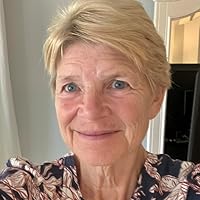
In this disturbing but inspirational account of her experiences of the Holocaust, Lucille Eichengreen relates her journey as a young Jewish girl through Nazi Germany and Poland - including internment in the camps at Auschwitz, Neuengamme, and Bergen-Belsen. It was a journey that began in 1933, when she was eight years old and witnessed the beginnings of Jewish persecution, a journey along which she suffered the horrible deaths of her father, mother and sister. Sustained by great courage and resourcefulness, Lucille Eichengreen emerged from her nightmare with the inner strength to build a new life for herself in the United States. Only in 1991 did she return to Germany and Poland to assess the Jewish situation there. Her story is a testament to the very thing the Holocaust sought to the regeneration of Jewish life. Blessed with a remarkable memory that made her one of the most effective witnesses in the postwar trial of her persecutors, Eichengreen has composed a memoir of exceptional accuracy. As important as its factual accuracy is its emotional clarity and truth. Simple and direct, Eichengreen's words compel with their moral authority.
I love reading about the holocaust and WWI and WWII. So interesting. And while I read this book, I kept reminding myself that this was ALL TRUE!!! It seemed like a fiction book. But it was all so true! WOW. And people lived through it to tell us about it. Scary and disturbing. But wonderful in the end.
It was one of the largest mass murders to date in an act to dehumanize and exterminate a religious group to make the “ perfect society.” From Ashes to Life by Lucille Echengreen is a memoir that depicts and shows the horrific acts the Germans make not only to take away Jewish culture but also to kill them and degrade their way of life to result in ultimate death. This book has demonstrated its excellence by Lucille receiving an honorary doctorate in language, culture, and literature in 2007. Lucille Echengreen is a girl who experiences firsthand being evicted from her home separated from loved ones, who were later killed, and deprived of basic functional necessities. Early on in the story, Lecille faces one event after another first being forced out of schools, her home, and public spaces. As the story goes on she loses her father to a concentration camp, her mother dies of malnourishment, and finally, her younger sister is taken from the ghetto and later killed at a concentration camp. After experiencing what she had experienced Lecille was on a quest to go to America and to prosecute the Germans for what they had done to her and her family as well as millions of other Jewish families. In my opinion, this book is a very complex well well-crafted piece of literature that fully resembles what the holocaust must have been like. The book fully engrossed my attention, captivated my creativity, and made me feel empathy. Its vivid detail both discussed and appalled me because it is hard to believe anyone would ever think of enforcing such awful, dehumanizing conditions. The portion of the book that surprised me the most was at the actual concentration camp itself, because I wasn't surprised women in this book were whipped, beaten, and shot because of other books I had read in the past. However, I was surprised at the degrading of women’s facial features when they arrived at the concentration camps. Lucille and all the other women would have to shave off all of their body hair. It wasn’t a surprise that all other belongings were also stripped from them, their religion, and family, but finally, all their characteristics that make them human were also being taken away. I thought that that was fascinating, in a cruel way, because all the other books I have read about the holocaust were about men and It wasn’t that big of a deal to the men that their hair was chopped off. On the other hand to the ladies it was the end of the world. The second concept that amused me was the timeline of the book. Throughout the book, Lucille grows from a young child all the way to an adult, and she experiences different feelings at each developmental age. In the beginning, before the war, she and her family were in a rented summer home. She is at the age where she doesn’t quite get the conflicts that are going to come. Once she loses her father and mother she starts to get older and realize she has to take care of her sister. She is always learning and growing as an individual and as she gets older. Later she also has a love interest, which she obtained after she lost her family and felt no hope or happiness. Lastly, the author’s unique perspective doesn't hold back any feelings, she shows her mistakes, feelings, and experiences as a whole. She is an advocate in talking about the holocaust, and truly showing what her experience was as a Jewish girl during WW2. She is a bright and empathic woman who experienced more pain than I could ever imagine. Her generosity and compassion carry through In her writing even through hardship. I would recommend this book to anyone who is interested in reading about the holocaust as well as anyone 13+, because it isn’t a hard read although the content in the book can get graphic. Overall I would give this book a 5 out of 5 stars, because not only did the book make me get emotional but its descriptiveness led me to see myself in her shoes.
The book From Ashes to Life: My Memories of the Holocaust by Lucille Eichengreen is a true story of Lucille’s experiences with the Holocaust. The book starts off a little slow when Lucille (Celia at the time) is in Bad Schwartau, Germany with her family recovering from a severe throat infection. It is slow just because Celia talks about her and her parents’ background. The point in the book when Celia is forced into the Lodz ghetto was the most engaging for me because her emotions are constantly all over the place. Celia is terribly sad that she and her remaining family are forced into a ghetto, however her spirits change when she meets an elderly couple that she loves so much. Then, her emotions plummet again when her mother dies of starvation/disease, however, her spirits change again when she falls in love with a man named Szaja. I found this book interesting in that the story doesn’t end when Celia is liberated a Bergen-Belson. She helps the British find many SS officers and continues to tell her journey of how she moved to the United States, changed her name, met her husband, and visited Germany 50 years later to see the Lodz ghetto and where she had buried her parents. I highly recommend reading this book because it is very unique; Celia talks about her love story in the Lodz ghetto and still talks about the horrors of multiple concentration camps, and also includes Celia’s life even 50 years after the Holocaust.
A gripping and detail account of the holocaust as seen through the eyes of an exceptional young Polish Jewish woman. Lucille Eichengreen survived the concentration camps of Auschwitz, Neuengamme and BergenBeisen, mostly thanks to the education she received from her parents, a skill with languages and her bravery. She is the only member of her immediate family to survive. With clarity and simple truth she tells her story with moral authority that resonates. Beginning with her family life before the war, we see a young girl in comfortable surroundings who loves her family and is on the cusp of life and then we see this life being gradually constrained by the Nazis until her very liberty is taken from her and she is put into a concentration camp with nothing from her past life to console her. Her strength lasts, she survives the war and her eventual resettlement in America is not easy. Eichengreen also found the fortitude to testify against some of the Nazis who persecuted her when all she wanted was to forget the horror she lived through. She recalled that horror she and others experienced so justice could be done. "Never forget" many victims vowed.
Excellent memoir of Lucille Eichengreen who recounts her teen years in Germany and Poland as a persecuted Jew under nazi occupation. She endures the harsh conditions of the Lodz ghetto for three years and is eventually deported to Auschwitz and other forced labor camps and barely survives to the end of the war. She also recounts the difficult first few years after the war until she’s able to make it to the US where she finds love and a new life. The best thing about this amazing woman is that at the end of the war while still in Germany, she identified 42 war criminals (SS guards, kapos, etc) to a British investigation team, and all were convicted of their crimes. Great work on her part!
I found this book at Media Play, likely in 1998. I read it several times during my adolescence. There are parts that have stayed with me all these years later. A dive into a rabbit-hole led me back to this book and its author. I found a quote she said... "I cannot understand how it is possible that people question the actual events of the Holocaust, doubt the extent of the torment, the suffering, and the number of those mutilated and murdered." It's distressing that people still deny that the Holocaust happened.
There were times after I graduated that I would peruse the book lists of certain courses at my university and order in copies of the books that looked the most compelling. This was one such book--I wish I could remember the name of the course, but I finally picked it up and read it through.
What I appreciated most about this book, which was fine--very fast, very clean (meaning, crisp prose, not sloppy or overly adorned) and what I appreciated the most was that Eichengreen went into post-Holocaust experience. So many narratives stop at liberation without going into the detail of recovery and how complex that experience was.
From Ashes to Life gives an insight to the world of the holocaust from the point of view of an innocent Jew. Most of the Jewish from the Holocaust experienced things that they did not understand such as: the camps,the loss of loved ones,the deaths, the hunger, the beatings,the dehumanization, and finally, the liberation. The Jewish committed not a single crime but through the the eyes of the Germans being born Jewish was the worst of all crimes.This book expresses the hardships experienced by many Jews during the time of Hitler's reign.
I was fortunate enough to see Mrs. Eichengreen speak during my Holocaust study course at Sonoma State University. She was one of the only survivors I've heard that admits that's she's still angry and sometimes finds it hard to forgive adn I find her much more easy to identify with because of this. Forgiveness should alsways be something we strive for I think, but it is human nature to be unable to forgive some things, especially an experience like Lucille's.
I have a passion for understanding the Holocaust and the causes of WWII. This was anothe rbook of a survivor who lost everything but, somehow still retained her spirit.
This book was terribly moving, stomach wrenching but I loved it so much that I just spent half an hour searching for the title on Barnes and Noble just so I could add it to my list.
“From Ashes to Life” is a truly inspirational yet disturbing Holocaust story, Lucille Eichengreen portrays her story as a young jewish girl through her life in Nazi Germany and Poland. Her hardships begin when the young girl is 8, her father was taken away for a reason unknown to the reader. A couple months later they received a box of his valuables and his ashes. Years passed and conditions became worse, anyone seen with a gold star was bullied and beaten. Her family were eventually transfer to a ghetto where they forced to stay in one closed off area and take beatings and torment from nazi’s. Sadly her mother died not long after they were transferred leaving Lucille and her sister all alone. Lucille was forced to go from one jod to another to another until suddenly there were no more. Years passed and the whole camp was moved again to a work camp, there the men women, elderly and children were separated, children and elderly people were sent to the gas chamber and those able to work were put on another train.. Lucille was one of the “lucky ones”, she was put on a train to a concentration camp called auschwitz. While her sister was sent to the gas chambers. On the way there she met a close friend, they both end up helping each other get through such hard times. The next few miserable years of her unbearable life is a constant loop, going from one camp to another. All of a sudden it just stopped, there were no guards in the towers no morning bell everything stopped, It almost seemed unreal. Nobody could believe it, even though they were free they still were bound to the horror and gruesome memories of the past. Most people well enough to walk had nowhere to go, there homes and towns were ruined. Lucille resorted to marriage to get out of the country, she was forced to marry her cousin in order to secure her best possible future. It was a plan, she was going to marry her cousin, get into america then run, leave her groom and start a life she deserved. Her cousin wasn't as clear on the plan as she was, he believed they would live a life together, instead of being used as a pawn to get into the country. Her story continues in america were she is visited by a whole new set of problems. This book is a never ending loop of sorrow and troubles, Lucille has survived the most horrible wars of time. I would recommend this book to anyone interested in books about the holocaust or history. I would also rate this a 4 out of 5 stars.
This entire review has been hidden because of spoilers.